Ethics, Power &
Inclusion in Design
A guest lecture for DSIGN342
University of Waikato, 2025
Prof. Ricardo Sosa
ricardo.sosa@waikato.ac.nz
Andrew J. Hawkins @andyjayhawk
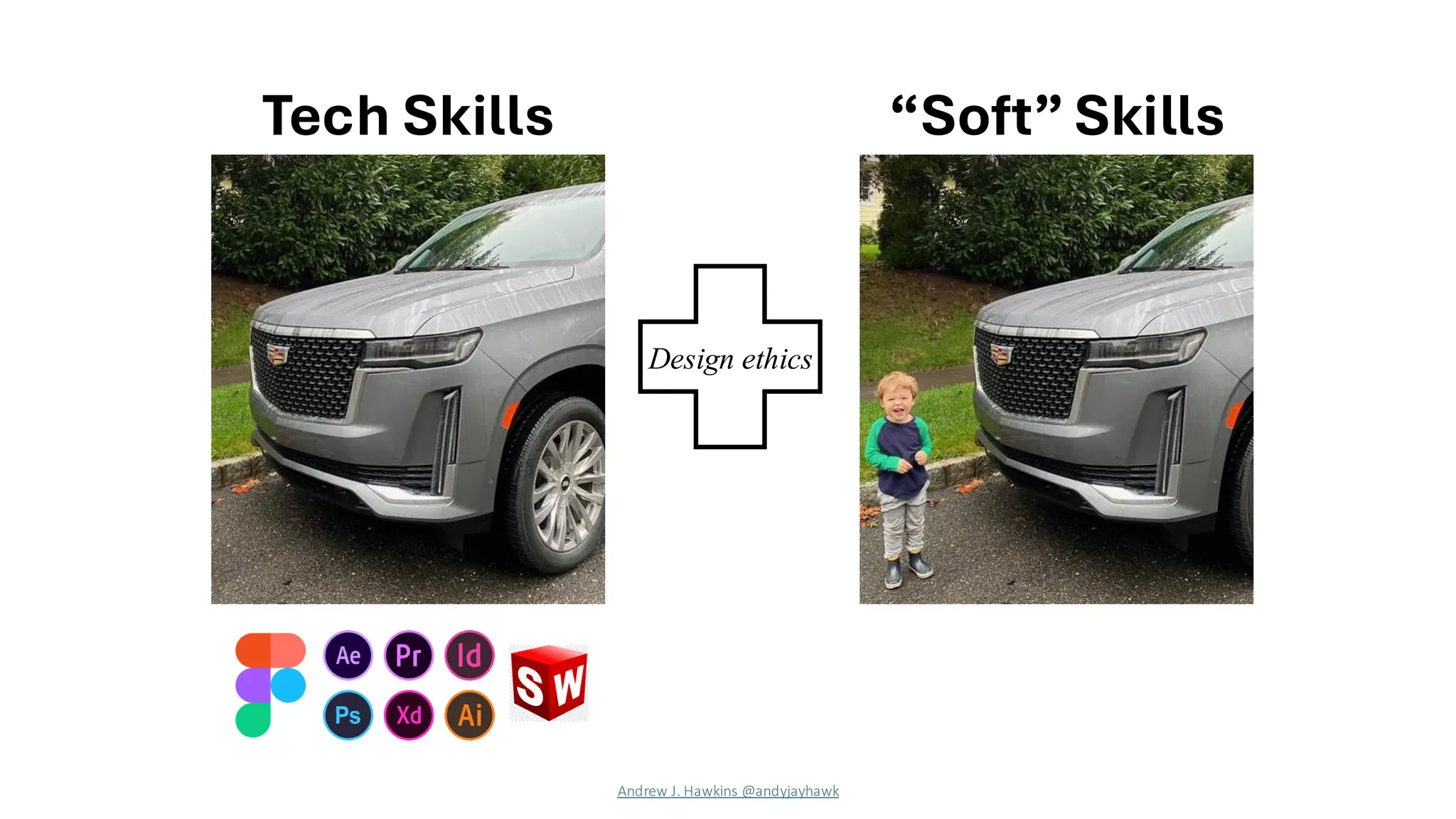
Tech Skills “Soft” Skills
Design ethics
Politics in design
“Users” in UCD
Agency of design
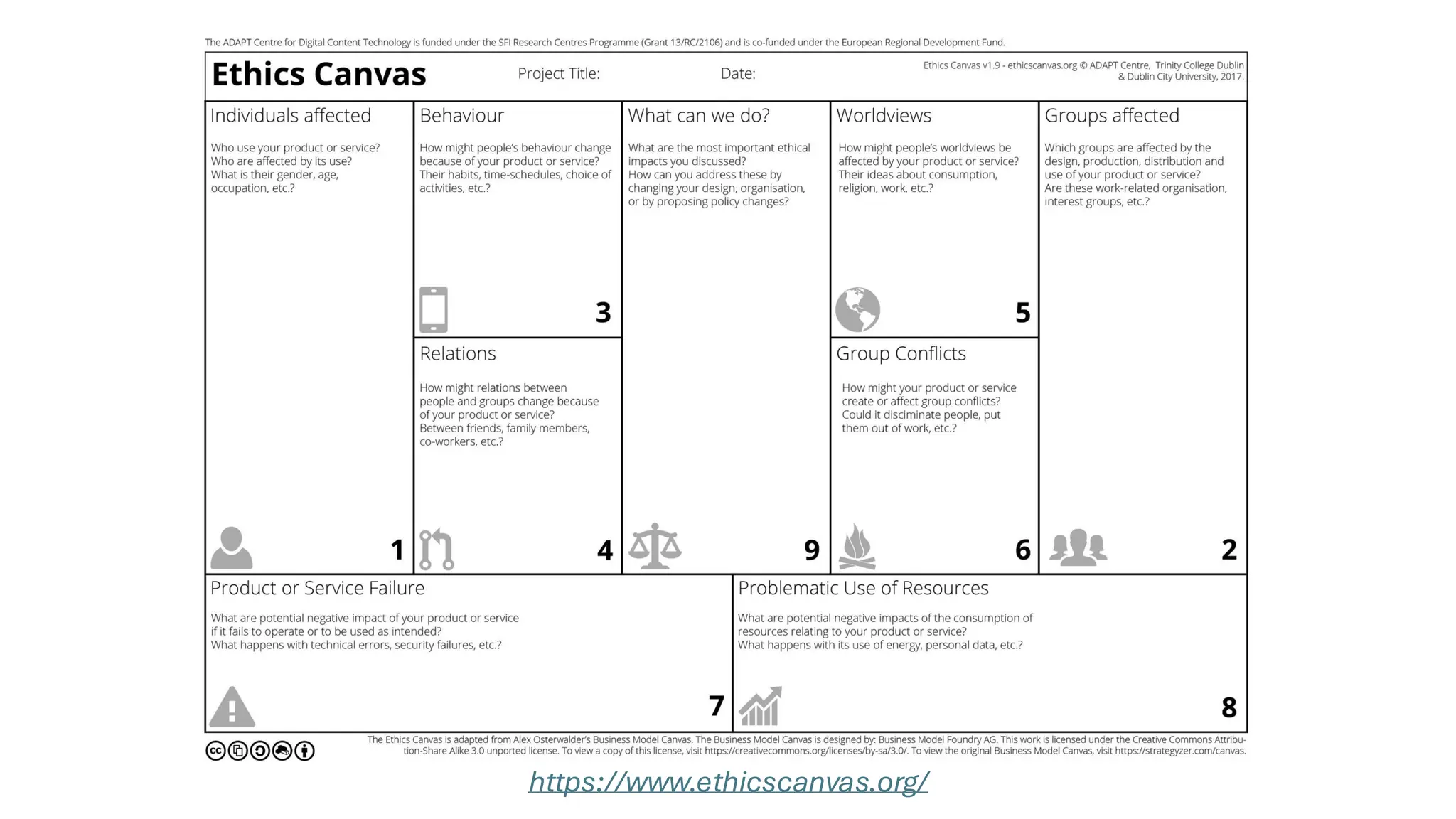
Ethics canvas
4 cases to unfold (CYOA)
Student presentations & discussion
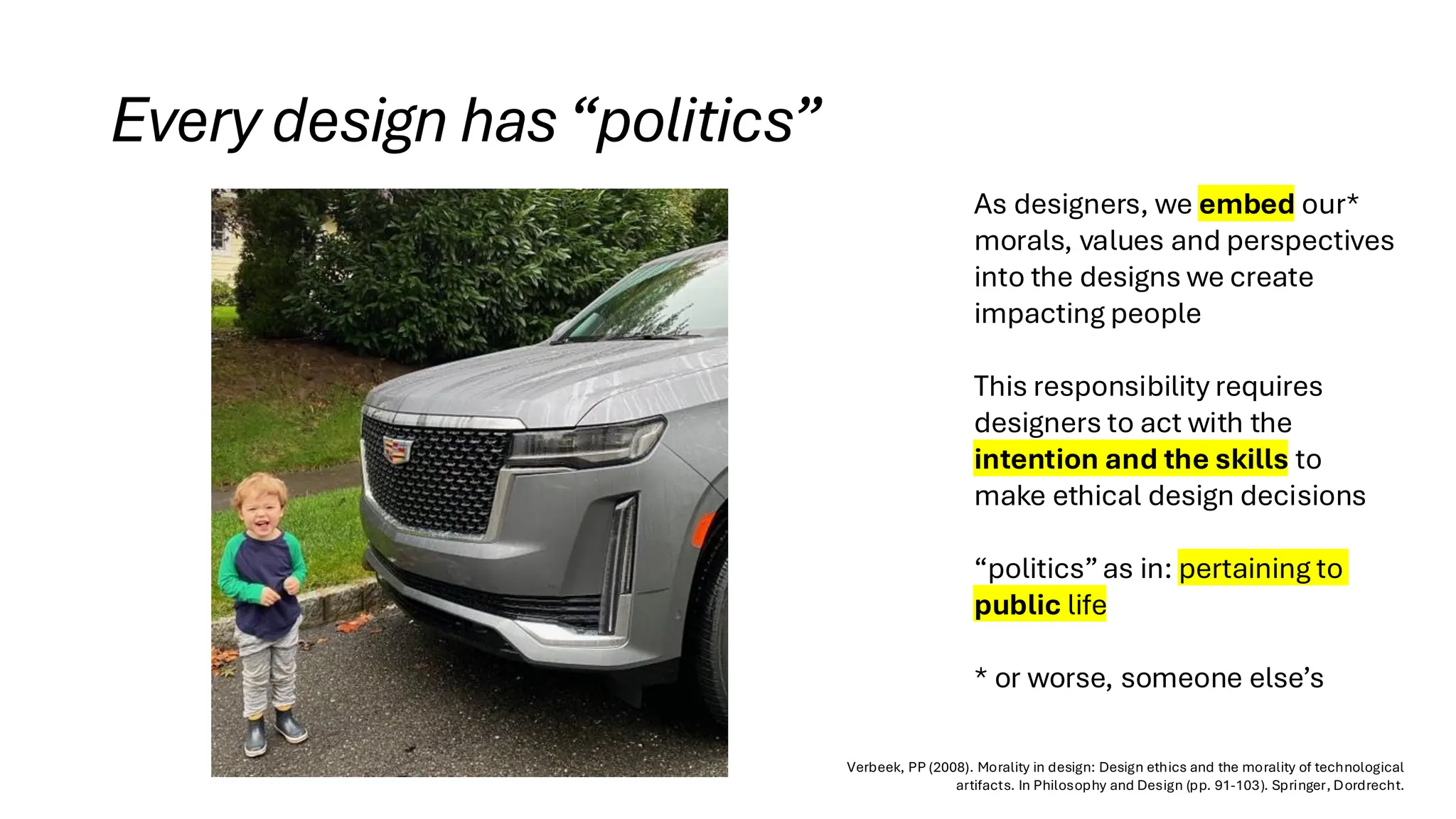
Every design has“politics”
As designers, we embed our*
morals, values and perspectives
into the designs we create
impacting people
This responsibility requires
designers to act with the
intention and the skills to
make ethical design decisions
“politics”as in: pertaining to
public life
* or worse, someone else’s
Verbeek, PP (2008). Morality in design: Design ethics and the morality of technological
artifacts. In Philosophy and Design (pp. 91-103). Springer, Dordrecht.
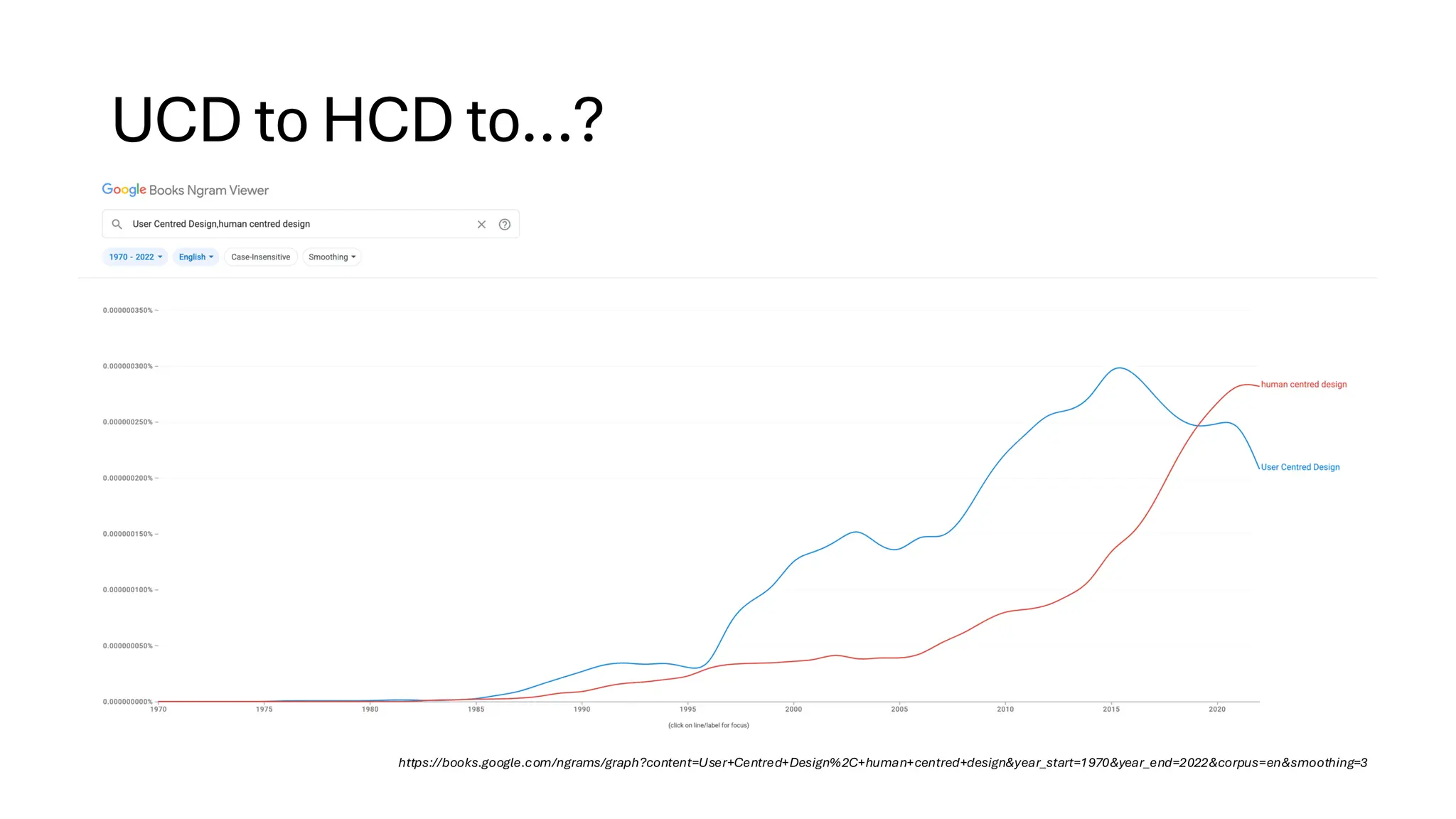
UCD to HCD to…?
https://books.google.com/ngrams/graph?content=User+Centred+Design%2C+human+centred+design&year_start=1970&year_end=2022&corpus=en&smoothing=3
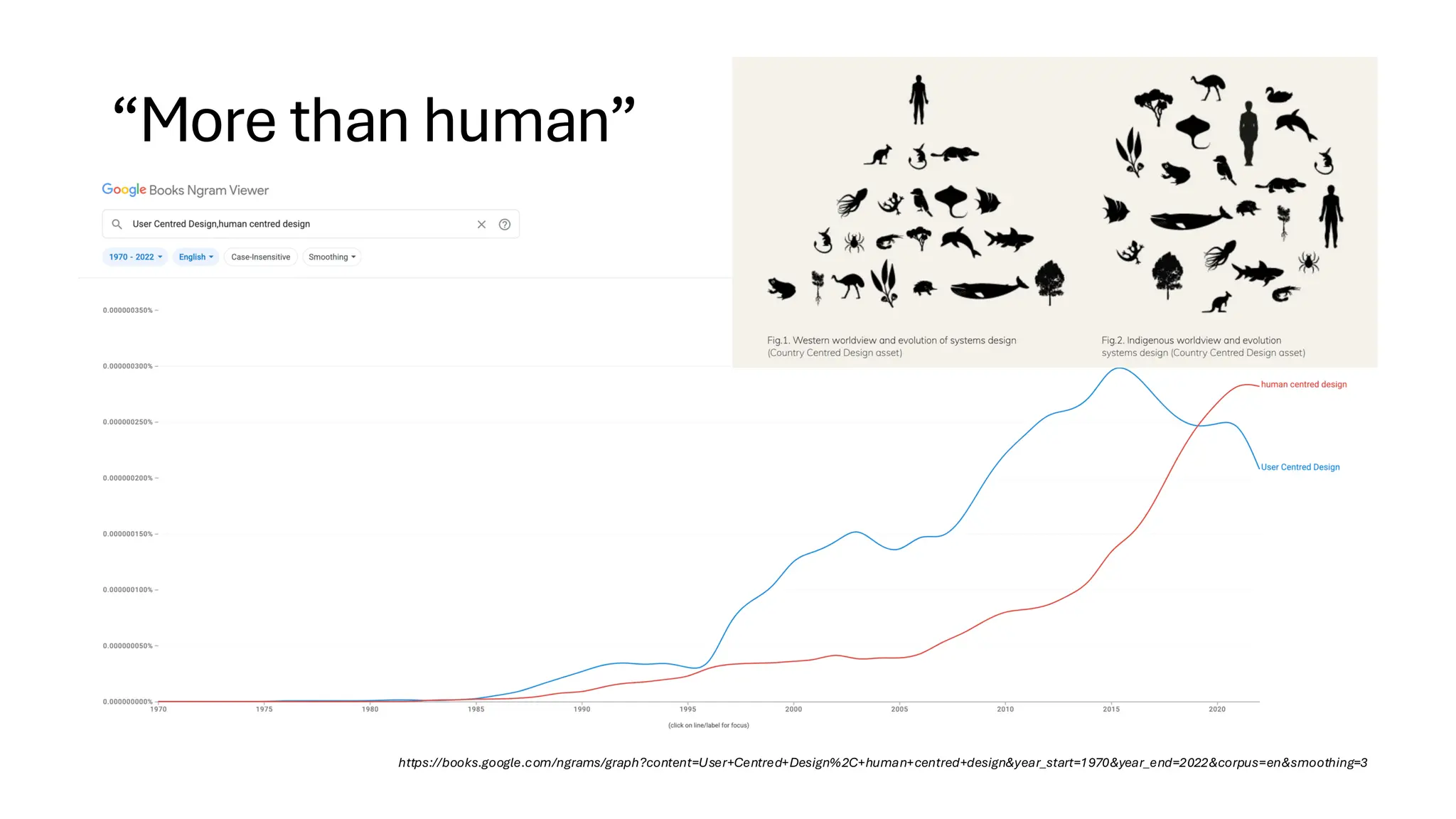
“More than human”
https://books.google.com/ngrams/graph?content=User+Centred+Design%2C+human+centred+design&year_start=1970&year_end=2022&corpus=en&smoothing=3
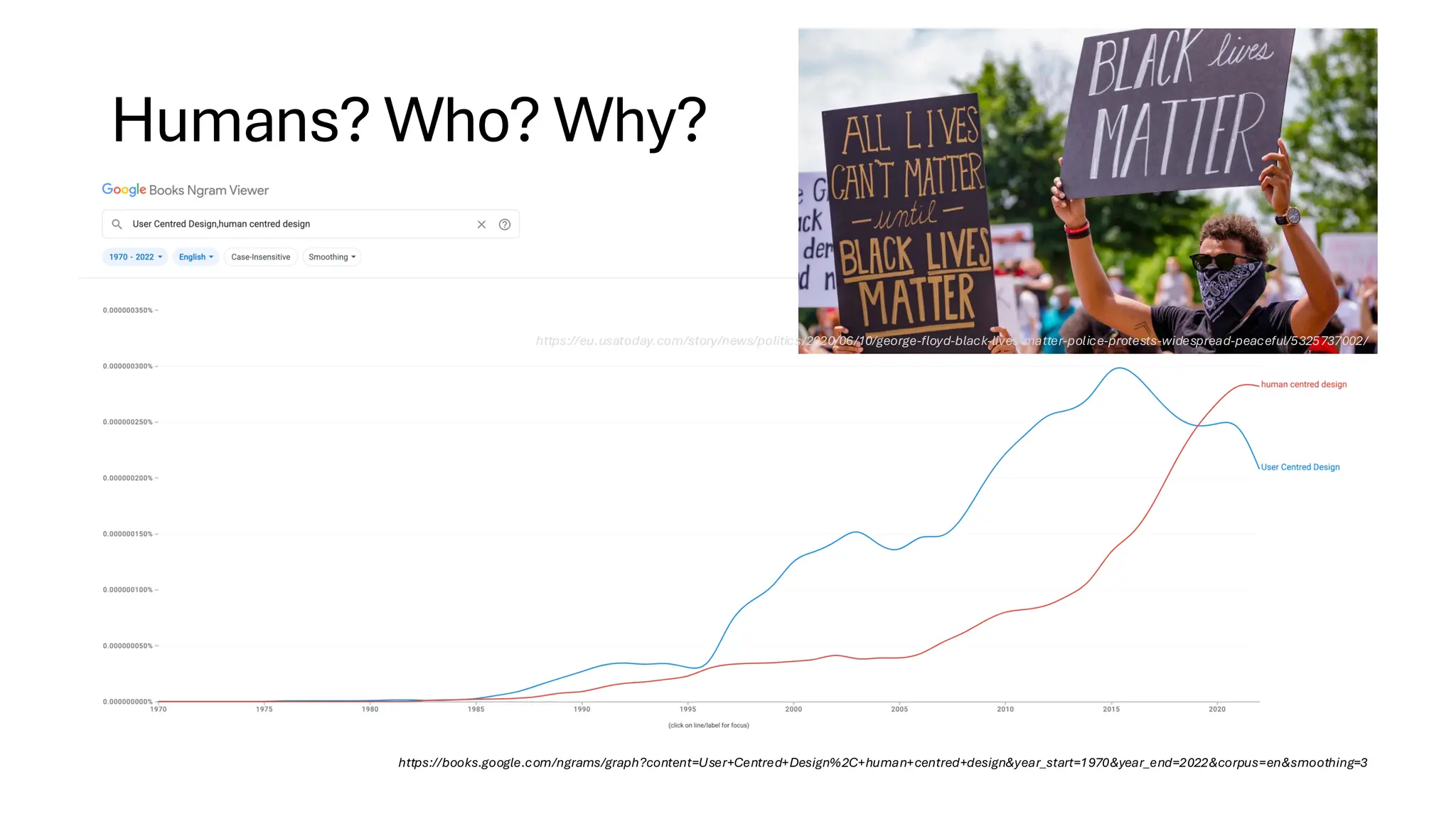
Humans? Who? Why?
https://books.google.com/ngrams/graph?content=User+Centred+Design%2C+human+centred+design&year_start=1970&year_end=2022&corpus=en&smoothing=3
https://eu.usatoday.com/story/news/politics/2020/06/10/george-floyd-black-lives-matter-police-protests-widespread-peaceful/5325737002/
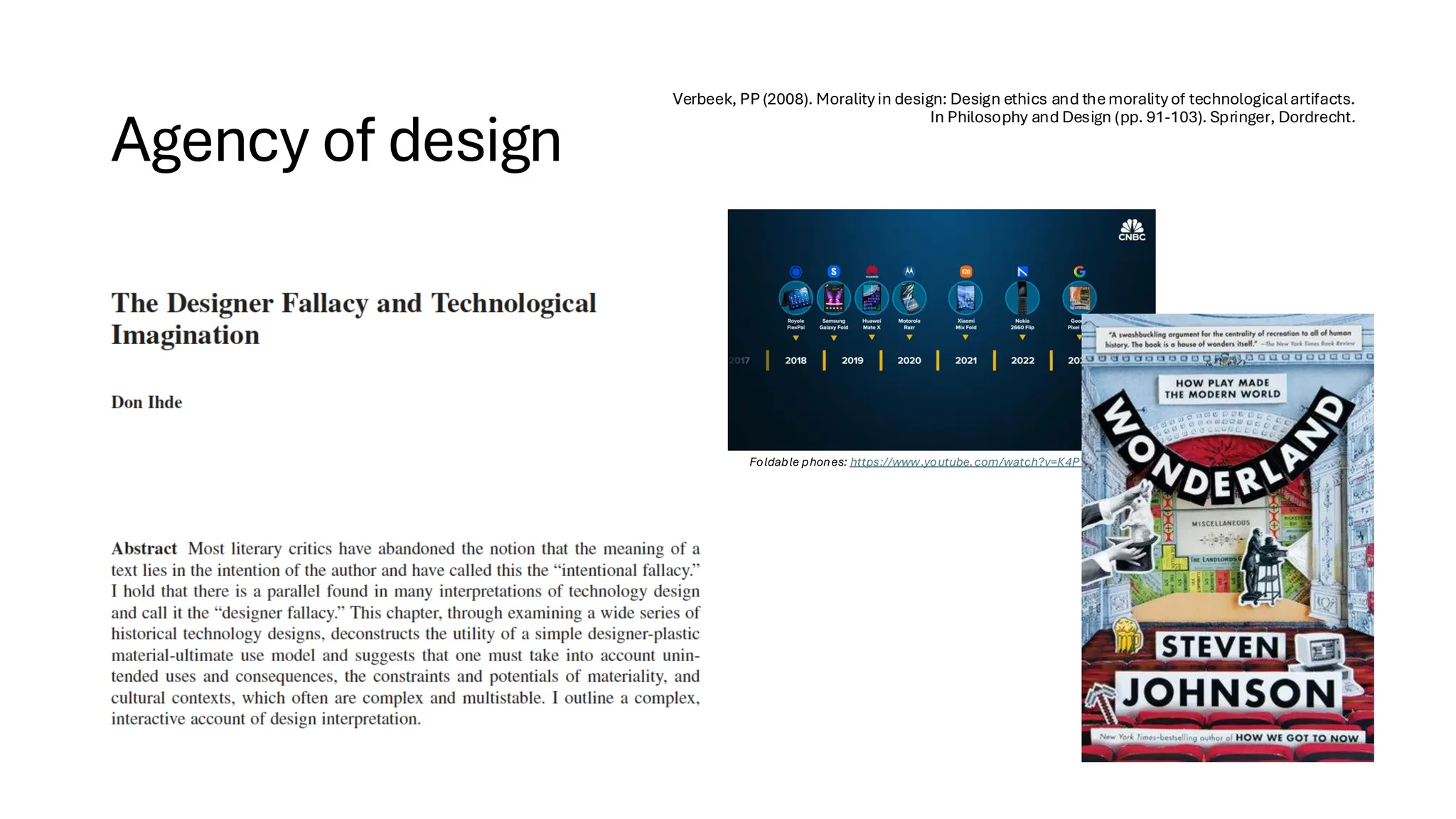
Agency of design
Verbeek, PP (2008). Moralityin design: Design ethics and themoralityof technologicalartifacts.
In Philosophy and Design (pp. 91-103). Springer, Dordrecht.
Foldable phones: https://www.youtube.com/watch?v=K4PY0k7_4Dk
https://www.ethicscanvas.org/
Ethics Canvas
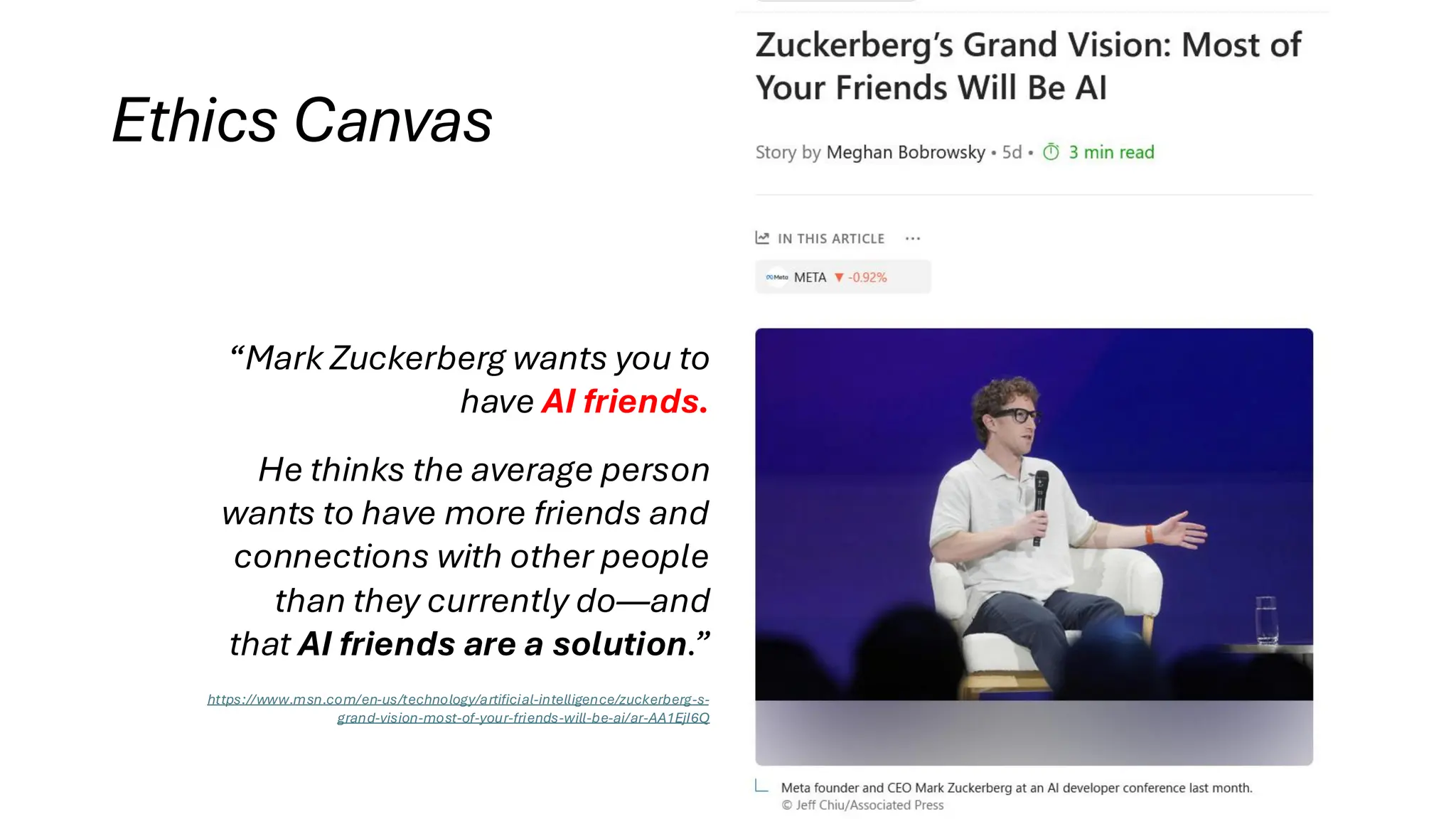
“Mark Zuckerberg wants you to
have AI friends.
He thinks the average person
wants to have more friends and
connections with other people
than they currently do—and
that AI friends are a solution.”
https://www.msn.com/en-us/technology/artificial-intelligence/zuckerberg-s-
grand-vision-most-of-your-friends-will-be-ai/ar-AA1EjI6Q
Ethics Canvas
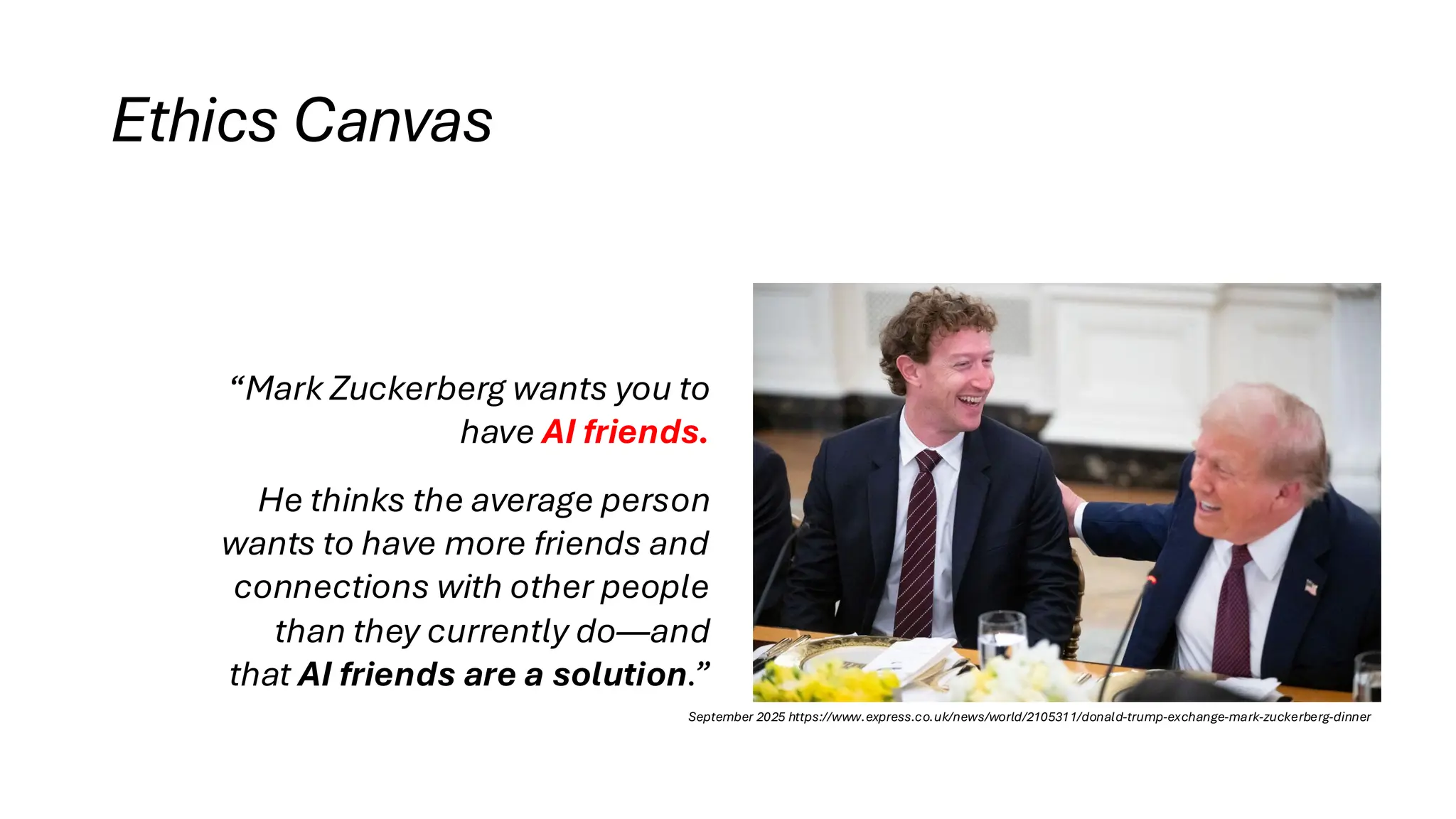
“Mark Zuckerberg wants you to
have AI friends.
He thinks the average person
wants to have more friends and
connections with other people
than they currently do—and
that AI friends are a solution.”
September 2025 https://www.express.co.uk/news/world/2105311/donald-trump-exchange-mark-zuckerberg-dinner
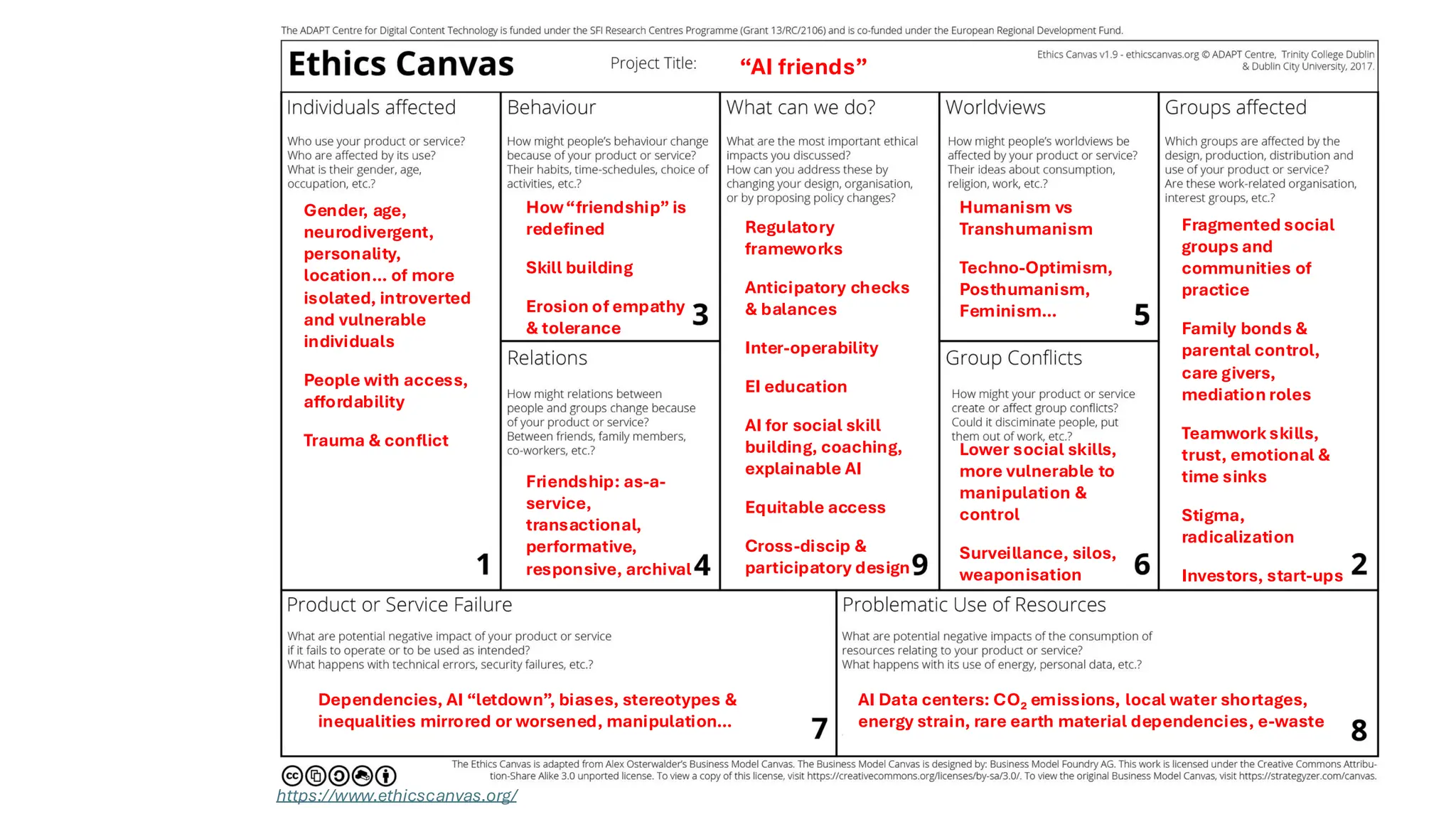
https://www.ethicscanvas.org/
“AI friends”
Gender, age,
neurodivergent,
personality,
location… of more
isolated, introverted
and vulnerable
individuals
People with access,
affordability
Trauma & conflict
How“friendship” is
redefined
Skill building
Erosion of empathy
& tolerance
Friendship: as-a-
service,
transactional,
performative,
responsive, archival
Fragmented social
groups and
communities of
practice
Family bonds &
parental control,
care givers,
mediation roles
Teamwork skills,
trust, emotional &
time sinks
Stigma,
radicalization
Investors, start-ups
Humanism vs
Transhumanism
Techno-Optimism,
Posthumanism,
Feminism…
Lower social skills,
more vulnerable to
manipulation &
control
Surveillance, silos,
weaponisation
Regulatory
frameworks
Anticipatory checks
& balances
Inter-operability
EI education
AI for social skill
building, coaching,
explainable AI
Equitable access
Cross-discip &
participatory design
AI Data centers: CO₂ emissions, local water shortages,
energy strain, rare earth material dependencies, e-waste
Dependencies, AI “letdown”, biases, stereotypes &
inequalities mirrored or worsened, manipulation…
4 cases
https://thelaundrylady.co.nz
A. “Theranos”(USA v. Elizabeth A. Holmes, et al.
justice.gov/usao-ndca/us-v-elizabeth-holmes-et-al)
B. Biases in design
C. Clients, bosses, briefs
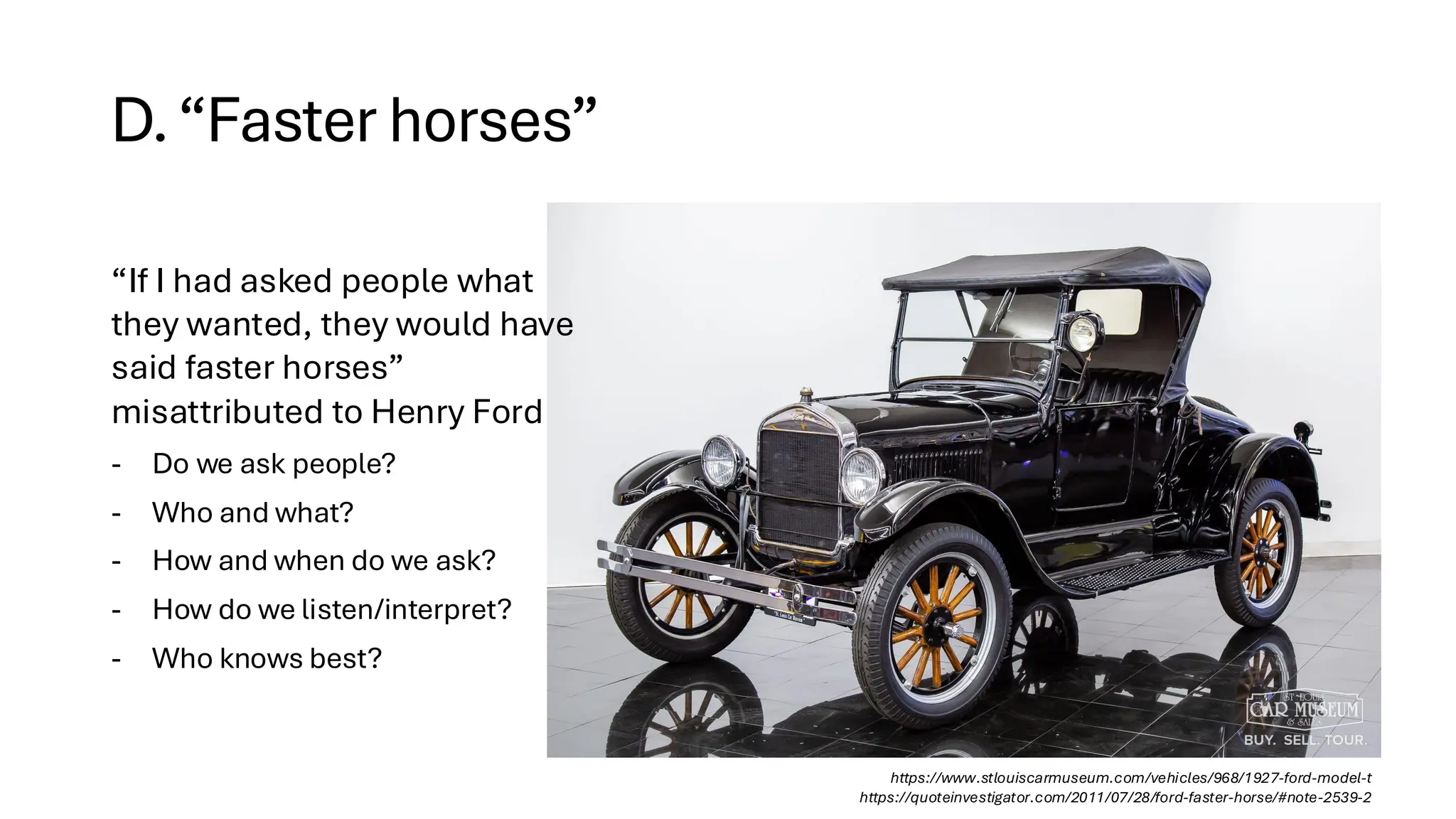
D. “If I had asked people what they wanted, they would
have said faster horses”Apocryphal quote
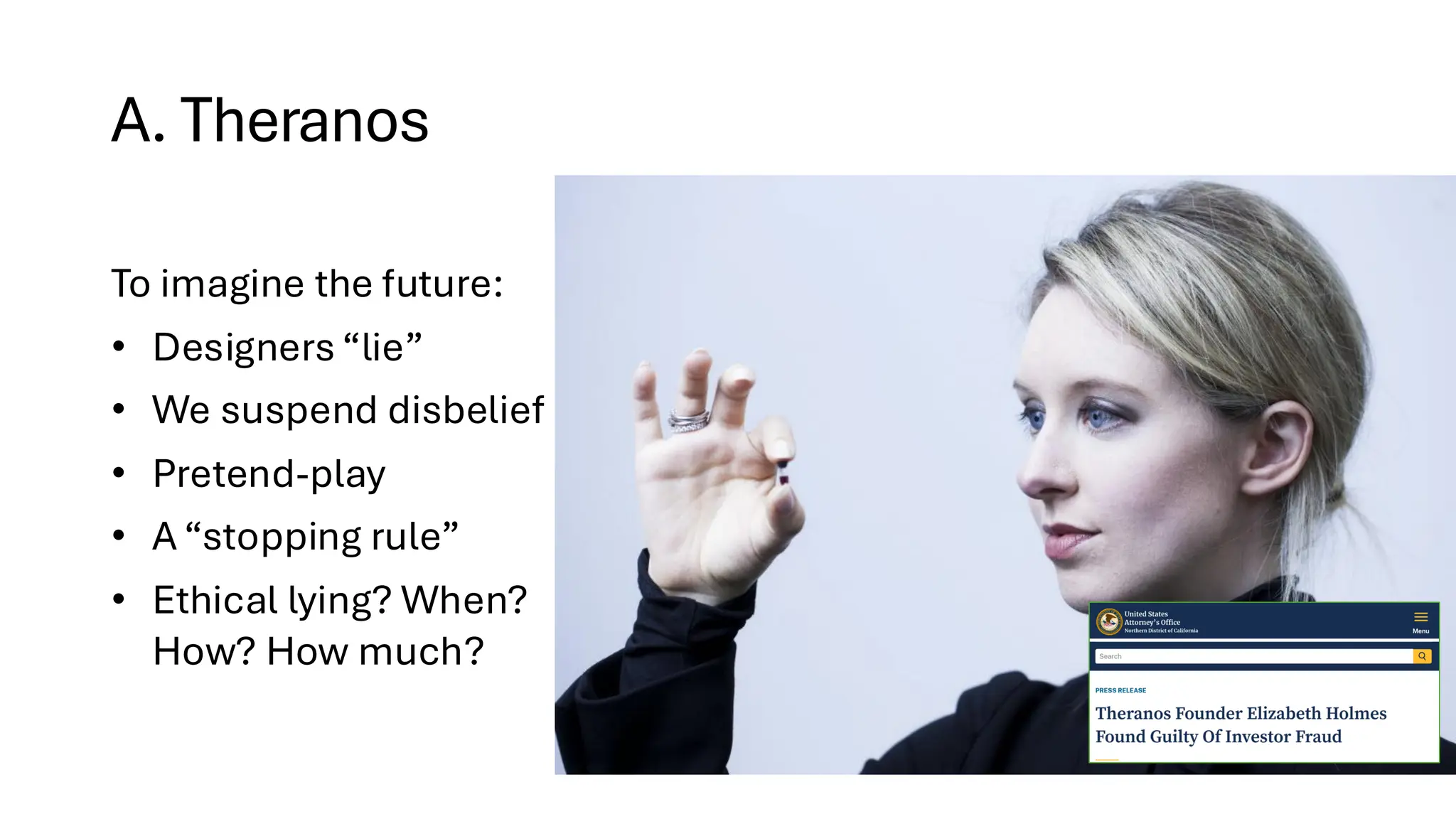
A. Theranos
skymall.com/products/inflatable-water-park-with-large-water-slides-and-basketball-hoop
To imagine the future:
• Designers “lie”
• We suspend disbelief
• Pretend-play
• A “stopping rule”
• Ethical lying? When?
How? How much?
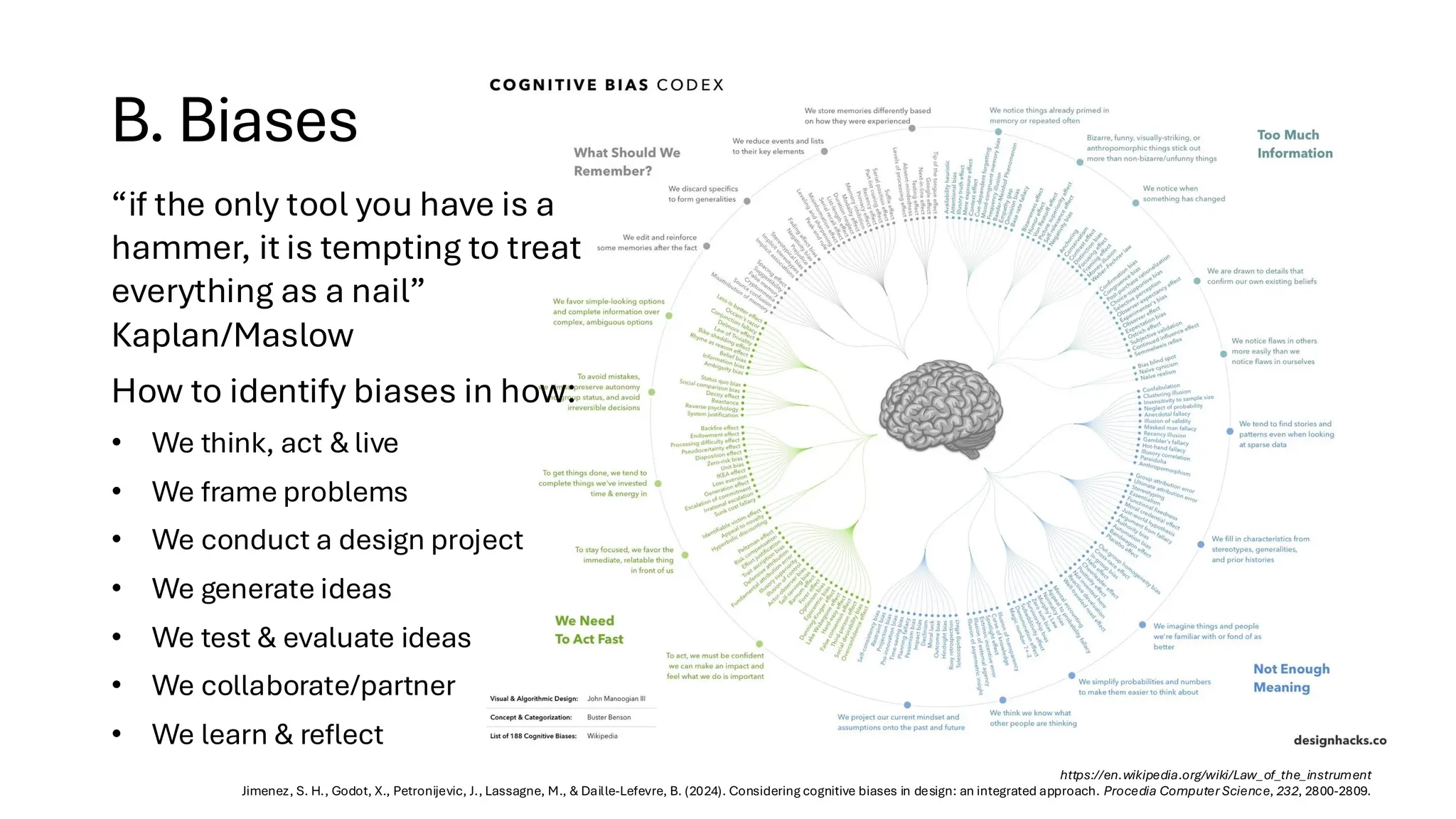
B. Biases
https://en.wikipedia.org/wiki/Law_of_the_instrument
Jimenez, S. H., Godot, X., Petronijevic, J., Lassagne, M., & Daille-Lefevre, B. (2024). Considering cognitive biases in design: an integrated approach. Procedia Computer Science, 232, 2800-2809.
“if the only tool you have is a
hammer, it is tempting to treat
everything as a nail”
Kaplan/Maslow
How to identify biases in how:
• We think, act & live
• We frame problems
• We conduct a design project
• We generate ideas
• We test & evaluate ideas
• We collaborate/partner
• We learn & reflect
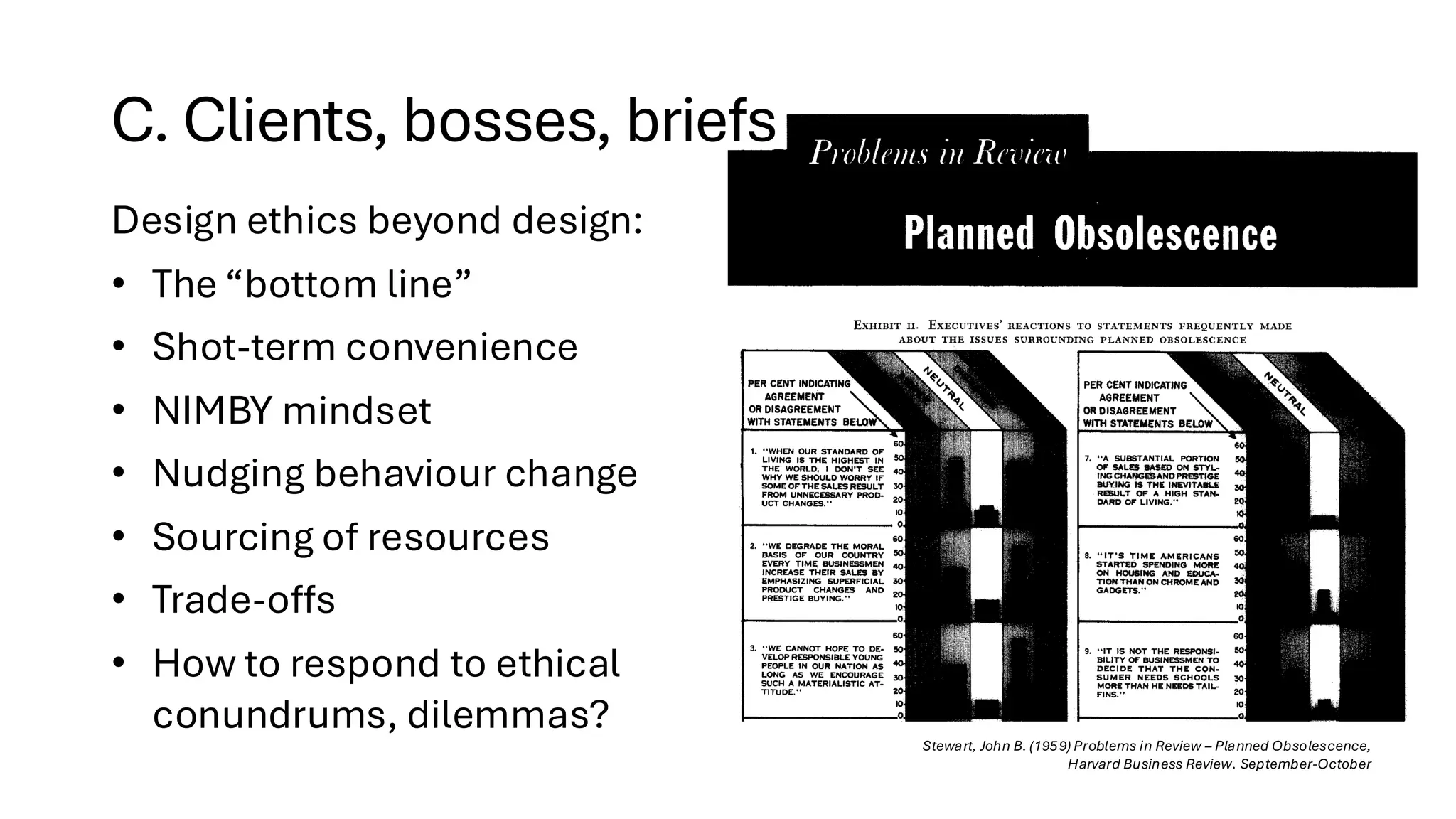
C. Clients, bosses, briefs
Stewart, John B. (1959) Problems in Review – Planned Obsolescence,
Harvard Business Review. September-October
Design ethics beyond design:
• The “bottom line”
• Shot-term convenience
• NIMBY mindset
• Nudging behaviour change
• Sourcing of resources
• Trade-offs
• How to respond to ethical
conundrums, dilemmas?
D.“Faster horses”
https://www.stlouiscarmuseum.com/vehicles/968/1927-ford-model-t
https://quoteinvestigator.com/2011/07/28/ford-faster-horse/#note-2539-2
“If I had asked people what
they wanted, they would have
said faster horses”
misattributed to Henry Ford
- Do we ask people?
- Who and what?
- How and when do we ask?
- How do we listen/interpret?
- Who knows best?
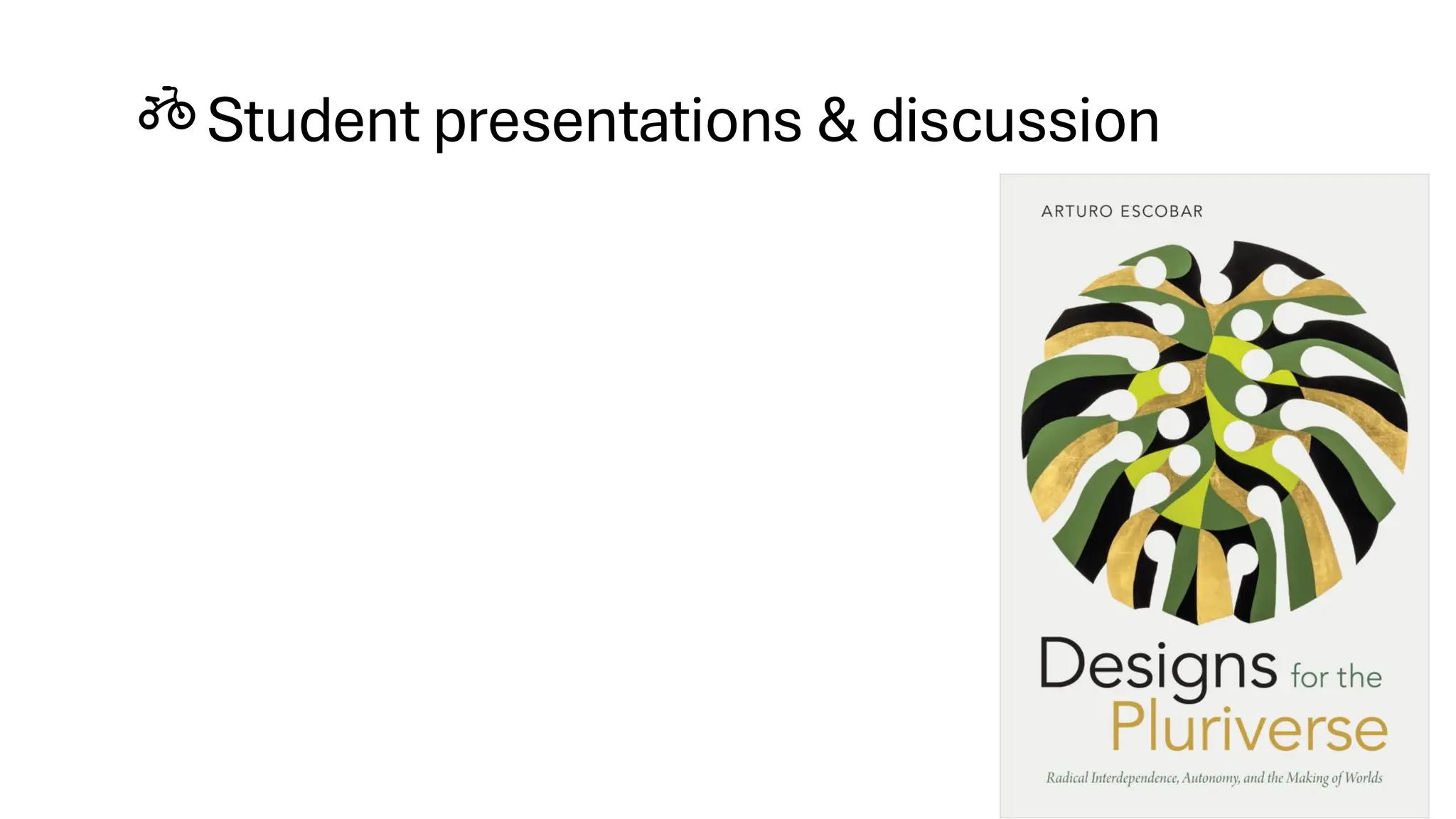
Student presentations & discussion
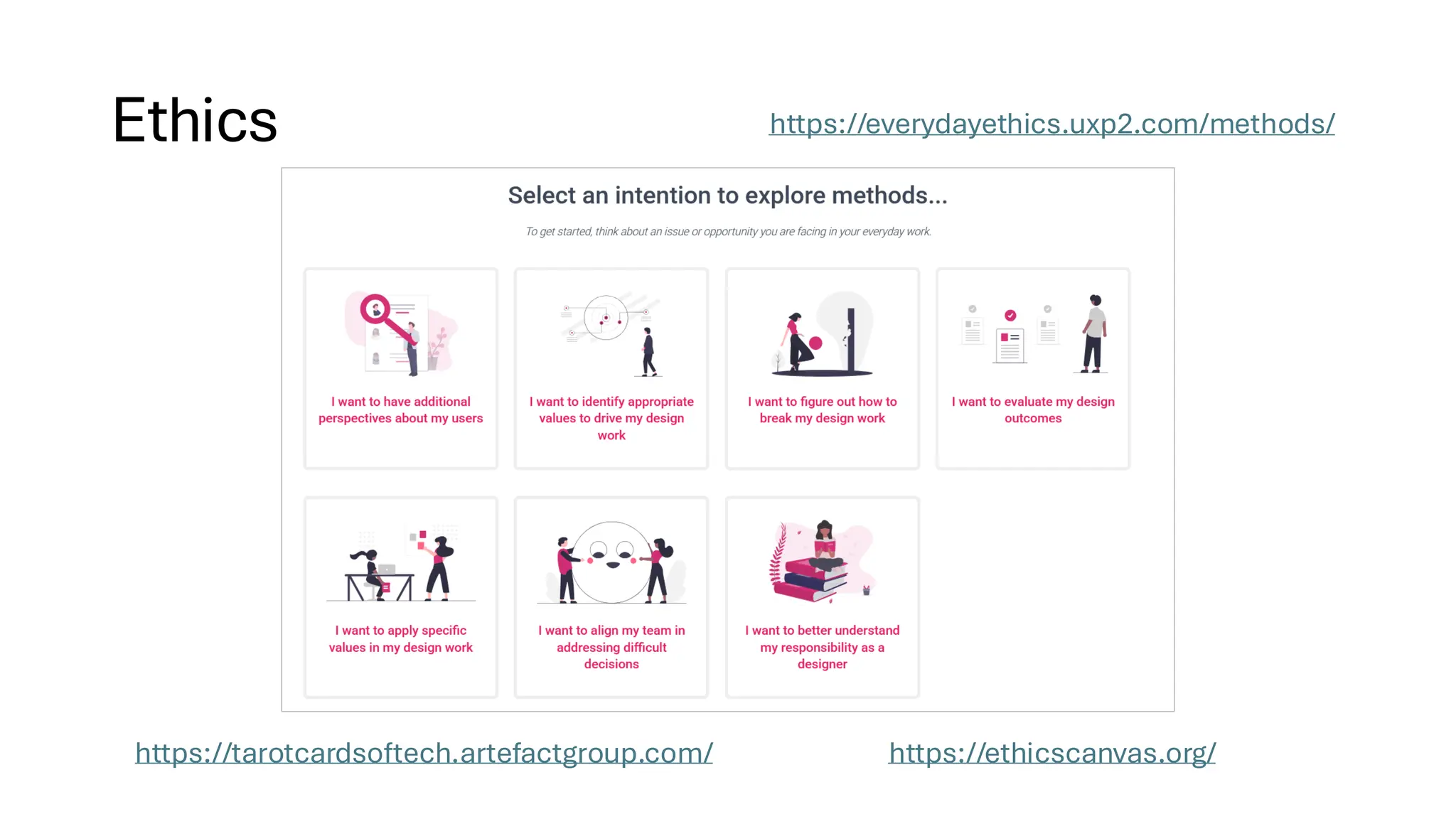
Ethics
https://tarotcardsoftech.artefactgroup.com/ https://ethicscanvas.org/
https://everydayethics.uxp2.com/methods/
Ethics, Power &
Inclusion in Design
A guest lecture for DSIGN342
University of Waikato, 2025
Prof. Ricardo Sosa
ricardo.sosa@waikato.ac.nz
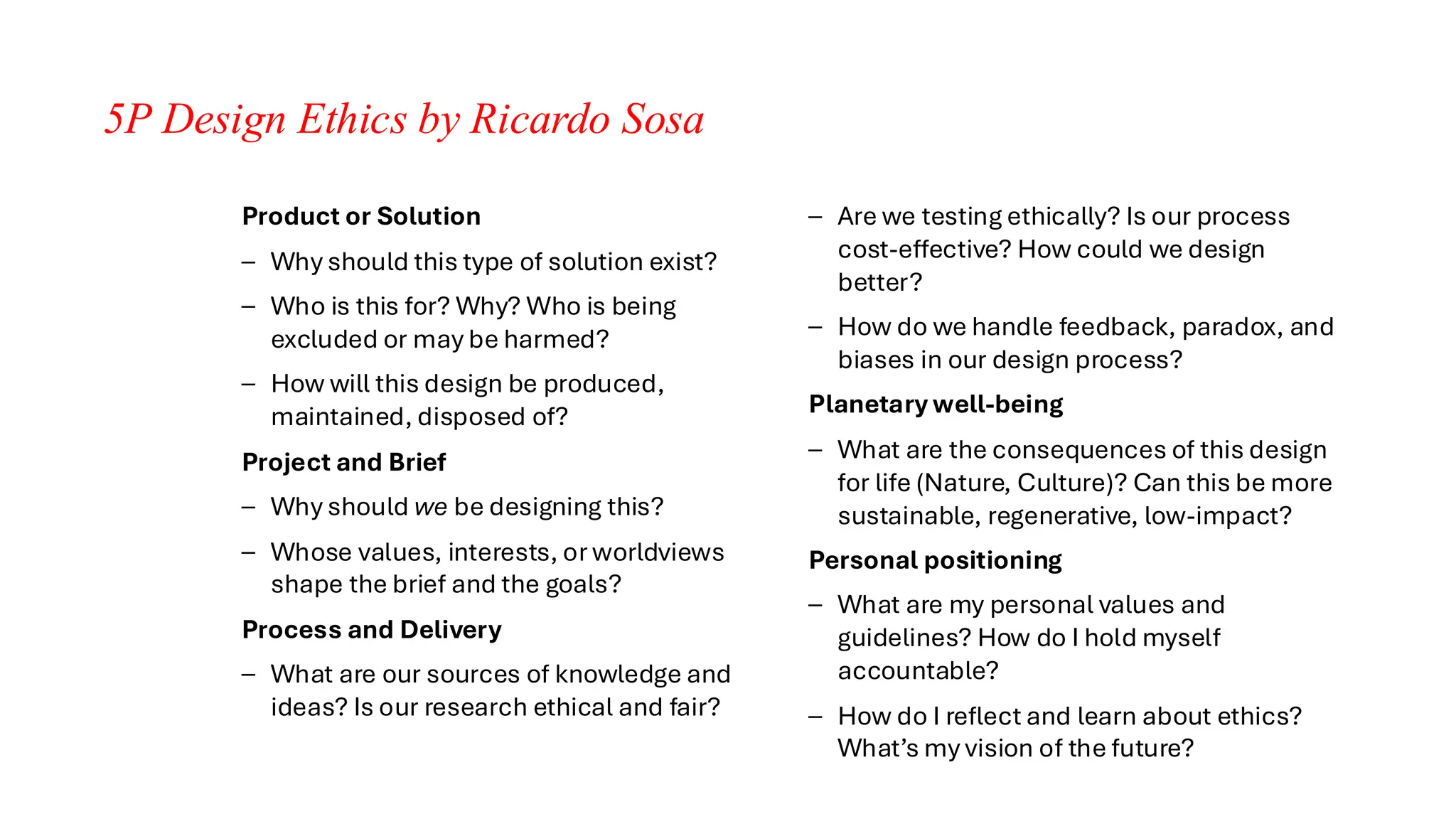
5P Design Ethics by Ricardo Sosa
Product or Solution
– Why should this type of solution exist?
– Who is this for? Why? Who is being
excluded or may be harmed?
– How will this design be produced,
maintained, disposed of?
Project and Brief
– Why should we be designing this?
– Whose values, interests, or worldviews
shape the brief and the goals?
Process and Delivery
– What are our sources of knowledge and
ideas? Is our research ethical and fair?
– Are we testing ethically? Is our process
cost-effective? How could we design
better?
– How do we handle feedback, paradox, and
biases in our design process?
Planetary well-being
– What are the consequences of this design
for life (Nature, Culture)? Can this be more
sustainable, regenerative, low-impact?
Personal positioning
– What are my personal values and
guidelines? How do I hold myself
accountable?
– How do I reflect and learn about ethics?
What’s my vision of the future?

Ethics Power Inclusion in Design. Waikato University