What is Professional?
•An individual engaged in a
specific occupation requiring
specialized education, training,
and adherence to ethical
standards, may have formal
credentials, licenses, and
certifications.
• Refers tothe conduct, aims, and
qualities that characterize a
professional person.
Professionalism means
following the rules of ethics of
your profession.
What is Professionalism
What is ProfessionalEthics?
• Professional ethics are the rules
and moral principles that guide
how a person should behave in
their job. Involves the moral
principles and standards that
guide behavior in a professional
context.
7.
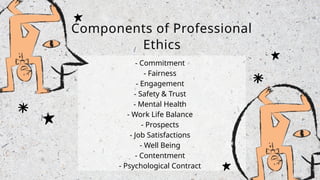
Components of Professional
Ethics
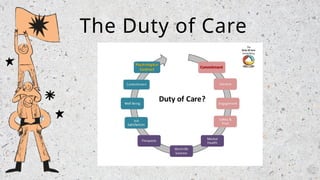
-Commitment
- Fairness
- Engagement
- Safety & Trust
- Mental Health
- Work Life Balance
- Prospects
- Job Satisfactions
- Well Being
- Contentment
- Psychological Contract
• Refers tothe continuous process of acquiring new skills,
knowledge, and competencies to enhance one’s
professional capabilities. It helps you grow in your
career and stay updated with changes in your field.
What is Professional Development?
• Refer tosystematic frameworks that provide a set of
principles and guidelines for determining what is
morally right or wrong.
1. Virtue Ethics: Focuses on the character and virtues of
the individual.
2. Utilitarianism: Emphasizes the consequences of
actions and aims to maximize overall happiness.
3. Deontology: Centers on adherence to moral duties
and rules.
A. Ethical Theories
13.
• Refers tothe fundamental ideas or
principles that form the basis of ethical
reasoning and decision-making, basic ideas
that help us understand what is right or
wrong, and guide how we should treat
others.
B. Ethical Concept/s
14.
1. Moral Obligationsand Duties
- Outlined as professional codes of ethics
and include principles such as
confidentiality, honesty, and
responsibility.
2. Rights and Justice
- Important ethical concepts that help
make sure everyone is treated fairly and
with respect.
3. Ethical Dilemmas
- Occur when professionals face
situations where they must choose
between conflicting ethical principles.
Three Fundamental
Concepts:
15.
C. Ethical Reasoning
•Involves the process of thinking through ethical
issues and making decisions based on ethical
principles and theories.
Steps in Ethical Reasoning:
• ·Identify the Ethical Issue
• ·Gather Information
• ·Evaluate Options
• ·Make a Decision
• ·Reflect on the Outcome