Ethical Leadership:  A Practical and Theoretical Framework Diane J. Prince, Clayton State University Nora Martin, University of South Carolina Richard Fulton, Troy University – Augusta, Georgia April 3, 2009
Outline Introduction Background Model Discussion Conclusions
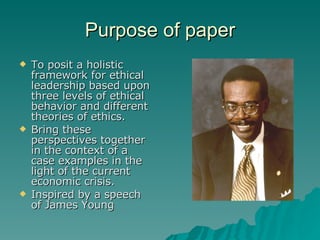
Purpose of paper To posit a holistic framework for ethical leadership based upon three levels of ethical behavior and different theories of ethics.  Bring these perspectives together in the context of a case examples in the light of the current economic crisis. Inspired by a speech of James Young
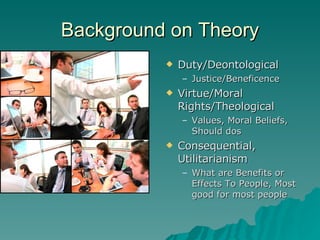
Background on Theory Duty/Deontological Justice/Beneficence Virtue/Moral Rights/Theological Values, Moral Beliefs, Should dos Consequential, Utilitarianism What are Benefits or Effects To People, Most good for most people
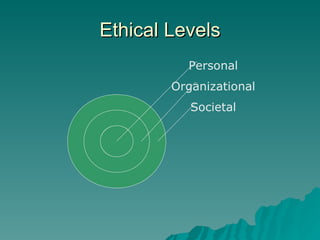
Ethical Levels Societal Organizational Personal
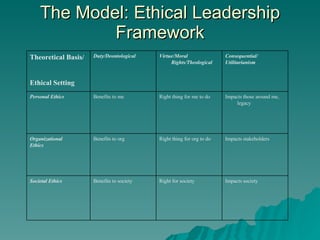
The Model: Ethical Leadership Framework Impacts society Right for society Benefits to society Societal Ethics Impacts stakeholders Right thing for org to do Benefits to org Organizational  Ethics Impacts those around me, legacy Right thing for me to do Benefits to me Personal Ethics Consequential/ Utilitarianism Virtue/Moral Rights/Theological Duty/Deontological Theoretical Basis/ Ethical Setting
Discussion Duty Moral Rights Consequences Personal Organizational Societal
Duty Personal – Benefits to me Made me a bonus, great incentives, Are the AIG bonuses fair? Org’l – Benefits to org Brought profits to org (more loans, more money)  Is it just that more people are defaulting on loans since the org lent to the wrong people? Societal – Benefits to society Helps society do better (more people in houses)  Is it fair that banking industry is failing? AIG  and others are needing a bailout?
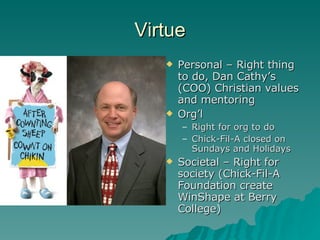
Virtue Personal – Right thing to do, Dan Cathy’s (COO) Christian values and mentoring Org’l  Right for org to do Chick-Fil-A closed on Sundays and Holidays Societal – Right for society (Chick-Fil-A Foundation create WinShape at Berry College)
Consequential/Utilitarianism Personal – Impacts me (difficult to get credit) Org’l – Impacts stakeholders (difficult to get business loans) Societal – Impacts society (Bankruptcies, regulations)
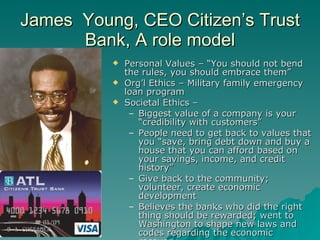
James  Young, CEO Citizen’s Trust Bank, A role model Personal Values – “You should not bend the rules, you should embrace them” Org’l Ethics – Military family emergency loan program Societal Ethics –  Biggest value of a company is your “credibility with customers”  People need to get back to values that you “save, bring debt down and buy a house that you can afford based on your savings, income, and credit history” Give back to the community; volunteer, create economic development Believes the banks who did the right thing should be rewarded; went to Washington to shape new laws and codes regarding the economic recovery.
Conclusions – Practical and Theoretical Ethical Leadership starts with the personal values, attitudes and actions of a person Ethical leaders of organizations walk the talk; go beyond legal regulations, embrace rules and policies; infuse a culture of ethics Ethical Leaders see the wholistic picture of how society is affected by the actions of individuals and organizations and not just the bottom line.  They are able to think long term and shape laws and regulations as well as societal attitudes. Ethical leaders evolve from personal and organizational ethics to societal ethics and integrate ethical perspectives of duty, moral rights and consequentialism into their lives.

Ethical Leadership

  • 1.
    Ethical Leadership: A Practical and Theoretical Framework Diane J. Prince, Clayton State University Nora Martin, University of South Carolina Richard Fulton, Troy University – Augusta, Georgia April 3, 2009
  • 2.
    Outline Introduction BackgroundModel Discussion Conclusions
  • 3.
    Purpose of paperTo posit a holistic framework for ethical leadership based upon three levels of ethical behavior and different theories of ethics. Bring these perspectives together in the context of a case examples in the light of the current economic crisis. Inspired by a speech of James Young
  • 4.
    Background on TheoryDuty/Deontological Justice/Beneficence Virtue/Moral Rights/Theological Values, Moral Beliefs, Should dos Consequential, Utilitarianism What are Benefits or Effects To People, Most good for most people
  • 5.
    Ethical Levels SocietalOrganizational Personal
  • 6.
    The Model: EthicalLeadership Framework Impacts society Right for society Benefits to society Societal Ethics Impacts stakeholders Right thing for org to do Benefits to org Organizational Ethics Impacts those around me, legacy Right thing for me to do Benefits to me Personal Ethics Consequential/ Utilitarianism Virtue/Moral Rights/Theological Duty/Deontological Theoretical Basis/ Ethical Setting
  • 7.
    Discussion Duty MoralRights Consequences Personal Organizational Societal
  • 8.
    Duty Personal –Benefits to me Made me a bonus, great incentives, Are the AIG bonuses fair? Org’l – Benefits to org Brought profits to org (more loans, more money) Is it just that more people are defaulting on loans since the org lent to the wrong people? Societal – Benefits to society Helps society do better (more people in houses) Is it fair that banking industry is failing? AIG and others are needing a bailout?
  • 9.
    Virtue Personal –Right thing to do, Dan Cathy’s (COO) Christian values and mentoring Org’l Right for org to do Chick-Fil-A closed on Sundays and Holidays Societal – Right for society (Chick-Fil-A Foundation create WinShape at Berry College)
  • 10.
    Consequential/Utilitarianism Personal –Impacts me (difficult to get credit) Org’l – Impacts stakeholders (difficult to get business loans) Societal – Impacts society (Bankruptcies, regulations)
  • 11.
    James Young,CEO Citizen’s Trust Bank, A role model Personal Values – “You should not bend the rules, you should embrace them” Org’l Ethics – Military family emergency loan program Societal Ethics – Biggest value of a company is your “credibility with customers” People need to get back to values that you “save, bring debt down and buy a house that you can afford based on your savings, income, and credit history” Give back to the community; volunteer, create economic development Believes the banks who did the right thing should be rewarded; went to Washington to shape new laws and codes regarding the economic recovery.
  • 12.
    Conclusions – Practicaland Theoretical Ethical Leadership starts with the personal values, attitudes and actions of a person Ethical leaders of organizations walk the talk; go beyond legal regulations, embrace rules and policies; infuse a culture of ethics Ethical Leaders see the wholistic picture of how society is affected by the actions of individuals and organizations and not just the bottom line. They are able to think long term and shape laws and regulations as well as societal attitudes. Ethical leaders evolve from personal and organizational ethics to societal ethics and integrate ethical perspectives of duty, moral rights and consequentialism into their lives.