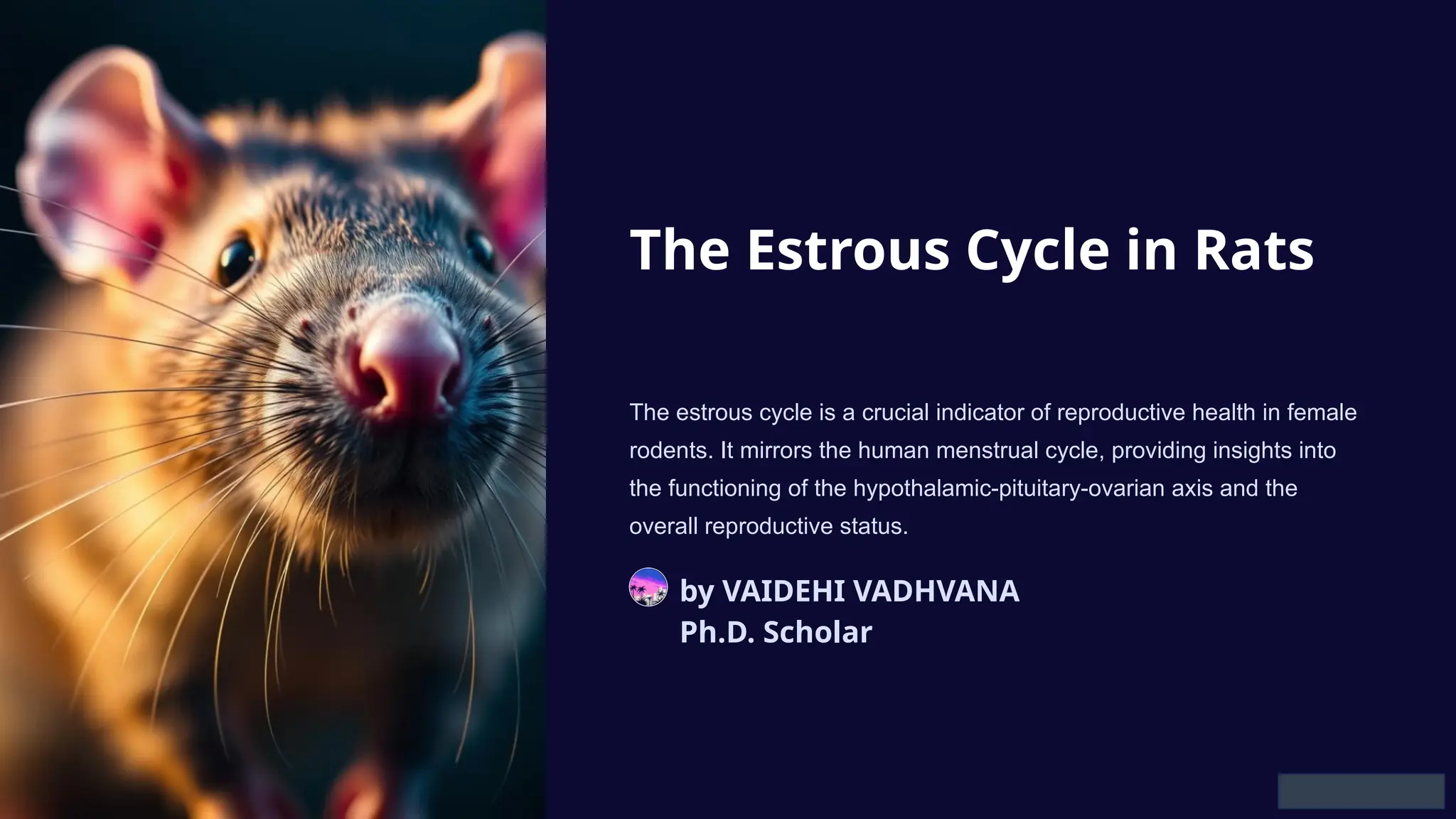
The Estrous Cycle in Rats
The estrous cycle is a crucial indicator of reproductive health in female
rodents. It mirrors the human menstrual cycle, providing insights into
the functioning of the hypothalamic-pituitary-ovarian axis and the
overall reproductive status.
by VAIDEHI VADHVANA
Ph.D. Scholar
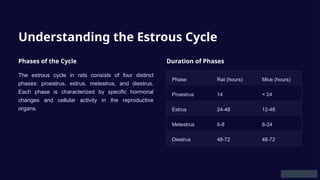
Understanding the Estrous Cycle
Phases of the Cycle
The estrous cycle in rats consists of four distinct
phases: proestrus, estrus, metestrus, and diestrus.
Each phase is characterized by specific hormonal
changes and cellular activity in the reproductive
organs.
Duration of Phases
Phase Rat (hours) Mice (hours)
Proestrus 14 < 24
Estrus 24-48 12-48
Metestrus 6-8 8-24
Diestrus 48-72 48-72
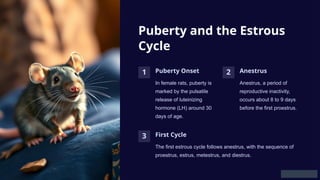
Puberty and the Estrous
Cycle
1 Puberty Onset
In female rats, puberty is
marked by the pulsatile
release of luteinizing
hormone (LH) around 30
days of age.
2 Anestrus
Anestrus, a period of
reproductive inactivity,
occurs about 8 to 9 days
before the first proestrus.
3 First Cycle
The first estrous cycle follows anestrus, with the sequence of
proestrus, estrus, metestrus, and diestrus.
Comparing the Estrous and Menstrual Cycles
Estrous Cycle
The estrous cycle in rats is similar to the human menstrual
cycle, but with some key differences. The estrous cycle is
characterized by four phases: proestrus, estrus, metestrus,
and diestrus.
Menstrual Cycle
The human menstrual cycle consists of three phases:
menstrual, proliferative (follicular), and secretory (luteal).
The ovulatory phase occurs between the proliferative and
secretory phases.
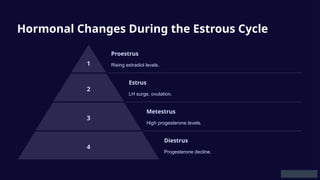
Hormonal Changes During the Estrous Cycle
1
Proestrus
Rising estradiol levels.
2
Estrus
LH surge, ovulation.
3
Metestrus
High progesterone levels.
4
Diestrus
Progesterone decline.
Historical Perspective on "Estrus"
The term "estrus" originates from the Greek word "oistros," meaning "sexual season," "gadfly,"
"frenzy," "sting," or "madness." This term was first used by Heape, highlighting the intense and
cyclical nature of reproductive behavior in animals.
Techniques for Estrous Cycle Assessment
Visual Assessment
Non-invasive, simple, and fast method, but observer-
dependent.
Vaginal Cytology
Widely accepted, accurate, and reliable, but can be tedious
and time-consuming.
Histological Examination
Specific and reliable, but not suitable for live animals.
Other Techniques
Vaginal wall impedance and urine biochemistry are also used,
but less common.
Conclusion: Choosing the
Right Technique
Various techniques exist for determining the phases of the estrous cycle.
Vaginal smear/cytology remains the gold standard, but other methods can
be used depending on the specific research needs. Continuous
improvement of these techniques is essential for enhancing their reliability
and specificity.

Estrous Cycle in Rats: A Physiological aspect

  • 1.
    The Estrous Cyclein Rats The estrous cycle is a crucial indicator of reproductive health in female rodents. It mirrors the human menstrual cycle, providing insights into the functioning of the hypothalamic-pituitary-ovarian axis and the overall reproductive status. by VAIDEHI VADHVANA Ph.D. Scholar
  • 2.
    Understanding the EstrousCycle Phases of the Cycle The estrous cycle in rats consists of four distinct phases: proestrus, estrus, metestrus, and diestrus. Each phase is characterized by specific hormonal changes and cellular activity in the reproductive organs. Duration of Phases Phase Rat (hours) Mice (hours) Proestrus 14 < 24 Estrus 24-48 12-48 Metestrus 6-8 8-24 Diestrus 48-72 48-72
  • 3.
    Puberty and theEstrous Cycle 1 Puberty Onset In female rats, puberty is marked by the pulsatile release of luteinizing hormone (LH) around 30 days of age. 2 Anestrus Anestrus, a period of reproductive inactivity, occurs about 8 to 9 days before the first proestrus. 3 First Cycle The first estrous cycle follows anestrus, with the sequence of proestrus, estrus, metestrus, and diestrus.
  • 4.
    Comparing the Estrousand Menstrual Cycles Estrous Cycle The estrous cycle in rats is similar to the human menstrual cycle, but with some key differences. The estrous cycle is characterized by four phases: proestrus, estrus, metestrus, and diestrus. Menstrual Cycle The human menstrual cycle consists of three phases: menstrual, proliferative (follicular), and secretory (luteal). The ovulatory phase occurs between the proliferative and secretory phases.
  • 5.
    Hormonal Changes Duringthe Estrous Cycle 1 Proestrus Rising estradiol levels. 2 Estrus LH surge, ovulation. 3 Metestrus High progesterone levels. 4 Diestrus Progesterone decline.
  • 6.
    Historical Perspective on"Estrus" The term "estrus" originates from the Greek word "oistros," meaning "sexual season," "gadfly," "frenzy," "sting," or "madness." This term was first used by Heape, highlighting the intense and cyclical nature of reproductive behavior in animals.
  • 7.
    Techniques for EstrousCycle Assessment Visual Assessment Non-invasive, simple, and fast method, but observer- dependent. Vaginal Cytology Widely accepted, accurate, and reliable, but can be tedious and time-consuming. Histological Examination Specific and reliable, but not suitable for live animals. Other Techniques Vaginal wall impedance and urine biochemistry are also used, but less common.
  • 8.
    Conclusion: Choosing the RightTechnique Various techniques exist for determining the phases of the estrous cycle. Vaginal smear/cytology remains the gold standard, but other methods can be used depending on the specific research needs. Continuous improvement of these techniques is essential for enhancing their reliability and specificity.