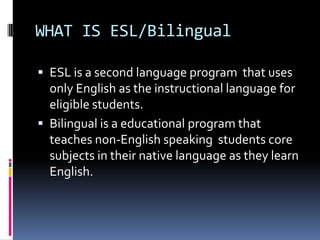
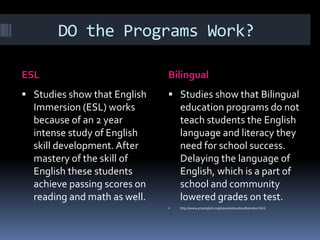
ESL programs teach students using only English to help them achieve English proficiency and academic mastery, while bilingual programs teach subjects in a student's native language as they learn English. Studies show ESL works well through intensive English study, while bilingual education may delay English learning and lower test scores. Both programs must meet federal standards, and states can choose specific programs. Qualification for ESL is determined through home language surveys and English proficiency testing.






![[TEFL] Language Teaching Methods/ Approaches](https://cdn.slidesharecdn.com/ss_thumbnails/tefl1-150402185109-conversion-gate01-thumbnail.jpg?width=640&height=640&fit=bounds)


