EpiHackTM Vietnam 2017
InSTEDD iLab Southeast Asia
October 2017 - Serena Resort and Hotel, Hoa Binh Province, Vietnam
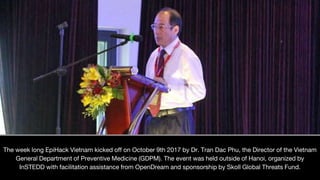
The week long EpiHack Vietnam kicked off on October 9th 2017 by Dr. Tran Dac Phu, the Director of the Vietnam
General Department of Preventive Medicine (GDPM). The event was held outside of Hanoi, organized by
InSTEDD with facilitation assistance from OpenDream and sponsorship by Skoll Global Threats Fund.
Theme of EpiHack Vietnam:
“General Population Participation in Disease Surveillance”
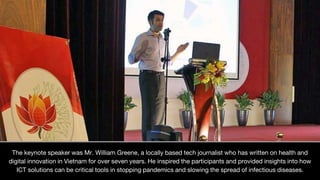
The keynote speaker was Mr. William Greene, a locally based tech journalist who has written on health and
digital innovation in Vietnam for over seven years. He inspired the participants and provided insights into how
ICT solutions can be critical tools in stopping pandemics and slowing the spread of infectious diseases.
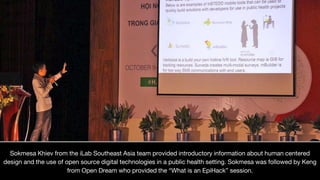
Sokmesa Khiev from the iLab Southeast Asia team provided introductory information about human centered
design and the use of open source digital technologies in a public health setting. Sokmesa was followed by Keng
from Open Dream who provided the “What is an EpiHack” session.
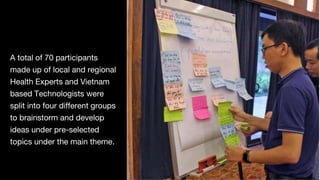
A total of 70 participants
made up of local and regional
Health Experts and Vietnam
based Technologists were
split into four different groups
to brainstorm and develop
ideas under pre-selected
topics under the main theme.
Four Prototyping Areas Emerged in the EpiHack:
1. Making Data Actionable
Data Visualization and an Analysis System
2. Encouraging Early Detection
Public Hotline for Reporting Outbreaks
3. Population Engagement
Developing a Smartphone Application for Reporting
4. Curating and Cross-checking Information
Using Social Media to Screen for Outbreaks
Group Facilitators came from GDPM, iLab SEA, iLab Latam, Open Dream and ADB
The EpiHack Vietnam benefitted from strong local technology engagement.
Ministry of Health Vietnam Participants came from the local to central level of the reporting systems, including
Provincial Preventive Medicine Center, Commune and District level. During the event they offered rapid feedback
of prototype ideas to improve and prepare them for real world usage.
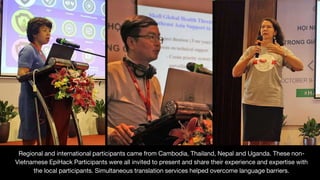
Regional and international participants came from Cambodia, Thailand, Nepal and Uganda. These non-
Vietnamese EpiHack Participants were all invited to present and share their experience and expertise with
the local participants. Simultaneous translation services helped overcome language barriers.
Master of ceremony for the upcoming EpiHack Uganda event, Dr. Eddie Mookyo, was an active observer,
participant, and presenter during the event. He walked away with a deep understanding of the EpiHack approach.
On the final day of the EpiHack the four groups present their prototypes to
Guests of Honor and to members of the General Department of Preventive
Medicine.
Prototype 1: Data Visualization and an Analysis System
Prototype 2: 115 Hotline for Reporting Outbreaks
Prototype 3: Smartphone Application
Prototype 4: Social Media Screening for Disease Outbreaks
EpiHack Vietnam 2017 delivered a unique opportunity for local government health
officials and technologists to work intensively together, share knowledge and hack for
health on solutions to stop pandemics.
Special thanks to
For more information about
InSTEDD and the digital disease
surveillance work in Southeast
Asia and worldwide please visit:
www.instedd.org
/instedd /iLabSEA /instedd

Epihack Vietnam 2017

  • 1.
    EpiHackTM Vietnam 2017 InSTEDDiLab Southeast Asia October 2017 - Serena Resort and Hotel, Hoa Binh Province, Vietnam
  • 2.
    The week longEpiHack Vietnam kicked off on October 9th 2017 by Dr. Tran Dac Phu, the Director of the Vietnam General Department of Preventive Medicine (GDPM). The event was held outside of Hanoi, organized by InSTEDD with facilitation assistance from OpenDream and sponsorship by Skoll Global Threats Fund.
  • 3.
    Theme of EpiHackVietnam: “General Population Participation in Disease Surveillance”
  • 4.
    The keynote speakerwas Mr. William Greene, a locally based tech journalist who has written on health and digital innovation in Vietnam for over seven years. He inspired the participants and provided insights into how ICT solutions can be critical tools in stopping pandemics and slowing the spread of infectious diseases.
  • 5.
    Sokmesa Khiev fromthe iLab Southeast Asia team provided introductory information about human centered design and the use of open source digital technologies in a public health setting. Sokmesa was followed by Keng from Open Dream who provided the “What is an EpiHack” session.
  • 6.
    A total of70 participants made up of local and regional Health Experts and Vietnam based Technologists were split into four different groups to brainstorm and develop ideas under pre-selected topics under the main theme.
  • 7.
    Four Prototyping AreasEmerged in the EpiHack: 1. Making Data Actionable Data Visualization and an Analysis System 2. Encouraging Early Detection Public Hotline for Reporting Outbreaks 3. Population Engagement Developing a Smartphone Application for Reporting 4. Curating and Cross-checking Information Using Social Media to Screen for Outbreaks
  • 8.
    Group Facilitators camefrom GDPM, iLab SEA, iLab Latam, Open Dream and ADB
  • 9.
    The EpiHack Vietnambenefitted from strong local technology engagement.
  • 11.
    Ministry of HealthVietnam Participants came from the local to central level of the reporting systems, including Provincial Preventive Medicine Center, Commune and District level. During the event they offered rapid feedback of prototype ideas to improve and prepare them for real world usage.
  • 12.
    Regional and internationalparticipants came from Cambodia, Thailand, Nepal and Uganda. These non- Vietnamese EpiHack Participants were all invited to present and share their experience and expertise with the local participants. Simultaneous translation services helped overcome language barriers.
  • 13.
    Master of ceremonyfor the upcoming EpiHack Uganda event, Dr. Eddie Mookyo, was an active observer, participant, and presenter during the event. He walked away with a deep understanding of the EpiHack approach.
  • 14.
    On the finalday of the EpiHack the four groups present their prototypes to Guests of Honor and to members of the General Department of Preventive Medicine.
  • 15.
    Prototype 1: DataVisualization and an Analysis System
  • 16.
    Prototype 2: 115Hotline for Reporting Outbreaks
  • 17.
  • 18.
    Prototype 4: SocialMedia Screening for Disease Outbreaks
  • 19.
    EpiHack Vietnam 2017delivered a unique opportunity for local government health officials and technologists to work intensively together, share knowledge and hack for health on solutions to stop pandemics.
  • 20.
  • 21.
    For more informationabout InSTEDD and the digital disease surveillance work in Southeast Asia and worldwide please visit: www.instedd.org /instedd /iLabSEA /instedd