Download to read offline


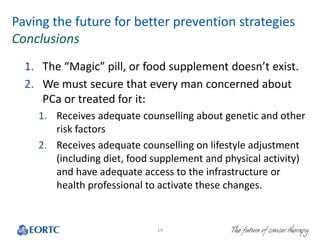


The document discusses the prevention of prostate cancer, highlighting the limitations of current approaches such as hormonal treatments and chemoprevention strategies, which have shown limited effectiveness. It emphasizes the need for targeted population identification, lifestyle adjustments, and personalized counseling on genetic and other risk factors. Furthermore, it stresses the urgency of implementing lifestyle recommendations and creating support networks for those affected by prostate cancer.


![Cancers [Prostate, Liver & Colon] Prevention and Control in Primary Healthcar...](https://cdn.slidesharecdn.com/ss_thumbnails/cancers-prostatelivercolonbyidokokoa-170924025106-thumbnail.jpg?width=640&height=640&fit=bounds)


