EOC computer review part 2
READ AND LISTEN CAREFULLY to everything!!You should have two windows open at this time.  One for the presentation and one for the questions on the form. Click the link below to get the form to open. https://spreadsheets.google.com/viewform?formkey=dE1XbExZTGNnX01NV0tEc0hBUE13eFE6MQ
Orange and yellow – tell you when to pause Or when do click on a linkDo activity Or answer a question.
Mitosis - MeiosisCell cycle has 7 parts IPMATC – interphase, prophase, metaphase, anaphase, telophase, cytokenisis. Interphase has three partsG1 – S phase – G2
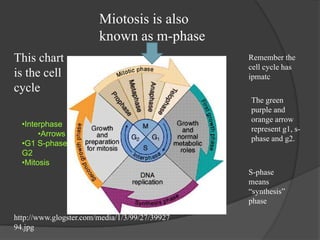
Miotosis is also known as m-phaseThis chart is the cell cycleRemember the cell cycle has ipmatcThe green purple and orange arrow represent g1, s-phase and g2.  Interphase
Arrows
G1 S-phase G2
MitosisS-phase means “synthesis” phasehttp://www.glogster.com/media/1/3/99/27/3992794.jpg
PAUSE – answer the following questions on the form.What happens during interphase?Label and write what happens during the three parts of interphase.
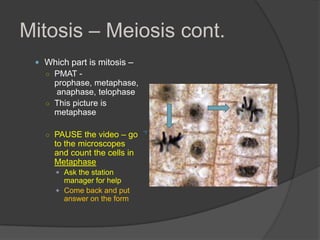
Mitosis – Meiosis cont.Which part is mitosis – PMAT - prophase, metaphase, anaphase, telophaseThis picture is metaphasePAUSE the video – go to the microscopes and count the cells in MetaphaseAsk the station manager for helpCome back and put answer on the form
Watch the animation by clicking herehttp://highered.mcgraw-hill.com/sites/0072495855/student_view0/chapter2/animation__mitosis_and_cytokinesis.htmlAfter watching vid come back to the program
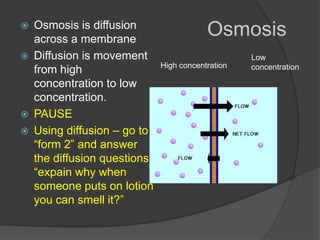
OsmosisOsmosis is diffusion across a membraneDiffusion is movement from high concentration to low concentration.PAUSE Using diffusion – go to “form 2” and answer the diffusion questions “expain why when someone puts on lotion you can smell it?”Low concentrationHigh concentration
With osmosis, hypertonic means there are more solutes (solids) outside the membrane. Water goes where the solutes are. What happens to the cell when it is put in a hypertonic solution?PAUSE – go back and look at microscope A and microscope B.Both microscopes have a purple onion. Which onion is in HYPERTONIC SOLUTION?  A or B? How do you know?  Answer on form 2
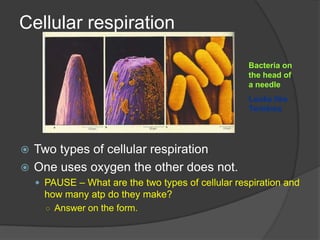
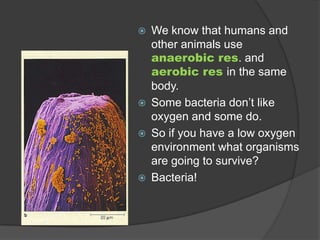
Cellular respirationBacteria on the head of a needleLooks like TwinkiesTwo types of cellular respirationOne uses oxygen the other does not.PAUSE – What are the two types of cellular respiration and how many atp do they make?Answer on the form.
We know that humans and other animals use anaerobic res. and aerobic res in the same body.Some bacteria don’t like oxygen and some do.So if you have a low oxygen environment what organisms are going to survive? Bacteria!
PAUSE.Go to the form and answer the question, “what organisms can live in a low oxygen environment.”What organisms need an high oxygen environment.
Biodiversity 1 and invasive speciesThe biggest reason different organisms die out (go extinct) is because of habitat destruction.Ex. Clear cuttingLand development Building homes and businessesFarmingWhen a habitat is destroyed the organisms die and biodiversity goes down.
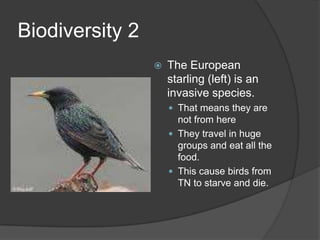
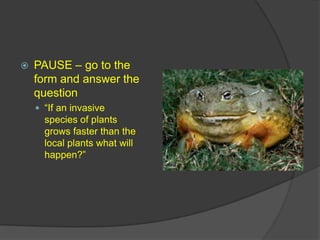
Biodiversity 2The European starling (left) is an invasive species.That means they are not from hereThey travel in huge groups and eat all the food.  This cause birds from TN to starve and die.
PAUSE – go to the form and answer the question“If an invasive species of plants grows faster than the local plants what will happen?”
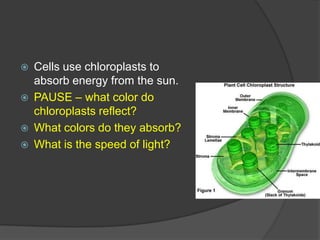
Cells and organellesPAUSE – go to this link and study the different organelles listed below.http://upper.usm.k12.wi.us/academics/faculty/rheun/organelle.htmlWhile at that site study the function of…NucleusMitochindriaGolgi apparatusRough ERSmooth ERRibosomesChloroplastsCell membrane
Play the game below until you score a 90% or higher – must show Mr. Taylor your scorehttps://docs.google.com/?tab=mo&authuser=0#all
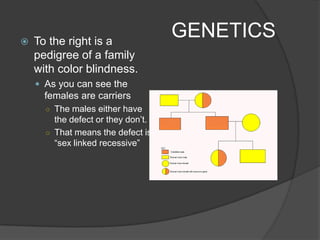
GENETICSTo the right is a pedigree of a family with color blindness.As you can see the females are carriersThe males either have the defect or they don’t.That means the defect is “sex linked recessive”
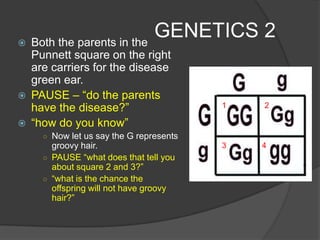
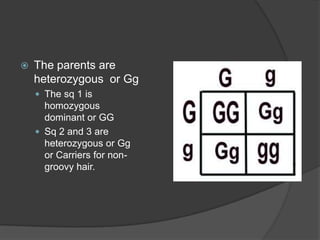
GENETICS 2Both the parents in the Punnett square on the right are carriers for the disease green ear.PAUSE – “do the parents have the disease?”“how do you know”Now let us say the G represents groovy hair.  PAUSE “what does that tell you about square 2 and 3?”“what is the chance the offspring will not have groovy hair?”11213141

Eoc computer review part 2

  • 1.
  • 2.
    READ AND LISTENCAREFULLY to everything!!You should have two windows open at this time. One for the presentation and one for the questions on the form. Click the link below to get the form to open. https://spreadsheets.google.com/viewform?formkey=dE1XbExZTGNnX01NV0tEc0hBUE13eFE6MQ
  • 3.
    Orange and yellow– tell you when to pause Or when do click on a linkDo activity Or answer a question.
  • 4.
    Mitosis - MeiosisCellcycle has 7 parts IPMATC – interphase, prophase, metaphase, anaphase, telophase, cytokenisis. Interphase has three partsG1 – S phase – G2
  • 5.
    Miotosis is alsoknown as m-phaseThis chart is the cell cycleRemember the cell cycle has ipmatcThe green purple and orange arrow represent g1, s-phase and g2. Interphase
  • 6.
  • 7.
  • 8.
    MitosisS-phase means “synthesis”phasehttp://www.glogster.com/media/1/3/99/27/3992794.jpg
  • 9.
    PAUSE – answerthe following questions on the form.What happens during interphase?Label and write what happens during the three parts of interphase.
  • 10.
    Mitosis – Meiosiscont.Which part is mitosis – PMAT - prophase, metaphase, anaphase, telophaseThis picture is metaphasePAUSE the video – go to the microscopes and count the cells in MetaphaseAsk the station manager for helpCome back and put answer on the form
  • 11.
    Watch the animationby clicking herehttp://highered.mcgraw-hill.com/sites/0072495855/student_view0/chapter2/animation__mitosis_and_cytokinesis.htmlAfter watching vid come back to the program
  • 12.
    OsmosisOsmosis is diffusionacross a membraneDiffusion is movement from high concentration to low concentration.PAUSE Using diffusion – go to “form 2” and answer the diffusion questions “expain why when someone puts on lotion you can smell it?”Low concentrationHigh concentration
  • 13.
    With osmosis, hypertonicmeans there are more solutes (solids) outside the membrane. Water goes where the solutes are. What happens to the cell when it is put in a hypertonic solution?PAUSE – go back and look at microscope A and microscope B.Both microscopes have a purple onion. Which onion is in HYPERTONIC SOLUTION? A or B? How do you know? Answer on form 2
  • 14.
    Cellular respirationBacteria onthe head of a needleLooks like TwinkiesTwo types of cellular respirationOne uses oxygen the other does not.PAUSE – What are the two types of cellular respiration and how many atp do they make?Answer on the form.
  • 15.
    We know thathumans and other animals use anaerobic res. and aerobic res in the same body.Some bacteria don’t like oxygen and some do.So if you have a low oxygen environment what organisms are going to survive? Bacteria!
  • 16.
    PAUSE.Go to theform and answer the question, “what organisms can live in a low oxygen environment.”What organisms need an high oxygen environment.
  • 17.
    Biodiversity 1 andinvasive speciesThe biggest reason different organisms die out (go extinct) is because of habitat destruction.Ex. Clear cuttingLand development Building homes and businessesFarmingWhen a habitat is destroyed the organisms die and biodiversity goes down.
  • 18.
    Biodiversity 2The Europeanstarling (left) is an invasive species.That means they are not from hereThey travel in huge groups and eat all the food. This cause birds from TN to starve and die.
  • 19.
    PAUSE – goto the form and answer the question“If an invasive species of plants grows faster than the local plants what will happen?”
  • 20.
    Cells and organellesPAUSE– go to this link and study the different organelles listed below.http://upper.usm.k12.wi.us/academics/faculty/rheun/organelle.htmlWhile at that site study the function of…NucleusMitochindriaGolgi apparatusRough ERSmooth ERRibosomesChloroplastsCell membrane
  • 21.
    Play the gamebelow until you score a 90% or higher – must show Mr. Taylor your scorehttps://docs.google.com/?tab=mo&authuser=0#all
  • 22.
    GENETICSTo the rightis a pedigree of a family with color blindness.As you can see the females are carriersThe males either have the defect or they don’t.That means the defect is “sex linked recessive”
  • 23.
    GENETICS 2Both theparents in the Punnett square on the right are carriers for the disease green ear.PAUSE – “do the parents have the disease?”“how do you know”Now let us say the G represents groovy hair. PAUSE “what does that tell you about square 2 and 3?”“what is the chance the offspring will not have groovy hair?”11213141