Content
1. Chemistry
2. Classification
3.Mode of action, Kinetics (Michaelis Menten Equation and some
modifications),
4. Inhibition, Activation, Specificity, Allosteric enzymes
5. Factors affecting the rate of an enzyme-catalyzed reaction
6. Biological and pharmaceutical importance
7. Mechanism of action of some important enzymes (Chymotrypsin,
Ribonuclease).
Enzymes are anotherimportant group of biomolecules synthesized
by the living cells.
General properties:
They are catalysts of biological systems (hence are called as
biocatalysts), thermolabile and protein in nature.
5.
Protein Nature ofEnzymes:
In general, all the enzymes are protein in nature with large mol. wt.
Exception: Ribozymes which are few RNA molecules with
enzymatic activity
Few enzymes are simple proteins while some are conjugated
proteins.
6.
Enzymes with conjugatedproteins:
In such enzymes the non-protein part is called prosthetic group or
coenzyme and the protein part is called as apoenzyme. The complete
structure of apoenzyme and prosthetic group is called as holoenzyme.
Holoenzyme = Apoenzyme (Protein part) + Coenzyme (Prosthetic
group)
For enzymes that require nonprotein components, those components
must be present for the enzyme to function in catalysis.
7.
If the nonproteinmoiety is a metal ion, such as zinc (Zn 2+ ) or iron
(Fe 2+ ), it is called a cofactor.
If it is a small organic molecule, it is termed a coenzyme.
Coenzymes or co-substrates only transiently associate with the
enzyme and dissociate from the enzyme in an altered state (for
example, NAD+ ).
8.
If the coenzymeis permanently associated with the enzyme and
returned to its original form, it is called a prosthetic group (for
example, FAD).
Coenzymes commonly are derived from vitamins. For example,
NAD+ contains niacin, and FAD contains riboflavin.
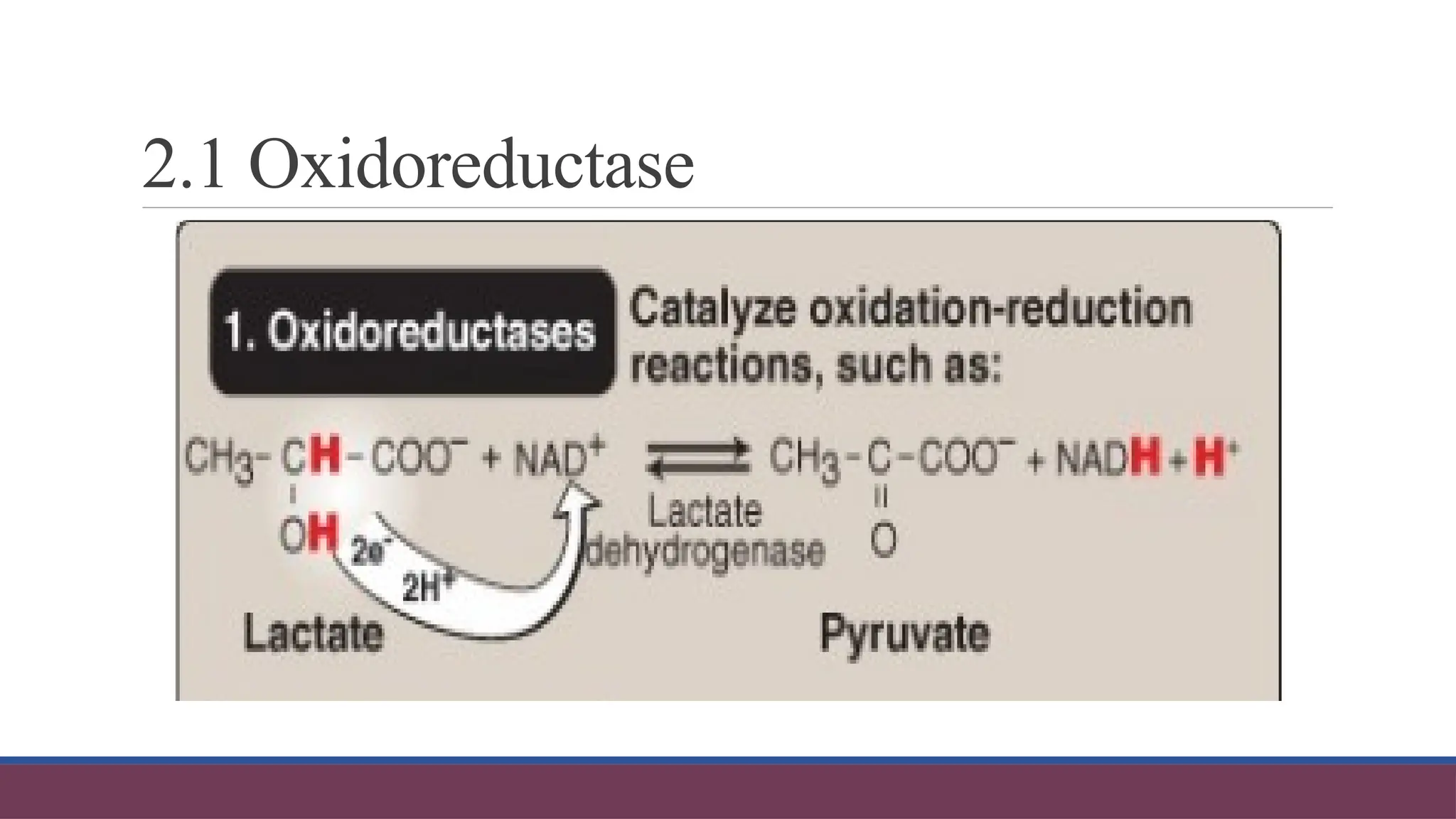
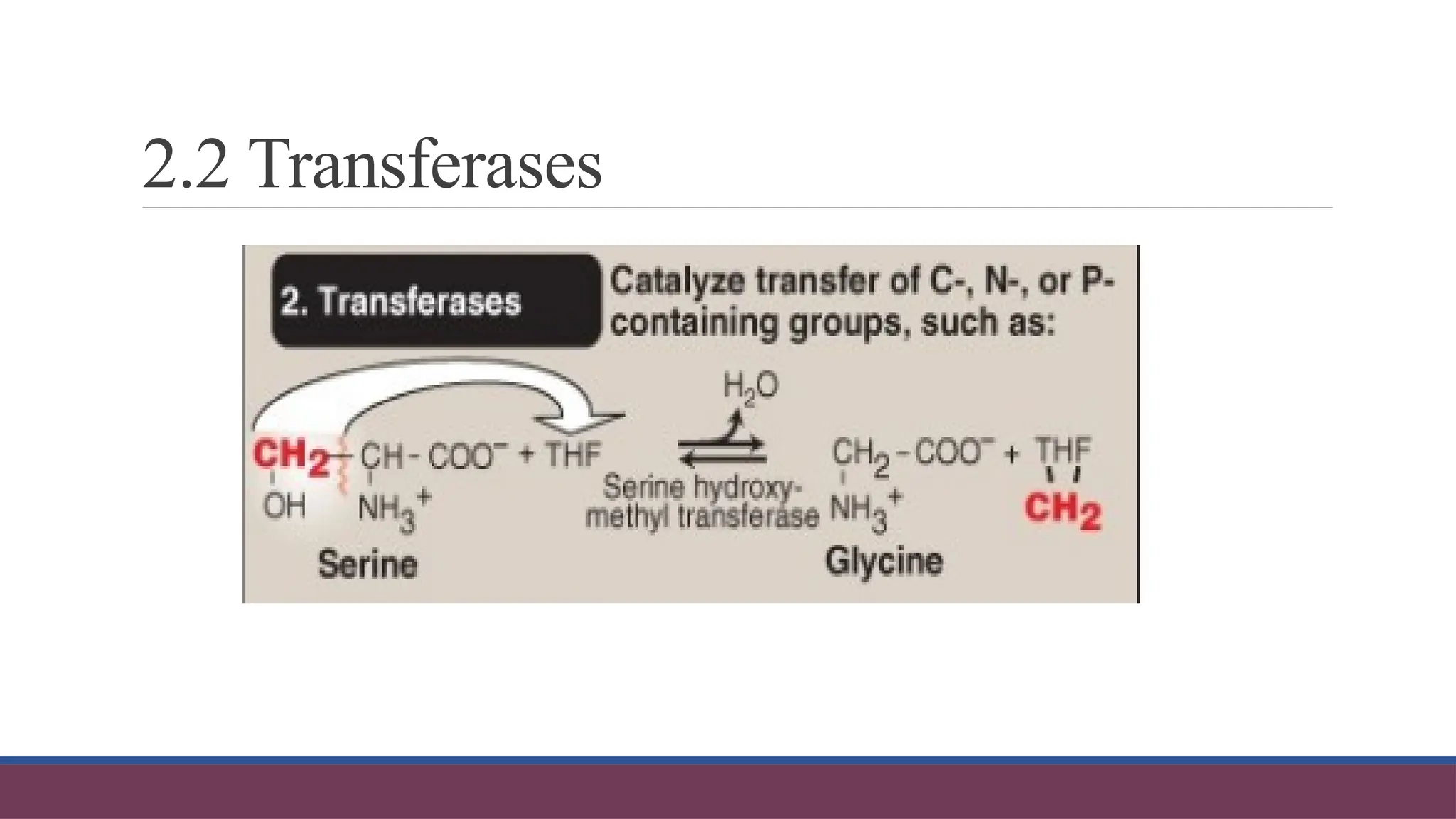
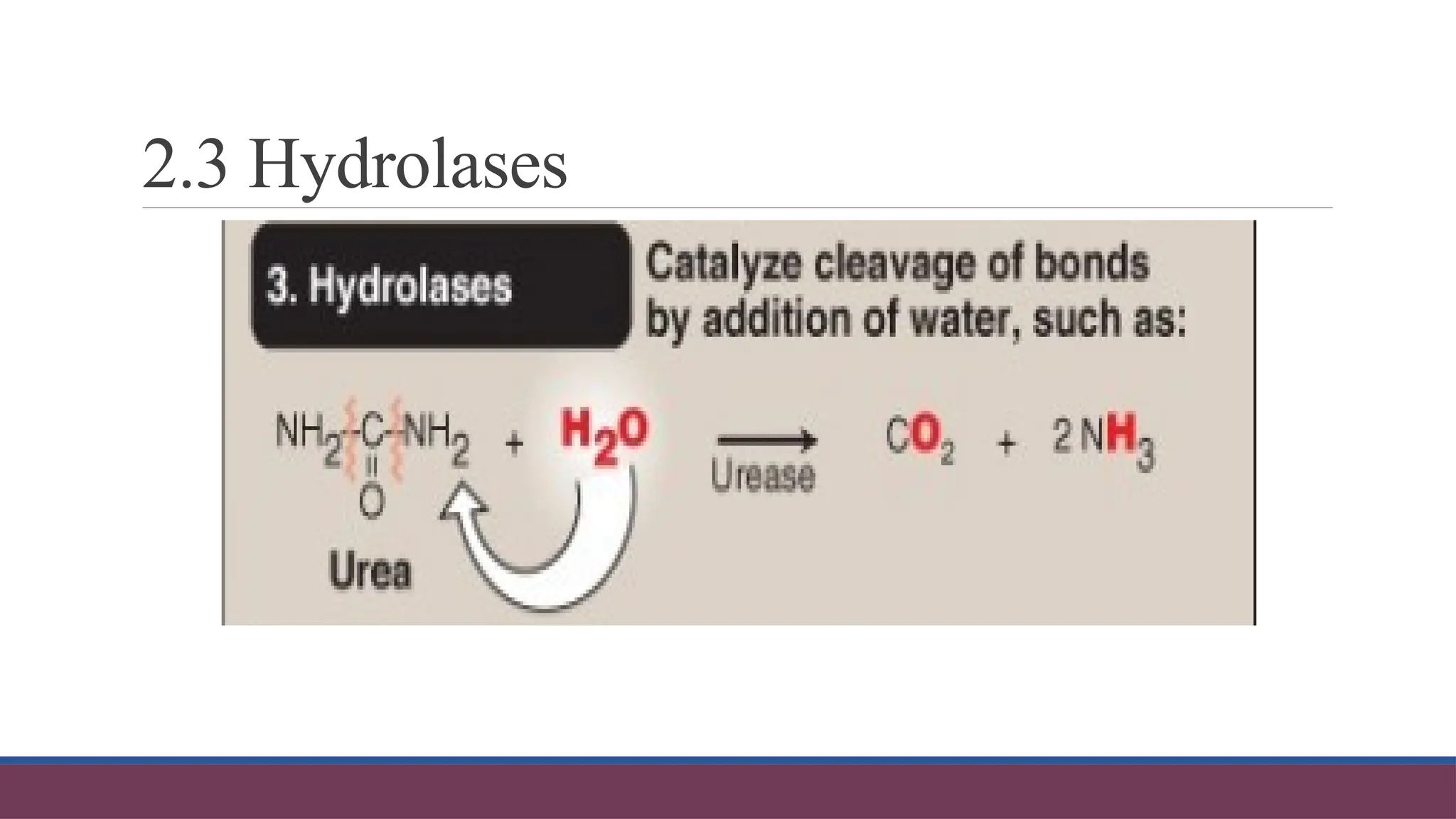
In order tohave a uniformity and unambiguity in identification of
enzymes, International Union of Biochemistry (IUB) adopted a
nomenclature system based on chemical reaction type and reaction
mechanism.
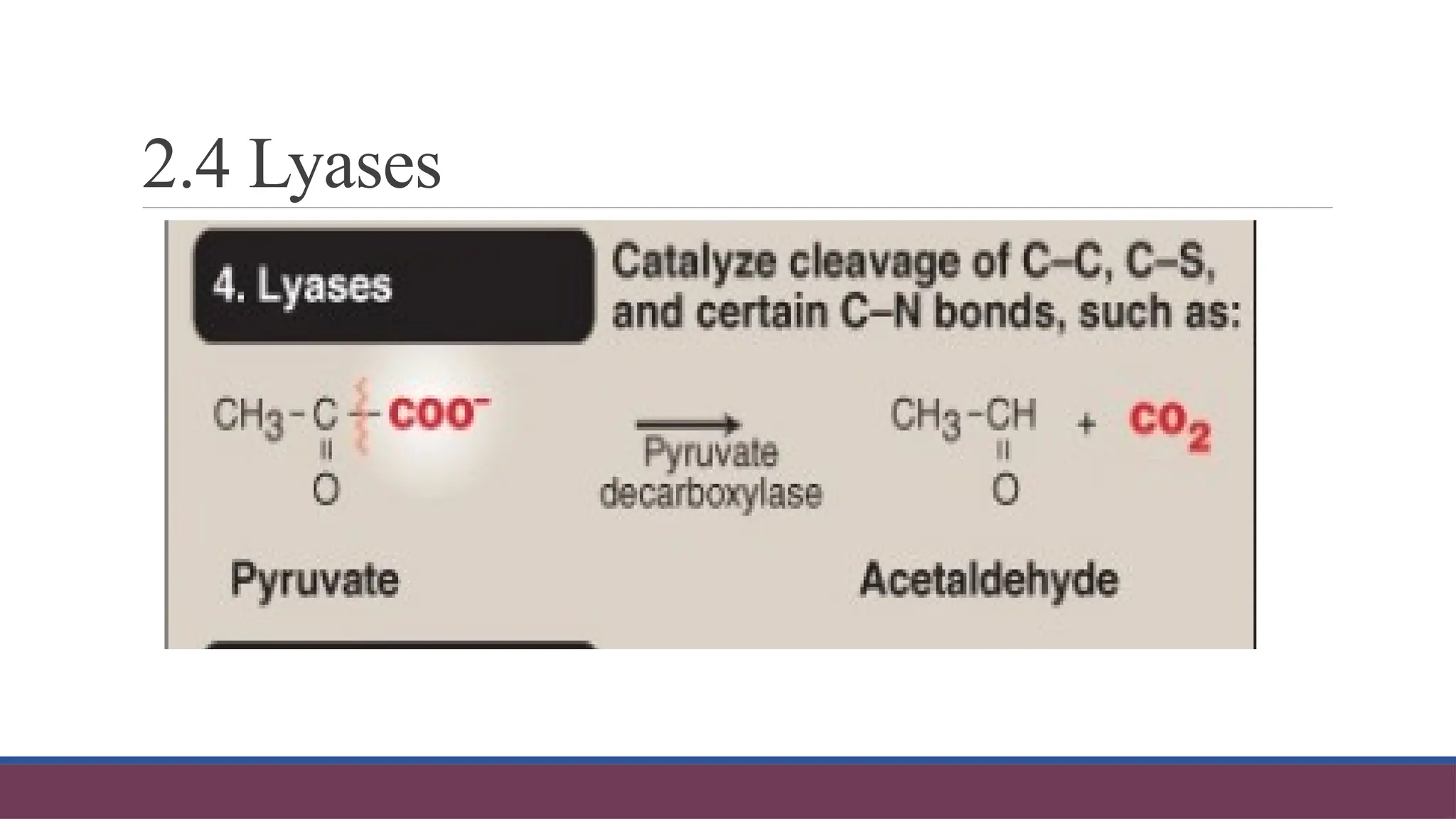
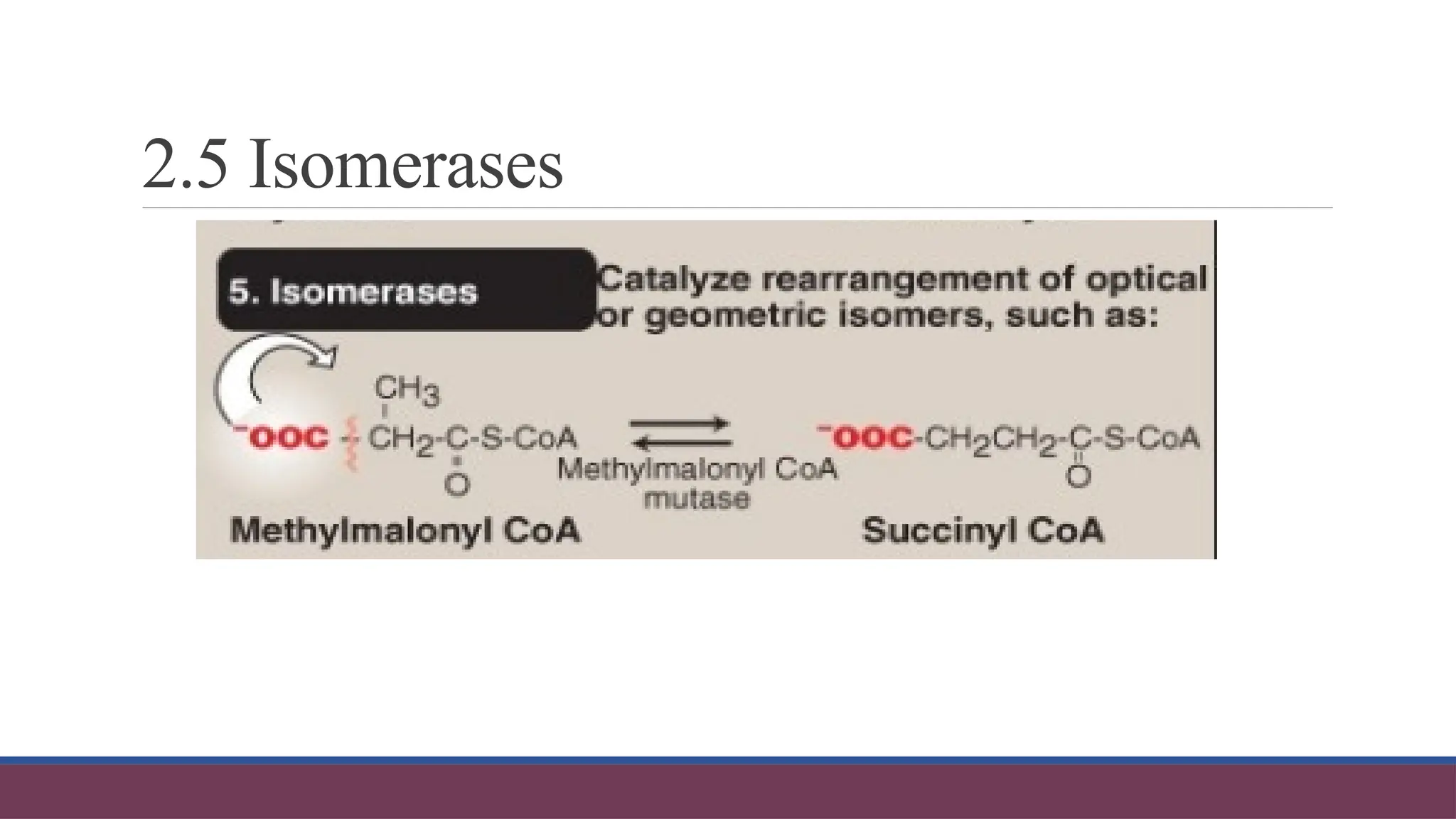
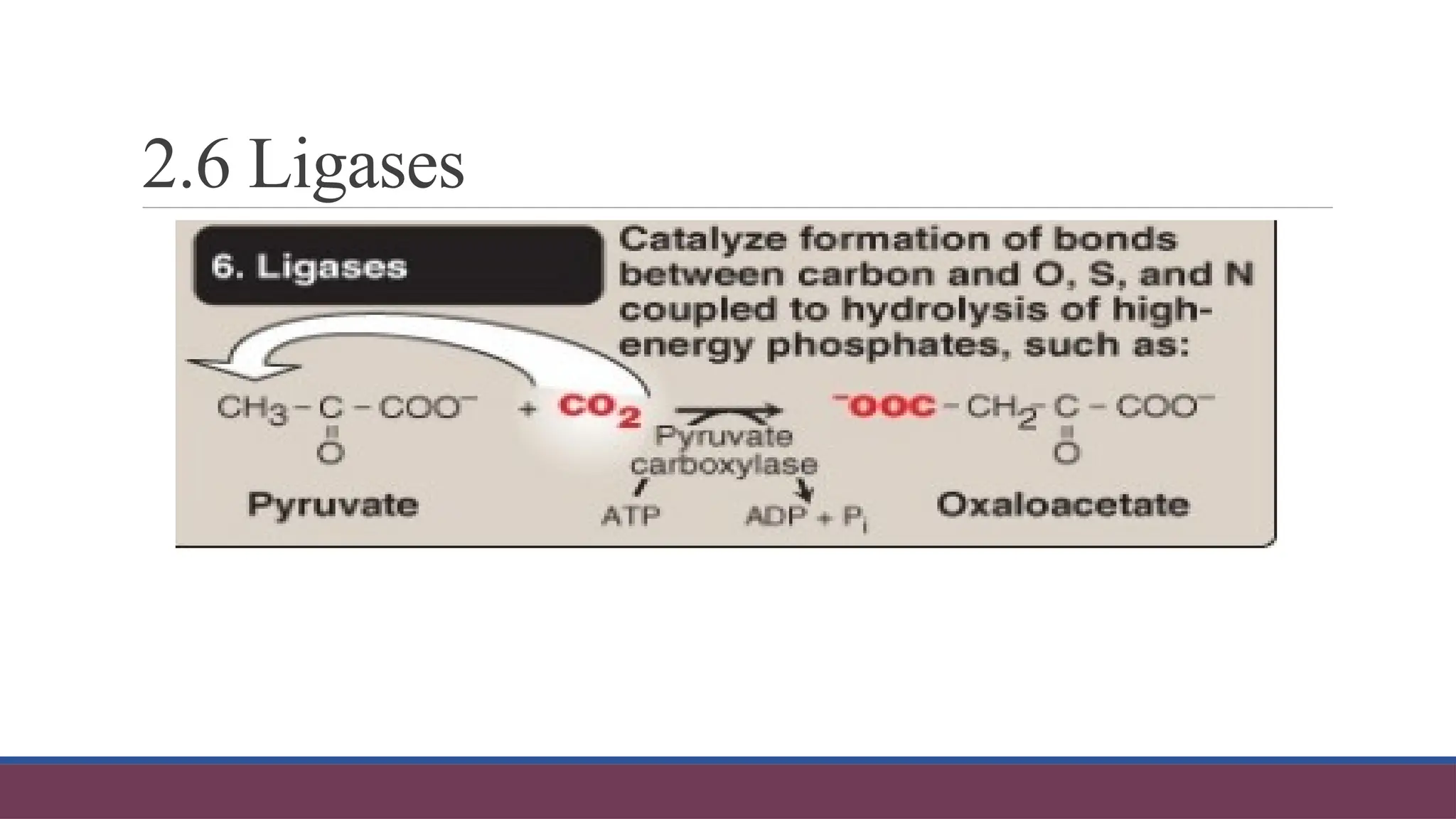
According to this system, enzymes are grouped in six main classes.
On the basisof peptide chain
Certain enzymes with only one polypeptide chain in their structure
are called as monomeric enzymes, e.g. ribonuclease.
Several enzymes possess more than one polypeptide chain and are
called as oligomeric enzymes, e.g. lactate dehydrogenase,
hexokinase, etc.
18.
When many differentenzyme catalysing reaction sites are located at
different sites of the same macromolecule, it is called as
multienzyme complex.
3.1 Catalytic Activityof Enzymes:
Enzymes have immense catalytic power and accelerate reactions at
least a million times, by reducing the energy of activation.
Before a chemical reaction can occur, the reacting molecules are
required to gain a minimum amount of energy, this is called the
energy of activation.
It can be decreased by increasing the temperature of the reaction
medium. But in human body which maintains a normal body
temperature fairly constant, it is achieved by enzymes.
21.
Virtually all chemicalreactions have an energy barrier separating the
reactants and the products. This barrier, called the activation energy
(Ea), is the energy difference between that of the reactants and a high-
energy intermediate, the transition state (T*), which is formed during
the conversion of reactant to product.
22.
3.2 Mechanism
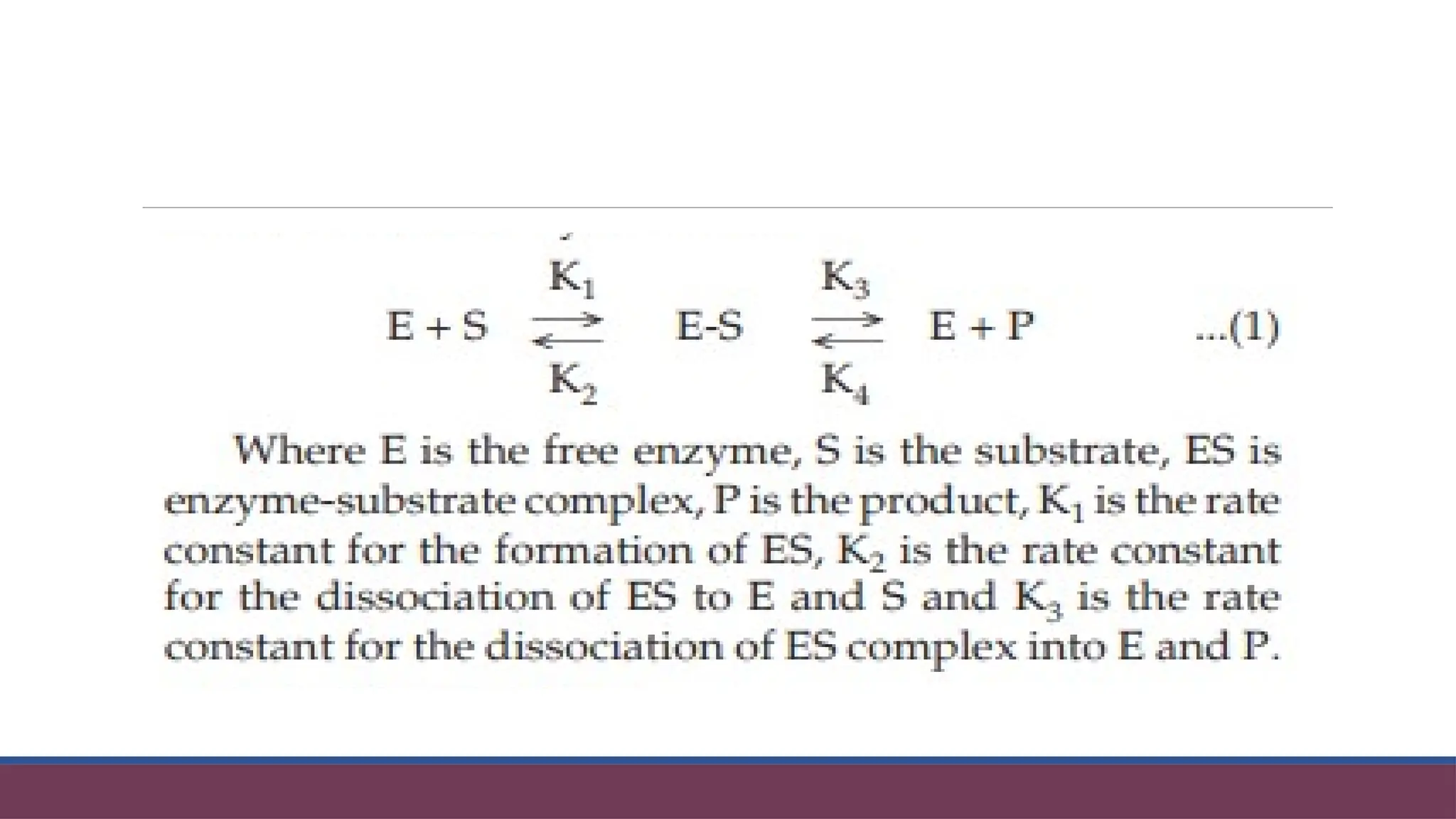
Michaelis andMenten have proposed a hypothesis for enzyme action,
which is most acceptable.
According to their hypothesis,
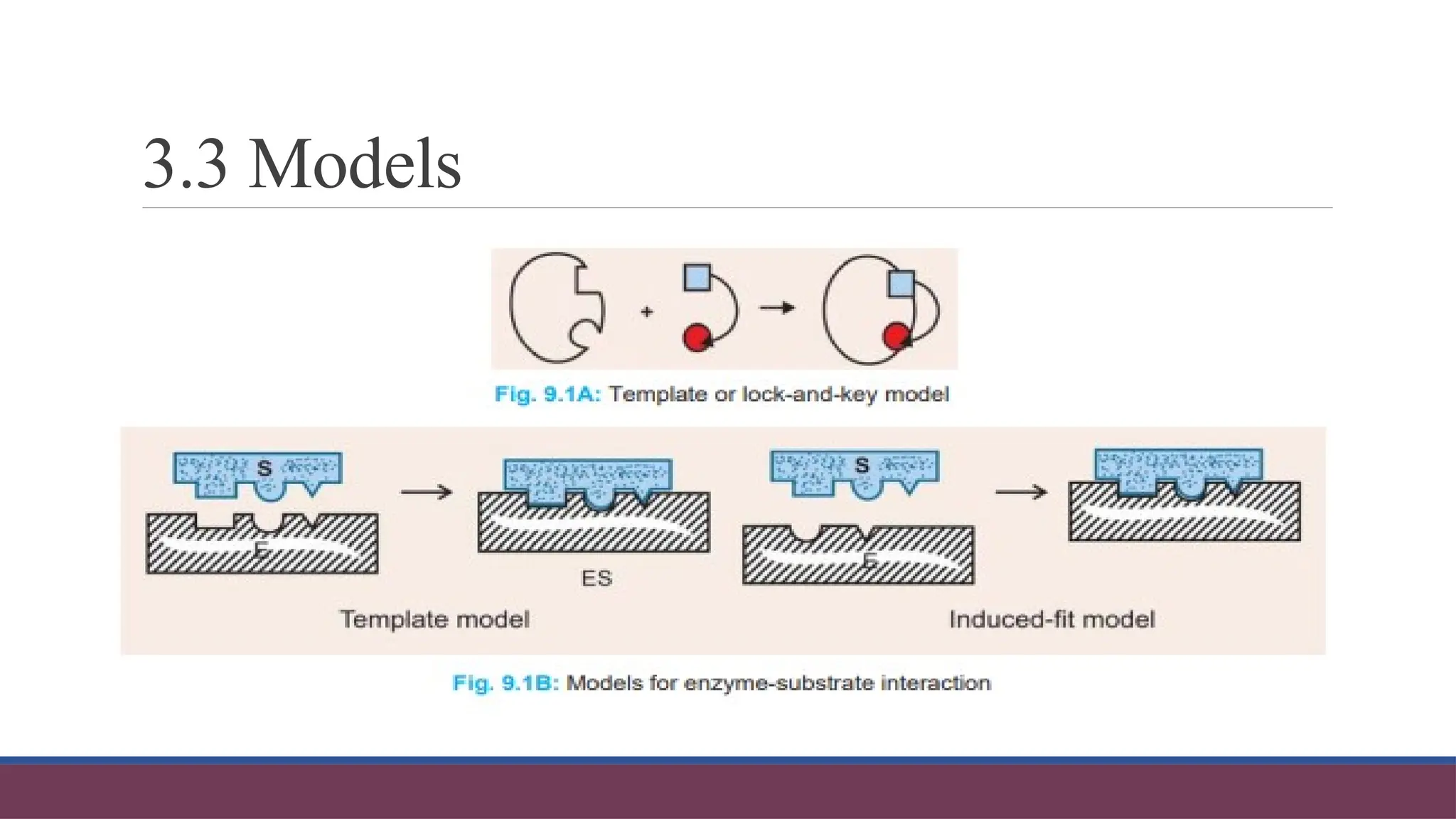
Step#1: The enzyme molecule (E) first combines with a substrate
molecule (S) to form an enzyme-substrate (ES) complex
Step#2: ES complex further dissociates to form product (P) and enzyme
(E) back.
Enzyme once dissociated from the complex is free to combine with
another molecule of substrate and form product in a similar way
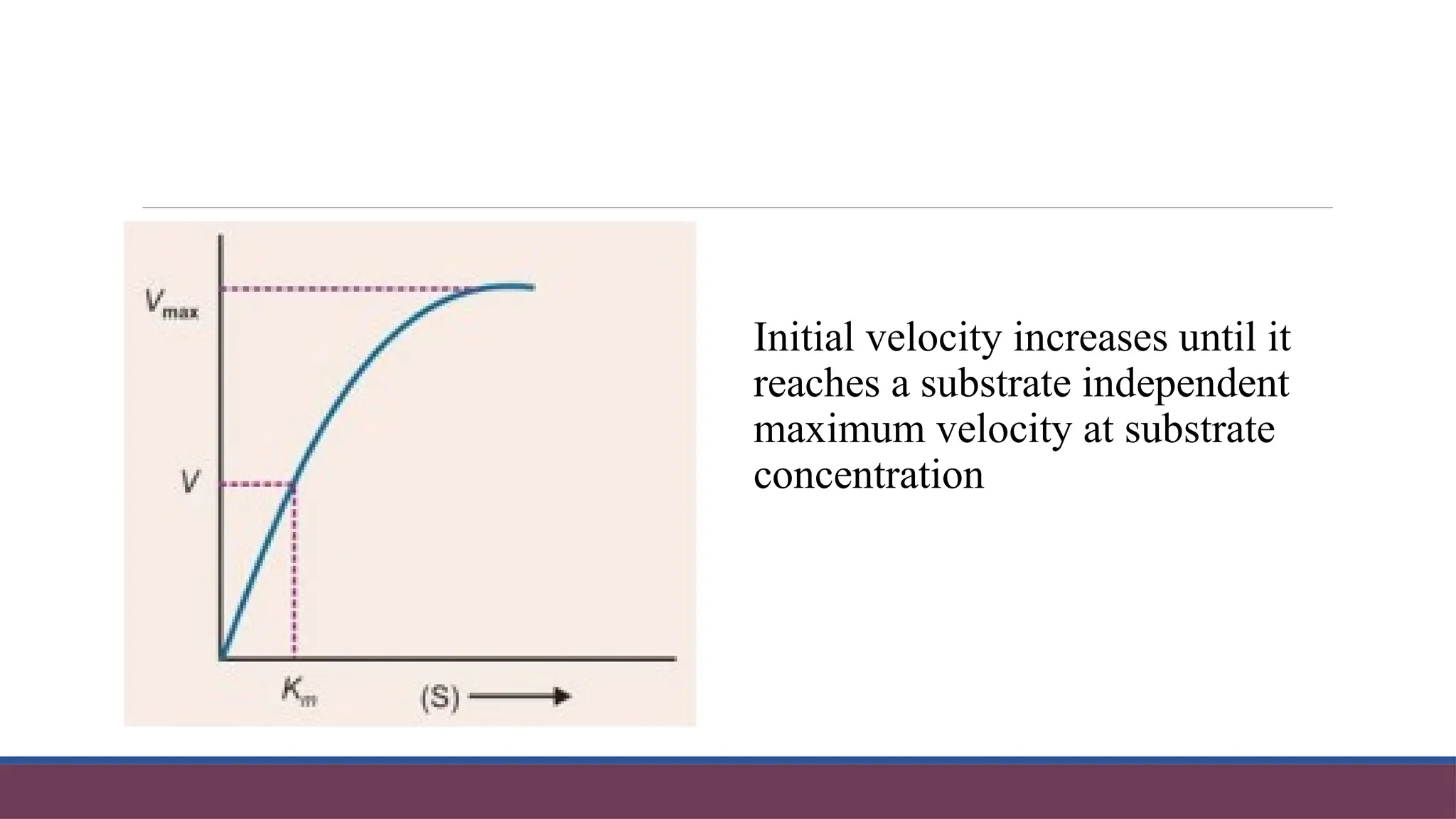
Initial velocity increasesuntil it
reaches a substrate independent
maximum velocity at substrate
concentration
27.
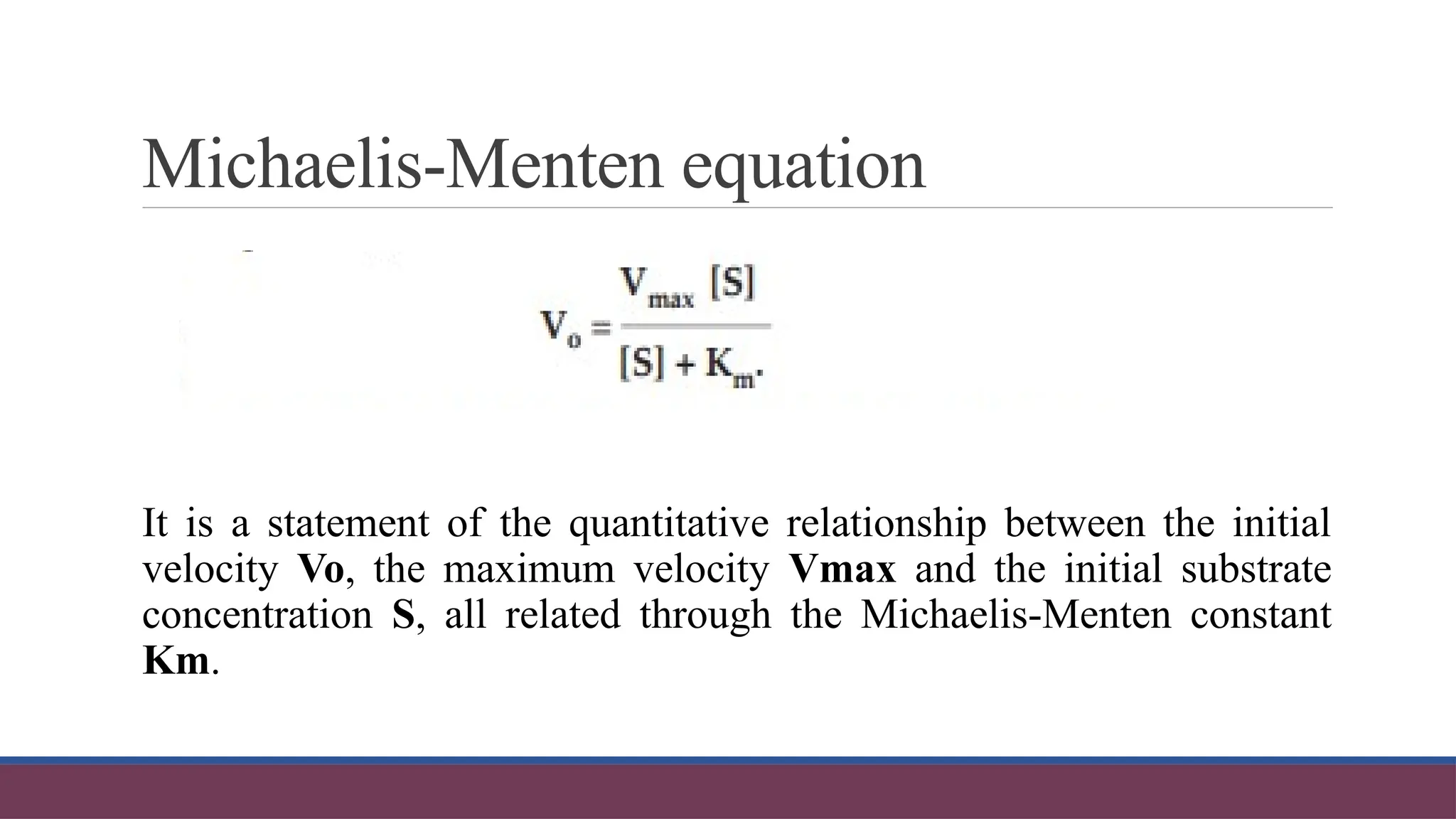
Michaelis-Menten equation
It isa statement of the quantitative relationship between the initial
velocity Vo, the maximum velocity Vmax and the initial substrate
concentration S, all related through the Michaelis-Menten constant
Km.
28.
The Michaelis-Menten equationcan be algebraically transformed into
equivalent equations that are useful in the practical determination of
Km and Vmax.
Therefore, Km is equal to substrate concentration at which the
velocity is half the maximum.
4.1 Inhibition
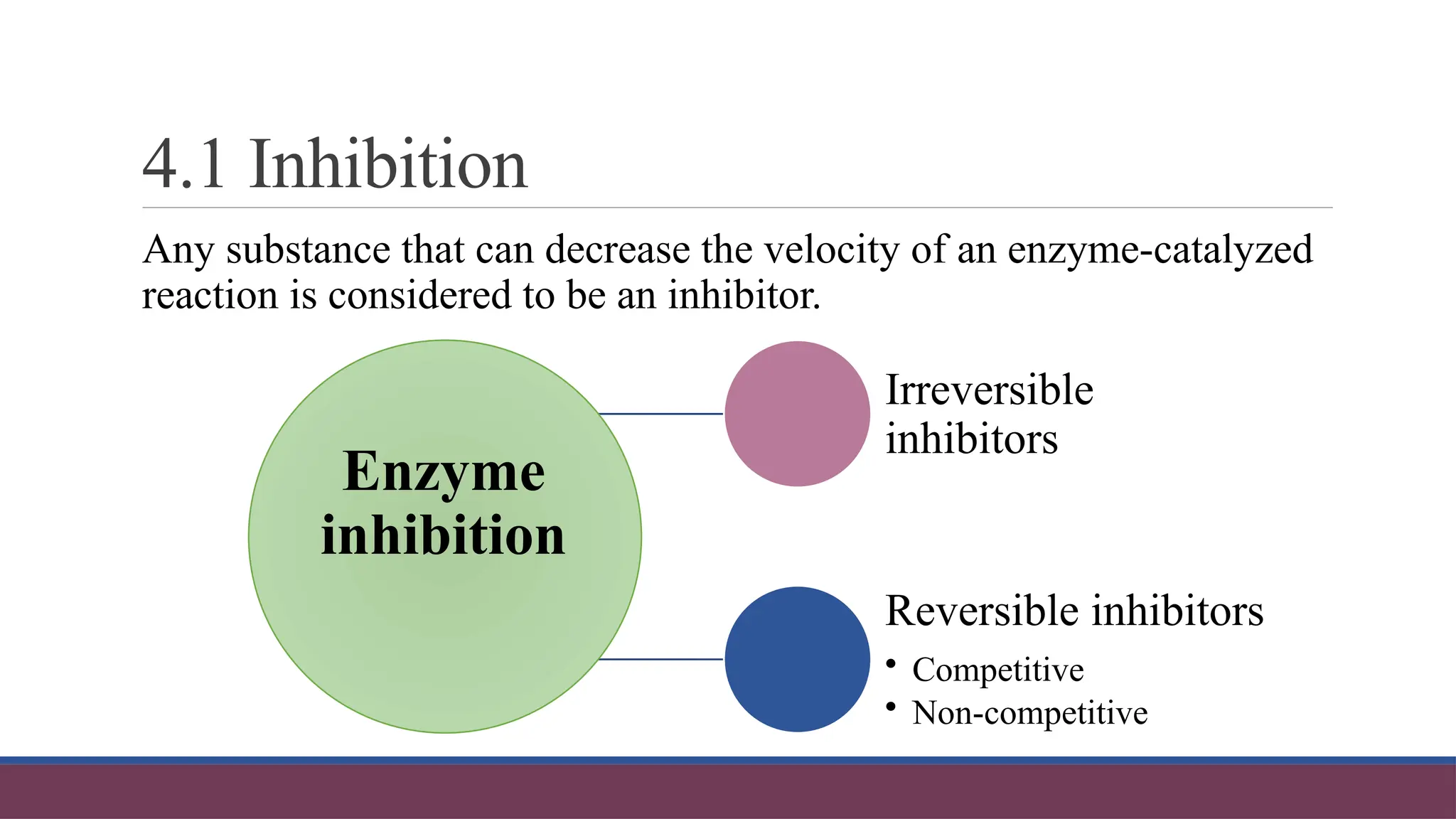
Any substancethat can decrease the velocity of an enzyme-catalyzed
reaction is considered to be an inhibitor.
Enzyme
inhibition
Irreversible
inhibitors
Reversible inhibitors
• Competitive
• Non-competitive
31.
Irreversible inhibitors
Irreversible inhibitorsbind to enzymes through covalent bonds.
Lead, for example, can act as an irreversible inhibitor of some
enzymes.
It forms covalent bonds with the sulfhydryl side chain of cysteine in
proteins.
Ferrochelatase, an enzyme involved in heme synthesis, is irreversibly
inhibited by lead.
32.
Reversible inhibitors
Reversible inhibitorsbind to enzymes through noncovalent bonds
forming an enzyme–inhibitor complex.
Dilution of the enzyme–inhibitor complex results in dissociation of
the reversibly bound inhibitor and recovery of enzyme activity.
The two most commonly encountered types of reversible inhibition
are competitive and noncompetitive
33.
A. Competitive inhibition
Thistype of inhibition occurs when the inhibitor binds reversibly to
the same site that the substrate would normally occupy and, therefore,
competes with the substrate for binding to the enzyme active site.
Example: Statin drugs as examples of competitive inhibitors
34.
B. Noncompetitive inhibition
Noncompetitiveinhibition occurs when the inhibitor and substrate
bind at different sites on the enzyme. The noncompetitive inhibitor
can bind either free enzyme or the ES complex, thereby preventing
the reaction from occurring
Example: Penicillin and amoxicillin, act by inhibiting enzymes
involved in bacterial cell wall synthesis.
35.
4.2 Specificity
Enzymes arehighly specific and are capable of interacting with one or a
very few substrates and can catalyze only one type of chemical reaction.
The set of enzymes synthesized within a cell determines which reactions
occur in that cell.
The specificity is of three different types namely:
1. Stereochemical specificity,
2. Reaction specificity, and
3. Substrate specificity.
36.
4.3 Allosteric siteof enzymes
These enzymes are almost always composed of multiple subunits,
and the regulatory (allosteric) site that binds the effector is distinct
from the substrate-binding site and may be located on a subunit that
is not itself catalytic.
*Active site: In biology, the active site is the region of
an enzyme where substrate molecules bind and
undergo a chemical reaction. The active site consists of
amino acid residues that form temporary bonds with
the substrate (binding site) and residues that catalyse a
reaction of that substrate (catalytic site).
37.
Effectors that inhibitenzyme activity are termed negative effectors,
whereas those that increase enzyme activity are called positive
effectors.