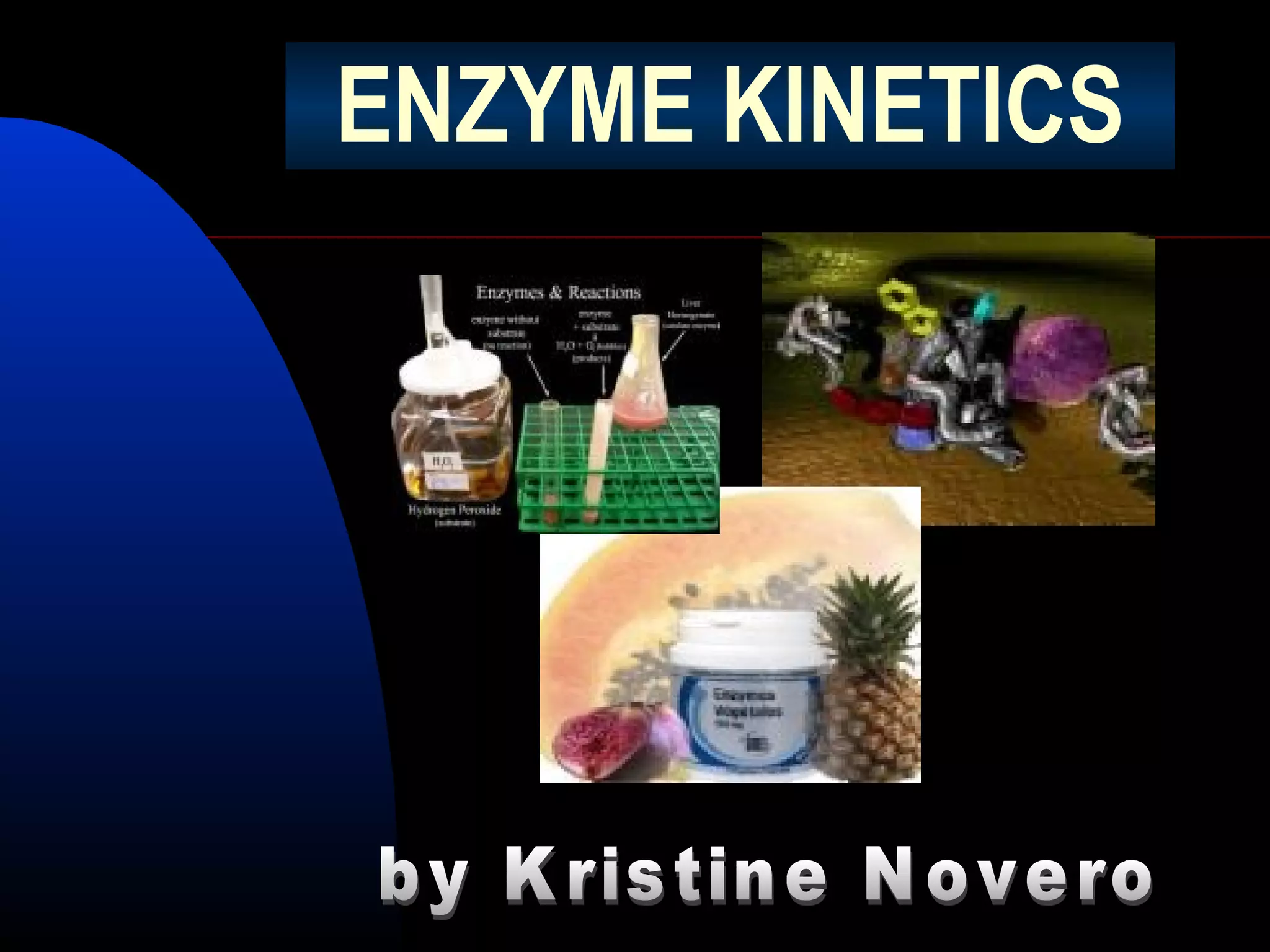
ENZYME KINETICS
 
BACKGROUND
• Students in introductory biology classes often have difficulty
understanding many aspects of enzymes.
•Since the physiology of organisms is based on the existence and speed of
chemical reactions, it is essential to understand basics in enzyme
activity in order to understand how life can exist.
•As students discover the importance of enzymes, they are better prepared to
apply their knowledge to real world applications.
•Study of enzymes is a difficult topic for most students because it is an
intangible topic.
Objectives


To allow students to learn
science through the
process of discovery



To provide a representation
of how one of life’s basic
processes occur



To motivate learners to
make their own discoveries
of knowledge
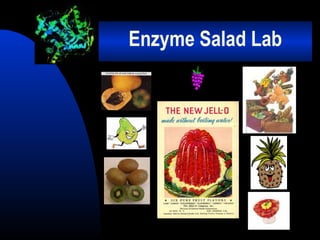
Enzyme Salad Lab
Background Information


Enzymes



Effect of temperature



Gelatin



Pineapple
Pre-Lab Discussion






Rationale
Time
Objectives
Materials
Procedure
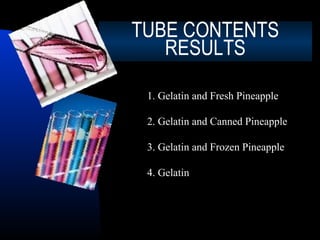
TUBE CONTENTS
RESULTS
1. Gelatin and Fresh Pineapple
2. Gelatin and Canned Pineapple
3. Gelatin and Frozen Pineapple
4. Gelatin
DISCUSSION
QUESTIONS
1. Why did test tube #4 contain only gelatin?
2. What could account for the different results in the tubes?
3. How could the canning process change bromelin?
4. What other fruits contain protein-digesting enzymes?
5. Using fresh pineapple, determine the temperature at
which the enzyme denatures. (for HS and college
students)
6. Design an experiment to find a temperature at which a
meat tenderizer works the best. (for college
students)
NOTES
1. We usually do this lab when we are discussing digestive enzymes and
temperature dependence of enzymes. The students like the application of
biochemistry to something they eat.
2. Suggestions:
a. Preparing the gelatin: Stir two envelopes of unflavored gelatin into 800
ml of hot water. This should be enough for three classes. Store it in a warm
water bath when the students are
using it so it will pour easily.
b. Remind the students to rinse of the razor blade between types
pineapple. Clean up is easier if they cut the fruit on paper plates.
c. Canned Pineapple: Use the chunky style.

of
Application of the
Enzyme Kinetics
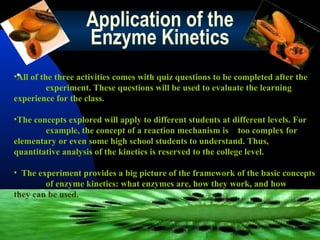
•• of the three activities comes with quiz questions to be completed after the
All
experiment. These questions will be used to evaluate the learning
experience for the class.
•The concepts explored will apply to different students at different levels. For
example, the concept of a reaction mechanism is too complex for
elementary or even some high school students to understand. Thus,
quantitative analysis of the kinetics is reserved to the college level.
• The experiment provides a big picture of the framework of the basic concepts
of enzyme kinetics: what enzymes are, how they work, and how
they can be used.
The
DISCOVERY APPROACH
The discovery
approach was first
popularized by Jerome
Bruner in a book The
Process of Education


The concept behind the
discovery approach is that the
motivation of pupils is to learn
science will be increased if they
experience the feelings scientists
obtain from "discovering"
scientific knowledge

The idea was supported by the
notion that pupils would learn about
the nature of science, and the
formation of scientific knowledge
through the process of "discovery"
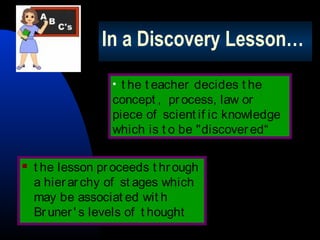
In a Discovery Lesson…
• t he t eacher decides t he

concept , pr ocess, law or
piece of scient if ic knowledge
which is t o be "discover ed“


t he lesson pr oceeds t hr ough
a hier ar chy of st ages which
may be associat ed wit h
Br uner ' s levels of t hought
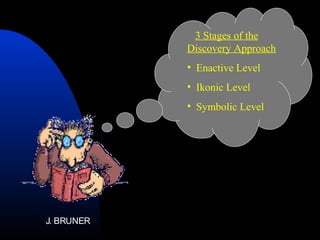
3 Stages of the
Discovery Approach
• Enactive Level
• Ikonic Level
• Symbolic Level

J. BRUNER
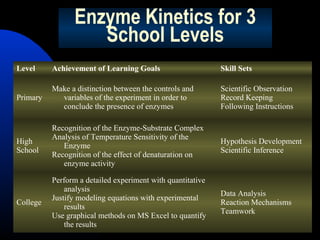
Enzyme Kinetics for 3
School Levels
Level

Achievement of Learning Goals

Skill Sets

Primary

Make a distinction between the controls and
variables of the experiment in order to
conclude the presence of enzymes

Scientific Observation
Record Keeping
Following Instructions

High
School

Recognition of the Enzyme-Substrate Complex
Analysis of Temperature Sensitivity of the
Enzyme
Recognition of the effect of denaturation on
enzyme activity

Hypothesis Development
Scientific Inference

College

Perform a detailed experiment with quantitative
analysis
Justify modeling equations with experimental
results
Use graphical methods on MS Excel to quantify
the results

Data Analysis
Reaction Mechanisms
Teamwork
References
Balala, S. (2003). Activities-To-Go. www.acessexellence.org.
Retrieved on December 4, 2006.
http://accessexellence.org/AE/ATG

Collette, A. and Chiapetta, E. (1994). Science Instruction in the
Middle and Secondary Schools. New York, USA: Macmillan
Publishing Company.
Duit, R. (2002). Pineapple-Jell-O Lab. www.dev.mdk12.org.
Retrieved on December 6, 2006.
http://dev.mdk12.org/instruction/curriculum/hsa/biology/enz
yme_activity/ teachers_guide_evaluation.html
Scott, S. Mixed Plate Biology. (2004). www.woodrow.org.
Retrieved on December 4, 2006.
http://woodrow.org/teachers/aelm

Enzyme Kinetics

  • 1.
  • 2.
      BACKGROUND • Students inintroductory biology classes often have difficulty understanding many aspects of enzymes. •Since the physiology of organisms is based on the existence and speed of chemical reactions, it is essential to understand basics in enzyme activity in order to understand how life can exist. •As students discover the importance of enzymes, they are better prepared to apply their knowledge to real world applications. •Study of enzymes is a difficult topic for most students because it is an intangible topic.
  • 3.
    Objectives  To allow studentsto learn science through the process of discovery  To provide a representation of how one of life’s basic processes occur  To motivate learners to make their own discoveries of knowledge
  • 4.
  • 5.
    Background Information  Enzymes  Effect oftemperature  Gelatin  Pineapple
  • 6.
  • 7.
    TUBE CONTENTS RESULTS 1. Gelatinand Fresh Pineapple 2. Gelatin and Canned Pineapple 3. Gelatin and Frozen Pineapple 4. Gelatin
  • 8.
    DISCUSSION QUESTIONS 1. Why didtest tube #4 contain only gelatin? 2. What could account for the different results in the tubes? 3. How could the canning process change bromelin? 4. What other fruits contain protein-digesting enzymes? 5. Using fresh pineapple, determine the temperature at which the enzyme denatures. (for HS and college students) 6. Design an experiment to find a temperature at which a meat tenderizer works the best. (for college students)
  • 9.
    NOTES 1. We usuallydo this lab when we are discussing digestive enzymes and temperature dependence of enzymes. The students like the application of biochemistry to something they eat. 2. Suggestions: a. Preparing the gelatin: Stir two envelopes of unflavored gelatin into 800 ml of hot water. This should be enough for three classes. Store it in a warm water bath when the students are using it so it will pour easily. b. Remind the students to rinse of the razor blade between types pineapple. Clean up is easier if they cut the fruit on paper plates. c. Canned Pineapple: Use the chunky style. of
  • 10.
    Application of the EnzymeKinetics •• of the three activities comes with quiz questions to be completed after the All experiment. These questions will be used to evaluate the learning experience for the class. •The concepts explored will apply to different students at different levels. For example, the concept of a reaction mechanism is too complex for elementary or even some high school students to understand. Thus, quantitative analysis of the kinetics is reserved to the college level. • The experiment provides a big picture of the framework of the basic concepts of enzyme kinetics: what enzymes are, how they work, and how they can be used.
  • 11.
    The DISCOVERY APPROACH The discovery approachwas first popularized by Jerome Bruner in a book The Process of Education  The concept behind the discovery approach is that the motivation of pupils is to learn science will be increased if they experience the feelings scientists obtain from "discovering" scientific knowledge The idea was supported by the notion that pupils would learn about the nature of science, and the formation of scientific knowledge through the process of "discovery"
  • 12.
    In a DiscoveryLesson… • t he t eacher decides t he concept , pr ocess, law or piece of scient if ic knowledge which is t o be "discover ed“  t he lesson pr oceeds t hr ough a hier ar chy of st ages which may be associat ed wit h Br uner ' s levels of t hought
  • 13.
    3 Stages ofthe Discovery Approach • Enactive Level • Ikonic Level • Symbolic Level J. BRUNER
  • 14.
    Enzyme Kinetics for3 School Levels Level Achievement of Learning Goals Skill Sets Primary Make a distinction between the controls and variables of the experiment in order to conclude the presence of enzymes Scientific Observation Record Keeping Following Instructions High School Recognition of the Enzyme-Substrate Complex Analysis of Temperature Sensitivity of the Enzyme Recognition of the effect of denaturation on enzyme activity Hypothesis Development Scientific Inference College Perform a detailed experiment with quantitative analysis Justify modeling equations with experimental results Use graphical methods on MS Excel to quantify the results Data Analysis Reaction Mechanisms Teamwork
  • 15.
    References Balala, S. (2003).Activities-To-Go. www.acessexellence.org. Retrieved on December 4, 2006. http://accessexellence.org/AE/ATG Collette, A. and Chiapetta, E. (1994). Science Instruction in the Middle and Secondary Schools. New York, USA: Macmillan Publishing Company. Duit, R. (2002). Pineapple-Jell-O Lab. www.dev.mdk12.org. Retrieved on December 6, 2006. http://dev.mdk12.org/instruction/curriculum/hsa/biology/enz yme_activity/ teachers_guide_evaluation.html Scott, S. Mixed Plate Biology. (2004). www.woodrow.org. Retrieved on December 4, 2006. http://woodrow.org/teachers/aelm