Enzyme 1
by Dr Manoj
Enzymes
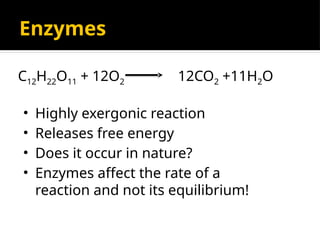
C12H22O11 + 12O2 12CO2 +11H2O
• Highly exergonic reaction
• Releases free energy
• Does it occur in nature?
• Enzymes affect the rate of a
reaction and not its equilibrium!
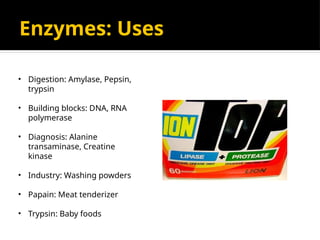
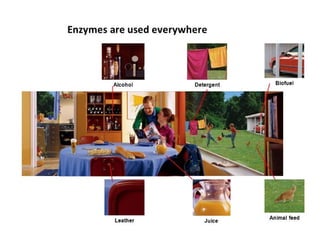
Enzymes: Uses
• Digestion: Amylase, Pepsin,
trypsin
• Building blocks: DNA, RNA
polymerase
• Diagnosis: Alanine
transaminase, Creatine
kinase
• Industry: Washing powders
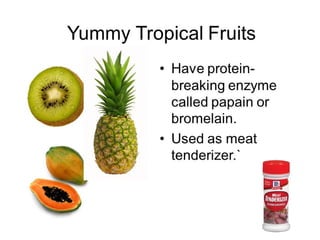
• Papain: Meat tenderizer
• Trypsin: Baby foods
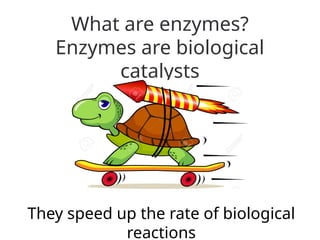
What are enzymes?
Enzymes are biological
catalysts
They speed up the rate of biological
reactions
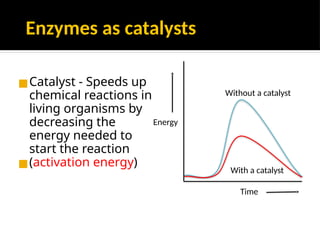
Enzymes as catalysts
◼Catalyst - Speeds up
chemical reactions in
living organisms by
decreasing the
energy needed to
start the reaction
◼(activation energy)
Energy
Time
Without a catalyst
With a catalyst
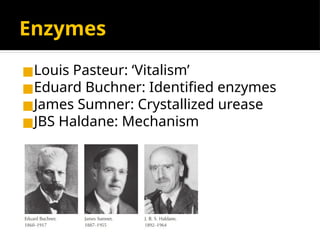
Enzymes
◼Louis Pasteur: ‘Vitalism’
◼Eduard Buchner: Identified enzymes
◼James Sumner: Crystallized urease
◼JBS Haldane: Mechanism
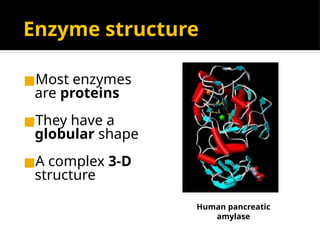
Enzyme structure
◼Most enzymes
are proteins
◼They have a
globular shape
◼A complex 3-D
structure
Human pancreatic
amylase
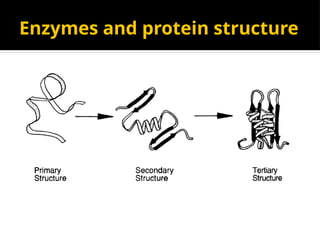
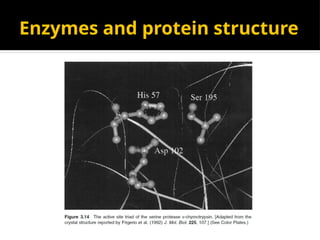
Enzymes and protein structure
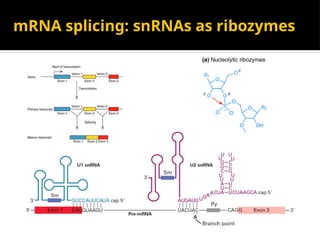
Ribozyme: a “natural” RNA enzyme
◼In the early 1980s, however, research
groups led by Sidney Altman and Thomas
Cech independently found that RNAs can
also act as catalysts for chemical reactions.
◼This class of catalytic RNAs are known as
ribozymes, and the finding earned Altman
and Cech the 1989 Nobel Prize in
Chemistry.
mRNA splicing: snRNAs as ribozymes
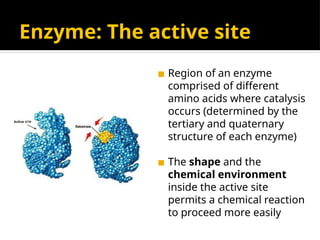
Enzyme: The active site
◼ Region of an enzyme
comprised of different
amino acids where catalysis
occurs (determined by the
tertiary and quaternary
structure of each enzyme)
◼ The shape and the
chemical environment
inside the active site
permits a chemical reaction
to proceed more easily
The substrate
◼ The substrate of an enzyme are the
reactants that are activated by the
enzyme and converted to product
◼ Enzymes are specific to their substrates
◼ The specificity is determined by the
active site
◼ Enzymes themselves do not undergo
any major change or get used up during
the reaction
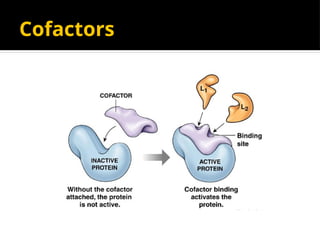
Cofactors
◼An additional non-
protein inorganic
molecule that is
needed by some
enzymes to help the
reaction
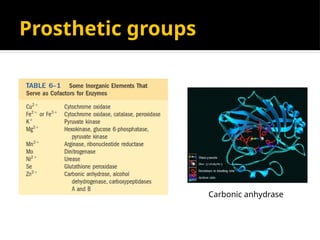
◼Prosthetic groups can
be metals
(Metalloenzymes) or
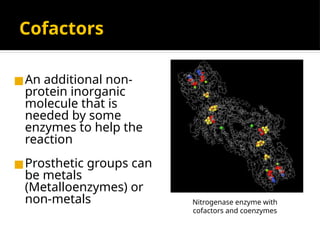
non-metals Nitrogenase enzyme with
cofactors and coenzymes
Cofactors
Prosthetic groups
Carbonic anhydrase
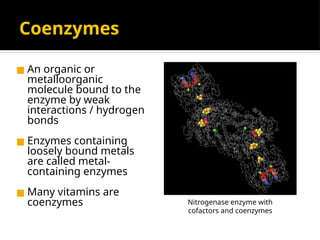
Coenzymes
◼ An organic or
metalloorganic
molecule bound to the
enzyme by weak
interactions / hydrogen
bonds
◼ Enzymes containing
loosely bound metals
are called metal-
containing enzymes
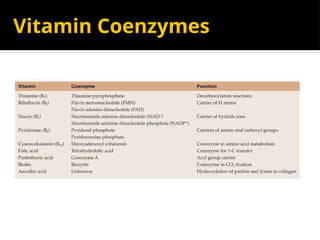
◼ Many vitamins are
coenzymes Nitrogenase enzyme with
cofactors and coenzymes
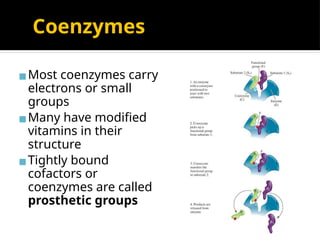
Coenzymes
▪Most coenzymes carry
electrons or small
groups
▪Many have modified
vitamins in their
structure
▪Tightly bound
cofactors or
coenzymes are called
prosthetic groups
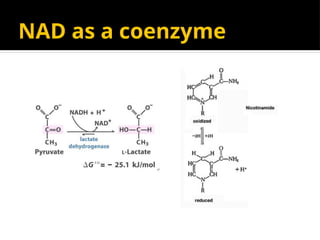
NAD as a coenzyme
Vitamin Coenzymes
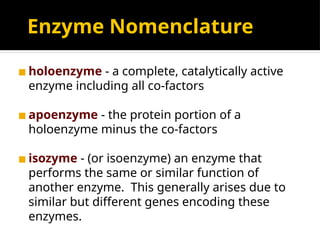
Enzyme Nomenclature
◼ holoenzyme - a complete, catalytically active
enzyme including all co-factors
◼ apoenzyme - the protein portion of a
holoenzyme minus the co-factors
◼ isozyme - (or isoenzyme) an enzyme that
performs the same or similar function of
another enzyme. This generally arises due to
similar but different genes encoding these
enzymes.
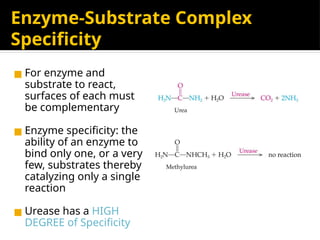
Enzyme-Substrate Complex
Specificity
◼ For enzyme and
substrate to react,
surfaces of each must
be complementary
◼ Enzyme specificity: the
ability of an enzyme to
bind only one, or a very
few, substrates thereby
catalyzing only a single
reaction
◼ Urease has a HIGH
DEGREE of Specificity
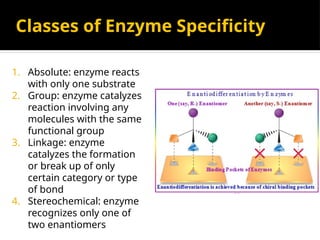
Classes of Enzyme Specificity
1. Absolute: enzyme reacts
with only one substrate
2. Group: enzyme catalyzes
reaction involving any
molecules with the same
functional group
3. Linkage: enzyme
catalyzes the formation
or break up of only
certain category or type
of bond
4. Stereochemical: enzyme
recognizes only one of
two enantiomers
Nomenclature and Classification
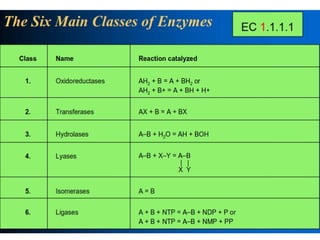
Enzymes are often classified by placing
them in categories according to the
reactions that they catalyze:
1. Oxidoreductase
2. Transferase
3. Hydrolase
4. Lyase
5. Isomerase
6. Ligase
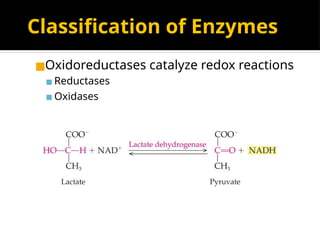
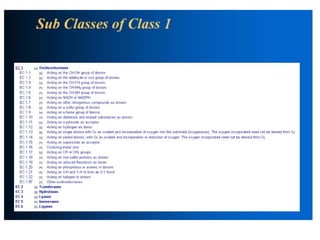
Classification of Enzymes
◼Oxidoreductases catalyze redox reactions
▪ Reductases
▪ Oxidases
Classification of Enzymes
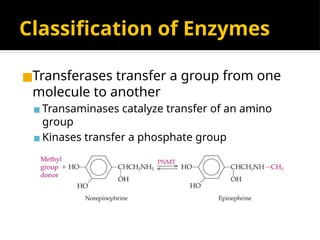
◼Transferases transfer a group from one
molecule to another
▪ Transaminases catalyze transfer of an amino
group
▪ Kinases transfer a phosphate group
Classification of Enzymes
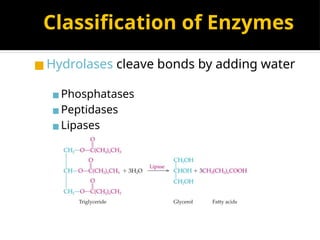
◼Hydrolases cleave bonds by adding water
▪Phosphatases
▪Peptidases
▪Lipases
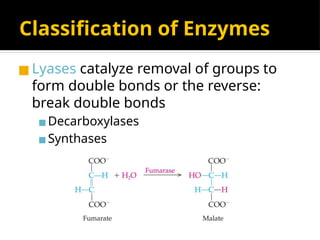
Classification of Enzymes
◼ Lyases catalyze removal of groups to
form double bonds or the reverse:
break double bonds
▪Decarboxylases
▪Synthases
Classification of Enzymes
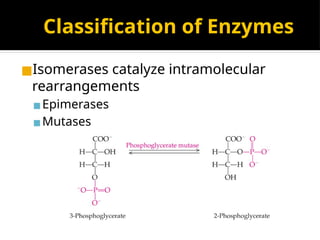
◼Isomerases catalyze intramolecular
rearrangements
▪Epimerases
▪Mutases
Classification of Enzymes
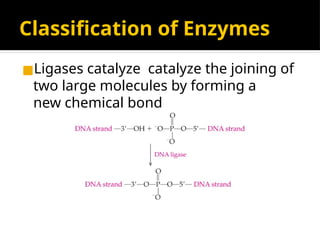
◼Ligases catalyze catalyze the joining of
two large molecules by forming a
new chemical bond
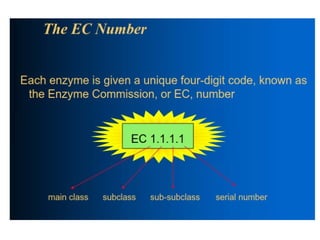
Why EC Numbers??
Back in the 1950s
◼ The number of known enzymes was
increasing rapidly
◼ No guiding authority
◼ The same enzymes became known by several
different names, and
◼ The same name was sometimes given to
different enzymes
◼ Names often conveyed little or no idea of the
nature of the reactions catalyzed
The Situation Was Chaotic…
◼Catalase (also known as equilase,
caperase, optidase…)
◼ Diaphorase (dehydrogenase)
◼ Zwischenferment (glucose-6-
phosphate dehydrogenase)
Enzyme Commissions
◼The First Enzyme Commission: In August
1955 M. Dixon and O. Hoffmann-Ostenhof
convinced the president of the International
Union of Biochemistry (IUB) to set up an
International Enzyme Commission to tackle
the problems
◼Enzymes are classified and named by the
reactions they catalyze
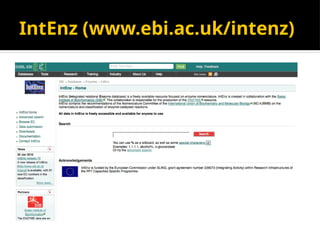
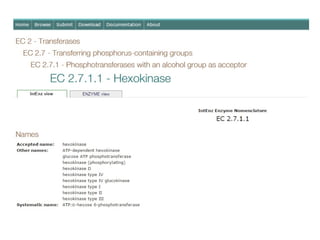
IntEnz (www.ebi.ac.uk/intenz)
22.05.09 IntEnz
Enzyme  basic information and working of enzyme

Enzyme basic information and working of enzyme

  • 1.
  • 2.
    Enzymes C12H22O11 + 12O212CO2 +11H2O • Highly exergonic reaction • Releases free energy • Does it occur in nature? • Enzymes affect the rate of a reaction and not its equilibrium!
  • 3.
    Enzymes: Uses • Digestion:Amylase, Pepsin, trypsin • Building blocks: DNA, RNA polymerase • Diagnosis: Alanine transaminase, Creatine kinase • Industry: Washing powders • Papain: Meat tenderizer • Trypsin: Baby foods
  • 6.
    What are enzymes? Enzymesare biological catalysts They speed up the rate of biological reactions
  • 7.
    Enzymes as catalysts ◼Catalyst- Speeds up chemical reactions in living organisms by decreasing the energy needed to start the reaction ◼(activation energy) Energy Time Without a catalyst With a catalyst
  • 8.
    Enzymes ◼Louis Pasteur: ‘Vitalism’ ◼EduardBuchner: Identified enzymes ◼James Sumner: Crystallized urease ◼JBS Haldane: Mechanism
  • 9.
    Enzyme structure ◼Most enzymes areproteins ◼They have a globular shape ◼A complex 3-D structure Human pancreatic amylase
  • 10.
  • 11.
  • 12.
    Ribozyme: a “natural”RNA enzyme ◼In the early 1980s, however, research groups led by Sidney Altman and Thomas Cech independently found that RNAs can also act as catalysts for chemical reactions. ◼This class of catalytic RNAs are known as ribozymes, and the finding earned Altman and Cech the 1989 Nobel Prize in Chemistry.
  • 13.
  • 14.
    Enzyme: The activesite ◼ Region of an enzyme comprised of different amino acids where catalysis occurs (determined by the tertiary and quaternary structure of each enzyme) ◼ The shape and the chemical environment inside the active site permits a chemical reaction to proceed more easily
  • 15.
    The substrate ◼ Thesubstrate of an enzyme are the reactants that are activated by the enzyme and converted to product ◼ Enzymes are specific to their substrates ◼ The specificity is determined by the active site ◼ Enzymes themselves do not undergo any major change or get used up during the reaction
  • 16.
    Cofactors ◼An additional non- proteininorganic molecule that is needed by some enzymes to help the reaction ◼Prosthetic groups can be metals (Metalloenzymes) or non-metals Nitrogenase enzyme with cofactors and coenzymes
  • 17.
  • 18.
  • 19.
    Coenzymes ◼ An organicor metalloorganic molecule bound to the enzyme by weak interactions / hydrogen bonds ◼ Enzymes containing loosely bound metals are called metal- containing enzymes ◼ Many vitamins are coenzymes Nitrogenase enzyme with cofactors and coenzymes
  • 20.
    Coenzymes ▪Most coenzymes carry electronsor small groups ▪Many have modified vitamins in their structure ▪Tightly bound cofactors or coenzymes are called prosthetic groups
  • 21.
    NAD as acoenzyme
  • 22.
  • 23.
    Enzyme Nomenclature ◼ holoenzyme- a complete, catalytically active enzyme including all co-factors ◼ apoenzyme - the protein portion of a holoenzyme minus the co-factors ◼ isozyme - (or isoenzyme) an enzyme that performs the same or similar function of another enzyme. This generally arises due to similar but different genes encoding these enzymes.
  • 24.
    Enzyme-Substrate Complex Specificity ◼ Forenzyme and substrate to react, surfaces of each must be complementary ◼ Enzyme specificity: the ability of an enzyme to bind only one, or a very few, substrates thereby catalyzing only a single reaction ◼ Urease has a HIGH DEGREE of Specificity
  • 25.
    Classes of EnzymeSpecificity 1. Absolute: enzyme reacts with only one substrate 2. Group: enzyme catalyzes reaction involving any molecules with the same functional group 3. Linkage: enzyme catalyzes the formation or break up of only certain category or type of bond 4. Stereochemical: enzyme recognizes only one of two enantiomers
  • 26.
    Nomenclature and Classification Enzymesare often classified by placing them in categories according to the reactions that they catalyze: 1. Oxidoreductase 2. Transferase 3. Hydrolase 4. Lyase 5. Isomerase 6. Ligase
  • 27.
    Classification of Enzymes ◼Oxidoreductasescatalyze redox reactions ▪ Reductases ▪ Oxidases
  • 28.
    Classification of Enzymes ◼Transferasestransfer a group from one molecule to another ▪ Transaminases catalyze transfer of an amino group ▪ Kinases transfer a phosphate group
  • 29.
    Classification of Enzymes ◼Hydrolasescleave bonds by adding water ▪Phosphatases ▪Peptidases ▪Lipases
  • 30.
    Classification of Enzymes ◼Lyases catalyze removal of groups to form double bonds or the reverse: break double bonds ▪Decarboxylases ▪Synthases
  • 31.
    Classification of Enzymes ◼Isomerasescatalyze intramolecular rearrangements ▪Epimerases ▪Mutases
  • 32.
    Classification of Enzymes ◼Ligasescatalyze catalyze the joining of two large molecules by forming a new chemical bond
  • 33.
    Why EC Numbers?? Backin the 1950s ◼ The number of known enzymes was increasing rapidly ◼ No guiding authority ◼ The same enzymes became known by several different names, and ◼ The same name was sometimes given to different enzymes ◼ Names often conveyed little or no idea of the nature of the reactions catalyzed
  • 34.
    The Situation WasChaotic… ◼Catalase (also known as equilase, caperase, optidase…) ◼ Diaphorase (dehydrogenase) ◼ Zwischenferment (glucose-6- phosphate dehydrogenase)
  • 35.
    Enzyme Commissions ◼The FirstEnzyme Commission: In August 1955 M. Dixon and O. Hoffmann-Ostenhof convinced the president of the International Union of Biochemistry (IUB) to set up an International Enzyme Commission to tackle the problems ◼Enzymes are classified and named by the reactions they catalyze
  • 40.

Editor's Notes

  • #40 IntEnz is a database focussed exclusively on Enzyme Nomenclature.