Part A Project 1
World Geography 2
Mariyah Jahangiri
Student ID: B62232671
Municipal solid waste, commonly known as
garbage - consists of everyday durable and
disposable items we use and then trash such
as: plastic packaging, yard clippings,
clothing, food, paper, books, and appliances.
Due to an increasing population growth and
industrialization, about 1.3 billion tons of
municipal solid waste is produced annually
throughout the world. The United States is
the leading producer of solid waste, at about
621,000 tons per day, which means the
average American produces about 4.3
pounds of waste every day.
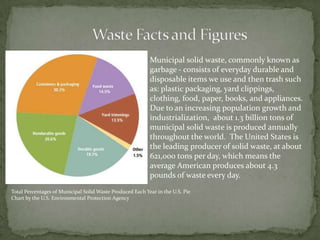
Total Percentages of Municipal Solid Waste Produced Each Year in the U.S. Pie
Chart by the U.S. Environmental Protection Agency
There are many negative impacts of the disposal of waste on the environment.
When food is thrown away and breaks down in a landfill, it produces methane
gas with the help of other materials in the landfill. Methane contributes to
greenhouse gasses in the atmosphere which increases global warming. For
example, in Australia, landfills contribute to about 2% of greenhouse gas
emissions. Other waste, such as batteries and paints, can be very dangerous to
the environment. This waste is called toxic waste, and it often produces
carcinogens which can cause cancer in humans if they come in contact with this
substance. Toxic waste can spread quite easily and can contaminate lakes,
rivers, and the atmosphere. Another negative effect of waste on the
environment is when plastic products need to be incinerated to create more
landfill area. Incinerating plastic can produce dangerous chemicals such as
dioxins when they are burnt, and this can lead damage to humans and the
environment if the toxic chemicals are spread by air pollution. Landfills are
also being used up rapidly, and people are continuing to use products and
throw them away at an alarming rate. As these products go to waste, so does the
energy used to manufacture these products.
Location makes a huge difference on a
person’s habits of buying and
disposing products. I currently live in
Riyadh, Saudi Arabia, which has a great
effect on my impact on the
environment. Saudis have not yet
started any major recycling companies,
and that is why I am not able to recycle
products as easily and as much as I
would like. 3 out of 8 of the people I
surveyed also live in Riyadh, and they
face the same dilemma. We have to go
out of our way to take recyclable
products to the city hospital, where
they have placed small bins for the use
of hospital workers and local citizens.
Another 2 of the 8 surveyed people live
in Cairo, Egypt, which also does not
have many recycling opportunities.
For this project, I surveyed 8 different people from around the world about their
consumer and waste disposal habits in order to find out their environmental
impact on the world.
The most common reason the surveyed people bought food products is because
of the easiness of buying and using the food product. For example, one of the
surveyed people stated that she buys packaged frozen chicken that is found in
general grocery shops, because this is more easily accessible to her than going
directly to the meat shop which is farther away from her house. Although the
frozen chicken is more easy to buy, the meat shop chicken has a lot less
packaging. 2 of the 8 people I interviewed were college students living in
dorms and they explained that fast food, which is often highly packaged, is the
easiest way to get food in a hurry. These college students also use plastic
disposable bottles when walking around on campus, because plastic bottles can
be easily bought on the campus.
All 8 of the people I surveyed stated that they consider buying alternatives to
disposable products if they are available. For example, one of the people surveyed
said that he tries to avoid disposable products as much as he can and prefers durable
products such as washable dishes. 2 of the 8 people also compost many disposable
products to reduce waste.
7 out of the 8 people I surveyed also said that they either gives their clothes to
charity, sell them, or pass them on to relatives when they no longer are in need of
those clothes. Only one person said that he dumps his clothes that are no longer
needed in the trash.
5 out of 8 of the people I surveyed said that they are aware of recycling
opportunities, and the other 3 said that not many recycling opportunities existed
in their area. 3 out of these 5 people recycle aluminum, glass, paper, and plastic.
2 other people out of the 5 people said that they try to recycle paper and plastic
whenever they get the opportunity to do so, but not necessarily all the time. 2 out
of the 3 people who did not recycle claimed that they did not do so because they
were not any local recycling opportunities, and only one person said that he was
aware of recycling opportunities yet still did not recycle any items.
Most of the 8 people seemed very effected by their locations in terms of
purchasing trends and waste disposal. The people who did not recycle didn’t have
many local recycling opportunities. 6 of the 8 people also bought different styles
of clothes based on the newest local fashion and trends, and only 2 of the 8
people bought clothes only if needed.
As shown by the survey, many people try
to make life easier by purchasing
packaged products in general grocery
stores rather than less packaged
products in local stores, by using
disposable plastic water bottles, by
regularly buying fast food, and many
other examples. Disposable products
such as papers and plastics which can be
easily reused and recycled are often
thrown away. Not many people are aware
of the consequences of such amounts of
waste on the environment. As the world
population grows, the amount of waste
produced in also increasing. If we do not
educate people about waste and
recycling, the environment could be
seriously damaged, which in the end will
result to affect us humans.
In order to reduce waste, people should start reusing and recycling products,
and reducing the use of those products that lead to the production of waste.
Instead of using disposable products, people should try to use durable
products, such as reusing a durable water bottle rather than use and throw
away multiple plastic disposable bottles every day. Not only is the
environment being hurt, but the energy being used to create these products
is also going to waste. For example, according to the EPA, every ton of mixed
paper recycled can save the energy equivalent of 165 gallons of gasoline. In
places where there are not many local recycling opportunities, such as Saudi
Arabia and Egypt, opportunities should be created so that people can have
the option of easily recycling products instead of throwing them away as
garbage. Also, different people and government organizations should start
educating people more about this serious issue so that us citizens of the
world can make more educated decisions on how to stay environmentally
friendly.

Environmental Impact

  • 1.
    Part A Project1 World Geography 2 Mariyah Jahangiri Student ID: B62232671
  • 2.
    Municipal solid waste,commonly known as garbage - consists of everyday durable and disposable items we use and then trash such as: plastic packaging, yard clippings, clothing, food, paper, books, and appliances. Due to an increasing population growth and industrialization, about 1.3 billion tons of municipal solid waste is produced annually throughout the world. The United States is the leading producer of solid waste, at about 621,000 tons per day, which means the average American produces about 4.3 pounds of waste every day. Total Percentages of Municipal Solid Waste Produced Each Year in the U.S. Pie Chart by the U.S. Environmental Protection Agency
  • 3.
    There are manynegative impacts of the disposal of waste on the environment. When food is thrown away and breaks down in a landfill, it produces methane gas with the help of other materials in the landfill. Methane contributes to greenhouse gasses in the atmosphere which increases global warming. For example, in Australia, landfills contribute to about 2% of greenhouse gas emissions. Other waste, such as batteries and paints, can be very dangerous to the environment. This waste is called toxic waste, and it often produces carcinogens which can cause cancer in humans if they come in contact with this substance. Toxic waste can spread quite easily and can contaminate lakes, rivers, and the atmosphere. Another negative effect of waste on the environment is when plastic products need to be incinerated to create more landfill area. Incinerating plastic can produce dangerous chemicals such as dioxins when they are burnt, and this can lead damage to humans and the environment if the toxic chemicals are spread by air pollution. Landfills are also being used up rapidly, and people are continuing to use products and throw them away at an alarming rate. As these products go to waste, so does the energy used to manufacture these products.
  • 4.
    Location makes ahuge difference on a person’s habits of buying and disposing products. I currently live in Riyadh, Saudi Arabia, which has a great effect on my impact on the environment. Saudis have not yet started any major recycling companies, and that is why I am not able to recycle products as easily and as much as I would like. 3 out of 8 of the people I surveyed also live in Riyadh, and they face the same dilemma. We have to go out of our way to take recyclable products to the city hospital, where they have placed small bins for the use of hospital workers and local citizens. Another 2 of the 8 surveyed people live in Cairo, Egypt, which also does not have many recycling opportunities.
  • 5.
    For this project,I surveyed 8 different people from around the world about their consumer and waste disposal habits in order to find out their environmental impact on the world. The most common reason the surveyed people bought food products is because of the easiness of buying and using the food product. For example, one of the surveyed people stated that she buys packaged frozen chicken that is found in general grocery shops, because this is more easily accessible to her than going directly to the meat shop which is farther away from her house. Although the frozen chicken is more easy to buy, the meat shop chicken has a lot less packaging. 2 of the 8 people I interviewed were college students living in dorms and they explained that fast food, which is often highly packaged, is the easiest way to get food in a hurry. These college students also use plastic disposable bottles when walking around on campus, because plastic bottles can be easily bought on the campus.
  • 6.
    All 8 ofthe people I surveyed stated that they consider buying alternatives to disposable products if they are available. For example, one of the people surveyed said that he tries to avoid disposable products as much as he can and prefers durable products such as washable dishes. 2 of the 8 people also compost many disposable products to reduce waste. 7 out of the 8 people I surveyed also said that they either gives their clothes to charity, sell them, or pass them on to relatives when they no longer are in need of those clothes. Only one person said that he dumps his clothes that are no longer needed in the trash.
  • 7.
    5 out of8 of the people I surveyed said that they are aware of recycling opportunities, and the other 3 said that not many recycling opportunities existed in their area. 3 out of these 5 people recycle aluminum, glass, paper, and plastic. 2 other people out of the 5 people said that they try to recycle paper and plastic whenever they get the opportunity to do so, but not necessarily all the time. 2 out of the 3 people who did not recycle claimed that they did not do so because they were not any local recycling opportunities, and only one person said that he was aware of recycling opportunities yet still did not recycle any items. Most of the 8 people seemed very effected by their locations in terms of purchasing trends and waste disposal. The people who did not recycle didn’t have many local recycling opportunities. 6 of the 8 people also bought different styles of clothes based on the newest local fashion and trends, and only 2 of the 8 people bought clothes only if needed.
  • 8.
    As shown bythe survey, many people try to make life easier by purchasing packaged products in general grocery stores rather than less packaged products in local stores, by using disposable plastic water bottles, by regularly buying fast food, and many other examples. Disposable products such as papers and plastics which can be easily reused and recycled are often thrown away. Not many people are aware of the consequences of such amounts of waste on the environment. As the world population grows, the amount of waste produced in also increasing. If we do not educate people about waste and recycling, the environment could be seriously damaged, which in the end will result to affect us humans.
  • 9.
    In order toreduce waste, people should start reusing and recycling products, and reducing the use of those products that lead to the production of waste. Instead of using disposable products, people should try to use durable products, such as reusing a durable water bottle rather than use and throw away multiple plastic disposable bottles every day. Not only is the environment being hurt, but the energy being used to create these products is also going to waste. For example, according to the EPA, every ton of mixed paper recycled can save the energy equivalent of 165 gallons of gasoline. In places where there are not many local recycling opportunities, such as Saudi Arabia and Egypt, opportunities should be created so that people can have the option of easily recycling products instead of throwing them away as garbage. Also, different people and government organizations should start educating people more about this serious issue so that us citizens of the world can make more educated decisions on how to stay environmentally friendly.