Bacteriological
measurement
(counting of bacteria)
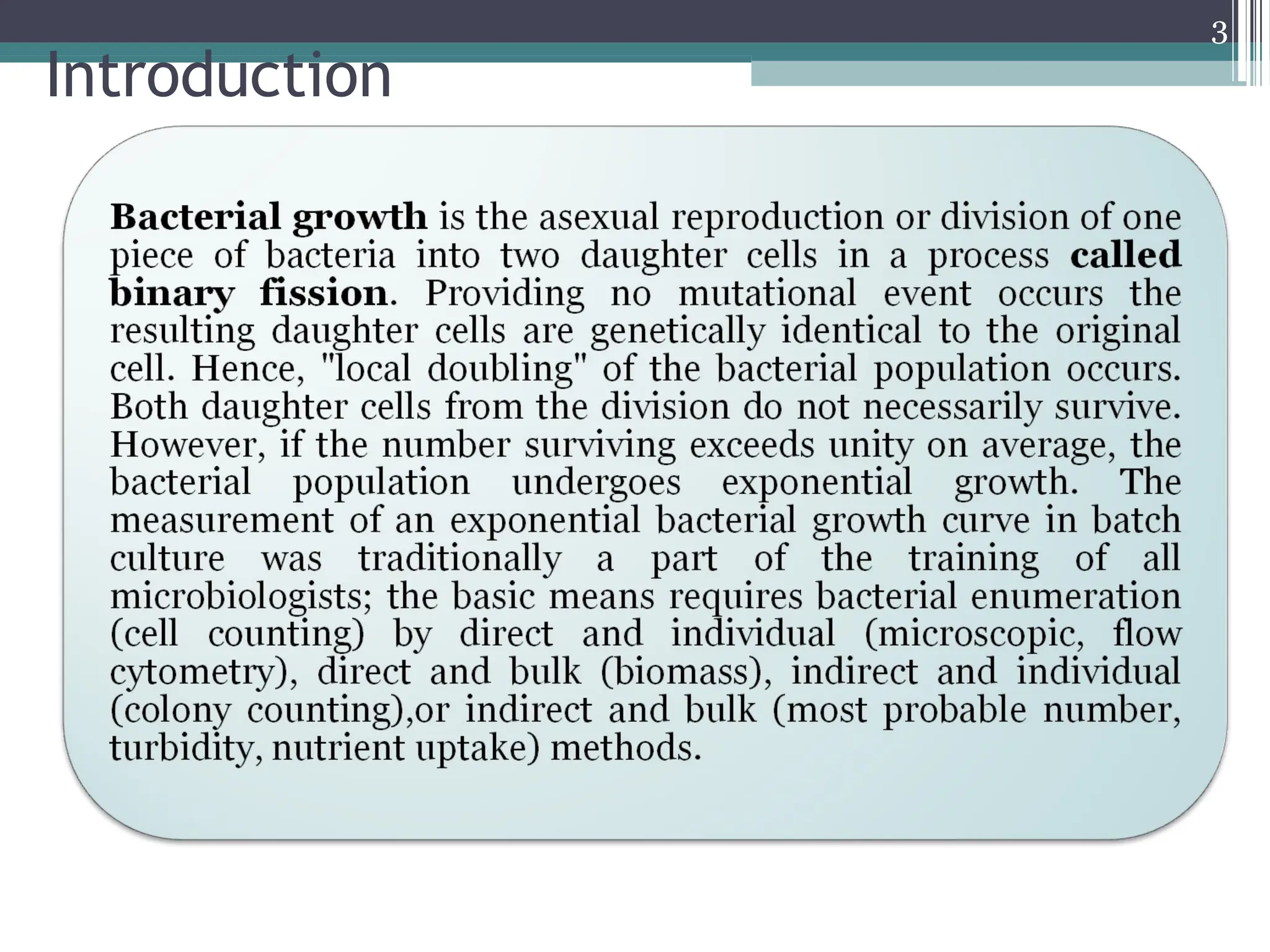
Introduction
3
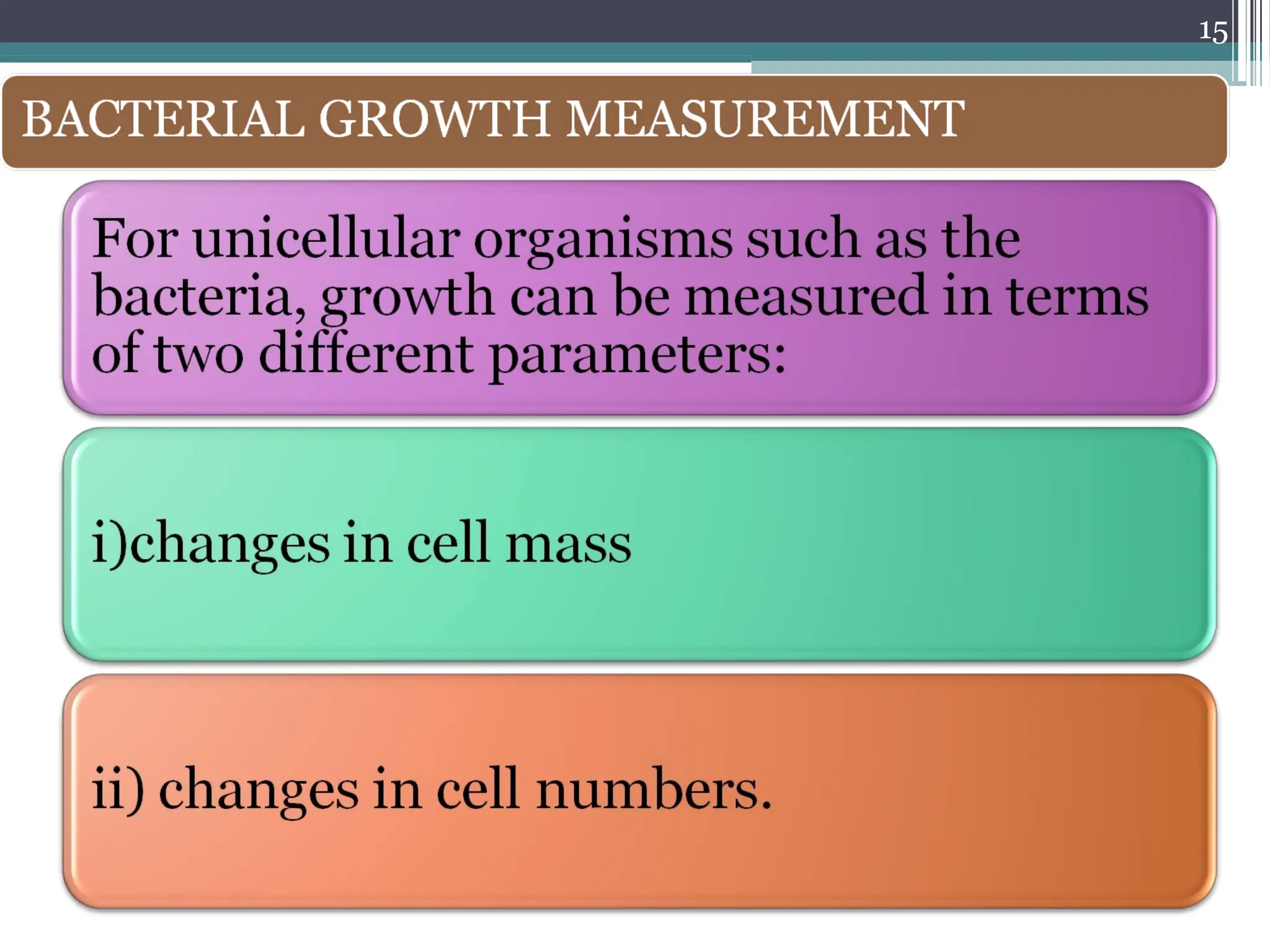
15
•
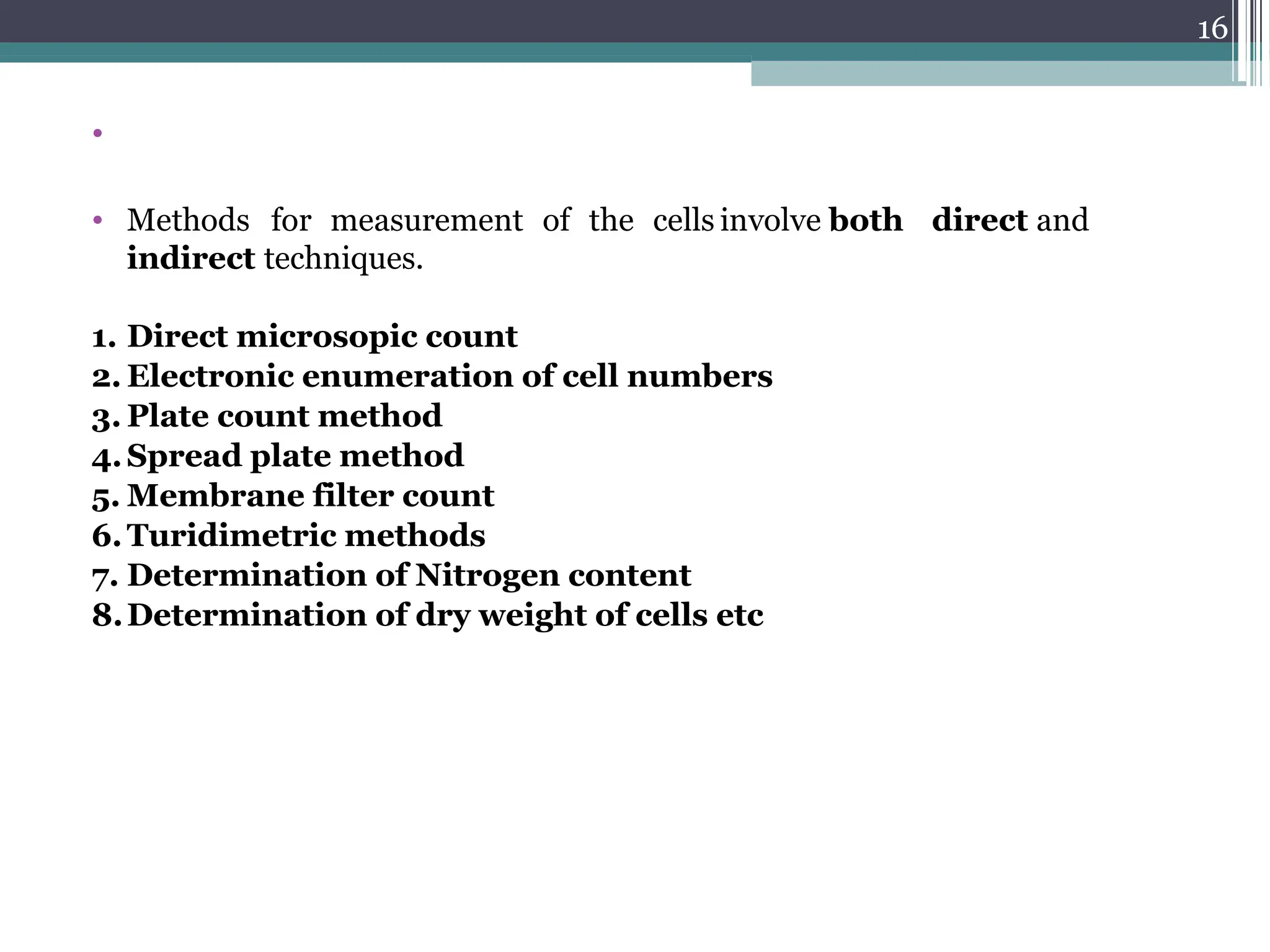
• Methods for measurement of the cells involve both direct and
indirect techniques.
1. Direct microsopic count
2. Electronic enumeration of cell numbers
3. Plate count method
4.Spread plate method
5. Membrane filter count
6.Turidimetric methods
7. Determination of Nitrogen content
8.Determination of dry weight of cells etc
16
19
• Methods for Measurement of Cell Numbers
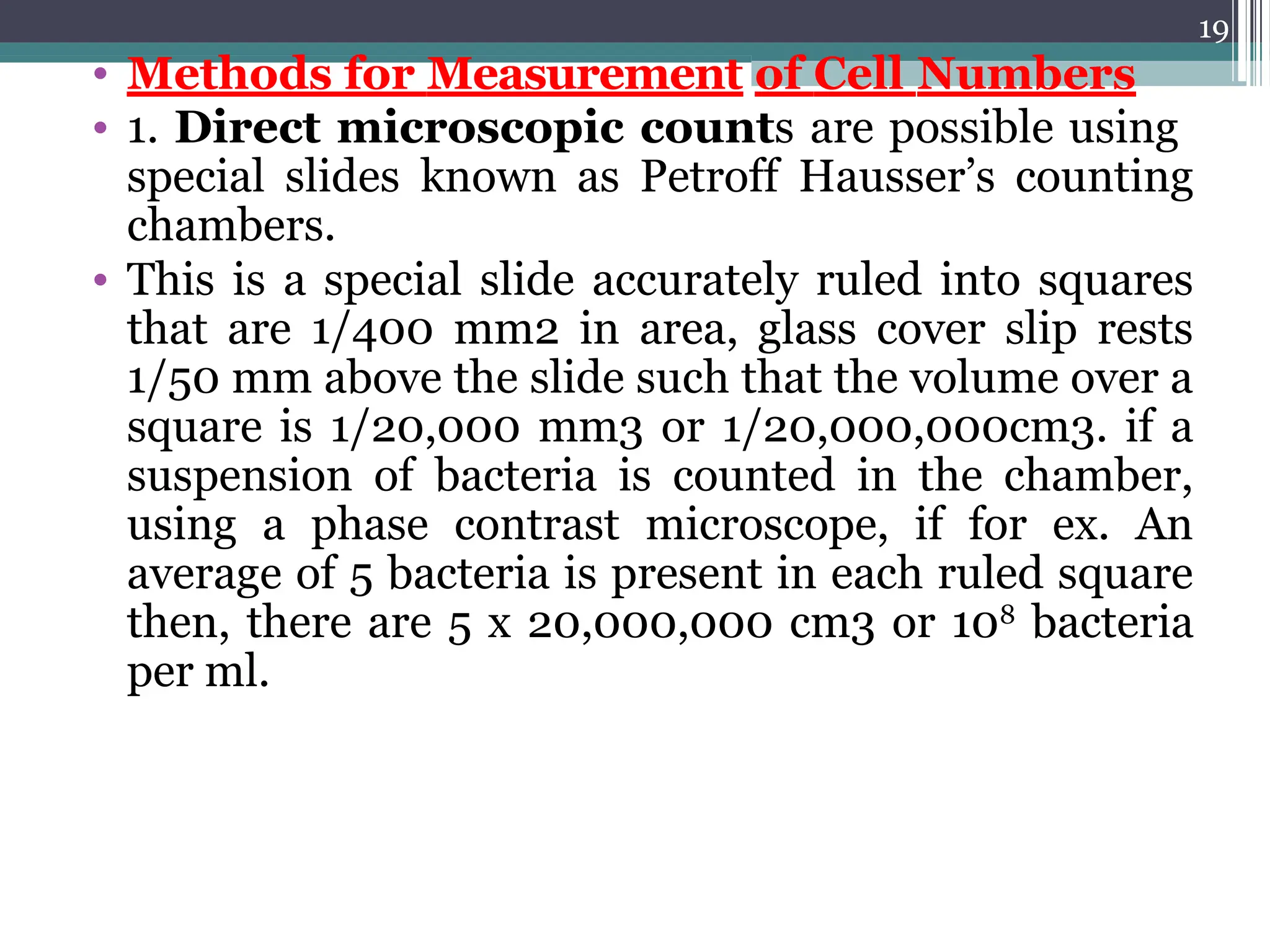
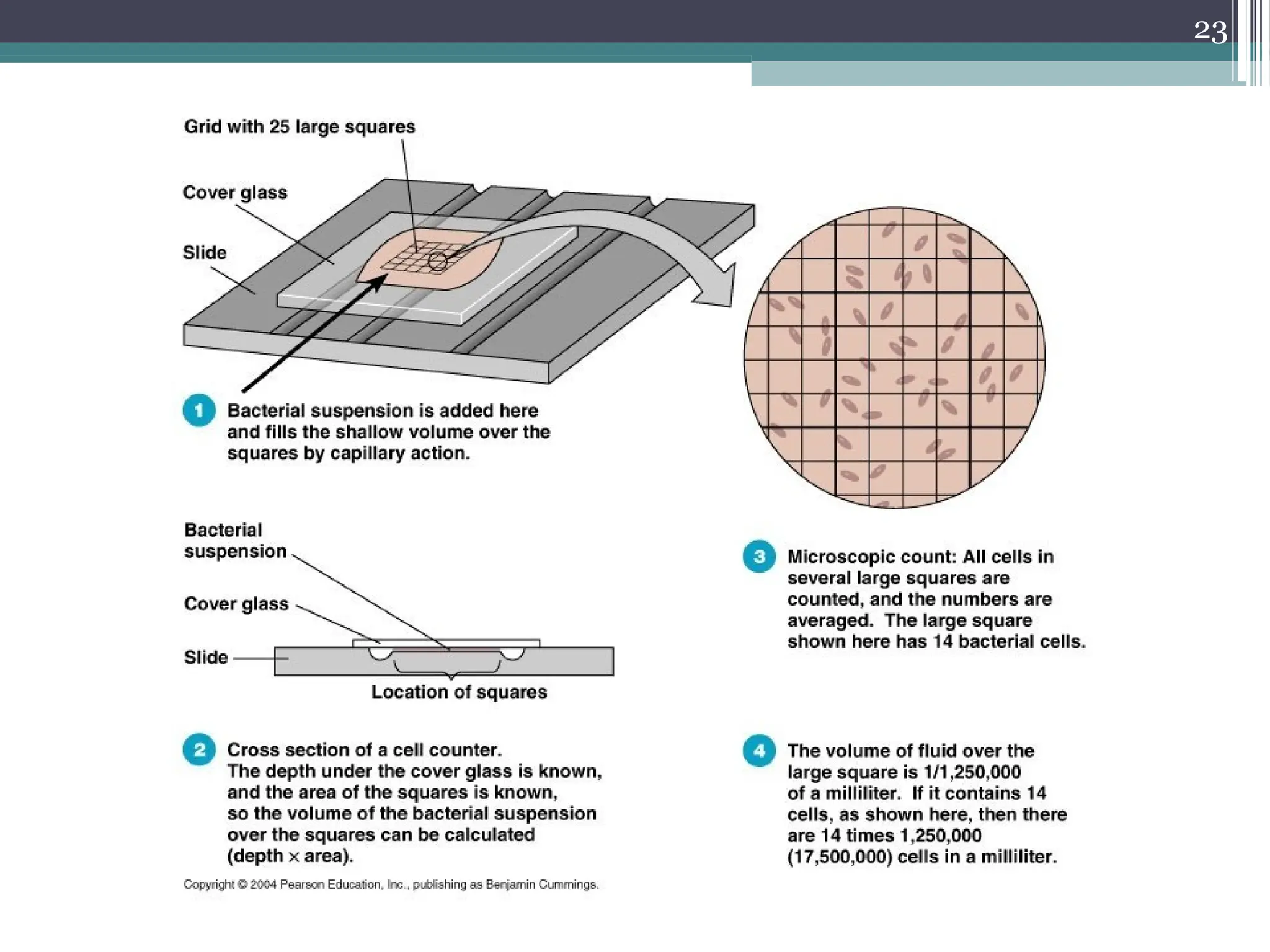
• 1. Direct microscopic counts are possible using
special slides known as Petroff Hausser’s counting
chambers.
• This is a special slide accurately ruled into squares
that are 1/400 mm2 in area, glass cover slip rests
1/50 mm above the slide such that the volume over a
square is 1/20,000 mm3 or 1/20,000,000cm3. if a
suspension of bacteria is counted in the chamber,
using a phase contrast microscope, if for ex. An
average of 5 bacteria is present in each ruled square
then, there are 5 x 20,000,000 cm3 or 108
bacteria
per ml.
23
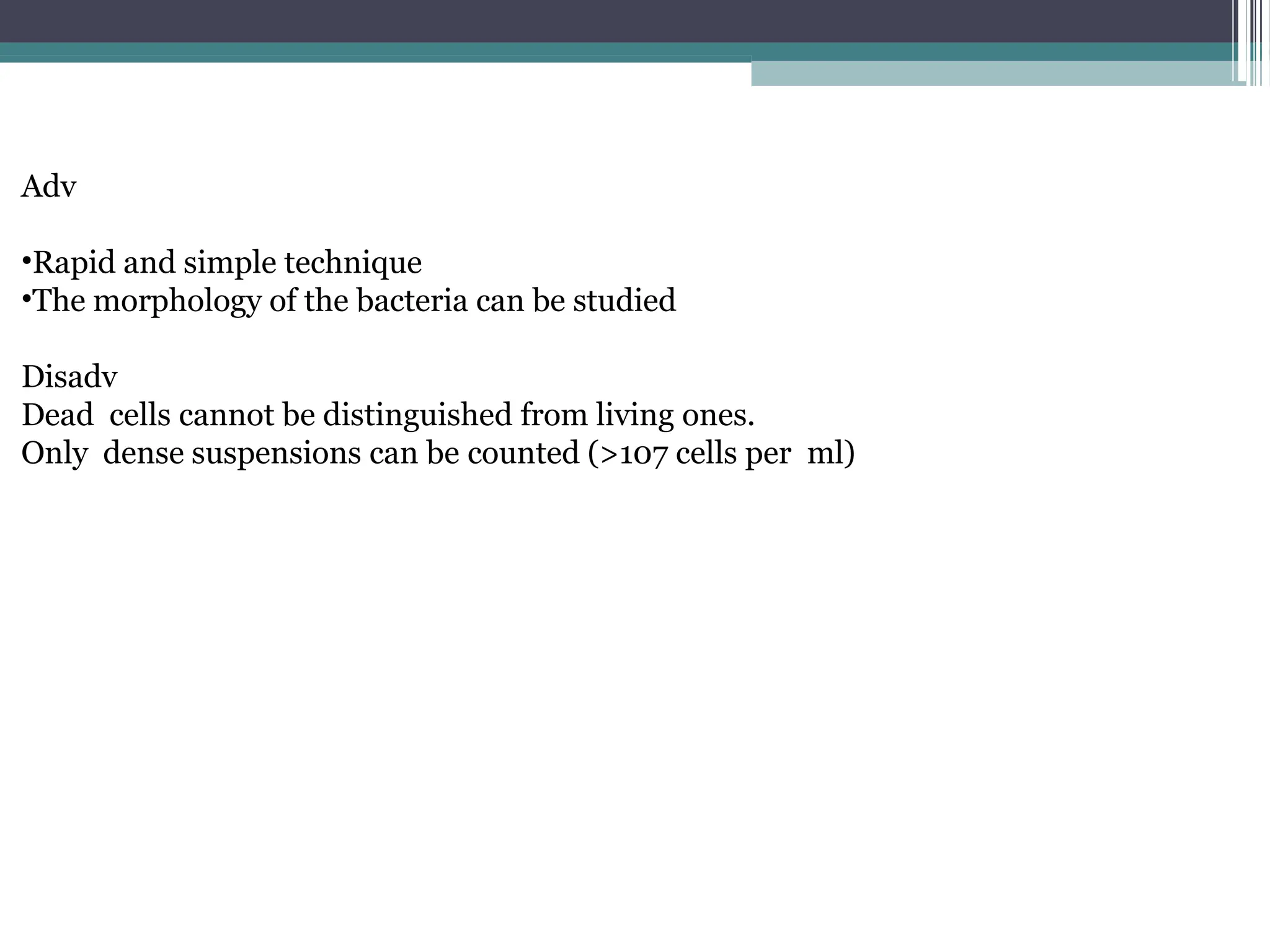
Adv
•Rapid and simple technique
•The morphology of the bacteria can be studied
Disadv
Dead cells cannot be distinguished from living ones.
Only dense suspensions can be counted (>107 cells per ml)
Electronic enumeration of cell
numbers
In this method the bacterial cell suspension is placed in an electronic
cell counter within which the bacteria is passed through a tiny orifice
of 10-30 micrometers in diameter. This orifice connects the two
compartments of the counter which contains an electrically
conductive solution. As each bacterium passes through the orifice,
the electrical resistance through the compartments increases. This
generates an electrical signal which automatically counted.
Disadv
The orifice tends to clog
There is no way to identify whether the cells are viable or not
21
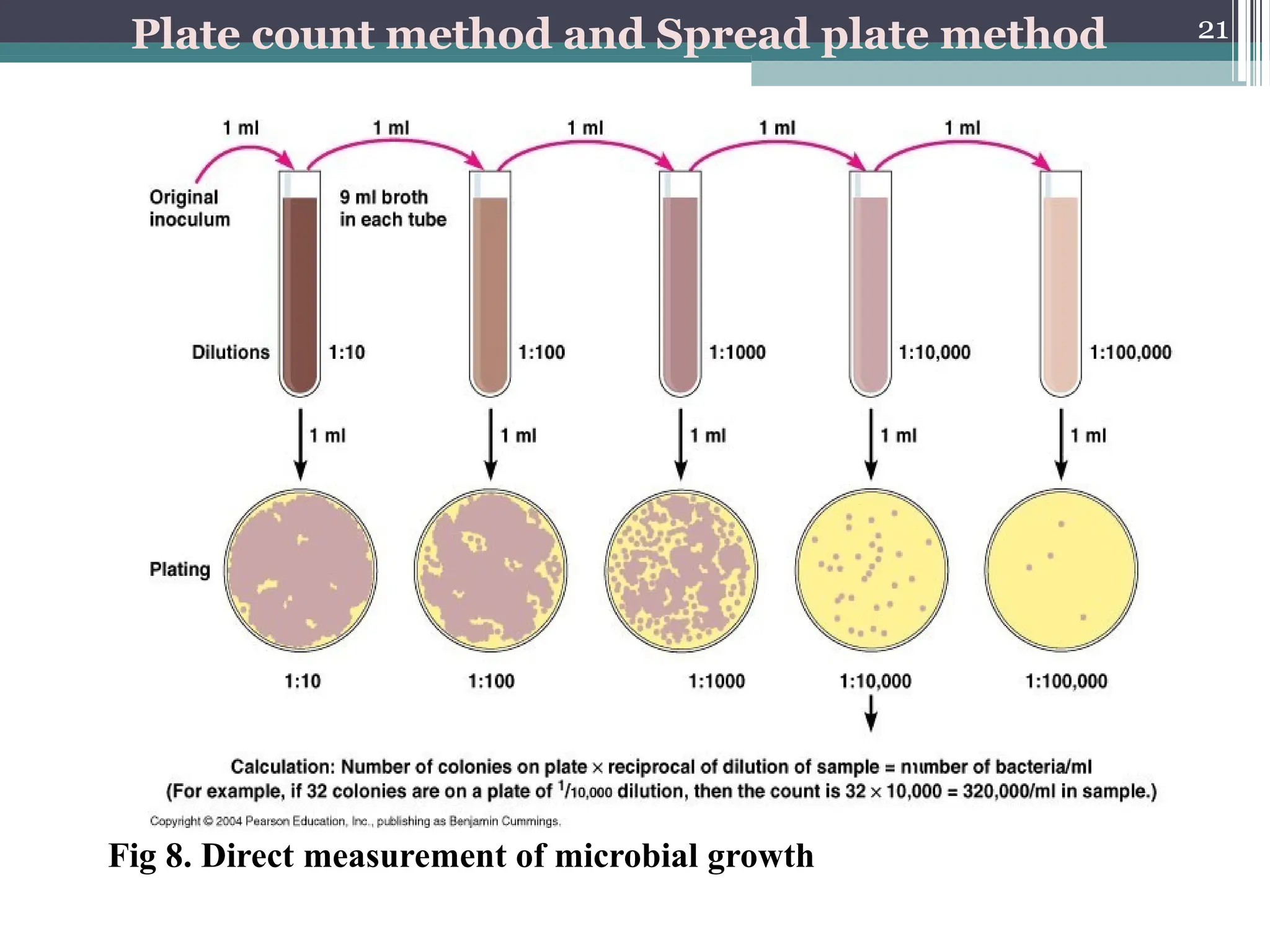
Fig 8. Direct measurement of microbial growth
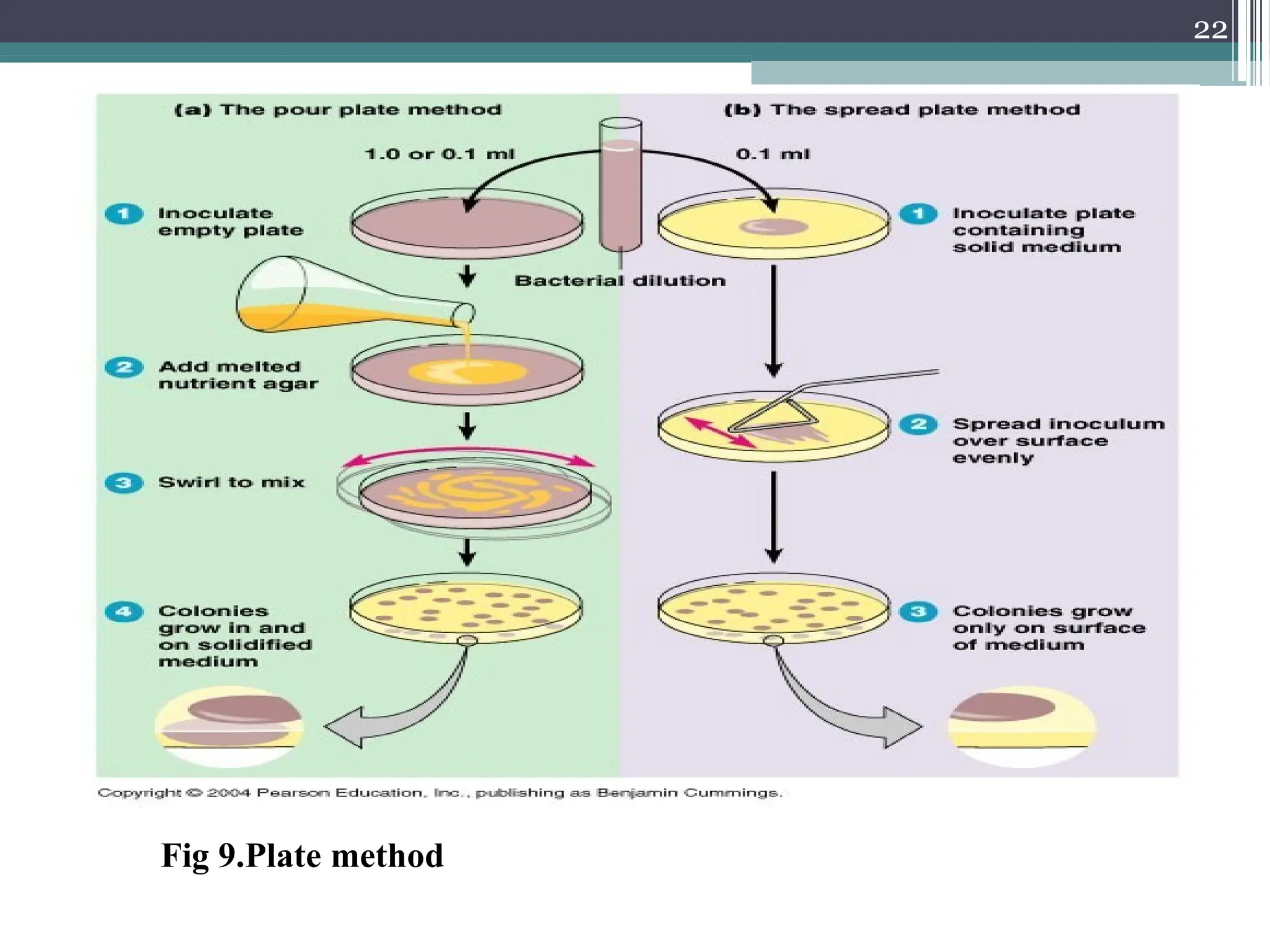
Plate count method and Spread plate method
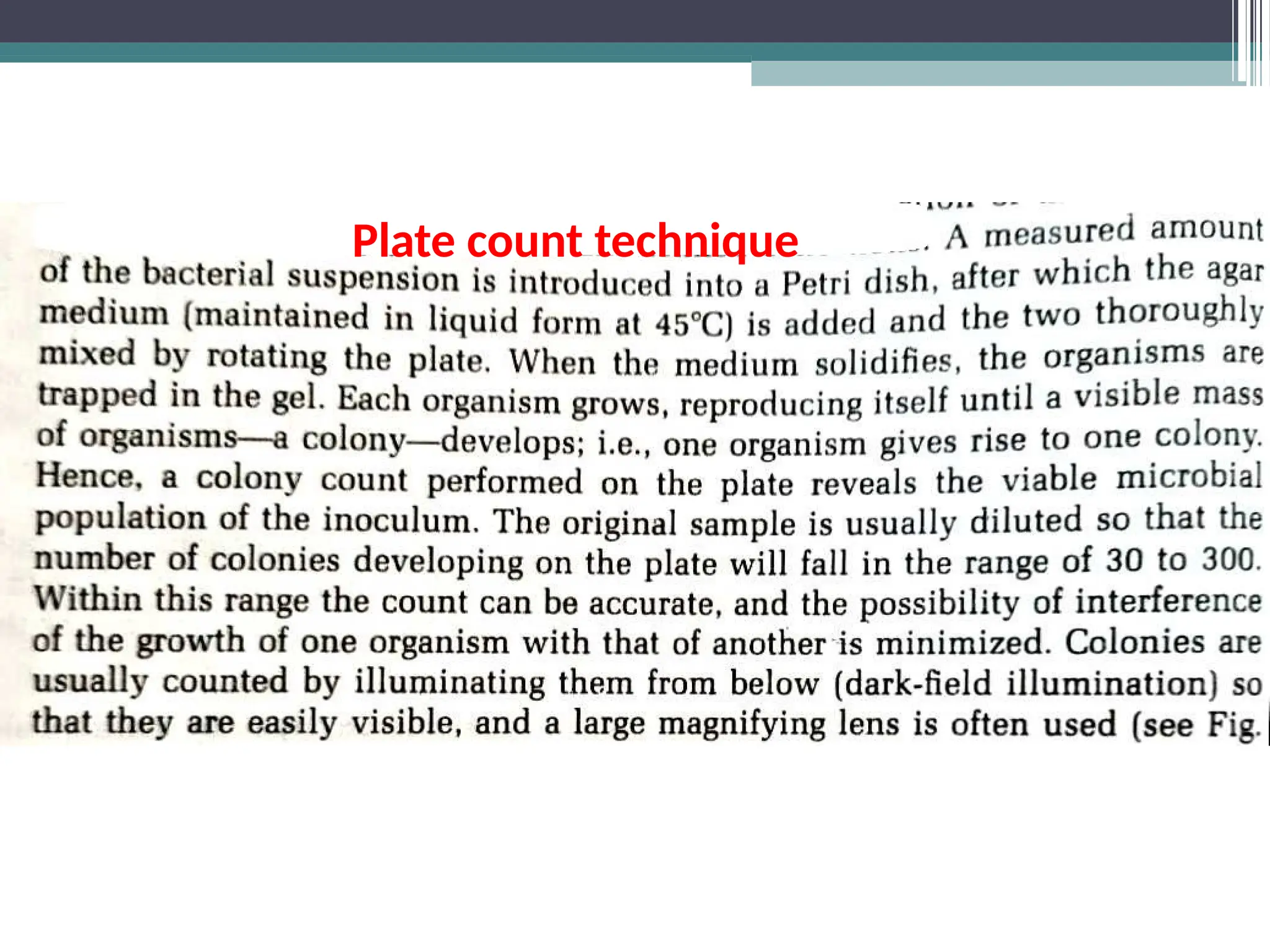
Plate count technique
22
Fig 9.Plate method
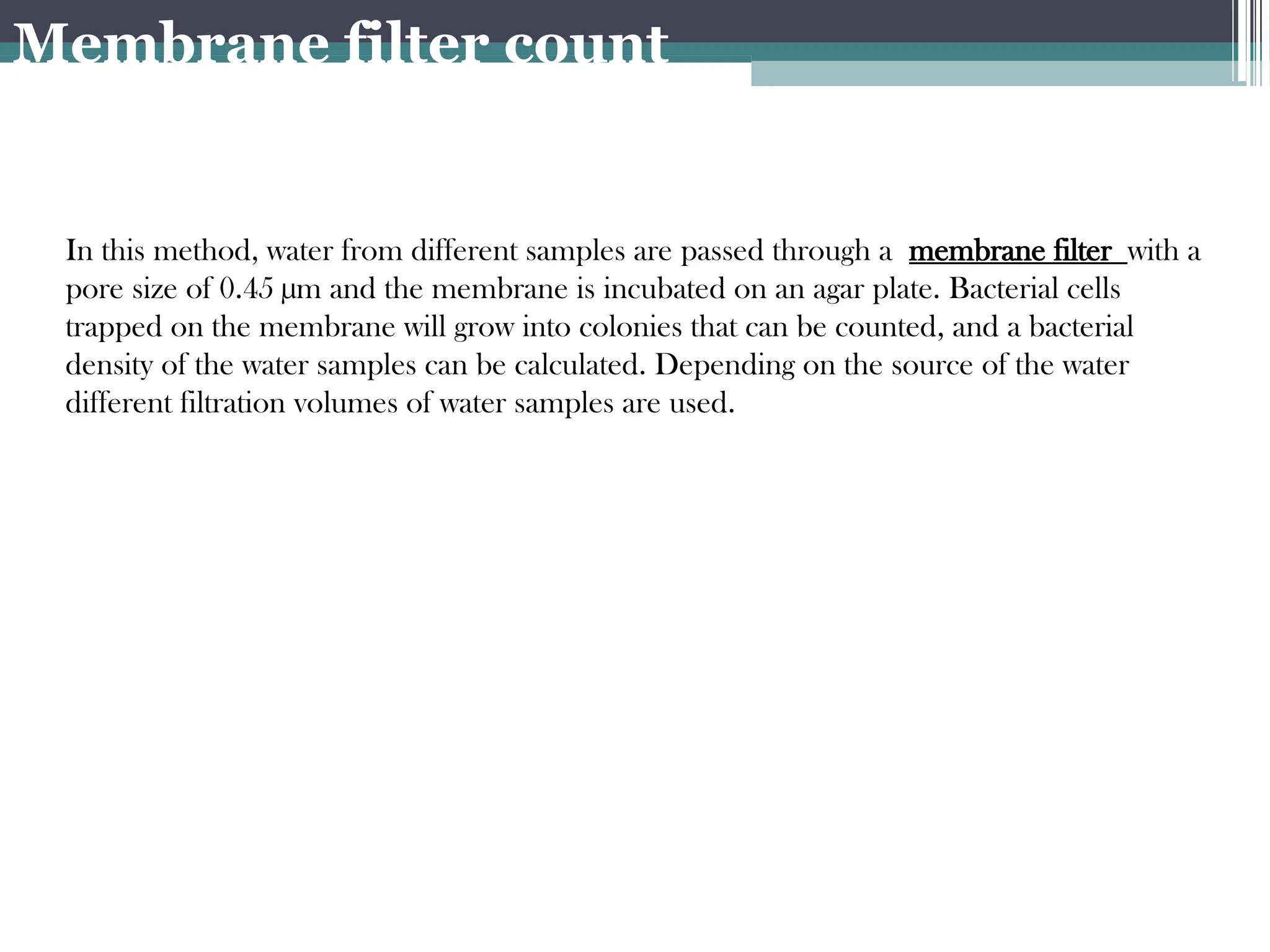
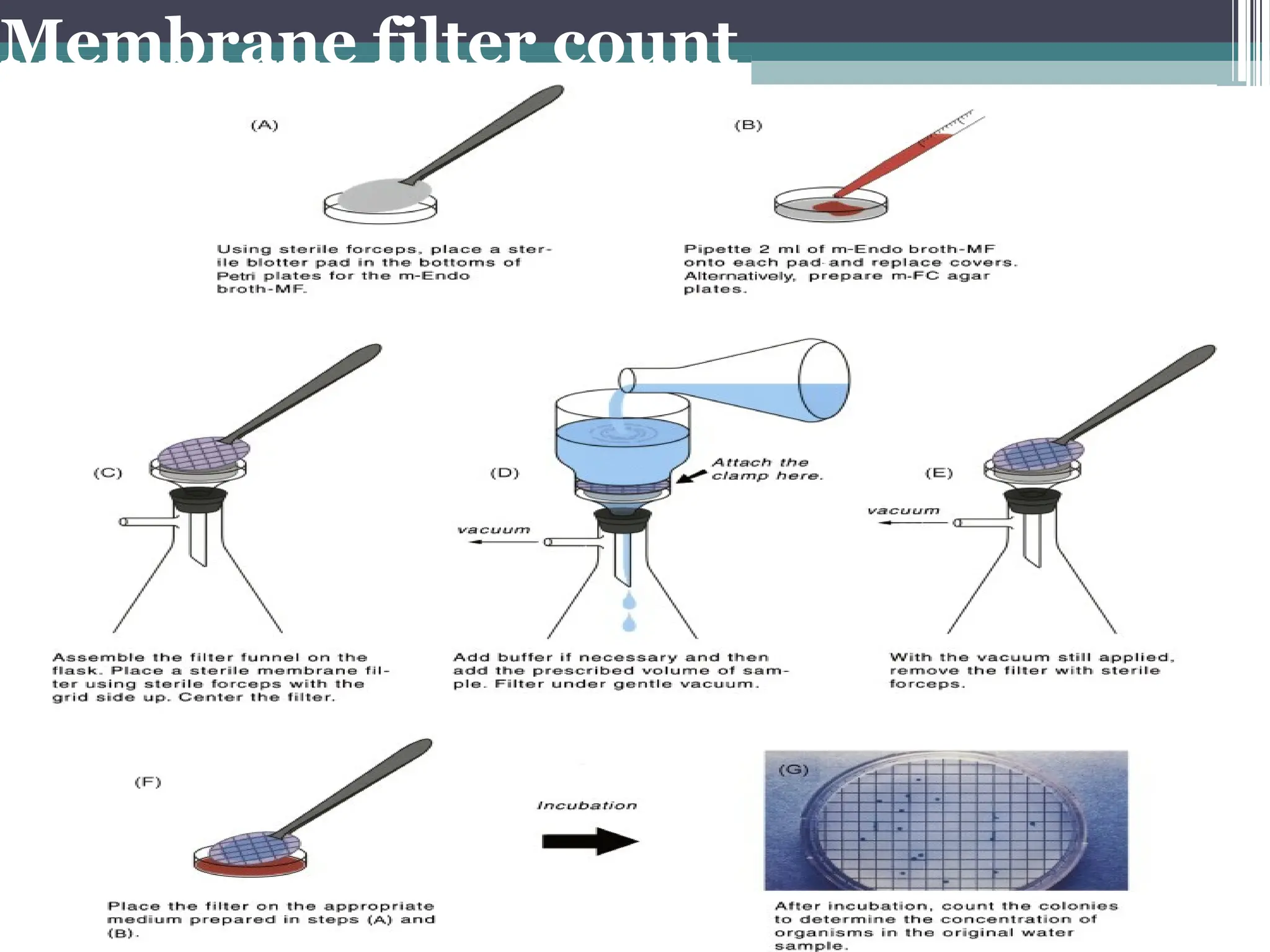
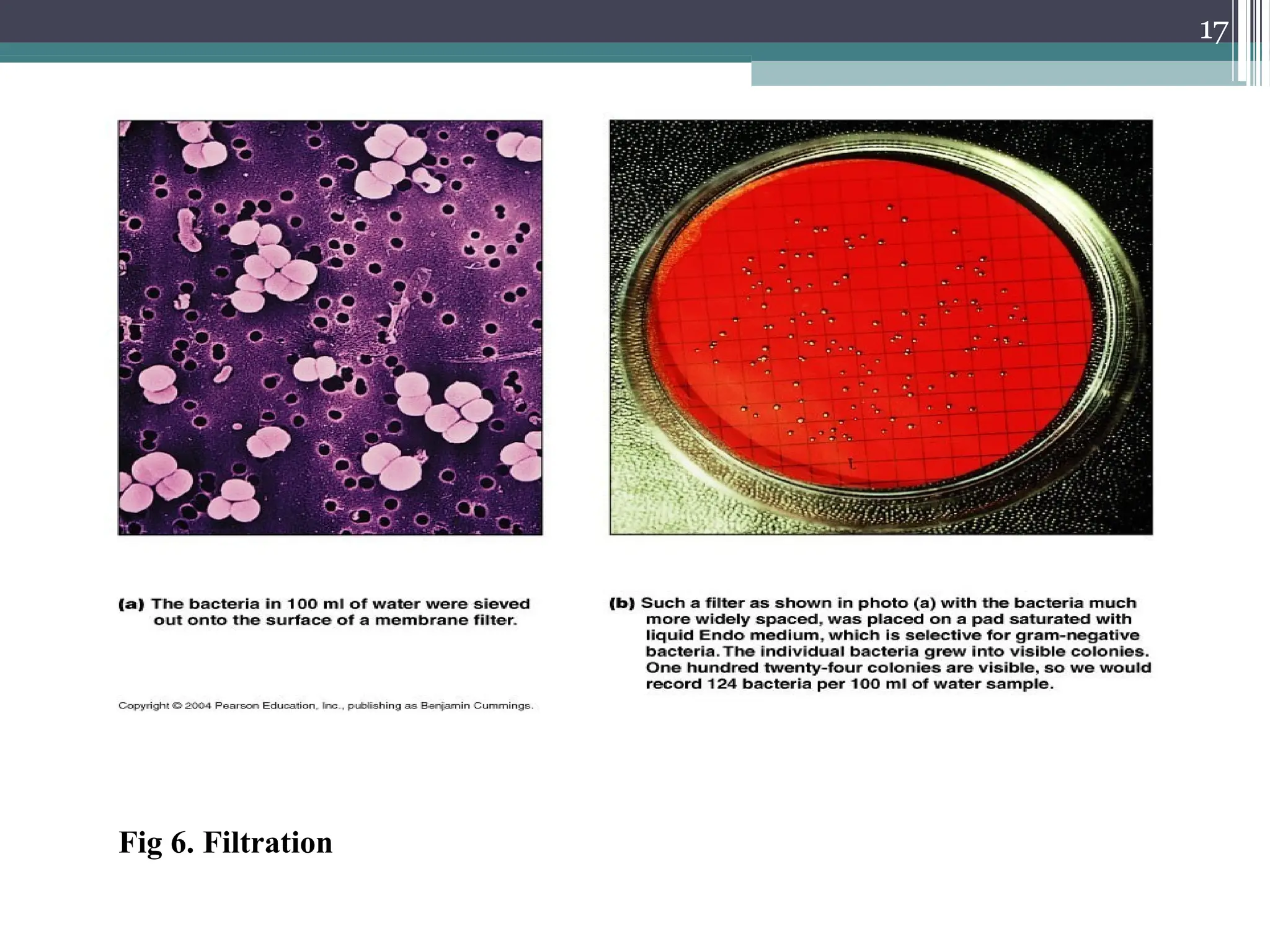
In this method, water from different samples are passed through a membrane filter with a
pore size of 0.45 µm and the membrane is incubated on an agar plate. Bacterial cells
trapped on the membrane will grow into colonies that can be counted, and a bacterial
density of the water samples can be calculated. Depending on the source of the water
different filtration volumes of water samples are used.
Membrane filter count
17
Fig 6. Filtration
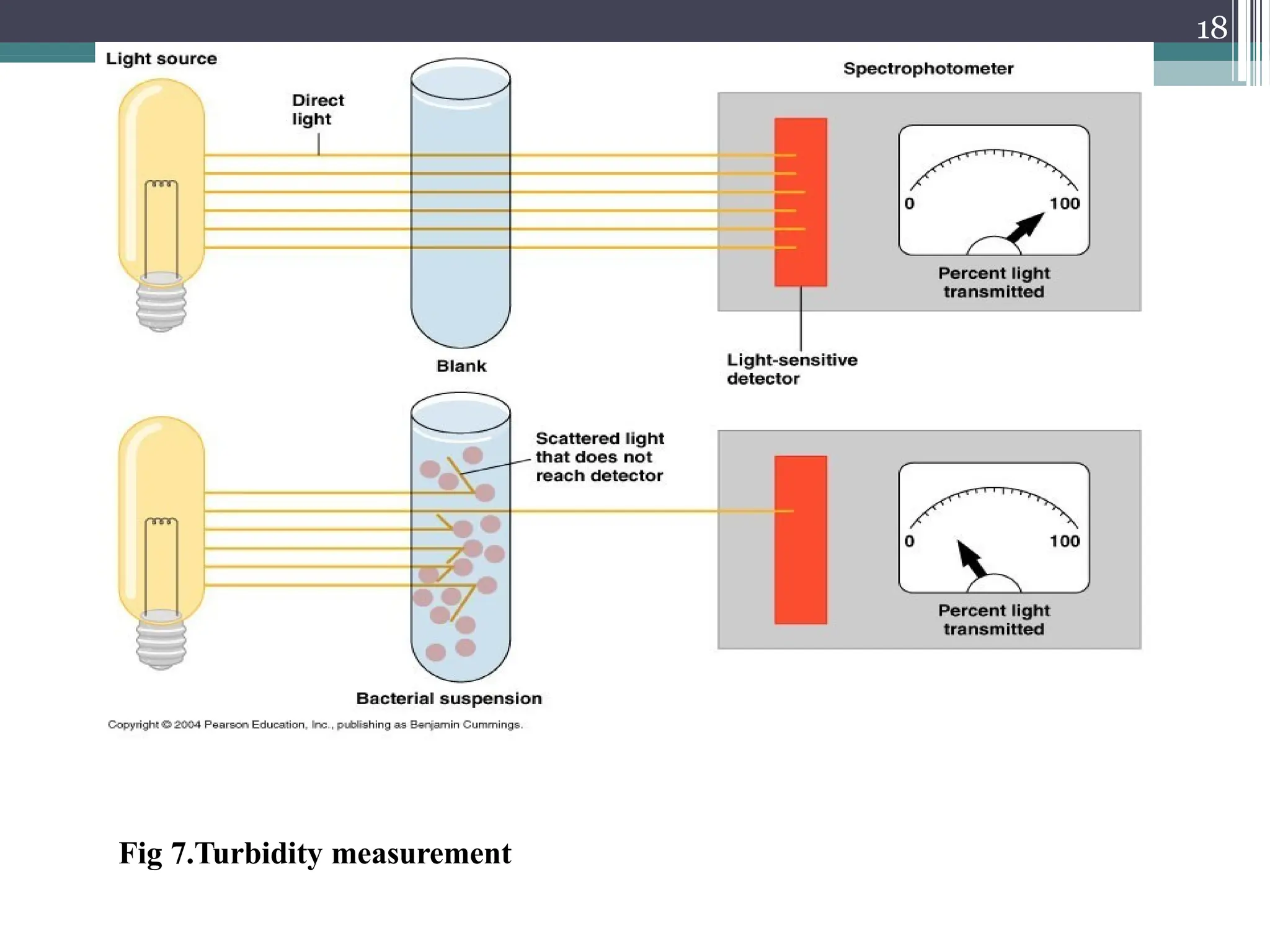
Turbidity measurements employ a variety of instruments to
determine the amount of light scattered by a suspension of cells.
Particulate objects such as bacteria scatter light in proportion to
their numbers. The turbidity or optical density of a suspension of
cells is directly related to cell mass or cell number, after
construction and calibration of a standard curve. The method is
simple and nondestructive, but the sensitivity is limited to about
107 cells per ml for most bacteria.
18
Fig 7.Turbidity measurement
Determination of Nitrogen content
Determination of dry weight of cells
27

Enumeration of bacteria or bacteriological measurement.pptx

  • 1.
  • 2.
  • 3.
  • 4.
    • • Methods formeasurement of the cells involve both direct and indirect techniques. 1. Direct microsopic count 2. Electronic enumeration of cell numbers 3. Plate count method 4.Spread plate method 5. Membrane filter count 6.Turidimetric methods 7. Determination of Nitrogen content 8.Determination of dry weight of cells etc 16
  • 5.
    19 • Methods forMeasurement of Cell Numbers • 1. Direct microscopic counts are possible using special slides known as Petroff Hausser’s counting chambers. • This is a special slide accurately ruled into squares that are 1/400 mm2 in area, glass cover slip rests 1/50 mm above the slide such that the volume over a square is 1/20,000 mm3 or 1/20,000,000cm3. if a suspension of bacteria is counted in the chamber, using a phase contrast microscope, if for ex. An average of 5 bacteria is present in each ruled square then, there are 5 x 20,000,000 cm3 or 108 bacteria per ml.
  • 6.
  • 7.
    Adv •Rapid and simpletechnique •The morphology of the bacteria can be studied Disadv Dead cells cannot be distinguished from living ones. Only dense suspensions can be counted (>107 cells per ml)
  • 8.
    Electronic enumeration ofcell numbers In this method the bacterial cell suspension is placed in an electronic cell counter within which the bacteria is passed through a tiny orifice of 10-30 micrometers in diameter. This orifice connects the two compartments of the counter which contains an electrically conductive solution. As each bacterium passes through the orifice, the electrical resistance through the compartments increases. This generates an electrical signal which automatically counted. Disadv The orifice tends to clog There is no way to identify whether the cells are viable or not
  • 9.
    21 Fig 8. Directmeasurement of microbial growth Plate count method and Spread plate method
  • 10.
  • 11.
  • 12.
    In this method,water from different samples are passed through a membrane filter with a pore size of 0.45 µm and the membrane is incubated on an agar plate. Bacterial cells trapped on the membrane will grow into colonies that can be counted, and a bacterial density of the water samples can be calculated. Depending on the source of the water different filtration volumes of water samples are used. Membrane filter count
  • 13.
  • 14.
  • 15.
    Turbidity measurements employa variety of instruments to determine the amount of light scattered by a suspension of cells. Particulate objects such as bacteria scatter light in proportion to their numbers. The turbidity or optical density of a suspension of cells is directly related to cell mass or cell number, after construction and calibration of a standard curve. The method is simple and nondestructive, but the sensitivity is limited to about 107 cells per ml for most bacteria.
  • 16.
  • 17.
  • 18.
    Determination of dryweight of cells
  • 19.