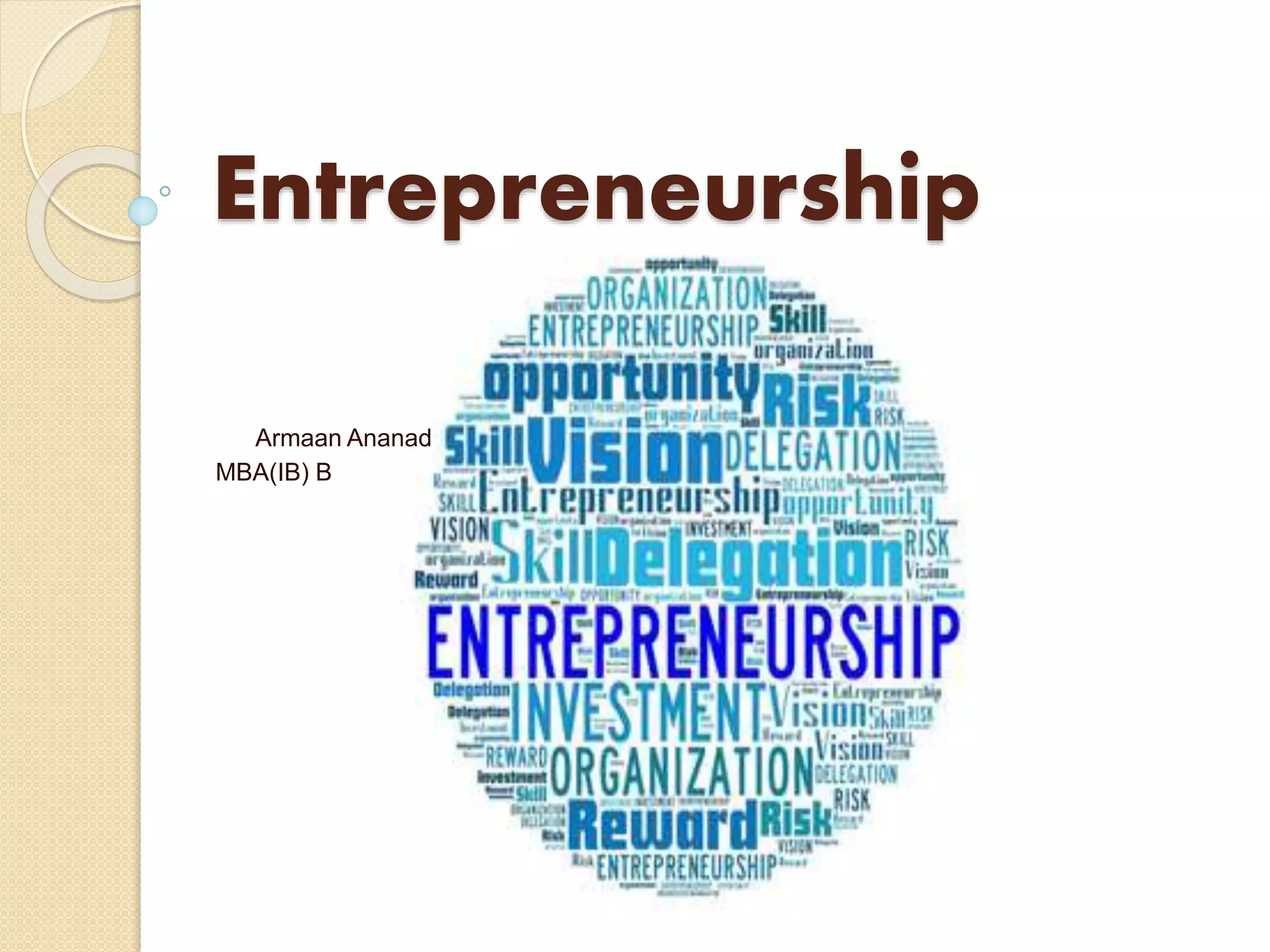
Entrepreneurship
Armaan Ananad
MBA(IB) B
Introduction
 “Entrepreneurship is neither science nor
art. It is the practise. It has a knowledge
base”
-Peter Drucker
 Entrepreneurship is the practise of starting new
organisation or revitalising mature org., particularly new
business generally In response identified oppurtunites.
 It is in the creation of more wealth, and in the
constant innovation from prevailing to the next best
practices, that the significance and importance of
Role of Entrepreneurship in
the Economy
 Increasing opportunities for employment (comprising
various)
 Competitive skill sets
 Additional wealth creation
 Introduction and dissemination of new methods and
technology;
 and
 Overall economic growth.
Entrepreneurship in India
 To quote the renowned economist, T.N. Srinivasan, ‘India has been
an entrepreneurial society…we had the entrepreneurial skill but
suppressed it for too long a time… and now it is thriving.’
 New entrepreneurs who do not belong to traditional business
communities have begun to emerge in large numbers.
Entrepreneurship has grown rapidly, visibly so, creating wealth and
generating employment
 In a recent survey by the Deloitte group, India
ranks 2 globally as home to the fastest growing
technology firms. 82 Indian companies entered the
Deloitte Technology Fast 500 list of AsiaPacific
Companies in 2007.
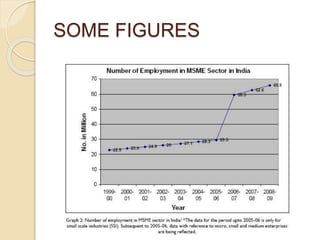
SOME FIGURES
5 global trends that can change India
1)The sharing economy and the world of experiences.
The web and attendant technologies have made it possible to
take physical products and turn them into services.
2)The transformative power of mobile, access and big data.
The emerging markets have been first adapters in the move to
mobile, with key services like news and banking being front-runners
in providing mobile services.
3) Retail is more about story-telling than about selling.
It's about being able to provide a consistent experience and
storyline across the platform.
4) Wearable technology and telemedicine transform health.
Ensuring internet connectivity, and in training nurses at the
remote location.
5) Education that builds hearts, minds and skills.
 For companies, those who leverage technologies to continuously
develop their talent will find themselves ready for market
changes and innovation.
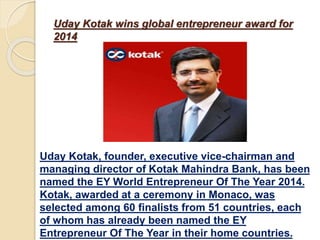
Uday Kotak wins global entrepreneur award for
2014
Uday Kotak, founder, executive vice-chairman and
managing director of Kotak Mahindra Bank, has been
named the EY World Entrepreneur Of The Year 2014.
Kotak, awarded at a ceremony in Monaco, was
selected among 60 finalists from 51 countries, each
of whom has already been named the EY
Entrepreneur Of The Year in their home countries.
Rise of the Global Entrepreneurial Class.
 Looking at the future, the average Indian is expected to
be 29 years old in 2020 as compared to 48 in USA, and 37
in China. Therefore , it is no surprise that we see
awareness and many a student movement creating
forums for entrepreneurship today.
 The Kerala government have also introduced recently an
entrepreneurship scheme for students at universities and
colleges that provides for accessibility to incubation
centres and academic incentives to those who approach
such centres.
 As a matter of fact is seen as one of the countries that is
par excellence with the rest of the Asian countries as far
as growing entrepreneurship is concerned.
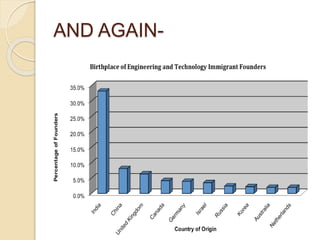
FIGURES AGAIN-
AND AGAIN-
Challenges Faced by
Entrepreneurs
 Bureaucratic potholes that ensure that a good number of
early days are spent running from one table to another, from
one department to another to get the necessary permissions
in place
 Poor infrastructure facilities prove to be a huge hurdle to the
distribution network. Scarcity of electricity, a good number of
non-motorable roads
 Gallup’s recent study found that though many indigenous
serial entrepreneurs have made their mark, they are not
ready to impart learnings from their journey to aspirants.
 Personal risk such as uncertainty of success, financial risk
such as loss of savings.
 Never-ending family pressure for job security through
traditional means. Add to it some myths like not being able to
find a good matrimonial alliance if one runs his/her own
business!
They don’t stop-
 In such an environment consumers become more
pessimistic, businesses invest less, and governments
spend heavily on security measures and defense in
terms of terrorism.
 Reducing consumers’ and firms’ expectations for the
future by terrorism.
 Triggering wider geopolitical conflict, which may cause
further economic disruptions through terrorism.
 Reports of corruption in a firm can cause shareholders
and investors to lose trust and confidence in the
business.
 Because corruption entails improper use of the
available resources, it can jeopardize the efficiency of a
business organization.
BIBLOGRAPHY
 http://kalyan-city.blogspot.com/2012/04/what-are-challenges-
before-indian.html
 http://www.journal.bonfring.org/papers/iems/volume1/BIJIEM
S-01-1004.pdf
 http://lurnq.com/lesson/Finding-A-Place-Under-The-Sun-
Entrepreneurial-Pursuit-in-India-s-Growth-
Story/section/Challenges-Faced-by-Entrepreneurs/
 http://iveybusinessjournal.com/topics/global-business/indian-
entrepreneurship-and-the-challenges-to-indias-
growth#.U5Xbt8s9KP8
 Wiki
 http://www.kas.de/wf/doc/kas_10991-544-2-
30.pdf?131022171603
 http://yourbusiness.azcentral.com/effects-corruption-
business-15261.html
.
 .

Entrepreneurship in India and challenges

  • 1.
  • 2.
    Introduction  “Entrepreneurship isneither science nor art. It is the practise. It has a knowledge base” -Peter Drucker  Entrepreneurship is the practise of starting new organisation or revitalising mature org., particularly new business generally In response identified oppurtunites.  It is in the creation of more wealth, and in the constant innovation from prevailing to the next best practices, that the significance and importance of
  • 3.
    Role of Entrepreneurshipin the Economy  Increasing opportunities for employment (comprising various)  Competitive skill sets  Additional wealth creation  Introduction and dissemination of new methods and technology;  and  Overall economic growth.
  • 4.
    Entrepreneurship in India To quote the renowned economist, T.N. Srinivasan, ‘India has been an entrepreneurial society…we had the entrepreneurial skill but suppressed it for too long a time… and now it is thriving.’  New entrepreneurs who do not belong to traditional business communities have begun to emerge in large numbers. Entrepreneurship has grown rapidly, visibly so, creating wealth and generating employment  In a recent survey by the Deloitte group, India ranks 2 globally as home to the fastest growing technology firms. 82 Indian companies entered the Deloitte Technology Fast 500 list of AsiaPacific Companies in 2007.
  • 5.
  • 6.
    5 global trendsthat can change India 1)The sharing economy and the world of experiences. The web and attendant technologies have made it possible to take physical products and turn them into services. 2)The transformative power of mobile, access and big data. The emerging markets have been first adapters in the move to mobile, with key services like news and banking being front-runners in providing mobile services. 3) Retail is more about story-telling than about selling. It's about being able to provide a consistent experience and storyline across the platform. 4) Wearable technology and telemedicine transform health. Ensuring internet connectivity, and in training nurses at the remote location. 5) Education that builds hearts, minds and skills.  For companies, those who leverage technologies to continuously develop their talent will find themselves ready for market changes and innovation.
  • 7.
    Uday Kotak winsglobal entrepreneur award for 2014 Uday Kotak, founder, executive vice-chairman and managing director of Kotak Mahindra Bank, has been named the EY World Entrepreneur Of The Year 2014. Kotak, awarded at a ceremony in Monaco, was selected among 60 finalists from 51 countries, each of whom has already been named the EY Entrepreneur Of The Year in their home countries.
  • 8.
    Rise of theGlobal Entrepreneurial Class.  Looking at the future, the average Indian is expected to be 29 years old in 2020 as compared to 48 in USA, and 37 in China. Therefore , it is no surprise that we see awareness and many a student movement creating forums for entrepreneurship today.  The Kerala government have also introduced recently an entrepreneurship scheme for students at universities and colleges that provides for accessibility to incubation centres and academic incentives to those who approach such centres.  As a matter of fact is seen as one of the countries that is par excellence with the rest of the Asian countries as far as growing entrepreneurship is concerned.
  • 9.
  • 10.
  • 11.
    Challenges Faced by Entrepreneurs Bureaucratic potholes that ensure that a good number of early days are spent running from one table to another, from one department to another to get the necessary permissions in place  Poor infrastructure facilities prove to be a huge hurdle to the distribution network. Scarcity of electricity, a good number of non-motorable roads  Gallup’s recent study found that though many indigenous serial entrepreneurs have made their mark, they are not ready to impart learnings from their journey to aspirants.  Personal risk such as uncertainty of success, financial risk such as loss of savings.  Never-ending family pressure for job security through traditional means. Add to it some myths like not being able to find a good matrimonial alliance if one runs his/her own business!
  • 12.
    They don’t stop- In such an environment consumers become more pessimistic, businesses invest less, and governments spend heavily on security measures and defense in terms of terrorism.  Reducing consumers’ and firms’ expectations for the future by terrorism.  Triggering wider geopolitical conflict, which may cause further economic disruptions through terrorism.  Reports of corruption in a firm can cause shareholders and investors to lose trust and confidence in the business.  Because corruption entails improper use of the available resources, it can jeopardize the efficiency of a business organization.
  • 13.
    BIBLOGRAPHY  http://kalyan-city.blogspot.com/2012/04/what-are-challenges- before-indian.html  http://www.journal.bonfring.org/papers/iems/volume1/BIJIEM S-01-1004.pdf http://lurnq.com/lesson/Finding-A-Place-Under-The-Sun- Entrepreneurial-Pursuit-in-India-s-Growth- Story/section/Challenges-Faced-by-Entrepreneurs/  http://iveybusinessjournal.com/topics/global-business/indian- entrepreneurship-and-the-challenges-to-indias- growth#.U5Xbt8s9KP8  Wiki  http://www.kas.de/wf/doc/kas_10991-544-2- 30.pdf?131022171603  http://yourbusiness.azcentral.com/effects-corruption- business-15261.html
  • 14.