Genre: a distinctive category
of literary composition
Literature Genre: marked by
distinctive style, form and content.
One is just right for YOU!
Are You for Real?
NON-FICTION: real, factual, deals
with actual people, places, and
events
FICTION: unreal, not true, not factual,
a made up story
Biography
Story of a real person’s life
Form of nonfiction (true)
Bios means life
Graphe means to write
Author must do research by
interviewing the subject or those who
knew the subject
Realistic Fiction
Form of fiction (not true)
Accurately reflects life as it could be lived
today
Everything in the story could happen to real
people living in our natural physical world
The characters have normal human
characteristics
Story may be set in real places, but the
story is NOT based on history
Autobiography
Form of nonfiction (true)
Story of a real person’s life
Auto means self
Bios means life
Graphe means to write
Written by the person the story is about
Author does not need to do research
Author shares how he/she feels and what
he/she thinks
Historical Fiction
Form of fiction (not true)
Based on historical events
Authentic settings
Characters portrayed in realistic
manner
Some characters may be actual
people from history, but the story is
fictional
Artistic mix of fiction and historical
Science Fiction
Form of fiction (not true)
Contains some sort of scientific
element, such as
Outer space
Medicine
Technology

Within the realm of possibility
Characters have some believable
traits/qualities
Fantasy
Form of fiction (not true)
Contains one or more of the following:
supernatural occurrences
characters with magical powers
things with magical powers
animals with human characteristics
real people in fantastic places
fantastic creatures or characters in real
situations
High Fantasy
Form of fiction (not real)
Good vs. evil (supernatural/evil forces)
Story written in a series of books/ volumes
Coming- of- age themes
Include fantastical elements, such as:
Elves and dwarves
Magic
Wizards
Invented languages
quests
Mystery
Form of fiction (not true)
Story revolves around a puzzle/problem
Characters deal with the solution to a
puzzle/problem, such as
finding a missing item/person
unraveling a secret
rationalize an event that is not explained

Contains clues/hints that help the
characters and readers solve the
puzzle/problem
Folktales
Form of fiction (not true)
Story that teaches a lesson
Contain the beliefs and customs of a
region or country
Original story is modified to make it
more interesting or more humorous
Present larger-than-life characters
and very unusual happenings
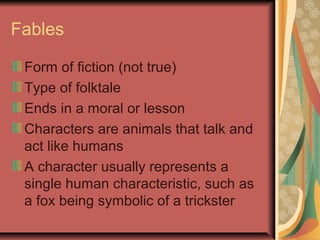
Fables
Form of fiction (not true)
Type of folktale
Ends in a moral or lesson
Characters are animals that talk and
act like humans
A character usually represents a
single human characteristic, such as
a fox being symbolic of a trickster
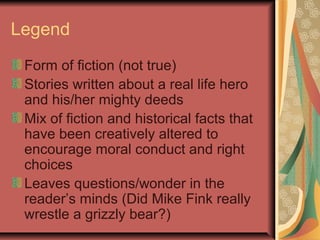
Legend
Form of fiction (not true)
Stories written about a real life hero
and his/her mighty deeds
Mix of fiction and historical facts that
have been creatively altered to
encourage moral conduct and right
choices
Leaves questions/wonder in the
reader’s minds (Did Mike Fink really
wrestle a grizzly bear?)
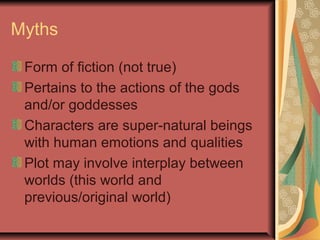
Myths
Form of fiction (not true)
Pertains to the actions of the gods
and/or goddesses
Characters are super-natural beings
with human emotions and qualities
Plot may involve interplay between
worlds (this world and
previous/original world)
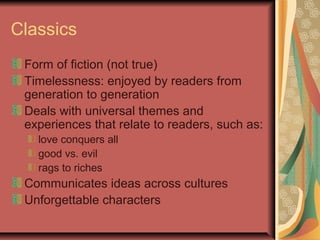
Classics
Form of fiction (not true)
Timelessness: enjoyed by readers from
generation to generation
Deals with universal themes and
experiences that relate to readers, such as:
love conquers all
good vs. evil
rags to riches

Communicates ideas across cultures
Unforgettable characters

English - ESL - Genre

  • 1.
    Genre: a distinctivecategory of literary composition Literature Genre: marked by distinctive style, form and content. One is just right for YOU!
  • 2.
    Are You forReal? NON-FICTION: real, factual, deals with actual people, places, and events FICTION: unreal, not true, not factual, a made up story
  • 3.
    Biography Story of areal person’s life Form of nonfiction (true) Bios means life Graphe means to write Author must do research by interviewing the subject or those who knew the subject
  • 4.
    Realistic Fiction Form offiction (not true) Accurately reflects life as it could be lived today Everything in the story could happen to real people living in our natural physical world The characters have normal human characteristics Story may be set in real places, but the story is NOT based on history
  • 5.
    Autobiography Form of nonfiction(true) Story of a real person’s life Auto means self Bios means life Graphe means to write Written by the person the story is about Author does not need to do research Author shares how he/she feels and what he/she thinks
  • 6.
    Historical Fiction Form offiction (not true) Based on historical events Authentic settings Characters portrayed in realistic manner Some characters may be actual people from history, but the story is fictional Artistic mix of fiction and historical
  • 7.
    Science Fiction Form offiction (not true) Contains some sort of scientific element, such as Outer space Medicine Technology Within the realm of possibility Characters have some believable traits/qualities
  • 8.
    Fantasy Form of fiction(not true) Contains one or more of the following: supernatural occurrences characters with magical powers things with magical powers animals with human characteristics real people in fantastic places fantastic creatures or characters in real situations
  • 9.
    High Fantasy Form offiction (not real) Good vs. evil (supernatural/evil forces) Story written in a series of books/ volumes Coming- of- age themes Include fantastical elements, such as: Elves and dwarves Magic Wizards Invented languages quests
  • 10.
    Mystery Form of fiction(not true) Story revolves around a puzzle/problem Characters deal with the solution to a puzzle/problem, such as finding a missing item/person unraveling a secret rationalize an event that is not explained Contains clues/hints that help the characters and readers solve the puzzle/problem
  • 11.
    Folktales Form of fiction(not true) Story that teaches a lesson Contain the beliefs and customs of a region or country Original story is modified to make it more interesting or more humorous Present larger-than-life characters and very unusual happenings
  • 12.
    Fables Form of fiction(not true) Type of folktale Ends in a moral or lesson Characters are animals that talk and act like humans A character usually represents a single human characteristic, such as a fox being symbolic of a trickster
  • 13.
    Legend Form of fiction(not true) Stories written about a real life hero and his/her mighty deeds Mix of fiction and historical facts that have been creatively altered to encourage moral conduct and right choices Leaves questions/wonder in the reader’s minds (Did Mike Fink really wrestle a grizzly bear?)
  • 14.
    Myths Form of fiction(not true) Pertains to the actions of the gods and/or goddesses Characters are super-natural beings with human emotions and qualities Plot may involve interplay between worlds (this world and previous/original world)
  • 15.
    Classics Form of fiction(not true) Timelessness: enjoyed by readers from generation to generation Deals with universal themes and experiences that relate to readers, such as: love conquers all good vs. evil rags to riches Communicates ideas across cultures Unforgettable characters