What is the new era of work?
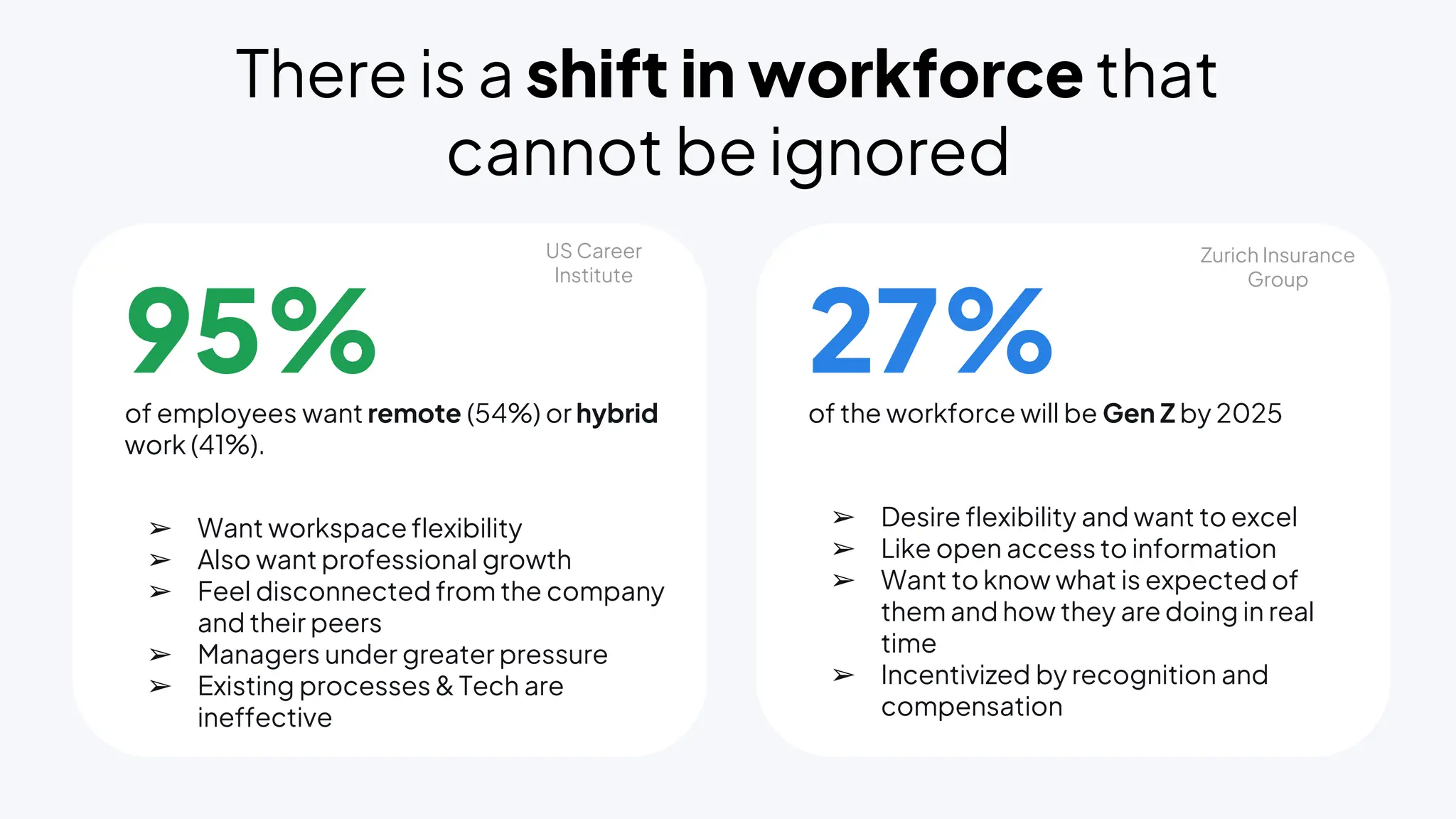
There is a shift in workforce that
cannot be ignored
95%
of employees want remote (54%) or hybrid
work (41%).
➢ Want workspace flexibility
➢ Also want professional growth
➢ Feel disconnected from the company
and their peers
➢ Managers under greater pressure
➢ Existing processes & Tech are
ineffective
US Career
Institute
27%
of the workforce will be Gen Z by 2025
➢ Desire flexibility and want to excel
➢ Like open access to information
➢ Want to know what is expected of
them and how they are doing in real
time
➢ Incentivized by recognition and
compensation
Zurich Insurance
Group
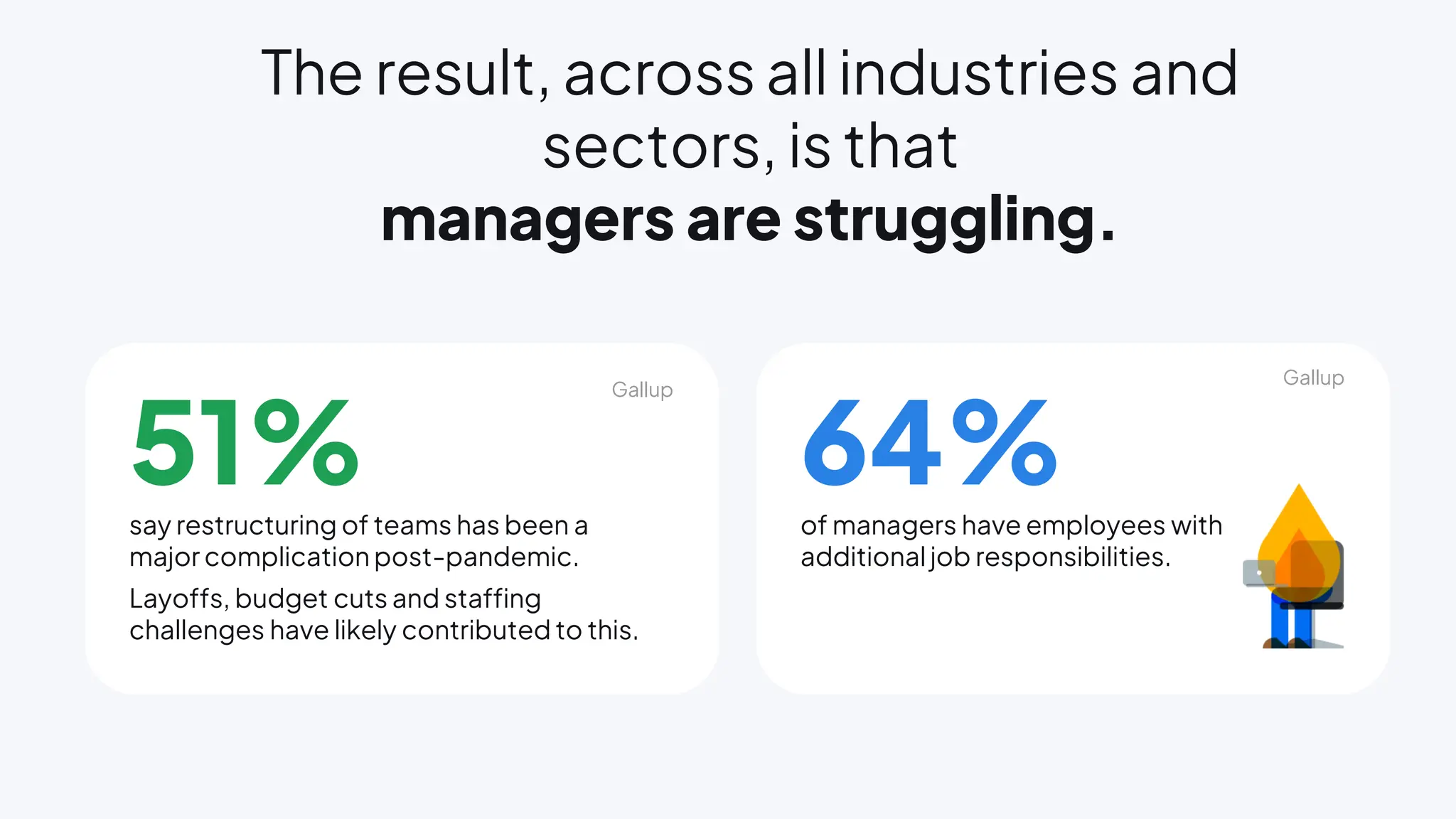
The result, across all industries and
sectors, is that
managers are struggling.
51%
say restructuring of teams has been a
major complication post-pandemic.
Layoffs, budget cuts and staffing
challenges have likely contributed to this.
Gallup
64%
of managers have employees with
additional job responsibilities.
Gallup
What are companies doing wrong today?
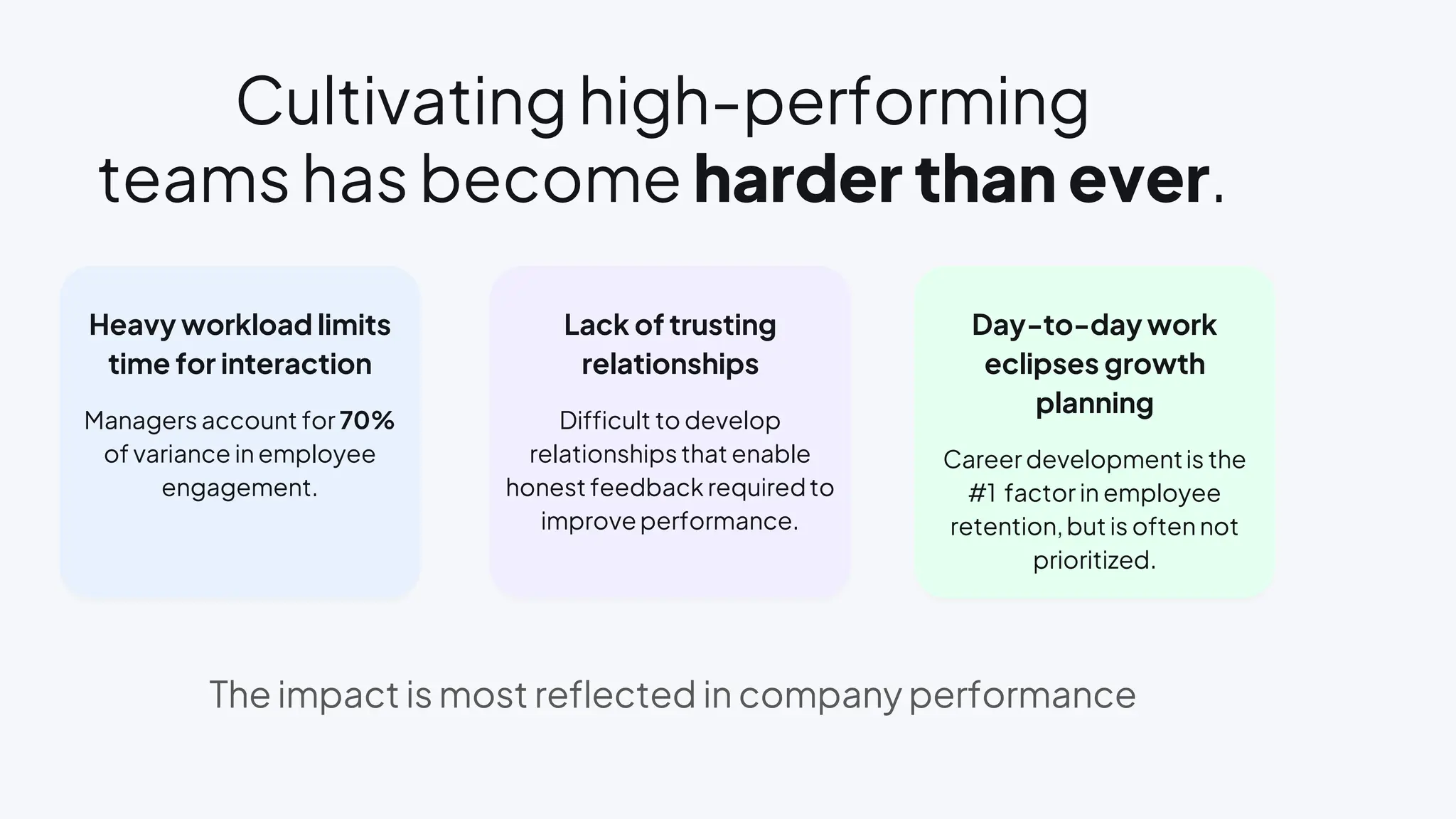
Cultivating high-performing
teams has become harder than ever.
Heavy workload limits
time for interaction
Managers account for 70%
of variance in employee
engagement.
Lack of trusting
relationships
Difficult to develop
relationships that enable
honest feedback requiredto
improveperformance.
Day-to-day work
eclipses growth
planning
Career developmentis the
#1 factor in employee
retention,but is often not
prioritized.
The impact is most reflected in company performance
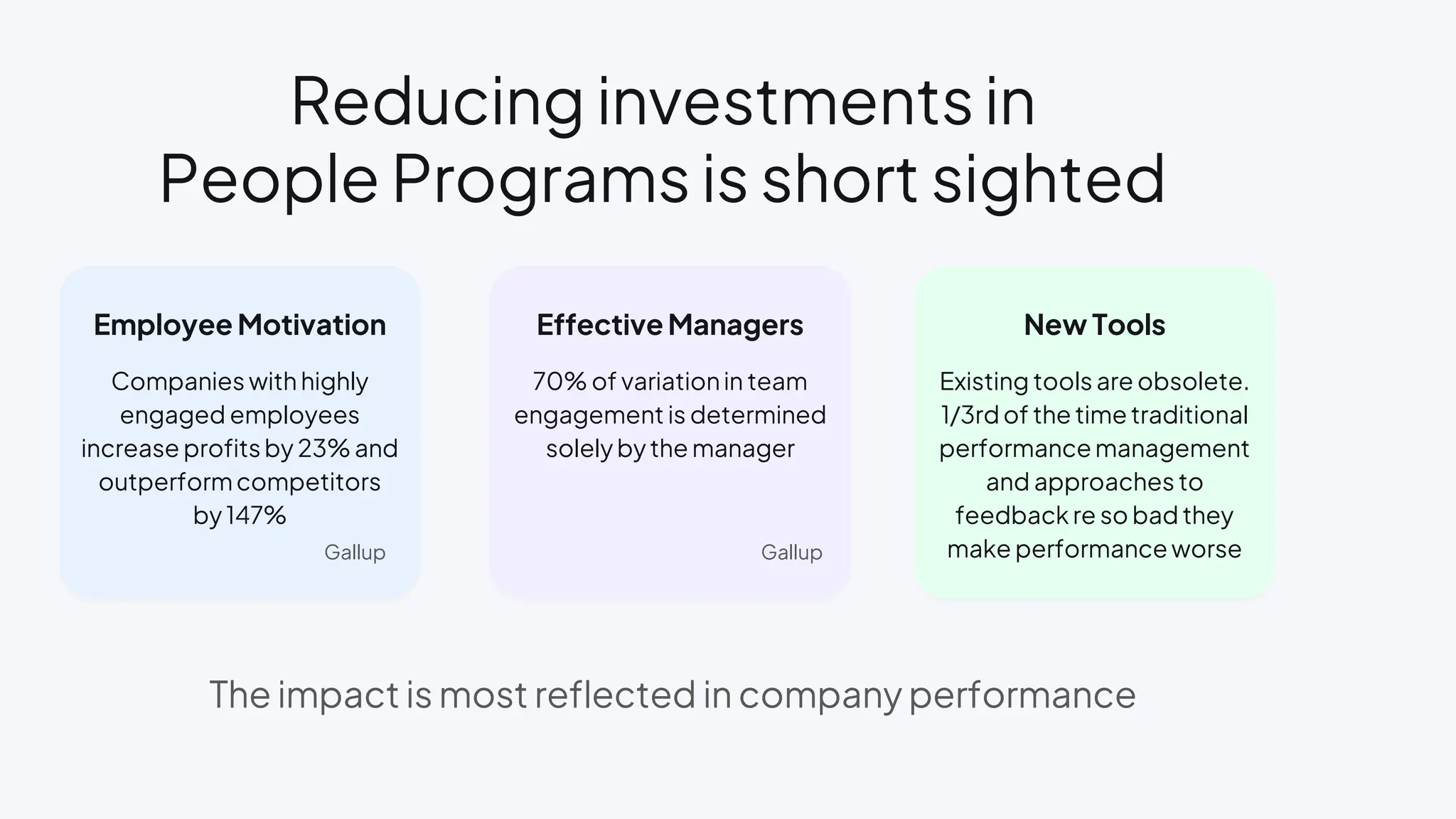
Reducing investments in
People Programs is short sighted
Employee Motivation
Companies with highly
engaged employees
increase profits by 23% and
outperformcompetitors
by 147%
Effective Managers
70% of variationin team
engagement is determined
solely by the manager
New Tools
Existing tools are obsolete.
1/3rd of the time traditional
performance management
and approaches to
feedback re so bad they
make performance worse
The impact is most reflected in company performance
Gallup Gallup
How should companies get this right?
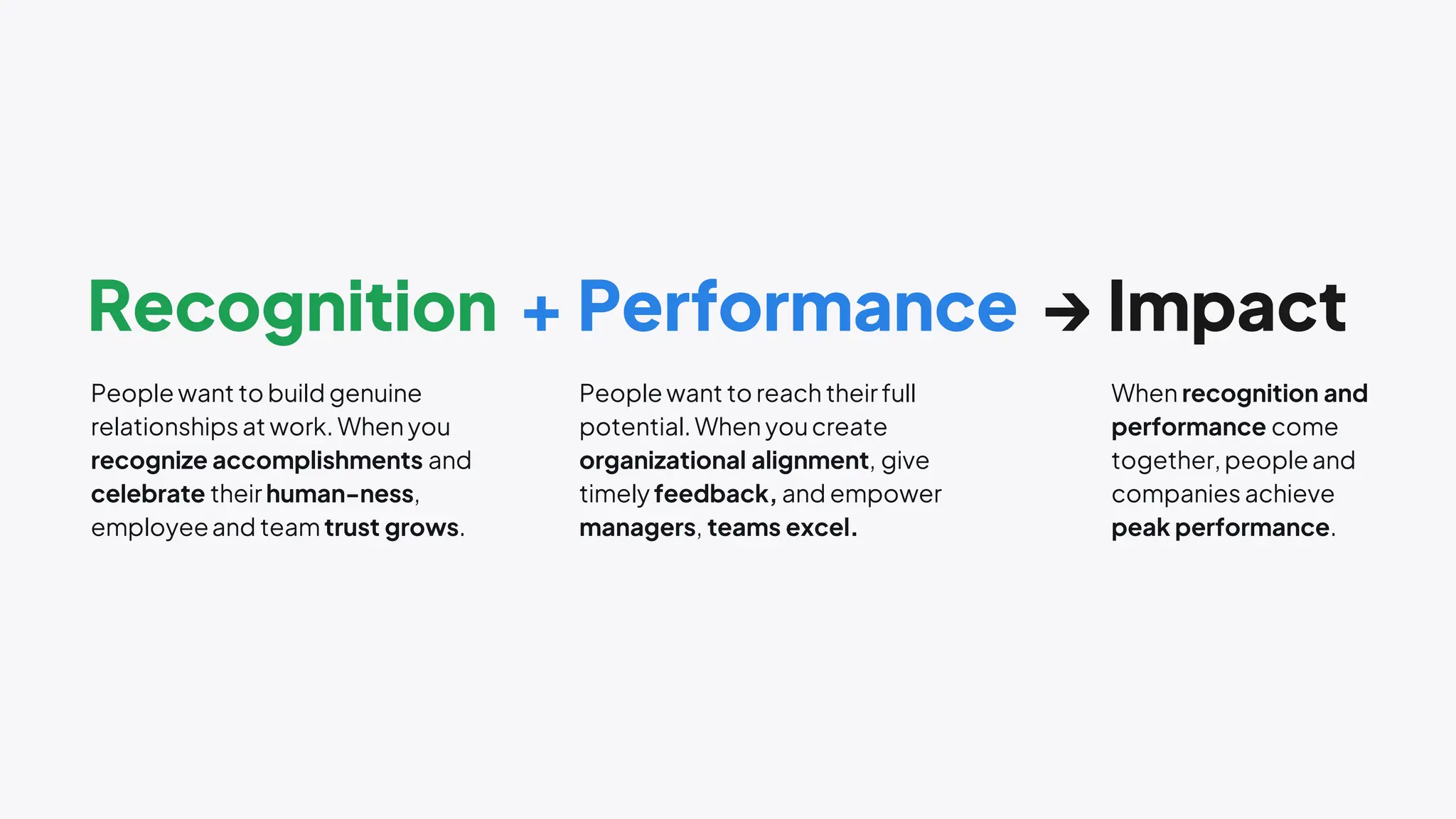
Recognition → Impact
+ Performance
Recognition → Impact
People want to build genuine
relationships at work. When you
recognize accomplishments and
celebrate their human-ness,
employeeand team trust grows.
People want to reach their full
potential.When youcreate
organizational alignment, give
timely feedback, and empower
managers, teams excel.
When recognition and
performance come
together, peopleand
companies achieve
peak performance.
+ Performance
Where do we start? What do we need to do?
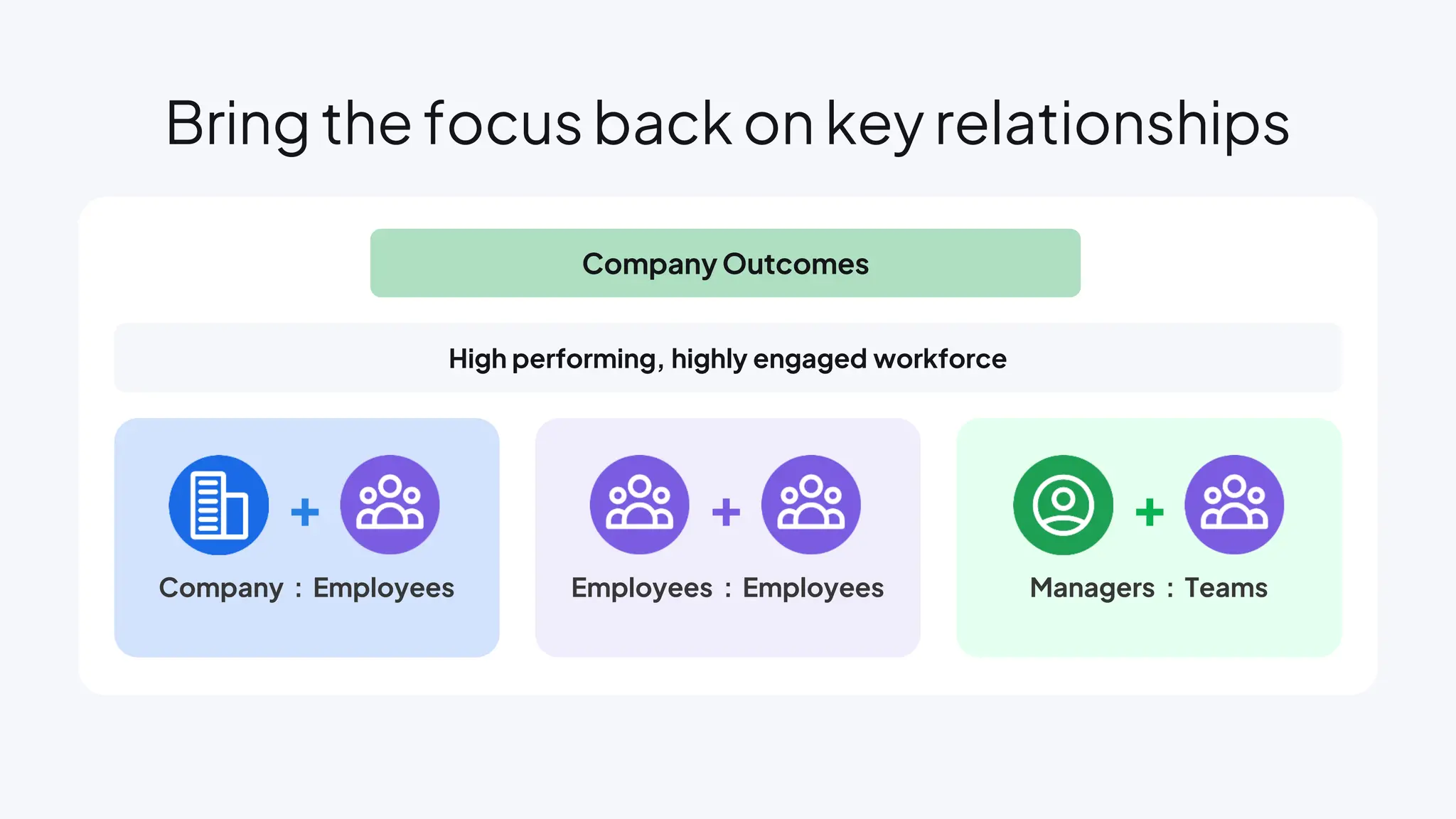
Bring the focus back on key relationships
Company Outcomes
High performing, highly engaged workforce
Employees : Employees
+
Managers : Teams
+
Company : Employees
+
Company : Employees
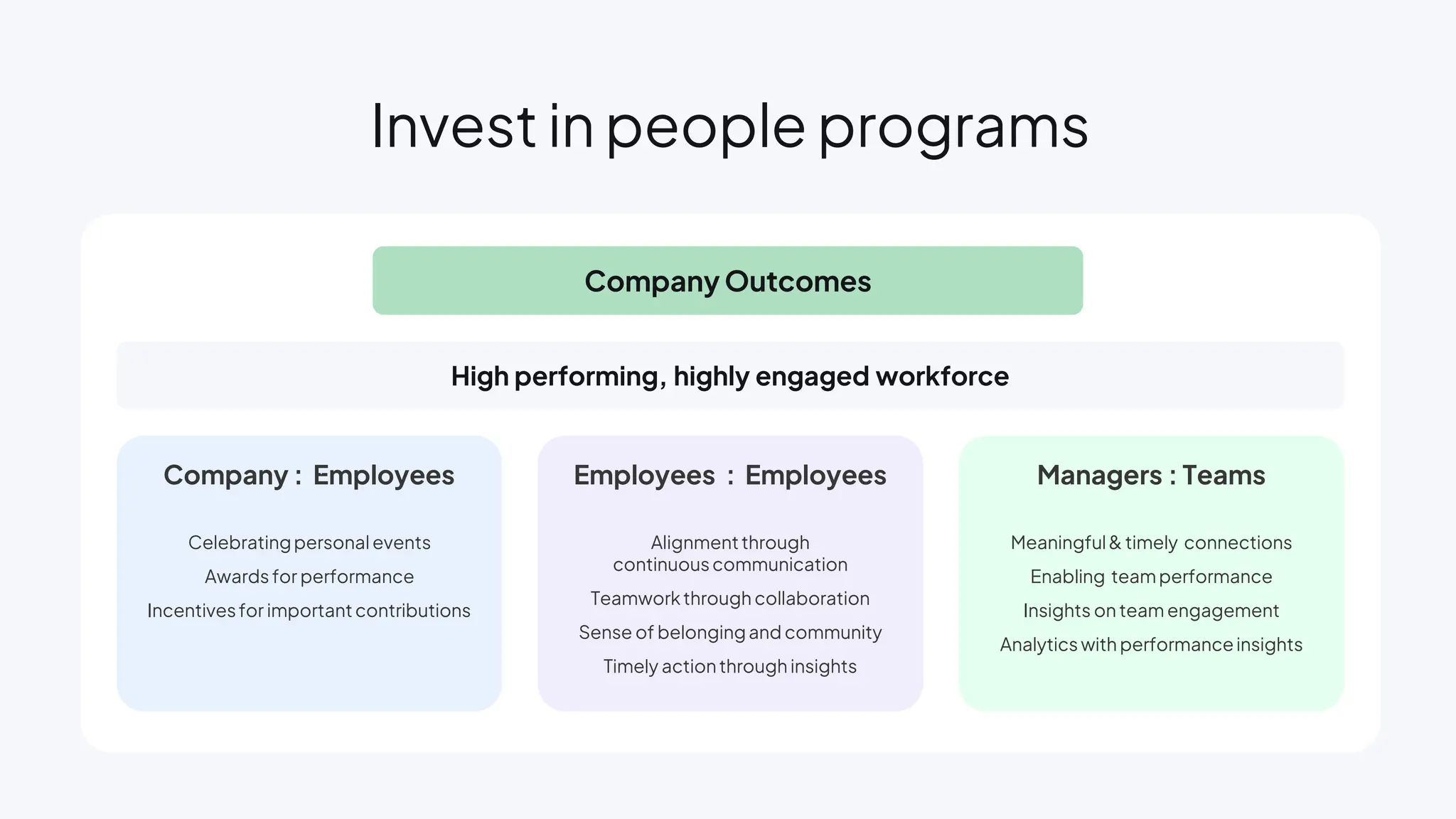
Invest in people programs
Company Outcomes
High performing, highly engaged workforce
Celebratingpersonal events
Awards for performance
Incentivesfor importantcontributions
Employees : Employees
Alignmentthrough
continuouscommunication
Teamworkthrough collaboration
Sense of belongingand community
Timely actionthrough insights
Managers : Teams
Meaningful& timely connections
Enabling teamperformance
Insights on team engagement
Analytics with performanceinsights
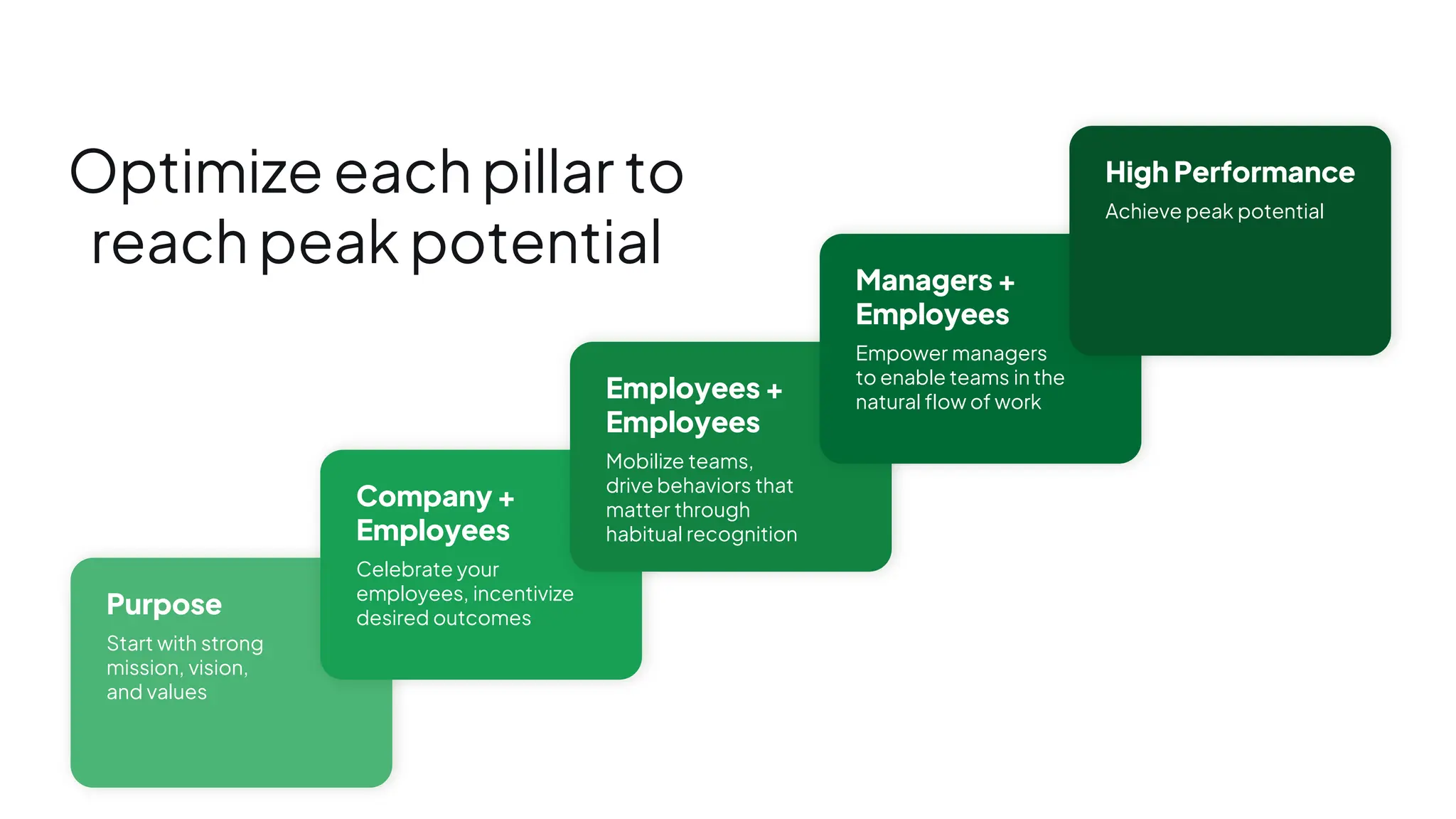
Purpose
Start with strong
mission, vision,
and values
Company+
Employees
Celebrate your
employees, incentivize
desired outcomes
Employees +
Employees
Mobilize teams,
drive behaviors that
matter through
habitual recognition
Managers +
Employees
Empower managers
to enable teams in the
natural flow of work
High Performance
Achieve peak potential
Optimize each pillar to
reach peak potential
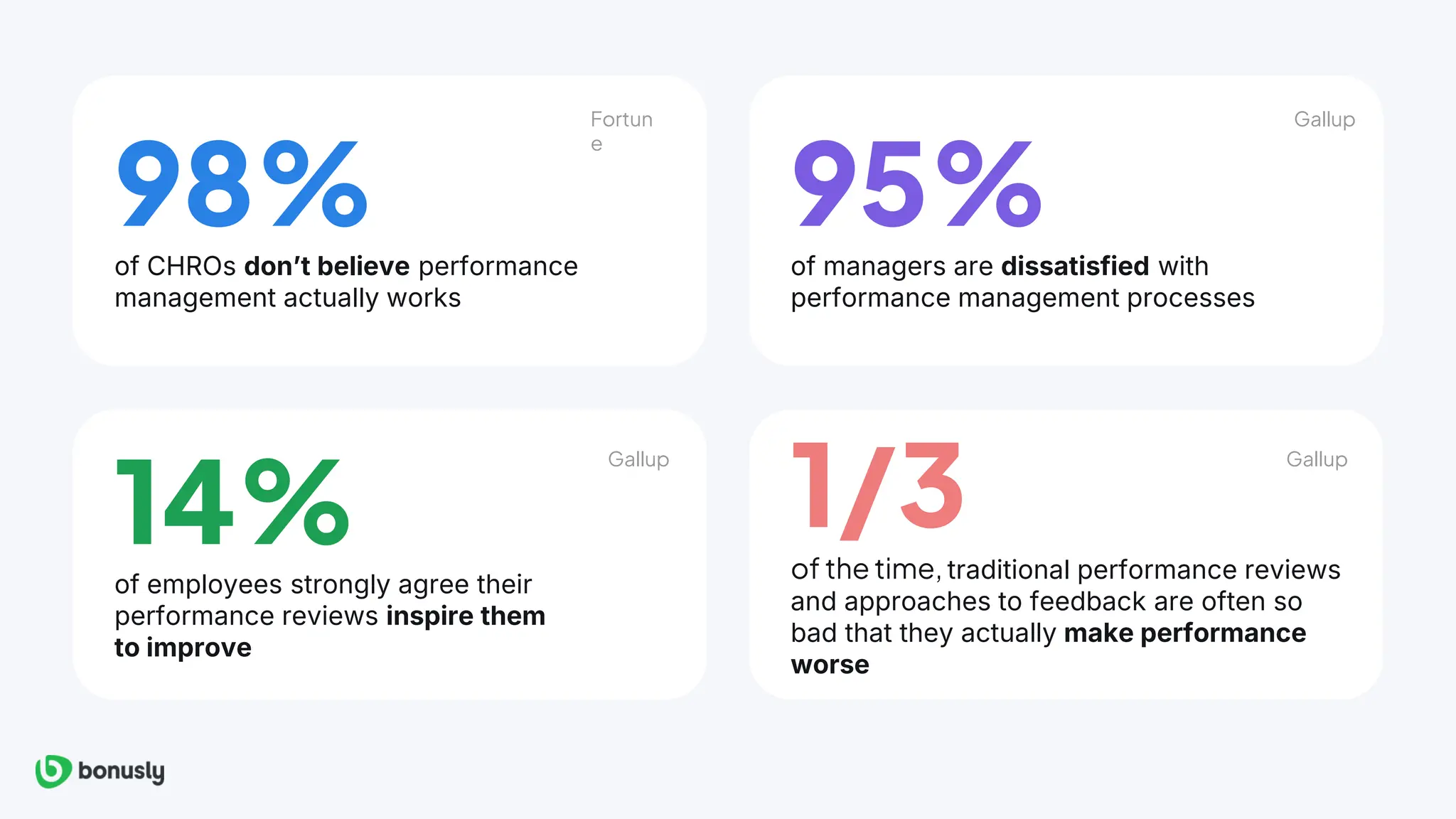
95%
of managers are dissatisfied with
performance management processes
Gallup
98%
of CHROs don’t believe performance
management actually works
Fortun
e
14%
of employees strongly agree their
performance reviews inspire them
to improve
Gallup
1/3
of the time, traditional performance reviews
and approaches to feedback are often so
bad that they actually make performance
worse
Gallup
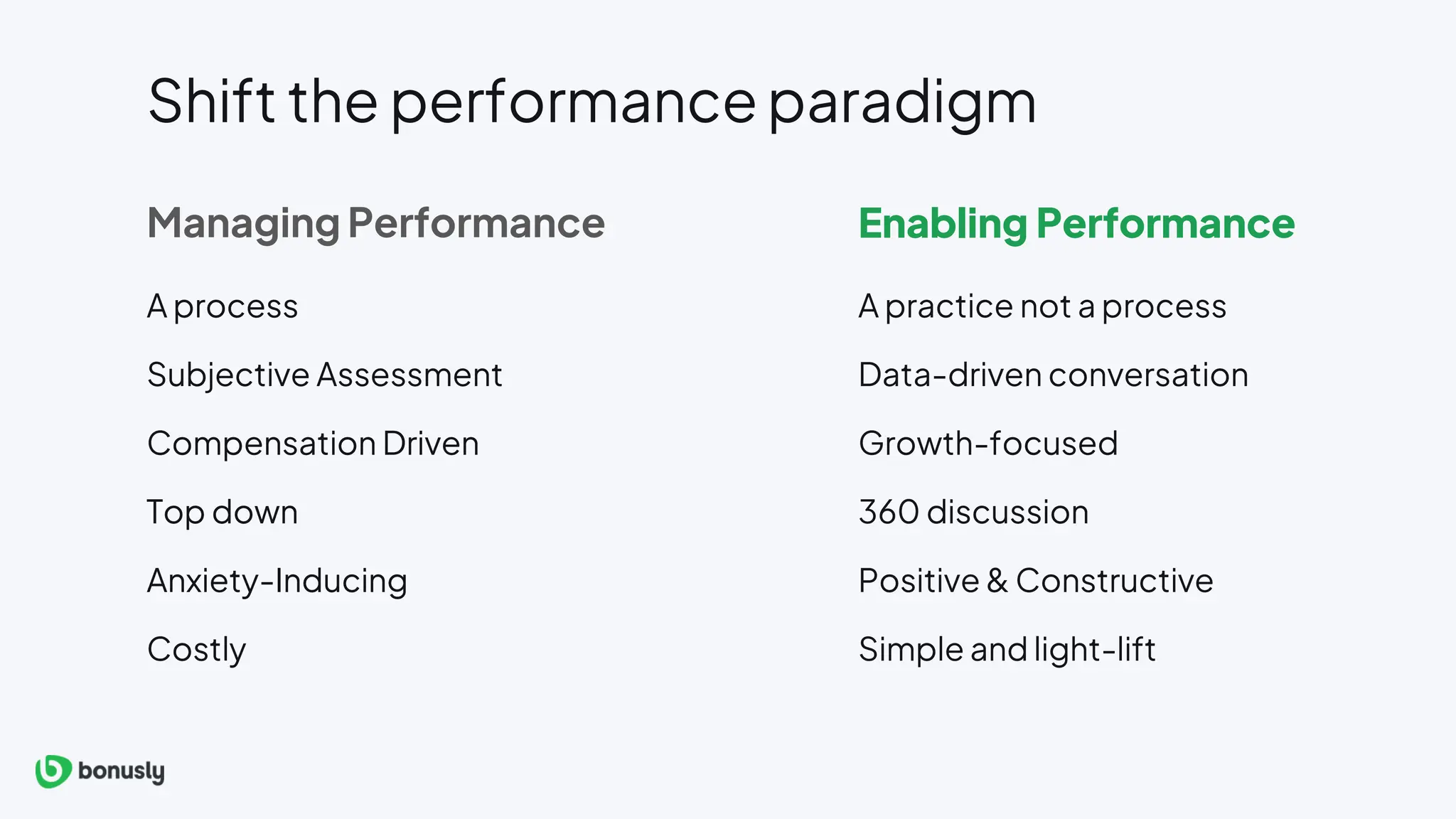
Shift the performance paradigm
Managing Performance Enabling Performance
A process
A process A practice not a process
Subjective Assessment
Subjective Assessment Data-driven conversation
Compensation Driven
Compensation Driven Growth-focused
Top down
Top down 360 discussion
Anxiety-Inducing
Anxiety-Inducing Positive & Constructive
Costly
Costly Simple and light-lift
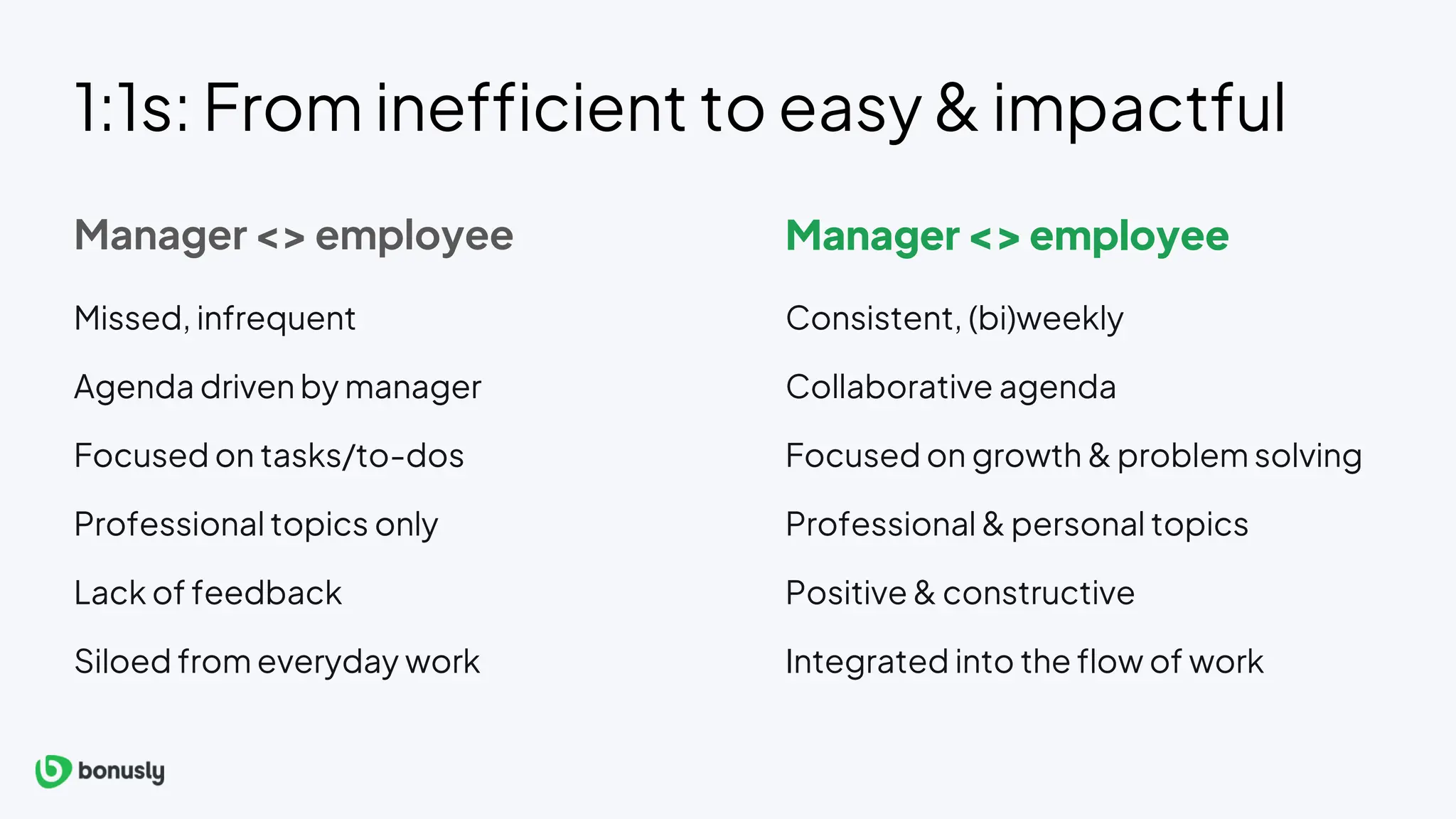
1:1s: From inefficient to easy & impactful
Manager <> employee Manager <> employee
Missed, infrequent
Agenda driven by manager
Focused on tasks/to-dos
Professional topics only
Lack of feedback
Siloed from everyday work
Missed, infrequent
Agenda driven by manager
Focused on tasks/to-dos
Professional topics only
Lack of feedback
Siloed from everyday work
Consistent, (bi)weekly
Collaborative agenda
Focused on growth & problem solving
Professional & personal topics
Positive & constructive
Integrated into the flow of work
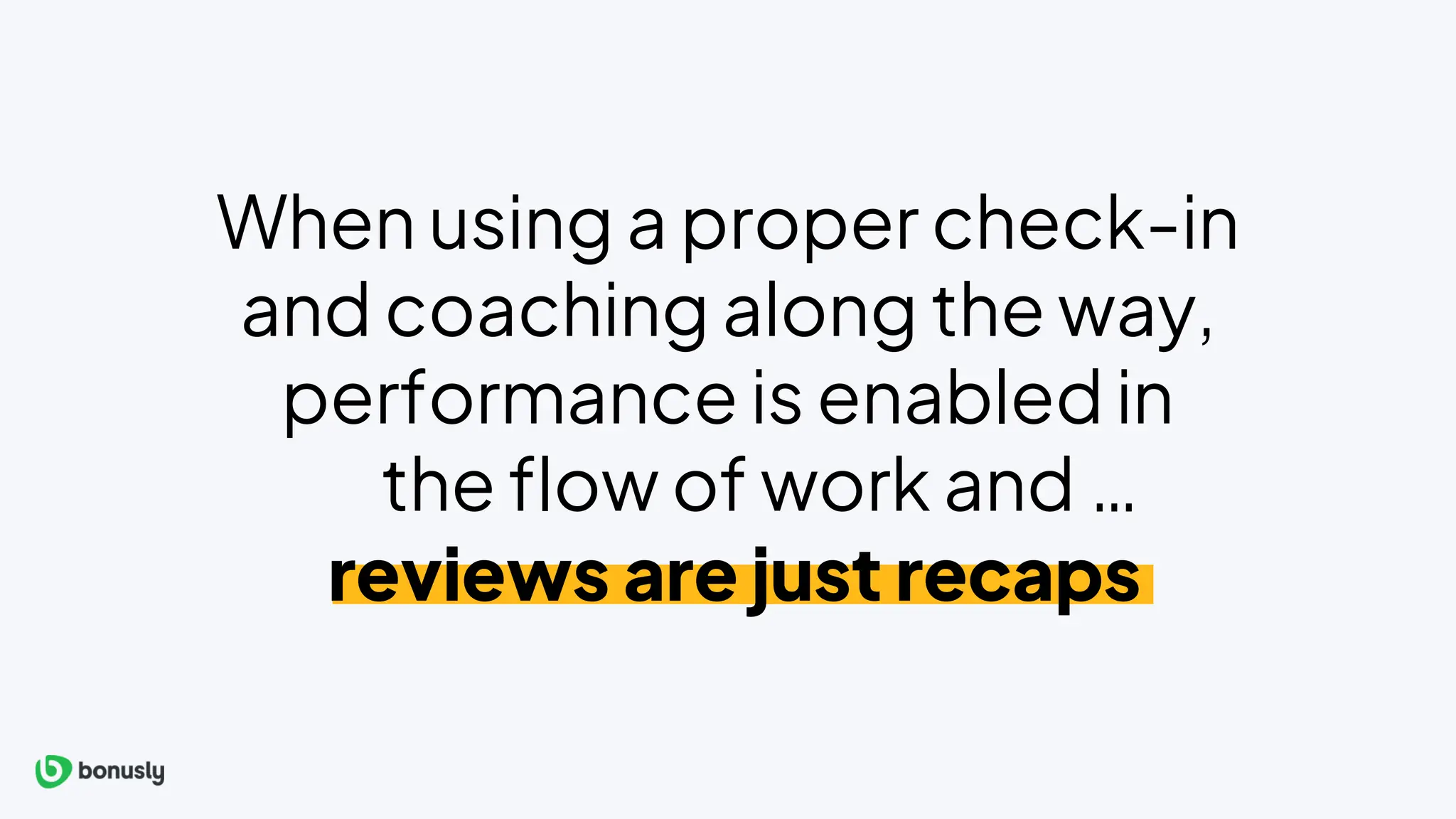
When using a proper check-in
and coaching along the way,
performance is enabled in
the flow of work and
reviews are just recaps
…
How does technology come into play?
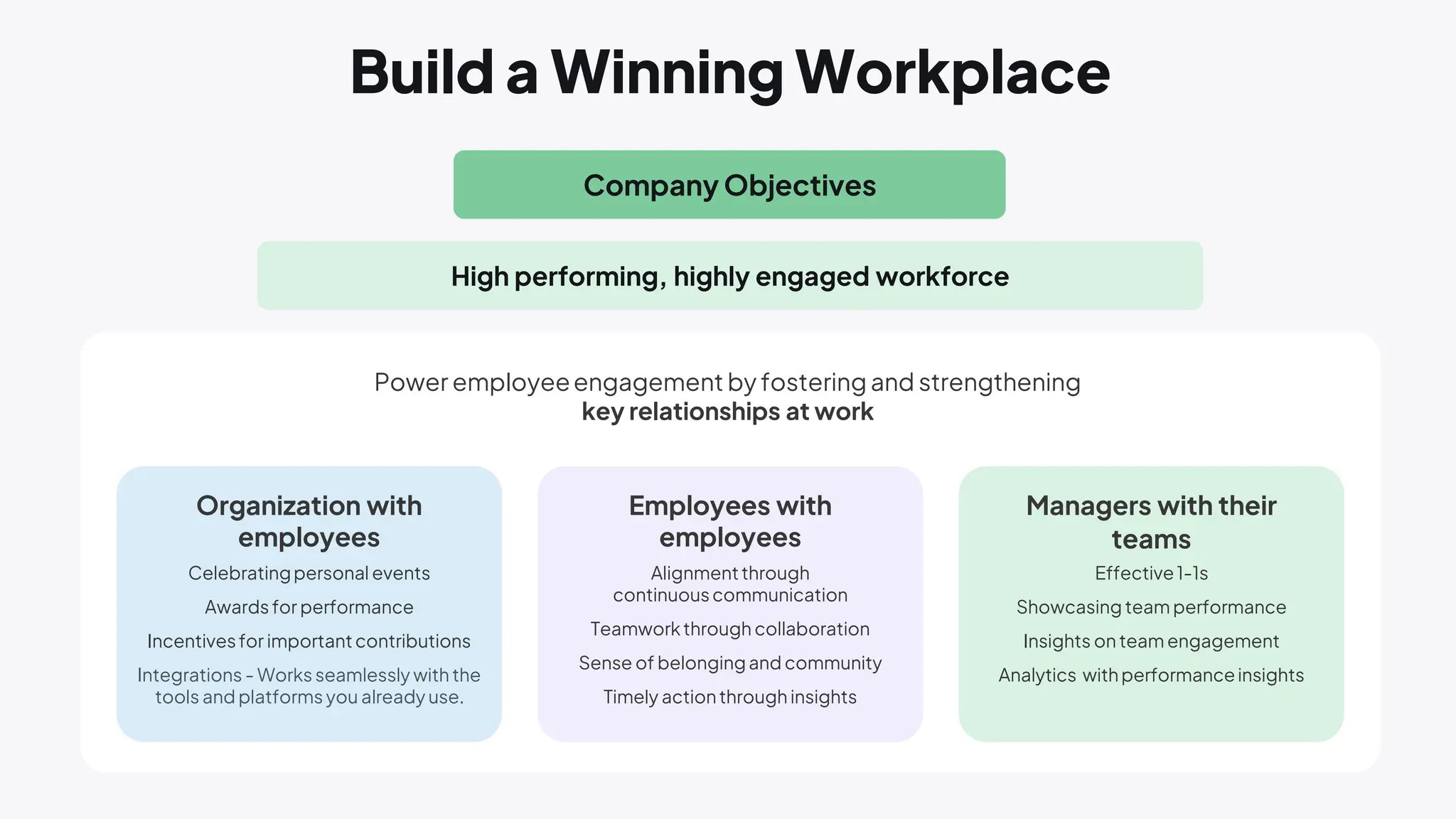
Organization with
employees
Build a Winning Workplace
Company Objectives
High performing, highly engaged workforce
Celebratingpersonal events
Awards for performance
Incentivesfor importantcontributions
Integrations - Works seamlessly with the
tools and platforms you already use.
Employees with
employees
Alignmentthrough
continuouscommunication
Teamworkthrough collaboration
Sense of belongingand community
Timely actionthrough insights
Managers with their
teams
Effective1-1s
Showcasing team performance
Insights on team engagement
Analytics withperformanceinsights
Power employeeengagement by fostering and strengthening
key relationships at work
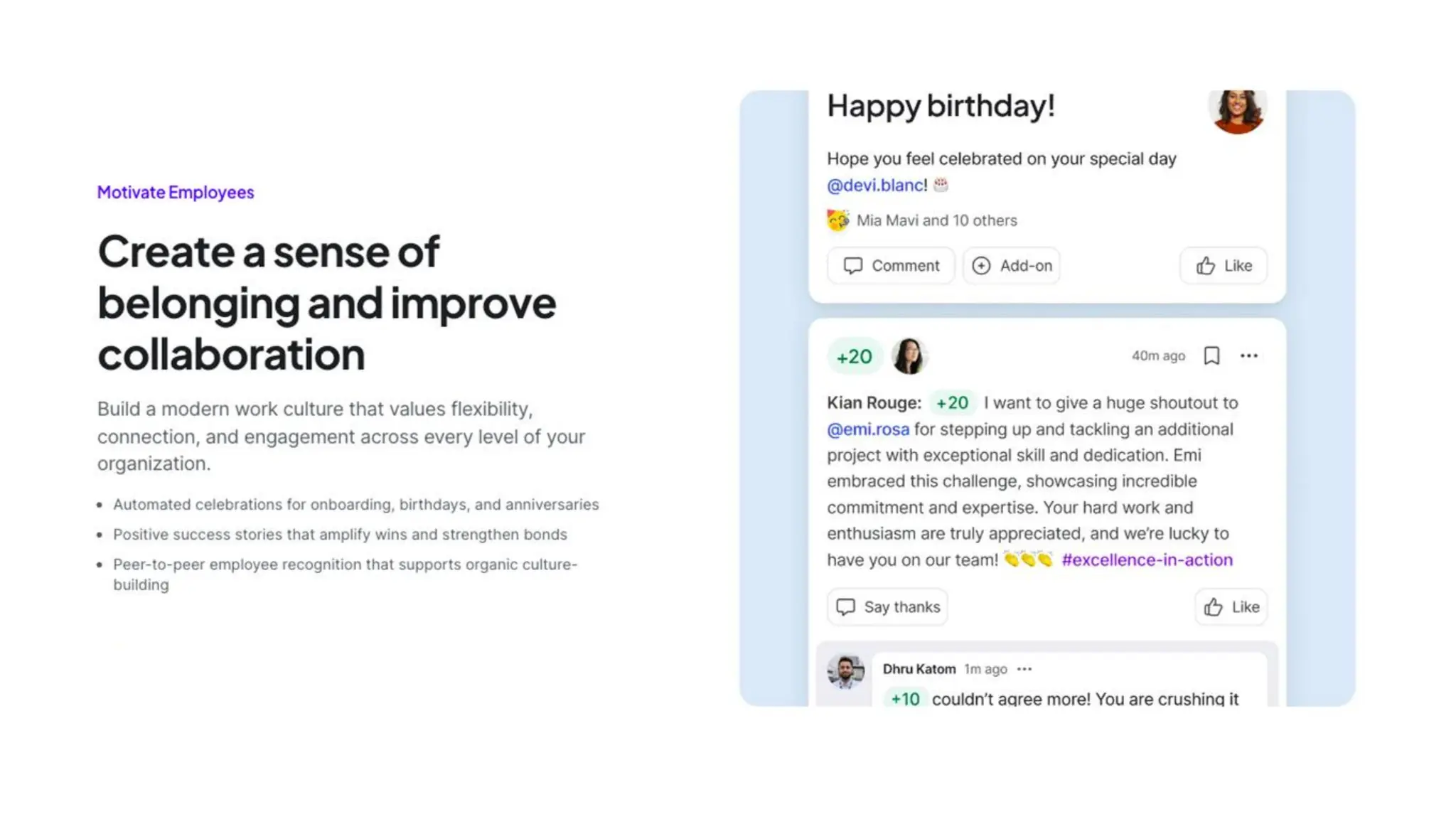
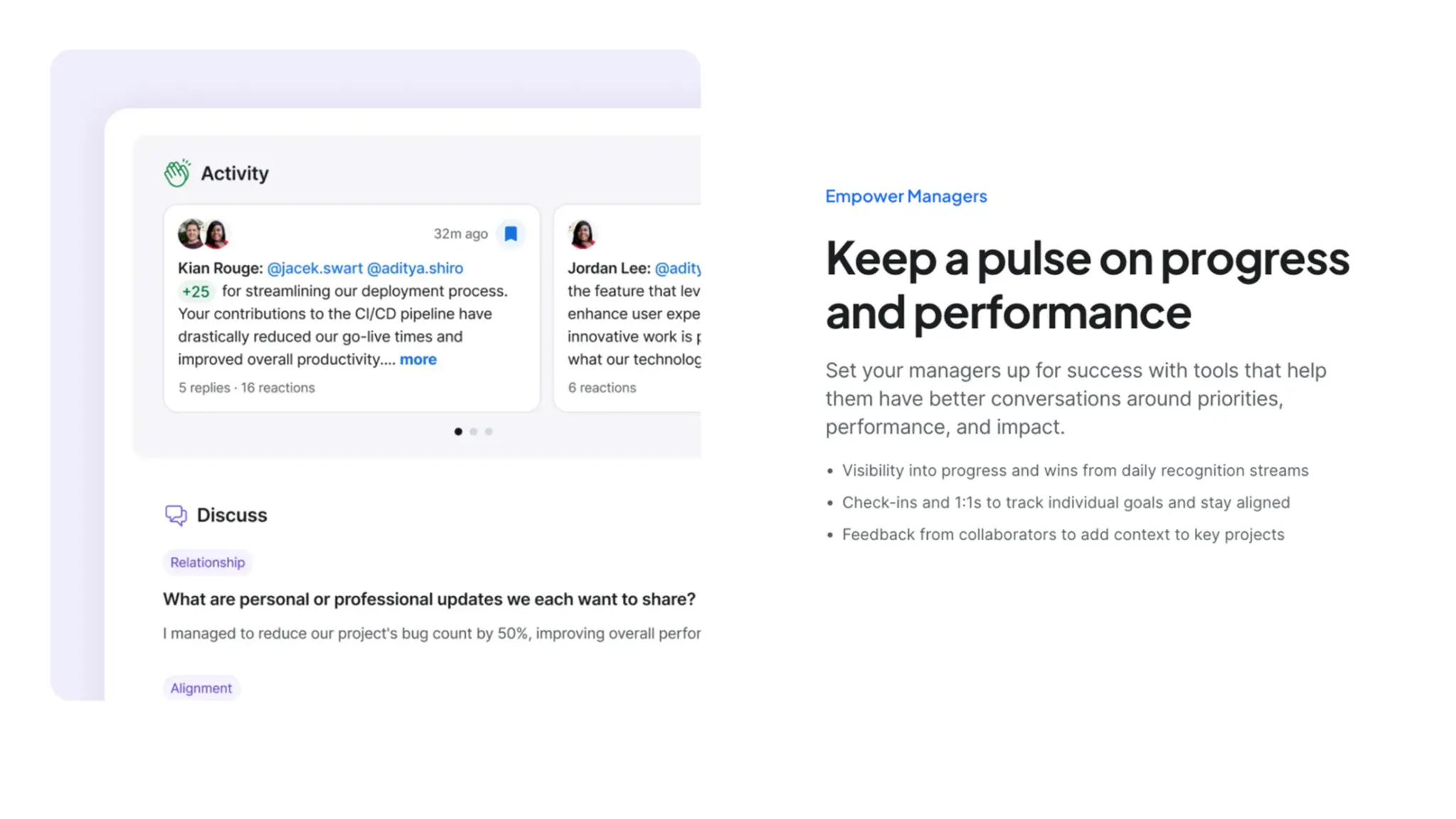
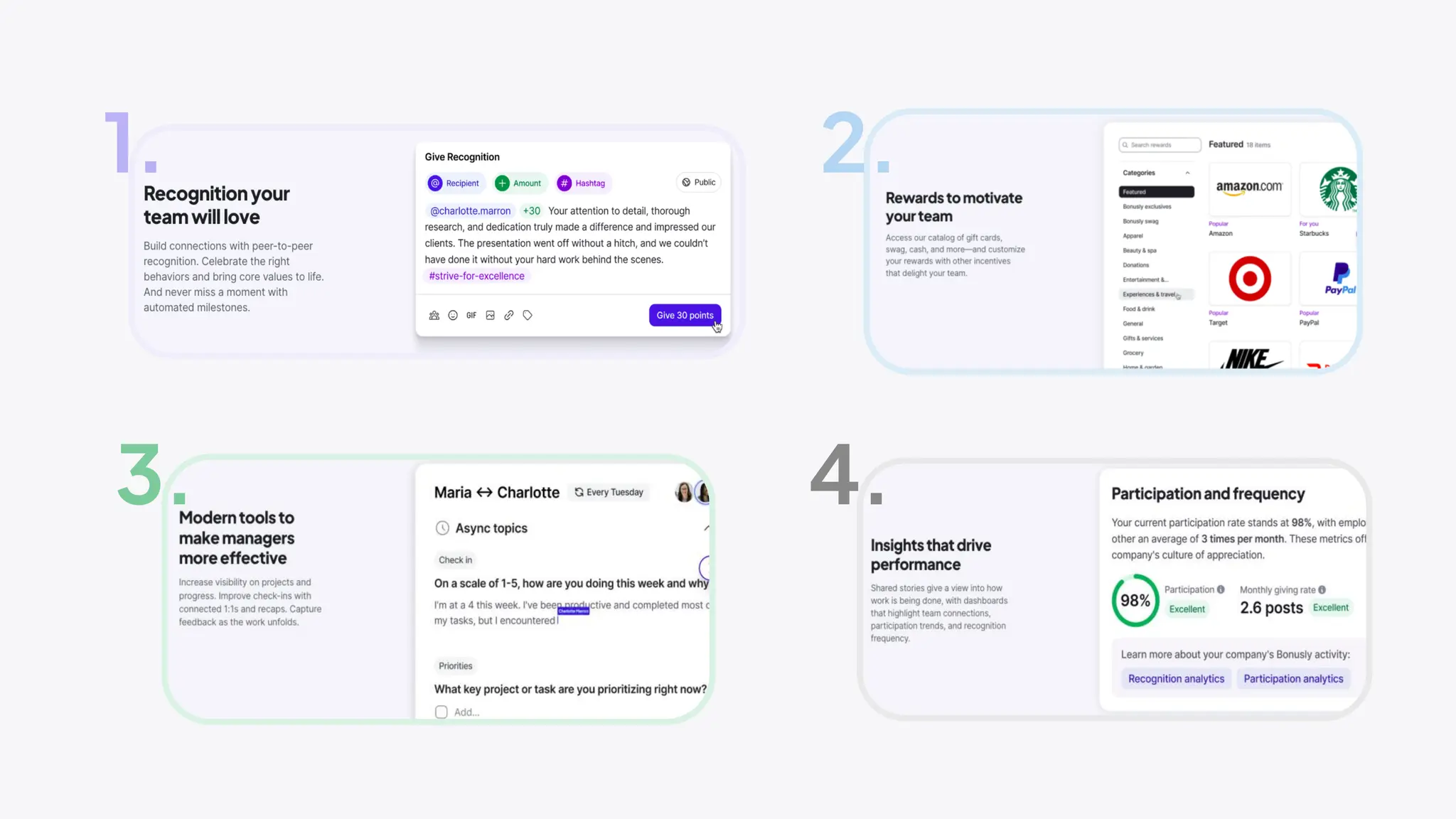
1. 2.
3. 4.
How should HR enable this transformation to new
processes aligned to the new way of working?
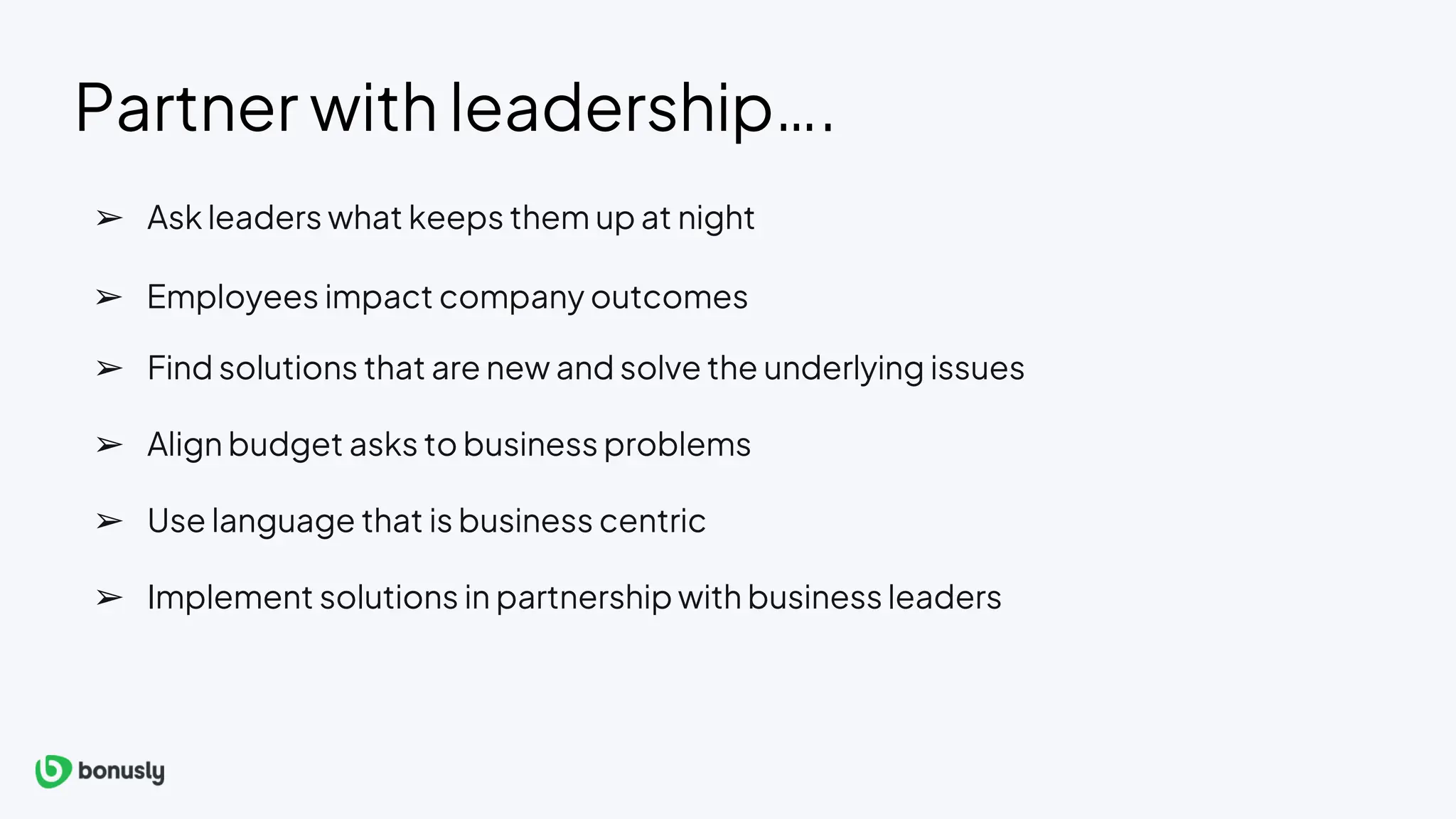
Partner with leadership….
➢ Implement solutions in partnership with business leaders
➢ Ask leaders what keeps them up at night
➢ Find solutions that are new and solve the underlying issues
➢ Align budget asks to business problems
➢ Use language that is business centric
➢ Employees impact company outcomes
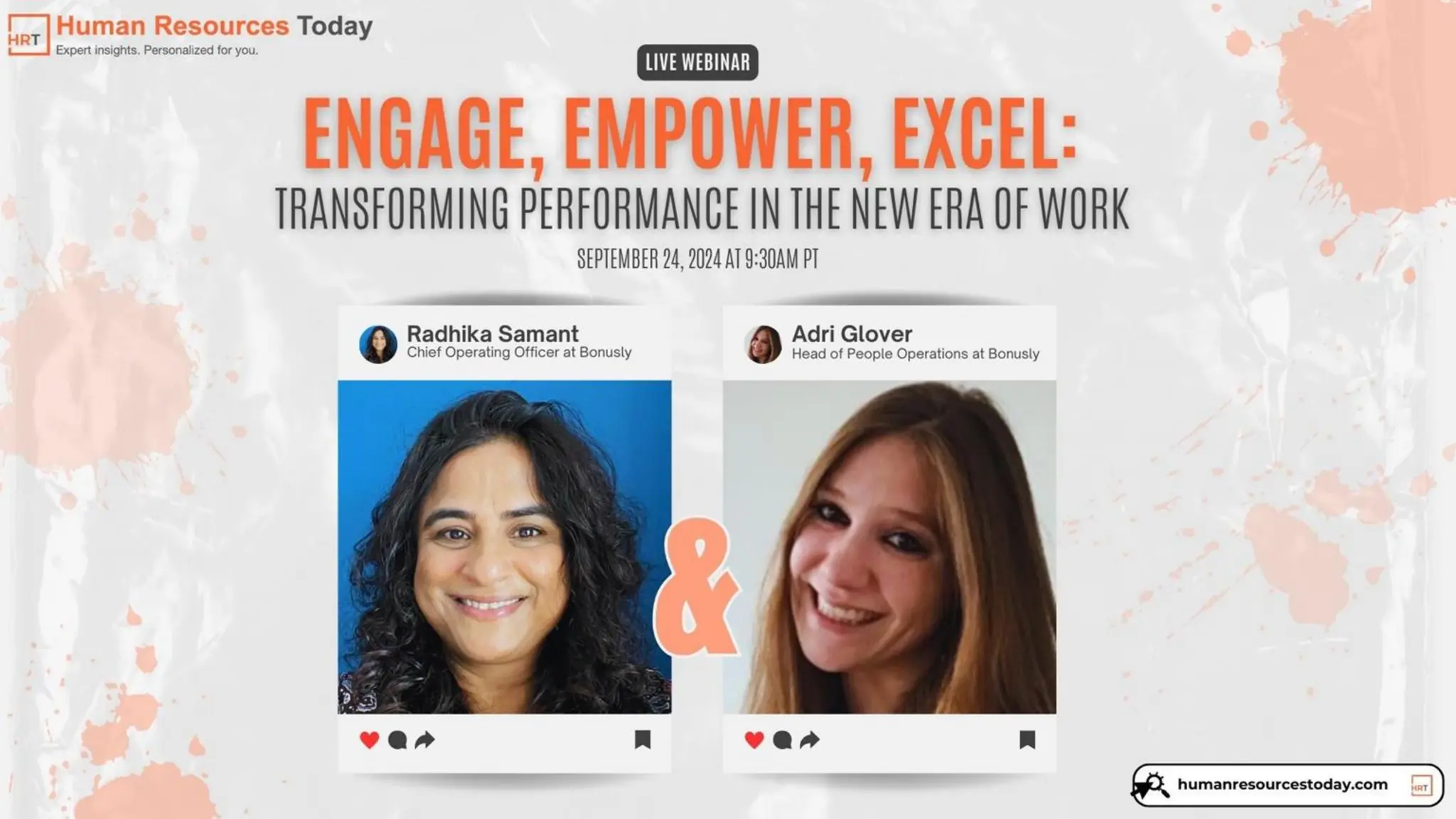
Engage, Empower, Excel: Transforming Performance in the New Era of Work

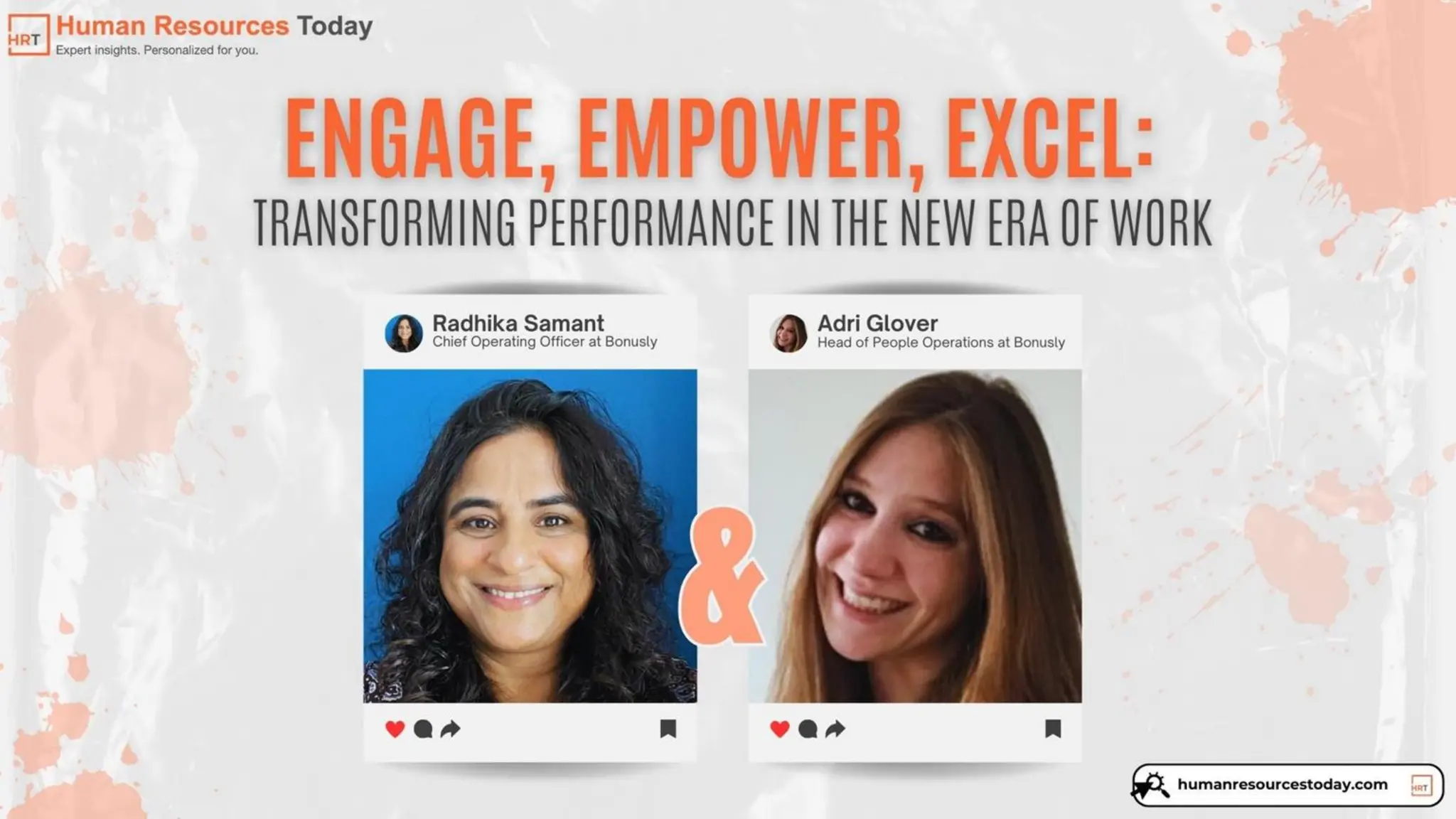
Engage, Empower, Excel: Transforming Performance in the New Era of Work

  • 5.
    What is thenew era of work?
  • 6.
    There is ashift in workforce that cannot be ignored 95% of employees want remote (54%) or hybrid work (41%). ➢ Want workspace flexibility ➢ Also want professional growth ➢ Feel disconnected from the company and their peers ➢ Managers under greater pressure ➢ Existing processes & Tech are ineffective US Career Institute 27% of the workforce will be Gen Z by 2025 ➢ Desire flexibility and want to excel ➢ Like open access to information ➢ Want to know what is expected of them and how they are doing in real time ➢ Incentivized by recognition and compensation Zurich Insurance Group
  • 7.
    The result, acrossall industries and sectors, is that managers are struggling. 51% say restructuring of teams has been a major complication post-pandemic. Layoffs, budget cuts and staffing challenges have likely contributed to this. Gallup 64% of managers have employees with additional job responsibilities. Gallup
  • 8.
    What are companiesdoing wrong today?
  • 9.
    Cultivating high-performing teams hasbecome harder than ever. Heavy workload limits time for interaction Managers account for 70% of variance in employee engagement. Lack of trusting relationships Difficult to develop relationships that enable honest feedback requiredto improveperformance. Day-to-day work eclipses growth planning Career developmentis the #1 factor in employee retention,but is often not prioritized. The impact is most reflected in company performance
  • 10.
    Reducing investments in PeoplePrograms is short sighted Employee Motivation Companies with highly engaged employees increase profits by 23% and outperformcompetitors by 147% Effective Managers 70% of variationin team engagement is determined solely by the manager New Tools Existing tools are obsolete. 1/3rd of the time traditional performance management and approaches to feedback re so bad they make performance worse The impact is most reflected in company performance Gallup Gallup
  • 11.
    How should companiesget this right?
  • 12.
    Recognition → Impact +Performance Recognition → Impact People want to build genuine relationships at work. When you recognize accomplishments and celebrate their human-ness, employeeand team trust grows. People want to reach their full potential.When youcreate organizational alignment, give timely feedback, and empower managers, teams excel. When recognition and performance come together, peopleand companies achieve peak performance. + Performance
  • 13.
    Where do westart? What do we need to do?
  • 14.
    Bring the focusback on key relationships Company Outcomes High performing, highly engaged workforce Employees : Employees + Managers : Teams + Company : Employees +
  • 15.
    Company : Employees Investin people programs Company Outcomes High performing, highly engaged workforce Celebratingpersonal events Awards for performance Incentivesfor importantcontributions Employees : Employees Alignmentthrough continuouscommunication Teamworkthrough collaboration Sense of belongingand community Timely actionthrough insights Managers : Teams Meaningful& timely connections Enabling teamperformance Insights on team engagement Analytics with performanceinsights
  • 16.
    Purpose Start with strong mission,vision, and values Company+ Employees Celebrate your employees, incentivize desired outcomes Employees + Employees Mobilize teams, drive behaviors that matter through habitual recognition Managers + Employees Empower managers to enable teams in the natural flow of work High Performance Achieve peak potential Optimize each pillar to reach peak potential
  • 17.
    95% of managers aredissatisfied with performance management processes Gallup 98% of CHROs don’t believe performance management actually works Fortun e 14% of employees strongly agree their performance reviews inspire them to improve Gallup 1/3 of the time, traditional performance reviews and approaches to feedback are often so bad that they actually make performance worse Gallup
  • 18.
    Shift the performanceparadigm Managing Performance Enabling Performance A process A process A practice not a process Subjective Assessment Subjective Assessment Data-driven conversation Compensation Driven Compensation Driven Growth-focused Top down Top down 360 discussion Anxiety-Inducing Anxiety-Inducing Positive & Constructive Costly Costly Simple and light-lift
  • 19.
    1:1s: From inefficientto easy & impactful Manager <> employee Manager <> employee Missed, infrequent Agenda driven by manager Focused on tasks/to-dos Professional topics only Lack of feedback Siloed from everyday work Missed, infrequent Agenda driven by manager Focused on tasks/to-dos Professional topics only Lack of feedback Siloed from everyday work Consistent, (bi)weekly Collaborative agenda Focused on growth & problem solving Professional & personal topics Positive & constructive Integrated into the flow of work
  • 20.
    When using aproper check-in and coaching along the way, performance is enabled in the flow of work and reviews are just recaps …
  • 21.
    How does technologycome into play?
  • 22.
    Organization with employees Build aWinning Workplace Company Objectives High performing, highly engaged workforce Celebratingpersonal events Awards for performance Incentivesfor importantcontributions Integrations - Works seamlessly with the tools and platforms you already use. Employees with employees Alignmentthrough continuouscommunication Teamworkthrough collaboration Sense of belongingand community Timely actionthrough insights Managers with their teams Effective1-1s Showcasing team performance Insights on team engagement Analytics withperformanceinsights Power employeeengagement by fostering and strengthening key relationships at work
  • 27.
  • 28.
    How should HRenable this transformation to new processes aligned to the new way of working?
  • 29.
    Partner with leadership…. ➢Implement solutions in partnership with business leaders ➢ Ask leaders what keeps them up at night ➢ Find solutions that are new and solve the underlying issues ➢ Align budget asks to business problems ➢ Use language that is business centric ➢ Employees impact company outcomes