Agenda
 The media landscape
 Building media relationships
 Crafting a winning pitch
 Final takeaways
 Q&A
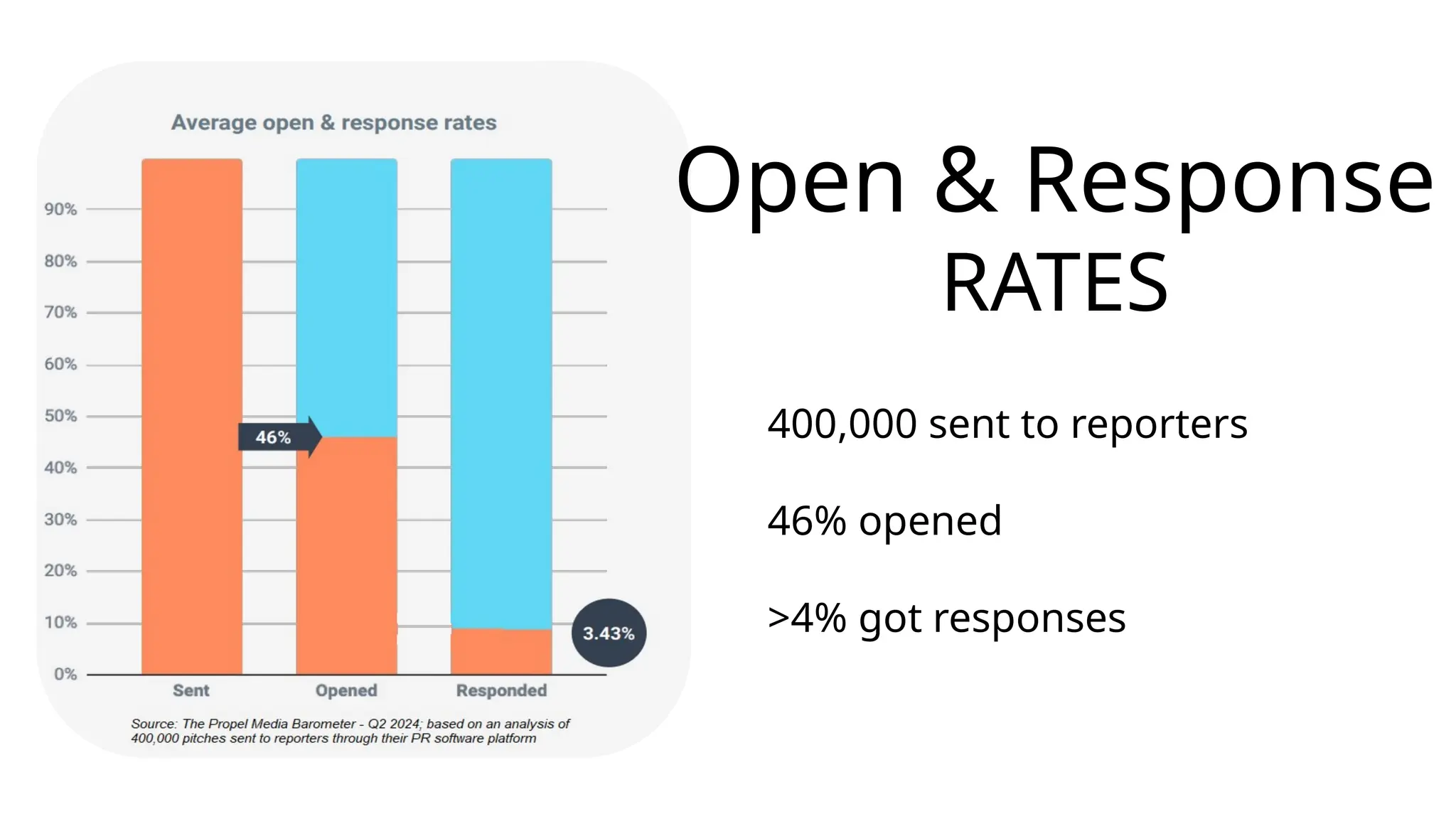
Open & Response
RATES
400,000 sent to reporters
46% opened
>4% got responses
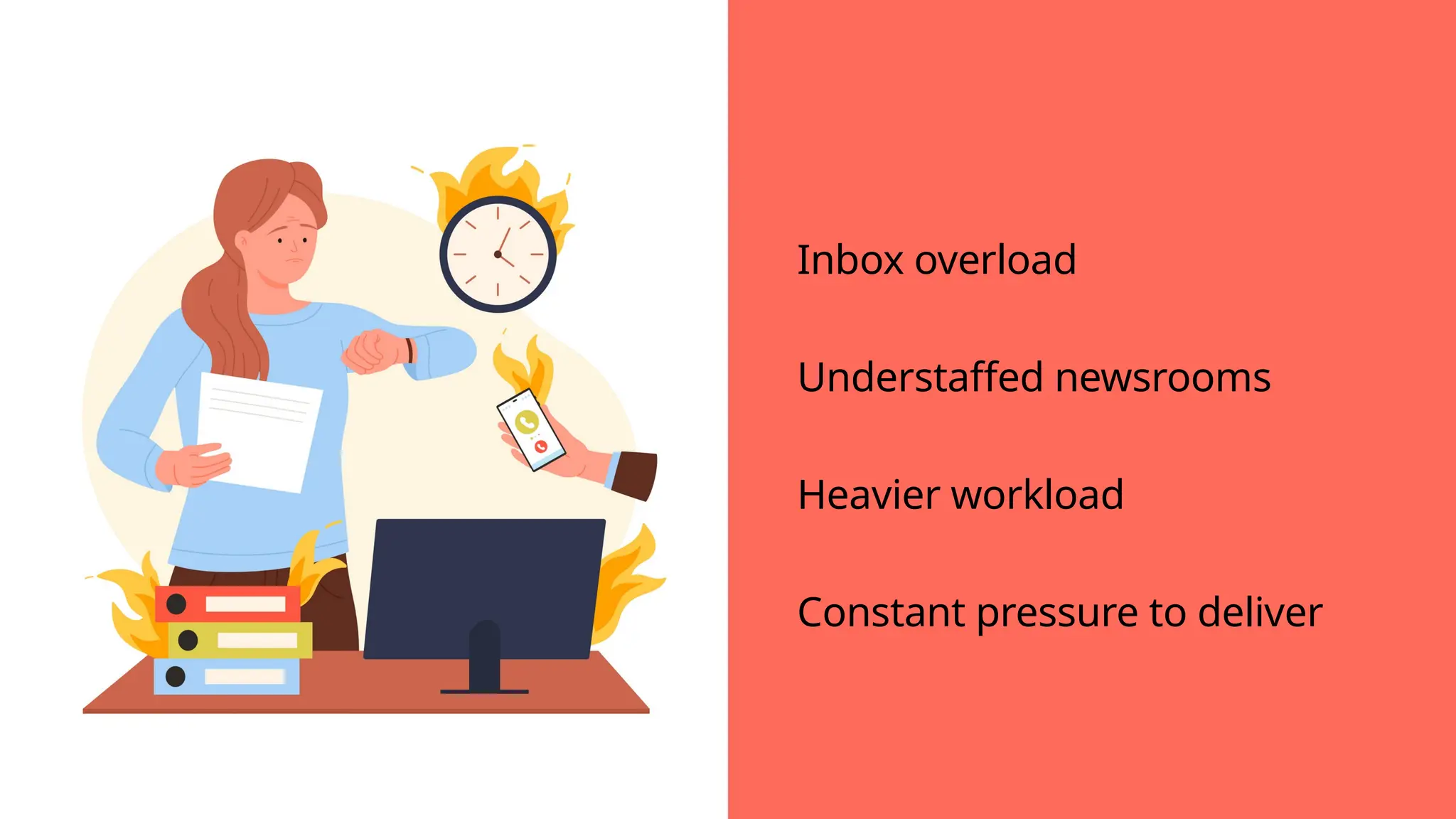
Inbox overload
Understaffed newsrooms
Heavier workload
Constant pressure to deliver
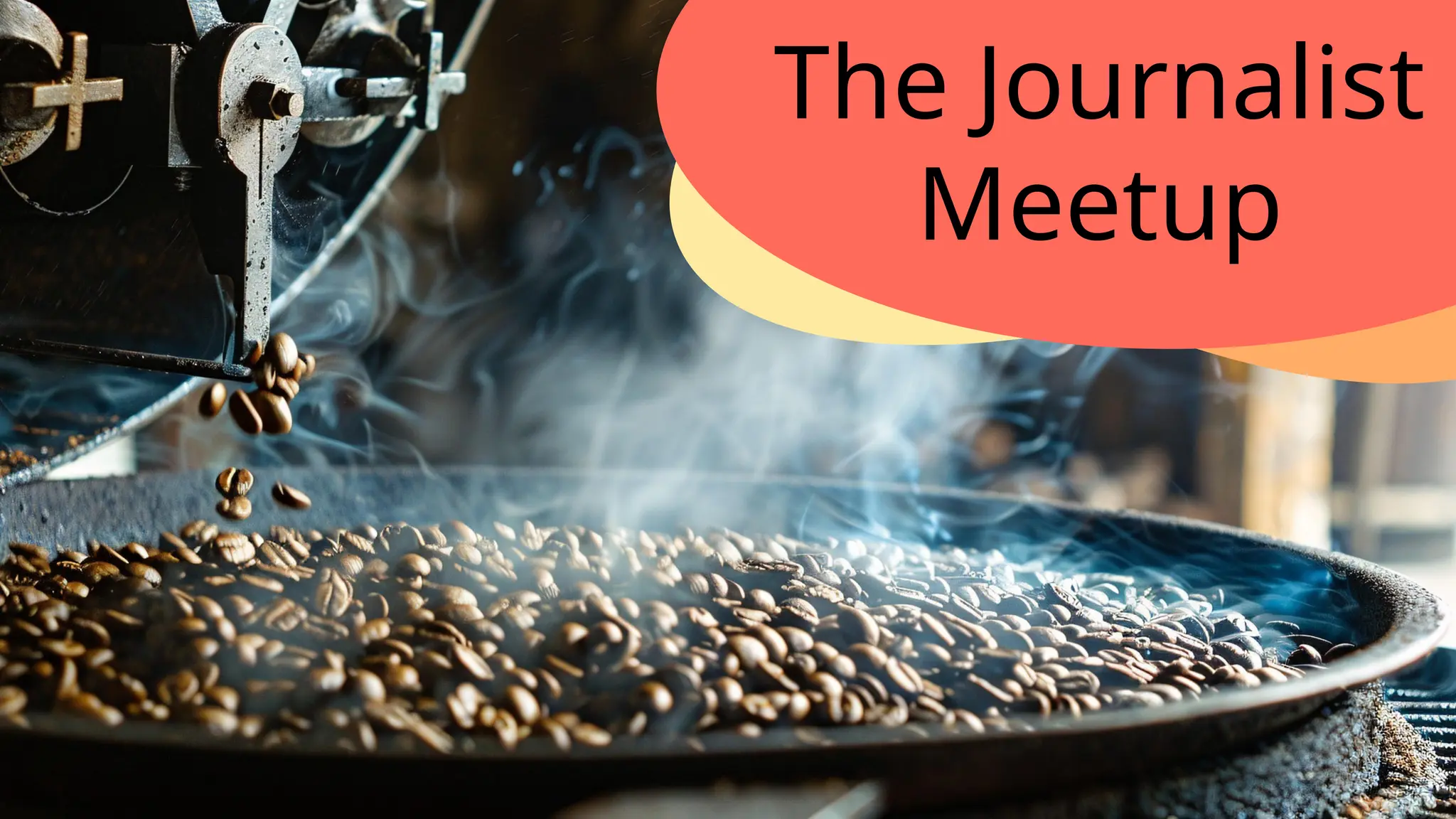
The Journalist
Meetup
Subject line: Quick coffee chat?
Hi [Reporter’s Name],
I hope you’re doing well. I’ve been following your work at [Publication] and really enjoyed your
recent piece on [specific article/topic]—great insights on [mention a key takeaway].
I'm [Your Name], a [Your Title] at [Your Company]. I’d love to connect for a quick coffee or chat to
introduce myself, learn more about what you're covering, and see how I can be a resource.
Are you available for a brief meeting next week? Happy to come to a spot near you or schedule a
virtual chat—whatever’s easiest for you.
Looking forward to connecting!
Best, [Name] [Company] [Contact Info]
Sample Outreach Email
Why it Works
 Subject Line: Quick coffee chat? → Clear & to
the point
 Opening: Hi [Name], I saw your recent piece on
[topic]... → Shows you’ve read their work
 Body: …learn more…, and see how I can be a
resource. → Shows you want to help
 The Ask: Would you be open to a quick coffee
chat? → Simple, low pressure
PITCH
 Can I help with anything you’re working on?
 What do you value most in a PR partner?
 Is there a specific time you like to get pitches?
 Do you like to get press releases?
 Do you prefer to get exclusives?
 Any pet peeves I should avoid?
Sample Q’s to Reporters
Showing that you can be a valuable
resource sets the stage for a long-
term, mutually beneficial
partnership.
 Invite a reporter to a 1:1 “coffee” chat via email
 Come prepared- know their work & their outlet
 Ask about their needs so you can be a
valuable resource
 Make it clear you’re there to help, not pitch
 Follow up with a short thank-you email
Key Takeaways
Crafting
the Pitch
Poll #1
 A detailed history of your company
 Catchy subject lines with puns or wordplay
 Daily follow ups
 All of the above
 None of the above
What do you think the top things
reporters want most in a pitch?
(select all that apply)
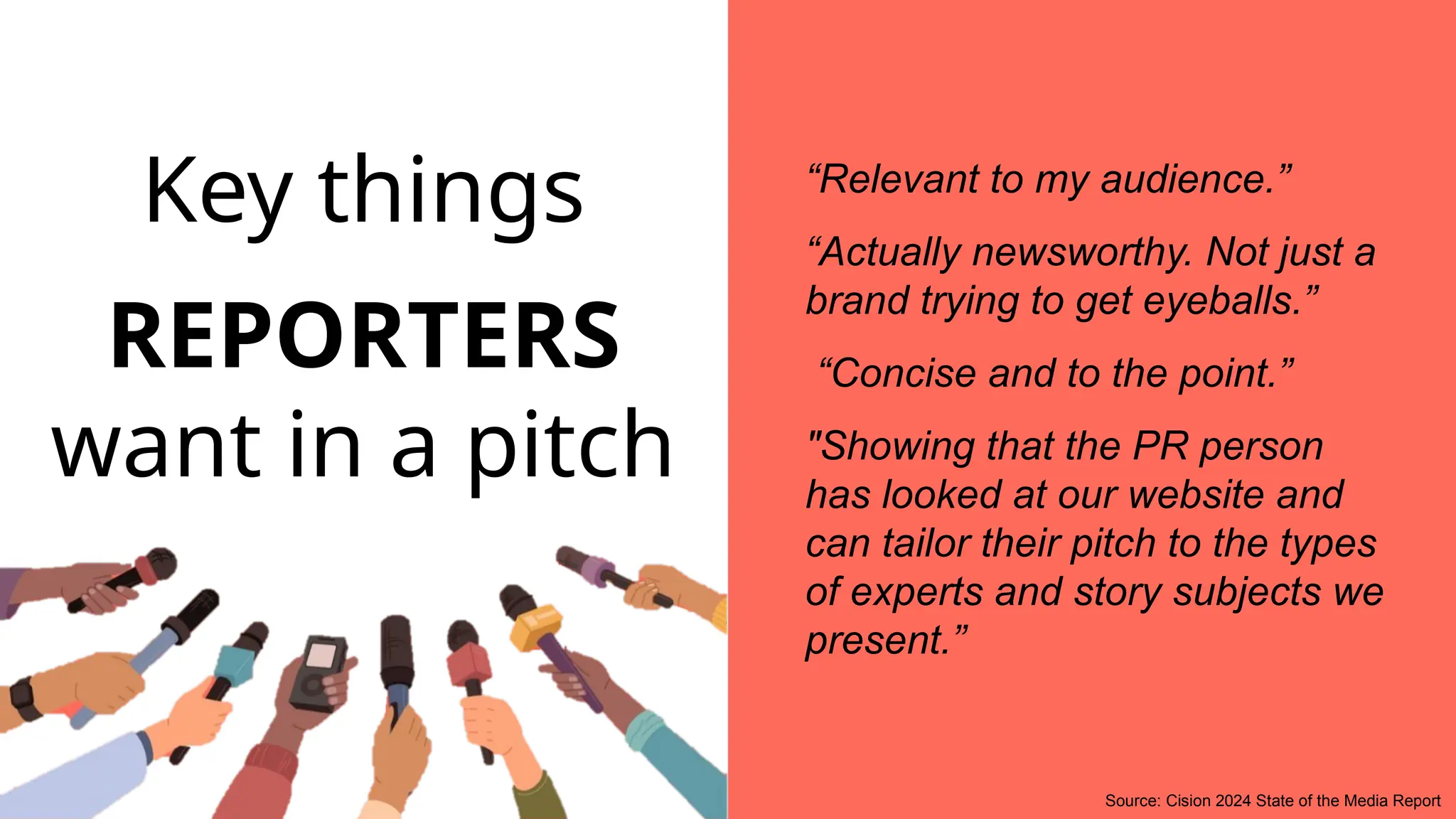
Key things
REPORTERS
want in a pitch
“Relevant to my audience.”
“Actually newsworthy. Not just a
brand trying to get eyeballs.”
“Concise and to the point.”
"Showing that the PR person
has looked at our website and
can tailor their pitch to the types
of experts and story subjects we
present.”
Source: Cision 2024 State of the Media Report
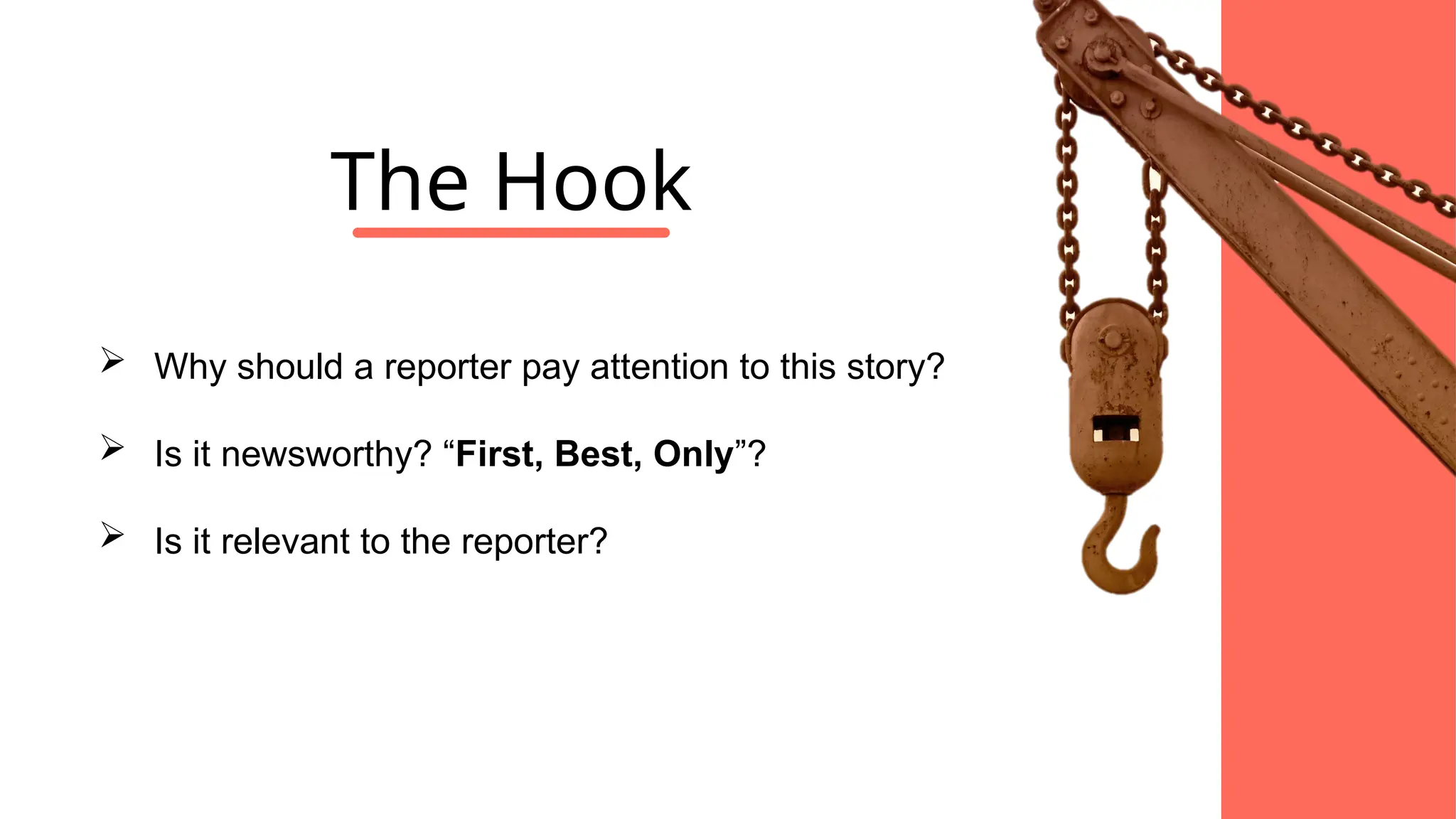
 Why should a reporter pay attention to this story?
 Is it newsworthy? “First, Best, Only”?
 Is it relevant to the reporter?
The Hook
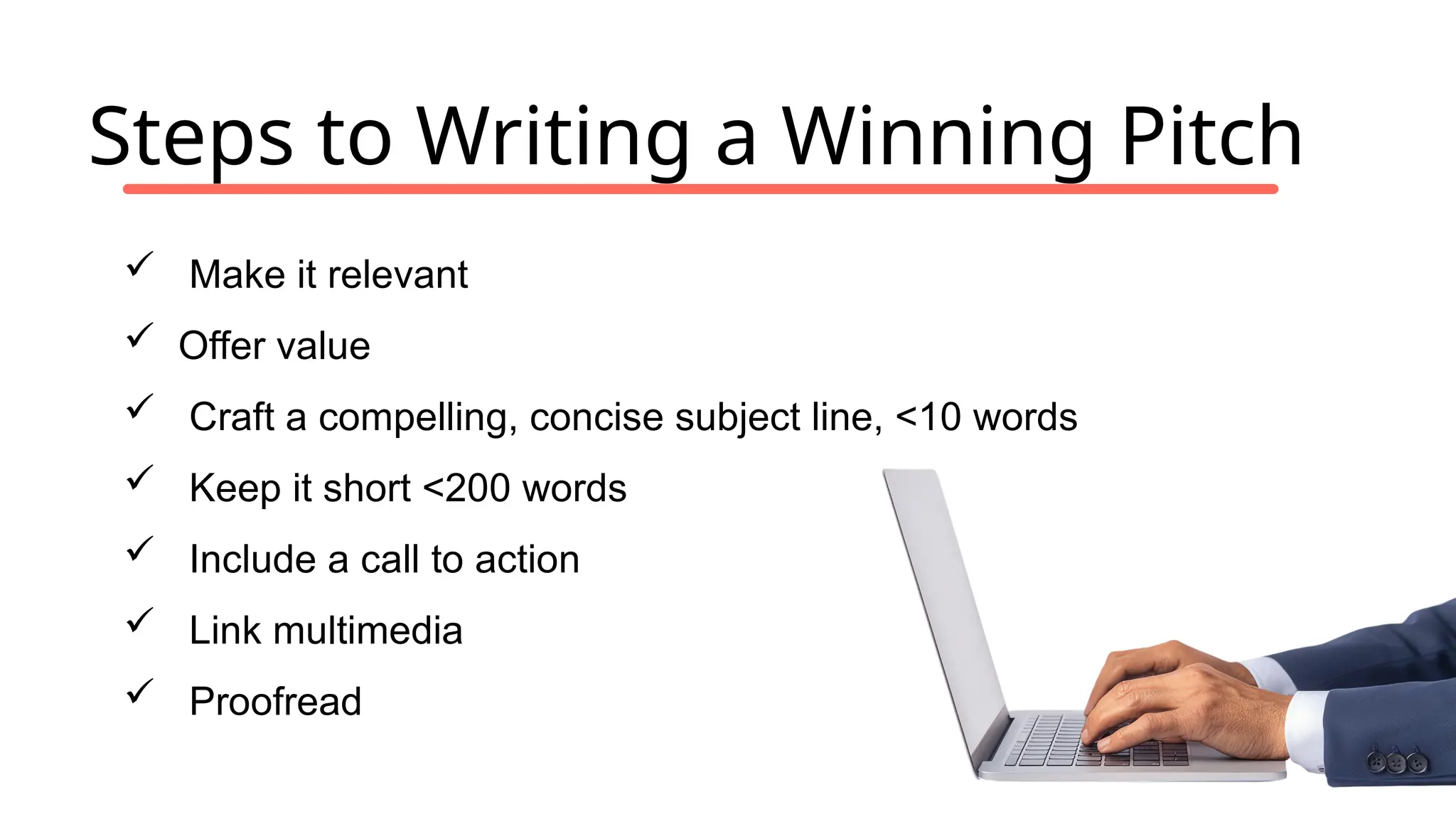
Steps to Writing a Winning Pitch
 Make it relevant
 Offer value
 Craft a compelling, concise subject line, <10 words
 Keep it short <200 words
 Include a call to action
 Link multimedia
 Proofread
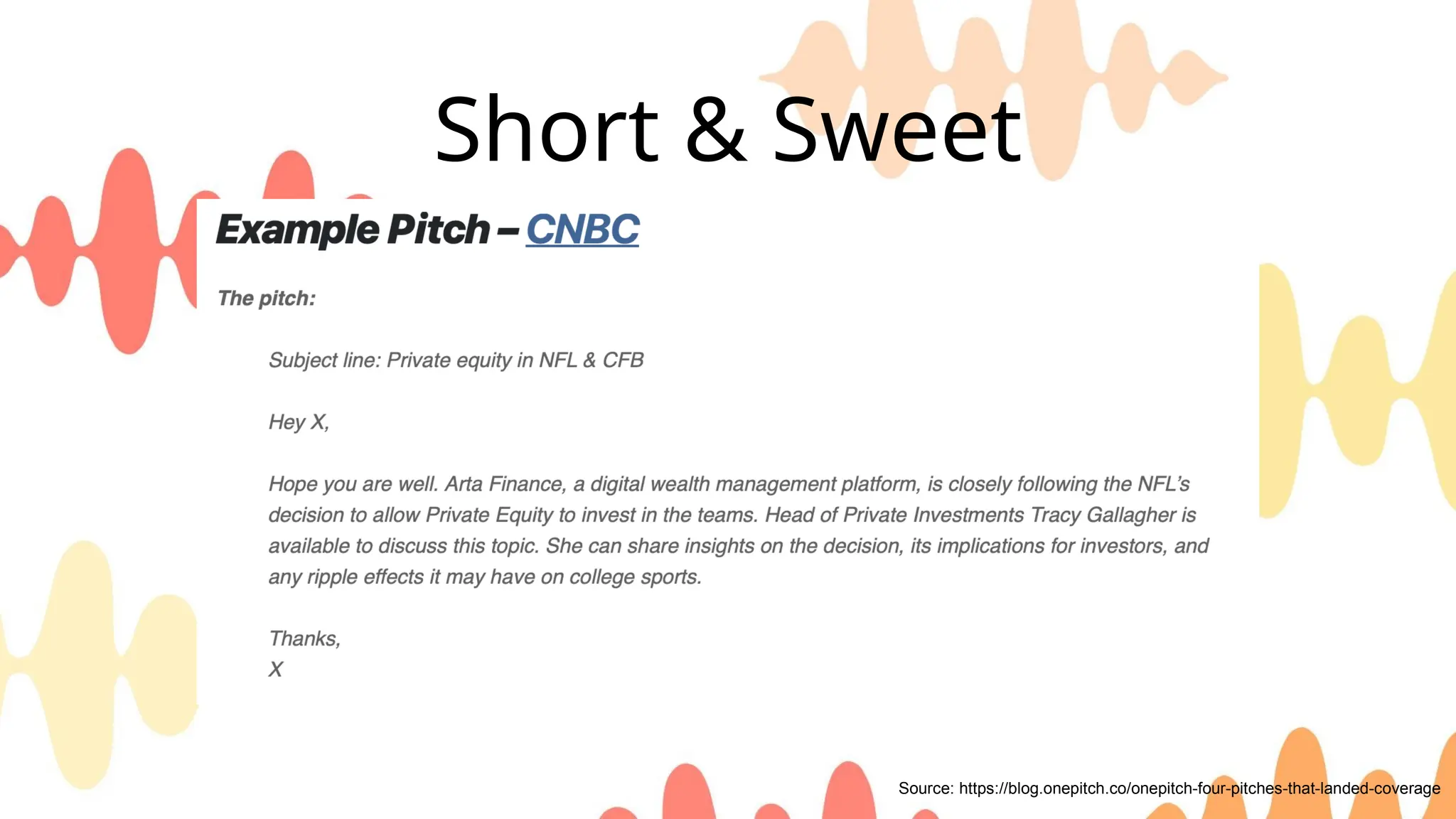
Short & Sweet
Source: https://blog.onepitch.co/onepitch-four-pitches-that-landed-coverage
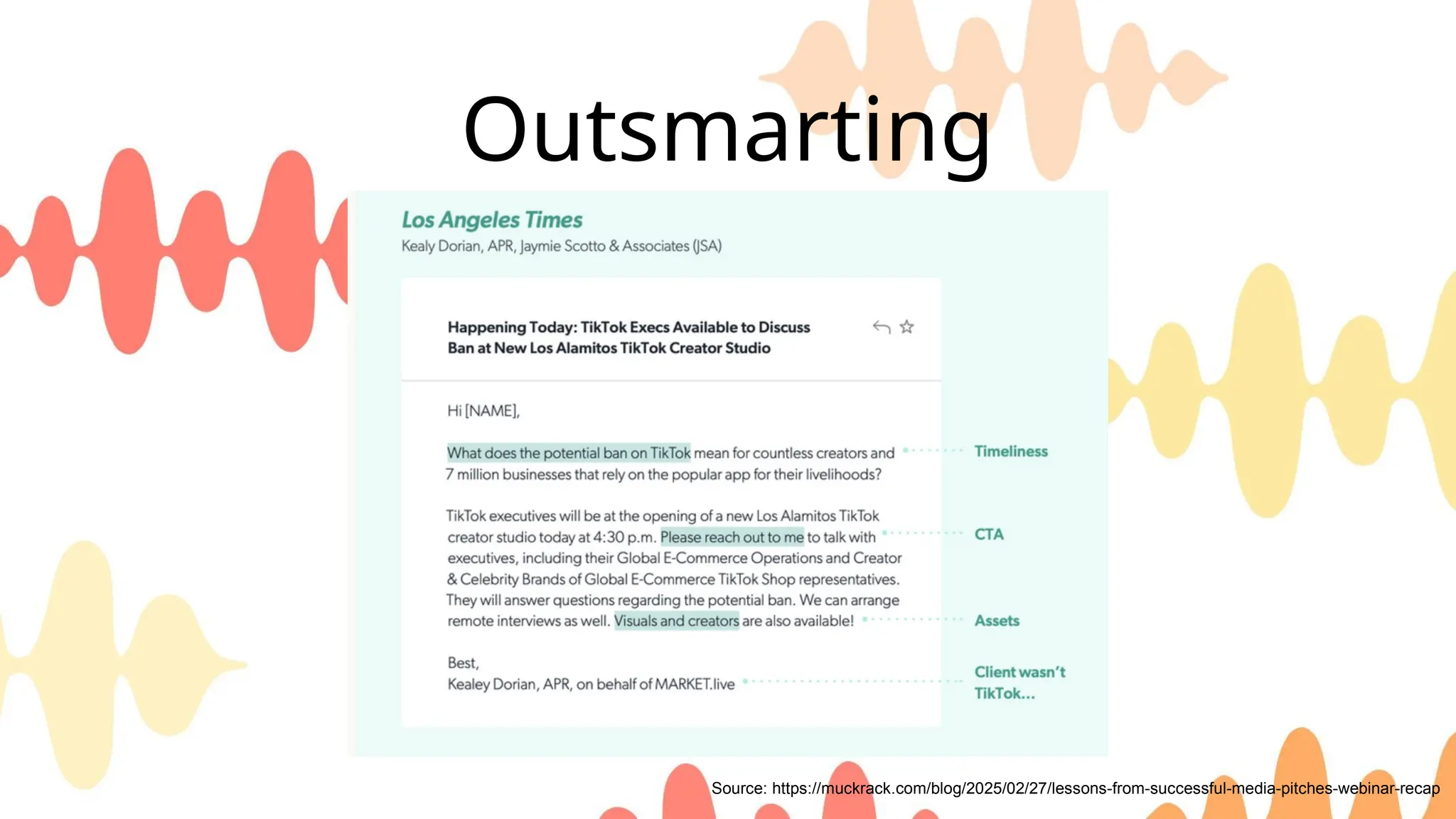
Outsmarting
Obscurity
Source: https://muckrack.com/blog/2025/02/27/lessons-from-successful-media-pitches-webinar-recap
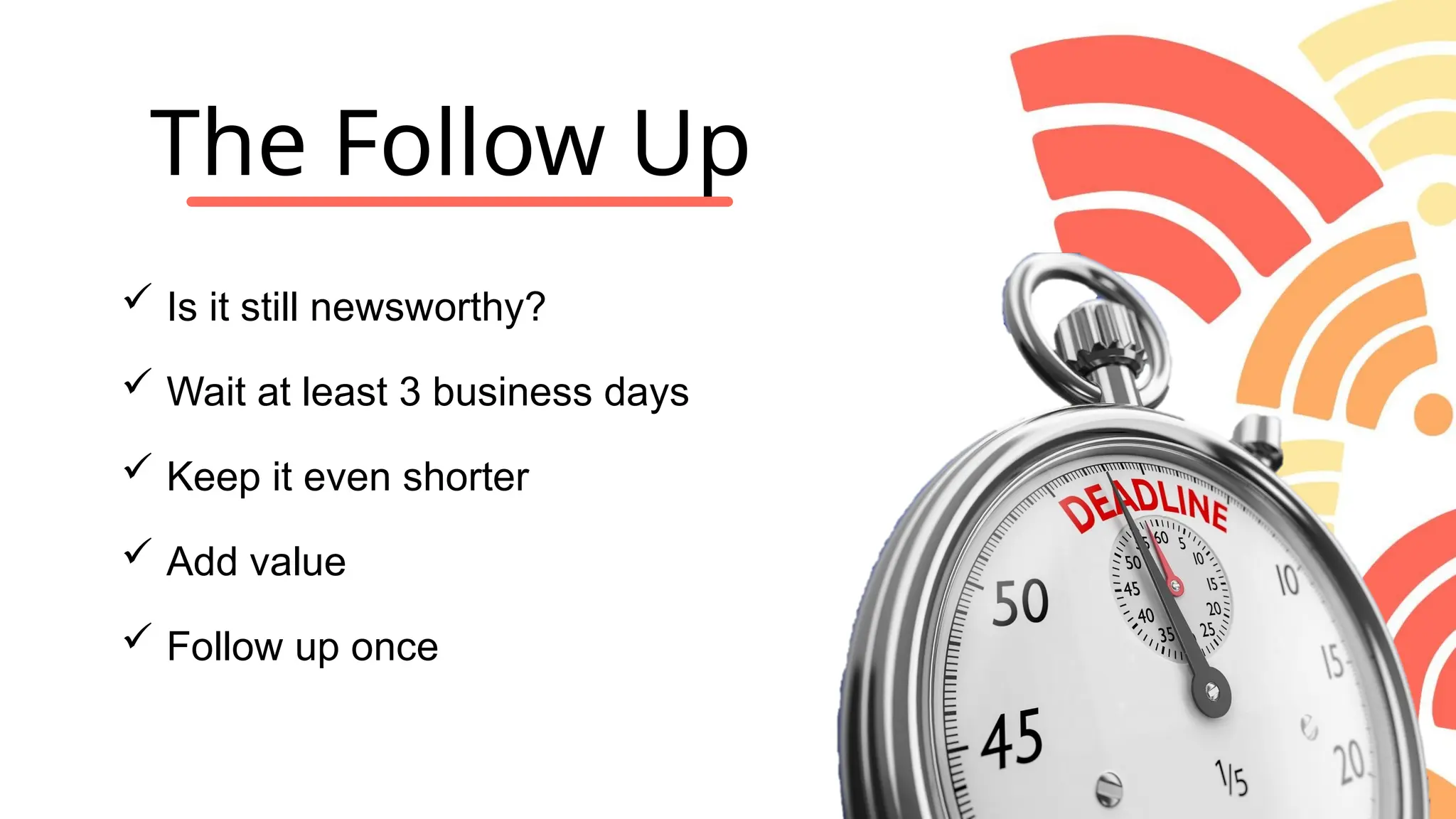
 Is it still newsworthy?
 Wait at least 3 business days
 Keep it even shorter
 Add value
 Follow up once
The Follow Up
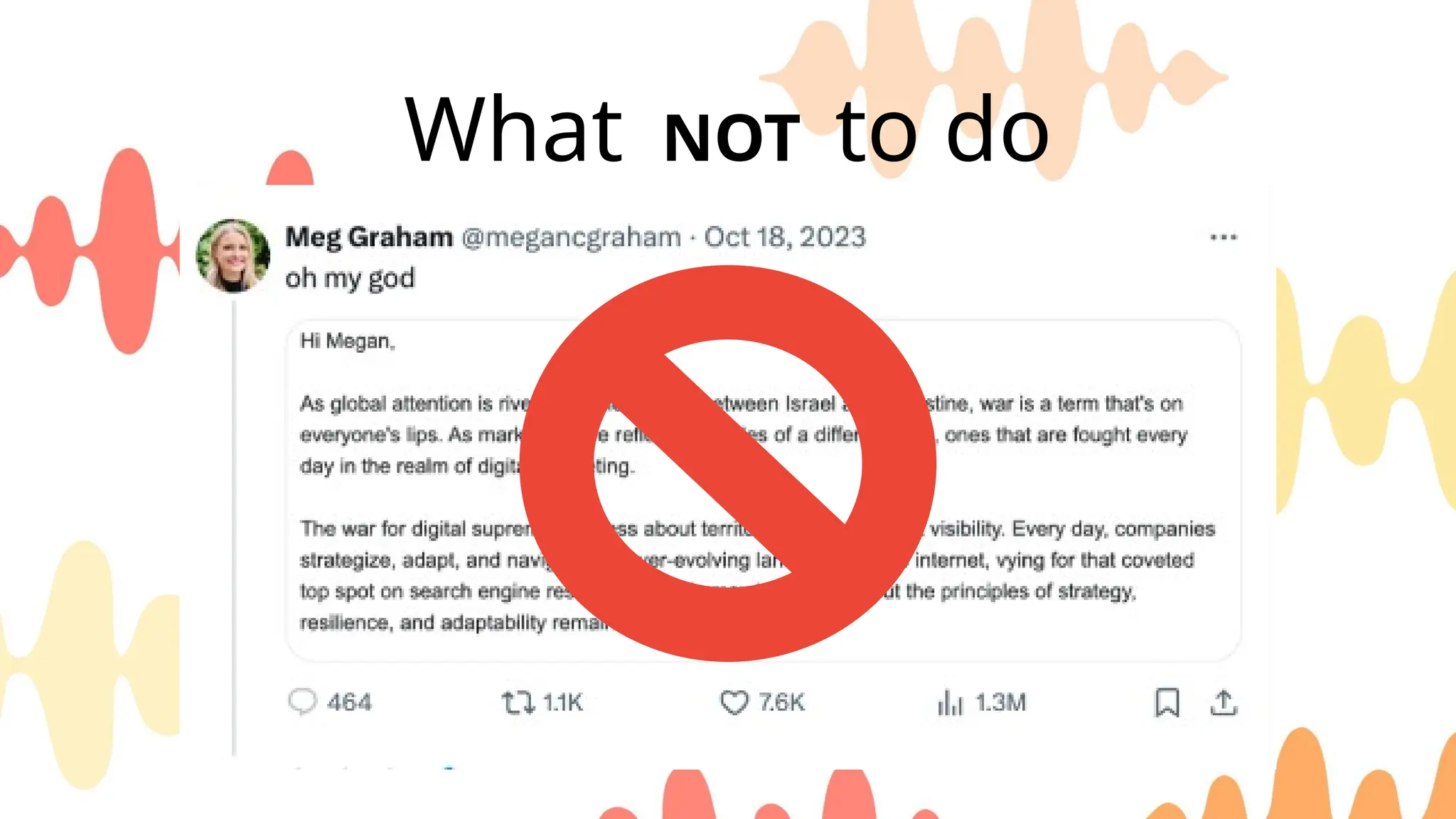
What NOT to do
 Fact check
 Check for bias
 Be human
 Never send without reviewing
💡 Pro tip: The better the prompt,
the better the AI’s output.
AI & Pitching
Final Takeaways
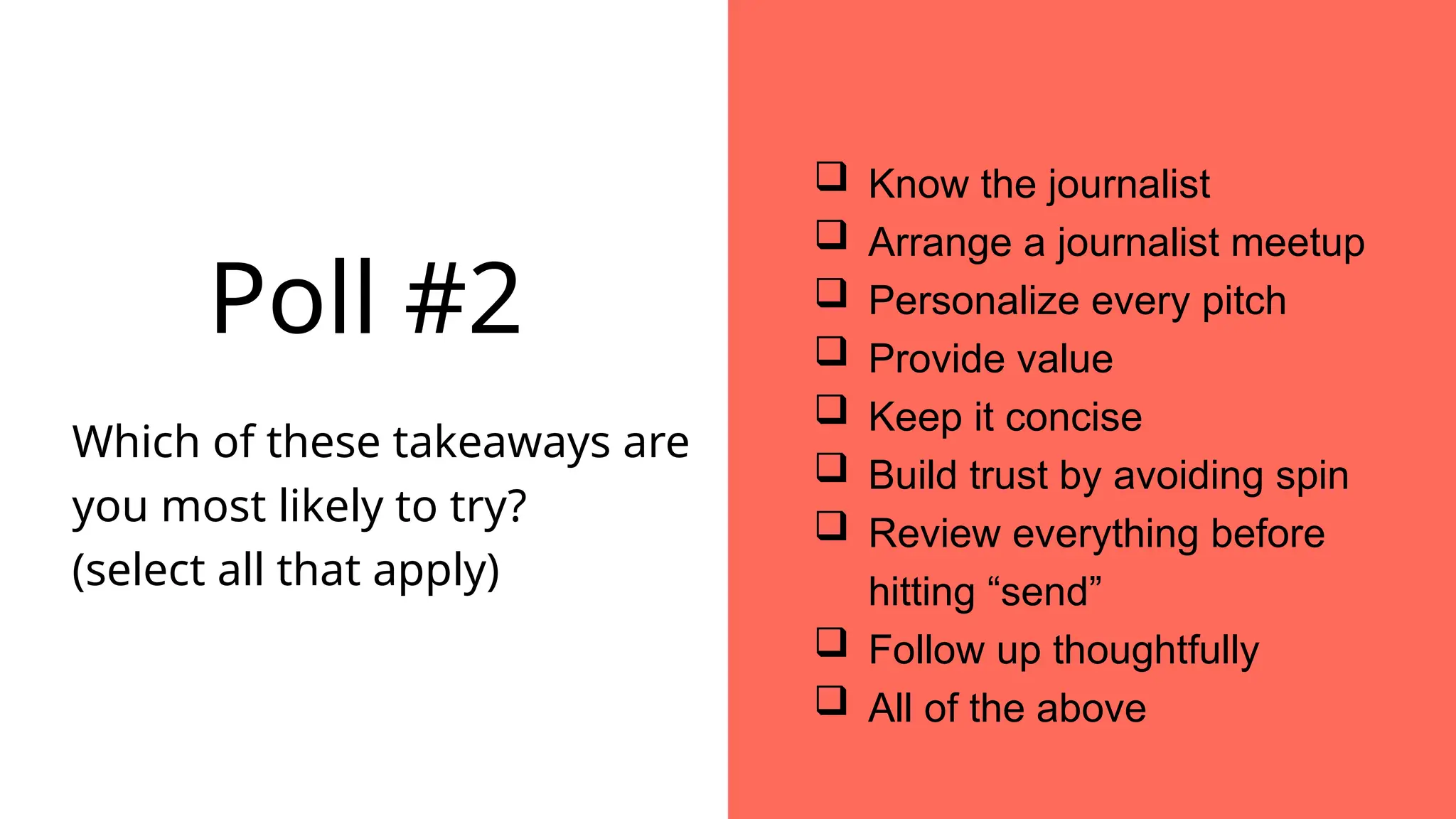
 Know the journalist
 Arrange a journalist meetup
 Personalize every pitch
 Provide value
 Keep it concise
 Build trust by avoiding spin
 Review everything before hitting “send”
 Follow up thoughtfully
 Know the journalist
 Arrange a journalist meetup
 Personalize every pitch
 Provide value
 Keep it concise
 Build trust by avoiding spin
 Review everything before
hitting “send”
 Follow up thoughtfully
 All of the above
Poll #2
Which of these takeaways are
you most likely to try?
(select all that apply)
Nonas Communications
Services
• Campaign development &
execution
• Fractional communications
• Media relations
• Thought leadership
• Brand messaging &
positioning
• Content creation
• Reputation management
• Crisis management
• Internal communications
• CEO & leadership positioning
• Speech writing
• Ghost writing
Beyond the Blast: How to Pitch with Purpose and Build Lasting Media Relationships

Beyond the Blast: How to Pitch with Purpose and Build Lasting Media Relationships

  • 6.
    Agenda  The medialandscape  Building media relationships  Crafting a winning pitch  Final takeaways  Q&A
  • 7.
    Open & Response RATES 400,000sent to reporters 46% opened >4% got responses
  • 8.
    Inbox overload Understaffed newsrooms Heavierworkload Constant pressure to deliver
  • 10.
  • 11.
    Subject line: Quickcoffee chat? Hi [Reporter’s Name], I hope you’re doing well. I’ve been following your work at [Publication] and really enjoyed your recent piece on [specific article/topic]—great insights on [mention a key takeaway]. I'm [Your Name], a [Your Title] at [Your Company]. I’d love to connect for a quick coffee or chat to introduce myself, learn more about what you're covering, and see how I can be a resource. Are you available for a brief meeting next week? Happy to come to a spot near you or schedule a virtual chat—whatever’s easiest for you. Looking forward to connecting! Best, [Name] [Company] [Contact Info] Sample Outreach Email
  • 12.
    Why it Works Subject Line: Quick coffee chat? → Clear & to the point  Opening: Hi [Name], I saw your recent piece on [topic]... → Shows you’ve read their work  Body: …learn more…, and see how I can be a resource. → Shows you want to help  The Ask: Would you be open to a quick coffee chat? → Simple, low pressure
  • 16.
  • 19.
     Can Ihelp with anything you’re working on?  What do you value most in a PR partner?  Is there a specific time you like to get pitches?  Do you like to get press releases?  Do you prefer to get exclusives?  Any pet peeves I should avoid? Sample Q’s to Reporters
  • 22.
    Showing that youcan be a valuable resource sets the stage for a long- term, mutually beneficial partnership.
  • 23.
     Invite areporter to a 1:1 “coffee” chat via email  Come prepared- know their work & their outlet  Ask about their needs so you can be a valuable resource  Make it clear you’re there to help, not pitch  Follow up with a short thank-you email Key Takeaways
  • 24.
  • 25.
    Poll #1  Adetailed history of your company  Catchy subject lines with puns or wordplay  Daily follow ups  All of the above  None of the above What do you think the top things reporters want most in a pitch? (select all that apply)
  • 26.
    Key things REPORTERS want ina pitch “Relevant to my audience.” “Actually newsworthy. Not just a brand trying to get eyeballs.” “Concise and to the point.” "Showing that the PR person has looked at our website and can tailor their pitch to the types of experts and story subjects we present.” Source: Cision 2024 State of the Media Report
  • 27.
     Why shoulda reporter pay attention to this story?  Is it newsworthy? “First, Best, Only”?  Is it relevant to the reporter? The Hook
  • 28.
    Steps to Writinga Winning Pitch  Make it relevant  Offer value  Craft a compelling, concise subject line, <10 words  Keep it short <200 words  Include a call to action  Link multimedia  Proofread
  • 29.
    Short & Sweet Source:https://blog.onepitch.co/onepitch-four-pitches-that-landed-coverage
  • 30.
  • 31.
     Is itstill newsworthy?  Wait at least 3 business days  Keep it even shorter  Add value  Follow up once The Follow Up
  • 32.
  • 33.
     Fact check Check for bias  Be human  Never send without reviewing 💡 Pro tip: The better the prompt, the better the AI’s output. AI & Pitching
  • 34.
    Final Takeaways  Knowthe journalist  Arrange a journalist meetup  Personalize every pitch  Provide value  Keep it concise  Build trust by avoiding spin  Review everything before hitting “send”  Follow up thoughtfully
  • 35.
     Know thejournalist  Arrange a journalist meetup  Personalize every pitch  Provide value  Keep it concise  Build trust by avoiding spin  Review everything before hitting “send”  Follow up thoughtfully  All of the above Poll #2 Which of these takeaways are you most likely to try? (select all that apply)
  • 36.
    Nonas Communications Services • Campaigndevelopment & execution • Fractional communications • Media relations • Thought leadership • Brand messaging & positioning • Content creation • Reputation management • Crisis management • Internal communications • CEO & leadership positioning • Speech writing • Ghost writing

Editor's Notes

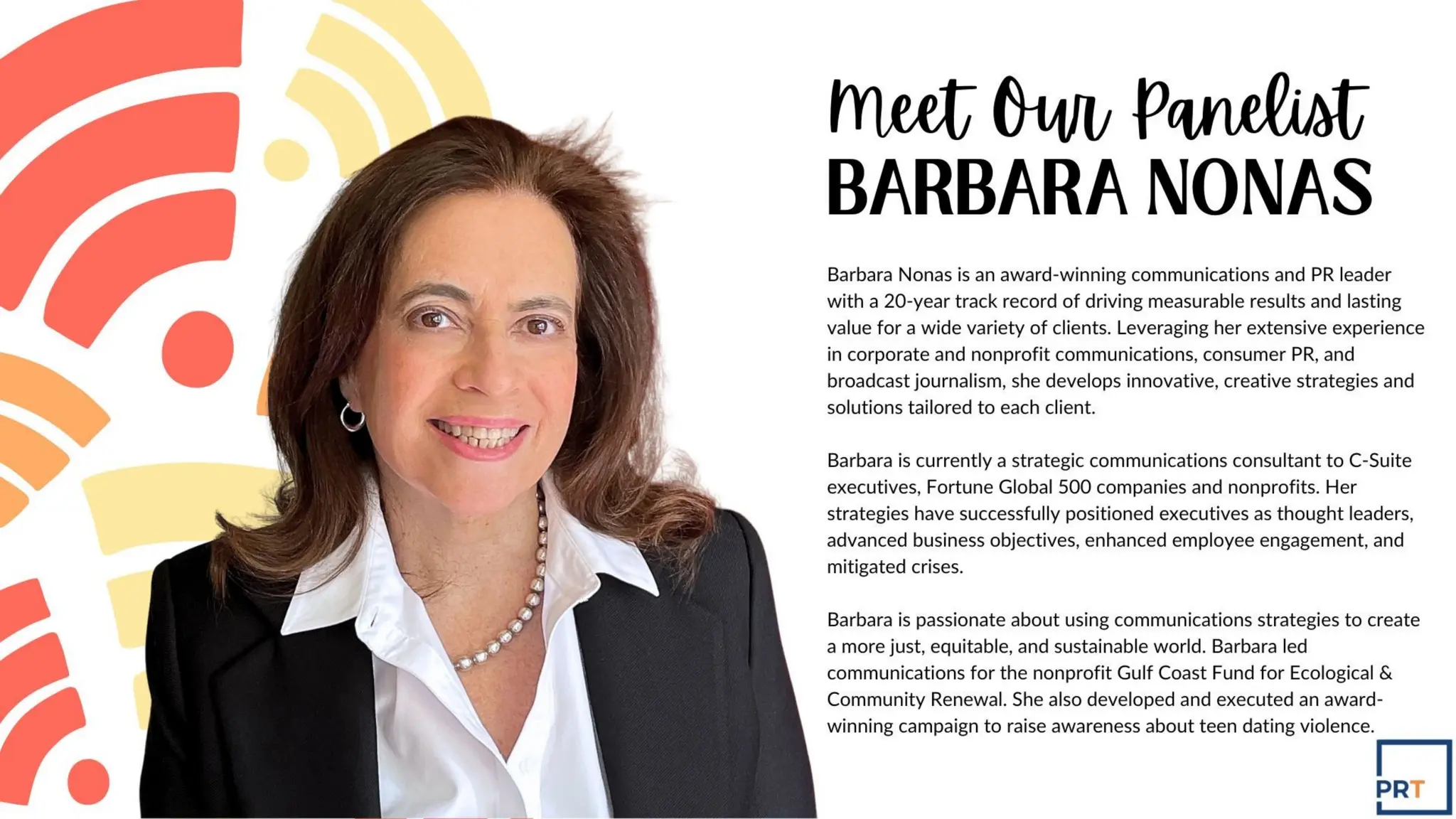
  • #4 Thanks, Tara! It’s been such a pleasure to work with you! And hi, everyone! I’m really looking forward to this conversation today. So let’s jump in and get started."
  • #5 Pitching is challenging, right? If it was easy, we wouldn’t be here today. We’d send one email, // lean back, // sip our coffee, // and boom—watch our stories hit the front page. //Yeah… if only. Instead, it can feel like a uphill battle…like we’re shouting into the ether. But don’t worry…today, we’re going to talk about how to build REAL media relationships…and craft pitches that journalists ACTUALLY want to open.
  • #6 Here’s what we’re going to cover today: First, we’ll take a look at what we’re up against in today’s media landscape. Then, we’ll talk about how to build strong media relationships BEFORE you even pitch. Because trust me.// laying the groundwork makes all the difference. Next, we’ll break down what actually makes a pitch stand out—And just a heads up--I’m going to be focusing on email pitches throughout our conversation. Why? because that’s the method reporters prefer. we’ll go over how to follow-up after sending a pitch, a little bit about AI (because let’s face it-- it’s everywhere) Finally, We’ll review key takeaways to make sure you leave here ready to pitch with purpose. Oh. And a poll- -speaking of which, we’re going to take 2 quick polls-- One in the middle and one at the end. // Because I want to hear from YOU, too. One last thing before we dive in: everything I’m sharing today comes from my experience—what’s worked for me. Take what resonates and feels right for you.
  • #7 Alright.. let’s take a look at the numbers… and see what we’re up against as PR pros. This chart SHOWS the average open and response rates from 400,000 email pitches sent to reporters. ANIMATE- The orange bar --on the far left-- represents all 400,000 pitches that were sent and analyzed. That’s a pretty big number! ANIMATE -The second bar shows that 46% ,// or almost half ,were opened, // which isn’t too bad. ANIMATE -The third bar is eye-opening. ACTUALLY, // you might want to close your eyes and brace yourself… //Because out of those 400,000 emails, less than 4% got a response ! /And that includes rejections! // That means most pitches? …get completely ignored. // I know It’s easy to feel frustrated by these numbers,// but when you see what REPORTERS are dealing with, it starts to make sense. // So let’s flip the script for a second…
  • #8 What’s it like on their end? // Because journalists aren’t just sitting around, / waiting for our pitches.// They’re DROWNING in them. Imagine being a journalist. // You open your inbox and see more than 300 unread emails– and from a quick scan, you can tell that most of them are pitches. // Meanwhile, deadlines are looming and your editor wants fresh content. It’s a LOT of pressure. Here’s a quick look at what they’re up against. ANIMATE - Email overload is no joke. A reporter I know says she gets an average of 500 emails per day! ANIMATE - We’ve all read about the layoffs & budget cuts to media outlets. ANIMATE - And with a smaller staff, comes a heavier workload. Some reporters are juggling multiple beats, and cranking out more than 10 stories a week. So if your pitch doesn’t grab them fast—it doesn’t stand a chance. ANIMATE - //It’s not just about meeting deadlines,—they ALSO need to produce stories that get clicks and drive revenue. So, //with all that in mind, it’s no surprise (voice goes up) that most pitches don’t get a response. // But here’s the thing… // You want to know the best way to break through the noise? build a personal connection with reporters.
  • #9 Strong media relationships/—like any professional relationship—are built on trust, mutual value, and genuine human connection. // It’s not just about landing one story—it’s about laying the groundwork for future conversations. It’s kind of like being a good dinner party guest.// You don’t barge in talking about yourself or start handing out business cards by the bread basket. First, you read the room. // Then, you join the conversation and say something interesting. You’re courteous, maybe even a little charming, and you contribute something that makes the host look good./ Do it right, and you’re not just remembered…—you get invited back. The same goes for working with journalists— it’s about building a relationship that lasts. / And one of the best ways to start… // Is to reach out and connect one-on-one.
  • #10 I like to take a direct, personal approach. I invite a reporter to meet with me 1:1. . // In my case, it’s usually a trade or business reporter. I look for someone who seems approachable and friendly. On that note– (scary voice) Beware the “gotcha reporter” – you can tell from their stories that they go for drama // They’re like the reality TV producer of journalism—less about the facts, /more about the fireworks. And, if you’ve never met with a reporter 1:1 before, I recommend building your confidence / BEFORE reaching out to someone at a top-tier publication // So now I’ll explain why I’m showing a picture of coffee beans. //That’s because I usually suggest that the reporter & I grab coffee— // for one thing, I like coffee. // 😏 And people meet for coffee all the time, so it doesn’t seem like an unusual request. // It keeps things casual and low stakes. And since it’s quick, a reporter can usually fit it into their busy schedule. // If meeting in person isn’t an option…if you don’t live in the same location, for example, you can ask for a ‘virtual’ coffee over video. Again, the word “coffee” //–at least to me, implies a relaxed, low-pressure conversation.
  • #11 So what does the invitation to meeting the reporter actually look like? Here’s an example of an email I’d send. Take a quick look at it— then in the next slide I’ll walk you through why it works. ////
  • #12 Rather than asking for something, this email is all about offering value. Let’s break it down. ANIMATE - The subject line is concise and to the point. ANIMATE - I open by referencing an article they’ve written. // It shows I’ve done my homework, and that I’m a fan. ANIMATE - I make it clear I want to be a resource // ANIMATE - I keep the tone //—and the ask //—light &breezy. //Just a quick coffee chat.
  • #13 OK. Your email piqued the interest of the reporter. They’ve agreed to meet. …Now what? First things first…Prepare! //
  • #14 Dig into the reporter’s work. // Look at their recent and past articles—do you notice any patterns? // Who do they typically quote? // What’s their writing style? //
  • #15 Do they like to include stats? // Are there specific topics within their beat that they focus on? / A tech reporter might only cover AI news /-- nothing else Check out their bio—sometimes you’ll find personal details that can help keep the conversation flowing. And, / it goes without saying, //make sure you’re really familiar with the media outlet they work for. BIG PAUSE: Now that you’re prepared, it’s time for the meeting
  • #16 But remember—and I can’t stress this enough--this isn’t about pitching a story. // It’s about making a connection, / and laying the foundation for a relationship that will benefit you both. //
  • #17  I’ve found that the best way to do that, / is to be genuinely helpful. I put myself in the reporter’s shoes… What do they need? // How can I be a resource? // When you focus on being VALUABLE—and OFFERING something,/// instead of being VISIBLE and ASKING for something, /// you build solid relationships.
  • #18 OK, so let’s assume you’re in a café… or meeting over zoom. During the conversation, I focus on learning what the journalist is working on and how I can be a genuine resource. // I might share insights or data that could be useful. // I also take the opportunity to ask questions that will help me do MY job better.
  • #19 There are so many possible questions to ask. I’m going to rattle off a bunch that I typically ask: ANIMATE - Can I help with anything you’re working on? ANIMATE - What do you value most in a PR partner? / ANIMATE - Is there a specific time you like to get pitches? / ANIMATE - Do you like to get press releases? / ANIMATE - Do you prefer exclusives? ANIMATE - Any pet peeves I should avoid? / DON’T MOVEWhen you tailor your approach to what THEY want, // your chances of coverage go way up. After the meeting, / I send a brief thank-you. It shows appreciation,/ and keeps the momentum going.
  • #20 One thing I’ve found really helpful.. Meeting with reporters who are new to their beat…and still figuring things out. // It’s a chance to be a resource //—no pitch, / just helpful information, / no strings attached. Every reporter’s different, of course, / But here’s what I usually do: After some small talk, / I’ll mention how tough it was when I went from doing PR for a nonprofit, to working at a global ad agency. BIG shift. Then, I’ll ask if I can help get them up to speed on something. /. And since I’VE opened up a bit, they feel comfortable doing the same. I offer to connect them // —off the record—with experts I trust./ People who can explain things clearly, // and are happy to talk on background.
  • #21 What I’ve seen is, those same experts often end up in future stories. They become trusted, go-to sources for the reporter. And there’s another bonus! Many—in fact / most-- of these novice reporters rise up the ranks fast…and end up in senior roles… // — either at the same outlet or somewhere else.
  • #22 I put this on its own slide bc it’s that important./// Showing that you can be a valuable resource sets the stage for a long-term, mutually beneficial partnership. // You notice I use the word partnership. It’s intentional. // This isn’t just about getting a story placed—it’s about creating a relationship… that holds up over time....and benefits you both. When a journalist sees you as a trusted source, // --someone who helps them do THERE JOB better, // the relationship shifts. ////This mindset has shaped the way I work with reporters…. And it’s made all the difference.
  • #23 Before we move on, here are the key takeaways from everything we’ve covered about the reporter meetup. ANIMATE - First, send an email and request a one-on-one chat. // Keep it casual and low-pressure. ANIMATE - Second, / prepare .// Make sure you’ve researched the reporter and the outlet. ANIMATE - During the meeting, / focus on learning what they NEED.. so you can be a helpful source. ANIMATE - And, / remember // —you’re not there to pitch, you’re there to offer value and build a relationship. ANIMATE - Finally, follow up with a short thank-you email to keep the conversation going. DON’T MOVE When you approach it this way, it feels natural…—and over time, you become someone they count on--not just someone trying to land a story.
  • #24 So, You’ve met with the reporter, and you have a story to pitch. // How can you make it pop and get noticed?
  • #25 But before we get started, //I want to hear from you. What do you think reporters want most in a pitch? Over to you, Tara!
  • #26 The answer to the poll is.. “None of the above”. Let’s take a look at some of the things reporters say – in their own words… --they want most in a pitch ANIMATE - Relevance. / Relevance is a must / —if it’s not a fit for their audience, / it’s an automatic no. ANIMATE - It has to be newsworthy— // it shouldn’t sound like a marketing brochure or a sales pitch. ANIMATE - It needs to be direct, / and to the point. / No jargon, no fluff. ANIMATE - And finally… Tailor it to the reporter. // Journalists can spot a “spray and pray” / —when the exact same email is blasted to everyone./ And they won’t hesitate to delete. They might even decide to block you. So while it might SEEM efficient, // a generic pitch will come back to bite you. If you want results… / you have to do the work. // You have to personalize every pitch.
  • #27 Before I even start writing, I think about the angle—the hook. I look for what I like to call the “news nugget” //—something that will get the reporter’s attention. I keep three simple words in mind, when judging whether a story is newsworthy: FIRST. // BEST. // ONLY. Is it the first of its kind? The best at what it does? Or the only one out there—something truly different? As we talked about earlier, to be successful, your pitch has to be tailored to the reporter you’re reaching out to.
  • #28 Let’s deconstruct what makes a strong pitch…Then we’ll look at some examples. ANIMATE - Relevance is critical– I’ve repeated this a lot, because it’s essential. You have to tailor your pitch to the reporter’s beat. If you’ve already had a 1:1 with them / —like a coffee meeting /-- mention it. It’s a great way to reinforce the relationship. ANIMATE - I can’t say it enough--// Offering value is ALSO essential. // You want to make it clear WHY this pitch is worth their time, / and more importantly, their AUDIENCE’S time. // Share new insights, data, or a fresh perspective // Can you offer an exclusive? ANIMATE - The subject line is your headline. Nail it--- ///or get deleted. / Reporters decide in seconds. ANIMATE - Get to the point fast. / No one’s got time for a novel. Hit the basics /—who, what, when, where-- / in simple, short sentences. ANIMATE - Don’t just send info and hope for the best. // Ask if they’d like more details, an interview, or specific next steps. // ANIMATE - Provide easy access to multimedia– / No attachments that will clog up their inbox. Instead, / link to images, videos, or anything they might need for their story.. I like to “lay it all out on a platter” and provide everything they might need. ANIMATE - Careless errors… / like misspelling a reporter’s name / are a big turnoff. // Take time to double check your work. You don’t want to hit send and then realize afterwards that you’ve made mistakes.
  • #29 Take a moment to read this winning pitch… it led to coverage on CNBC (pause for reading) Here’s why it works: It’s Straightforward…clear… timely…and relevant. There's no "fluff" or corporate messaging. In just a few sentences, it delivers a breaking story, and an expert that can talk about it. It targeted to reporters who cover the topic. Personally, I would’ve ended with a quick call to action, like, “when is a good time to set up an interview…but regardless. This worked.
  • #30 Sometimes, // what you have to pitch, / just isn’t that newsy. // We’ve all been there. And it’s challenging I love this example of how getting CREATIVE can lead to COVERAGE. You don’t have to read it –just get the gist by checking out the comments and highlights in green. Here’s why it works. It grabs attention right off the bat by tapping into a hot topic– a potential TikTok ban. It offers experts to comment on the news… and assets to enrich the story. Here’s what’s SO clever about it…The author doesn’t actually work for TikTok! She represents a company that PARTNERS with them. But she knew reporters weren’t going to rush out to cover a small company no one’s heard of, so instead, she hooks them with a story they can’t resist. Once they’re on site, they can interview the TikTok folks and then she can introduce them to her clients. And they become…part of the story.
  • #31 Following up with journalists can be tricky. It matters—but too much can backfire. Before you follow up, / ask yourself: Is this story still newsworthy? // If not, / move on. If it IS, here’s what to keep in mind: ANIMATE - Don’t follow up too soon. ANIMATE - Keep it short—shorter than your original pitch. ANIMATE - Don’t just ask if they saw your email. // It’s an annoying question that doesn’t offer any value. // Instead, / add something new: / an update,… or a fresh angle, ANIMATE - One follow-up is usually fine. // More than that is NOT a good look. Nearly half of journalists say they’d block someone for being too pushy. // DON”T MOVE. So be thoughtful. / Be respectful. / And when in doubt …less is more. And if the pitch doesn’t land? Don’t get discouraged. / It’s not always about you…. breaking news, deadlines… or just inbox overload can get in the way. BUT…if your pitch was thoughtful, and relevant, // stay in touch… Because even if this one doesn’t land… /// the next one just might.
  • #32 We’ve talked about what you SHOULD do. Now I want to briefly touch on what you SHOULDN’T do. This email was sent to a reporter at the Wall Street Journal. Don’t bother reading it. But check out the comment. Oh my god…is right… and says it all. It’s rambling, / incoherent / and of absolutely NO value, / In fact, it’s a waste of the reporter’s time. So… you might be wondering….why am I showing it to you??//The answer is… Because it sounds like it was created with AI.
  • #33 AI is so easily accessible. And it’s everywhere. A survey of PR pros last year showed that 75% of us use AI at work. And that number’s only going to increase. So… we have to be vigilant. Because while AI can be an incredible tool… it’s not perfect. If we’re going to use it effectively… and responsibly… there are a few “musts”… We have to verify information.. with trusted sources. Because AI doesn’t always get the facts right. It learns from the data it’s trained on… // which means AI can inherit buy-a-sis. It’s up to us to catch it when it shows up. The output can sound robotic,. // That’s where our HUMANNESS comes in—we need to bring in real HUMAN EMOTION, —so that what we’re writing sounds like an ACTUAL PERSON. // It might be tempting to just copy and paste… / but don’t. If we don’t review and refine, we risk sending something that sounds off //—or worse… // gets tweeted out with an oh my god by a reporter. Here’s a tip--. (ARROW/ANIMATE) - It’s like the saying… garbage in,.. garbage out. The more detailed & specific the prompt,… the better the result.
  • #34 Alright!—here’s a recap of the big takeaways. ANIMATE - Take time to understand what the journalist covers…and what matters to their audience. Doing your homework shows… // —and it pays off. ANIMATE - Set up a quick coffee chat. // I’ve found that once I’ve had a genuine conversation—// face-to-face.. or even over Zoom—// something shifts. I’m no longer just a name… in their inbox. / I’m someone they’ve met. ANIMATE - Personalize every pitch. It shouldn’t feel like a blast // —it should feel like it was written just for them. ANIMATE - Give them something, that makes their job EASIER //—or their STORY, better. ANIMATE - Keep it short, / relevant, / and focused on what’s in it for THEM. ANIMATE- Be honest. / Skip the spin. / Reporters can spot hype a mile away. / Be straightforward. Reporters appreciate it & will want to work with you. ANIMATE - Before you hit send, / review. Whether YOU wrote… it or AI helped—// Make sure it sounds like you. ANIMATE - Follow up once… and make it count. Don’t overdo it.
  • #35 Before we wrap up, I’d love to hear from you—Which of these takeaways are you most likely to try? There’s no wrong answer here—just a chance to reflect on what resonated most with you.
  • #36 Thank you so much for being part of this session. I hope it helps you pitch with purpose & build lasting media relationships. If to keep the conversation going, or if there’s anything I can help you with, feel free to contact me. Enjoy the rest of your day!