ENERGY & WATER 
CONSERVATION
PRESENTED BY 
SHIVANGI RAI.C-2391 
YASH KANADHIA.C-2392 
ANKISHA SAWANT.C-2393 
SALMAN SAYED.C-2394(GROUP LEADER). 
BINAL SHAH-C-2395 
VINIT SHARMA-C-2396 
YASH VAIDYA-C-2397 
RISHAB BHOJAK C-2398 
SULTAN SIDDIQUE C-2399 
PRITAM JANA-C-2400.
ENERGY CONSERVATION
AGENDA 
 WHAT IS ENERGY? 
TYPES OF ENERGY 
 WHY TO CONSERVE? 
 WHAT CAN WE DO? 
 ENERGY CONSERVATION IN INDIA
WHAT IS ENERGY? 
 Energy light our cities, power our vehicles, and runs 
machinery in factories. It warms and cools our homes, 
cooks our food, plays our music, and gives us pictures 
on television. 
 Energy is defined as the ability or the capablity to do 
work.
TYPES OF ENERGY 
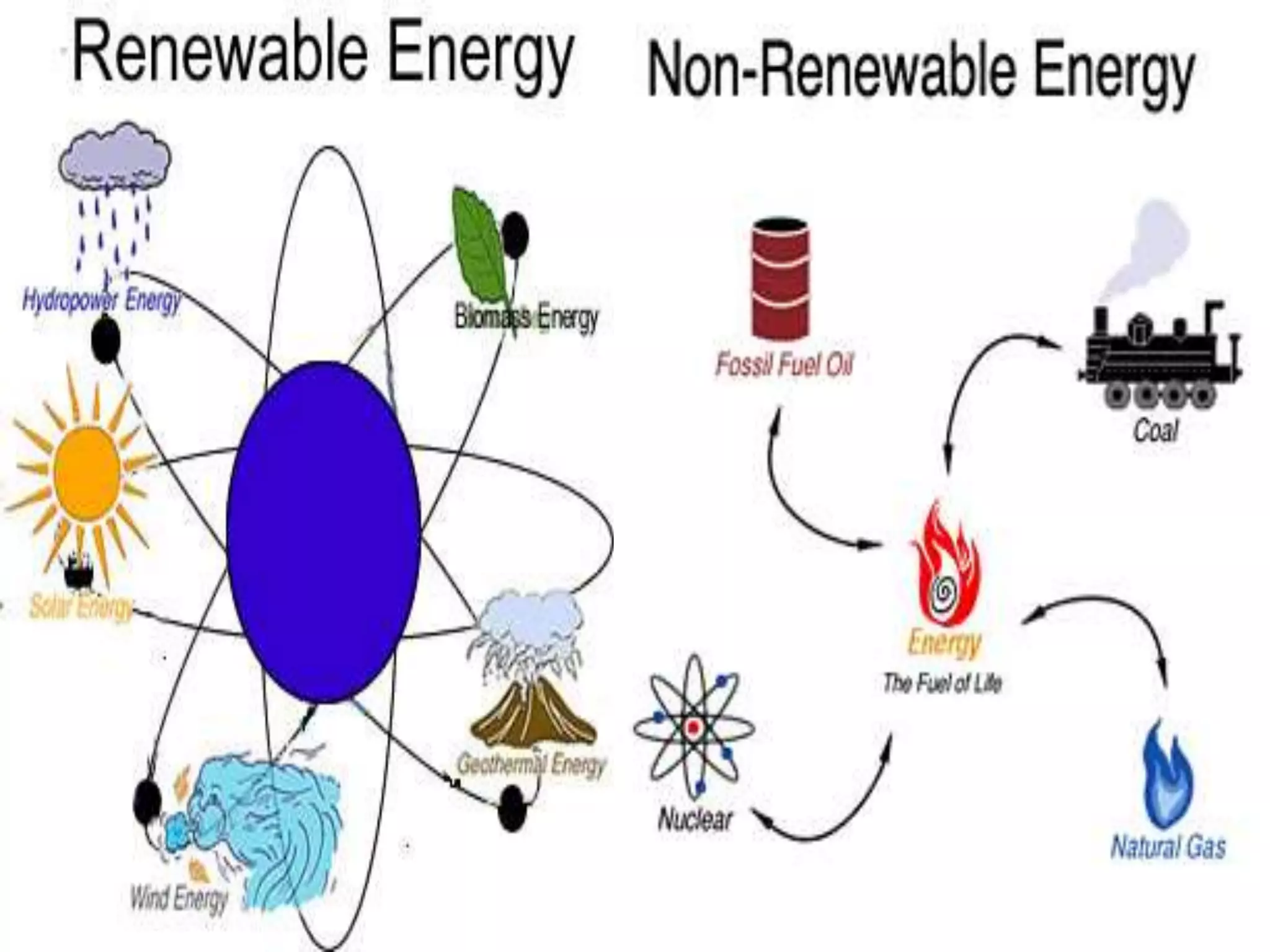
 RENEWABLE ENERGY : 
Renewable energy can be generated continuously 
practically without decay of source. 
EXAMPLE: 
• Solar energy,wind energy,Geothermal,Hydro energy. 
 NON-RENEWABLE ENERGY : 
Non-renewable energy is energy that comes from the 
ground and is not replaced in a relatively short amount 
of time. 
EXAMPLE: 
Energy generated from combustion of fossil 
fuels,Coal,gas etc.
WHY TO CONSERVE IT? 
 We have limited resources available on 
earth. 
 Our demands are continuously increasing 
day by day. 
 It is possible that someday most of the non-renewable 
resources will be exhausted and we 
will have to switch over to alternate ennergy
WHAT WE CAN DO? 
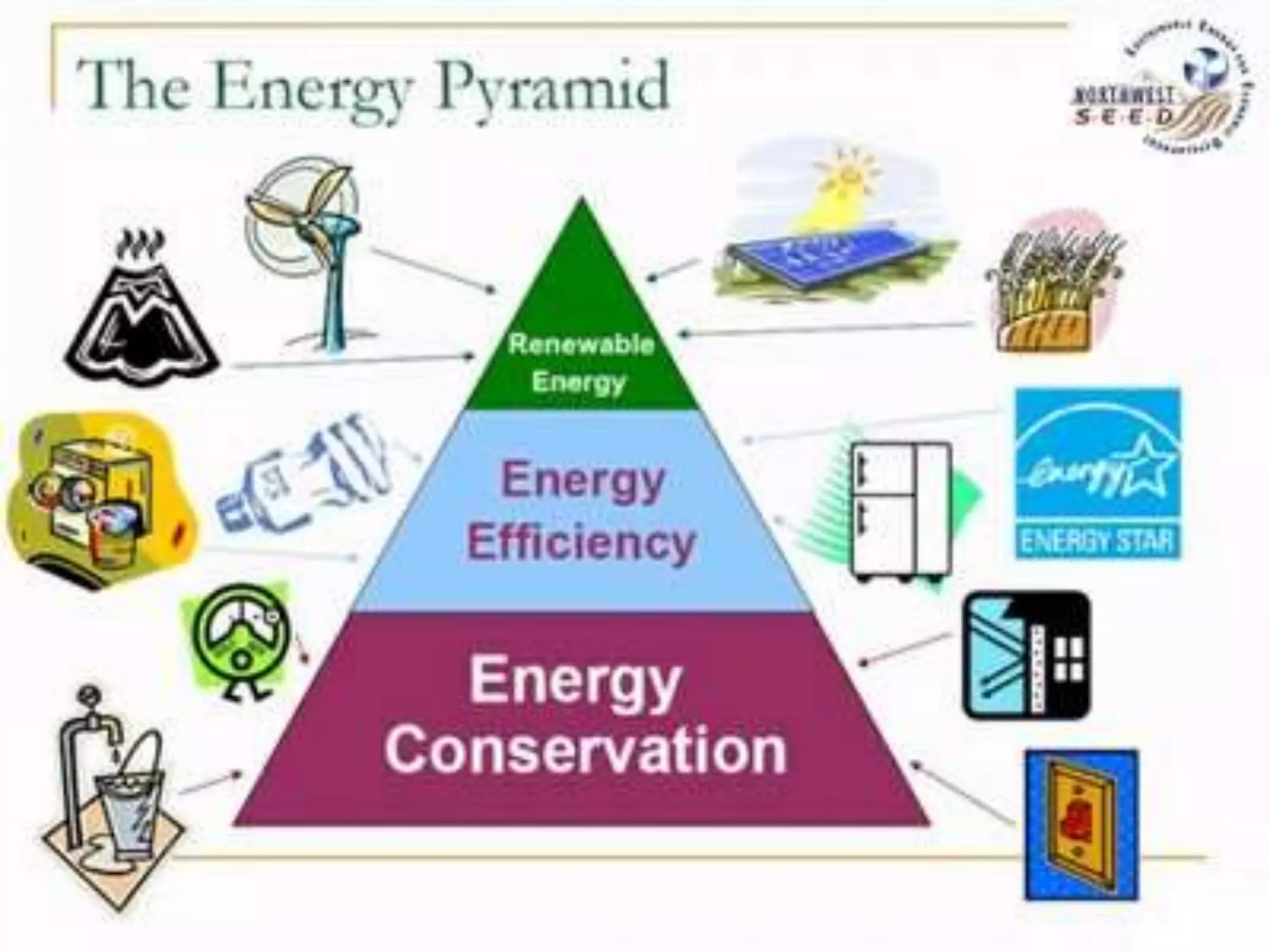
 RECYCLE – Compositing waste materials into new 
products to prevent waste of potentially useful materials. 
Turn off all electronic devices that are not in use. Not 
only turn them off but try to remember to unplug them. 
You will be surprised how much you will save with this 
simple step! 
Replace old light bulbs with energy saving fluorescent 
bulbs. They may cost more, but will save you much more 
in the long run.
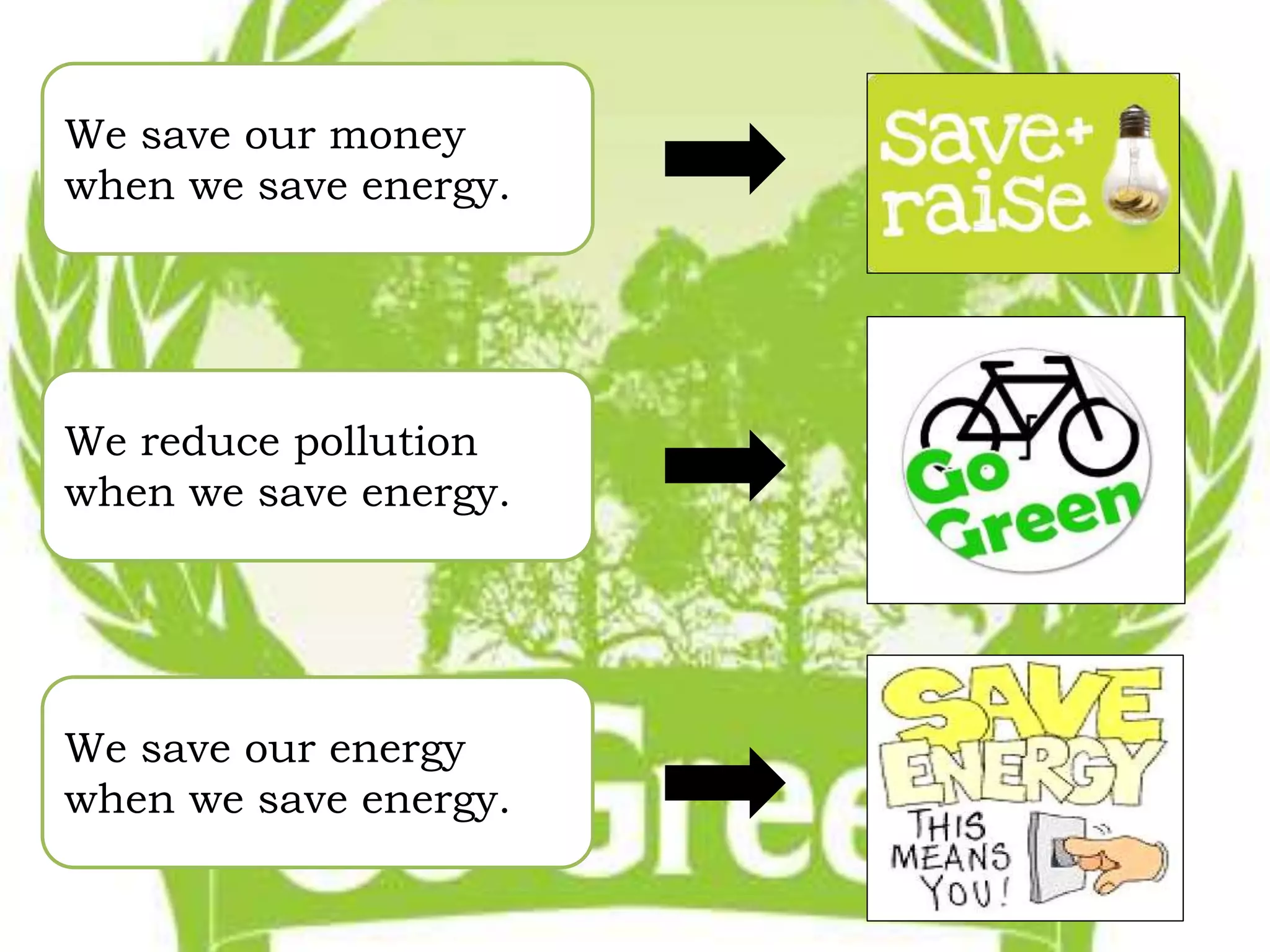
We save our money 
when we save energy. 
We reduce pollution 
when we save energy. 
We save our energy 
when we save energy.
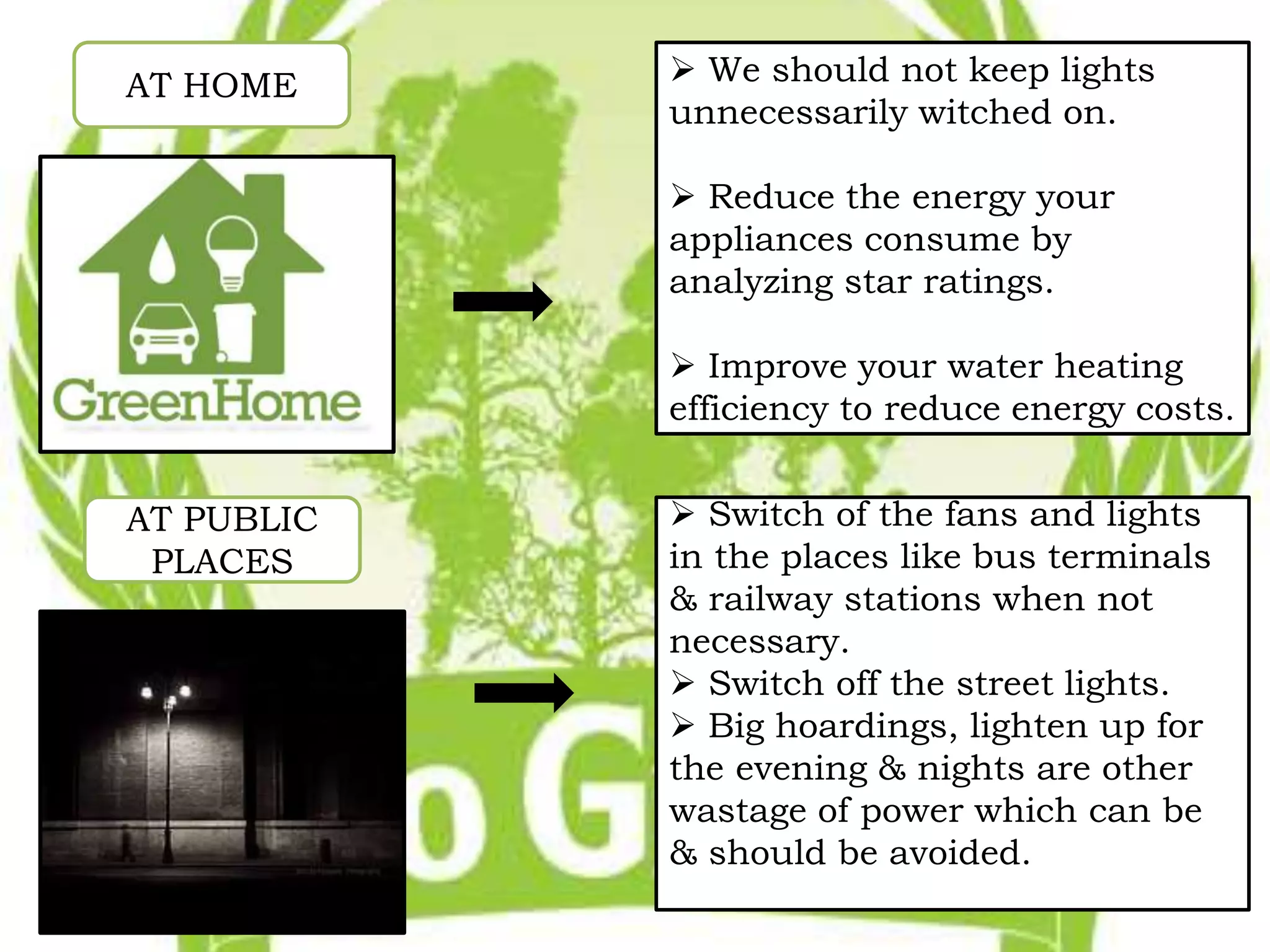
 We should not keep lights 
unnecessarily witched on. 
 Reduce the energy your 
appliances consume by 
analyzing star ratings. 
 Improve your water heating 
efficiency to reduce energy costs. 
 Switch of the fans and lights 
in the places like bus terminals 
& railway stations when not 
necessary. 
 Switch off the street lights. 
 Big hoardings, lighten up for 
the evening & nights are other 
wastage of power which can be 
& should be avoided. 
AT HOME 
AT PUBLIC 
PLACES
ENERGY CONSERVATION IN 
INDIA 
About 70% of india’s energy generation capacity is from 
fossil fuels,with coal accounting 40% of india’s total energy 
consumption followed by crude oil and natural gas at 24% 
and 6% respectively. 
India is largely dependent on fossil fuels import to meet it’s 
energy demands. 
By 2030,india’s dependence on energy imports is expected 
to exceed 53% o the country’s total energy consumption. 
In 2009-10,the country imported 159.26 million tonnes of 
crude oil which amount to 80% of its domestic crude oil 
consumption and 31% of the country’s total imports are oil 
imports.
INTRODUCTION 
Water is essential to life on earth. 
 Saving water is good for earth,your family & your 
community. 
 Saving water leads to save energy. 
 Saving water leads to save money.
WHAT IS WATER 
CONSERVATION? 
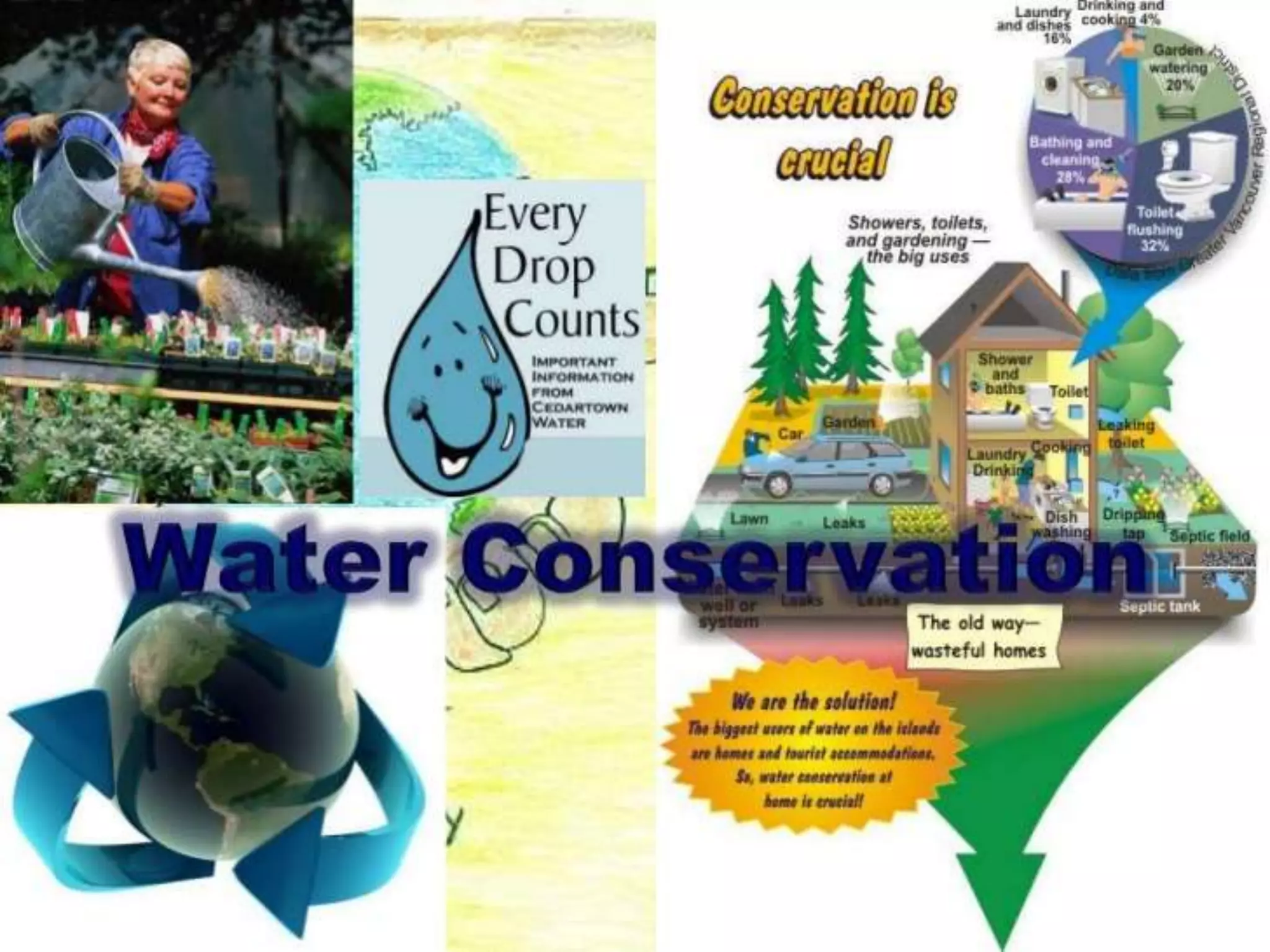
It refers to reducing the wastage of water & 
recycling of waste water. 
 water conservation helps to save 
energy,protect wild animals & prevent people 
from using so much of water that cannot be 
replaced with rain. 
“NO WATER NO LIFE”
WHY SAVE WATER? 
 When you use water wisely, you help the 
environment. You help preserve drinking water 
supplies. 
 You use water wisely,it ease the burden on 
wastewater treatment plants-the less water you 
send down the drain, the less work these plants 
have to do to make water clean again. 
 When you use water wisely, you save energy. 
 You save the energy that your water suppliers 
uses to treat and move water to you, and the 
energy your family uses to heat your water.
STRATEGIES 
In implementing water conservation principles 
there are a number of key activities that may be 
beneficial. 
 Any beneficial reduction in water loss,use and 
waste of resources. 
 Avoiding any damage to water quality. 
 Improving water management practices that 
reduce or enhance the beneficial.
WATER CONSERVATION SOLUTION 
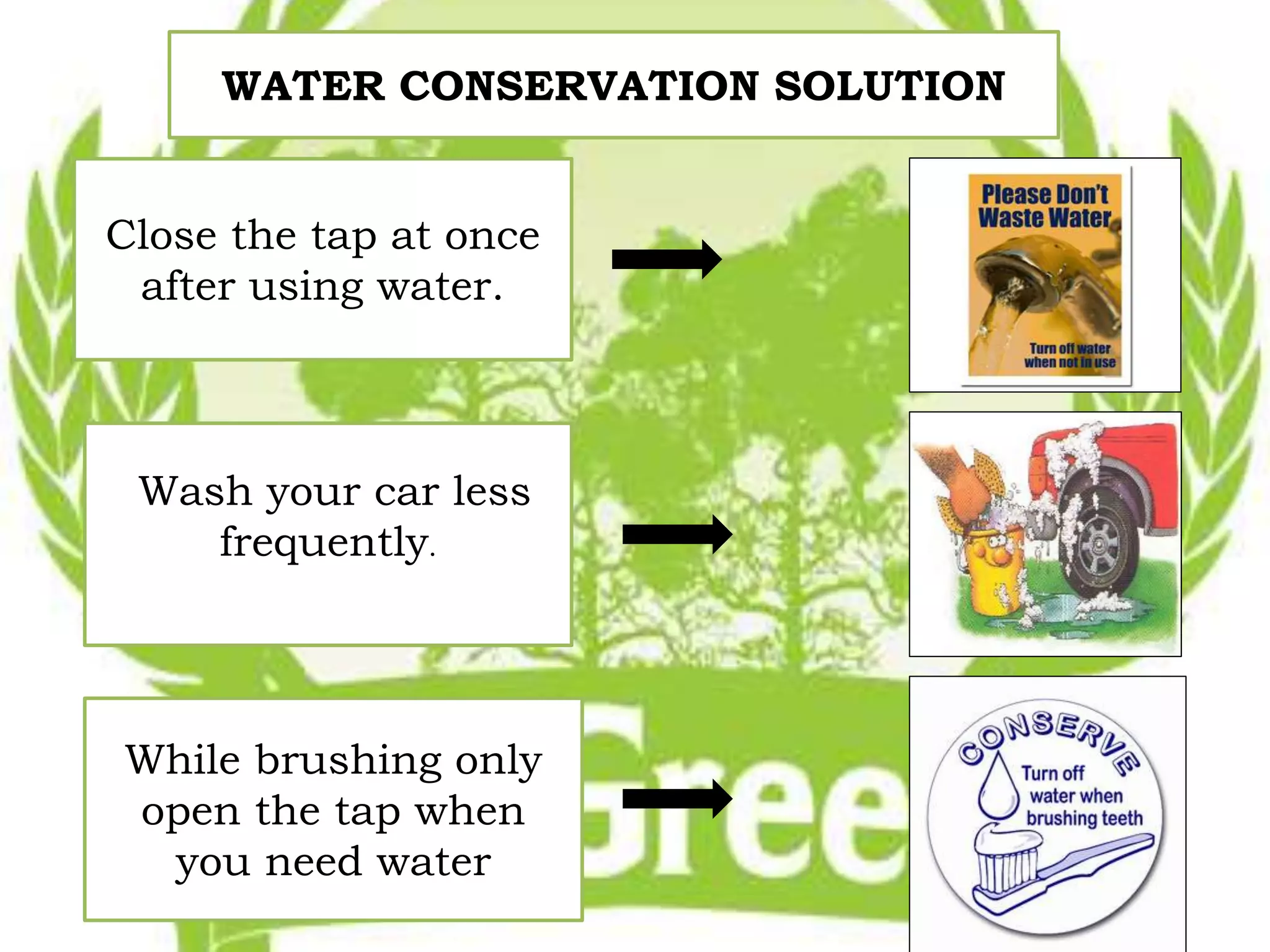
Close the tap at once 
after using water. 
Wash your car less 
frequently. 
While brushing only 
open the tap when 
you need water
WATER CONSERVATION SOLUTON 
 Fix leak pipes. 
 Less use of washing machine. 
 Run your dishwasher only when you have full load. 
 Slow flow of water. 
Huge storage containers. 
 Take shorter showers. 
 Do not over-water plants.
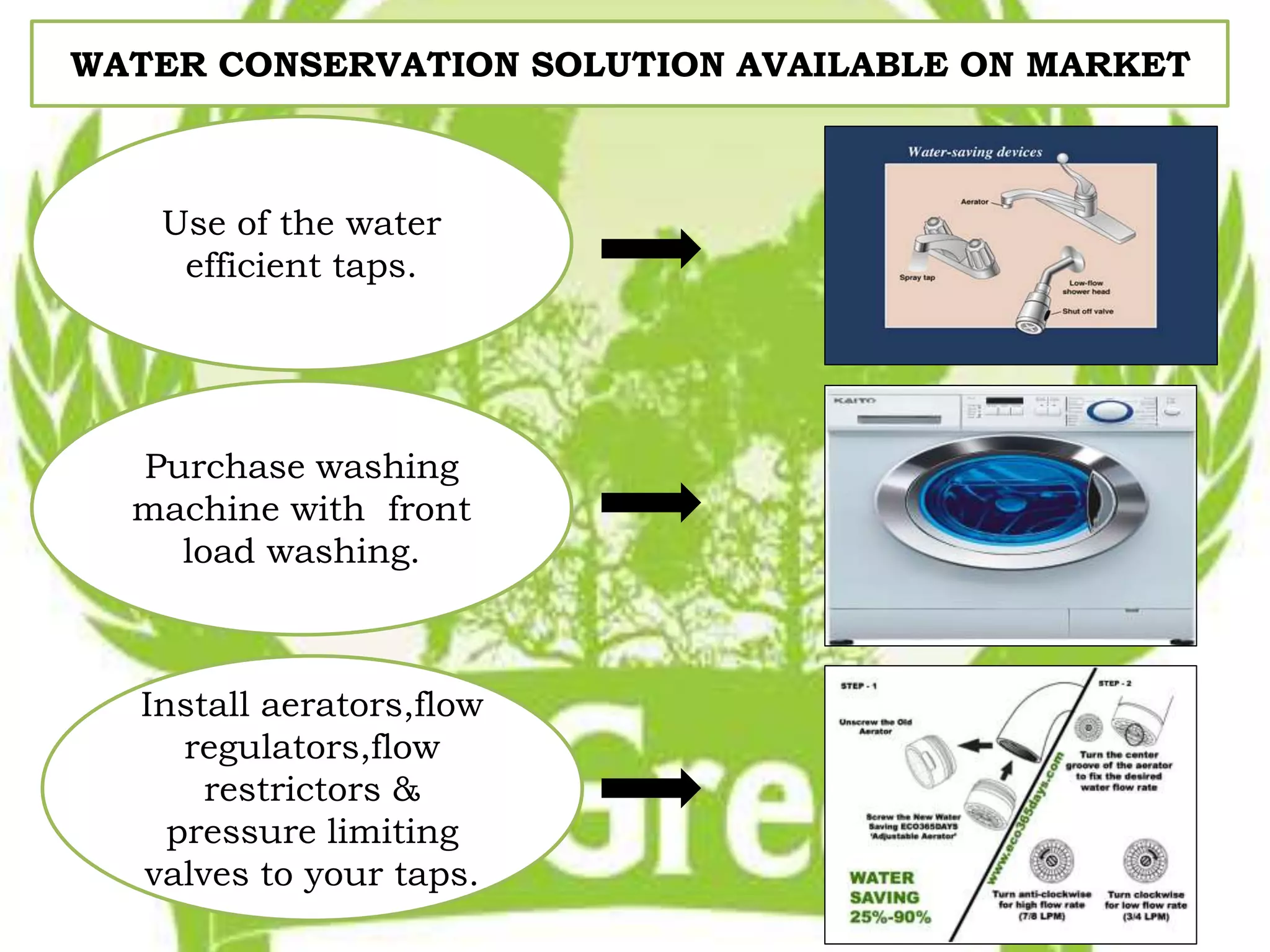
WATER CONSERVATION SOLUTION AVAILABLE ON MARKET 
Use of the water 
efficient taps. 
Purchase washing 
machine with front 
load washing. 
Install aerators,flow 
regulators,flow 
restrictors & 
pressure limiting 
valves to your taps.
USE 
DUCE 
CYCLE 
THANKYOU

Energy & watr conservation

  • 1.
    ENERGY & WATER CONSERVATION
  • 2.
    PRESENTED BY SHIVANGIRAI.C-2391 YASH KANADHIA.C-2392 ANKISHA SAWANT.C-2393 SALMAN SAYED.C-2394(GROUP LEADER). BINAL SHAH-C-2395 VINIT SHARMA-C-2396 YASH VAIDYA-C-2397 RISHAB BHOJAK C-2398 SULTAN SIDDIQUE C-2399 PRITAM JANA-C-2400.
  • 3.
  • 4.
    AGENDA  WHATIS ENERGY? TYPES OF ENERGY  WHY TO CONSERVE?  WHAT CAN WE DO?  ENERGY CONSERVATION IN INDIA
  • 5.
    WHAT IS ENERGY?  Energy light our cities, power our vehicles, and runs machinery in factories. It warms and cools our homes, cooks our food, plays our music, and gives us pictures on television.  Energy is defined as the ability or the capablity to do work.
  • 6.
    TYPES OF ENERGY  RENEWABLE ENERGY : Renewable energy can be generated continuously practically without decay of source. EXAMPLE: • Solar energy,wind energy,Geothermal,Hydro energy.  NON-RENEWABLE ENERGY : Non-renewable energy is energy that comes from the ground and is not replaced in a relatively short amount of time. EXAMPLE: Energy generated from combustion of fossil fuels,Coal,gas etc.
  • 8.
    WHY TO CONSERVEIT?  We have limited resources available on earth.  Our demands are continuously increasing day by day.  It is possible that someday most of the non-renewable resources will be exhausted and we will have to switch over to alternate ennergy
  • 10.
    WHAT WE CANDO?  RECYCLE – Compositing waste materials into new products to prevent waste of potentially useful materials. Turn off all electronic devices that are not in use. Not only turn them off but try to remember to unplug them. You will be surprised how much you will save with this simple step! Replace old light bulbs with energy saving fluorescent bulbs. They may cost more, but will save you much more in the long run.
  • 11.
    We save ourmoney when we save energy. We reduce pollution when we save energy. We save our energy when we save energy.
  • 12.
     We shouldnot keep lights unnecessarily witched on.  Reduce the energy your appliances consume by analyzing star ratings.  Improve your water heating efficiency to reduce energy costs.  Switch of the fans and lights in the places like bus terminals & railway stations when not necessary.  Switch off the street lights.  Big hoardings, lighten up for the evening & nights are other wastage of power which can be & should be avoided. AT HOME AT PUBLIC PLACES
  • 13.
    ENERGY CONSERVATION IN INDIA About 70% of india’s energy generation capacity is from fossil fuels,with coal accounting 40% of india’s total energy consumption followed by crude oil and natural gas at 24% and 6% respectively. India is largely dependent on fossil fuels import to meet it’s energy demands. By 2030,india’s dependence on energy imports is expected to exceed 53% o the country’s total energy consumption. In 2009-10,the country imported 159.26 million tonnes of crude oil which amount to 80% of its domestic crude oil consumption and 31% of the country’s total imports are oil imports.
  • 15.
    INTRODUCTION Water isessential to life on earth.  Saving water is good for earth,your family & your community.  Saving water leads to save energy.  Saving water leads to save money.
  • 16.
    WHAT IS WATER CONSERVATION? It refers to reducing the wastage of water & recycling of waste water.  water conservation helps to save energy,protect wild animals & prevent people from using so much of water that cannot be replaced with rain. “NO WATER NO LIFE”
  • 17.
    WHY SAVE WATER?  When you use water wisely, you help the environment. You help preserve drinking water supplies.  You use water wisely,it ease the burden on wastewater treatment plants-the less water you send down the drain, the less work these plants have to do to make water clean again.  When you use water wisely, you save energy.  You save the energy that your water suppliers uses to treat and move water to you, and the energy your family uses to heat your water.
  • 18.
    STRATEGIES In implementingwater conservation principles there are a number of key activities that may be beneficial.  Any beneficial reduction in water loss,use and waste of resources.  Avoiding any damage to water quality.  Improving water management practices that reduce or enhance the beneficial.
  • 19.
    WATER CONSERVATION SOLUTION Close the tap at once after using water. Wash your car less frequently. While brushing only open the tap when you need water
  • 20.
    WATER CONSERVATION SOLUTON  Fix leak pipes.  Less use of washing machine.  Run your dishwasher only when you have full load.  Slow flow of water. Huge storage containers.  Take shorter showers.  Do not over-water plants.
  • 21.
    WATER CONSERVATION SOLUTIONAVAILABLE ON MARKET Use of the water efficient taps. Purchase washing machine with front load washing. Install aerators,flow regulators,flow restrictors & pressure limiting valves to your taps.
  • 22.
    USE DUCE CYCLE THANKYOU