Energy System
Modeling/Simulation
Enegy Systems In Buildings
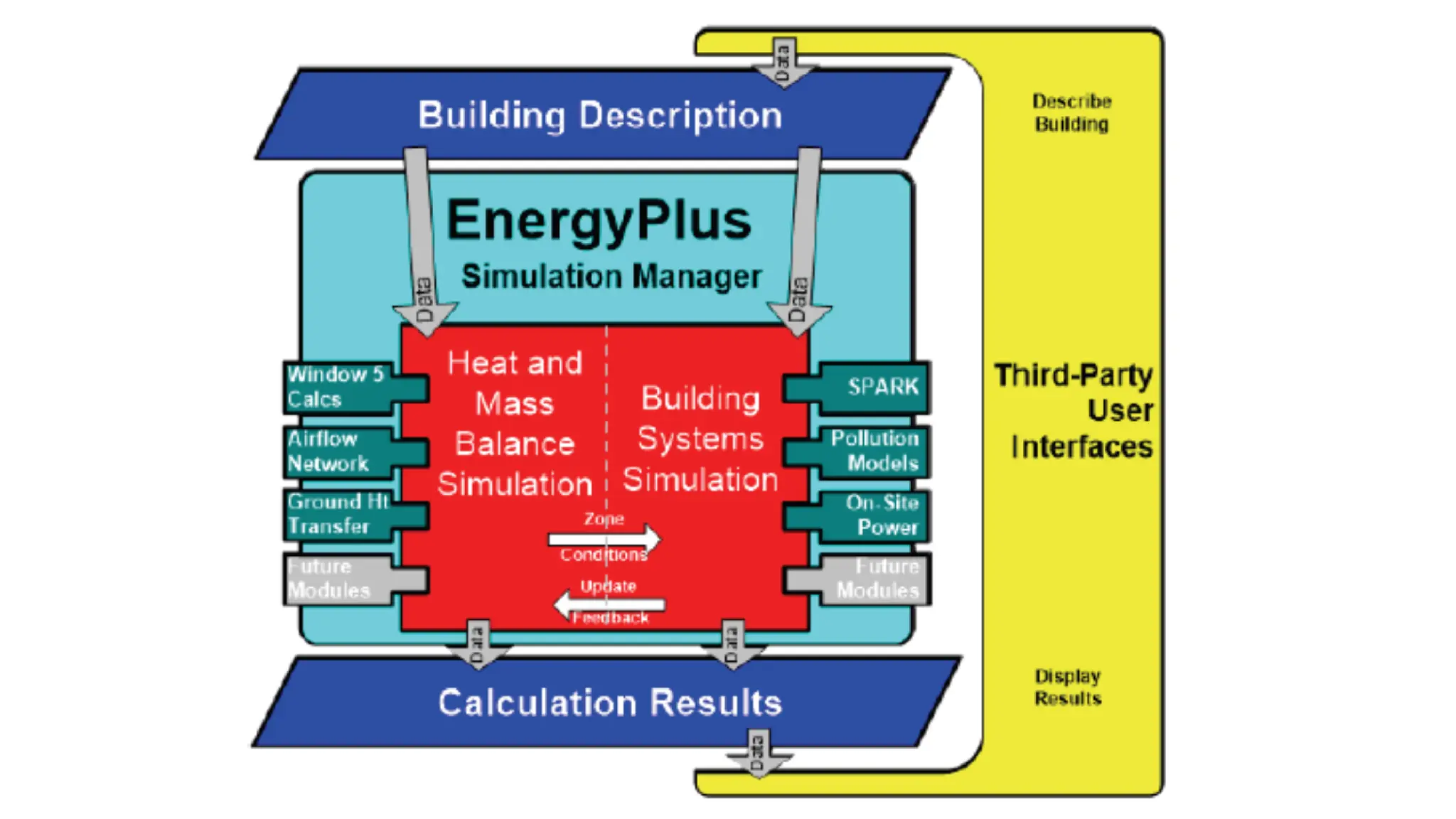
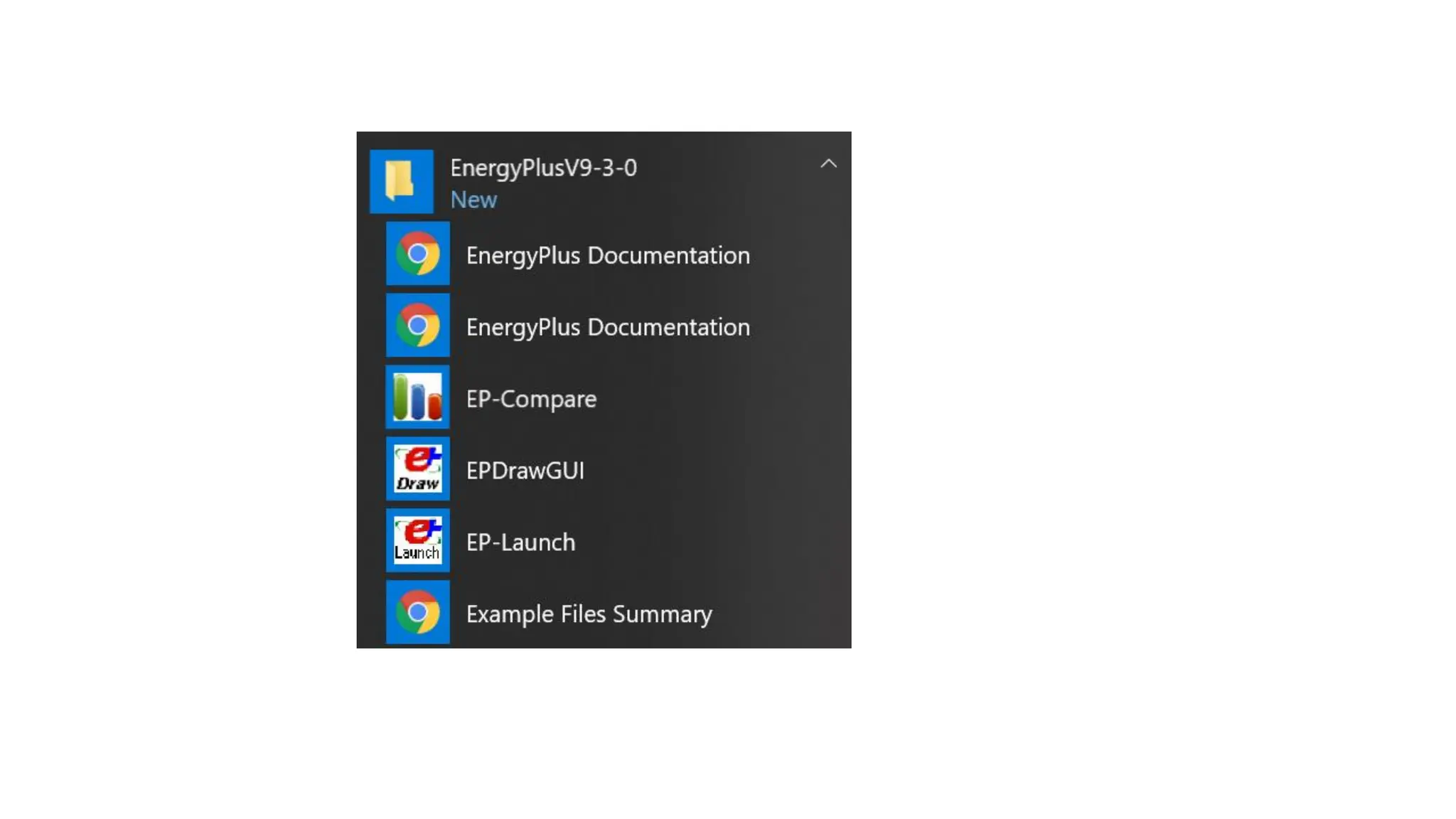
• ENERGYPLUS 9.3
What is EnergyPlus?
• EnergyPlus has its roots in both the BLAST and DOE–2
programs. BLAST (Building Loads Analysis and System
Thermodynamics) and DOE–2 were both developed and
released in the late 1970s and early 1980s as energy and
load simulation tools.
• For design engineer or architect that wishes
• to size appropriate HVAC equipment,
• develop retrofit studies for life cycling cost analyses,
• optimize energy performance, etc.
Applicability of EnergyPlus to various
simulation situations.
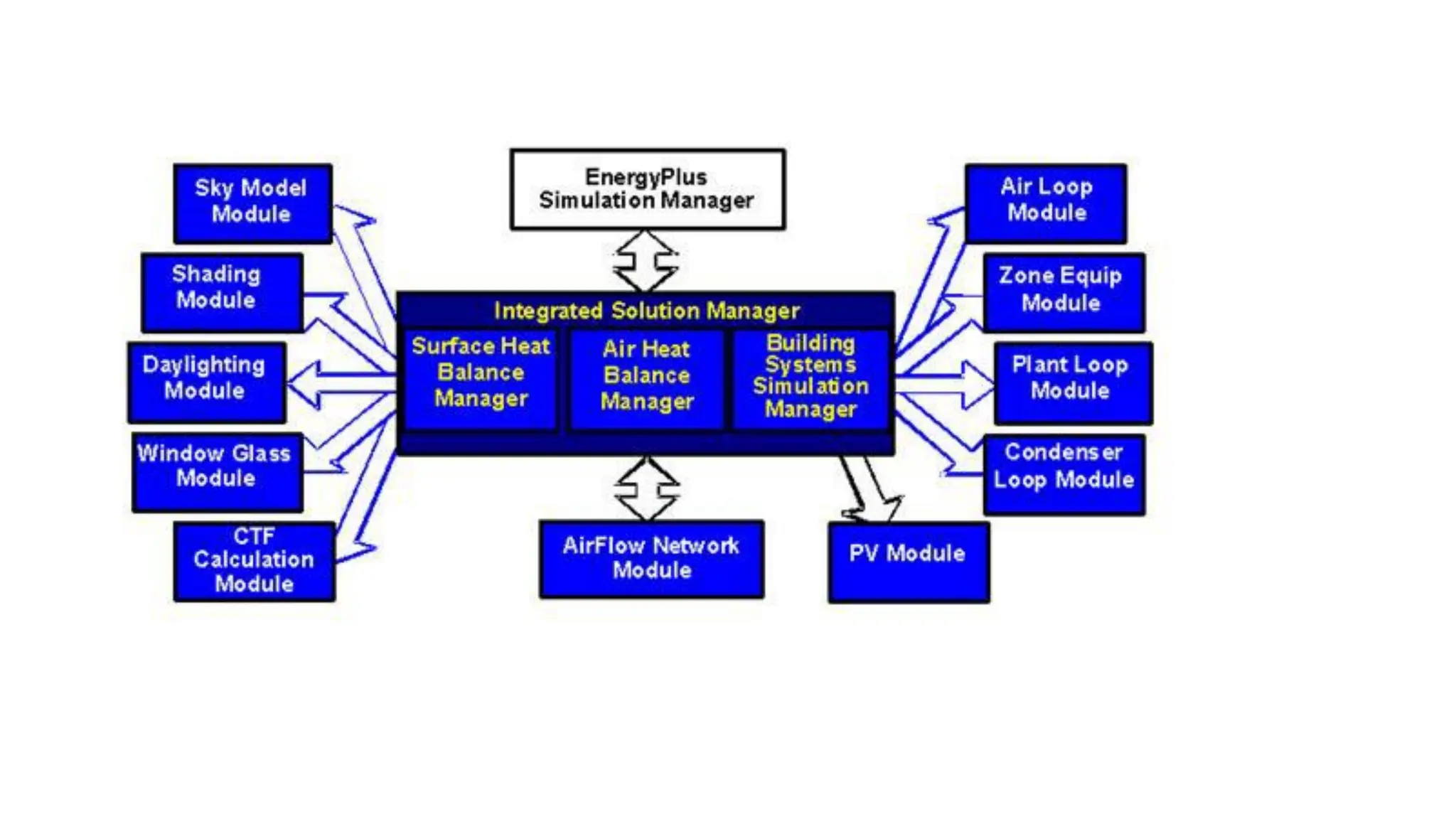
• Integrated, simultaneous solution where the building response and
the primary and secondary systems are tightly coupled (iteration
performed when necessary)
• Sub-hourly, user-definable time steps for the interaction between
the thermal zones and the environment; variable time steps for
interactions between the thermal zones and the HVAC systems
(automatically varied to ensure solution stability
• ASCII text based weather, input, and output files that include hourly
or sub-hourly environmental conditions, and standard and user
definable reports, respectively
• Heat balance based solution technique for building thermal loads
that allows for simultaneous calculation of radiant and convective
effects at both in the interior and exterior surface during each time
step
• Transient heat conduction through building elements such as walls,
roofs, floors, etc. using conduction transfer functions
• Improved ground heat transfer modeling through links to three-
dimensional finite difference ground models and simplified analytical
techniques
• Combined heat and mass transfer model that accounts for moisture
adsorption/desorption either as a layer-by-layer integration into the
conduction transfer functions or as an effective moisture penetration
depth model (EMPD)
• Thermal comfort models based on activity, inside dry bulb, humidity,
etc.
• Anisotropic sky model for improved calculation of diffuse solar on
tilted surfaces
• Advanced fenestration calculations including controllable window
blinds, electrochromic glazings, layer-by-layer heat balances that allow
proper assignment of solar energy absorbed by window panes, and a
performance library for numerous commercially available windows
• Daylighting controls including interior illuminance calculations, glare
simulation and control, luminaire controls, and the effect of reduced
artificial lighting on heating and cooling
• Loop based configurable HVAC systems (conventional and radiant)
that allow users to model typical systems and slightly modified systems
without recompiling the program source code
• Atmospheric pollution calculations that predict CO2, SOx, NOx, CO,
particulate matter, and hydrocarbon production for both on site and
remote energy conversion
Running EnergyPlus, Building Envelope, Internal
Loads, Reports
• Overview
• Rectangular single story building
• Windows in east and west walls
• Single zone with no interior partitions
• Lightweight construction
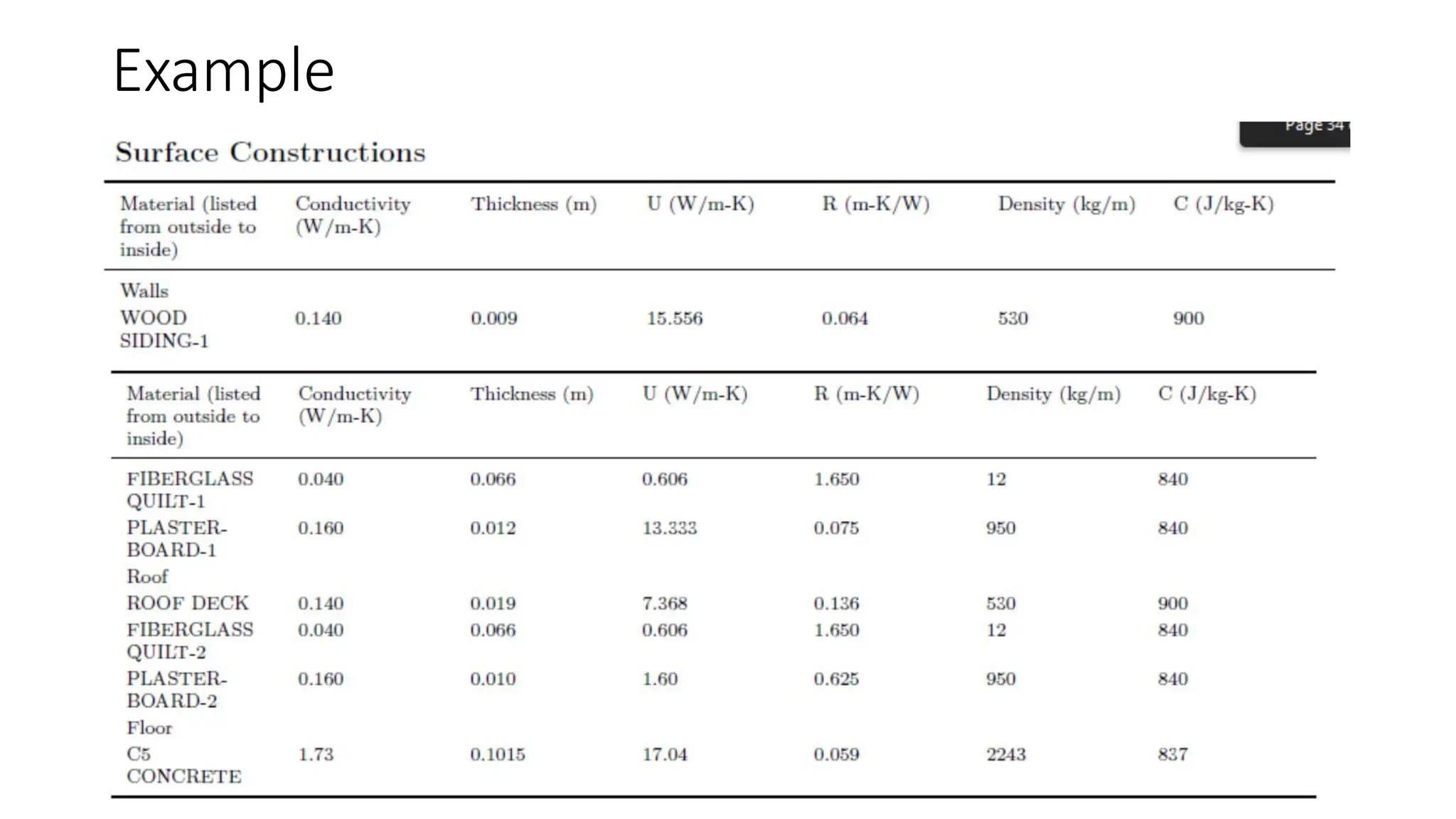
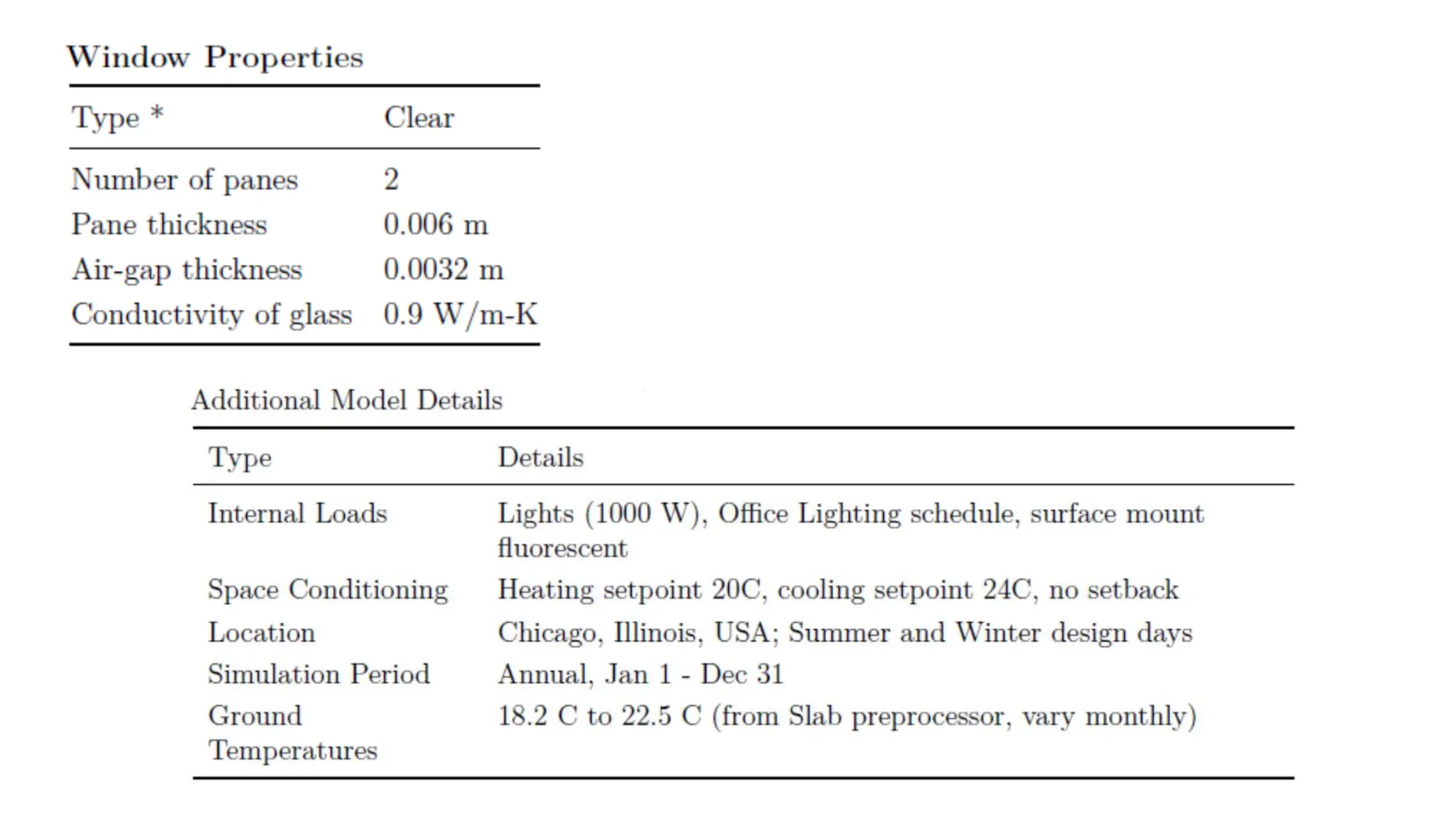
Example
EnegyPlus in Other System
• Boiler
https://bigladdersoftware.com/epx/docs/8-0/input-output-
reference/page-024.html#boiler-electric-energy-j
Engineering Calculator
https://www.tlv.com/global/TI/calculator/
Steam Table
• https://www.tlv.com/global/TI/calculator/superheated-steam-
table.html
• Boiler Efficiency
• https://www.tlv.com/global/TI/calculator/boiler-efficiency.html

Energy System Modeling for energy system analysis

  • 1.
  • 2.
    Enegy Systems InBuildings • ENERGYPLUS 9.3
  • 3.
    What is EnergyPlus? •EnergyPlus has its roots in both the BLAST and DOE–2 programs. BLAST (Building Loads Analysis and System Thermodynamics) and DOE–2 were both developed and released in the late 1970s and early 1980s as energy and load simulation tools. • For design engineer or architect that wishes • to size appropriate HVAC equipment, • develop retrofit studies for life cycling cost analyses, • optimize energy performance, etc.
  • 4.
    Applicability of EnergyPlusto various simulation situations. • Integrated, simultaneous solution where the building response and the primary and secondary systems are tightly coupled (iteration performed when necessary) • Sub-hourly, user-definable time steps for the interaction between the thermal zones and the environment; variable time steps for interactions between the thermal zones and the HVAC systems (automatically varied to ensure solution stability • ASCII text based weather, input, and output files that include hourly or sub-hourly environmental conditions, and standard and user definable reports, respectively
  • 5.
    • Heat balancebased solution technique for building thermal loads that allows for simultaneous calculation of radiant and convective effects at both in the interior and exterior surface during each time step • Transient heat conduction through building elements such as walls, roofs, floors, etc. using conduction transfer functions • Improved ground heat transfer modeling through links to three- dimensional finite difference ground models and simplified analytical techniques • Combined heat and mass transfer model that accounts for moisture adsorption/desorption either as a layer-by-layer integration into the conduction transfer functions or as an effective moisture penetration depth model (EMPD)
  • 6.
    • Thermal comfortmodels based on activity, inside dry bulb, humidity, etc. • Anisotropic sky model for improved calculation of diffuse solar on tilted surfaces • Advanced fenestration calculations including controllable window blinds, electrochromic glazings, layer-by-layer heat balances that allow proper assignment of solar energy absorbed by window panes, and a performance library for numerous commercially available windows • Daylighting controls including interior illuminance calculations, glare simulation and control, luminaire controls, and the effect of reduced artificial lighting on heating and cooling
  • 7.
    • Loop basedconfigurable HVAC systems (conventional and radiant) that allow users to model typical systems and slightly modified systems without recompiling the program source code • Atmospheric pollution calculations that predict CO2, SOx, NOx, CO, particulate matter, and hydrocarbon production for both on site and remote energy conversion
  • 10.
    Running EnergyPlus, BuildingEnvelope, Internal Loads, Reports • Overview • Rectangular single story building • Windows in east and west walls • Single zone with no interior partitions • Lightweight construction
  • 11.
  • 15.
    EnegyPlus in OtherSystem • Boiler https://bigladdersoftware.com/epx/docs/8-0/input-output- reference/page-024.html#boiler-electric-energy-j
  • 16.
    Engineering Calculator https://www.tlv.com/global/TI/calculator/ Steam Table •https://www.tlv.com/global/TI/calculator/superheated-steam- table.html • Boiler Efficiency • https://www.tlv.com/global/TI/calculator/boiler-efficiency.html