Encyclopedia of Distributed Learning
Scholar Practitioner Model
Contributors: Charles McClintock
Edited by: Anna Distefano, Kjell Erik Rudestam & Robert J.
Silverman
Book Title: Encyclopedia of Distributed Learning
Chapter Title: "Scholar Practitioner Model"
Pub. Date: 2004
Access Date: June 9, 2020
Publishing Company: SAGE Publications, Inc.
City: Thousand Oaks
Print ISBN: 9780761924517
Online ISBN: 9781412950596
DOI: http://dx.doi.org/10.4135/9781412950596.n134
Print pages: 440-396
© 2004 SAGE Publications, Inc. All Rights Reserved.
This PDF has been generated from SAGE Knowledge. Please
note that the pagination of the online
version will vary from the pagination of the print book.
javascript:void(0);
javascript:void(0);
http://dx.doi.org/10.4135/9781412950596.n134
The term scholar practitioner expresses an ideal of professional
excellence grounded in theory and research,
informed by experiential knowledge, and motivated by personal
values, political commitments, and ethical
conduct. Scholar practitioners are committed to the well-being
of clients and colleagues, to learning new ways
of being effective, and to conceptualizing their work in relation
to broader organizational, community, political,
and cultural contexts. Scholar practitioners explicitly reflect on
and assess the impact of their work. Their pro-
fessional activities and the knowledge they develop are based
on collaborative and relational learning through
active exchange within communities of practice and scholarship.
The scholar practitioner ideal has been analyzed from various
perspectives as to the nature of skilled and
principled action ranging from adult development and higher
education to epistemology and social systems.
Professional fields such as education, medicine, clinical
psychology, social work, program evaluation, man-
agement, engineering, architecture, and law all have addressed
this role. Each of these areas has a distinct
practice track—as teacher, scholar, health care professional,
psychotherapist, social worker, evaluator, man-
ager, business consultant, engineer, architect, and lawyer.
Experts in these fields possess a deep understand-
ing of subject matter and practice knowledge and, compared to
novices, demonstrate effective, efficient, and
creative problem solving.
Debate across professional fields has not settled on a single
specification for what a scholar practitioner
should be able to do at a practical level. Areas of competence
are diverse and include depth in a discipline and
its methods for creating knowledge, educational expertise
(whether as a teacher, change agent, or leader),
capacity for teamwork across fields and public and private
sectors, and skilled commitment to ethical con-
duct, diversity, and a global perspective. The variety of
perspectives on the topic is reflected in several related
terms and emphases such as reflective practitioner, scientist
practitioner, citizen scholar, public intellectual,
and practitioner scholar. Four cross-cutting perspectives help
illuminate the ideal of the scholar practitioner
and the varied issues that influence its evolution.
Educating the Scholar Practitioner
Accredited schooling and formal licensing or codes of conduct
are hallmarks of a profession and guide educa-
tional practices for the scholar practitioner. Currently there is a
resurgent interest in reforming and broadening
the practice of graduate and professional education, both within
disciplines and across types such as doctor-
al, medical, legal, and other helping professions. One of the
forces driving this examination is the emergence
of distributed forms of education and lifelong learning that
allow flexibility of time, place, format, individual de-
finition of goals, and social grouping. Virtual learning
environments increase the possibilities for collaborative
educational relationships that are especially suitable for adult
and mid-career students whose commitments
and ways of learning may not be compatible with traditional
settings.
Notwithstanding these developments and the fact that effective
practitioners require an experiential knowl-
edge base, their formal education is composed largely of
didactic learning, whether in the physical or virtual
classroom, grounded in theory and in research that presumably
‘underlies’ practice expertise. Even profes-
sionally oriented programs, such as those in business, nursing,
and social work, typically employ didactic
methods to present basic concepts and analytic techniques prior
to field-based learning of practitioner skills.
This Platonic ideal, which emphasizes underlying theory and
analytic technique, exists for several reasons. It
affirms a norm of humility in Western science that knowledge
evolves and requires conceptual and empirical
challenge in a continual analysis of truth. This premise
reinforces the idea that practitioner work, whether as
healer, teacher, or leader, should be based on more than
personal prejudice, power, or the influence of au-
thority figures and fads. The ability to interpret client and
societal needs based on the most reliable knowledge
is critically important to being a competent and ethically
responsible practitioner, especially in high-stakes
helping professions such as medicine.
The emphasis on theory and research has a political rationale as
well. Within the broad context of modernity
SAGE
© 2004 by Sage Publications, Inc.
SAGE Reference
Page 2 of 6
Encyclopedia of Distributed Learning
and the rise of science and technology, establishing theoretical
and empirical knowledge is essential to
achieving status as a profession. The more determinate and
prominent the knowledge base—as in the phys-
ical and life sciences—the greater the prestige and power of the
field. For example, Ph.D. clinical psychol-
ogists vie for privilege against M.D. practitioners within a
health care system that distributes enormous re-
sources. The caliber of research training in Ph.D. programs
becomes one lever in that contest. Practitioner
degrees such as the Psy.D. and Ed.D. in psychology and
education emphasize empirical inquiry that is more
closely tied to practice settings than to theoretical questions.
These and similar programs are aimed more at
the practitioner scholar than at the scholar practitioner, thereby
highlighting the status and resource competi-
tion issues.
Finally, educating for interpersonal nuances and situational
uncertainties of practitioner work, as well as re-
lated ideas about ethics and values, is generally done through
experiential methods such as case teaching,
mentoring, practicums, and field internships. These are more
expensive forms of education than a sequenced
classroom curriculum. Practice knowledge often is tacit and
therefore difficult to codify for educational pur-
poses in comparison to theory and research methods. Hence,
experiential learning often conflicts with mass-
production institutional imperatives for most educational
organizations. The resulting bias toward didactically
taught content knowledge becomes self-perpetuating because
the majority of teachers who educate schol-
ar practitioners were themselves trained through the same
method. The lack of attention to and expertise in
experiential learning leads to wide variation in the degree to
which it is used systematically to enhance and
assess the acquisition of practice knowledge. For John Dewey,
whose work provides a foundational rationale
for experiential learning, it is not just the experience but the
quality of and reflection on experience that lead
to important learning.
Given that practitioners work on human affairs, it can be argued
that postbaccalaureate professional training
for the scholar practitioner should be grounded in a broad
liberal arts undergraduate education as a means of
strengthening general analytic capacities as well as historical,
aesthetic, and spiritual ways of knowing. Cost
notwithstanding, the same argument applies to professional
graduate education where knowledge of the hu-
manities offers balance to the more technocratic scholarly
approaches of the social and natural sciences.
Knowledge Forms and Methods
Knowledge takes many forms—personal, practical, artistic,
scholarly, political, and spiritual—each of which
plays a role in the work of the scholar practitioner, who often
contends with uncertainty about problem defin-
ition and intervention impact. This uncertainty, in turn, exists
within the normal context of practitioner work in
which novel patterns of information, situational constraint, and
value conflict are common. Professional edu-
cation programs, however, emphasize only a few forms of
knowledge and historically have embodied a hier-
archical relationship in which scholarly knowledge derived from
theory and research is passed on for practical
application in particular situations. The terms theory and
research, which are used somewhat interchangeably
here, encompass a wide range of epistemological and
methodological approaches. Constructivist epistemol-
ogy, experiential pedagogy, and many applied research
strategies including action and evaluation research
attempt to equalize this relationship. However, they often
eschew general theory for an emphasis on situa-
tional knowledge, thereby substituting one hierarchy for
another.
Methods for creating and testing new knowledge are also
circumscribed. In the social sciences, these schol-
arship skills typically include using research designs and
methods of sampling to make comparisons and
render judgments of cause and effect, employing empirical
methods for gathering data, measuring and mak-
ing representations of reality, and using statistical, simulation,
and qualitative methods for analyzing data and
substantiating interpretations or conclusions. Postmodern
understanding from the humanities has widened
the methodological choices in the social sciences in which
subjective voice, situational nuance, and societal
perspective highlight how knowledge is socially and
psychologically constructed and used. Qualitative and
expressive/artistic methods are added to the traditional tools of
experiments and surveys. Criteria for sound
SAGE
© 2004 by Sage Publications, Inc.
SAGE Reference
Page 3 of 6
Encyclopedia of Distributed Learning
evidence have evolved from the traditional reliability and
validity standards to include considerations such as
authenticity, trustworthiness, utility, and praxis.
These developments help foster a more integrated basis for the
dual facets of the scholar practitioner role.
They strengthen the status of tacit knowledge in comparison to
formal knowledge and create opportunities
to explore how practitioner knowledge derived from experience
can strengthen research-based findings and
inquiry. For example, traditional research methods attempt to
control or isolate what are considered confound-
ing factors, such as the background characteristics of clients
who seek treatment, from the pure effects of the
treatment. This research design practice is used so that one can
judge the efficacy of a treatment in order
to make important decisions about investing in it for the general
good of others. The practitioner, however,
must accommodate, not control, a wide variety of background
characteristics in working with clients. Reliable
research results that indicate increased risks for hormone
therapy for menopause symptoms, for example, do
not dictate the choices that might be made in the context of an
individual's life situation. Understanding this
choice process can identify additional outcomes as well as
illuminate the ever-present interaction of generic
treatments with individual and social factors. Thus, control and
accommodation as well as research and prac-
tice knowledge together provide a more complete understanding
and basis for action.
Also, practitioner work occurs within institutional settings that
provide continual economic, societal, and ethical
challenges that research knowledge can guide only at a very
general level. For instance, the research findings
on school choice and learning outcomes must be interpreted by
educational practitioners within the historical
context of racial and economic segregation, democratic ideals,
and the needs of particular communities and
their constituents.
An important value of scholarly skills is that they have a
significant degree of cross-disciplinary application,
whereas practice skills are more linked to particular
professions. It is possible for scholars from diverse disci-
plines to have reasoned exchange about research evidence and
criteria for judging its merit. The social inven-
tion of scholarly content and methods thus makes possible
disciplinary and social boundary crossing for the
benefit of all. On the other hand, the historical emphasis on
theoretical knowledge and research skills results
in neglect of practice capacities such as teaching, consulting,
colleagueship in a workplace, and the moral di-
mensions of one's work, as well as the forms and sources of
knowledge that are associated with these skills.
One approach to equalizing the treatment of theory and practice
knowledge forms is to identify practitioner
principles that occupy a middle ground between general
theoretical orientations and profession-specific tech-
niques. Practice principles of this kind, whether aimed at
individuals, groups, organizations, or communities,
would have in common such concerns as establishing trusting
and respectful relationships, effective commu-
nications, diagnostics, and facility with negotiation, motivation,
and change dynamics. Along with research
methods (i.e., design, measurement, analysis) these practice
principles constitute an epistemology of schol-
arly practice that illuminate how professionals can think and act
reflectively and strategically.
The Scholar Practitioner as an Adult Learner
As an adult learner with professional practice, personal growth,
and intellectual development goals, the ideal
scholar practitioner interrelates concepts, understandings, and
methods from varied theoretical and practice
perspectives. In addition, scholar practitioners employ research
and practice principles in complementary
ways such as using their experiential knowledge to enrich
theoretical concepts and using structured empiri-
cal inquiry to examine the effectiveness of professional
interventions. They draw upon knowledge from mul-
tiple sources including theorybased propositions, case-based
best practices, and values-based maxims and
morals. These varied forms of knowledge are continuously
acquired through didactic, experiential, and cul-
tural means. Scholar practitioners seek continuing education
that adds to their skills and offers new insight
into knowledge previously acquired. The ideal of the scholar
practitioner defines this effort in terms of lifelong
learning that expands the individual's capacity for insight,
reflection, and effective action.
SAGE
© 2004 by Sage Publications, Inc.
SAGE Reference
Page 4 of 6
Encyclopedia of Distributed Learning
The term andragogy represents an approach to adult learning
based on both formal and tacit knowledge, as
well as the personal and professional values that individuals
bring to their learning. Andragogy emphasizes
an active and defining role for individuals in what and how they
learn and may include goals of personal and
professional transformation. Transformational andragogy, as
applied to the scholar practitioner, seeks to nur-
ture flexible interpretive and emotional capacities in the learner
that support examination of tacit assumptions,
exploration of cultural diversity, integration of varied
intellectual perspectives, and incorporation of unifying
aspirations for humanity.
Attributes of the Scholar Practitioner
The ideal of the scholar practitioner also can be examined in
relation to an individual's cognitive, personal,
and behavioral attributes in the context of adult development.
Theory and research on individuals who excel
in their professions as innovators and problemsolvers identify
several intellectual capacities. For example,
comparisons of novices and experts show the latter as having
well-defined hierarchical knowledge structures
with many lateral connections among concepts that allow them
to abstractly, efficiently, and creatively inter-
pret information from their everyday work. Experts are able to
frame situations from multiple perspectives,
pose competing hypotheses, and identify evidence that would
test alternative explanations.
In addition to these cognitive attributes, the fully developed
adult professional shows the capacity for emo-
tional intelligence and use of self that is both unified and
differentiated across settings and roles. Tolerance
of difference and ambiguity is linked with compassion for life
and a commitment to improving the human con-
dition. Development of these affective and behavioral
dimensions is a challenging but critical aspect of the
scholar practitioner as an agent of change for individuals,
organizations, and communities.
The concept of wisdom captures the essence of much of the
foregoing discussion, in that it represents an
integration of cognitive, affective, and behavioral dimensions.
The work of wisdom for a scholar practitioner
requires alternating between the abstract and the observable,
questioning what is taken for granted and over-
looked, complicating with unexpected findings, and simplifying
with new interpretations. These intellectual
and social skills require multiple forms of intelligence and are
manifested through principled and ethical ac-
tion. Nurturing the capacity for wisdom is the goal of education
and lies at the heart of the scholar practitioner
ideal.
• experientialism
• andragogy
• adult learning
• theory and research
• experiential learning
• graduate and professional education
• professional education
Charles McClintock
http://dx.doi.org/10.4135/9781412950596.n134
See also
• Adult Education Learning Model
• Experiential Learning
• Graduate Study
Bibliography
SAGE
© 2004 by Sage Publications, Inc.
SAGE Reference
Page 5 of 6
Encyclopedia of Distributed Learning
http://dx.doi.org/10.4135/9781412950596.n134
http://sk.sagepub.com/reference/distributedlearning/n9.xml
http://sk.sagepub.com/reference/distributedlearning/n56.xml
http://sk.sagepub.com/reference/distributedlearning/n71.xml
Boyer, Ernest L.(1990). Scholarship reconsidered: Priorities of
the professoriate. Princeton, NJ: Carnegie
Foundation for the Advancement of Teaching.
Curry, Lawrence, Wergin, Jon, & Associates.(1993). Educating
professionals: Responding to new expecta-
tions for competence and accountability. San Francisco: Jossey-
Bass.
Kitchener, Karen, & King, Patricia.(1991). A reflective
judgment model: Transforming assumptions about
knowing. In JackMezirow (Ed.), Fostering critical reflection in
adulthood. San Francisco: Jossey-Bass.
Knowles, Malcolm S., Holton III, Elwood F., & Swanson,
Richard A.(1998). The adult learner. 5th Edition.
Woburn, MA: Butterworth-Heinemann.
Nyquist, Jody D.The Ph.D.: A tapestry of change for the 21st
century.
Change34(6)12–
20(2002).http://dx.doi.org/10.1080/00091380209605564
Schön, Donald A.(1983). The reflective practitioner: How
professionals think in action. New York: Basic
Books.
Shulman, Lee S.Knowledge and teaching: Foundations of the
new reform. Harvard Educational Re-
view571–22(1987).
Sternberg, Robert J., & Horvath, James A. (Eds.). (1999). Tacit
knowledge in professional practice. Mahwah,
NJ: Lawrence Erlbaum.
SAGE
© 2004 by Sage Publications, Inc.
SAGE Reference
Page 6 of 6
Encyclopedia of Distributed Learning
http://dx.doi.org/10.1080/00091380209605564Encyclopedia of
Distributed LearningScholar Practitioner Model
Brown 1
1
Shallon Brown
Doc. Tai Houser
HUM 1101
21 April 2019
NARRATIVE: THE CIVIL
RIGHTS MOVEMENT IN
ART
Art is an expressive method that captures the viewpoint and
influences of the artist. It is used in a
variety of effective ways, especially in recording the historical
past. Present day the reader can analyze
the composition of an artist’s work and when full understanding
is achieved, to connect with its
intended meaning. However, the meaning may vary among
individuals. Art and history have worked
together to illustrate the worldview of an artist as seen through
his eyes. When text is added to an
artwork, the interpretation of the image changes.
1. During the civil rights, equal educational opportunities were
not available among persons living within
the United States especially African Americans. These images
depicted the scenes at that time.
Supporting detail - Fig. 1. Norman Rockwell, The Problem We
All Live With 1964.
i. Additional support/idea - On first look, the painting may
merely illustrate a black child
walking among adults in the slumps. The words “nigger” and
“KKK” can be seen on the
wall; what appears to be a tomato splattered is seen but appears
old since it is on the
wall and not the figures in the painting. Interpreting the image,
we note the attire of the
child and Marshall’s are not modern and reflects the year 1964.
Consistent with images
we have seen in the past, through reproductive television
programs and other media
communications. The body language demonstrates
determination more so for the child
through her clenched fist and assumed stride. The white color of
her uniform signifies
peace, purity and a change in segregation. This is significant
because white not only
represents peace but “new beginnings…and is a combination of
all colors” representing
equality (Larocco). The faces of the men are not included but
the color of their skin is;
neither is she being treated hostile. The image provokes the
thought on why the child is
being escorted, where was she going, the location, time in
history and its significance?
Brown 2
2
ii. Additional support/idea - Berger wrote on the implication of
words when added to an
image. Understanding this image requires the reader to be aware
of the negative
connotations in using “nigger” and “KKK” throughout history.
Background knowledge of
the author is also helpful in understanding the painting. Norman
Rockwell was an artist
who painted throughout his lifetime. Starting from 1963 his
paintings illustrated his
“concern and interest in civil rights, America’s war on poverty,
and the exploration of
space (Norman).” Considering the artist's style and completion
year of 1964. This
justifies the representation of the educational challenges faced
by African American
during civil rights (Norman Rockwell). Klansmen also fought to
keep segregation, they
bombed many homes and churches during this time. Rockwell’s
inspiration came from
Ruby Bridges, “the six-year-old girl who helped to desegregated
an all-white New
Orleans elementary school in 1960.” Also, all students who had
to be escorted to school
due to “violence and riots by white mobs” who opposed
desegregation (Duncan).
Supporting detail – Fig. 2 Jacob Lawrence The Library 1968
i. Additional support/idea Initial observation brings attention to
the various colors used
throughout the painting and their associated meaning. Although
the African American
cultural holiday Kwanza was not introduced until 1966, the
painting bares similar
representation through its bold colors and an African theme. It
is evident color
symbolism plays a vital role in understanding the painting.
Black usually has a negative
connotation but also signifies power, authority, and elegance.
Note the man standing in
the front of the painting. Red is the color of passion, energy,
war, strength, and
determination. The contrast between the shades of brown
suggests stability and
harvest. Blue symbolizes depth, trust, wisdom, intelligence, and
devotion. The olive
green represents peace. The floor appears to be gold in color
which represent prestige,
wisdom, and wealth (Brunts). There is a semblance of unity in
the colors and shades of
brown used that matches the color of their skin, representing
power and a desire to
educate one's self as everyone stares at a book.
ii. Additional support/idea - For further understanding, the
historical context in which the
painting is set and the artist must be considered. Described as a
"social realist' Jacob
Lawrence documented African American experience in several
art series. The series,
“life in Harlem and the Civil Rights Movement of the 1960s,”
was influenced by his black
family and the community in which he grew up (Jacob). The
timeline of this painting was
during the Civil Rights Movement and his trips to Africa.
Following the 1954 Supreme
Brown 3
3
Court’s ruling to end segregation in schools, many persons
(whites) were not happy and
black children continued to be victimized when attending school
(Lyons). The figures are
all shades of black and brown representing African Americans
drive to succeed through
education. The added text informs us of the possible location
depicted being the 135th
Street Library, located in Harlem. This library was the first to
house a collection of
“African American literature, history and prints opened in 1925
(Jacob).” The library was
a haven for African Americans to empower themselves through
education as black
history was not taught in schools. The library is now the
Schomburg Center for Research
in Black Culture. This painting provides a connection between
the importance of the
library in providing African-Americans with educational
opportunities during the Civil
Rights Movement.
2. During the Civil Right Movement, African Americans faced
social and political inequality in comparison
to whites. Artists have worked to capture this period in their
paintings.
Supporting detail – Fig. 3 Jacob Lawrence Bar and Grill 1941
Jacob Lawrence
i. Additional support/idea – With prior knowledge of the
influence African-American
culture had on Jacob Lawrence’s artwork will impact the
interpretation of this painting.
Exploring the compositional unity of the painting, there is a
partition in the bar, diving
the customers based on the color of their skin. The fan, ashtray,
bartender and white
customers are on one side and colors on the other. They have
separate entrances and
utensils a difference in the service being provided can be seen.
For better understanding
reading into the details of the painting is important and
historical knowledge of life in
1941.This painting indicates the presence of segregation
between African Americans
and whites, as they were given separate areas in public
locations. What Lawrence has
done, is to show the cultural dynamics within this time. No
signs are present but using
color in his art, we can decipher the difference in the race and
see the restriction
through the barrier.
ii. Additional support/idea – Created in 1941 after his move to
New Orleans Lawrence
experienced the reality of the Jim Crow law which enforced
racial segregation in the
South. The exhibition label attached to the painting notes the
vantage point
emphasizing the “artificiality of the two separate worlds” in
New Orleans (Lawrence).
The label confirms the implication of segregation being present
because of the Jim Crow
laws. This illustrates a striking contrast to how African-
Americans were treated in
comparison to the whites.
Brown 4
4
Supporting detail – Fig 4. Norman Lewis Evening Rendezvous
1962
i. Additional support/idea – Initial observation of the painting
appears to be a remake of
the American flag through stick figures in white. Understanding
Norman Lewis’s interest
in civil rights forces us to question the details of the painting.
Further observation
indicates the figures are carrying sticks, flags, possible
weapons. 0n their head, is a
triangle, a representation of the Ku Klux Klan. Laws were now
in place against Klan
violence yet they had minimal effect on the group (Ku Klux
Klan). As the title suggests,
the scene is set in the night, coupled with the weapons indicates
defiance and secrecy
as they appear to be conducting a meeting. To the top left of the
painting, there are
three figures that appear to be hanging which was one of their
methods of attack (see
fig. 5). They were known to victimize both black and white
activist and unlike previous
years were met with “counter-protesters” and law enforcement
monitoring their
activities, due to desegregation laws. The fading flag represents
existence but also their
loss of power (Ku Klux Klan).
ii. Additional support/idea – The exhibition label creates a
better understanding and
confirms the figures are Klansmen. For complete interpretation,
understanding of their
role in history is necessary. Being one of the oldest hate groups,
they attacked African-
Americans, Catholics, immigrants, and other groups while
preaching patriotism.
They campaigned for violence, including lynching and for the
Jim Crow laws to remain
(Ku Klux Klan). With clarity on who the Ku Klux Klan is, the
secrecy of the scene makes
complete sense to be planning another attach or holding a
meeting. While others fought
for civil rights they opposed equality among non-white
Americans. The Klansmen took
life, happiness, and freedom from people. They were a mockery
to America, hence the
fading of the flag and the fire in the middle.
3. Throughout history women have been involved in activism
for progression, individualism, and equality
among men. In doing so, they have made significant
contributions to the world. These next pieces of art
require the reader to consider how women have evolved and
their role in the Civil Rights Movement.
Supporting detail – Fig. 6 Wadsworth A. Jarrell Revolutionary
1972
Brown 5
5
i. Additional support/idea – The painting portrays a woman
singing, her significance is
currently unknown. Similar to The Library, bold colors are used
throughout the image
indicating color symbolism. The pink symbolizes courage,
intelligence, and passion as
women had become vocal and were leading instead of being led.
Extended from her
mouth is the power of determination in the words that surrounds
her, ultimately
creating the painting. The following words and phrases are
depicted coming from her
mouth. "Revolution, Resist, Black, Black is Beautiful and I
have given my life to the
struggle If I have lost my life in the struggle that is the way it
will be.” The choice of
colors and words are a representation of feminism and uplifting
of blacks. The additional
text seeks to provide information on who the artist is and the
Revolutionary female.
ii. Additional support/idea - Created by Wadsworth Jarrell, the
image is of civil rights
activist Angela Davis, known to be outspoken and a rebel of her
time. Davis fought for
women’s rights and to end poverty and oppression which aligns
the choice of words
used throughout the painting (Davis). Another noteworthy point
is the connection to
what she is wearing and the artist. Jerrell was the co-founder of
the Coalition of Black
Revolutionary Artists (COBRA) along with his wife Jae and
other artists. The colors used
represent the AfriCOBRA of which all three were associated
and advocated for civil
rights. Like Berger’s point on recreation, the painting was a
replica of the Revolutionary
suit designed by Jae in early 1969 for AfriCOBRA (Brooklyn
Museum). The painting has
become a reproduction of an outfit creating a new meaning to
what it was and now is,
both influenced by women activists during the civil rights.
Supporting detail – Fig. 7 B4- Rosa Here I Stand by Najee
Dorsey.
i. Additional support/idea –
It is very easy to take a quick look and assume this painting
reflects the famous civil
rights activist Rosa Parks. Yet, close attention to the title, sign
and the youthful features
of the girl is an indication further thought should be given to
the painting’s composition.
Her sign displays ‘B4 -7053’ if the reader is not familiar with
Rosa Parks these numbers
may have a different meaning or none. Again, color is
important as seen in the
contrasting shade of blackness to the skin. In the background
are a bus and a building.
The blooms of the flowers signify spring and growth. Since this
is not Rosa Parks, who is
she and what is her significance? Additional text is required in
understanding this image.
ii. Additional support/idea - The added text becomes important
in understanding the
historical connection. The painting combines two monumental
occasions in history.
Brown 6
6
Claudette Colvin is “the first person arrested for resisting bus
segregation in
Montgomery, Alabama.” Yet little is known about her and her
significance in the history
of civil rights. Beyond being of darker complexion, she was 15
years old and became
pregnant soon after. Being in the forefront would have brought
additional negativity to
the black community. Colvin was pregnant and unmarried. Her
efforts were impactful
because nine months after her arrest, Rosa Parks was arrested
for not giving up her seat
on the bus. Parks was the “secretary of the Montgomery chapter
of the National
Association of the Advancement of Colored People.” She was
older and of lighter
complexion becoming the perfect candidate (Rumble). At the
time of her arrest, Rosa
Parks’ inmate number was 7053 hence the connection to the
sign Colvin is in holding.
The bus is a symbolic representation of change and the
connection between both Colvin
and Parks. This painting also highlights colorism. Another
battle African-Americans faced
within their social group while fighting for their rights. This
image illustrates an
impactful connection between Colvin and Parks and their role in
ending racial
segregation during the Civil Rights Movement
Brown 7
7
Works Cited
Brunts, Rene. "Color Clues What Hues Mean to You." Going
Bonkers Magazine, June 2010, p.32.
PsychologyCollection,
http://link.galegroup.com/apps/doc/A351949929/PPPC?u=linccl
in_wcc&sid=PPPC&xid=37ea06
eb. Accessed 17 Apr. 2019.
“Davis, Angela (1944–).” African American Eras:
Contemporary Times, vol. 1: Activism and Reform, The
Arts, Business and Industry, UXL, 2010, pp. 18-21. Gale
Virtual Reference Library,
http://link.galegroup.com/apps/doc/CX1838000016/GVRL?u=li
ncclin_bwcc&sid=GVRL&xid=d57
131dd. Accessed 14 Apr. 2019.
Duncan, Garrett A. "Desegregation." Race and Racism in the
United States: An Encyclopedia of the
American Mosaic, edited by Charles A. Gallagher and Cameron
D. Lippard, vol. 1, Greenwood,
2014, pp. 341-347. Gale Virtual Reference Library,
http://link.galegroup.com/apps/doc/CX3160000197/GVRL?u=li
ncclin_bwcc&sid=GVRL&xid=11f
2beae. Accessed 13 Apr. 2019.
“Jacob Lawrence,” Smithsonian American Art Museum,
https://americanart.si.edu/artist/jacob-
lawrence-2828. Accessed 13. April. 2019.
"Ku Klux Klan." Extremist Groups: Information for Students,
vol. 1, Gale, 2006, pp. 444-451. Gale Virtual
Reference Library,
http://link.galegroup.com/apps/doc/CX3447100081/GVRL?u=li
ncclin_bwcc&sid=GVRL&xid=c62
28411. Accessed 14 Apr. 2019.
Lawrence, Jacob. Bar and Grill.1941. Smithsonian American
Art Museum,
americanart.si.edu/artwork/bar-and-grill-79031. Accessed 13.
April. 2019
Lawrence, Jacob. The Library. 1960. Smithsonian American Art
Museum,
https://americanart.si.edu/artwork/library-14376. Accessed 13.
April 2019
Lewis, Norman. Evening Rendezvous. 1962. Smithsonian
American Art Museum,
americanart.si.edu/artwork/evening-rendezvous-33910. Access
13. April 2019
Larocco, Rosalie. "The Power of Color." The Exceptional
Parent, Apr. 2014, p. 20+. Psychology Collection,
http://link.galegroup.com/apps/doc/A377573613/PPPC?u=linccl
in_bwcc&sid=PPPC&xid=f80f4f
2e. Accessed 17 Apr. 2019
Lyons, Courtney Ann. "Civil Rights Movement." Multicultural
America: A Multimedia Encyclopedia,
edited by Carlos E. Cortés and Jane E. Sloan, vol. 1, SAGE
Reference, 2014, pp. 518-525. Gale
Virtual Reference Library,
Brown 8
8
http://link.galegroup.com/apps/doc/CX3718500204/GVRL?u=li
ncclin_bwcc&sid=GVRL&xid=2e6
b2872. Accessed 13 Apr. 2019.
“Norman Rockwell - A Brief Biography - A Career in
Illustration.” Norman Rockwell Museum,
www.nrm.org/about/about-2/about-norman-rockwell/. Accessed
13 Apr. 2019.
Rumble, Taylor-Dior. “Claudette Colvin: The 15-Year-Old Who
Came before Rosa Parks.” BBC News, BBC,
10 Mar. 2018, www.bbc.com/news/stories-43171799. Accessed
14 Apr. 2019.
Works Cited
American Civil Rights Movement in Art
1954 – 1972
Shallon Brown
Doc. Tai Houser
HUM 1101
21 April 2019
Thesis
Art is an expressive method that captures the viewpoint and
influences of the artist. It is used in a variety of effective ways,
especially in recording the historical past. Present day the
reader is able to analyze the composition of an artist’s work and
when full understanding is achieved, to connect with its
intended meaning. However, the meaning may vary among
individuals. Art and history have worked together to illustrate
the worldview of an artist as seen through his eyes. When text is
added to an artwork, the interpretation of the image changes.
Paintings you will be reading.
The Problem We All Live With 1964, Norman Rockwell
The Library Jacob Lawrence 1960, Jacob Lawrence
Bar and Grill 1941, Jacob Lawrence
Evening Rendezvous 1962, Norman Lewis
Revolutionary 1972, Wadsworth A. Jarrell Sr
B4- Rosa Here I Stand, 2014 Najee Dorsey
3
On the next slide is a summary of all the images.
1. First take a moment to observe each image.
2. Then write one point you believe the image represents.
5
Remember to follow along with the attached narrative.
What’s the link?
ART History & Education?
7
Fig.1. Rockwell, Norman. The Problem We All Live With.
1964. Norman Rockwell Museum. Accessed 14 Arp. 2019.
Rockwell, Norman. The Problem We All Live With. 1964.
Norman Rockwell Museum. Web. Accessed 14 Arp. 2019.
“Image Resources - Norman Rockwell Museum - The Home for
American Illustration.” Norman Rockwell Museum,
www.nrm.org/collections-2/image-resources/. Accessed 14 Arp.
2019.
8
Fig. 2. Lawrence, Jacob. The Library. 1960. Smithsonian
American Art Museum. Tempera on fiberboard. Accessed 14
Apr. 2019.
Fig. 2. Lawrence, Jacob. The Library. 1960. Smithsonian
American Art Museum. Tempera on fiberboard. Accessed 14
Apr. 2019.
9
What’s the link?
ART History & Segregation?
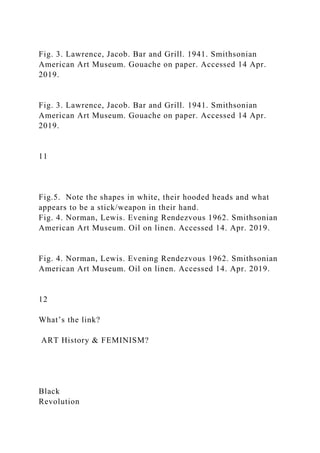
Fig. 3. Lawrence, Jacob. Bar and Grill. 1941. Smithsonian
American Art Museum. Gouache on paper. Accessed 14 Apr.
2019.
Fig. 3. Lawrence, Jacob. Bar and Grill. 1941. Smithsonian
American Art Museum. Gouache on paper. Accessed 14 Apr.
2019.
11
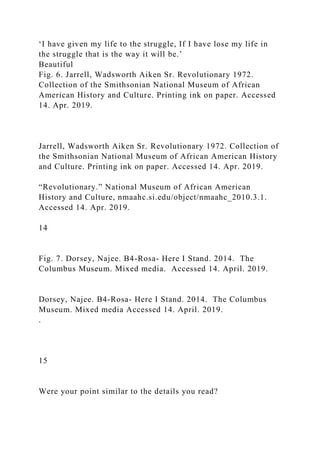
Fig.5. Note the shapes in white, their hooded heads and what
appears to be a stick/weapon in their hand.
Fig. 4. Norman, Lewis. Evening Rendezvous 1962. Smithsonian
American Art Museum. Oil on linen. Accessed 14. Apr. 2019.
Fig. 4. Norman, Lewis. Evening Rendezvous 1962. Smithsonian
American Art Museum. Oil on linen. Accessed 14. Apr. 2019.
12
What’s the link?
ART History & FEMINISM?
Black
Revolution
‘I have given my life to the struggle, If I have lose my life in
the struggle that is the way it will be.’
Beautiful
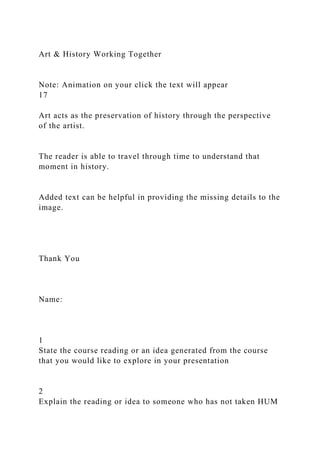
Fig. 6. Jarrell, Wadsworth Aiken Sr. Revolutionary 1972.
Collection of the Smithsonian National Museum of African
American History and Culture. Printing ink on paper. Accessed
14. Apr. 2019.
Jarrell, Wadsworth Aiken Sr. Revolutionary 1972. Collection of
the Smithsonian National Museum of African American History
and Culture. Printing ink on paper. Accessed 14. Apr. 2019.
“Revolutionary.” National Museum of African American
History and Culture, nmaahc.si.edu/object/nmaahc_2010.3.1.
Accessed 14. Apr. 2019.
14
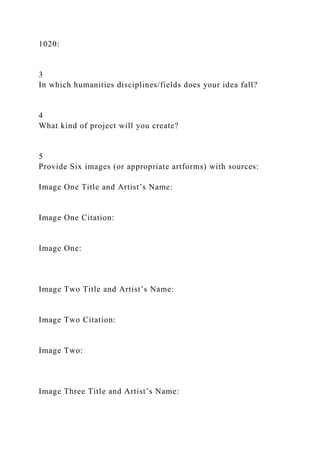
Fig. 7. Dorsey, Najee. B4-Rosa- Here I Stand. 2014. The
Columbus Museum. Mixed media. Accessed 14. April. 2019.
Dorsey, Najee. B4-Rosa- Here I Stand. 2014. The Columbus
Museum. Mixed media Accessed 14. April. 2019.
.
15
Were your point similar to the details you read?
Art & History Working Together
Note: Animation on your click the text will appear
17
Art acts as the preservation of history through the perspective
of the artist.
The reader is able to travel through time to understand that
moment in history.
Added text can be helpful in providing the missing details to the
image.
Thank You
Name:
1
State the course reading or an idea generated from the course
that you would like to explore in your presentation
2
Explain the reading or idea to someone who has not taken HUM
1020:
3
In which humanities disciplines/fields does your idea fall?
4
What kind of project will you create?
5
Provide Six images (or appropriate artforms) with sources:
Image One Title and Artist’s Name:
Image One Citation:
Image One:
Image Two Title and Artist’s Name:
Image Two Citation:
Image Two:
Image Three Title and Artist’s Name:
Image Three Citation:
Image Three:
Image Four Title and Artist’s Name:
Image Four Citation:
Image Four:
Image Five Title and Artist’s Name:
Image Five Citation:
Image Five:
Image Six Title and Artist’s Name:
Image Six Citation:
Image Six:
6
Provide three research sources you’ve found from the BC
Online database. These may not be the same sources as you
provided for the images. Enter the MLA bibliographic citations
here:
Source 1:
Source 2:
Source 3:
7
Create a working thesis statement: (Two to three sentences
which state the argument the project will support)
8
Create a working outline by following the template below:
I. Introduction
II. First Main Idea
a. Support for First Main Idea
b. Support for First Main Idea
c. The two images being used
III. Second Main Idea
a. Support for Second Main Idea
b. Support for Second Main Idea
c. The two images being used
IV. Third Main Idea
a. Support for Third Main Idea
b. Support for Third Main Idea
c. The two images being used
V. Conclusion
Articulating your purpose.
Purpose Title
I want to help children and stakeholders with Developmental
disabilities.
Purpose Statement
I want to work with Autistic children and other individuals that
have developmental disabilities in ABA. These children will
have to learn to live alone and function in different
environments as time progresses. To do this, I will enhance my
knowledge of applied behavior analysis in order to maximize
client’s outcomes in all environments.
POLICY STATEMENT
Learners are expected to conduct themselves in a manner guided
by respect, collegiality, honesty, and ethical behavior as part of
their academic development. Learner conduct that infringes on
the quality of such an educational experience is not acceptable.
This policy describes the types of conduct that are deemed
prohibited and unacceptable. (Separate university policies
address academic honesty and discrimination, harassment, and
assault. For further details, see university policies 3.01.01
Academic Integrity and Honesty and 4.02.04 Discrimination,
Harassment, and Assault.) This policy also serves as a tool to
combat impersonation, identity theft, text mining, and/or
creation of fictitious identities in an effort to secure access to
federal funds.
Prohibited learner conduct includes but is not limited to the
following: complicity, dishonesty, disruptive conduct,
disrespect, document forgery, illegal activity, impersonation,
text mining, and theft, as described in the definitions section of
this policy.
Scholar-Practitioner Model
The scholar-practitioner learning model will guide your
professional development, encouraging you to investigate and
critically evaluate relevant theory and research to determine
effective best practices that you will use on the job. It will help
you establish a lifelong commitment to continually building
relevant knowledge and skill in your areas of interest and
specialization in psychology.
Encyclopedia of Distributed Learning Scholar Practitioner Mo.docx

Encyclopedia of Distributed Learning Scholar Practitioner Mo.docx

  • 1.
    Encyclopedia of DistributedLearning Scholar Practitioner Model Contributors: Charles McClintock Edited by: Anna Distefano, Kjell Erik Rudestam & Robert J. Silverman Book Title: Encyclopedia of Distributed Learning Chapter Title: "Scholar Practitioner Model" Pub. Date: 2004 Access Date: June 9, 2020 Publishing Company: SAGE Publications, Inc. City: Thousand Oaks Print ISBN: 9780761924517 Online ISBN: 9781412950596 DOI: http://dx.doi.org/10.4135/9781412950596.n134 Print pages: 440-396 © 2004 SAGE Publications, Inc. All Rights Reserved. This PDF has been generated from SAGE Knowledge. Please note that the pagination of the online version will vary from the pagination of the print book. javascript:void(0); javascript:void(0); http://dx.doi.org/10.4135/9781412950596.n134 The term scholar practitioner expresses an ideal of professional excellence grounded in theory and research, informed by experiential knowledge, and motivated by personal values, political commitments, and ethical conduct. Scholar practitioners are committed to the well-being
  • 2.
    of clients andcolleagues, to learning new ways of being effective, and to conceptualizing their work in relation to broader organizational, community, political, and cultural contexts. Scholar practitioners explicitly reflect on and assess the impact of their work. Their pro- fessional activities and the knowledge they develop are based on collaborative and relational learning through active exchange within communities of practice and scholarship. The scholar practitioner ideal has been analyzed from various perspectives as to the nature of skilled and principled action ranging from adult development and higher education to epistemology and social systems. Professional fields such as education, medicine, clinical psychology, social work, program evaluation, man- agement, engineering, architecture, and law all have addressed this role. Each of these areas has a distinct practice track—as teacher, scholar, health care professional, psychotherapist, social worker, evaluator, man- ager, business consultant, engineer, architect, and lawyer. Experts in these fields possess a deep understand- ing of subject matter and practice knowledge and, compared to novices, demonstrate effective, efficient, and creative problem solving. Debate across professional fields has not settled on a single specification for what a scholar practitioner should be able to do at a practical level. Areas of competence are diverse and include depth in a discipline and its methods for creating knowledge, educational expertise (whether as a teacher, change agent, or leader), capacity for teamwork across fields and public and private sectors, and skilled commitment to ethical con- duct, diversity, and a global perspective. The variety of perspectives on the topic is reflected in several related terms and emphases such as reflective practitioner, scientist
  • 3.
    practitioner, citizen scholar,public intellectual, and practitioner scholar. Four cross-cutting perspectives help illuminate the ideal of the scholar practitioner and the varied issues that influence its evolution. Educating the Scholar Practitioner Accredited schooling and formal licensing or codes of conduct are hallmarks of a profession and guide educa- tional practices for the scholar practitioner. Currently there is a resurgent interest in reforming and broadening the practice of graduate and professional education, both within disciplines and across types such as doctor- al, medical, legal, and other helping professions. One of the forces driving this examination is the emergence of distributed forms of education and lifelong learning that allow flexibility of time, place, format, individual de- finition of goals, and social grouping. Virtual learning environments increase the possibilities for collaborative educational relationships that are especially suitable for adult and mid-career students whose commitments and ways of learning may not be compatible with traditional settings. Notwithstanding these developments and the fact that effective practitioners require an experiential knowl- edge base, their formal education is composed largely of didactic learning, whether in the physical or virtual classroom, grounded in theory and in research that presumably ‘underlies’ practice expertise. Even profes- sionally oriented programs, such as those in business, nursing, and social work, typically employ didactic methods to present basic concepts and analytic techniques prior to field-based learning of practitioner skills. This Platonic ideal, which emphasizes underlying theory and
  • 4.
    analytic technique, existsfor several reasons. It affirms a norm of humility in Western science that knowledge evolves and requires conceptual and empirical challenge in a continual analysis of truth. This premise reinforces the idea that practitioner work, whether as healer, teacher, or leader, should be based on more than personal prejudice, power, or the influence of au- thority figures and fads. The ability to interpret client and societal needs based on the most reliable knowledge is critically important to being a competent and ethically responsible practitioner, especially in high-stakes helping professions such as medicine. The emphasis on theory and research has a political rationale as well. Within the broad context of modernity SAGE © 2004 by Sage Publications, Inc. SAGE Reference Page 2 of 6 Encyclopedia of Distributed Learning and the rise of science and technology, establishing theoretical and empirical knowledge is essential to achieving status as a profession. The more determinate and prominent the knowledge base—as in the phys- ical and life sciences—the greater the prestige and power of the field. For example, Ph.D. clinical psychol- ogists vie for privilege against M.D. practitioners within a health care system that distributes enormous re- sources. The caliber of research training in Ph.D. programs becomes one lever in that contest. Practitioner
  • 5.
    degrees such asthe Psy.D. and Ed.D. in psychology and education emphasize empirical inquiry that is more closely tied to practice settings than to theoretical questions. These and similar programs are aimed more at the practitioner scholar than at the scholar practitioner, thereby highlighting the status and resource competi- tion issues. Finally, educating for interpersonal nuances and situational uncertainties of practitioner work, as well as re- lated ideas about ethics and values, is generally done through experiential methods such as case teaching, mentoring, practicums, and field internships. These are more expensive forms of education than a sequenced classroom curriculum. Practice knowledge often is tacit and therefore difficult to codify for educational pur- poses in comparison to theory and research methods. Hence, experiential learning often conflicts with mass- production institutional imperatives for most educational organizations. The resulting bias toward didactically taught content knowledge becomes self-perpetuating because the majority of teachers who educate schol- ar practitioners were themselves trained through the same method. The lack of attention to and expertise in experiential learning leads to wide variation in the degree to which it is used systematically to enhance and assess the acquisition of practice knowledge. For John Dewey, whose work provides a foundational rationale for experiential learning, it is not just the experience but the quality of and reflection on experience that lead to important learning. Given that practitioners work on human affairs, it can be argued that postbaccalaureate professional training for the scholar practitioner should be grounded in a broad liberal arts undergraduate education as a means of
  • 6.
    strengthening general analyticcapacities as well as historical, aesthetic, and spiritual ways of knowing. Cost notwithstanding, the same argument applies to professional graduate education where knowledge of the hu- manities offers balance to the more technocratic scholarly approaches of the social and natural sciences. Knowledge Forms and Methods Knowledge takes many forms—personal, practical, artistic, scholarly, political, and spiritual—each of which plays a role in the work of the scholar practitioner, who often contends with uncertainty about problem defin- ition and intervention impact. This uncertainty, in turn, exists within the normal context of practitioner work in which novel patterns of information, situational constraint, and value conflict are common. Professional edu- cation programs, however, emphasize only a few forms of knowledge and historically have embodied a hier- archical relationship in which scholarly knowledge derived from theory and research is passed on for practical application in particular situations. The terms theory and research, which are used somewhat interchangeably here, encompass a wide range of epistemological and methodological approaches. Constructivist epistemol- ogy, experiential pedagogy, and many applied research strategies including action and evaluation research attempt to equalize this relationship. However, they often eschew general theory for an emphasis on situa- tional knowledge, thereby substituting one hierarchy for another. Methods for creating and testing new knowledge are also circumscribed. In the social sciences, these schol- arship skills typically include using research designs and methods of sampling to make comparisons and
  • 7.
    render judgments ofcause and effect, employing empirical methods for gathering data, measuring and mak- ing representations of reality, and using statistical, simulation, and qualitative methods for analyzing data and substantiating interpretations or conclusions. Postmodern understanding from the humanities has widened the methodological choices in the social sciences in which subjective voice, situational nuance, and societal perspective highlight how knowledge is socially and psychologically constructed and used. Qualitative and expressive/artistic methods are added to the traditional tools of experiments and surveys. Criteria for sound SAGE © 2004 by Sage Publications, Inc. SAGE Reference Page 3 of 6 Encyclopedia of Distributed Learning evidence have evolved from the traditional reliability and validity standards to include considerations such as authenticity, trustworthiness, utility, and praxis. These developments help foster a more integrated basis for the dual facets of the scholar practitioner role. They strengthen the status of tacit knowledge in comparison to formal knowledge and create opportunities to explore how practitioner knowledge derived from experience can strengthen research-based findings and inquiry. For example, traditional research methods attempt to control or isolate what are considered confound- ing factors, such as the background characteristics of clients
  • 8.
    who seek treatment,from the pure effects of the treatment. This research design practice is used so that one can judge the efficacy of a treatment in order to make important decisions about investing in it for the general good of others. The practitioner, however, must accommodate, not control, a wide variety of background characteristics in working with clients. Reliable research results that indicate increased risks for hormone therapy for menopause symptoms, for example, do not dictate the choices that might be made in the context of an individual's life situation. Understanding this choice process can identify additional outcomes as well as illuminate the ever-present interaction of generic treatments with individual and social factors. Thus, control and accommodation as well as research and prac- tice knowledge together provide a more complete understanding and basis for action. Also, practitioner work occurs within institutional settings that provide continual economic, societal, and ethical challenges that research knowledge can guide only at a very general level. For instance, the research findings on school choice and learning outcomes must be interpreted by educational practitioners within the historical context of racial and economic segregation, democratic ideals, and the needs of particular communities and their constituents. An important value of scholarly skills is that they have a significant degree of cross-disciplinary application, whereas practice skills are more linked to particular professions. It is possible for scholars from diverse disci- plines to have reasoned exchange about research evidence and criteria for judging its merit. The social inven- tion of scholarly content and methods thus makes possible disciplinary and social boundary crossing for the
  • 9.
    benefit of all.On the other hand, the historical emphasis on theoretical knowledge and research skills results in neglect of practice capacities such as teaching, consulting, colleagueship in a workplace, and the moral di- mensions of one's work, as well as the forms and sources of knowledge that are associated with these skills. One approach to equalizing the treatment of theory and practice knowledge forms is to identify practitioner principles that occupy a middle ground between general theoretical orientations and profession-specific tech- niques. Practice principles of this kind, whether aimed at individuals, groups, organizations, or communities, would have in common such concerns as establishing trusting and respectful relationships, effective commu- nications, diagnostics, and facility with negotiation, motivation, and change dynamics. Along with research methods (i.e., design, measurement, analysis) these practice principles constitute an epistemology of schol- arly practice that illuminate how professionals can think and act reflectively and strategically. The Scholar Practitioner as an Adult Learner As an adult learner with professional practice, personal growth, and intellectual development goals, the ideal scholar practitioner interrelates concepts, understandings, and methods from varied theoretical and practice perspectives. In addition, scholar practitioners employ research and practice principles in complementary ways such as using their experiential knowledge to enrich theoretical concepts and using structured empiri- cal inquiry to examine the effectiveness of professional interventions. They draw upon knowledge from mul- tiple sources including theorybased propositions, case-based best practices, and values-based maxims and
  • 10.
    morals. These variedforms of knowledge are continuously acquired through didactic, experiential, and cul- tural means. Scholar practitioners seek continuing education that adds to their skills and offers new insight into knowledge previously acquired. The ideal of the scholar practitioner defines this effort in terms of lifelong learning that expands the individual's capacity for insight, reflection, and effective action. SAGE © 2004 by Sage Publications, Inc. SAGE Reference Page 4 of 6 Encyclopedia of Distributed Learning The term andragogy represents an approach to adult learning based on both formal and tacit knowledge, as well as the personal and professional values that individuals bring to their learning. Andragogy emphasizes an active and defining role for individuals in what and how they learn and may include goals of personal and professional transformation. Transformational andragogy, as applied to the scholar practitioner, seeks to nur- ture flexible interpretive and emotional capacities in the learner that support examination of tacit assumptions, exploration of cultural diversity, integration of varied intellectual perspectives, and incorporation of unifying aspirations for humanity. Attributes of the Scholar Practitioner The ideal of the scholar practitioner also can be examined in
  • 11.
    relation to anindividual's cognitive, personal, and behavioral attributes in the context of adult development. Theory and research on individuals who excel in their professions as innovators and problemsolvers identify several intellectual capacities. For example, comparisons of novices and experts show the latter as having well-defined hierarchical knowledge structures with many lateral connections among concepts that allow them to abstractly, efficiently, and creatively inter- pret information from their everyday work. Experts are able to frame situations from multiple perspectives, pose competing hypotheses, and identify evidence that would test alternative explanations. In addition to these cognitive attributes, the fully developed adult professional shows the capacity for emo- tional intelligence and use of self that is both unified and differentiated across settings and roles. Tolerance of difference and ambiguity is linked with compassion for life and a commitment to improving the human con- dition. Development of these affective and behavioral dimensions is a challenging but critical aspect of the scholar practitioner as an agent of change for individuals, organizations, and communities. The concept of wisdom captures the essence of much of the foregoing discussion, in that it represents an integration of cognitive, affective, and behavioral dimensions. The work of wisdom for a scholar practitioner requires alternating between the abstract and the observable, questioning what is taken for granted and over- looked, complicating with unexpected findings, and simplifying with new interpretations. These intellectual and social skills require multiple forms of intelligence and are manifested through principled and ethical ac- tion. Nurturing the capacity for wisdom is the goal of education
  • 12.
    and lies atthe heart of the scholar practitioner ideal. • experientialism • andragogy • adult learning • theory and research • experiential learning • graduate and professional education • professional education Charles McClintock http://dx.doi.org/10.4135/9781412950596.n134 See also • Adult Education Learning Model • Experiential Learning • Graduate Study Bibliography SAGE © 2004 by Sage Publications, Inc. SAGE Reference Page 5 of 6 Encyclopedia of Distributed Learning http://dx.doi.org/10.4135/9781412950596.n134 http://sk.sagepub.com/reference/distributedlearning/n9.xml http://sk.sagepub.com/reference/distributedlearning/n56.xml http://sk.sagepub.com/reference/distributedlearning/n71.xml Boyer, Ernest L.(1990). Scholarship reconsidered: Priorities of
  • 13.
    the professoriate. Princeton,NJ: Carnegie Foundation for the Advancement of Teaching. Curry, Lawrence, Wergin, Jon, & Associates.(1993). Educating professionals: Responding to new expecta- tions for competence and accountability. San Francisco: Jossey- Bass. Kitchener, Karen, & King, Patricia.(1991). A reflective judgment model: Transforming assumptions about knowing. In JackMezirow (Ed.), Fostering critical reflection in adulthood. San Francisco: Jossey-Bass. Knowles, Malcolm S., Holton III, Elwood F., & Swanson, Richard A.(1998). The adult learner. 5th Edition. Woburn, MA: Butterworth-Heinemann. Nyquist, Jody D.The Ph.D.: A tapestry of change for the 21st century. Change34(6)12– 20(2002).http://dx.doi.org/10.1080/00091380209605564 Schön, Donald A.(1983). The reflective practitioner: How professionals think in action. New York: Basic Books. Shulman, Lee S.Knowledge and teaching: Foundations of the new reform. Harvard Educational Re- view571–22(1987). Sternberg, Robert J., & Horvath, James A. (Eds.). (1999). Tacit knowledge in professional practice. Mahwah, NJ: Lawrence Erlbaum. SAGE © 2004 by Sage Publications, Inc. SAGE Reference Page 6 of 6 Encyclopedia of Distributed Learning http://dx.doi.org/10.1080/00091380209605564Encyclopedia of
  • 14.
    Distributed LearningScholar PractitionerModel Brown 1 1 Shallon Brown Doc. Tai Houser HUM 1101 21 April 2019 NARRATIVE: THE CIVIL RIGHTS MOVEMENT IN ART Art is an expressive method that captures the viewpoint and influences of the artist. It is used in a variety of effective ways, especially in recording the historical past. Present day the reader can analyze the composition of an artist’s work and when full understanding is achieved, to connect with its intended meaning. However, the meaning may vary among individuals. Art and history have worked together to illustrate the worldview of an artist as seen through his eyes. When text is added to an artwork, the interpretation of the image changes. 1. During the civil rights, equal educational opportunities were not available among persons living within the United States especially African Americans. These images depicted the scenes at that time.
  • 15.
    Supporting detail -Fig. 1. Norman Rockwell, The Problem We All Live With 1964. i. Additional support/idea - On first look, the painting may merely illustrate a black child walking among adults in the slumps. The words “nigger” and “KKK” can be seen on the wall; what appears to be a tomato splattered is seen but appears old since it is on the wall and not the figures in the painting. Interpreting the image, we note the attire of the child and Marshall’s are not modern and reflects the year 1964. Consistent with images we have seen in the past, through reproductive television programs and other media communications. The body language demonstrates determination more so for the child through her clenched fist and assumed stride. The white color of her uniform signifies peace, purity and a change in segregation. This is significant because white not only represents peace but “new beginnings…and is a combination of all colors” representing equality (Larocco). The faces of the men are not included but the color of their skin is; neither is she being treated hostile. The image provokes the thought on why the child is being escorted, where was she going, the location, time in history and its significance? Brown 2 2
  • 16.
    ii. Additional support/idea- Berger wrote on the implication of words when added to an image. Understanding this image requires the reader to be aware of the negative connotations in using “nigger” and “KKK” throughout history. Background knowledge of the author is also helpful in understanding the painting. Norman Rockwell was an artist who painted throughout his lifetime. Starting from 1963 his paintings illustrated his “concern and interest in civil rights, America’s war on poverty, and the exploration of space (Norman).” Considering the artist's style and completion year of 1964. This justifies the representation of the educational challenges faced by African American during civil rights (Norman Rockwell). Klansmen also fought to keep segregation, they bombed many homes and churches during this time. Rockwell’s inspiration came from Ruby Bridges, “the six-year-old girl who helped to desegregated an all-white New Orleans elementary school in 1960.” Also, all students who had to be escorted to school due to “violence and riots by white mobs” who opposed desegregation (Duncan). Supporting detail – Fig. 2 Jacob Lawrence The Library 1968 i. Additional support/idea Initial observation brings attention to the various colors used throughout the painting and their associated meaning. Although the African American
  • 17.
    cultural holiday Kwanzawas not introduced until 1966, the painting bares similar representation through its bold colors and an African theme. It is evident color symbolism plays a vital role in understanding the painting. Black usually has a negative connotation but also signifies power, authority, and elegance. Note the man standing in the front of the painting. Red is the color of passion, energy, war, strength, and determination. The contrast between the shades of brown suggests stability and harvest. Blue symbolizes depth, trust, wisdom, intelligence, and devotion. The olive green represents peace. The floor appears to be gold in color which represent prestige, wisdom, and wealth (Brunts). There is a semblance of unity in the colors and shades of brown used that matches the color of their skin, representing power and a desire to educate one's self as everyone stares at a book. ii. Additional support/idea - For further understanding, the historical context in which the painting is set and the artist must be considered. Described as a "social realist' Jacob Lawrence documented African American experience in several art series. The series, “life in Harlem and the Civil Rights Movement of the 1960s,” was influenced by his black family and the community in which he grew up (Jacob). The timeline of this painting was during the Civil Rights Movement and his trips to Africa. Following the 1954 Supreme
  • 18.
    Brown 3 3 Court’s rulingto end segregation in schools, many persons (whites) were not happy and black children continued to be victimized when attending school (Lyons). The figures are all shades of black and brown representing African Americans drive to succeed through education. The added text informs us of the possible location depicted being the 135th Street Library, located in Harlem. This library was the first to house a collection of “African American literature, history and prints opened in 1925 (Jacob).” The library was a haven for African Americans to empower themselves through education as black history was not taught in schools. The library is now the Schomburg Center for Research in Black Culture. This painting provides a connection between the importance of the library in providing African-Americans with educational opportunities during the Civil Rights Movement. 2. During the Civil Right Movement, African Americans faced social and political inequality in comparison to whites. Artists have worked to capture this period in their paintings.
  • 19.
    Supporting detail –Fig. 3 Jacob Lawrence Bar and Grill 1941 Jacob Lawrence i. Additional support/idea – With prior knowledge of the influence African-American culture had on Jacob Lawrence’s artwork will impact the interpretation of this painting. Exploring the compositional unity of the painting, there is a partition in the bar, diving the customers based on the color of their skin. The fan, ashtray, bartender and white customers are on one side and colors on the other. They have separate entrances and utensils a difference in the service being provided can be seen. For better understanding reading into the details of the painting is important and historical knowledge of life in 1941.This painting indicates the presence of segregation between African Americans and whites, as they were given separate areas in public locations. What Lawrence has done, is to show the cultural dynamics within this time. No signs are present but using color in his art, we can decipher the difference in the race and see the restriction through the barrier. ii. Additional support/idea – Created in 1941 after his move to New Orleans Lawrence experienced the reality of the Jim Crow law which enforced racial segregation in the South. The exhibition label attached to the painting notes the vantage point emphasizing the “artificiality of the two separate worlds” in New Orleans (Lawrence).
  • 20.
    The label confirmsthe implication of segregation being present because of the Jim Crow laws. This illustrates a striking contrast to how African- Americans were treated in comparison to the whites. Brown 4 4 Supporting detail – Fig 4. Norman Lewis Evening Rendezvous 1962 i. Additional support/idea – Initial observation of the painting appears to be a remake of the American flag through stick figures in white. Understanding Norman Lewis’s interest in civil rights forces us to question the details of the painting. Further observation indicates the figures are carrying sticks, flags, possible weapons. 0n their head, is a triangle, a representation of the Ku Klux Klan. Laws were now in place against Klan violence yet they had minimal effect on the group (Ku Klux Klan). As the title suggests, the scene is set in the night, coupled with the weapons indicates defiance and secrecy as they appear to be conducting a meeting. To the top left of the painting, there are three figures that appear to be hanging which was one of their methods of attack (see fig. 5). They were known to victimize both black and white
  • 21.
    activist and unlikeprevious years were met with “counter-protesters” and law enforcement monitoring their activities, due to desegregation laws. The fading flag represents existence but also their loss of power (Ku Klux Klan). ii. Additional support/idea – The exhibition label creates a better understanding and confirms the figures are Klansmen. For complete interpretation, understanding of their role in history is necessary. Being one of the oldest hate groups, they attacked African- Americans, Catholics, immigrants, and other groups while preaching patriotism. They campaigned for violence, including lynching and for the Jim Crow laws to remain (Ku Klux Klan). With clarity on who the Ku Klux Klan is, the secrecy of the scene makes complete sense to be planning another attach or holding a meeting. While others fought for civil rights they opposed equality among non-white Americans. The Klansmen took life, happiness, and freedom from people. They were a mockery to America, hence the fading of the flag and the fire in the middle. 3. Throughout history women have been involved in activism for progression, individualism, and equality among men. In doing so, they have made significant contributions to the world. These next pieces of art require the reader to consider how women have evolved and their role in the Civil Rights Movement.
  • 22.
    Supporting detail –Fig. 6 Wadsworth A. Jarrell Revolutionary 1972 Brown 5 5 i. Additional support/idea – The painting portrays a woman singing, her significance is currently unknown. Similar to The Library, bold colors are used throughout the image indicating color symbolism. The pink symbolizes courage, intelligence, and passion as women had become vocal and were leading instead of being led. Extended from her mouth is the power of determination in the words that surrounds her, ultimately creating the painting. The following words and phrases are depicted coming from her mouth. "Revolution, Resist, Black, Black is Beautiful and I have given my life to the struggle If I have lost my life in the struggle that is the way it will be.” The choice of colors and words are a representation of feminism and uplifting of blacks. The additional text seeks to provide information on who the artist is and the Revolutionary female. ii. Additional support/idea - Created by Wadsworth Jarrell, the image is of civil rights
  • 23.
    activist Angela Davis,known to be outspoken and a rebel of her time. Davis fought for women’s rights and to end poverty and oppression which aligns the choice of words used throughout the painting (Davis). Another noteworthy point is the connection to what she is wearing and the artist. Jerrell was the co-founder of the Coalition of Black Revolutionary Artists (COBRA) along with his wife Jae and other artists. The colors used represent the AfriCOBRA of which all three were associated and advocated for civil rights. Like Berger’s point on recreation, the painting was a replica of the Revolutionary suit designed by Jae in early 1969 for AfriCOBRA (Brooklyn Museum). The painting has become a reproduction of an outfit creating a new meaning to what it was and now is, both influenced by women activists during the civil rights. Supporting detail – Fig. 7 B4- Rosa Here I Stand by Najee Dorsey. i. Additional support/idea – It is very easy to take a quick look and assume this painting reflects the famous civil rights activist Rosa Parks. Yet, close attention to the title, sign and the youthful features of the girl is an indication further thought should be given to the painting’s composition. Her sign displays ‘B4 -7053’ if the reader is not familiar with Rosa Parks these numbers may have a different meaning or none. Again, color is important as seen in the contrasting shade of blackness to the skin. In the background
  • 24.
    are a busand a building. The blooms of the flowers signify spring and growth. Since this is not Rosa Parks, who is she and what is her significance? Additional text is required in understanding this image. ii. Additional support/idea - The added text becomes important in understanding the historical connection. The painting combines two monumental occasions in history. Brown 6 6 Claudette Colvin is “the first person arrested for resisting bus segregation in Montgomery, Alabama.” Yet little is known about her and her significance in the history of civil rights. Beyond being of darker complexion, she was 15 years old and became pregnant soon after. Being in the forefront would have brought additional negativity to the black community. Colvin was pregnant and unmarried. Her efforts were impactful because nine months after her arrest, Rosa Parks was arrested for not giving up her seat on the bus. Parks was the “secretary of the Montgomery chapter of the National Association of the Advancement of Colored People.” She was older and of lighter complexion becoming the perfect candidate (Rumble). At the
  • 25.
    time of herarrest, Rosa Parks’ inmate number was 7053 hence the connection to the sign Colvin is in holding. The bus is a symbolic representation of change and the connection between both Colvin and Parks. This painting also highlights colorism. Another battle African-Americans faced within their social group while fighting for their rights. This image illustrates an impactful connection between Colvin and Parks and their role in ending racial segregation during the Civil Rights Movement Brown 7 7 Works Cited Brunts, Rene. "Color Clues What Hues Mean to You." Going Bonkers Magazine, June 2010, p.32. PsychologyCollection, http://link.galegroup.com/apps/doc/A351949929/PPPC?u=linccl in_wcc&sid=PPPC&xid=37ea06 eb. Accessed 17 Apr. 2019. “Davis, Angela (1944–).” African American Eras: Contemporary Times, vol. 1: Activism and Reform, The Arts, Business and Industry, UXL, 2010, pp. 18-21. Gale Virtual Reference Library, http://link.galegroup.com/apps/doc/CX1838000016/GVRL?u=li ncclin_bwcc&sid=GVRL&xid=d57 131dd. Accessed 14 Apr. 2019.
  • 26.
    Duncan, Garrett A."Desegregation." Race and Racism in the United States: An Encyclopedia of the American Mosaic, edited by Charles A. Gallagher and Cameron D. Lippard, vol. 1, Greenwood, 2014, pp. 341-347. Gale Virtual Reference Library, http://link.galegroup.com/apps/doc/CX3160000197/GVRL?u=li ncclin_bwcc&sid=GVRL&xid=11f 2beae. Accessed 13 Apr. 2019. “Jacob Lawrence,” Smithsonian American Art Museum, https://americanart.si.edu/artist/jacob- lawrence-2828. Accessed 13. April. 2019. "Ku Klux Klan." Extremist Groups: Information for Students, vol. 1, Gale, 2006, pp. 444-451. Gale Virtual Reference Library, http://link.galegroup.com/apps/doc/CX3447100081/GVRL?u=li ncclin_bwcc&sid=GVRL&xid=c62 28411. Accessed 14 Apr. 2019. Lawrence, Jacob. Bar and Grill.1941. Smithsonian American Art Museum, americanart.si.edu/artwork/bar-and-grill-79031. Accessed 13. April. 2019 Lawrence, Jacob. The Library. 1960. Smithsonian American Art Museum, https://americanart.si.edu/artwork/library-14376. Accessed 13. April 2019 Lewis, Norman. Evening Rendezvous. 1962. Smithsonian American Art Museum, americanart.si.edu/artwork/evening-rendezvous-33910. Access 13. April 2019
  • 27.
    Larocco, Rosalie. "ThePower of Color." The Exceptional Parent, Apr. 2014, p. 20+. Psychology Collection, http://link.galegroup.com/apps/doc/A377573613/PPPC?u=linccl in_bwcc&sid=PPPC&xid=f80f4f 2e. Accessed 17 Apr. 2019 Lyons, Courtney Ann. "Civil Rights Movement." Multicultural America: A Multimedia Encyclopedia, edited by Carlos E. Cortés and Jane E. Sloan, vol. 1, SAGE Reference, 2014, pp. 518-525. Gale Virtual Reference Library, Brown 8 8 http://link.galegroup.com/apps/doc/CX3718500204/GVRL?u=li ncclin_bwcc&sid=GVRL&xid=2e6 b2872. Accessed 13 Apr. 2019. “Norman Rockwell - A Brief Biography - A Career in Illustration.” Norman Rockwell Museum, www.nrm.org/about/about-2/about-norman-rockwell/. Accessed 13 Apr. 2019. Rumble, Taylor-Dior. “Claudette Colvin: The 15-Year-Old Who Came before Rosa Parks.” BBC News, BBC, 10 Mar. 2018, www.bbc.com/news/stories-43171799. Accessed 14 Apr. 2019. Works Cited
  • 28.
    American Civil RightsMovement in Art 1954 – 1972 Shallon Brown Doc. Tai Houser HUM 1101 21 April 2019 Thesis Art is an expressive method that captures the viewpoint and influences of the artist. It is used in a variety of effective ways, especially in recording the historical past. Present day the reader is able to analyze the composition of an artist’s work and when full understanding is achieved, to connect with its intended meaning. However, the meaning may vary among individuals. Art and history have worked together to illustrate the worldview of an artist as seen through his eyes. When text is added to an artwork, the interpretation of the image changes. Paintings you will be reading. The Problem We All Live With 1964, Norman Rockwell The Library Jacob Lawrence 1960, Jacob Lawrence Bar and Grill 1941, Jacob Lawrence Evening Rendezvous 1962, Norman Lewis Revolutionary 1972, Wadsworth A. Jarrell Sr B4- Rosa Here I Stand, 2014 Najee Dorsey
  • 29.
    3 On the nextslide is a summary of all the images. 1. First take a moment to observe each image. 2. Then write one point you believe the image represents. 5 Remember to follow along with the attached narrative. What’s the link? ART History & Education? 7 Fig.1. Rockwell, Norman. The Problem We All Live With. 1964. Norman Rockwell Museum. Accessed 14 Arp. 2019.
  • 30.
    Rockwell, Norman. TheProblem We All Live With. 1964. Norman Rockwell Museum. Web. Accessed 14 Arp. 2019. “Image Resources - Norman Rockwell Museum - The Home for American Illustration.” Norman Rockwell Museum, www.nrm.org/collections-2/image-resources/. Accessed 14 Arp. 2019. 8 Fig. 2. Lawrence, Jacob. The Library. 1960. Smithsonian American Art Museum. Tempera on fiberboard. Accessed 14 Apr. 2019. Fig. 2. Lawrence, Jacob. The Library. 1960. Smithsonian American Art Museum. Tempera on fiberboard. Accessed 14 Apr. 2019. 9 What’s the link? ART History & Segregation?
  • 31.
    Fig. 3. Lawrence,Jacob. Bar and Grill. 1941. Smithsonian American Art Museum. Gouache on paper. Accessed 14 Apr. 2019. Fig. 3. Lawrence, Jacob. Bar and Grill. 1941. Smithsonian American Art Museum. Gouache on paper. Accessed 14 Apr. 2019. 11 Fig.5. Note the shapes in white, their hooded heads and what appears to be a stick/weapon in their hand. Fig. 4. Norman, Lewis. Evening Rendezvous 1962. Smithsonian American Art Museum. Oil on linen. Accessed 14. Apr. 2019. Fig. 4. Norman, Lewis. Evening Rendezvous 1962. Smithsonian American Art Museum. Oil on linen. Accessed 14. Apr. 2019. 12 What’s the link? ART History & FEMINISM? Black Revolution
  • 32.
    ‘I have givenmy life to the struggle, If I have lose my life in the struggle that is the way it will be.’ Beautiful Fig. 6. Jarrell, Wadsworth Aiken Sr. Revolutionary 1972. Collection of the Smithsonian National Museum of African American History and Culture. Printing ink on paper. Accessed 14. Apr. 2019. Jarrell, Wadsworth Aiken Sr. Revolutionary 1972. Collection of the Smithsonian National Museum of African American History and Culture. Printing ink on paper. Accessed 14. Apr. 2019. “Revolutionary.” National Museum of African American History and Culture, nmaahc.si.edu/object/nmaahc_2010.3.1. Accessed 14. Apr. 2019. 14 Fig. 7. Dorsey, Najee. B4-Rosa- Here I Stand. 2014. The Columbus Museum. Mixed media. Accessed 14. April. 2019. Dorsey, Najee. B4-Rosa- Here I Stand. 2014. The Columbus Museum. Mixed media Accessed 14. April. 2019. . 15 Were your point similar to the details you read?
  • 33.
    Art & HistoryWorking Together Note: Animation on your click the text will appear 17 Art acts as the preservation of history through the perspective of the artist. The reader is able to travel through time to understand that moment in history. Added text can be helpful in providing the missing details to the image. Thank You Name: 1 State the course reading or an idea generated from the course that you would like to explore in your presentation 2 Explain the reading or idea to someone who has not taken HUM
  • 34.
    1020: 3 In which humanitiesdisciplines/fields does your idea fall? 4 What kind of project will you create? 5 Provide Six images (or appropriate artforms) with sources: Image One Title and Artist’s Name: Image One Citation: Image One: Image Two Title and Artist’s Name: Image Two Citation: Image Two: Image Three Title and Artist’s Name:
  • 35.
    Image Three Citation: ImageThree: Image Four Title and Artist’s Name: Image Four Citation: Image Four: Image Five Title and Artist’s Name: Image Five Citation: Image Five: Image Six Title and Artist’s Name: Image Six Citation: Image Six:
  • 36.
    6 Provide three researchsources you’ve found from the BC Online database. These may not be the same sources as you provided for the images. Enter the MLA bibliographic citations here: Source 1: Source 2: Source 3: 7 Create a working thesis statement: (Two to three sentences which state the argument the project will support) 8 Create a working outline by following the template below:
  • 37.
    I. Introduction II. FirstMain Idea a. Support for First Main Idea b. Support for First Main Idea c. The two images being used III. Second Main Idea a. Support for Second Main Idea b. Support for Second Main Idea c. The two images being used IV. Third Main Idea a. Support for Third Main Idea b. Support for Third Main Idea c. The two images being used V. Conclusion Articulating your purpose. Purpose Title I want to help children and stakeholders with Developmental disabilities. Purpose Statement I want to work with Autistic children and other individuals that have developmental disabilities in ABA. These children will have to learn to live alone and function in different environments as time progresses. To do this, I will enhance my knowledge of applied behavior analysis in order to maximize client’s outcomes in all environments.
  • 38.
    POLICY STATEMENT Learners areexpected to conduct themselves in a manner guided by respect, collegiality, honesty, and ethical behavior as part of their academic development. Learner conduct that infringes on the quality of such an educational experience is not acceptable. This policy describes the types of conduct that are deemed prohibited and unacceptable. (Separate university policies address academic honesty and discrimination, harassment, and assault. For further details, see university policies 3.01.01 Academic Integrity and Honesty and 4.02.04 Discrimination, Harassment, and Assault.) This policy also serves as a tool to combat impersonation, identity theft, text mining, and/or creation of fictitious identities in an effort to secure access to federal funds. Prohibited learner conduct includes but is not limited to the following: complicity, dishonesty, disruptive conduct, disrespect, document forgery, illegal activity, impersonation, text mining, and theft, as described in the definitions section of this policy. Scholar-Practitioner Model The scholar-practitioner learning model will guide your professional development, encouraging you to investigate and critically evaluate relevant theory and research to determine effective best practices that you will use on the job. It will help you establish a lifelong commitment to continually building relevant knowledge and skill in your areas of interest and specialization in psychology.