Clausen Consulting 2013
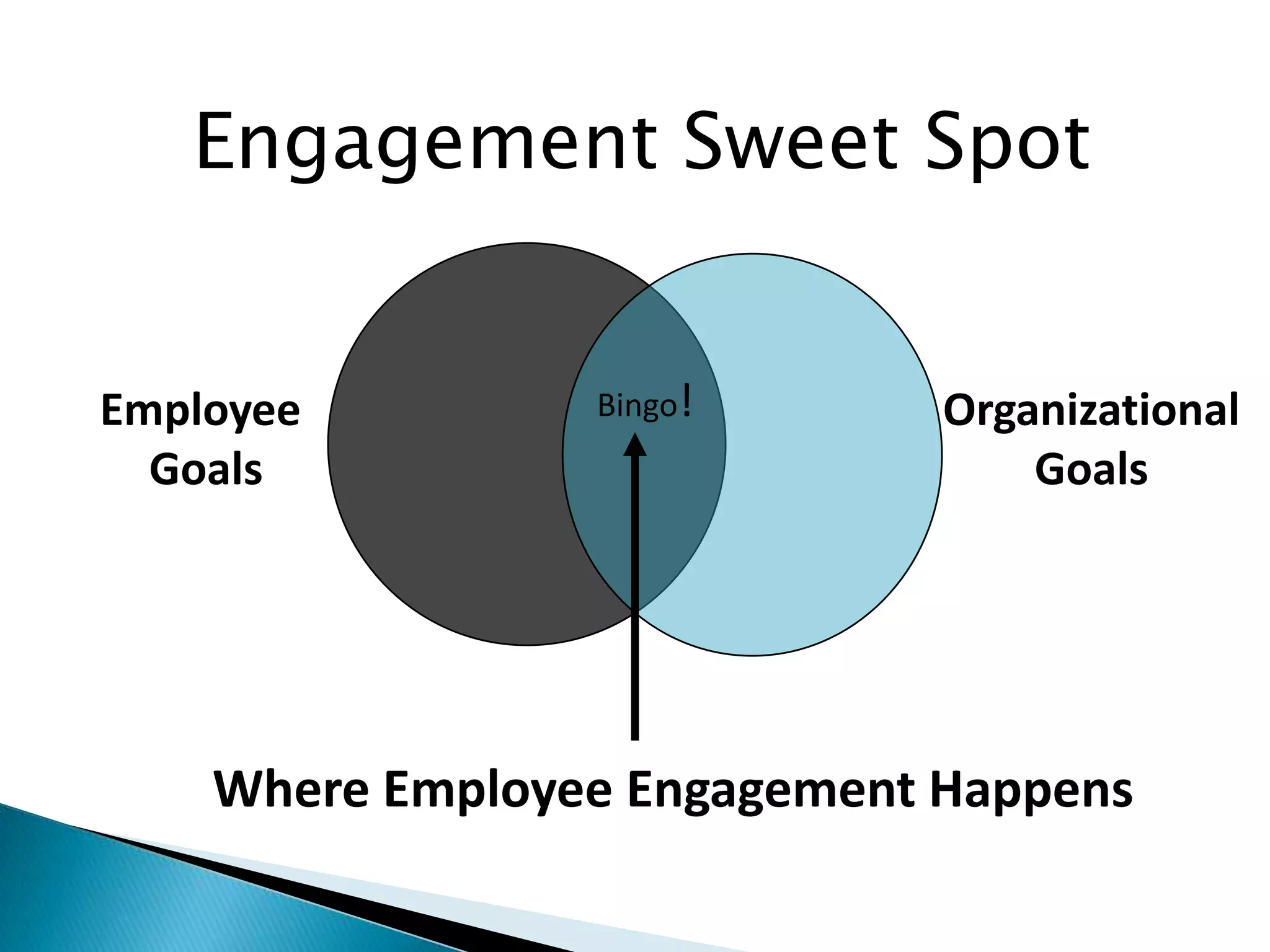
Where Employee Engagement Happens
Employee
Goals
Bingo! Organizational
Goals
Engagement Sweet Spot
“…the energy and
passion employees
have for what the
organization is trying to
achieve.”
-Baumruk and Marusarz,
-Hewitt and Associates (2004)
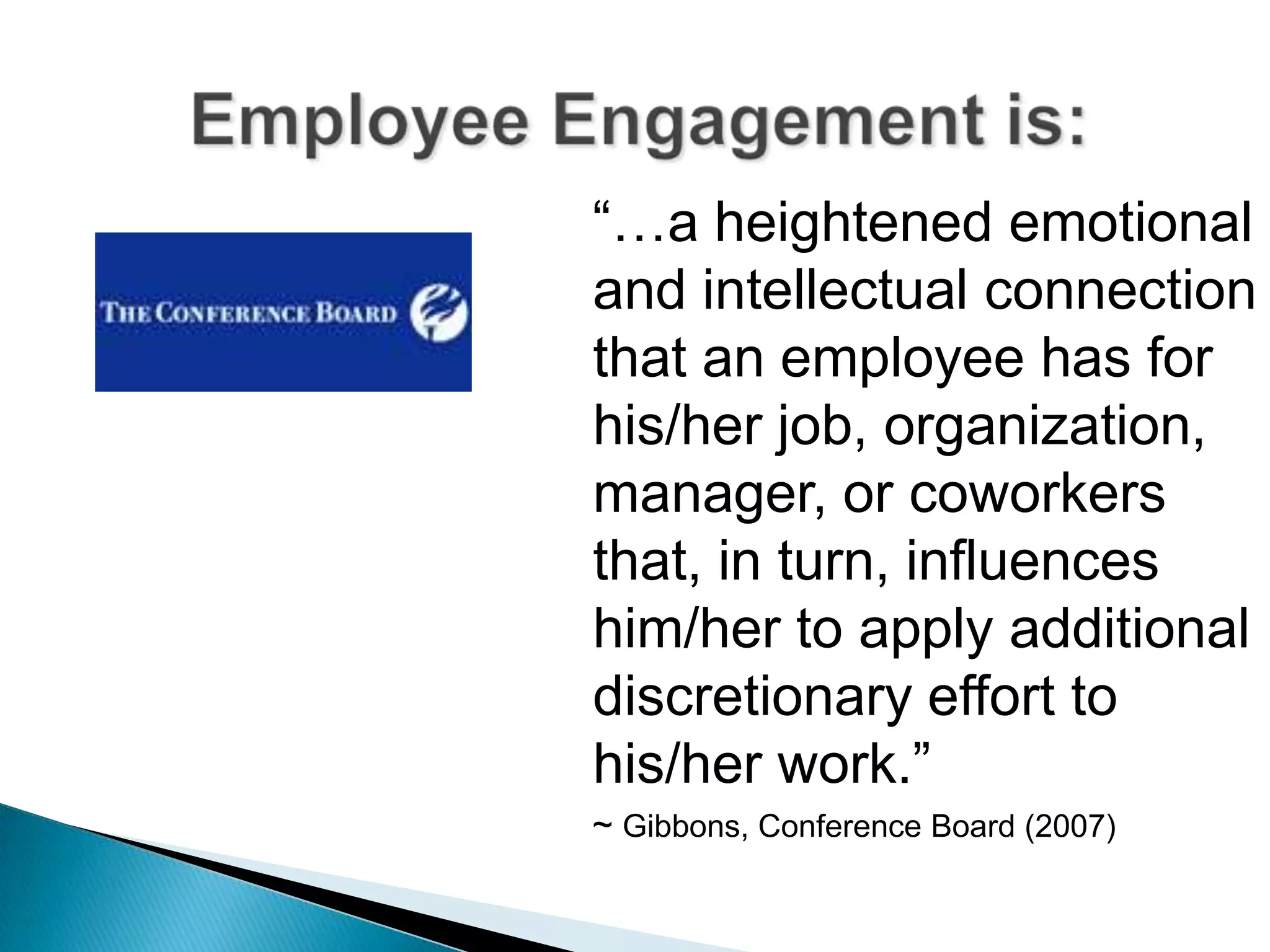
“…a heightened emotional
and intellectual connection
that an employee has for
his/her job, organization,
manager, or coworkers
that, in turn, influences
him/her to apply additional
discretionary effort to
his/her work.”
~ Gibbons, Conference Board (2007)
COGNITIVE
COMMITMENT
EMOTIONAL
ATTACHMENT
BEHAVIORAL OUTCOMES
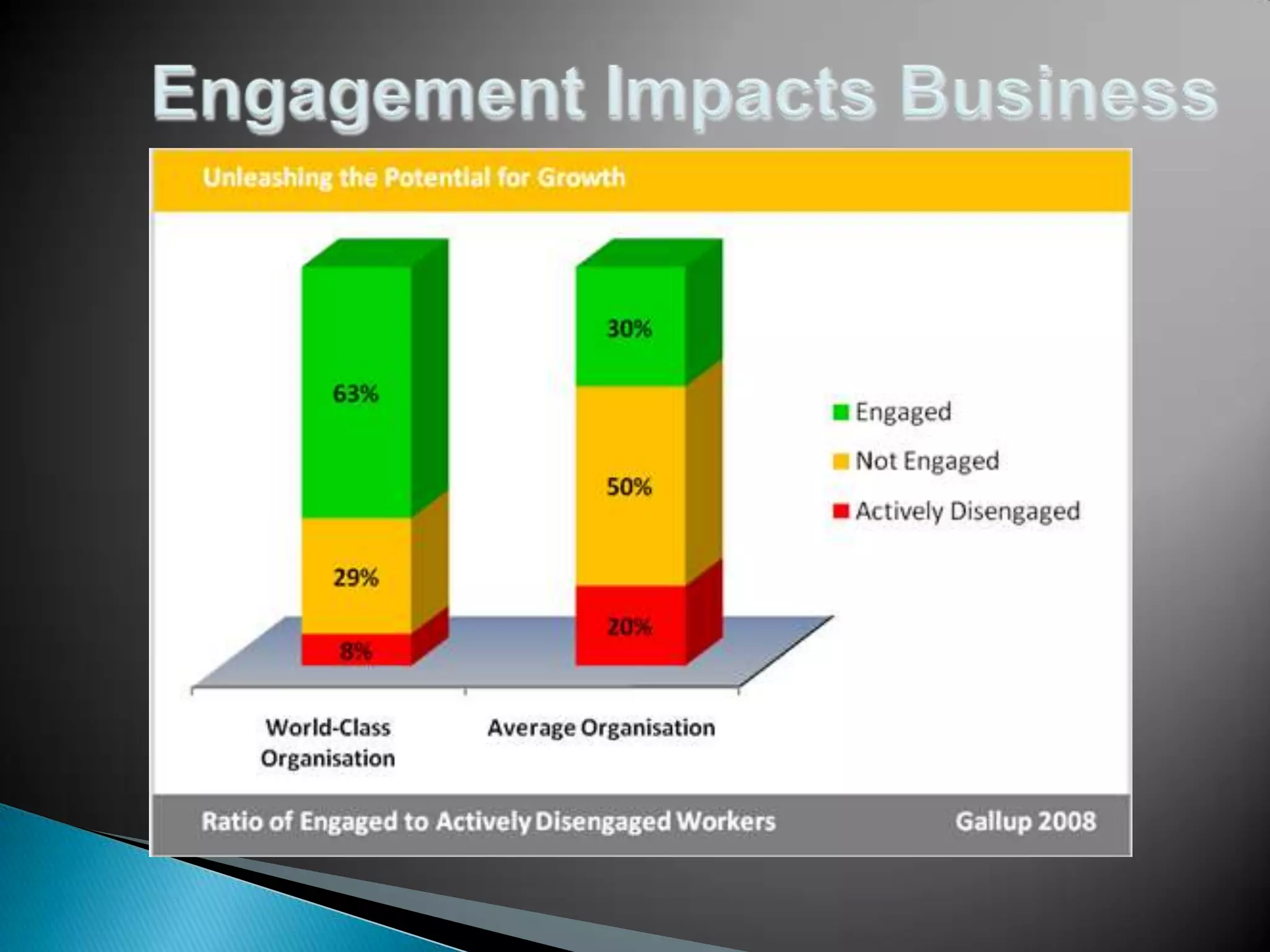
Percent of employees actively
seeking new jobs
 High performing employees = 47%
 Middle performing employees = 25%
 Low performing employees = 18%
 38% higher customer satisfaction
 22% higher productivity
 27% higher profits
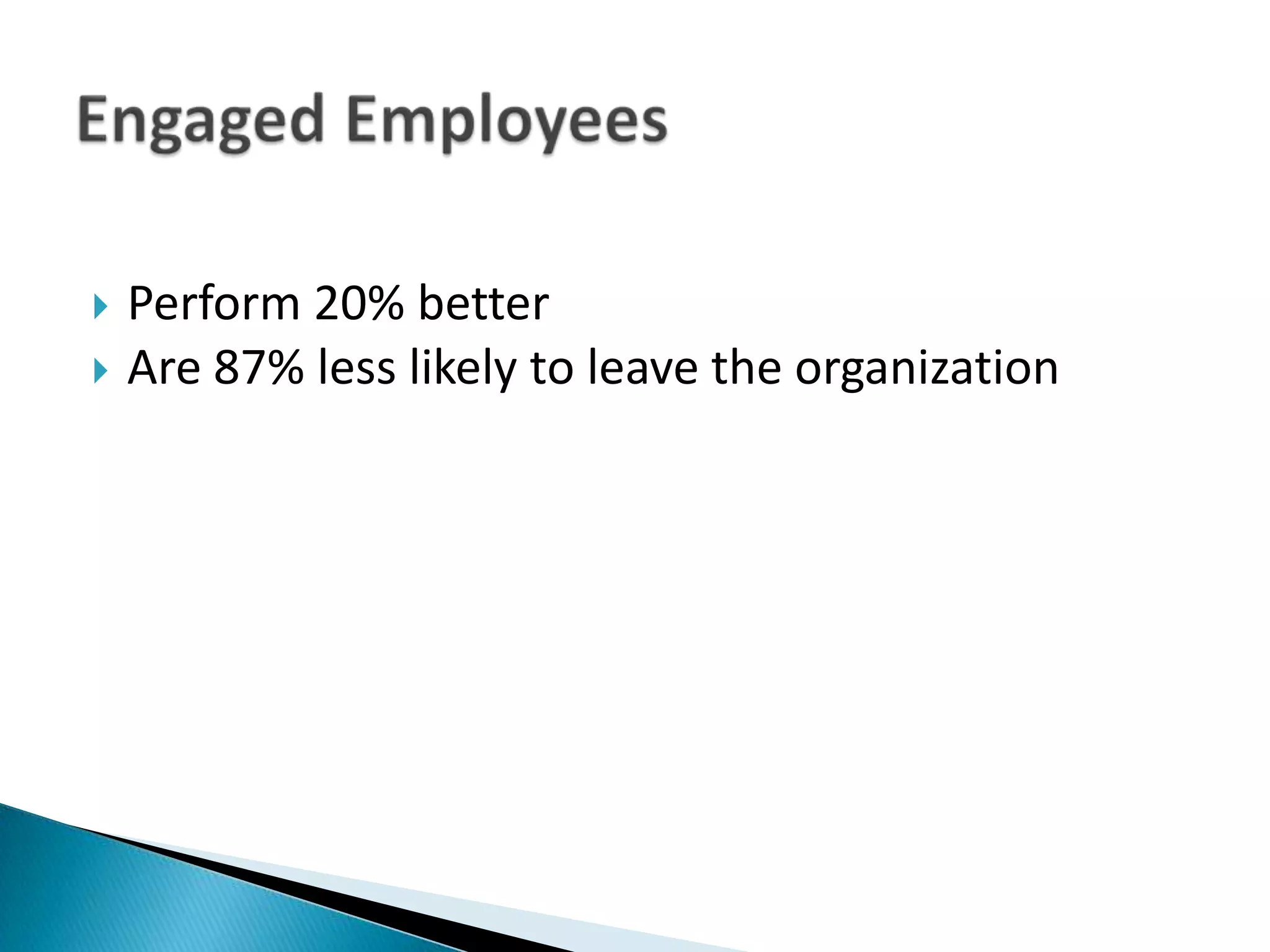
 Perform 20% better
 Are 87% less likely to leave the organization
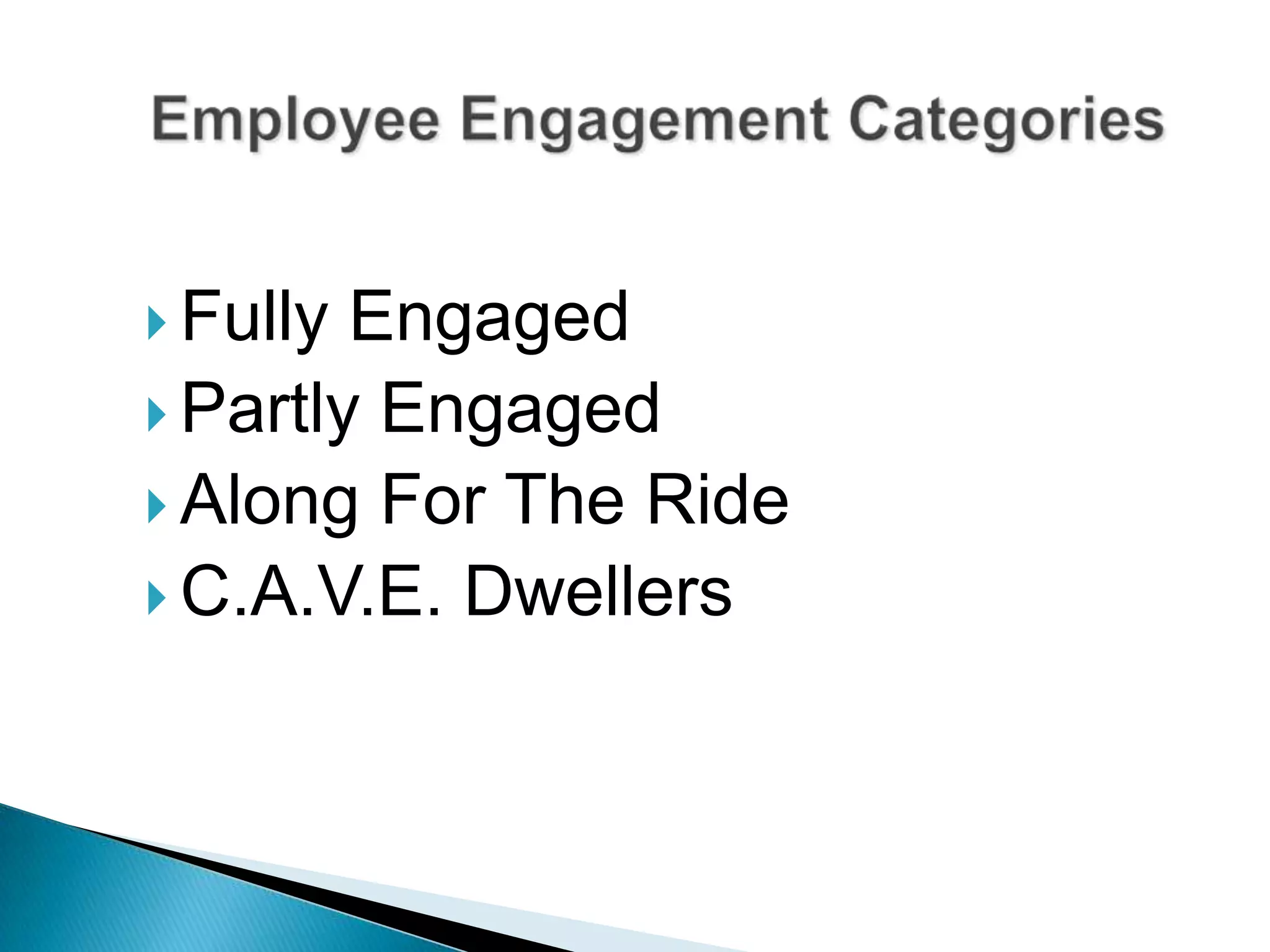
 Fully Engaged
 Partly Engaged
 Along For The Ride
 C.A.V.E. Dwellers
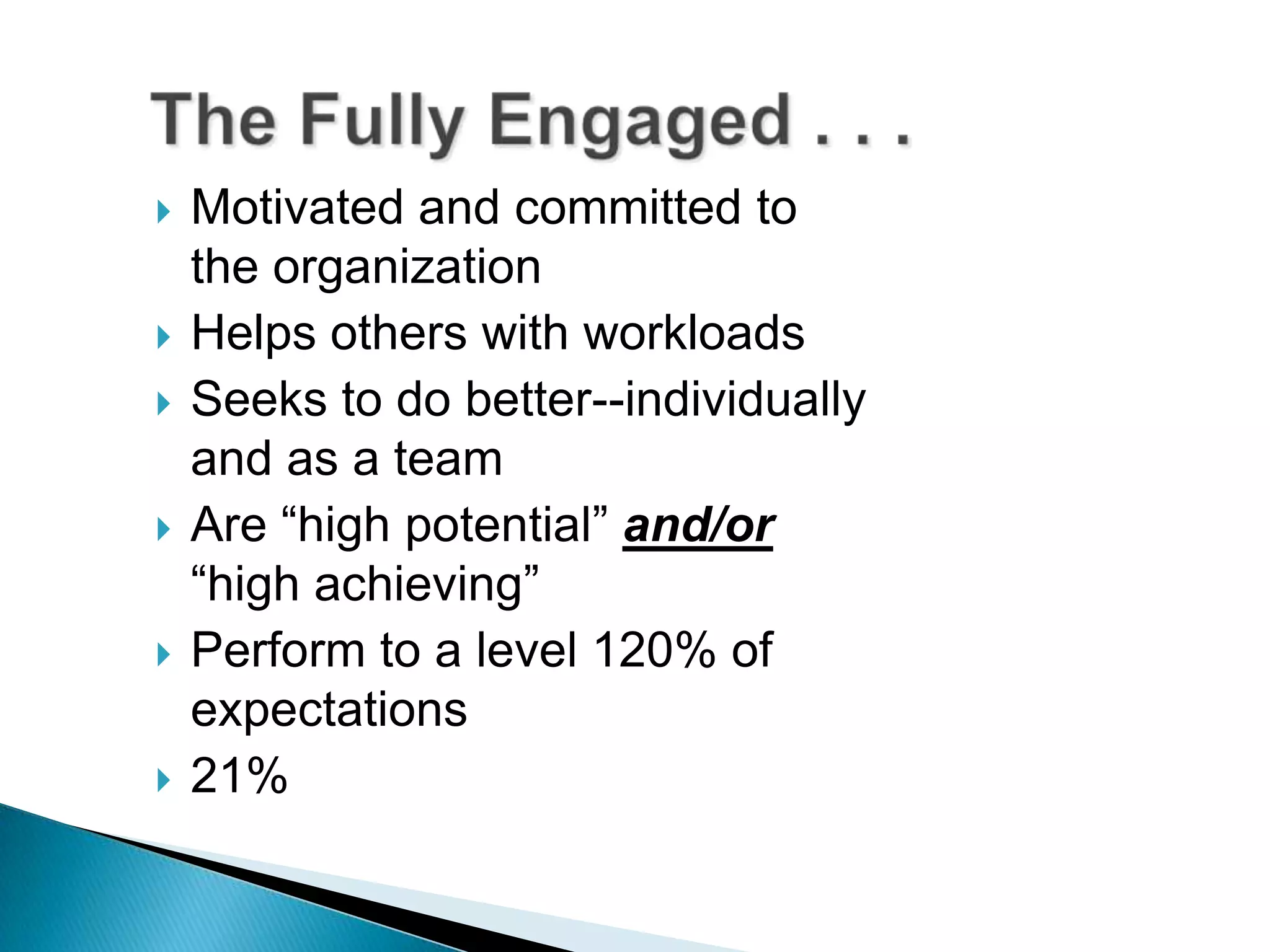
 Motivated and committed to
the organization
 Helps others with workloads
 Seeks to do better--individually
and as a team
 Are “high potential” and/or
“high achieving”
 Perform to a level 120% of
expectations
 21%
 Moderate to high levels of motivation and
commitment
 Solid contributors, can be
counted on
 Occasionally go beyond
basic job expectations
 Don’t exhibit high levels of drive or
consistency
 Perform to a level 100% of expectations
 46%
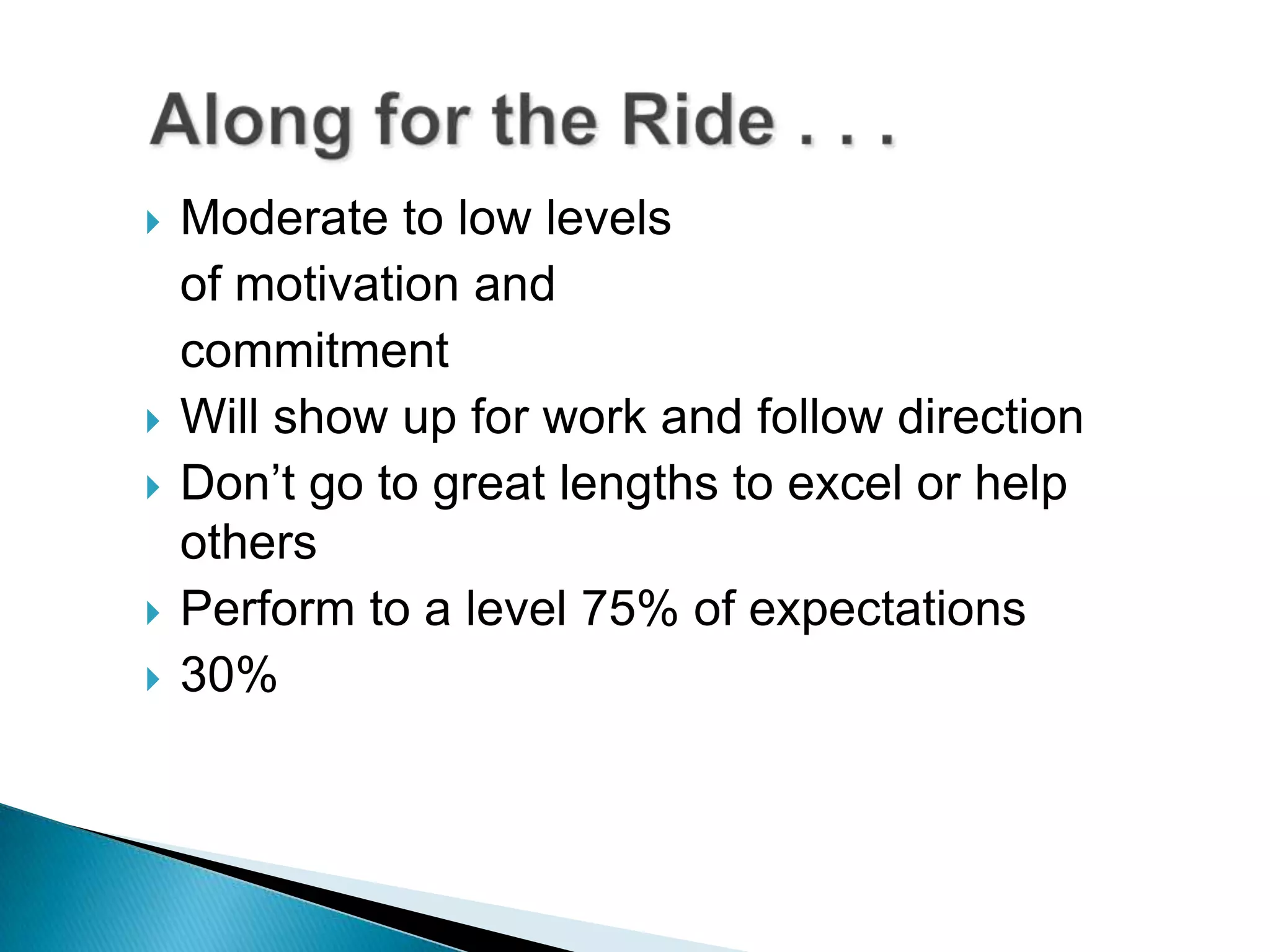
 Moderate to low levels
of motivation and
commitment
 Will show up for work and follow direction
 Don’t go to great lengths to excel or help
others
 Perform to a level 75% of expectations
 30%
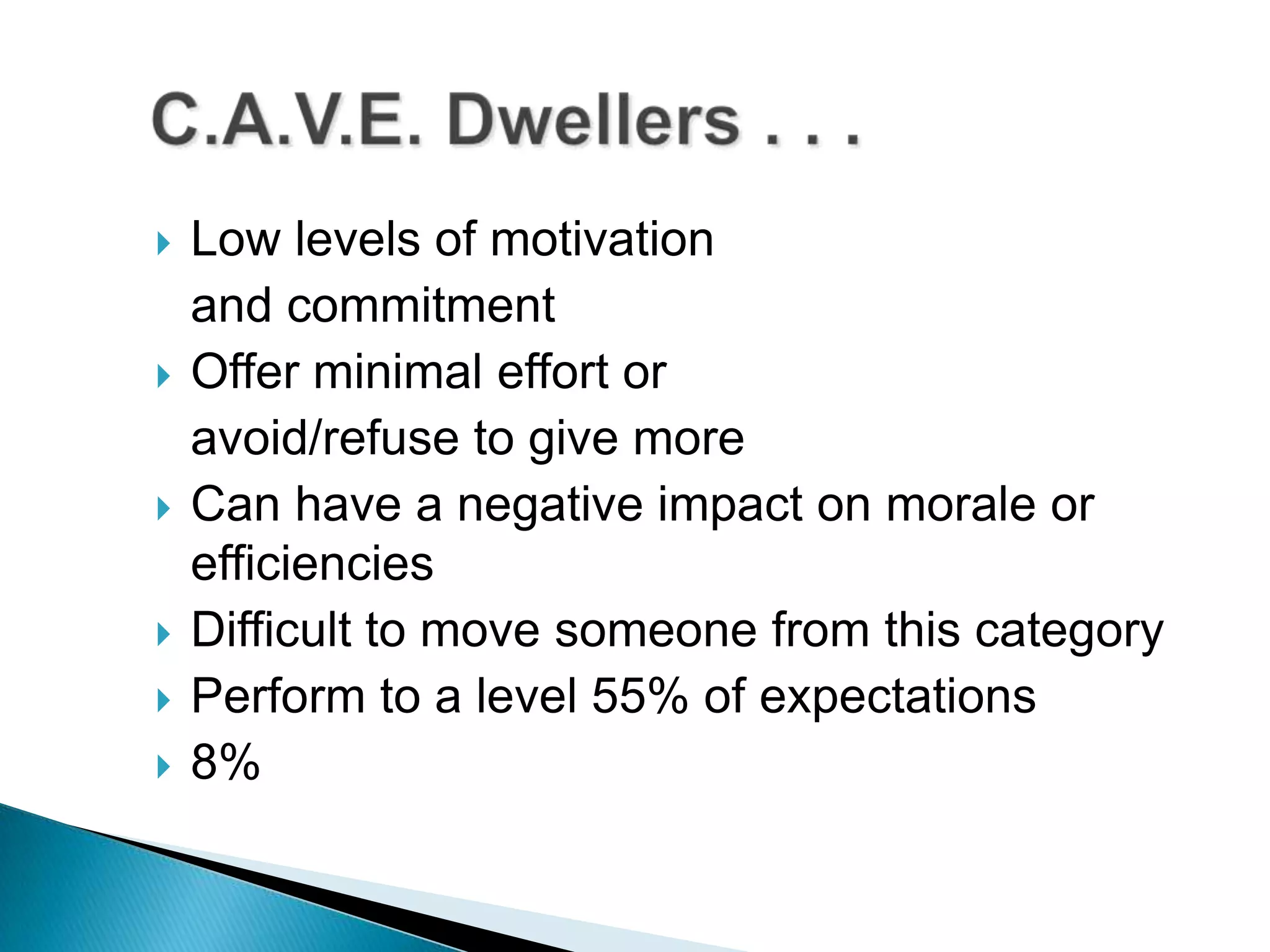
 Low levels of motivation
and commitment
 Offer minimal effort or
avoid/refuse to give more
 Can have a negative impact on morale or
efficiencies
 Difficult to move someone from this category
 Perform to a level 55% of expectations
 8%
 Trust and Integrity
 Nature of the Job
 Line-of Sight Between Individual & Company
Performance
 Career Growth Opportunities
 Pride about the Company
 Coworkers/Team Members
 Employee Development
 Personal Relationship with One’s Manager
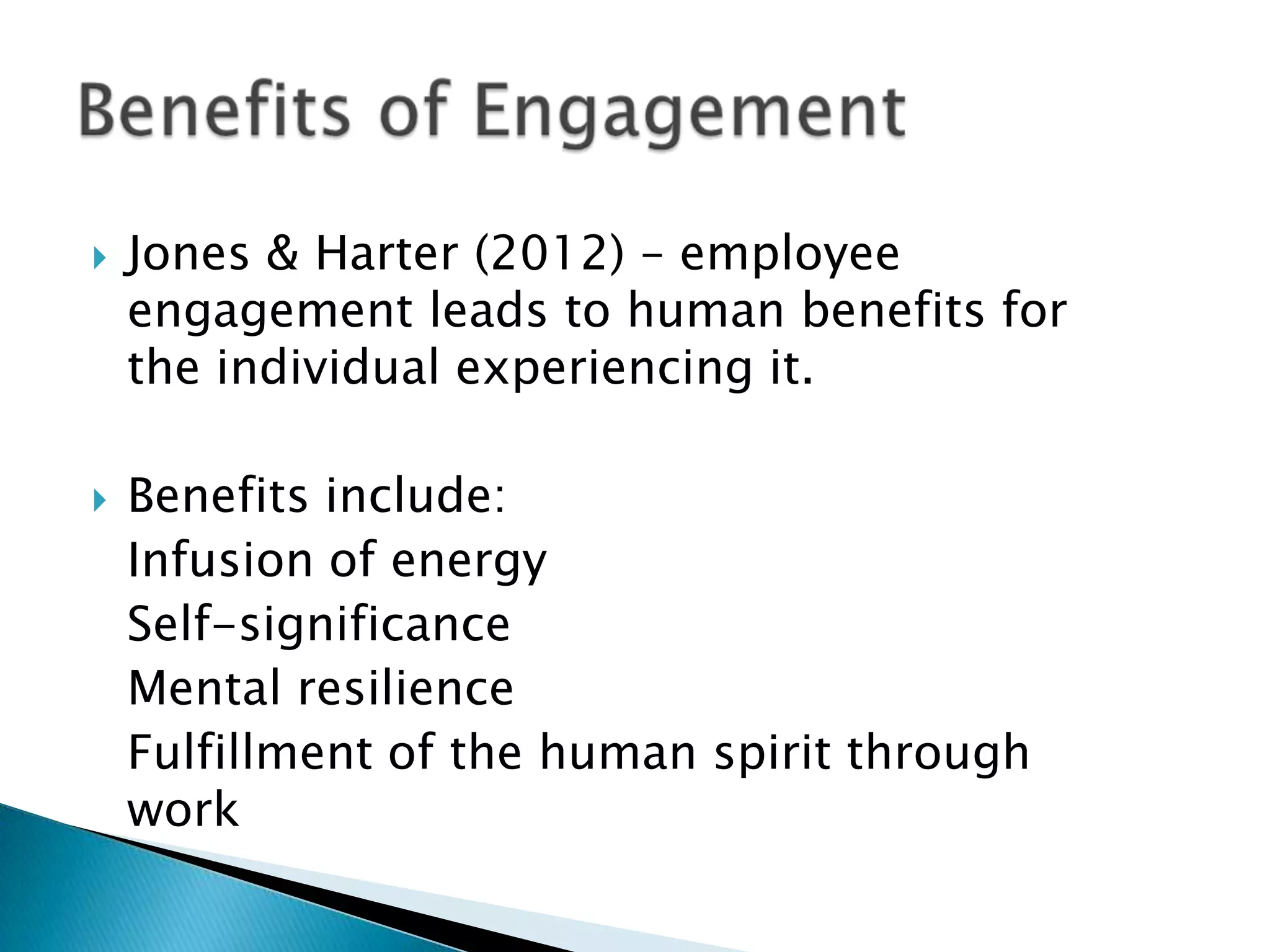
 Jones & Harter (2012) – employee
engagement leads to human benefits for
the individual experiencing it.
 Benefits include:
Infusion of energy
Self-significance
Mental resilience
Fulfillment of the human spirit through
work
Great
Managers
Engaged
Employees
Poor
Managers
Disengaged
employees
 Evidence that suggests engagement-
turnover link depends in large part on
how satisfied employees are with their
relationship with their supervisor.
 Engagement is significantly affected by
interactions with other organizational
members, whether on an individual,
group, or organizational level.

Employee Engagment

  • 1.
  • 3.
    Where Employee EngagementHappens Employee Goals Bingo! Organizational Goals Engagement Sweet Spot
  • 4.
    “…the energy and passionemployees have for what the organization is trying to achieve.” -Baumruk and Marusarz, -Hewitt and Associates (2004)
  • 5.
    “…a heightened emotional andintellectual connection that an employee has for his/her job, organization, manager, or coworkers that, in turn, influences him/her to apply additional discretionary effort to his/her work.” ~ Gibbons, Conference Board (2007)
  • 6.
  • 10.
    Percent of employeesactively seeking new jobs  High performing employees = 47%  Middle performing employees = 25%  Low performing employees = 18%
  • 11.
     38% highercustomer satisfaction  22% higher productivity  27% higher profits
  • 12.
     Perform 20%better  Are 87% less likely to leave the organization
  • 14.
     Fully Engaged Partly Engaged  Along For The Ride  C.A.V.E. Dwellers
  • 15.
     Motivated andcommitted to the organization  Helps others with workloads  Seeks to do better--individually and as a team  Are “high potential” and/or “high achieving”  Perform to a level 120% of expectations  21%
  • 16.
     Moderate tohigh levels of motivation and commitment  Solid contributors, can be counted on  Occasionally go beyond basic job expectations  Don’t exhibit high levels of drive or consistency  Perform to a level 100% of expectations  46%
  • 17.
     Moderate tolow levels of motivation and commitment  Will show up for work and follow direction  Don’t go to great lengths to excel or help others  Perform to a level 75% of expectations  30%
  • 18.
     Low levelsof motivation and commitment  Offer minimal effort or avoid/refuse to give more  Can have a negative impact on morale or efficiencies  Difficult to move someone from this category  Perform to a level 55% of expectations  8%
  • 19.
     Trust andIntegrity  Nature of the Job  Line-of Sight Between Individual & Company Performance  Career Growth Opportunities  Pride about the Company  Coworkers/Team Members  Employee Development  Personal Relationship with One’s Manager
  • 20.
     Jones &Harter (2012) – employee engagement leads to human benefits for the individual experiencing it.  Benefits include: Infusion of energy Self-significance Mental resilience Fulfillment of the human spirit through work
  • 21.
  • 22.
     Evidence thatsuggests engagement- turnover link depends in large part on how satisfied employees are with their relationship with their supervisor.  Engagement is significantly affected by interactions with other organizational members, whether on an individual, group, or organizational level.