This document discusses four emerging areas of signal timing optimization:
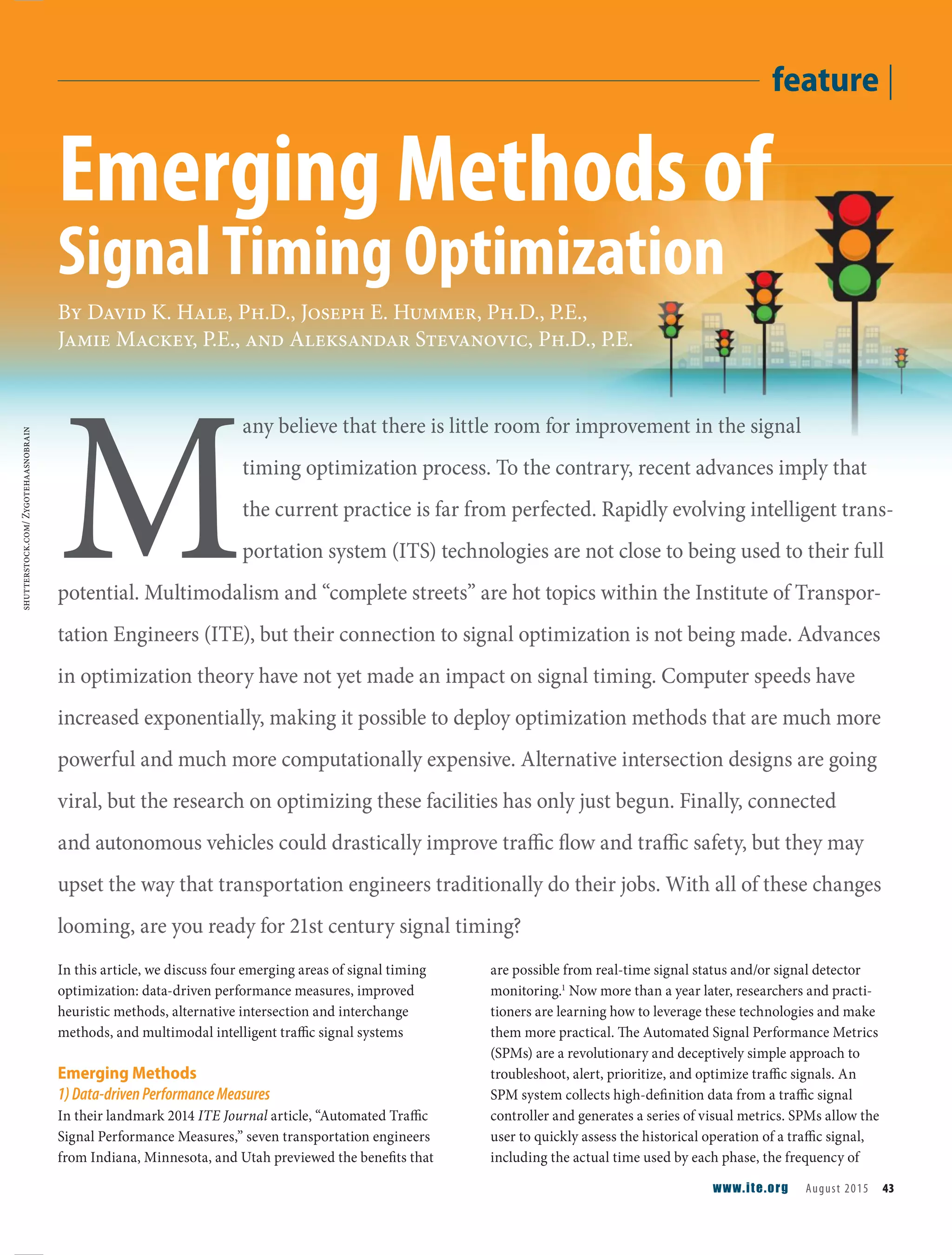
1) Data-driven performance measures like Automated Signal Performance Metrics that use real-time signal data to optimize timing without models.
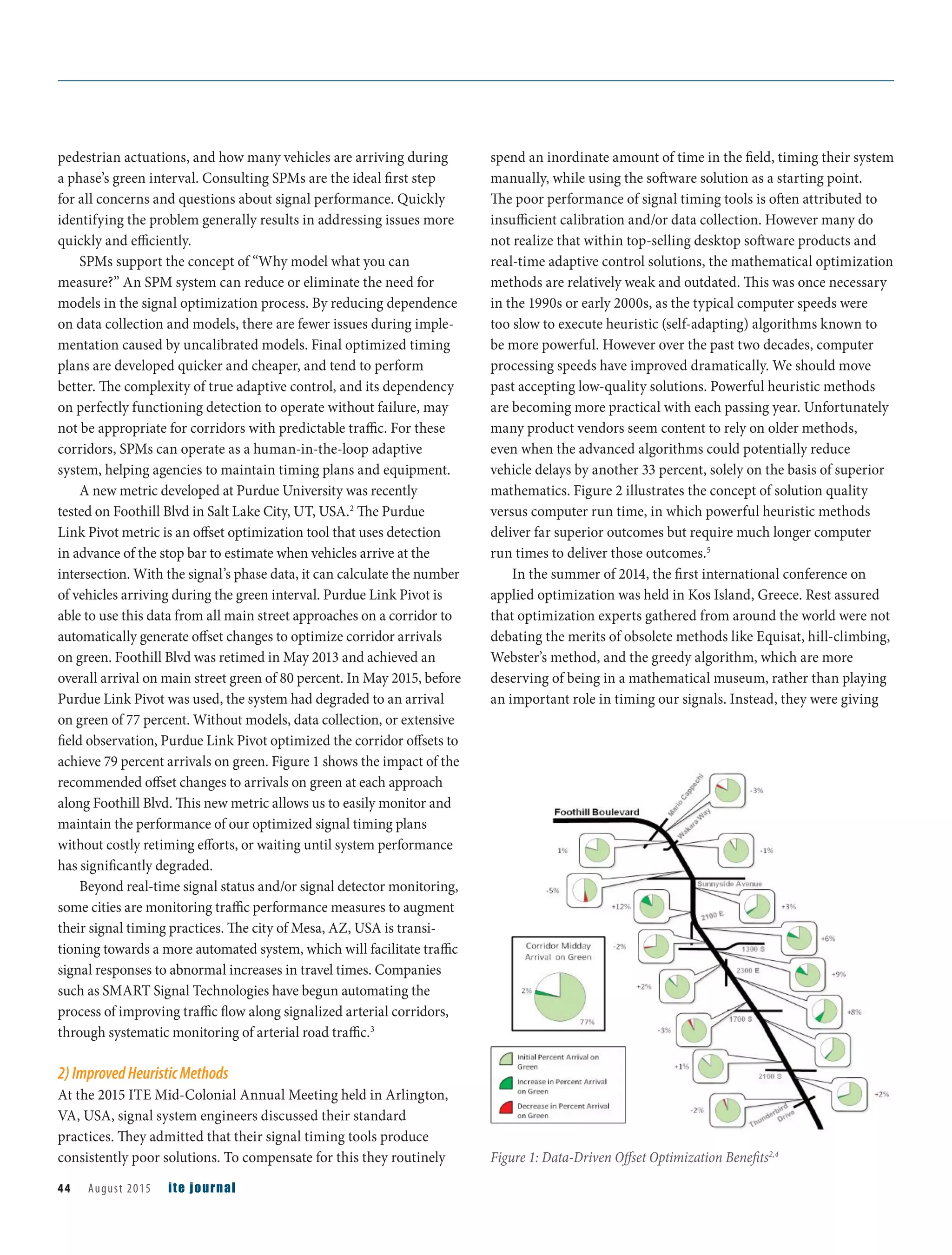
2) Improved heuristic optimization methods that are more powerful but require more computer time, allowing more optimal solutions.
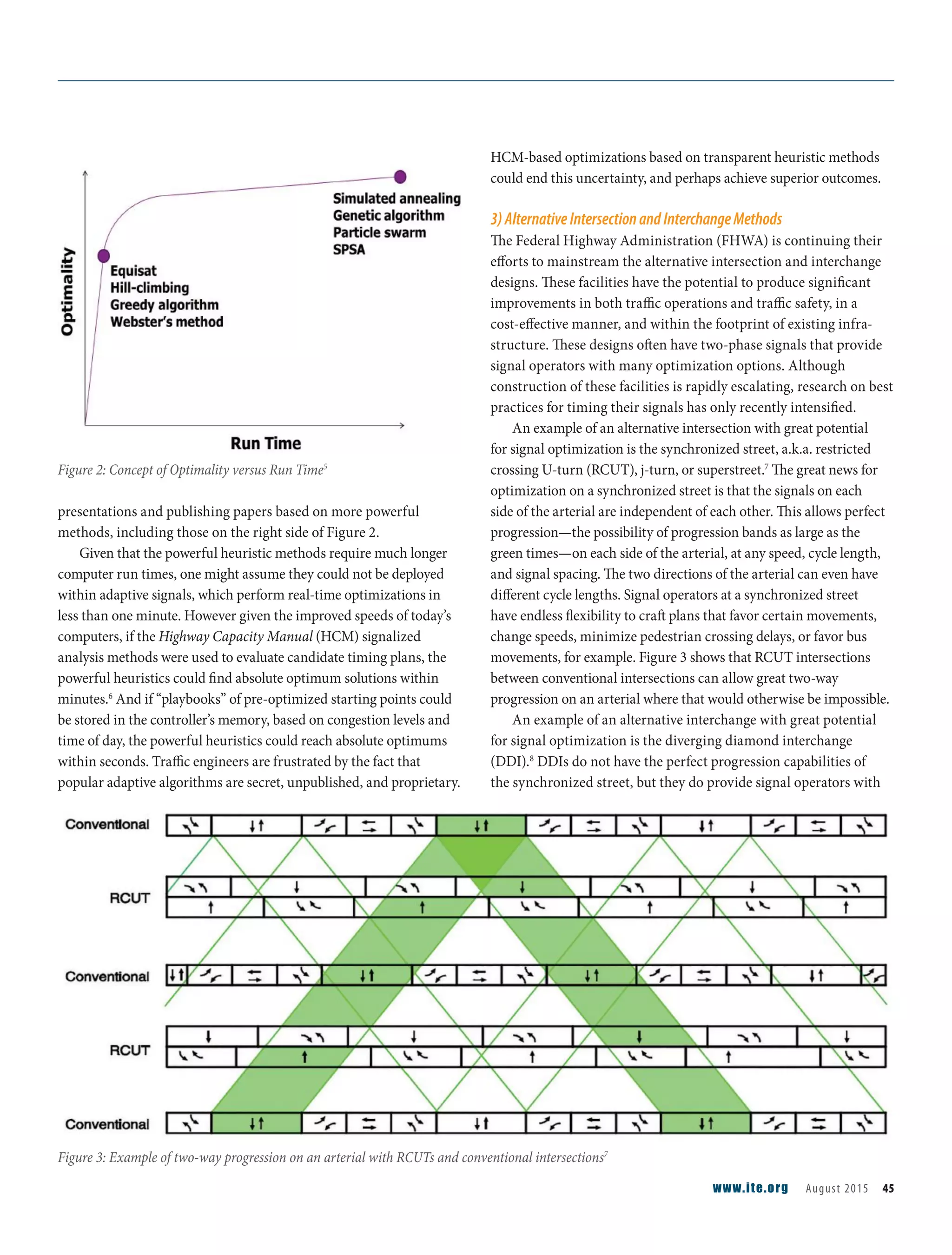
3) Optimization of alternative intersection designs like diverging diamonds and continuous flow intersections that provide new flexibility.
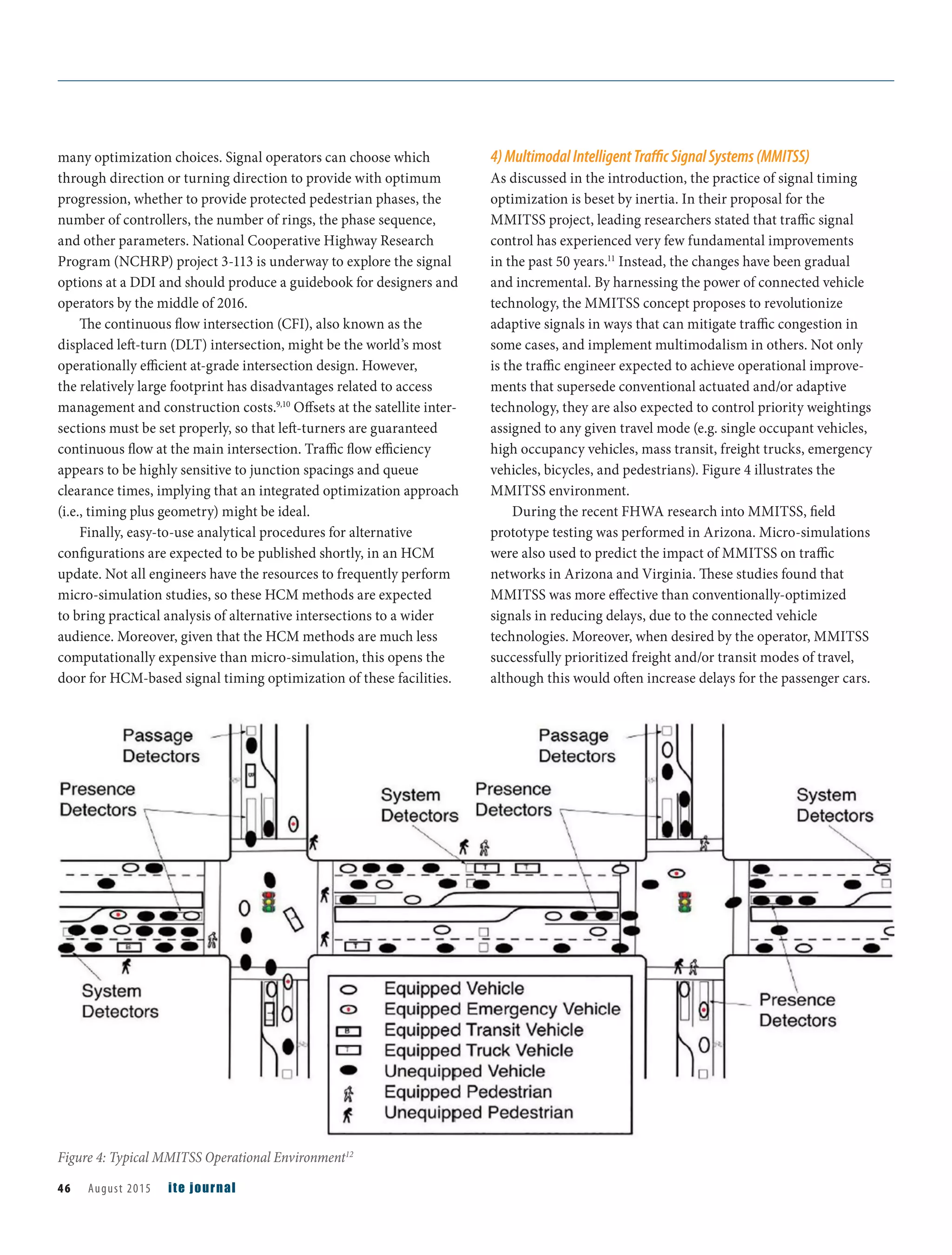
4) Multimodal intelligent traffic signal systems that use connected vehicles to prioritize different modes of transportation dynamically.
The document argues that advances in technology allow more optimal timing solutions, but practitioners must demand improvement from vendors and leaders to modernize practices.