Taking the First Step: 
Mentoring Students in Gerontology 
Research 
Daniel W. Durkin and Victoria Adams 
Department of Social Work and The School of Allied Health and Life Sciences
Agenda 
• History – nothing I do is original 
• Student Mentoring Conference 
• “The Process” 
• Emerge Project 
• Presentations over the years 
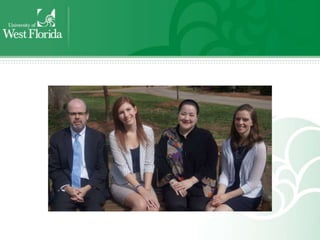
• Victoria’s experience
Mentoring Culture 
Always be 
mentored and 
always be 
mentoring.
UA Center for Mental 
Health and Aging 
• Interdisciplinary research center 
• Mostly psychology and social 
work 
• Also nursing, medical, business 
• Weekly meetings with a 
statistician on-hand 
• 1st year project
Southeastern Student Mentoring 
Conference in Gerontology and 
Geriatrics 
• Started in 1989 
• I have attended all but 2 since 2003 
• “Seeks to provide students with 
practical scholarly experiences 
associated with academic and 
applied gerontology” 
• “Vehicle for students to gain 
experience presenting their 
research and to network with key 
professionals in aging”
Southeastern Student Mentoring 
Conference in Gerontology and 
Geriatrics 
• Promotes student professional 
development 
• Acknowledges important student 
work in the fields of gerontology 
and geriatrics 
• Supports faculty/student 
mentoring
The Process 
• The student picks an aging-related topic (e.g. mild 
cognitive impairment, LGBT aging, recovery after 
stroke). 
• The student does a preliminary search of the 
literature to begin to identify research gaps. 
• The student meets with me to discuss the topic and 
narrow it down to a more specific research focus 
that addresses a gap in the literature. We work 
together to develop some preliminary research 
questions. 
• We search for publicly available databases that 
could be used to examine our research questions 
(e.g. NIH data stored with the Interuniversity 
Consortium for Political and Social Research, Centers 
for Disease Control data). 
• We decide on a database, download the data and 
organize it to meet our needs. This includes the 
identification of variables and data transformation, if 
necessary (e.g. calculating sum scores, recoding to 
categorical variables).
The Process 
• We refine the research questions and determine the 
appropriate analyses to answer the research questions. 
• Since I do not expect the student to have experience with 
statistics, I run the analyses with the student present. I 
explain what I’m doing and why and we discuss the process 
so the student has a basic understanding of what the tests 
mean and how to interpret the results. 
• We work together to interpret the results and identify 
research, practice and policy implications. 
• Once the above process is complete, an abstract is crafted 
and submitted for acceptance. 
• If the abstract is accepted, the student and I work together 
to create a poster presentation and an oral presentation 
for the conference. 
• Finally, the student and I attend the conference and the 
student presents his/her work. 
• Student completes the formal critical reflection component.
Critical Reflection 
Critical Reflection Learning Goal: 
Create a professional poster presentation using criteria from Hess’ “Creating Effective 
Poster Presentations” and analyze which characteristics and strategies support effective 
communication in different settings and with different audiences. 
Identify Explain Apply Analyze Synthesize Evaluate 
Identifies 
Explains 
principles of 
principles of 
effective 
effective 
presentations 
presentations 
as a result of 
so that others 
reflection on 
can 
the 
understand. 
experience. 
Considers how 
principles of 
effective 
presentations 
emerged in 
your 
experience at 
the Student 
Mentoring 
Conference. 
Compares and 
contrasts your 
initial and later 
understandings 
of effective 
presentations. 
Develops steps 
necessary to 
use principles 
of effective 
presentations 
for other 
conferences. 
Evaluate 
principles of 
effective 
presentations 
in terms of 
impact on 
different 
audiences.
DEAL Model 
• Describe your poster presentation and oral 
presentation experience at the Student 
Mentoring Conference. 
• Explain: How effective were you in 
conveying your central message in both 
poster and oral presentation? 
• Articulate Learning: What problems or 
challenges did you encounter in creating your 
poster and oral presentations? Was there 
anything you feel was important that you had
High Impact Practices 
• Faculty/Student Research 
• Faculty guided systematic investigation 
and research experiences including 
presentation of findings. 
• Collaborative Assignments and 
Projects 
• Learning activities that combine two key 
goals: learning to work and solve 
problems in the company of others, and 
sharpening one’s own understanding by 
listening seriously to the insights of 
others including team-based activities, 
cooperative projects and research.
Program Goals 
• Critical Thinking: Analyze and 
interpret the qualitative and 
quantitative data related to 
evidence-based social work 
practice. 
• Communication: Report findings 
from social work research and 
literature. 
• Project Management: Effectively 
utilize research strategies to 
examine issues in social work
Presentations Over the 
Years 
• Subjective and objective measures of income: Which 
is the better predictor of caregiver outcomes? 
• Growing old behind bars: A qualitative review of the 
aging male prisoner. 
• Goodness of fit of a stress and coping model with 
White, African American and Hispanic/Latino 
caregivers of person’s with Alzheimer’s disease and 
related dementias. 
• The influence of exercise upon subjective health, 
anxiety and depression among Alzheimer’s caregivers. 
• Exemplary caregiving as a mediator of the effects of 
daily care bother on caregiver emotional outcomes. 
• Whom do nursing home residents prefer to talk to 
about their satisfaction with care?: Implications for 
improving quality of care.
Last Year 
• Heather Mutchie - Comparison of MMSE 
and ACTIVE methods for the identification 
of MCI. 
• Dannette Wallace - Subjective mental 
health among LGB Latino and Asian 
American adults: A comparison between 
older and younger adults. 
• Victoria Adams - Quality of life among 
stroke patients in the Russian Federation.
Mentoring Students in Aging Research - Dr. Dan Durkin

Mentoring Students in Aging Research - Dr. Dan Durkin

  • 1.
    Taking the FirstStep: Mentoring Students in Gerontology Research Daniel W. Durkin and Victoria Adams Department of Social Work and The School of Allied Health and Life Sciences
  • 2.
    Agenda • History– nothing I do is original • Student Mentoring Conference • “The Process” • Emerge Project • Presentations over the years • Victoria’s experience
  • 5.
    Mentoring Culture Alwaysbe mentored and always be mentoring.
  • 6.
    UA Center forMental Health and Aging • Interdisciplinary research center • Mostly psychology and social work • Also nursing, medical, business • Weekly meetings with a statistician on-hand • 1st year project
  • 7.
    Southeastern Student Mentoring Conference in Gerontology and Geriatrics • Started in 1989 • I have attended all but 2 since 2003 • “Seeks to provide students with practical scholarly experiences associated with academic and applied gerontology” • “Vehicle for students to gain experience presenting their research and to network with key professionals in aging”
  • 8.
    Southeastern Student Mentoring Conference in Gerontology and Geriatrics • Promotes student professional development • Acknowledges important student work in the fields of gerontology and geriatrics • Supports faculty/student mentoring
  • 9.
    The Process •The student picks an aging-related topic (e.g. mild cognitive impairment, LGBT aging, recovery after stroke). • The student does a preliminary search of the literature to begin to identify research gaps. • The student meets with me to discuss the topic and narrow it down to a more specific research focus that addresses a gap in the literature. We work together to develop some preliminary research questions. • We search for publicly available databases that could be used to examine our research questions (e.g. NIH data stored with the Interuniversity Consortium for Political and Social Research, Centers for Disease Control data). • We decide on a database, download the data and organize it to meet our needs. This includes the identification of variables and data transformation, if necessary (e.g. calculating sum scores, recoding to categorical variables).
  • 10.
    The Process •We refine the research questions and determine the appropriate analyses to answer the research questions. • Since I do not expect the student to have experience with statistics, I run the analyses with the student present. I explain what I’m doing and why and we discuss the process so the student has a basic understanding of what the tests mean and how to interpret the results. • We work together to interpret the results and identify research, practice and policy implications. • Once the above process is complete, an abstract is crafted and submitted for acceptance. • If the abstract is accepted, the student and I work together to create a poster presentation and an oral presentation for the conference. • Finally, the student and I attend the conference and the student presents his/her work. • Student completes the formal critical reflection component.
  • 11.
    Critical Reflection CriticalReflection Learning Goal: Create a professional poster presentation using criteria from Hess’ “Creating Effective Poster Presentations” and analyze which characteristics and strategies support effective communication in different settings and with different audiences. Identify Explain Apply Analyze Synthesize Evaluate Identifies Explains principles of principles of effective effective presentations presentations as a result of so that others reflection on can the understand. experience. Considers how principles of effective presentations emerged in your experience at the Student Mentoring Conference. Compares and contrasts your initial and later understandings of effective presentations. Develops steps necessary to use principles of effective presentations for other conferences. Evaluate principles of effective presentations in terms of impact on different audiences.
  • 12.
    DEAL Model •Describe your poster presentation and oral presentation experience at the Student Mentoring Conference. • Explain: How effective were you in conveying your central message in both poster and oral presentation? • Articulate Learning: What problems or challenges did you encounter in creating your poster and oral presentations? Was there anything you feel was important that you had
  • 13.
    High Impact Practices • Faculty/Student Research • Faculty guided systematic investigation and research experiences including presentation of findings. • Collaborative Assignments and Projects • Learning activities that combine two key goals: learning to work and solve problems in the company of others, and sharpening one’s own understanding by listening seriously to the insights of others including team-based activities, cooperative projects and research.
  • 14.
    Program Goals •Critical Thinking: Analyze and interpret the qualitative and quantitative data related to evidence-based social work practice. • Communication: Report findings from social work research and literature. • Project Management: Effectively utilize research strategies to examine issues in social work
  • 15.
    Presentations Over the Years • Subjective and objective measures of income: Which is the better predictor of caregiver outcomes? • Growing old behind bars: A qualitative review of the aging male prisoner. • Goodness of fit of a stress and coping model with White, African American and Hispanic/Latino caregivers of person’s with Alzheimer’s disease and related dementias. • The influence of exercise upon subjective health, anxiety and depression among Alzheimer’s caregivers. • Exemplary caregiving as a mediator of the effects of daily care bother on caregiver emotional outcomes. • Whom do nursing home residents prefer to talk to about their satisfaction with care?: Implications for improving quality of care.
  • 19.
    Last Year •Heather Mutchie - Comparison of MMSE and ACTIVE methods for the identification of MCI. • Dannette Wallace - Subjective mental health among LGB Latino and Asian American adults: A comparison between older and younger adults. • Victoria Adams - Quality of life among stroke patients in the Russian Federation.