2
BUD CADDELL
DR. KIM PERKINS
3
Org Design
Change
Management
Leadership
Development
New Ways
of Working
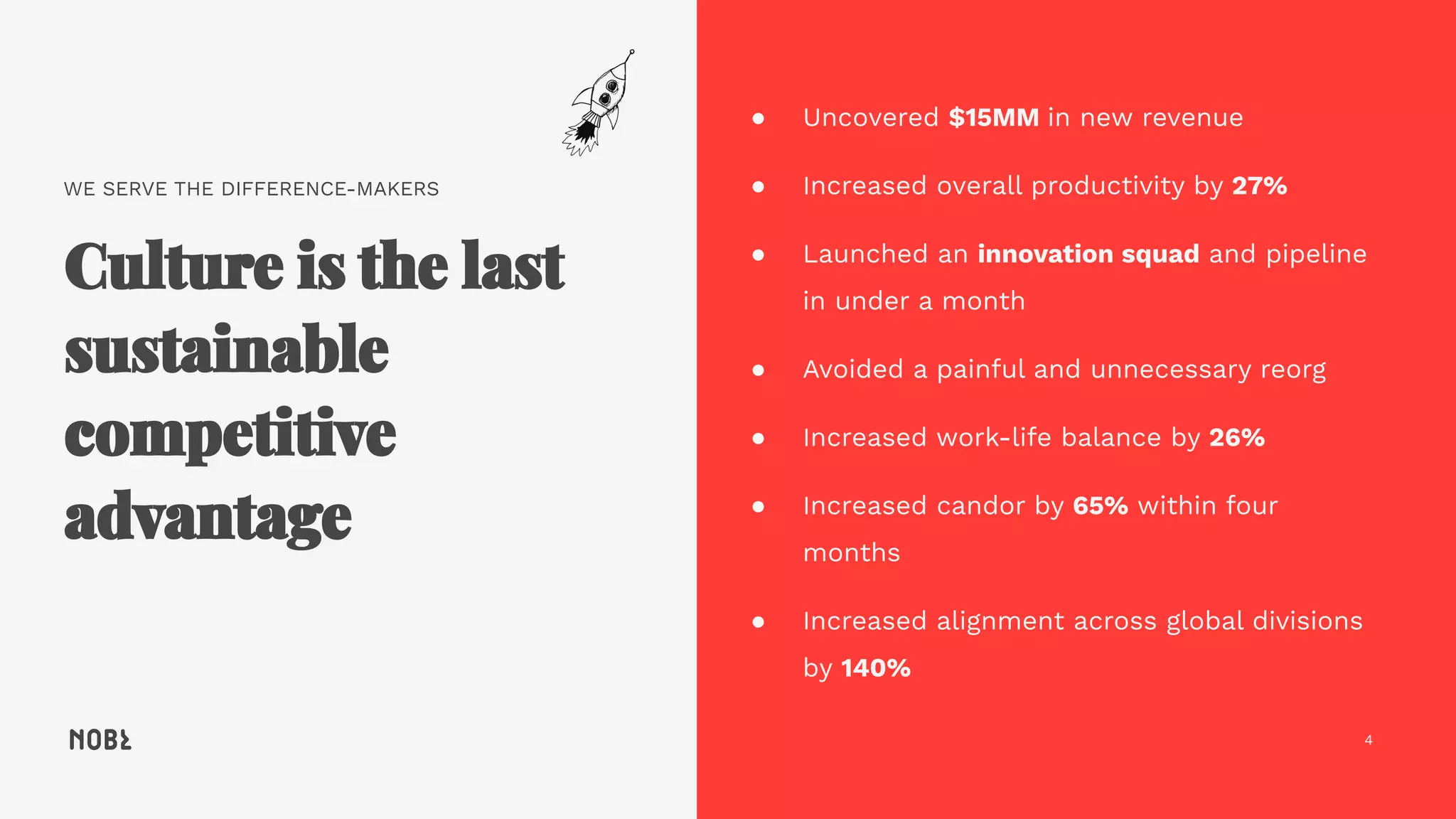
WE SERVE THE DIFFERENCE-MAKERS
4
● Uncovered $15MM in new revenue
● Increased overall productivity by 27%
● Launched an innovation squad and pipeline
in under a month
● Avoided a painful and unnecessary reorg
● Increased work-life balance by 26%
● Increased candor by 65% within four
months
● Increased alignment across global divisions
by 140%
5
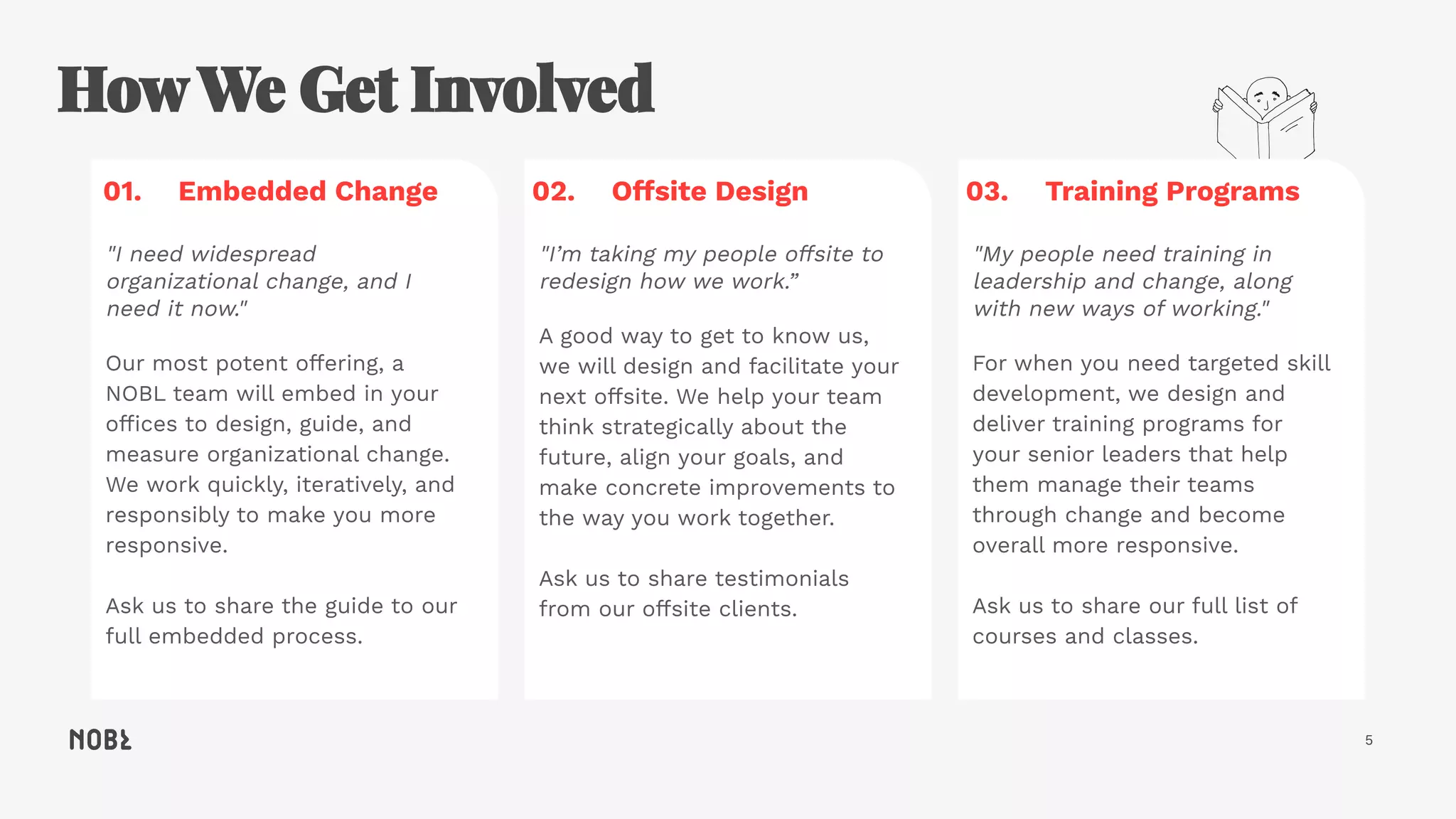
01. Embedded Change
"I need widespread
organizational change, and I
need it now."
Our most potent offering, a
NOBL team will embed in your
offices to design, guide, and
measure organizational change.
We work quickly, iteratively, and
responsibly to make you more
responsive.
Ask us to share the guide to our
full embedded process.
02. Offsite Design
"I’m taking my people offsite to
redesign how we work.”
A good way to get to know us,
we will design and facilitate your
next offsite. We help your team
think strategically about the
future, align your goals, and
make concrete improvements to
the way you work together.
Ask us to share testimonials
from our offsite clients.
03. Training Programs
"My people need training in
leadership and change, along
with new ways of working."
For when you need targeted skill
development, we design and
deliver training programs for
your senior leaders that help
them manage their teams
through change and become
overall more responsive.
Ask us to share our full list of
courses and classes.
6
7
Hey, you were right. We have to
change and we have to change now.
Good luck with that. This place will
never change.
But I just committed to changing??
And I need your help to do it!
¯_(ツ)_/¯
8
9
OUR TOPIC
OUR GOAL
1. Personal: 48% of workers feel at least somewhat
cynical about change in their organizations
2. Interpersonal: Cynicism can be infectious and its
social impact can have real consequences on burnout,
engagement, and performance
3. Organizational: If change is indeed a business
constant, organizations must grapple with increasing
change resistance as the consequences of failed
changes
4. Societal: Distrust of institutions and their ability to
solve meaningful problems is growing, spurring trolling
and promotion of chaos as an alternative to both
trying to change and standing idly by
10
11
1. Common misconceptions
2. How to engage and convert cynics
3. Dealing with your own cynicism
4. Discussion
12
01
13
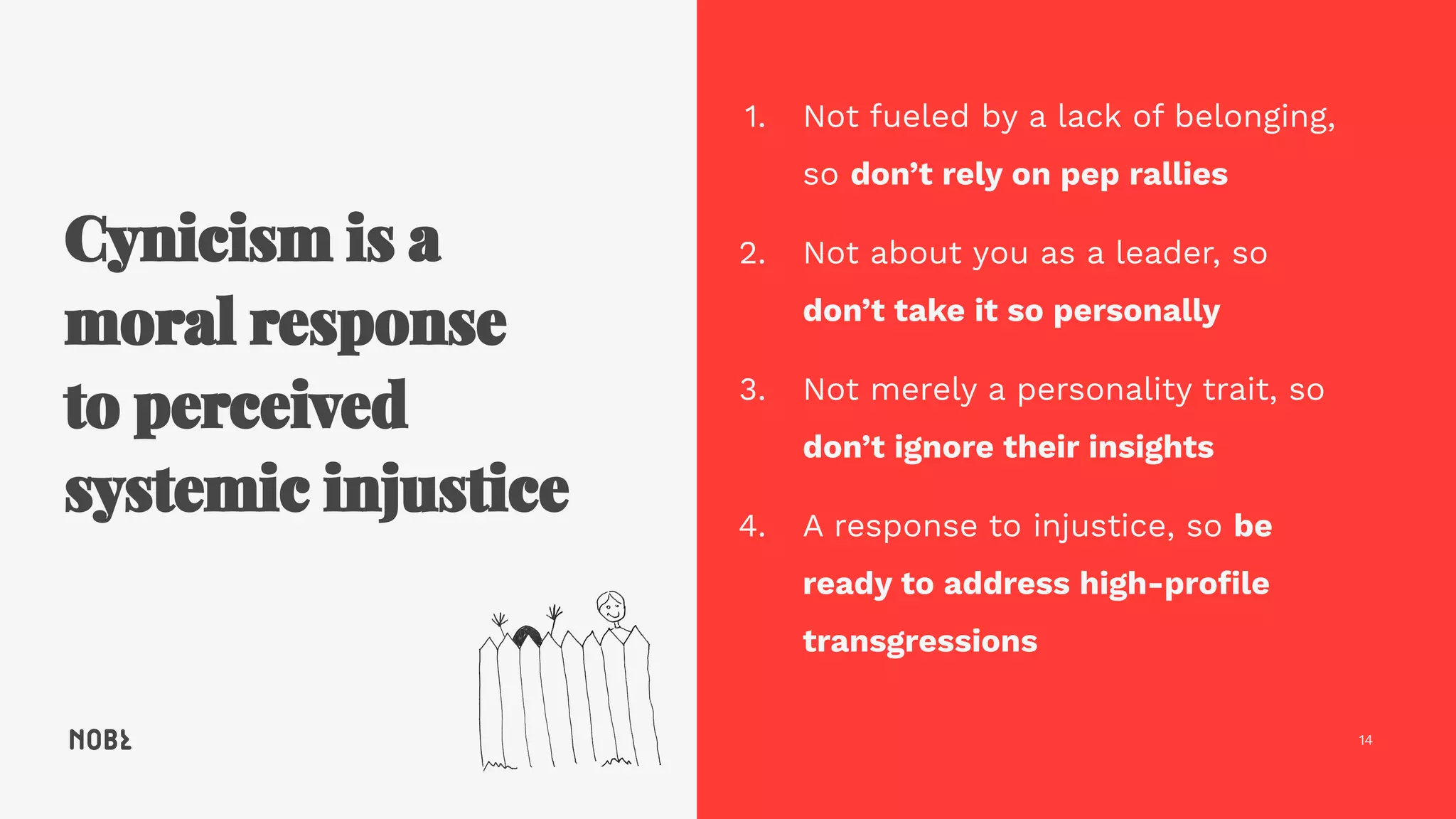
14
1. Not fueled by a lack of belonging,
so don’t rely on pep rallies
2. Not about you as a leader, so
don’t take it so personally
3. Not merely a personality trait, so
don’t ignore their insights
4. A response to injustice, so be
ready to address high-profile
transgressions
15
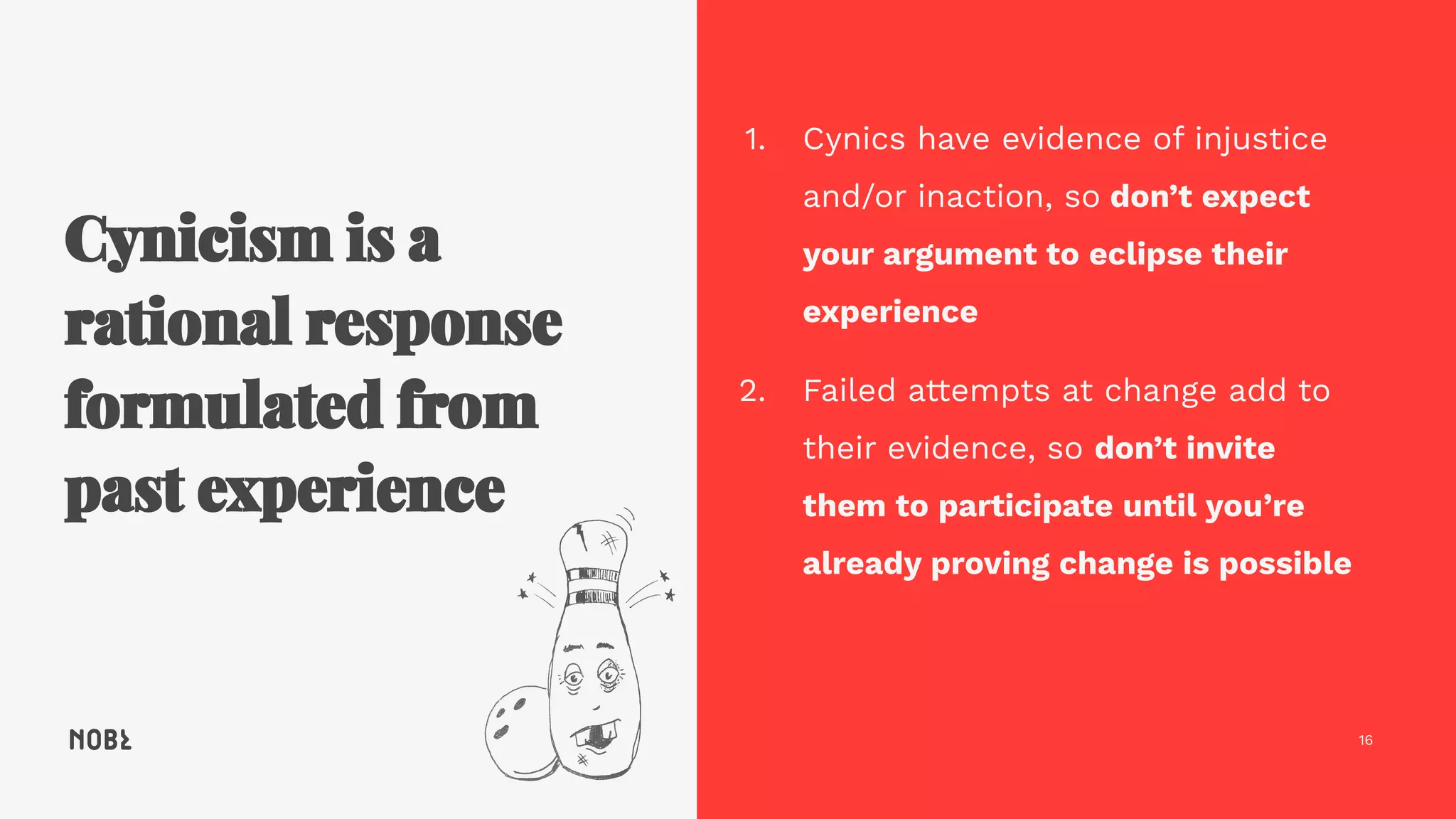
16
1. Cynics have evidence of injustice
and/or inaction, so don’t expect
your argument to eclipse their
experience
2. Failed attempts at change add to
their evidence, so don’t invite
them to participate until you’re
already proving change is possible
17
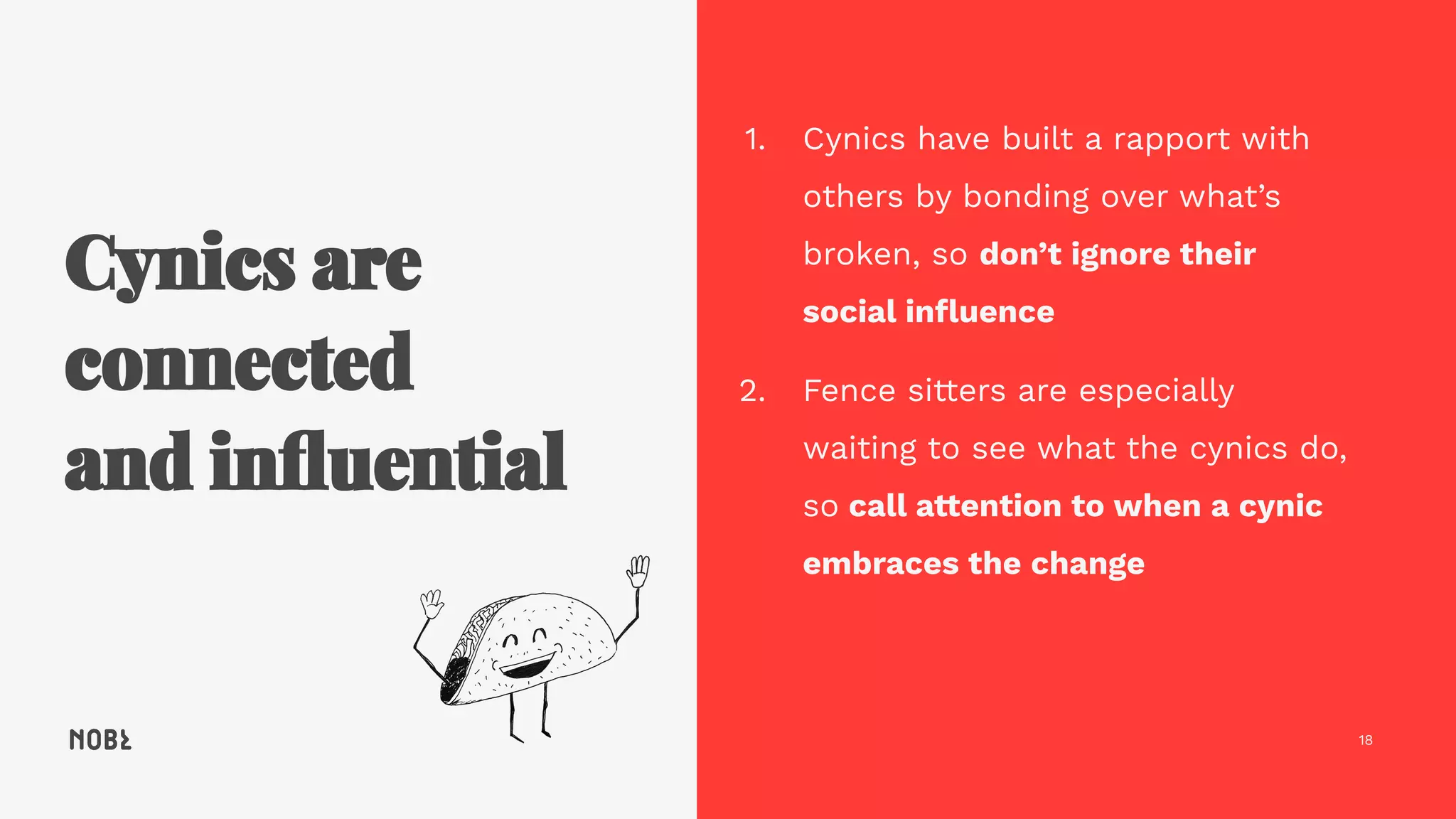
18
1. Cynics have built a rapport with
others by bonding over what’s
broken, so don’t ignore their
social influence
2. Fence sitters are especially
waiting to see what the cynics do,
so call attention to when a cynic
embraces the change
19
20
1. Have meaningful insight into
what’s wrong
2. Typically well-connected,
especially to fence sitters
3. Can be a powerful cultural force
when they do embrace change
21
02
22
DO’S AND DON’TS
23
Cynics Grumps
24
DO’S AND DON’TS
25
1. “I personally guarantee to you
that…”
2. “Together we can make this one
of the best workplaces ever!”
3. “This time it’s different because of
….”
26
27
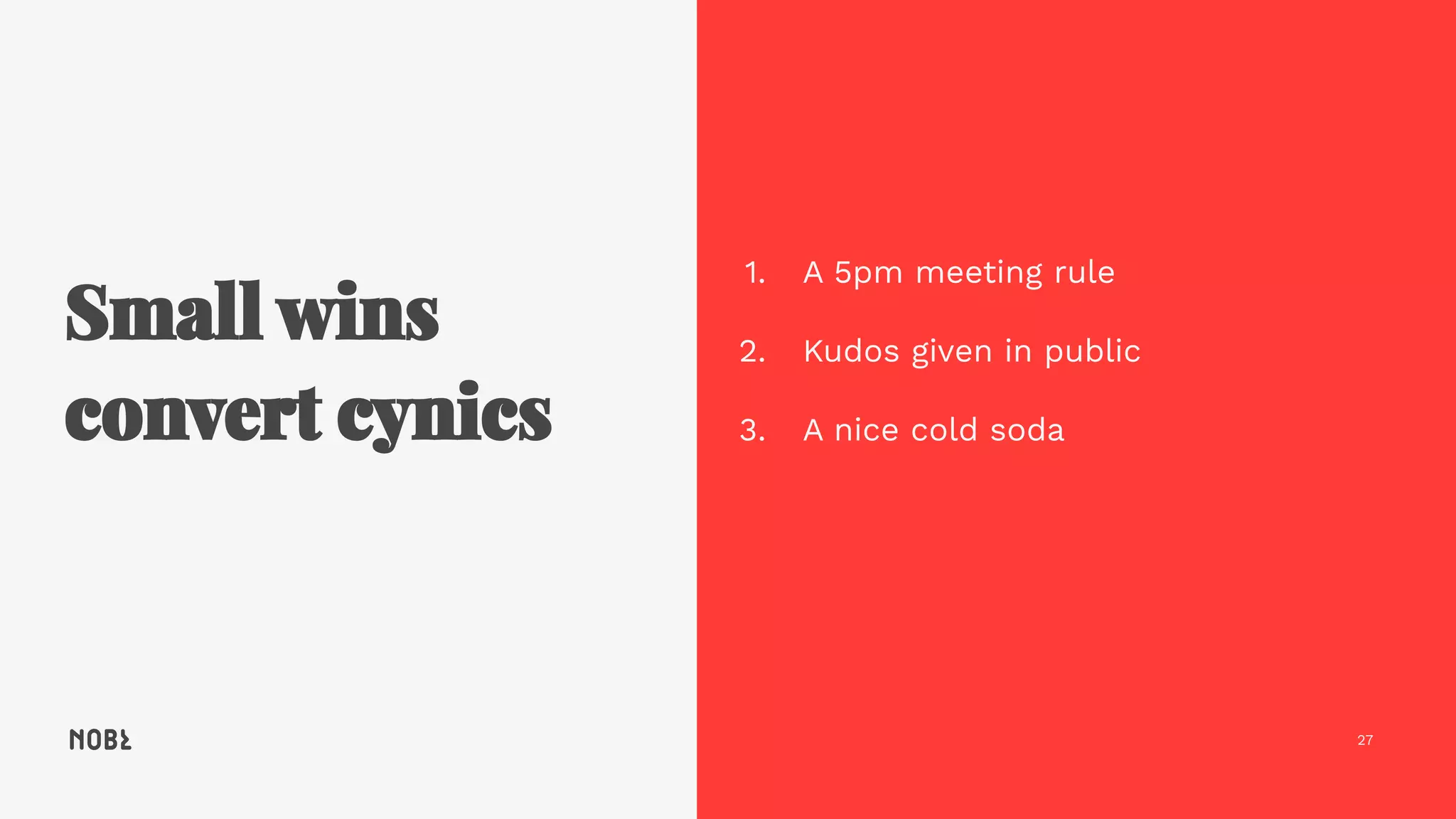
1. A 5pm meeting rule
2. Kudos given in public
3. A nice cold soda
28
04
29
30
1. Don’t beat yourself up, you arrived here
based on evidence
2. Ask yourself what would need to occur
for you to believe change is possible
3. Check to see if there’s anything in your
immediate zone of control or influence
you can do
4. Be careful spreading cynicism by
bonding over what’s broken vs what
might be tried
31
learn more: nobl.io
podcast: workoffiction.fm
tweet: @worknobl?

Cynicism and Change Management in Organizations

  • 2.
  • 3.
  • 4.
    WE SERVE THEDIFFERENCE-MAKERS 4 ● Uncovered $15MM in new revenue ● Increased overall productivity by 27% ● Launched an innovation squad and pipeline in under a month ● Avoided a painful and unnecessary reorg ● Increased work-life balance by 26% ● Increased candor by 65% within four months ● Increased alignment across global divisions by 140%
  • 5.
    5 01. Embedded Change "Ineed widespread organizational change, and I need it now." Our most potent offering, a NOBL team will embed in your offices to design, guide, and measure organizational change. We work quickly, iteratively, and responsibly to make you more responsive. Ask us to share the guide to our full embedded process. 02. Offsite Design "I’m taking my people offsite to redesign how we work.” A good way to get to know us, we will design and facilitate your next offsite. We help your team think strategically about the future, align your goals, and make concrete improvements to the way you work together. Ask us to share testimonials from our offsite clients. 03. Training Programs "My people need training in leadership and change, along with new ways of working." For when you need targeted skill development, we design and deliver training programs for your senior leaders that help them manage their teams through change and become overall more responsive. Ask us to share our full list of courses and classes.
  • 6.
  • 7.
    7 Hey, you wereright. We have to change and we have to change now. Good luck with that. This place will never change. But I just committed to changing?? And I need your help to do it! ¯_(ツ)_/¯
  • 8.
  • 9.
  • 10.
    1. Personal: 48%of workers feel at least somewhat cynical about change in their organizations 2. Interpersonal: Cynicism can be infectious and its social impact can have real consequences on burnout, engagement, and performance 3. Organizational: If change is indeed a business constant, organizations must grapple with increasing change resistance as the consequences of failed changes 4. Societal: Distrust of institutions and their ability to solve meaningful problems is growing, spurring trolling and promotion of chaos as an alternative to both trying to change and standing idly by 10
  • 11.
    11 1. Common misconceptions 2.How to engage and convert cynics 3. Dealing with your own cynicism 4. Discussion
  • 12.
  • 13.
  • 14.
    14 1. Not fueledby a lack of belonging, so don’t rely on pep rallies 2. Not about you as a leader, so don’t take it so personally 3. Not merely a personality trait, so don’t ignore their insights 4. A response to injustice, so be ready to address high-profile transgressions
  • 15.
  • 16.
    16 1. Cynics haveevidence of injustice and/or inaction, so don’t expect your argument to eclipse their experience 2. Failed attempts at change add to their evidence, so don’t invite them to participate until you’re already proving change is possible
  • 17.
  • 18.
    18 1. Cynics havebuilt a rapport with others by bonding over what’s broken, so don’t ignore their social influence 2. Fence sitters are especially waiting to see what the cynics do, so call attention to when a cynic embraces the change
  • 19.
  • 20.
    20 1. Have meaningfulinsight into what’s wrong 2. Typically well-connected, especially to fence sitters 3. Can be a powerful cultural force when they do embrace change
  • 21.
  • 22.
  • 23.
  • 24.
  • 25.
    25 1. “I personallyguarantee to you that…” 2. “Together we can make this one of the best workplaces ever!” 3. “This time it’s different because of ….”
  • 26.
  • 27.
    27 1. A 5pmmeeting rule 2. Kudos given in public 3. A nice cold soda
  • 28.
  • 29.
  • 30.
    30 1. Don’t beatyourself up, you arrived here based on evidence 2. Ask yourself what would need to occur for you to believe change is possible 3. Check to see if there’s anything in your immediate zone of control or influence you can do 4. Be careful spreading cynicism by bonding over what’s broken vs what might be tried
  • 31.
    31 learn more: nobl.io podcast:workoffiction.fm tweet: @worknobl?