E-mails andblogsin the esl classroomBy: IvelisseBarreto VargasProfessor Mary MooreTEED 3035
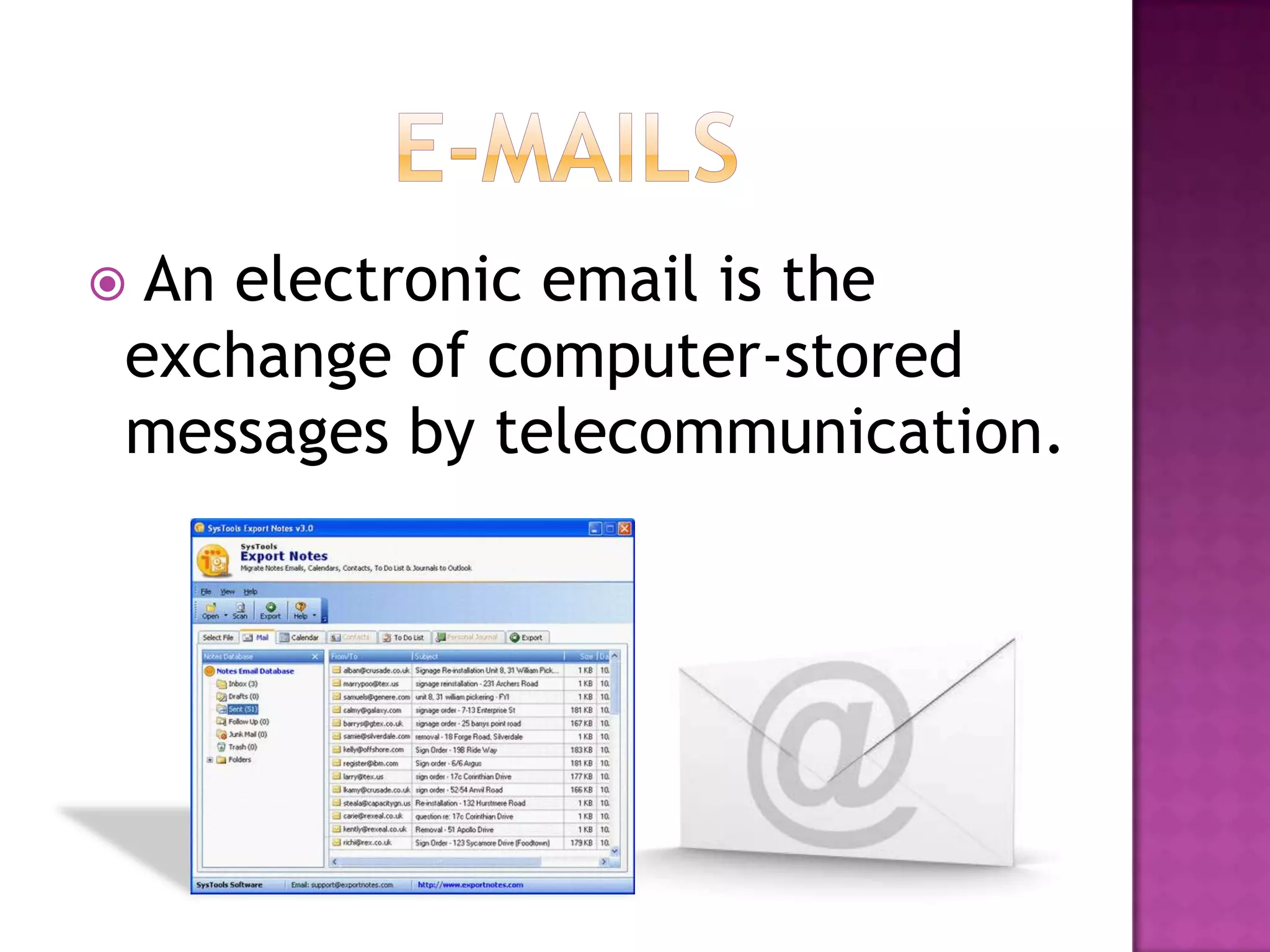
E-MAILS An electronic email is the exchange of computer-stored messages by telecommunication.
Advantages of e-mailsThey help the teachers and students maintain communication in an easy and entertaining way for both of them.Students can email concerns, questions, doubts, assignments, readings, tests, presentations, graphic images, sound files, non-text files, etc.By using emails teachers and students can have a very personal or individual communication with one another. Or they can also send emails to a listed group all at the same time.
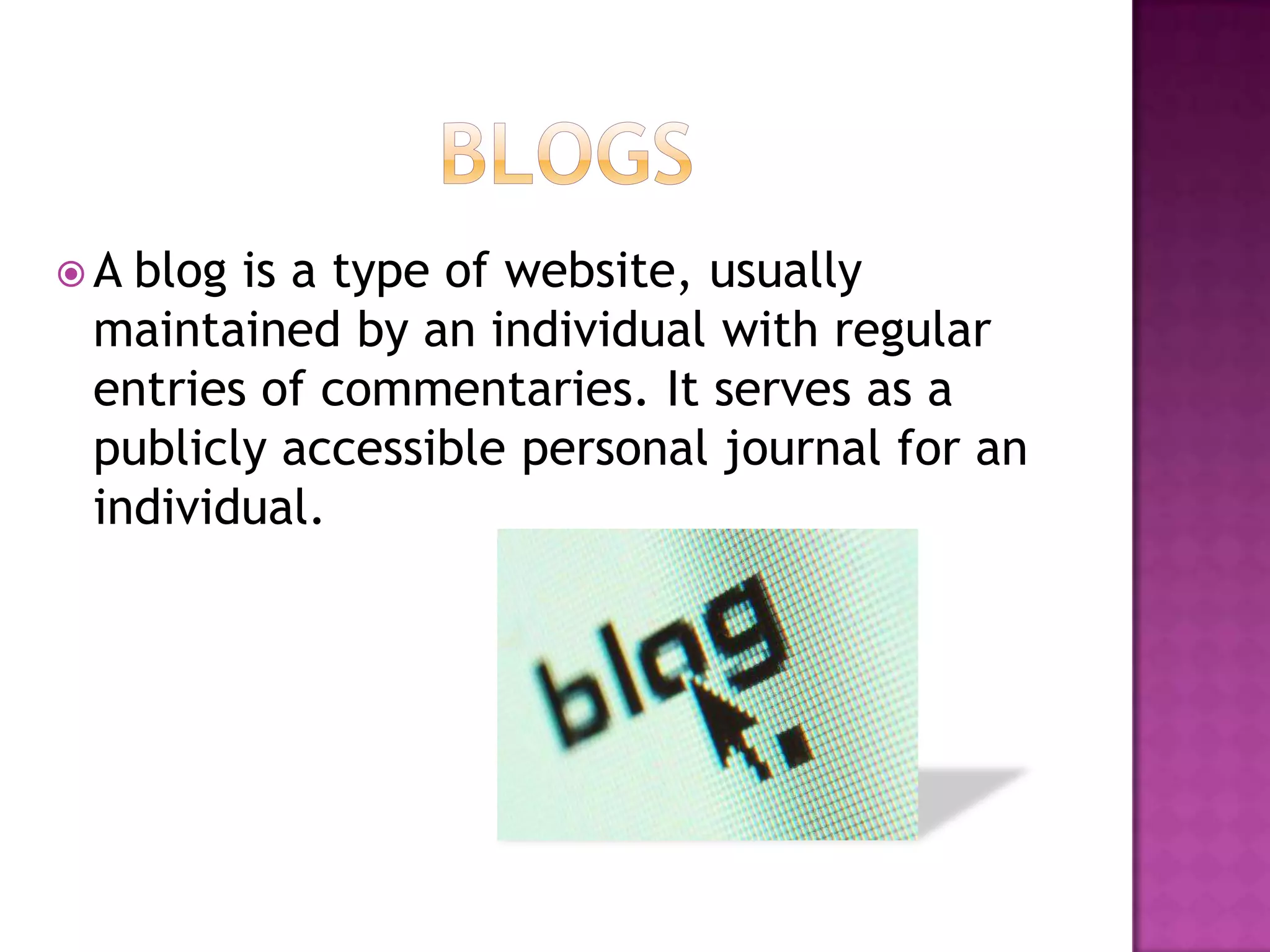
Advantages of e-mailsStudents  can also use emails to contact an organization or person from other countries around the world. They can use it to communicate with these people so they can create a research project.Since all ESL students need to read and write in English as much as possible to develop proficiency, the teacher can require more email reading work so they can enhance their skills.When the students send the text to the teacher, she can be sure that she/he is going to receive a legible document.Disadvantages of e-mailsSome students actually prefer speaking to writing e-mails or online conversations. E-mails can be misunderstanding and confusing.For example, students can write e-mails to the teacher as if they were chatting in Messenger, and they use sort of abbreviations that can be misunderstanding. In occasions, teachers or students do not actually receive the e-mails.Sometimes they get received and marked as a spam.Disadvantages of e-mailsSometimes e-mails can be limited.Some students do not have laptops or computers in their homes, or they don’t have internet so getting the work done online can be a problem.Cost and access to technology may also be troubling.BLOGSA blog is a type of website, usually maintained by an individual with regular entries of commentaries. It serves as a publicly accessible personal journal for an individual.
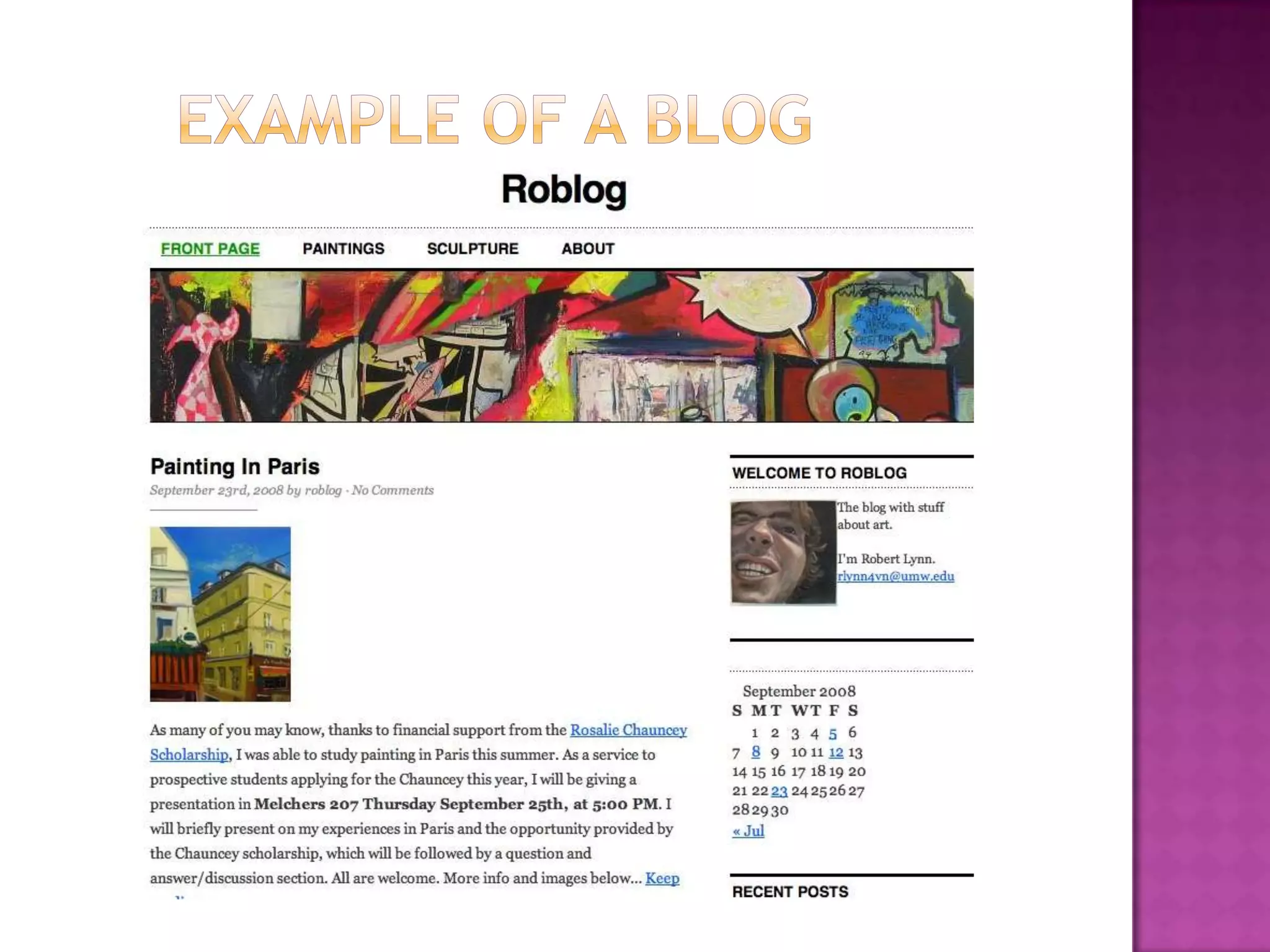
Example of a blog
Advantages of blogsBlogs are an easy tool to use for both teachers and students to communicate.They can be easily created, maintained and can also be changed without difficulty.They provide the opportunity for all students to participate and to integrate with each other and with the teacher.Specially for those students that are shy and do not speak in the classrooms.Advantages of blogsTeachers can use it by posting assignments, questions, readings, important notices, instructional tips, etc.Students can create discussions and debates.They also have the opportunity to carry out peer review. Everyone has the opportunity to express their opinions equality and freely. By using blogs students can benefit and enhance reading and writing skills.
Disadvantages of blogsThere is no confidentiality as it is a public forum.Since students have all the freedom to express themselves, some commentaries might be misconstrued and that could be a problem.Since the student is responsible for his/her words, they must express themselves smartlyTo use blogs, students need internet and laptops or computers to have complete access to it.Cost and access to technology may also be troubling.
Emails and Blogs
Emails and Blogs
Emails and Blogs
Emails and Blogs

Emails and Blogs

  • 1.
    E-mails andblogsin theesl classroomBy: IvelisseBarreto VargasProfessor Mary MooreTEED 3035
  • 2.
    E-MAILS An electronicemail is the exchange of computer-stored messages by telecommunication.
  • 3.
    Advantages of e-mailsTheyhelp the teachers and students maintain communication in an easy and entertaining way for both of them.Students can email concerns, questions, doubts, assignments, readings, tests, presentations, graphic images, sound files, non-text files, etc.By using emails teachers and students can have a very personal or individual communication with one another. Or they can also send emails to a listed group all at the same time.
  • 4.
    Advantages of e-mailsStudents can also use emails to contact an organization or person from other countries around the world. They can use it to communicate with these people so they can create a research project.Since all ESL students need to read and write in English as much as possible to develop proficiency, the teacher can require more email reading work so they can enhance their skills.When the students send the text to the teacher, she can be sure that she/he is going to receive a legible document.Disadvantages of e-mailsSome students actually prefer speaking to writing e-mails or online conversations. E-mails can be misunderstanding and confusing.For example, students can write e-mails to the teacher as if they were chatting in Messenger, and they use sort of abbreviations that can be misunderstanding. In occasions, teachers or students do not actually receive the e-mails.Sometimes they get received and marked as a spam.Disadvantages of e-mailsSometimes e-mails can be limited.Some students do not have laptops or computers in their homes, or they don’t have internet so getting the work done online can be a problem.Cost and access to technology may also be troubling.BLOGSA blog is a type of website, usually maintained by an individual with regular entries of commentaries. It serves as a publicly accessible personal journal for an individual.
  • 5.
  • 6.
    Advantages of blogsBlogsare an easy tool to use for both teachers and students to communicate.They can be easily created, maintained and can also be changed without difficulty.They provide the opportunity for all students to participate and to integrate with each other and with the teacher.Specially for those students that are shy and do not speak in the classrooms.Advantages of blogsTeachers can use it by posting assignments, questions, readings, important notices, instructional tips, etc.Students can create discussions and debates.They also have the opportunity to carry out peer review. Everyone has the opportunity to express their opinions equality and freely. By using blogs students can benefit and enhance reading and writing skills.
  • 7.
    Disadvantages of blogsThereis no confidentiality as it is a public forum.Since students have all the freedom to express themselves, some commentaries might be misconstrued and that could be a problem.Since the student is responsible for his/her words, they must express themselves smartlyTo use blogs, students need internet and laptops or computers to have complete access to it.Cost and access to technology may also be troubling.