Lesson 2: Problem-Based Learning
and Project-Based Learning
Nature of Problem-Based Learning
Objectives
Recognize the benefits of project based and problem
based learning in their lives
Know the role of technology and productivity tools in
implementing problem based and project based learning.
Analyze and find the difference and similarities between
problem based and project based learning
Nature of Problem-Based Learning
Problem-based learning is an approach
that involves a process of inquiry and
solving open-ended questions that serve
as the main problem that the learners will
work on.
Nature of Problem-Based Learning
Ali (2019) described PBL as a process that is
used to identify problems with a scenario to
increase knowledge and understanding.
 In her article, she proposed the following
five principles of PBL that may be
considered by teachers in planning or using
the approach:
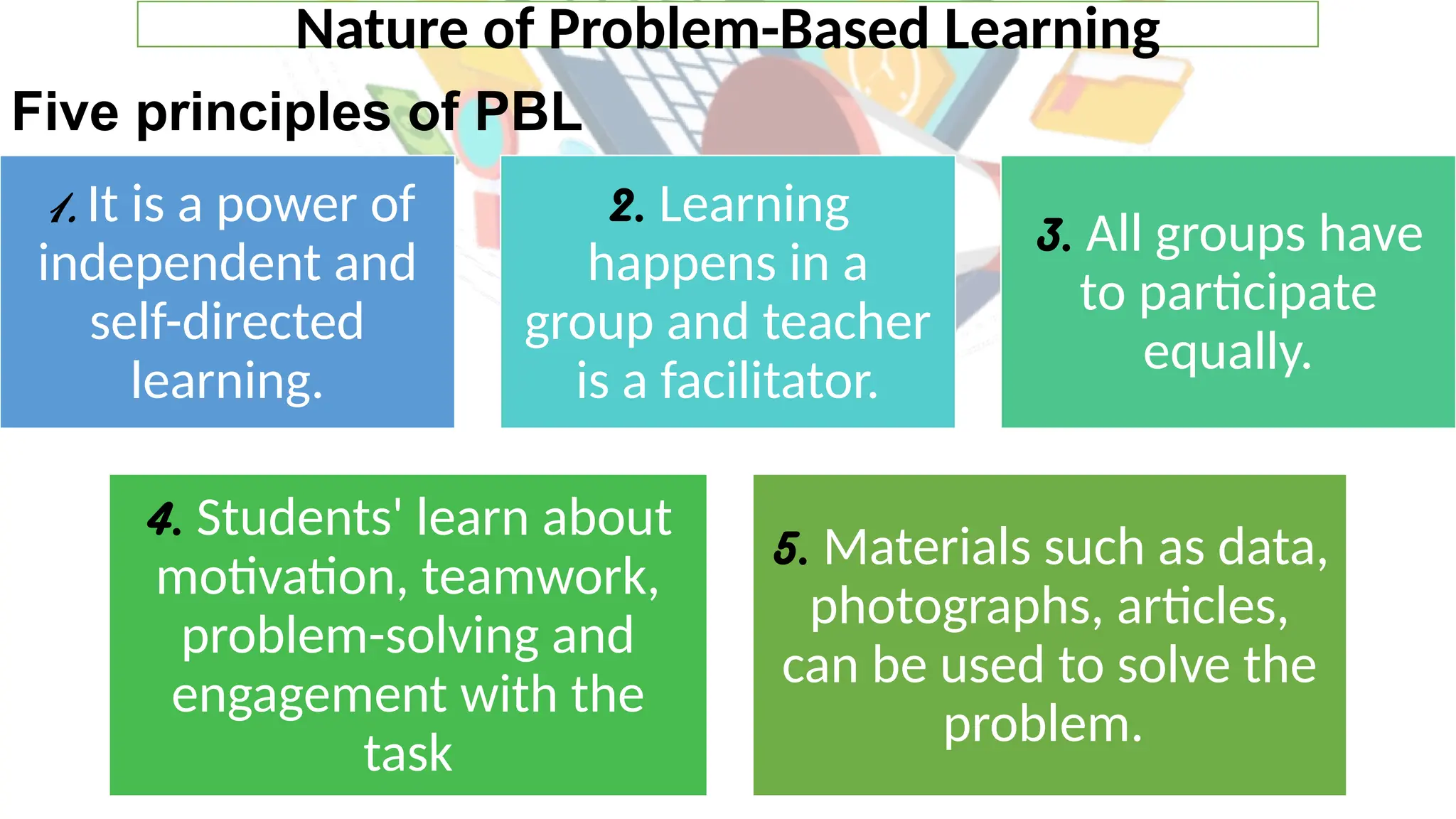
Five principles of PBL
1. It is a power of
independent and
self-directed
learning.
2. Learning
happens in a
group and teacher
is a facilitator.
3. All groups have
to participate
equally.
4. Students' learn about
motivation, teamwork,
problem-solving and
engagement with the
task
5. Materials such as data,
photographs, articles,
can be used to solve the
problem.
Nature of Problem-Based Learning
Lo (2009, p. 208) proposed a six-stage
process used in the adoption of the online
PBL:
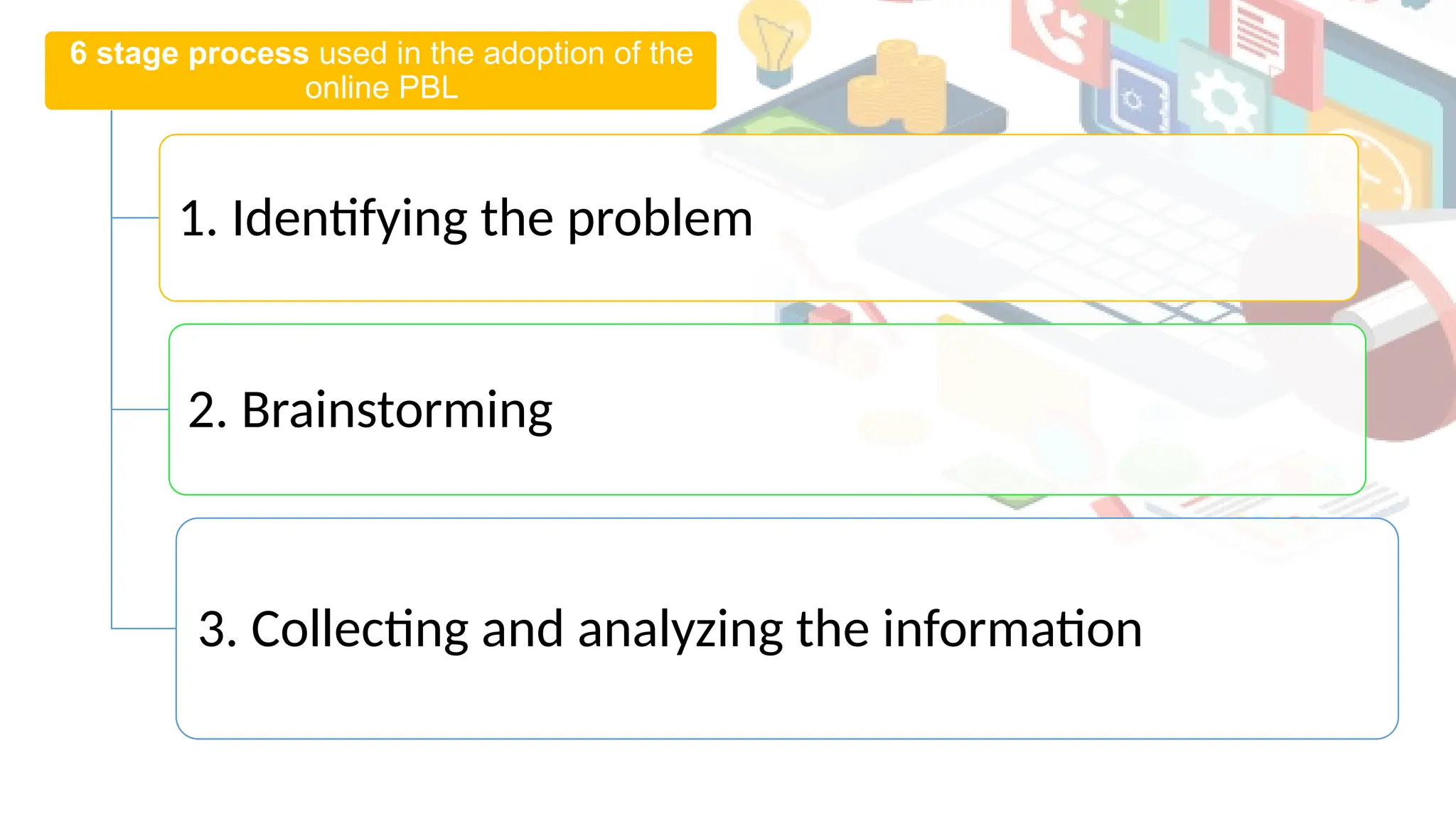
6 stage process used in the adoption of the
online PBL
1. Identifying the problem
2. Brainstorming
3. Collecting and analyzing the information
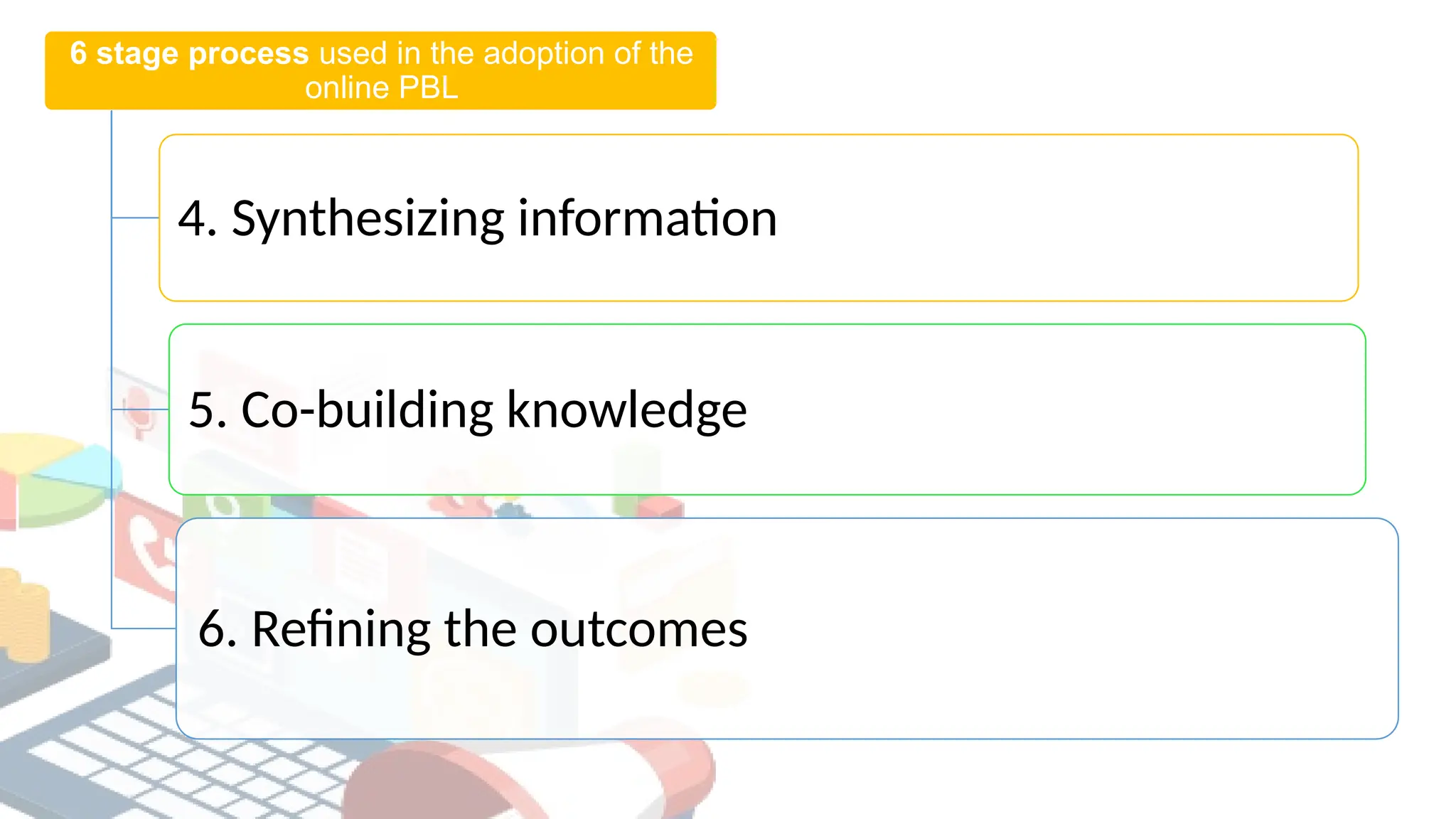
6 stage process used in the adoption of the
online PBL
4. Synthesizing information
5. Co-building knowledge
6. Refining the outcomes
Benefits of Problem-Based Learning
positive impacts of PBL on learners as they
engage in the process. Among these are the
following:
 Benefits of Problem-Based Learning
1. Promotes self-confidence and motivation
2. Reduces students' nervousness during the
learning process
3. Increases students' responsibility in learning
4. Makes students easily learn the material through
sharing of ideas
(Ghufron & Ermawati, 2018, p. 666-in n EFL writing class)
 Benefits of Problem-Based Learning
5. Promotes problem-solving skills
6. Promotes self-directed learning
7. Promotes active learning
8. Makes students explore many learning resources
9. Makes students develop positive attitude towards
learning
 Benefits of Problem-Based Learning
For Baresh, Ali, & Darmi, 2019-EFL students:
• Enhances Fluences in communications
• Improves grammar
• Increases comprehension
• Enhances self- confidence
• Increases range of vocabulary
 Benefits of Problem-Based Learning
For English as a Foreign Language (EFL) students, PBL:
• Enhances fluency in communication
• Improves grammar
• Increases comprehension
• Enhances good pronunciations and intonations
• Enhances self-confidence
• Increases range of vocabulary
Role of Technology
How is Technology integrated
in the PBL Activity?
As the learners embark on an open-ended
question collaboratively, there are a number
of free online tools that they can use from
the commencement of the task to its
completion especially that some of the group
tasks will be done outside the regular class
hours.
Technology integrated in the PBL Activity
These may facilitate and enhance PBL activities
(Tambouris et al, 2012) in its different stages.
Web 2.0
technologies
are characterized by
collaboration, sharing
and networking.
WWW
has opportunities for
PBL that can be utilized
by the learners to
accomplish their tasks
Technology integrated in the PBL Activity
Productivity tools
Such as those for writing, presentations,
spreadsheets, calendars, organizers, citations
and others are also available to assist learners
and teachers in accomplishing required tasks and
outputs from a PBL activity
Nature of Project-Based Learning/
Project Based Approach
Project-Based Learning/Project Based
Approach
evolved as a teaching method that engages
learners in a series of planned tasks
Student- Centered
This method is based on John Dewey’s
principles “ Learning by doing “
and Vygotsky's constructivist theory of
learning
A collaborative learning activity where
learners work on an authentic task
guided by an open-ended question
Project-Based Learning/Project Based
Approach
Past and more recent researches have proven PrBL
to be beneficial in the development of various skills
Researches:
1. Research methodology skills (Tiwari,
Arya, & Bansal, 2017).
2. Oral communicative competence
(Bakar, Noordin, & Rali, 2019).
3. Development of life skills (Wurdinger &
Qureshi, 2015).

ELE 19 GR. 3- 2B.pptx Project based and Problem based learning

  • 1.
    Lesson 2: Problem-BasedLearning and Project-Based Learning
  • 2.
  • 3.
    Objectives Recognize the benefitsof project based and problem based learning in their lives Know the role of technology and productivity tools in implementing problem based and project based learning. Analyze and find the difference and similarities between problem based and project based learning
  • 4.
    Nature of Problem-BasedLearning Problem-based learning is an approach that involves a process of inquiry and solving open-ended questions that serve as the main problem that the learners will work on.
  • 5.
    Nature of Problem-BasedLearning Ali (2019) described PBL as a process that is used to identify problems with a scenario to increase knowledge and understanding.  In her article, she proposed the following five principles of PBL that may be considered by teachers in planning or using the approach:
  • 6.
    Five principles ofPBL 1. It is a power of independent and self-directed learning. 2. Learning happens in a group and teacher is a facilitator. 3. All groups have to participate equally. 4. Students' learn about motivation, teamwork, problem-solving and engagement with the task 5. Materials such as data, photographs, articles, can be used to solve the problem. Nature of Problem-Based Learning
  • 7.
    Nature of Problem-BasedLearning Lo (2009, p. 208) proposed a six-stage process used in the adoption of the online PBL:
  • 8.
    6 stage processused in the adoption of the online PBL 1. Identifying the problem 2. Brainstorming 3. Collecting and analyzing the information
  • 9.
    6 stage processused in the adoption of the online PBL 4. Synthesizing information 5. Co-building knowledge 6. Refining the outcomes
  • 10.
    Benefits of Problem-BasedLearning positive impacts of PBL on learners as they engage in the process. Among these are the following:
  • 11.
     Benefits ofProblem-Based Learning 1. Promotes self-confidence and motivation 2. Reduces students' nervousness during the learning process 3. Increases students' responsibility in learning 4. Makes students easily learn the material through sharing of ideas (Ghufron & Ermawati, 2018, p. 666-in n EFL writing class)
  • 12.
     Benefits ofProblem-Based Learning 5. Promotes problem-solving skills 6. Promotes self-directed learning 7. Promotes active learning 8. Makes students explore many learning resources 9. Makes students develop positive attitude towards learning
  • 13.
     Benefits ofProblem-Based Learning For Baresh, Ali, & Darmi, 2019-EFL students: • Enhances Fluences in communications • Improves grammar • Increases comprehension • Enhances self- confidence • Increases range of vocabulary
  • 14.
     Benefits ofProblem-Based Learning For English as a Foreign Language (EFL) students, PBL: • Enhances fluency in communication • Improves grammar • Increases comprehension • Enhances good pronunciations and intonations • Enhances self-confidence • Increases range of vocabulary
  • 15.
  • 16.
    How is Technologyintegrated in the PBL Activity?
  • 17.
    As the learnersembark on an open-ended question collaboratively, there are a number of free online tools that they can use from the commencement of the task to its completion especially that some of the group tasks will be done outside the regular class hours. Technology integrated in the PBL Activity
  • 18.
    These may facilitateand enhance PBL activities (Tambouris et al, 2012) in its different stages. Web 2.0 technologies are characterized by collaboration, sharing and networking. WWW has opportunities for PBL that can be utilized by the learners to accomplish their tasks Technology integrated in the PBL Activity
  • 19.
    Productivity tools Such asthose for writing, presentations, spreadsheets, calendars, organizers, citations and others are also available to assist learners and teachers in accomplishing required tasks and outputs from a PBL activity
  • 20.
    Nature of Project-BasedLearning/ Project Based Approach
  • 21.
    Project-Based Learning/Project Based Approach evolvedas a teaching method that engages learners in a series of planned tasks Student- Centered This method is based on John Dewey’s principles “ Learning by doing “
  • 22.
    and Vygotsky's constructivisttheory of learning A collaborative learning activity where learners work on an authentic task guided by an open-ended question Project-Based Learning/Project Based Approach
  • 23.
    Past and morerecent researches have proven PrBL to be beneficial in the development of various skills
  • 24.
    Researches: 1. Research methodologyskills (Tiwari, Arya, & Bansal, 2017). 2. Oral communicative competence (Bakar, Noordin, & Rali, 2019). 3. Development of life skills (Wurdinger & Qureshi, 2015).