ELDERLY ABUSE
INTRODUCTION
• Population aging is the one of the most significant
emerging problem in almost all developing and developed
countries.
• Government of India in its national policy on older persons
(January, 1999) defines "senior citizen" or "elderly" as a
person who is of age 60 years or above.
• Asia holds the highest proportion of world's elderly (53%),
followed by Europe, 25%.
• This problem is an ongoing one since the life expectancy of
the people is increasing day by day due to increased awareness
on healthy lifestyle, access to health care and growing medical
technology.
• This burden of increasing numbers of elderly will build-up and
take giant tides in the next 50 years.
• By 2050, around 82% of the world's elderly population will be
found in developing regions of Asia. Population aging is
considered as the biggest problem of developing nations.
Myths related to growing older
• Older people are unfit mentally and physically
• We cannot expect any creativity or contribution in older people
• Older people's experience cannot make wonders in modern
society
• Older people want to be quiet and calm
• Older people takes away resources from young people
Expenses on older people is a waste
• Older people are not suited to modern work places
• Older people want to live in isolation
• Older people are not worth.
Elderly abuse
• Elderly abuse is a general term used to describe harmful
treatment toward an elderly person. This includes physical
abuse, emotional abuse, sexual abuse, financial exploitation
and neglect.
• The World Health Organization (WHO) defines elder abuse as
"a single or repeated act, or lack of appropriate action,
occurring within any relationship where there is an expectation
of trust which causes harm or distress to an older person.“
Places of Elder Abuse
• Elder abuse tends to take place where the senior lives.
• Most often in the home where abusers are adult children; other
family members such as grandchildren; or spouses/ partners of
elders.
• Institutional settings especially long-term care facilities can
also be sources of elder abuse.
• Abuse of elder's takes in different forms, involves intimidation
or threats against the elder, neglect, and financial chicanery.
Type of elder abuse
• Physical abuse
• Emotional abuse
• Sexual abuse
• Neglect or Abandonment
• Financial exploitation
• Health care fraud and abuse
Type of elder abuse
• Physical abuse: Physical elder abuse is non-accidental use of
force against an elderly person that results in physical pain,
injury, or impairment, Such abuse includes not only physical
assaults such as hitting or shoving but the inappropriate use of
drugs, restraints, or confinement.
2. Emotional abuse: In emotional or psychological senior abuse, people
speak to or treat elderly persons in ways that cause emotional pain
or distress.
Verbal forms of Emotional elder abuse include:
• Intimidation through yelling or threats
• Humiliation and ridicule
• Habitual blaming or scapegoating
Non-verbal Psychological elder abuse are:
• Ignoring the elderly person
• Isolating an elder from friends or activities
• Terrorizing or menacing the elderly person
3. Sexual abuse: Sexual elder abuse is contact with an elderly
person without the elder's consent.
Such contact can involve physical sex acts, but activities such
as showing an elderly person pornographic material, forcing
the person to watch sexual acts or forcing the elder to undress
are also considered sexual elder abuse.
4. Neglect or Abandonment by Caregivers: failure to fulfill a
caretaking obligation constitutes more than half of all reported
cases of elder abuse.
It can be active (intentional) or passive (unintentional)
5. Financial exploitation: This involves un authorized use of an
elderly person's funds or property, either by a caregiver or an
outside scam artist.
An unscrupulous caregiver might.
• Misuse an elder's personal cheques, credit cards, or accounts,
• Steal cash, income checks, or household goods.
• Forge the elder's signature.
• Engage in identity theft.
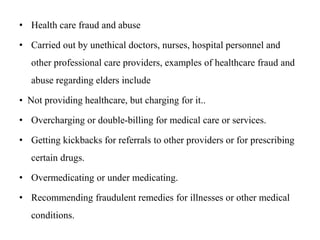
• Health care fraud and abuse
• Carried out by unethical doctors, nurses, hospital personnel and
other professional care providers, examples of healthcare fraud and
abuse regarding elders include
• Not providing healthcare, but charging for it..
• Overcharging or double-billing for medical care or services.
• Getting kickbacks for referrals to other providers or for prescribing
certain drugs.
• Overmedicating or under medicating.
• Recommending fraudulent remedies for illnesses or other medical
conditions.
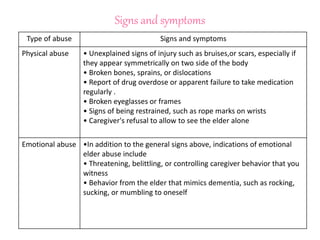
Signs and symptoms
Type of abuse Signs and symptoms
Physical abuse • Unexplained signs of injury such as bruises,or scars, especially if
they appear symmetrically on two side of the body
• Broken bones, sprains, or dislocations
• Report of drug overdose or apparent failure to take medication
regularly .
• Broken eyeglasses or frames
• Signs of being restrained, such as rope marks on wrists
• Caregiver's refusal to allow to see the elder alone
Emotional abuse •In addition to the general signs above, indications of emotional
elder abuse include
• Threatening, belittling, or controlling caregiver behavior that you
witness
• Behavior from the elder that mimics dementia, such as rocking,
sucking, or mumbling to oneself
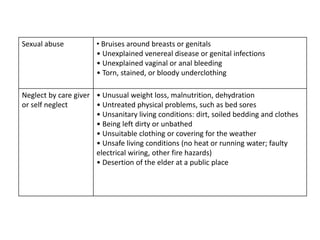
Sexual abuse • Bruises around breasts or genitals
• Unexplained venereal disease or genital infections
• Unexplained vaginal or anal bleeding
• Torn, stained, or bloody underclothing
Neglect by care giver
or self neglect
• Unusual weight loss, malnutrition, dehydration
• Untreated physical problems, such as bed sores
• Unsanitary living conditions: dirt, soiled bedding and clothes
• Being left dirty or unbathed
• Unsuitable clothing or covering for the weather
• Unsafe living conditions (no heat or running water; faulty
electrical wiring, other fire hazards)
• Desertion of the elder at a public place
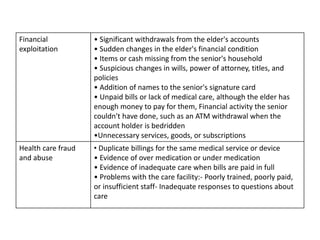
Financial
exploitation
• Significant withdrawals from the elder's accounts
• Sudden changes in the elder's financial condition
• Items or cash missing from the senior's household
• Suspicious changes in wills, power of attorney, titles, and
policies
• Addition of names to the senior's signature card
• Unpaid bills or lack of medical care, although the elder has
enough money to pay for them, Financial activity the senior
couldn't have done, such as an ATM withdrawal when the
account holder is bedridden
•Unnecessary services, goods, or subscriptions
Health care fraud
and abuse
• Duplicate billings for the same medical service or device
• Evidence of over medication or under medication
• Evidence of inadequate care when bills are paid in full
• Problems with the care facility:- Poorly trained, poorly paid,
or insufficient staff- Inadequate responses to questions about
care
How to assess the elder abuse
1. Assess the elderly person's general appearance.
Evaluate the patient's skin integrity. Are there any cuts or
bruises? Evaluate hygiene, clothing and nutrition. Does he
appear to be undernourished or unwashed?
2. Look for signs of abuse.
This includes bruises, burns, cuts or lacerations, skin abrasions
or broken bones that may indicate physical abuse. Bruises
occurring around the genitals or breasts may indicate sexual
abuse. Personality changes, depression, withdrawal from
regular activities or a change in mental alertness may indicate
emotional abuse.
3. Look for signs of neglect.
This includes the presence of bedsores, dehydration, poor
hygiene, depression, burns, malnutrition, unexplained weight
loss and repeated hospitalizations due to improper health care.
4. Examine her financial history.
Some indicators of exploitation or financial abuse include a
sudden change in the elderly person's finances, large
withdrawals from her account, cash or valuables missing from
her home, unpaid bills, the addition of other names to a credit
card and sudden changes made to a will or other legal
document.
5. Observe the relationship between the patient and his caregiver.
Strained relationships, numerous arguments and tension can be
a sign of a larger problem. If you observe the caregiver (or
another family member) making threats, belittling the elderly
adult or exerting unnecessary power, this also may indicate
emotional or verbal abuse.
Role of community health nurse in prevention of abuse elderly:
• Creating mass awareness about the problem and education
regarding causes, prevention and control of the problem.
• Helping the family develop the family support system and
coping abilities to deal with the family situation and limited
resources.
• Guidance and counseling of family members.
• Identification of older abuse cases, participating in their
diagnosis and treatment as prescribed.
• Providing specific care according to the trauma, good physical
care and love to the abused person and encouraging the family
participation in the care
• Participating in the individual and group psychotherapy
session and activating the implementation of the acts.

ELDERLY ABUSE.pptx

  • 1.
  • 2.
    INTRODUCTION • Population agingis the one of the most significant emerging problem in almost all developing and developed countries. • Government of India in its national policy on older persons (January, 1999) defines "senior citizen" or "elderly" as a person who is of age 60 years or above. • Asia holds the highest proportion of world's elderly (53%), followed by Europe, 25%.
  • 3.
    • This problemis an ongoing one since the life expectancy of the people is increasing day by day due to increased awareness on healthy lifestyle, access to health care and growing medical technology. • This burden of increasing numbers of elderly will build-up and take giant tides in the next 50 years. • By 2050, around 82% of the world's elderly population will be found in developing regions of Asia. Population aging is considered as the biggest problem of developing nations.
  • 4.
    Myths related togrowing older • Older people are unfit mentally and physically • We cannot expect any creativity or contribution in older people • Older people's experience cannot make wonders in modern society • Older people want to be quiet and calm • Older people takes away resources from young people Expenses on older people is a waste • Older people are not suited to modern work places • Older people want to live in isolation • Older people are not worth.
  • 5.
    Elderly abuse • Elderlyabuse is a general term used to describe harmful treatment toward an elderly person. This includes physical abuse, emotional abuse, sexual abuse, financial exploitation and neglect. • The World Health Organization (WHO) defines elder abuse as "a single or repeated act, or lack of appropriate action, occurring within any relationship where there is an expectation of trust which causes harm or distress to an older person.“
  • 6.
    Places of ElderAbuse • Elder abuse tends to take place where the senior lives. • Most often in the home where abusers are adult children; other family members such as grandchildren; or spouses/ partners of elders. • Institutional settings especially long-term care facilities can also be sources of elder abuse. • Abuse of elder's takes in different forms, involves intimidation or threats against the elder, neglect, and financial chicanery.
  • 7.
    Type of elderabuse • Physical abuse • Emotional abuse • Sexual abuse • Neglect or Abandonment • Financial exploitation • Health care fraud and abuse
  • 8.
    Type of elderabuse • Physical abuse: Physical elder abuse is non-accidental use of force against an elderly person that results in physical pain, injury, or impairment, Such abuse includes not only physical assaults such as hitting or shoving but the inappropriate use of drugs, restraints, or confinement.
  • 9.
    2. Emotional abuse:In emotional or psychological senior abuse, people speak to or treat elderly persons in ways that cause emotional pain or distress. Verbal forms of Emotional elder abuse include: • Intimidation through yelling or threats • Humiliation and ridicule • Habitual blaming or scapegoating Non-verbal Psychological elder abuse are: • Ignoring the elderly person • Isolating an elder from friends or activities • Terrorizing or menacing the elderly person
  • 10.
    3. Sexual abuse:Sexual elder abuse is contact with an elderly person without the elder's consent. Such contact can involve physical sex acts, but activities such as showing an elderly person pornographic material, forcing the person to watch sexual acts or forcing the elder to undress are also considered sexual elder abuse.
  • 11.
    4. Neglect orAbandonment by Caregivers: failure to fulfill a caretaking obligation constitutes more than half of all reported cases of elder abuse. It can be active (intentional) or passive (unintentional) 5. Financial exploitation: This involves un authorized use of an elderly person's funds or property, either by a caregiver or an outside scam artist.
  • 12.
    An unscrupulous caregivermight. • Misuse an elder's personal cheques, credit cards, or accounts, • Steal cash, income checks, or household goods. • Forge the elder's signature. • Engage in identity theft.
  • 13.
    • Health carefraud and abuse • Carried out by unethical doctors, nurses, hospital personnel and other professional care providers, examples of healthcare fraud and abuse regarding elders include • Not providing healthcare, but charging for it.. • Overcharging or double-billing for medical care or services. • Getting kickbacks for referrals to other providers or for prescribing certain drugs. • Overmedicating or under medicating. • Recommending fraudulent remedies for illnesses or other medical conditions.
  • 14.
    Signs and symptoms Typeof abuse Signs and symptoms Physical abuse • Unexplained signs of injury such as bruises,or scars, especially if they appear symmetrically on two side of the body • Broken bones, sprains, or dislocations • Report of drug overdose or apparent failure to take medication regularly . • Broken eyeglasses or frames • Signs of being restrained, such as rope marks on wrists • Caregiver's refusal to allow to see the elder alone Emotional abuse •In addition to the general signs above, indications of emotional elder abuse include • Threatening, belittling, or controlling caregiver behavior that you witness • Behavior from the elder that mimics dementia, such as rocking, sucking, or mumbling to oneself
  • 15.
    Sexual abuse •Bruises around breasts or genitals • Unexplained venereal disease or genital infections • Unexplained vaginal or anal bleeding • Torn, stained, or bloody underclothing Neglect by care giver or self neglect • Unusual weight loss, malnutrition, dehydration • Untreated physical problems, such as bed sores • Unsanitary living conditions: dirt, soiled bedding and clothes • Being left dirty or unbathed • Unsuitable clothing or covering for the weather • Unsafe living conditions (no heat or running water; faulty electrical wiring, other fire hazards) • Desertion of the elder at a public place
  • 16.
    Financial exploitation • Significant withdrawalsfrom the elder's accounts • Sudden changes in the elder's financial condition • Items or cash missing from the senior's household • Suspicious changes in wills, power of attorney, titles, and policies • Addition of names to the senior's signature card • Unpaid bills or lack of medical care, although the elder has enough money to pay for them, Financial activity the senior couldn't have done, such as an ATM withdrawal when the account holder is bedridden •Unnecessary services, goods, or subscriptions Health care fraud and abuse • Duplicate billings for the same medical service or device • Evidence of over medication or under medication • Evidence of inadequate care when bills are paid in full • Problems with the care facility:- Poorly trained, poorly paid, or insufficient staff- Inadequate responses to questions about care
  • 17.
    How to assessthe elder abuse 1. Assess the elderly person's general appearance. Evaluate the patient's skin integrity. Are there any cuts or bruises? Evaluate hygiene, clothing and nutrition. Does he appear to be undernourished or unwashed? 2. Look for signs of abuse. This includes bruises, burns, cuts or lacerations, skin abrasions or broken bones that may indicate physical abuse. Bruises occurring around the genitals or breasts may indicate sexual abuse. Personality changes, depression, withdrawal from regular activities or a change in mental alertness may indicate emotional abuse. 3. Look for signs of neglect. This includes the presence of bedsores, dehydration, poor hygiene, depression, burns, malnutrition, unexplained weight loss and repeated hospitalizations due to improper health care.
  • 18.
    4. Examine herfinancial history. Some indicators of exploitation or financial abuse include a sudden change in the elderly person's finances, large withdrawals from her account, cash or valuables missing from her home, unpaid bills, the addition of other names to a credit card and sudden changes made to a will or other legal document. 5. Observe the relationship between the patient and his caregiver. Strained relationships, numerous arguments and tension can be a sign of a larger problem. If you observe the caregiver (or another family member) making threats, belittling the elderly adult or exerting unnecessary power, this also may indicate emotional or verbal abuse.
  • 19.
    Role of communityhealth nurse in prevention of abuse elderly: • Creating mass awareness about the problem and education regarding causes, prevention and control of the problem. • Helping the family develop the family support system and coping abilities to deal with the family situation and limited resources. • Guidance and counseling of family members.
  • 20.
    • Identification ofolder abuse cases, participating in their diagnosis and treatment as prescribed. • Providing specific care according to the trauma, good physical care and love to the abused person and encouraging the family participation in the care • Participating in the individual and group psychotherapy session and activating the implementation of the acts.