Introduction
Every person-every man,woman,
and child-deserves to be treated
with respect and with caring.
Every person-no matter how
young or how old-deserves to be
safe from harm by those who live
with them, care for them, or come
in day-to-day contact with them.
4.
• Between 44%of abused older adults experience
some level of depression. Up to 6% of abused older
adults become severely depressed.
• Living with abuse and neglect can also significantly
increase the person's chances of becoming ill.
• Abused or neglected older adults have 200%
increased risk of early death.
• • About 80% of abuse or neglect of older adults is
hidden or goes undetected.
• Only about one in five cases of abuse come to the
attention of community agencies or authorities.
Did You Know?
5.
Definition
What Is ElderAbuse?
• Elder abuse is the infliction of physical,
emotional, or psychological harm on an
older adult.
• Elder abuse also can take the form of
financial exploitation or intentional or
unintentional neglect of an older adult by
the caregiver.
6.
• According tothe WHO,
abuse and neglect of older adults
can be a single or a repeated act.
• It can occur in any relationship
where there is an expectation of
trust or where a person is in a
position of power or authority.
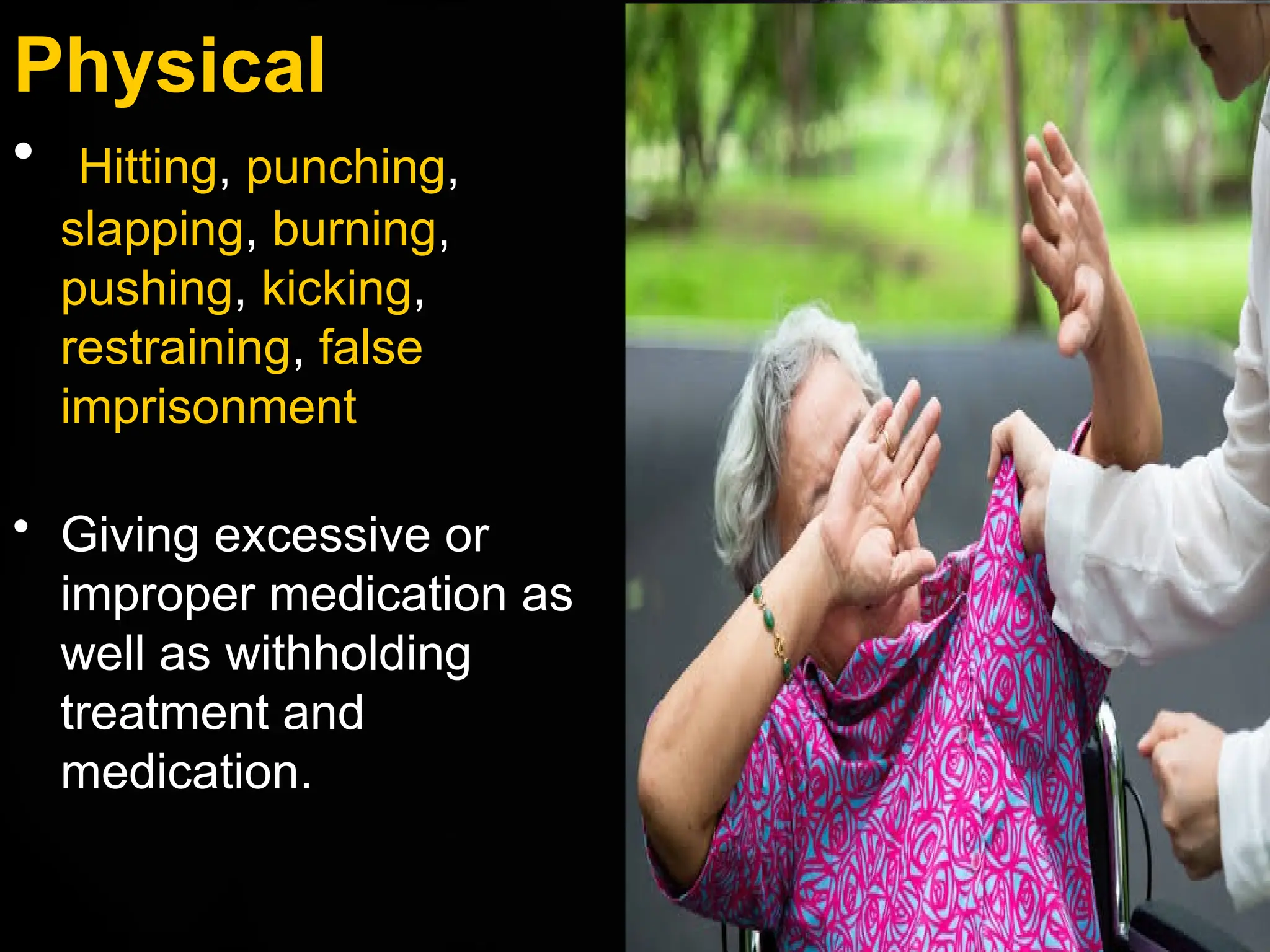
Physical
• Hitting, punching,
slapping,burning,
pushing, kicking,
restraining, false
imprisonment
• Giving excessive or
improper medication as
well as withholding
treatment and
medication.
9.
Sexual
• Forcing aelder to take part in any
sexual activity without his or her
consent,
• Including forcing them to participate
in conversations of a sexual nature
against their will
• Which may also include situations
where the person is no longer able
to give consent (dementia).
10.
Emotional
• It maytake verbal forms such as yelling,
name-calling, ridiculing, constantly
criticizing, accusations, blaming,
• Nonverbal forms such as ignoring, silence,
shunning or withdrawing affection.
Financial
• Known as financial exploitation or economic
abuse,
• Involving misappropriation of financial
resources by family members, caregivers,
or strangers,
• The use of financial means to control the
elder or facilitate other types of abuse
11.
• Neglect
• Deprivingan elder of proper
medical treatment, food,
clothing, comfort, essential
medication
• Depriving an elder of needed
services to force certain kinds
of actions, financial and
otherwise.
• Neglect can include leaving an
at-risk (i.e. fall risk) elder
person unattended.
12.
Prevalence
• According tothe Hourglass helpline in the UK,
abuse occurs primarily in the family home
(64%), residential care (23%), and hospitals
(5%),
• Around 1 in 6 people 60 years and older
experienced some form of abuse in community
settings during the past year.
• Abuse increases with age, with 78 percent of
victims being over 70 years of age, common in
Females than Males
• Rates of abuse of older people have increased
during the COVID-19 pandemic.
13.
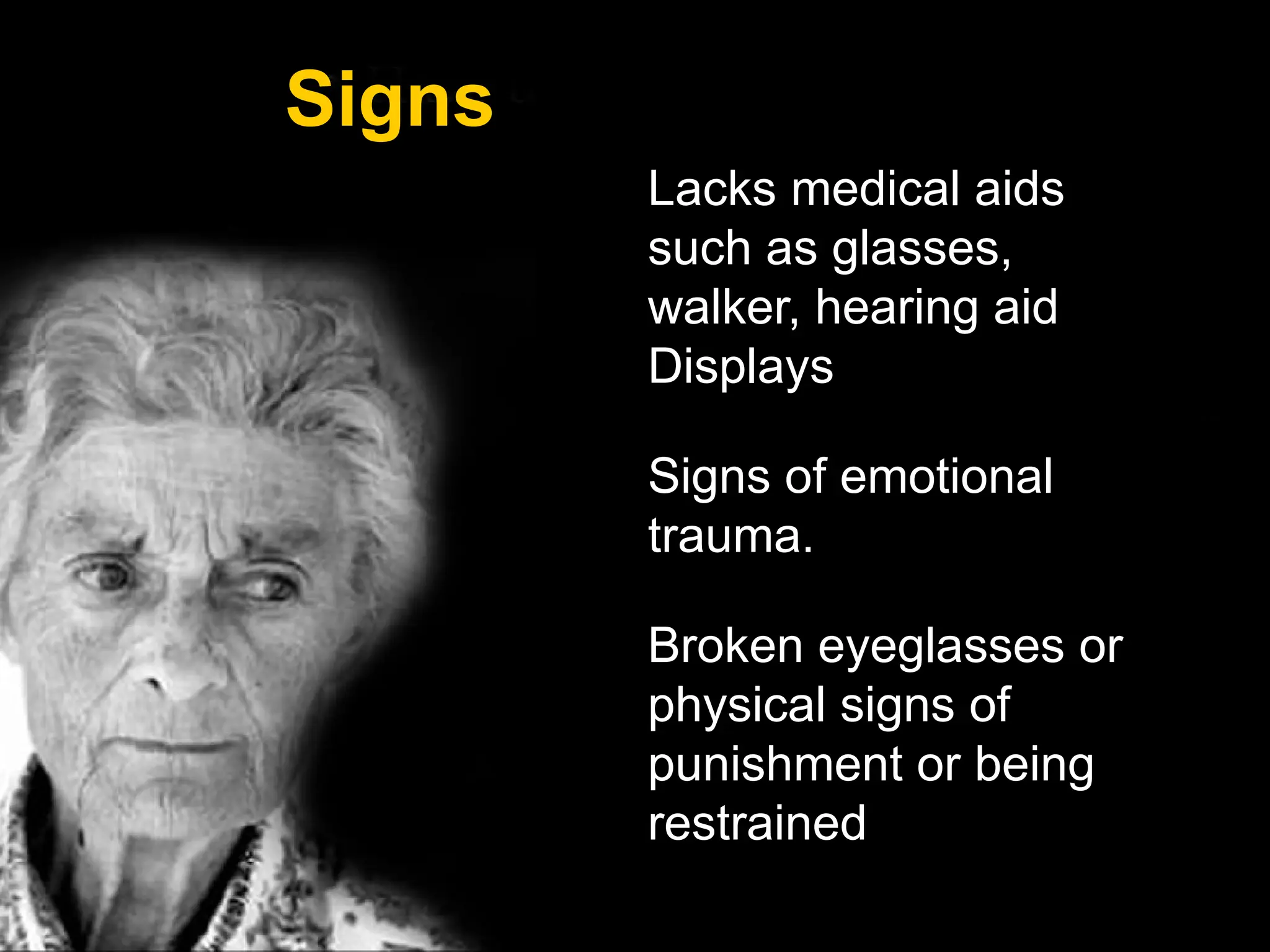
Signs
Lacks medical aids
suchas glasses,
walker, hearing aid
Displays
Signs of emotional
trauma.
Broken eyeglasses or
physical signs of
punishment or being
restrained
14.
• Displays signsof insufficient
care or unpaid bills despite
adequate financial resources
• Broken bones
• Poor physical appearance
• Changes in mental status
• Frequent infections
• Bruising, scratches, welts, or
cuts
• Chest pain (Angina )
15.
Risk factors
• Memoryproblems (such as
dementia)
• Mental illness, either long-
standing or recent.
• Physical disabilities
• Depression, loneliness, or
lack of social support
• Abuses alcohol or other
substances
• Verbally or physically
combative with the
caregiver
• Lower income or poverty
16.
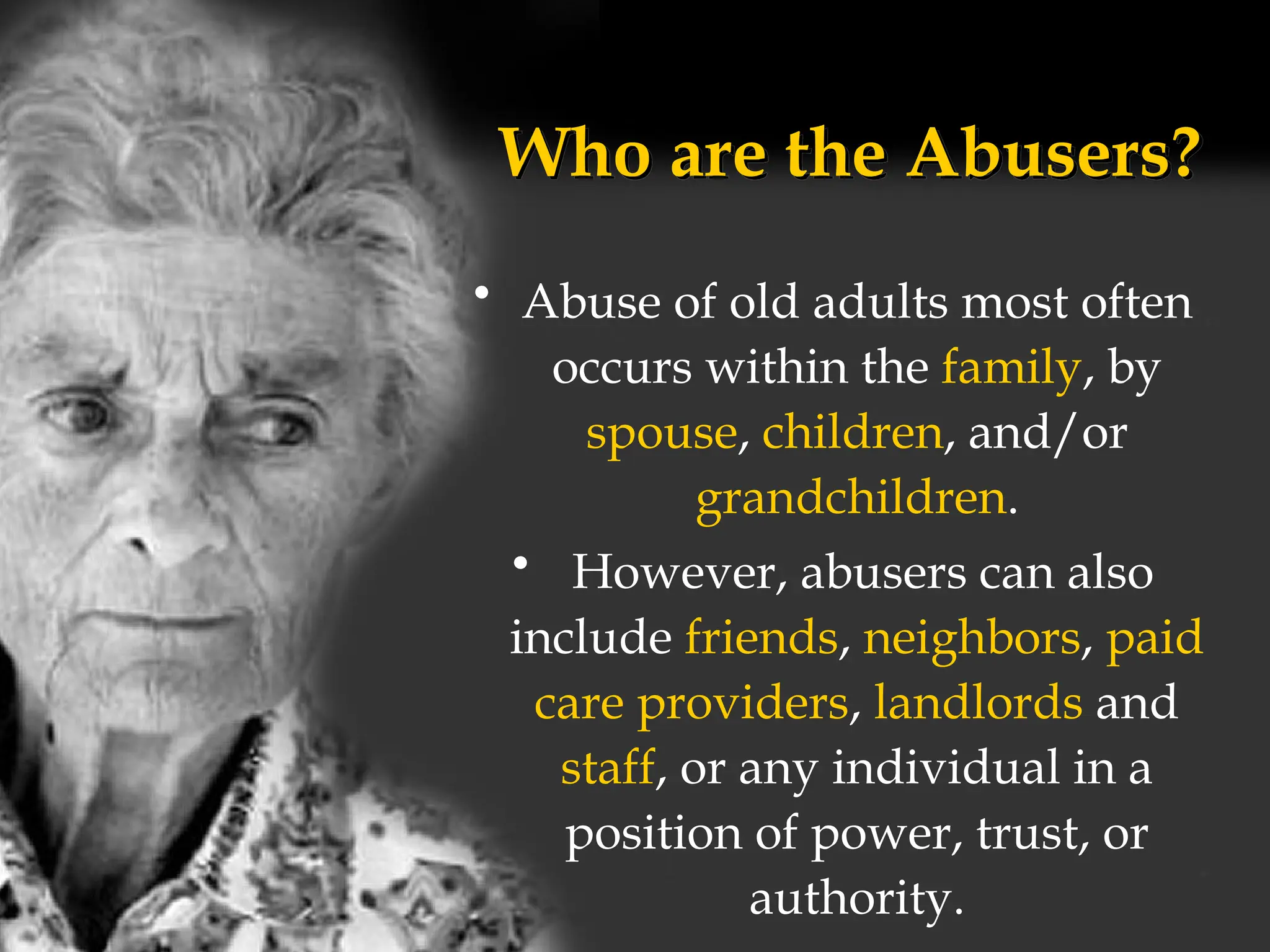
Who are theAbusers?
• Abuse of old adults most often
occurs within the family, by
spouse, children, and/or
grandchildren.
• However, abusers can also
include friends, neighbors, paid
care providers, landlords and
staff, or any individual in a
position of power, trust, or
authority.
18.
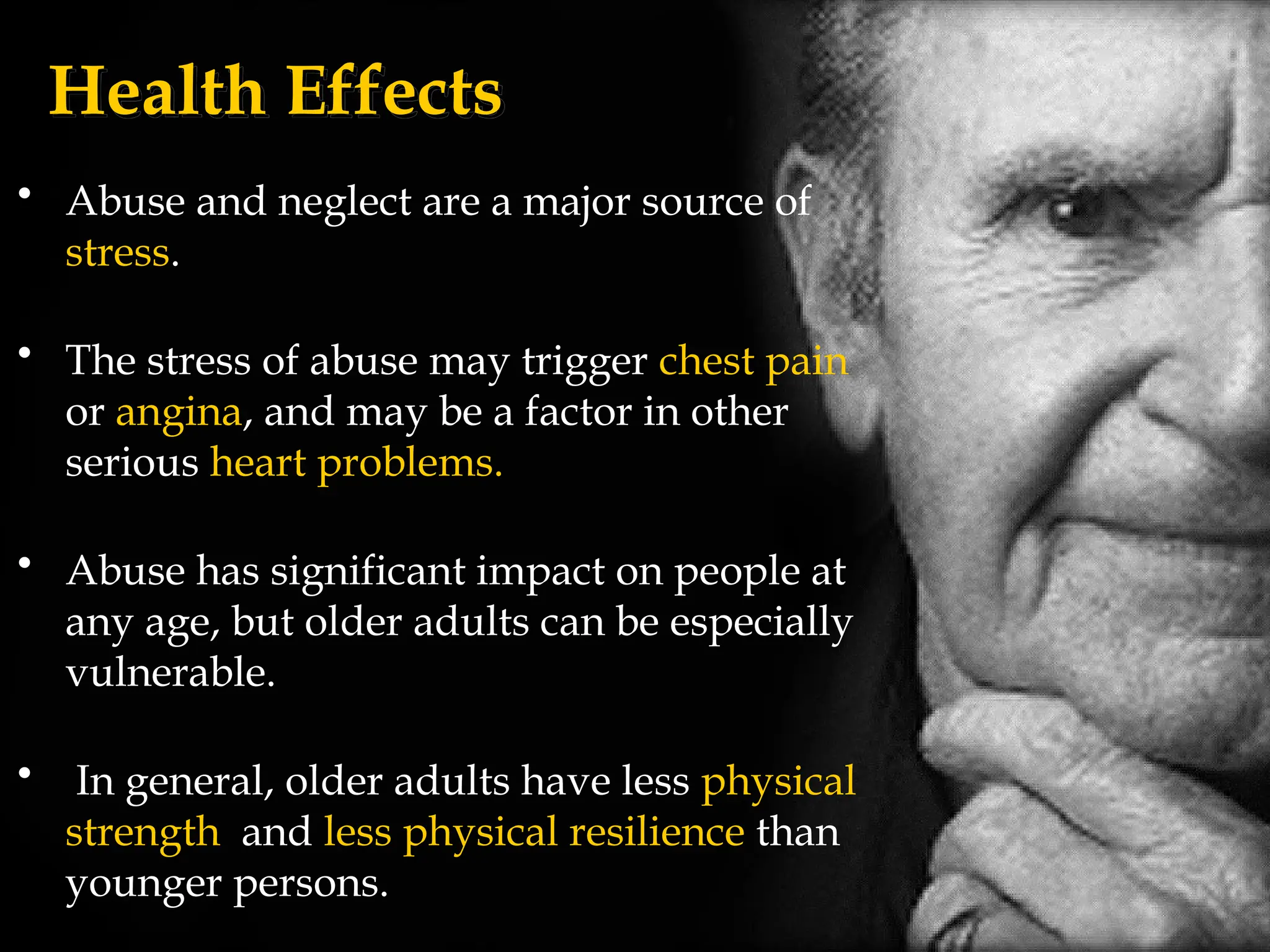
Health Effects
• Abuseand neglect are a major source of
stress.
• The stress of abuse may trigger chest pain
or angina, and may be a factor in other
serious heart problems.
• Abuse has significant impact on people at
any age, but older adults can be especially
vulnerable.
• In general, older adults have less physical
strength and less physical resilience than
younger persons.
19.
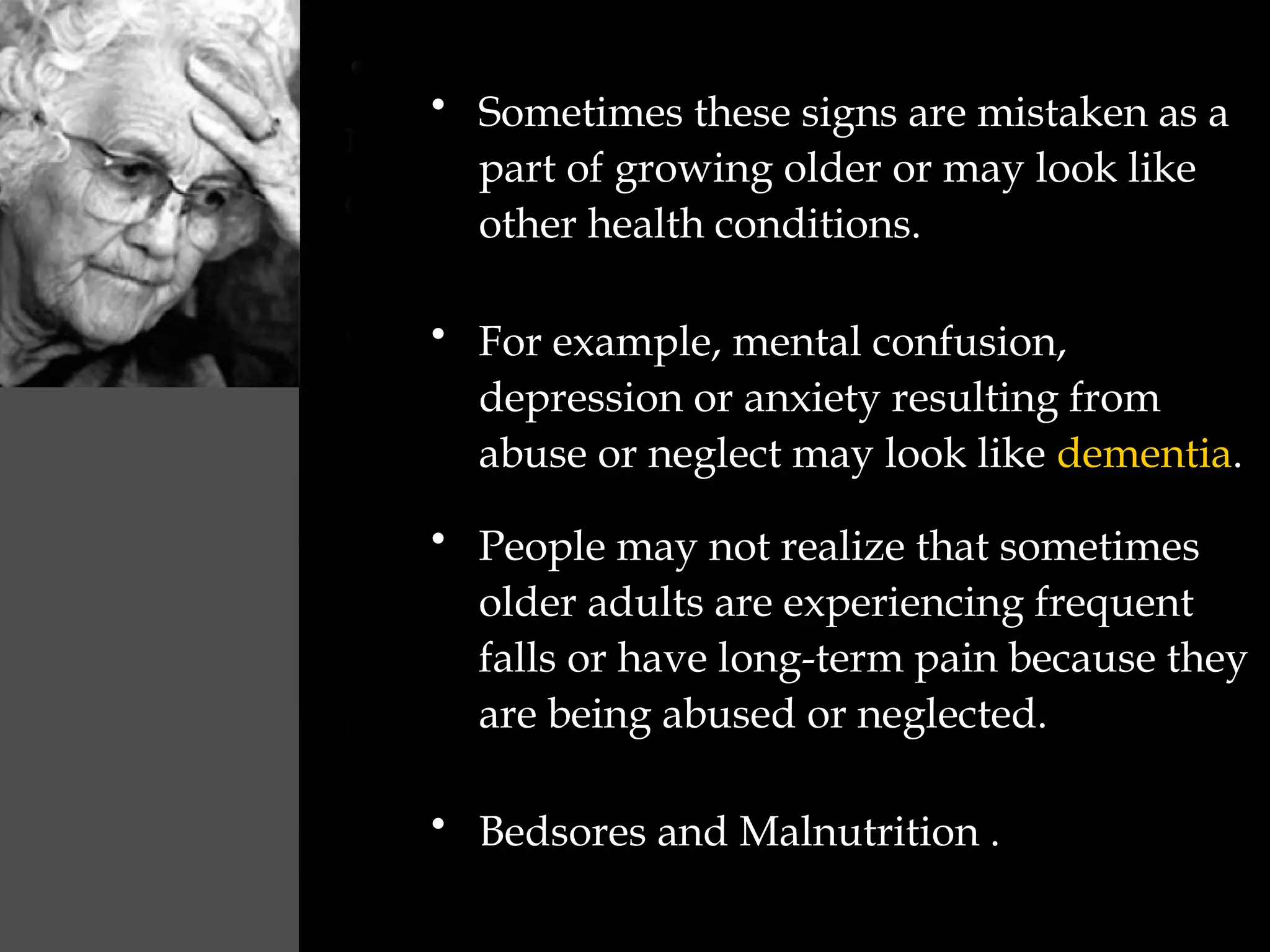
• Sometimes thesesigns are mistaken as a
part of growing older or may look like
other health conditions.
• For example, mental confusion,
depression or anxiety resulting from
abuse or neglect may look like dementia.
• People may not realize that sometimes
older adults are experiencing frequent
falls or have long-term pain because they
are being abused or neglected.
• Bedsores and Malnutrition .
20.
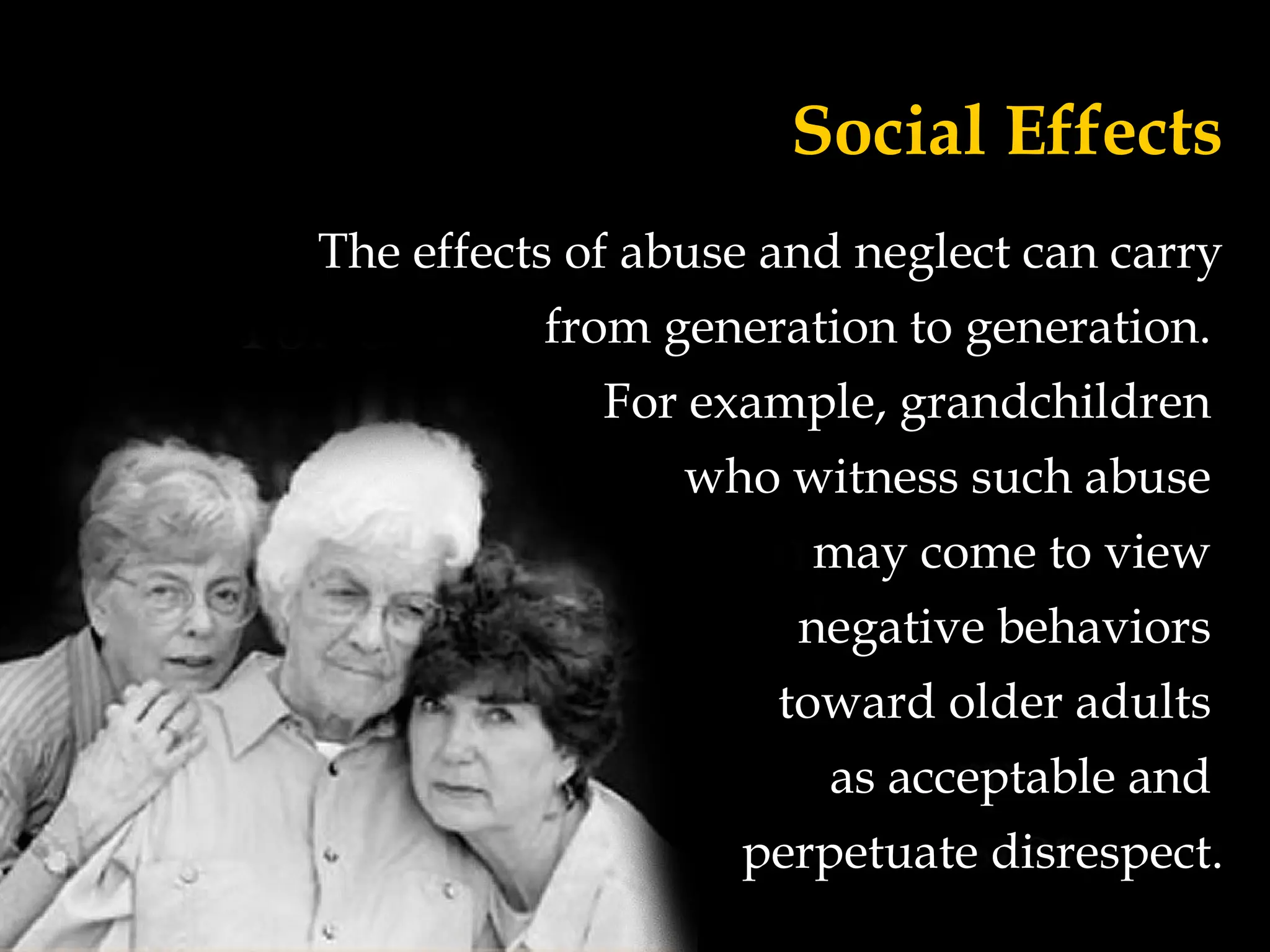
Social Effects
The effectsof abuse and neglect can carry
from generation to generation.
For example, grandchildren
who witness such abuse
may come to view
negative behaviors
toward older adults
as acceptable and
perpetuate disrespect.
21.
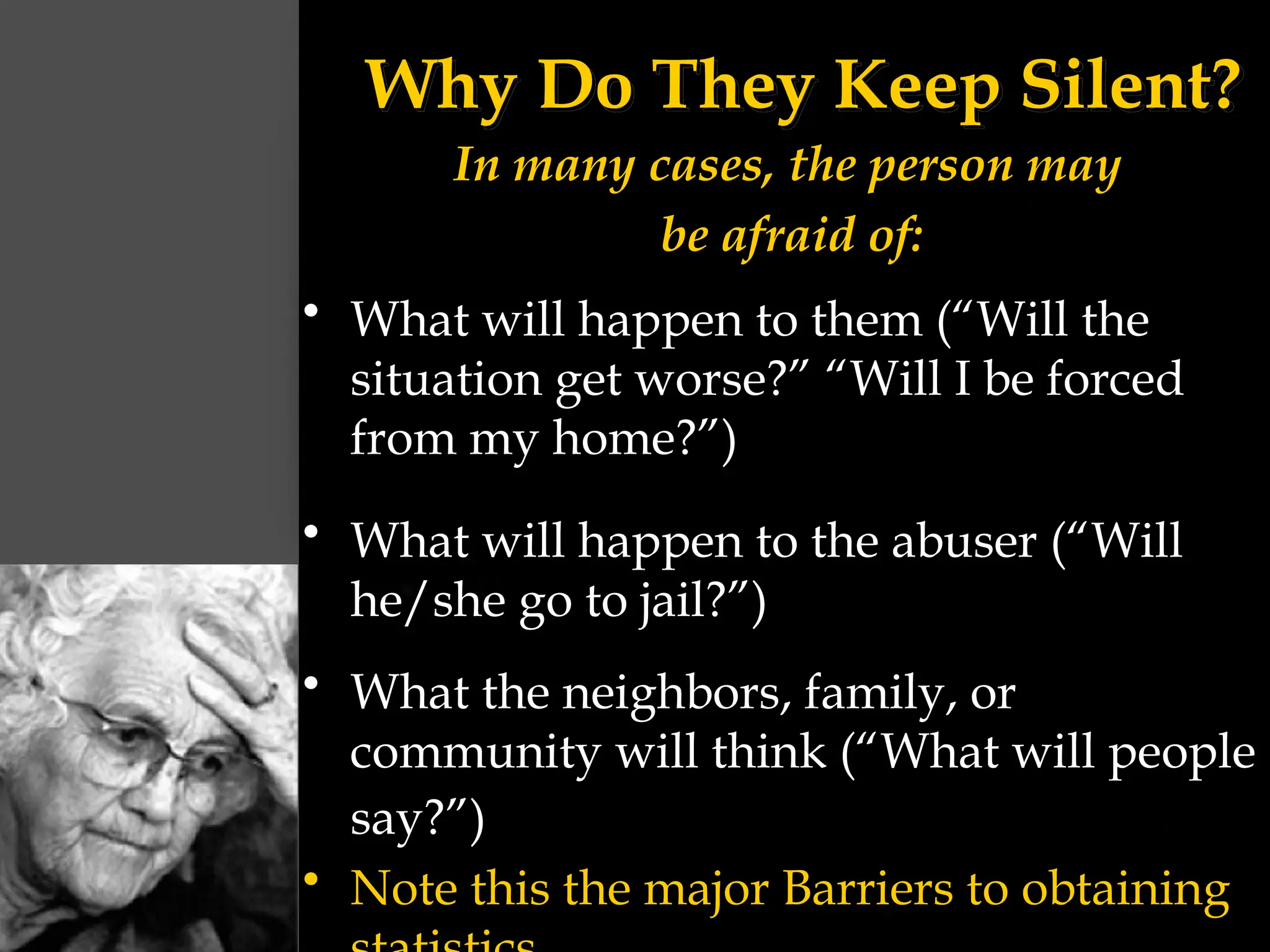
Why Do TheyKeep Silent?
In many cases, the person may
be afraid of:
• What will happen to them (“Will the
situation get worse?” “Will I be forced
from my home?”)
• What will happen to the abuser (“Will
he/she go to jail?”)
• What the neighbors, family, or
community will think (“What will people
say?”)
• Note this the major Barriers to obtaining
22.
Prevention of
Elder Abuse
•The first and most important step
toward preventing elder abuse is
to recognize that no one-of
whatever age-should be subjected
to violent, abusive, humiliating, or
neglectful behavior.
23.
• Promoting thissocial attitude, positive steps
include educating people about elder abuse
• Increasing the availability of respite care,
promoting increased social contact and support
for families with dependent older adults
• Encouraging counseling and treatment to cope
with personal and family problems that
contribute to abuse.
• Violence, abuse, and neglect toward elders are
signs that the people involved need help-
immediately.
24.
Conclusion
• Considering thehigh level
of elder abuse and its
dangerous effects on the
quality of life for older
people, it is essential to
develop appropriate
programs to increase
awareness among older
people and their families.
25.
Reference
• Canadian Networkfor the Prevention of Elder
Abuse, “Health and Abuse.”
• BC Health Files “Health Effects of Abuse and
Neglect of Older Adults.”
• http://www.gov.ns.ca/scs/pubs/elderabuse/
Fact-Sheet-4-Signs-and-Effects-En.pdf
• http://www.apa.org/pi/aging/eldabuse.html
• http://www.apa.org/pi/aging/eldabuse.html