ECONOMIST INTELLIGENCE UNIT 
COUNTRY REPORTS ARCHIVE 
Researching the impact of the 1988 Seoul Olympic Games on South Korea 
Rob Newman, Senior Product Manager
Research topic – Korea and the 1988 Seoul Olympics 
• We can use Economist Intelligence Unit Country Reports Archive to 
examine the impact of the hosting of the Olympic Games in Seoul in 
1988 on the politics, international relations and economy of South 
Korea. 
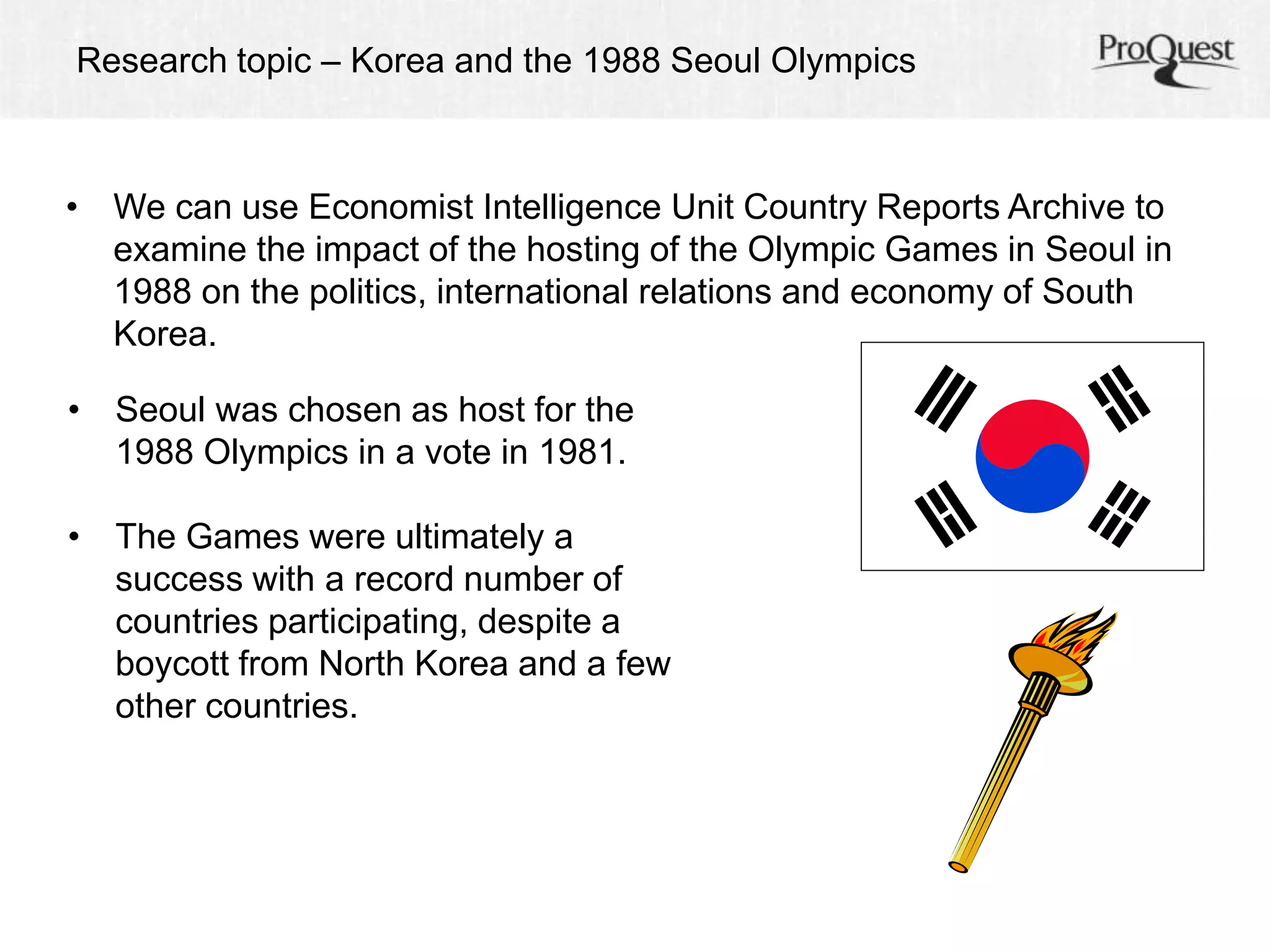
• Seoul was chosen as host for the 
1988 Olympics in a vote in 1981. 
• The Games were ultimately a 
success with a record number of 
countries participating, despite a 
boycott from North Korea and a few 
other countries.
EIU Country Reports Archive 
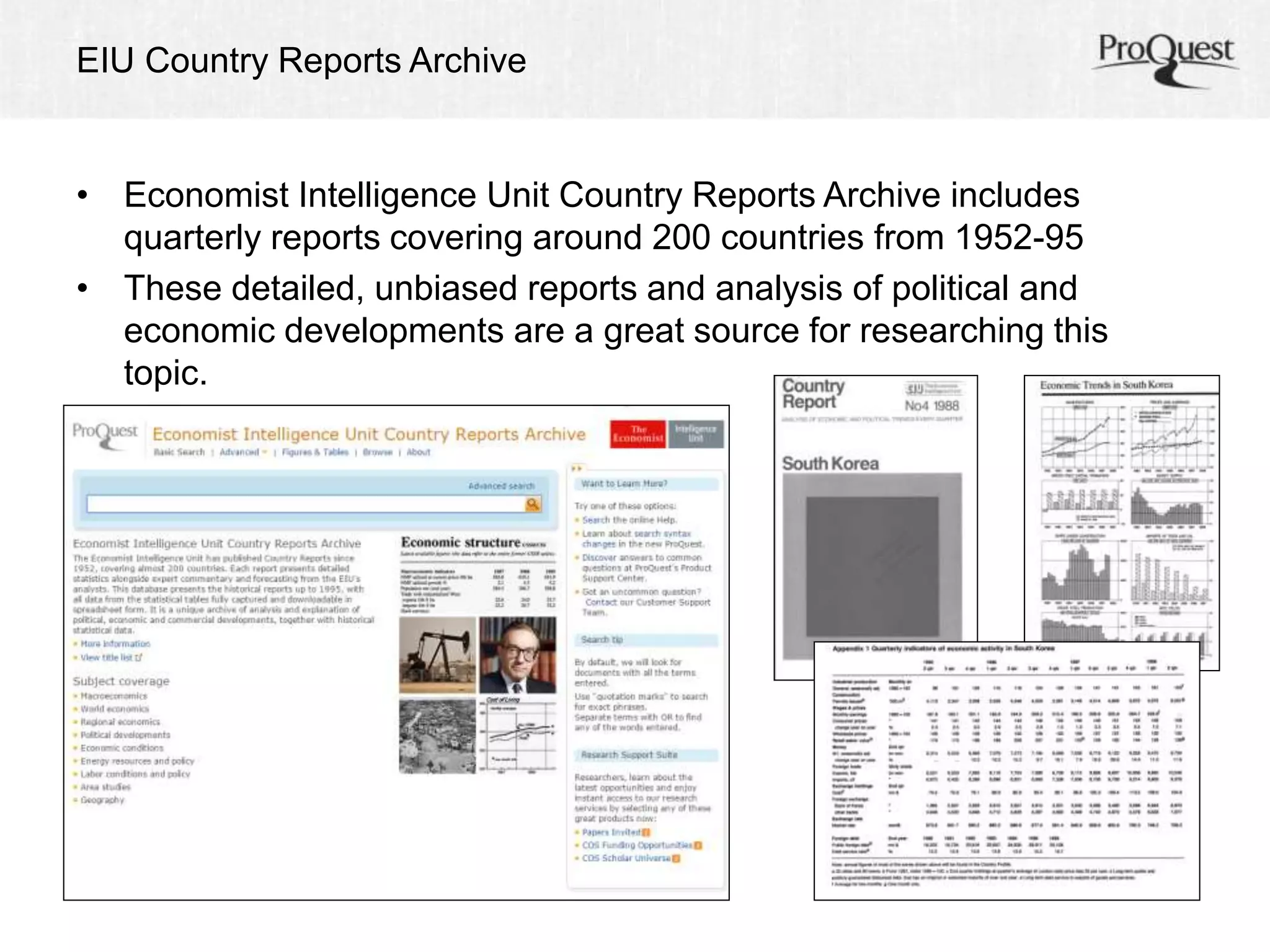
• Economist Intelligence Unit Country Reports Archive includes 
quarterly reports covering around 200 countries from 1952-95 
• These detailed, unbiased reports and analysis of political and 
economic developments are a great source for researching this 
topic.
Quarterly Economic Review of South Korea First Quarter 
1982 
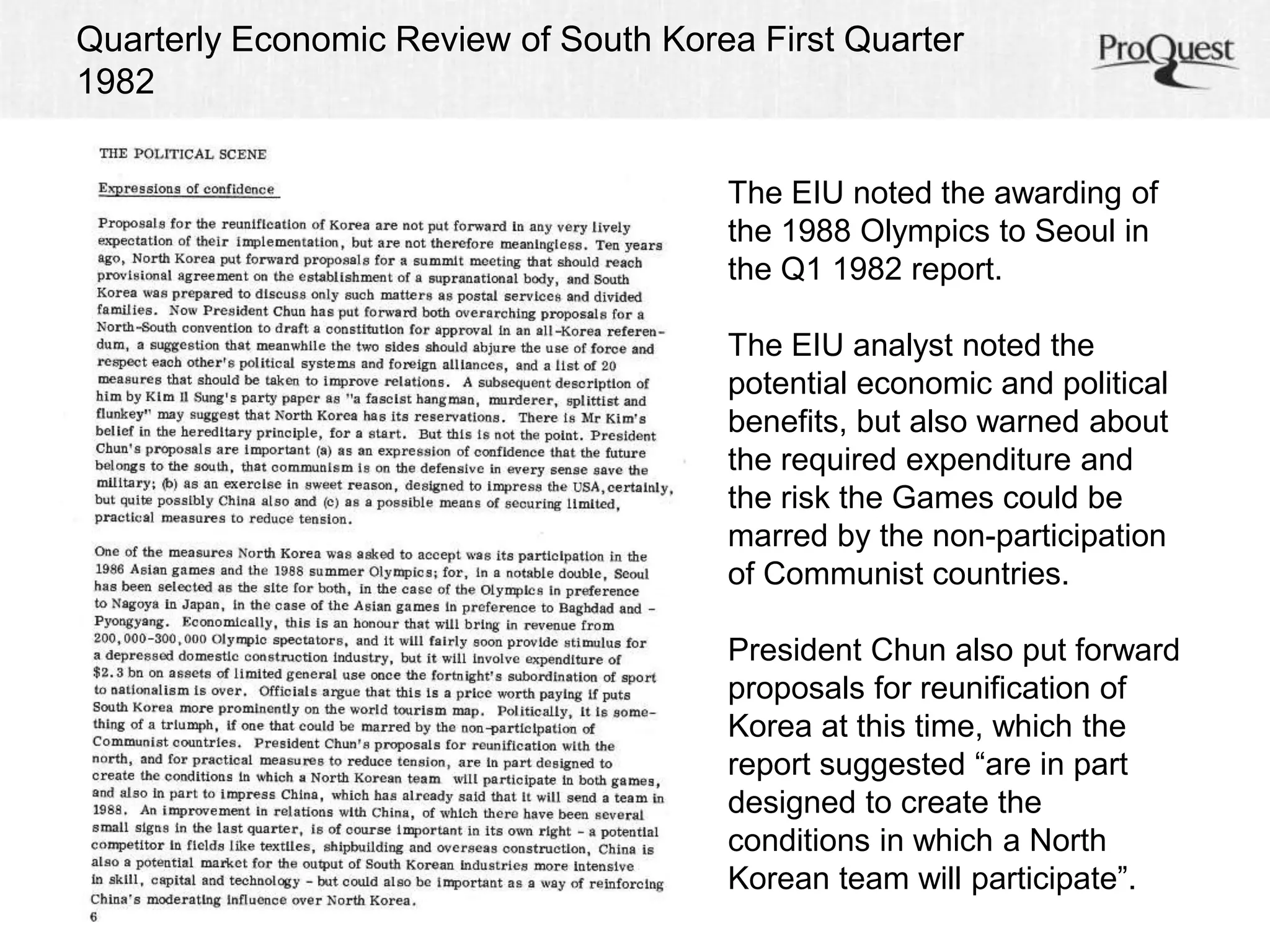
The EIU noted the awarding of 
the 1988 Olympics to Seoul in 
the Q1 1982 report. 
The EIU analyst noted the 
potential economic and political 
benefits, but also warned about 
the required expenditure and 
the risk the Games could be 
marred by the non-participation 
of Communist countries. 
President Chun also put forward 
proposals for reunification of 
Korea at this time, which the 
report suggested “are in part 
designed to create the 
conditions in which a North 
Korean team will participate”.
Quarterly Economic Review of South Korea Fourth Quarter 
1983 
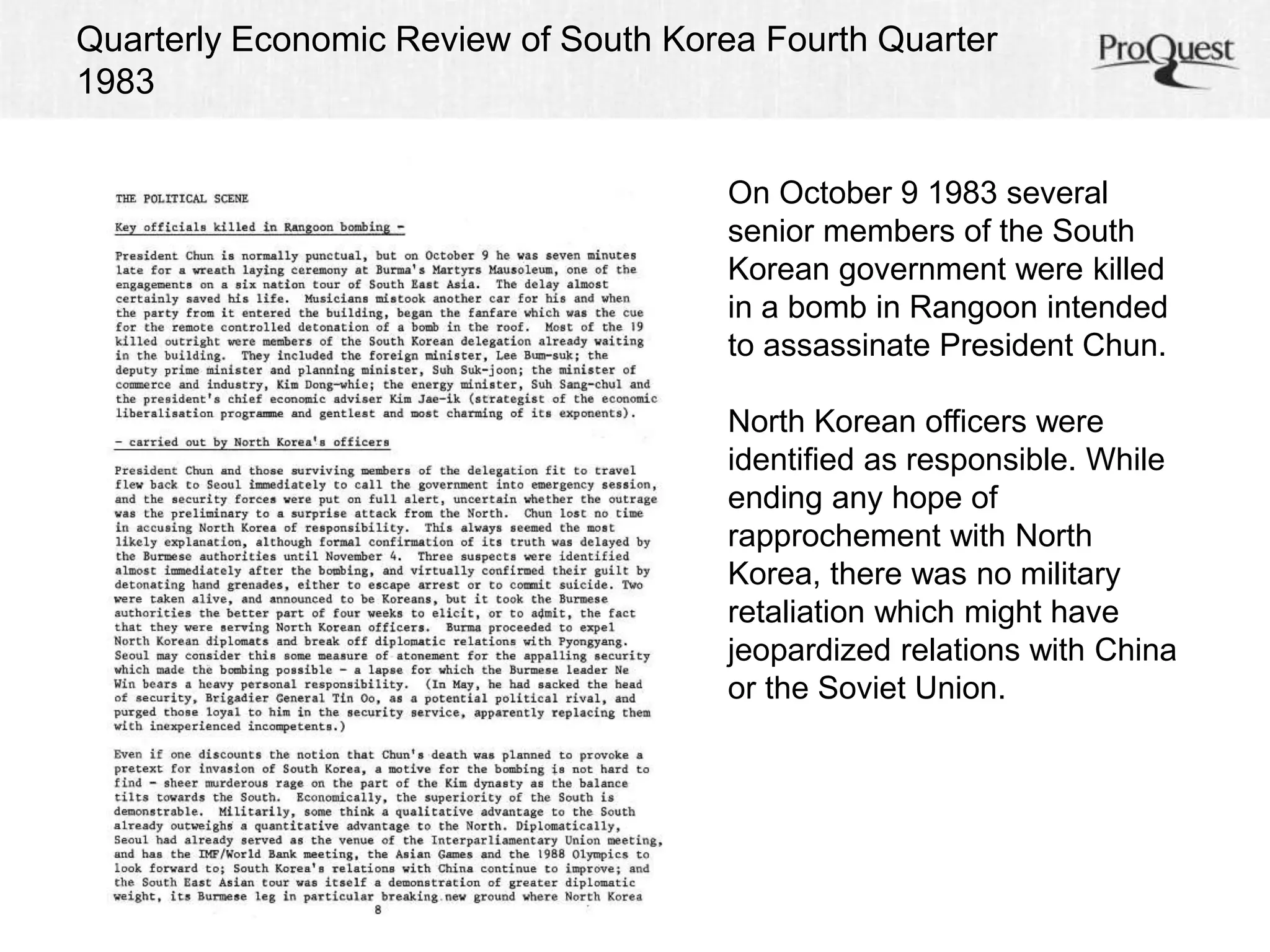
On October 9 1983 several 
senior members of the South 
Korean government were killed 
in a bomb in Rangoon intended 
to assassinate President Chun. 
North Korean officers were 
identified as responsible. While 
ending any hope of 
rapprochement with North 
Korea, there was no military 
retaliation which might have 
jeopardized relations with China 
or the Soviet Union.
Country Report. South Korea Third Quarter 1986 
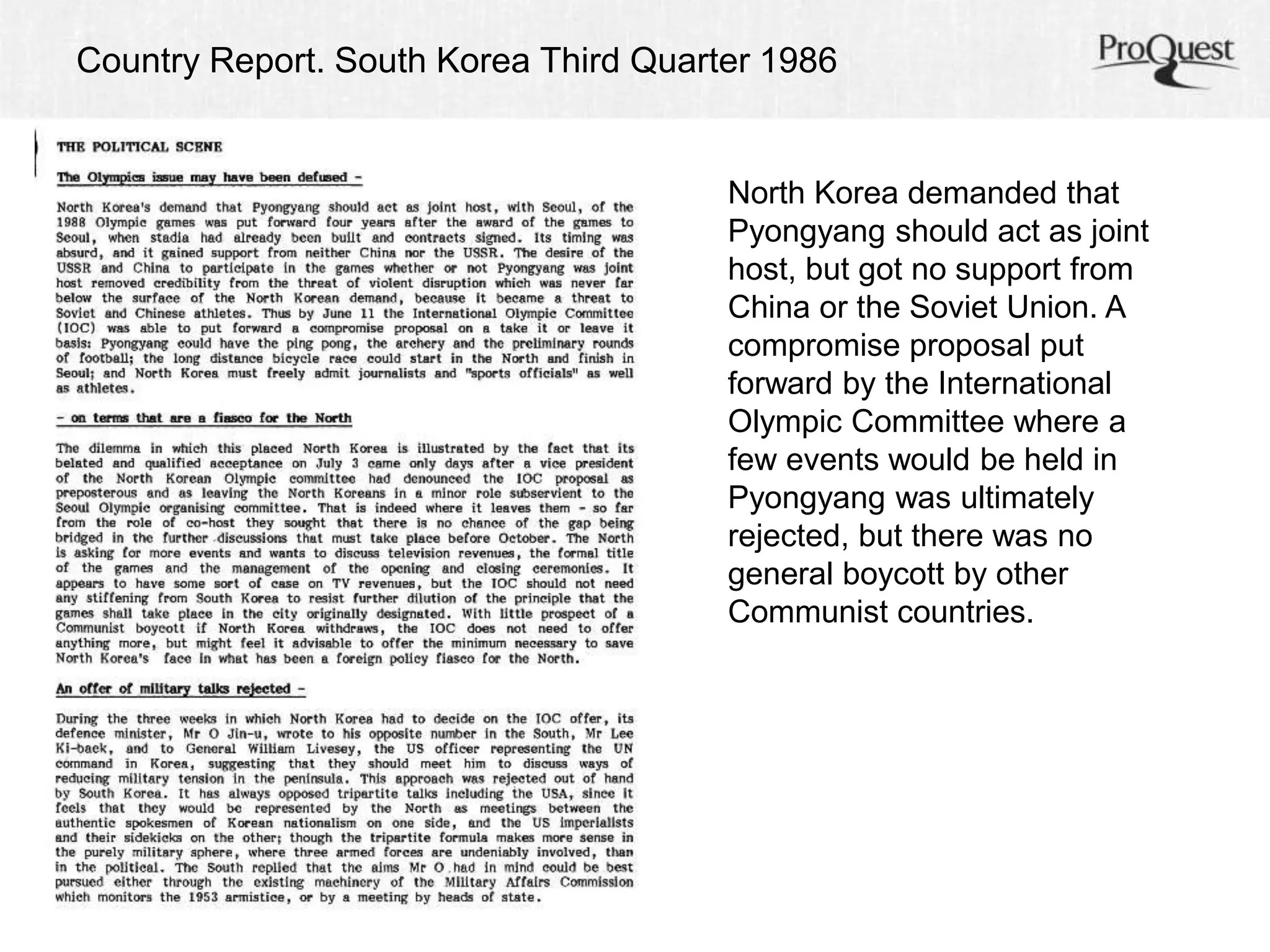
North Korea demanded that 
Pyongyang should act as joint 
host, but got no support from 
China or the Soviet Union. A 
compromise proposal put 
forward by the International 
Olympic Committee where a 
few events would be held in 
Pyongyang was ultimately 
rejected, but there was no 
general boycott by other 
Communist countries.
Country Report. South Korea Third Quarter 1987 
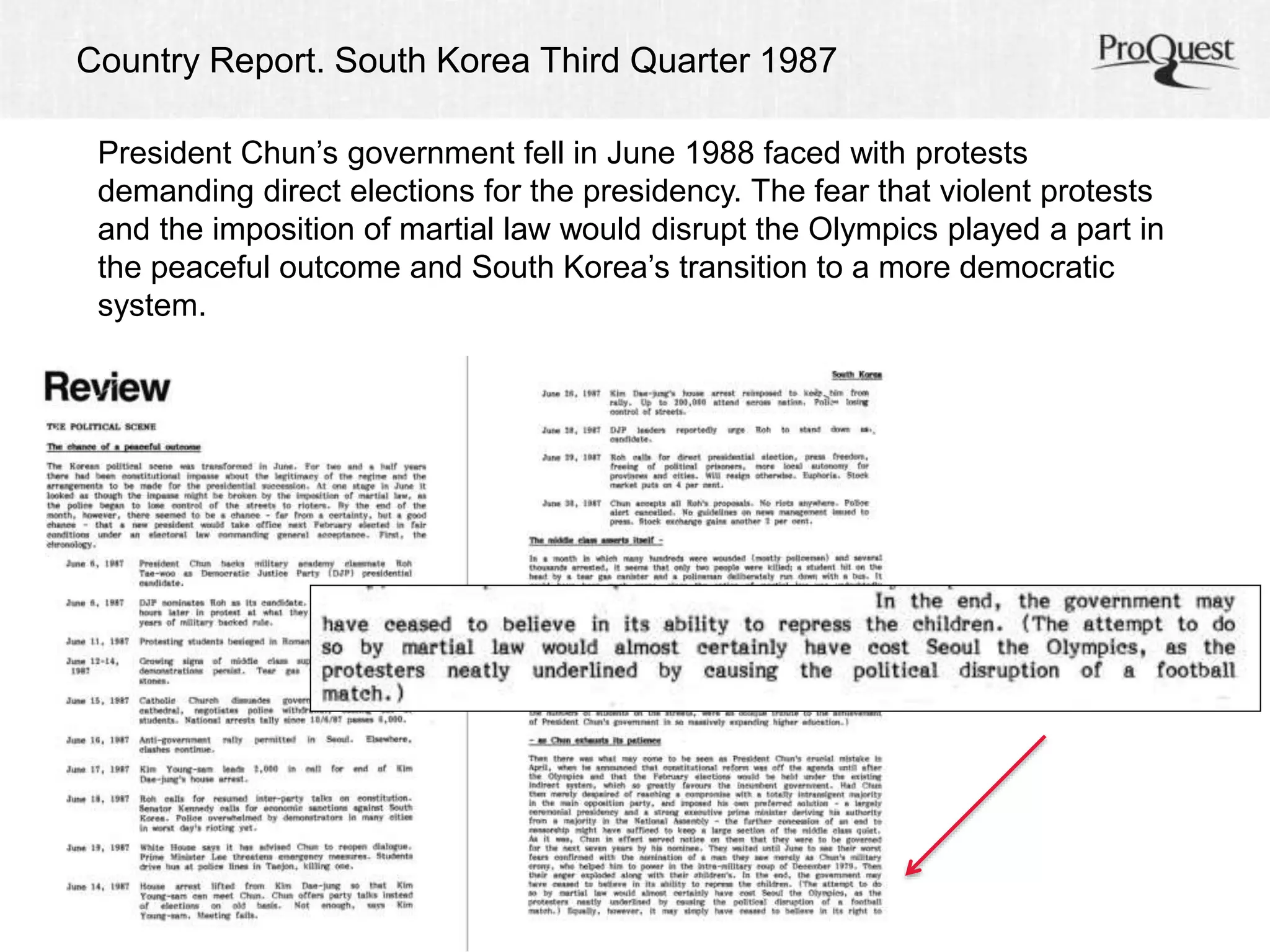
President Chun’s government fell in June 1988 faced with protests 
demanding direct elections for the presidency. The fear that violent protests 
and the imposition of martial law would disrupt the Olympics played a part in 
the peaceful outcome and South Korea’s transition to a more democratic 
system.
Country Report. South Korea Third Quarter 1987 
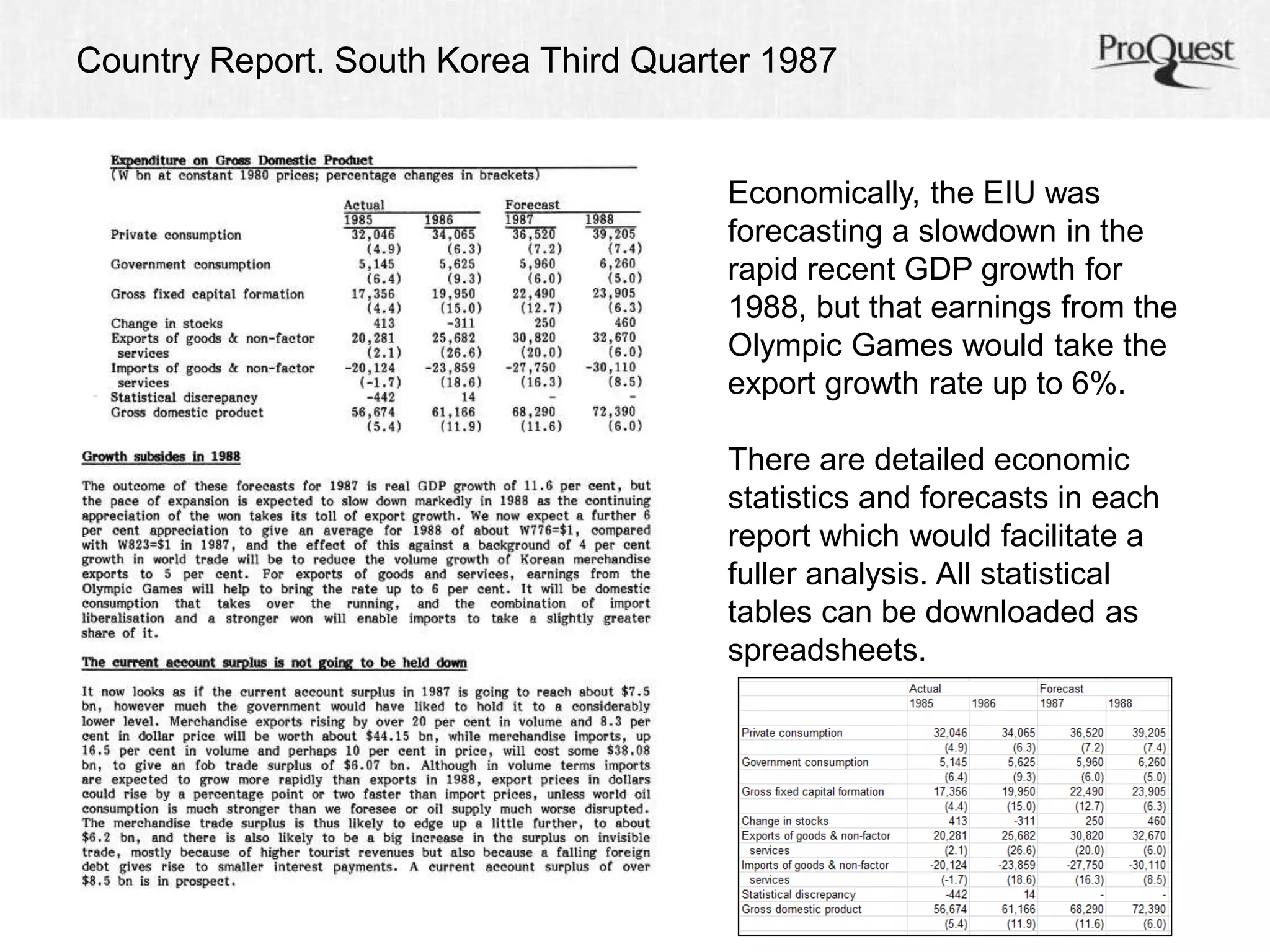
Economically, the EIU was 
forecasting a slowdown in the 
rapid recent GDP growth for 
1988, but that earnings from the 
Olympic Games would take the 
export growth rate up to 6%. 
There are detailed economic 
statistics and forecasts in each 
report which would facilitate a 
fuller analysis. All statistical 
tables can be downloaded as 
spreadsheets.
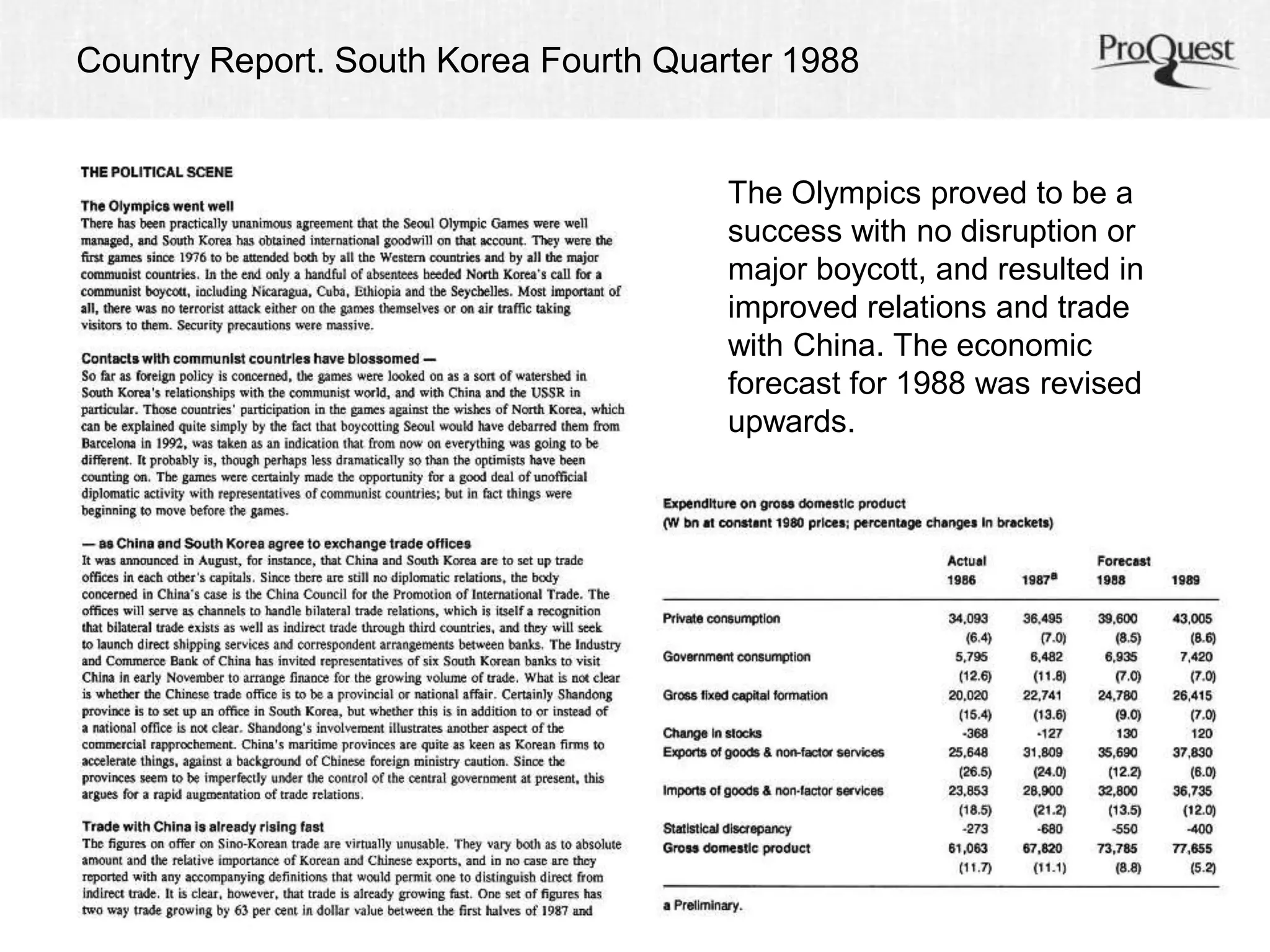
Country Report. South Korea Fourth Quarter 1988 
The Olympics proved to be a 
success with no disruption or 
major boycott, and resulted in 
improved relations and trade 
with China. The economic 
forecast for 1988 was revised 
upwards.
Further reading 
• Continue to track South Korean economic performance after the 
1988 Olympics using the Country Reports from 1989 to 1995. 
• Examine the reports on China, North Korea and the USSR from the 
same period to see how their policy and relations with South Korea 
were shaped in response to the Olympics. 
• Compare the impact of the Seoul Olympics with the 1992 Olympic 
Games in Barcelona using the Country Reports on Spain. 
• Use other ProQuest resources such as historical newspapers for 
additional perspectives and detail.

EIU Country Reports Archive Example Use Case Seoul Olympics

  • 1.
    ECONOMIST INTELLIGENCE UNIT COUNTRY REPORTS ARCHIVE Researching the impact of the 1988 Seoul Olympic Games on South Korea Rob Newman, Senior Product Manager
  • 2.
    Research topic –Korea and the 1988 Seoul Olympics • We can use Economist Intelligence Unit Country Reports Archive to examine the impact of the hosting of the Olympic Games in Seoul in 1988 on the politics, international relations and economy of South Korea. • Seoul was chosen as host for the 1988 Olympics in a vote in 1981. • The Games were ultimately a success with a record number of countries participating, despite a boycott from North Korea and a few other countries.
  • 3.
    EIU Country ReportsArchive • Economist Intelligence Unit Country Reports Archive includes quarterly reports covering around 200 countries from 1952-95 • These detailed, unbiased reports and analysis of political and economic developments are a great source for researching this topic.
  • 4.
    Quarterly Economic Reviewof South Korea First Quarter 1982 The EIU noted the awarding of the 1988 Olympics to Seoul in the Q1 1982 report. The EIU analyst noted the potential economic and political benefits, but also warned about the required expenditure and the risk the Games could be marred by the non-participation of Communist countries. President Chun also put forward proposals for reunification of Korea at this time, which the report suggested “are in part designed to create the conditions in which a North Korean team will participate”.
  • 5.
    Quarterly Economic Reviewof South Korea Fourth Quarter 1983 On October 9 1983 several senior members of the South Korean government were killed in a bomb in Rangoon intended to assassinate President Chun. North Korean officers were identified as responsible. While ending any hope of rapprochement with North Korea, there was no military retaliation which might have jeopardized relations with China or the Soviet Union.
  • 6.
    Country Report. SouthKorea Third Quarter 1986 North Korea demanded that Pyongyang should act as joint host, but got no support from China or the Soviet Union. A compromise proposal put forward by the International Olympic Committee where a few events would be held in Pyongyang was ultimately rejected, but there was no general boycott by other Communist countries.
  • 7.
    Country Report. SouthKorea Third Quarter 1987 President Chun’s government fell in June 1988 faced with protests demanding direct elections for the presidency. The fear that violent protests and the imposition of martial law would disrupt the Olympics played a part in the peaceful outcome and South Korea’s transition to a more democratic system.
  • 8.
    Country Report. SouthKorea Third Quarter 1987 Economically, the EIU was forecasting a slowdown in the rapid recent GDP growth for 1988, but that earnings from the Olympic Games would take the export growth rate up to 6%. There are detailed economic statistics and forecasts in each report which would facilitate a fuller analysis. All statistical tables can be downloaded as spreadsheets.
  • 9.
    Country Report. SouthKorea Fourth Quarter 1988 The Olympics proved to be a success with no disruption or major boycott, and resulted in improved relations and trade with China. The economic forecast for 1988 was revised upwards.
  • 10.
    Further reading •Continue to track South Korean economic performance after the 1988 Olympics using the Country Reports from 1989 to 1995. • Examine the reports on China, North Korea and the USSR from the same period to see how their policy and relations with South Korea were shaped in response to the Olympics. • Compare the impact of the Seoul Olympics with the 1992 Olympic Games in Barcelona using the Country Reports on Spain. • Use other ProQuest resources such as historical newspapers for additional perspectives and detail.