What Companies Want:
Graduate education needs
in a global labor market

Prof. Luca Giustiniano
Associate Professor of Management
Luiss Business School

1

Project presentation: 5/3/2010
Agenda

2
Expected outcome

The expected outcome of the project is to help Luiss Business
School improve its educational offer for the MBA programs.
Recent social and economic events have driven executives and
managers to the search of new routes to value creation and growth.

The ultimate aim of the project is to understand “what companies
want” from their present and future managers.

According to the aim and philosophy of the eHRM Program: “Project work will be carried out in cross-cultural
teams for a multinational company; they provide the opportunity for in-depth work and will also develop
consultancy skills relevant to multinationals operating in Europe.
Source: (C) 2010 Master Programme in European Human Resource Management

3
Project task

Participants will work directly on business and management topics in
order to carry out the research project in cooperation with the faculty.
The (applied) research project will be based on multiple methodology:
• Quantitative analysis
•Basic descriptive statistic
•External data analysis
• Qualitative analysis
•Participative observation
•Storytelling

4
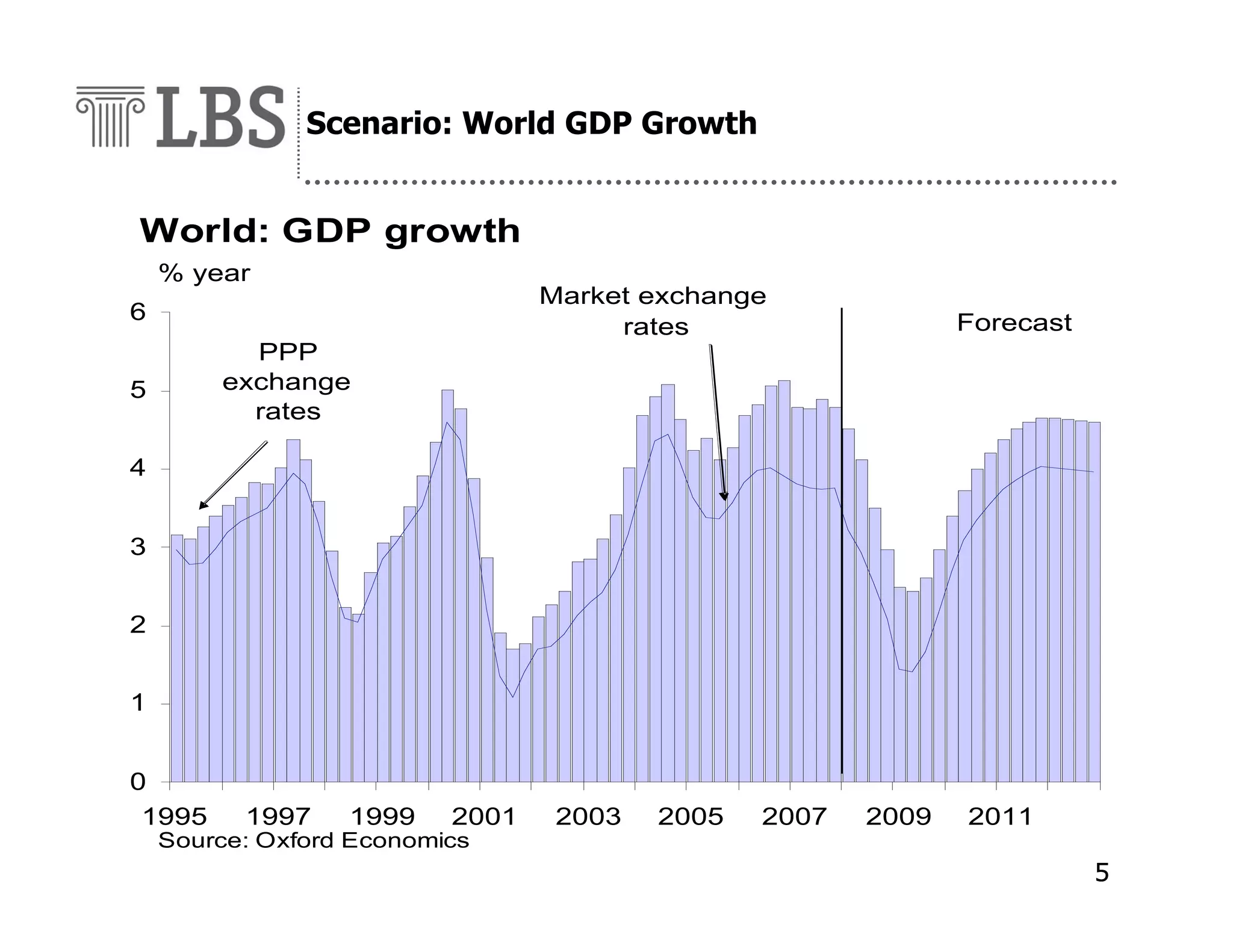
Scenario: World GDP Growth

World: GDP growth
% year

Market exchange
rates

6
PPP
exchange
rates

5

Forecast

4
3
2
1
0
1995

1997

1999

2001

Source: Oxford Economics

2003

2005

2007

2009

2011

5
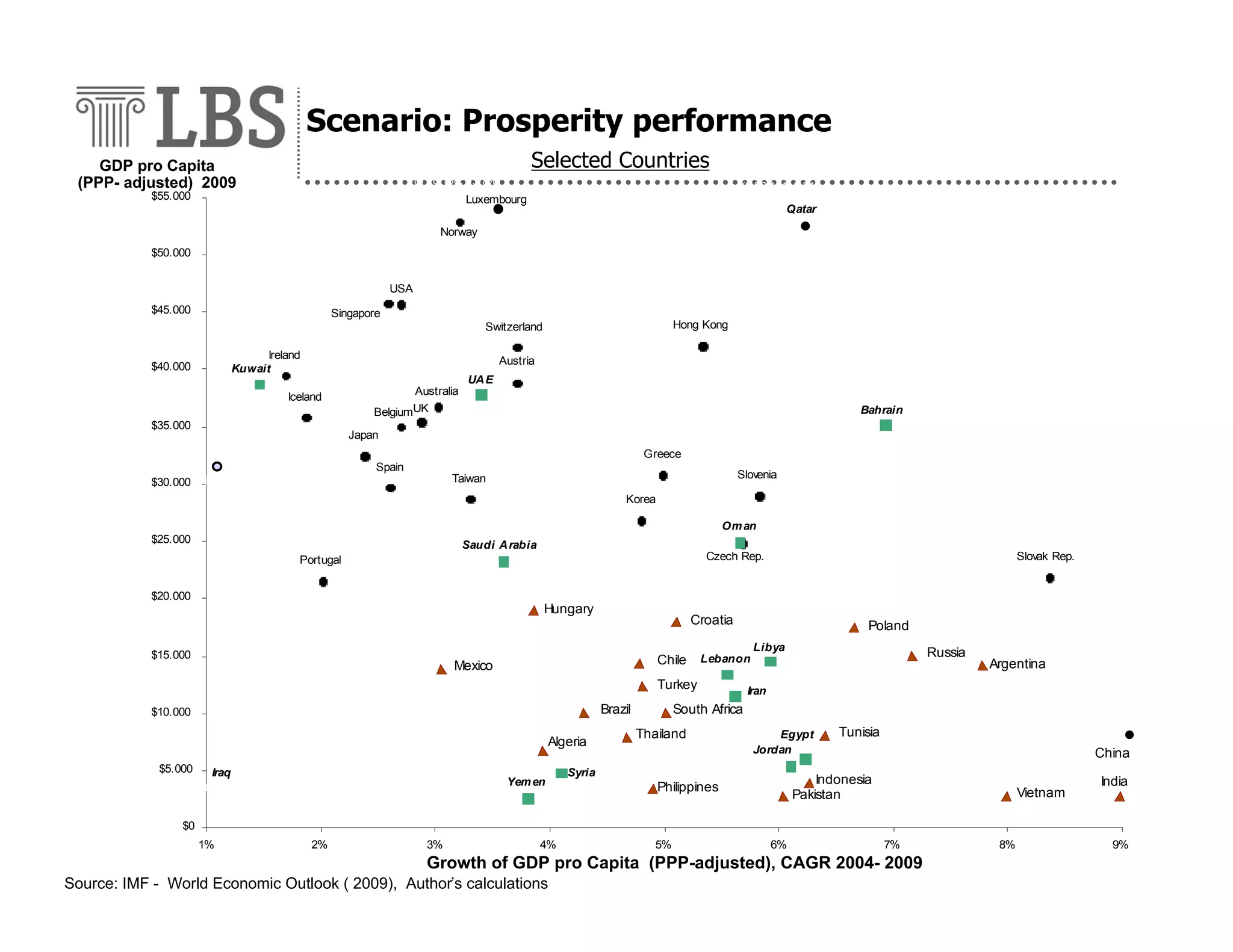
Scenario: Prosperity performance
Selected Countries

GDP pro Capita
(PPP- adjusted) 2009

($ 78.108, 3,47%)

$55.000

($ 92.121, 6,21 )

Luxembourg

Qatar

Norway
$50.000
USA
$45.000

Singapore

Hong Kong

Switzerland
Ireland
Kuwait

$40.000

Austria

Iceland
$35.000

Australia

UA E

BelgiumUK

Bahrain

Japan
Greece
Spain

$30.000

Slovenia

Taiwan

Italy

Korea
Om an
$25.000

Saudi A rabia

Czech Rep.

Portugal
$20.000

Hungary

$15.000

Croatia
Chile

Mexico
Brazil
Algeria

$5.000

Iraq
($ 3.655, 0,00%)

Yem en

Poland

Lebanon

Turkey
$10.000

Slovak Rep.

Libya

Russia

Argentina

Iran

South Africa
Thailand

Egypt
Jordan

Syria

Tunisia
China
($6.379, 10,30%)

Indonesia
Pakistan

Philippines

Vietnam

India

$0
1%

2%

3%

4%

5%

6%

7%

Growth Capita pro Capita (PPP-adjusted), CAGR 2004- 2009
Growth of GDP per of GDP(PPP-adjusted), CAGR 2004- 2009
Source:IMF - -World Economic Outlook ( 2009), authors calculations
IMF World Economic Outlook ( 2009), Author’s calculations
Source:

8%

9%
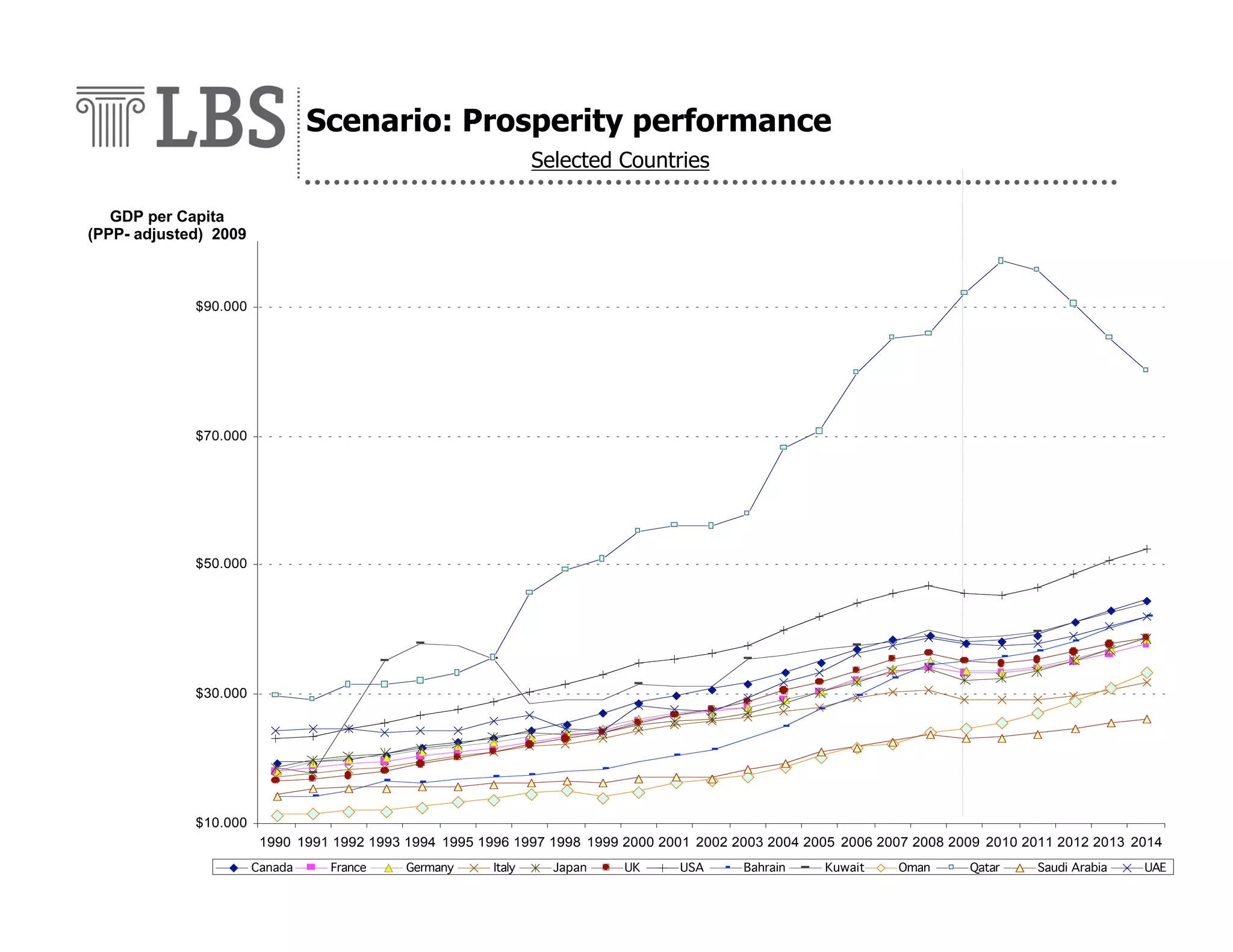
Scenario: Prosperity performance
Selected Countries
GDP per Capita
(PPP- adjusted) 2009

$90.000

$70.000

$50.000

$30.000

$10.000
1990 1991 1992 1993 1994 1995 1996 1997 1998 1999 2000 2001 2002 2003 2004 2005 2006 2007 2008 2009 2010 2011 2012 2013 2014
Canada

France

Germany

Source: IMF - World Economic Outlook ( 2009), authors calculations

Italy

Japan

UK

USA

Bahrain

Kuwait

Oman

Qatar

Saudi Arabia

UAE
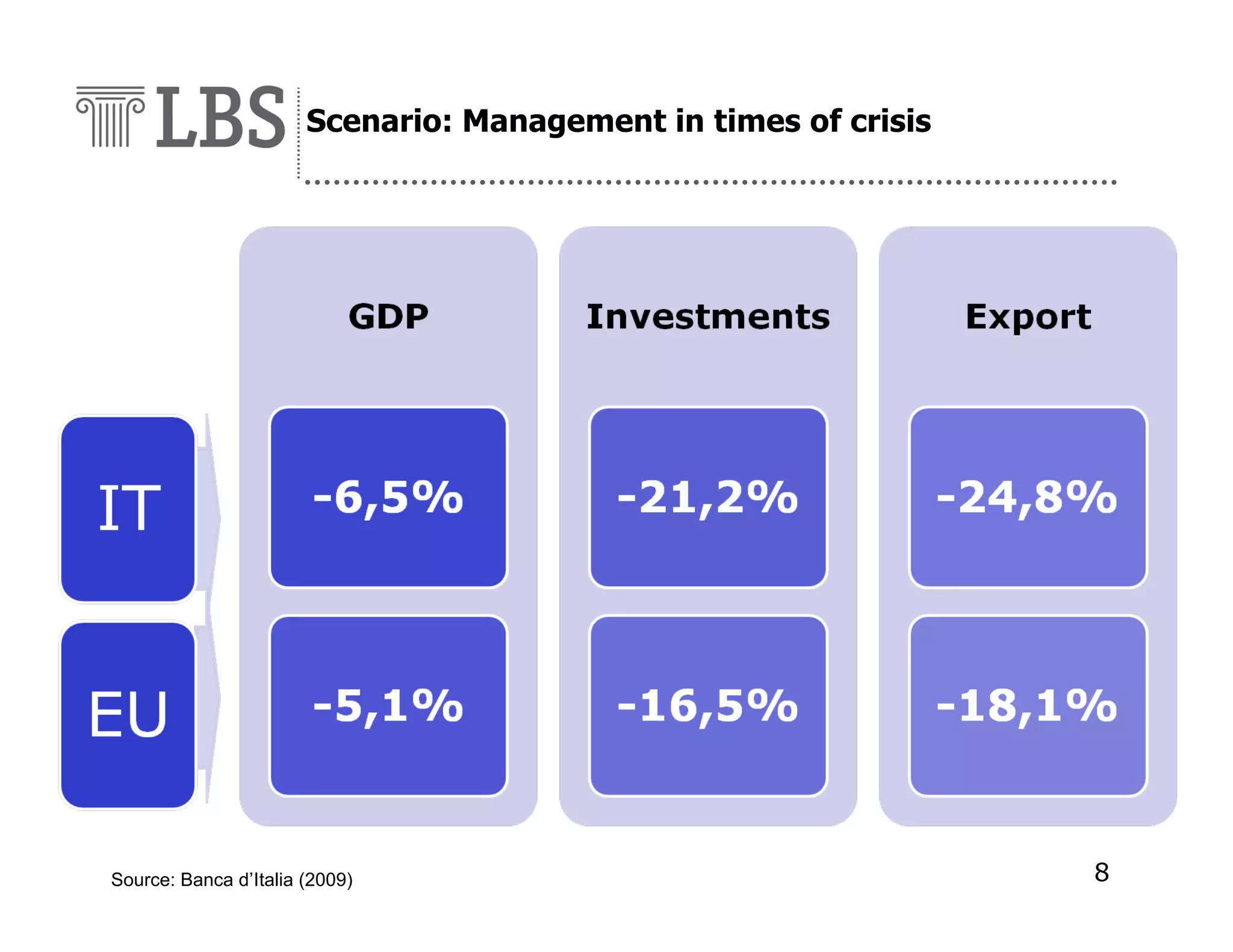
Scenario: Management in times of crisis

Source: Banca d’Italia (2009)

8
Scenario: Lessons learnt from the best perfomers

– Continuous investments in R&D
– Exploitation of ICT potential
– Leverage of the “Made-In” effect
– Valorization of territories
– Limitation of people negative turnover
– Cooperation with research centers and Universities
– From pure competition to co-opetition
9
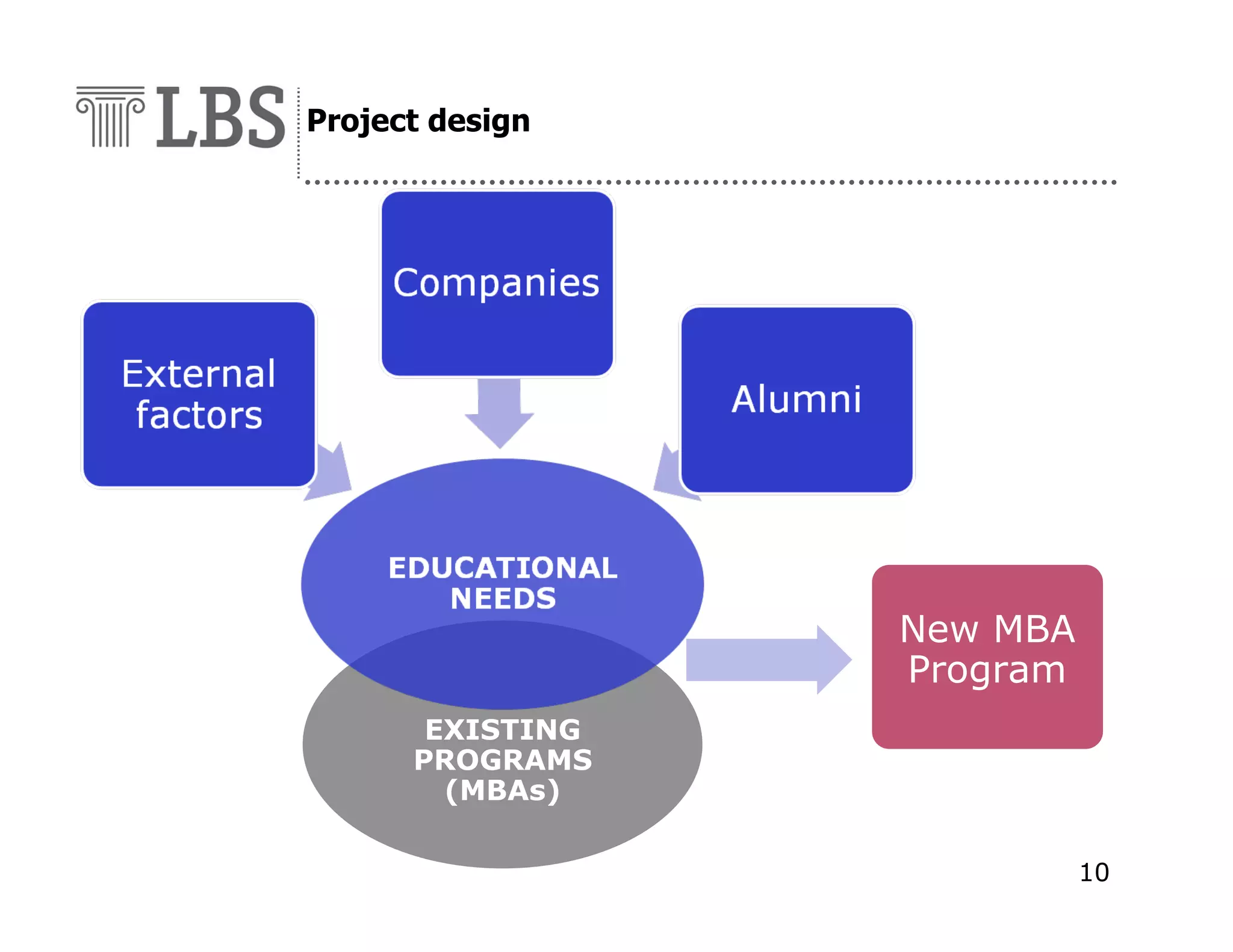
Project design

New MBA
Program
EXISTING
PROGRAMS
(MBAs)
10
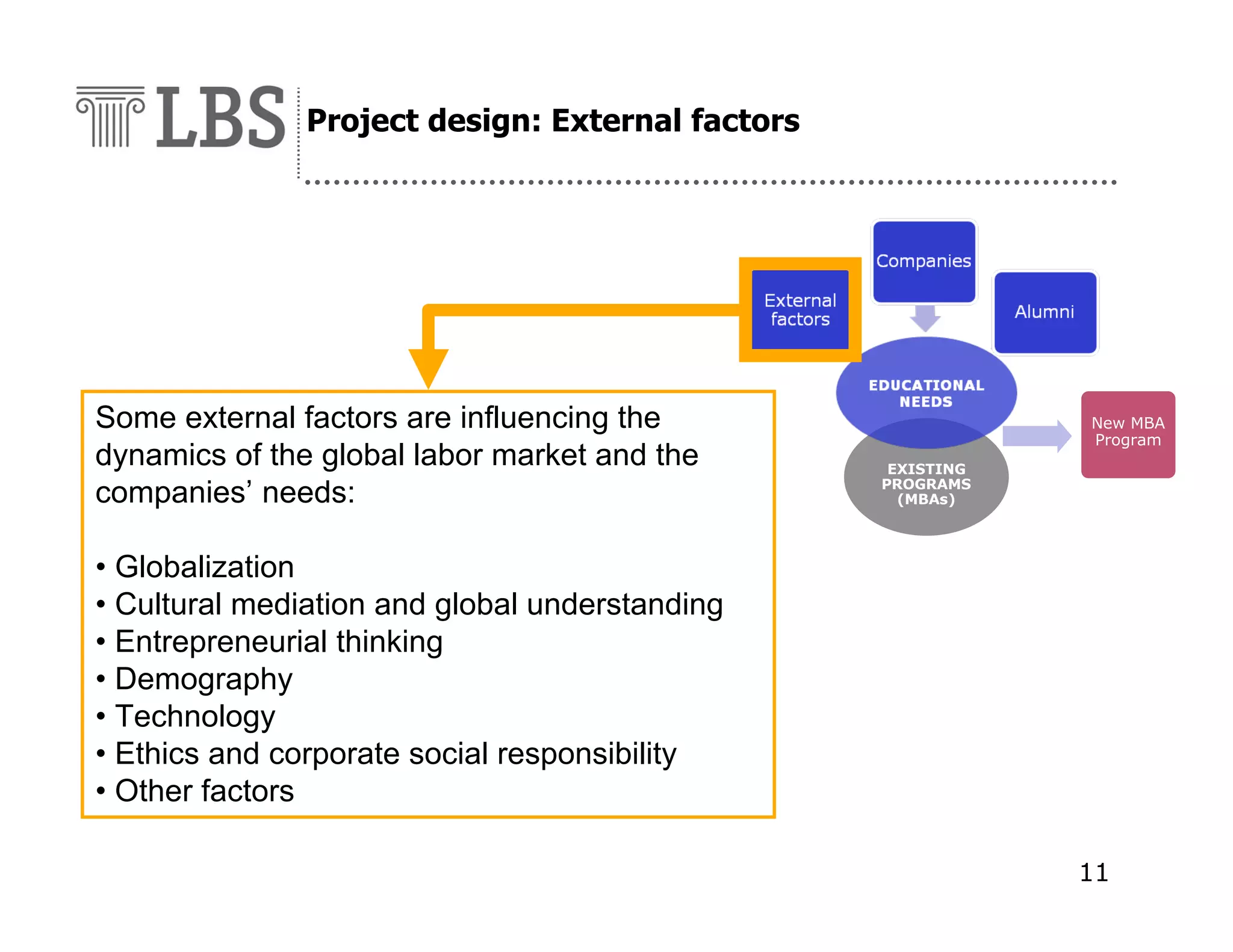
Project design: External factors

Some external factors are influencing the
dynamics of the global labor market and the
companies’ needs:

New MBA
Program
EXISTING
PROGRAMS
(MBAs)

• Globalization
• Cultural mediation and global understanding
• Entrepreneurial thinking
• Demography
• Technology
• Ethics and corporate social responsibility
• Other factors
11
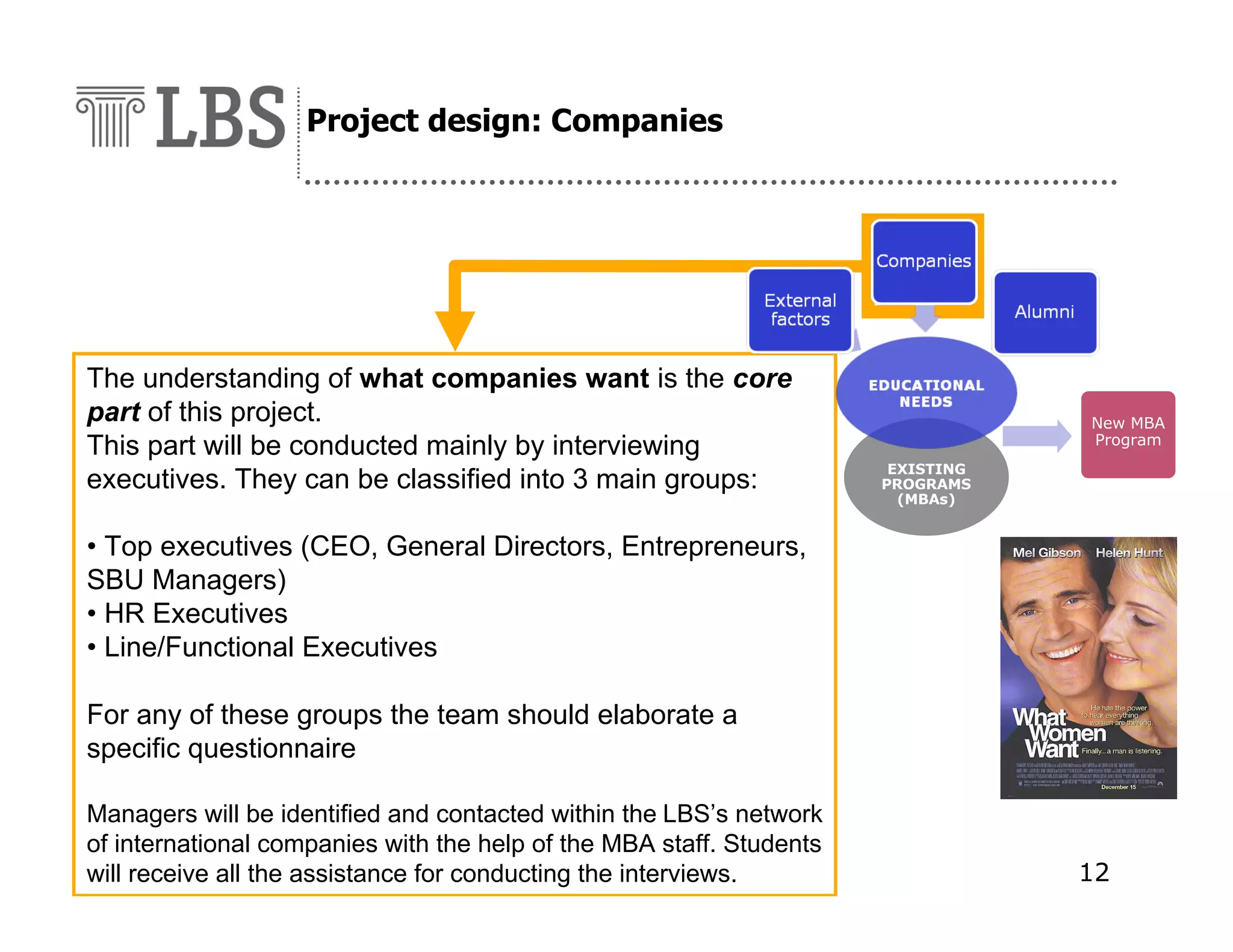
Project design: Companies

The understanding of what companies want is the core
part of this project.
This part will be conducted mainly by interviewing
executives. They can be classified into 3 main groups:

New MBA
Program
EXISTING
PROGRAMS
(MBAs)

• Top executives (CEO, General Directors, Entrepreneurs,
SBU Managers)
• HR Executives
• Line/Functional Executives
For any of these groups the team should elaborate a
specific questionnaire
Managers will be identified and contacted within the LBS’s network
of international companies with the help of the MBA staff. Students
will receive all the assistance for conducting the interviews.

12
Project design: Alumni

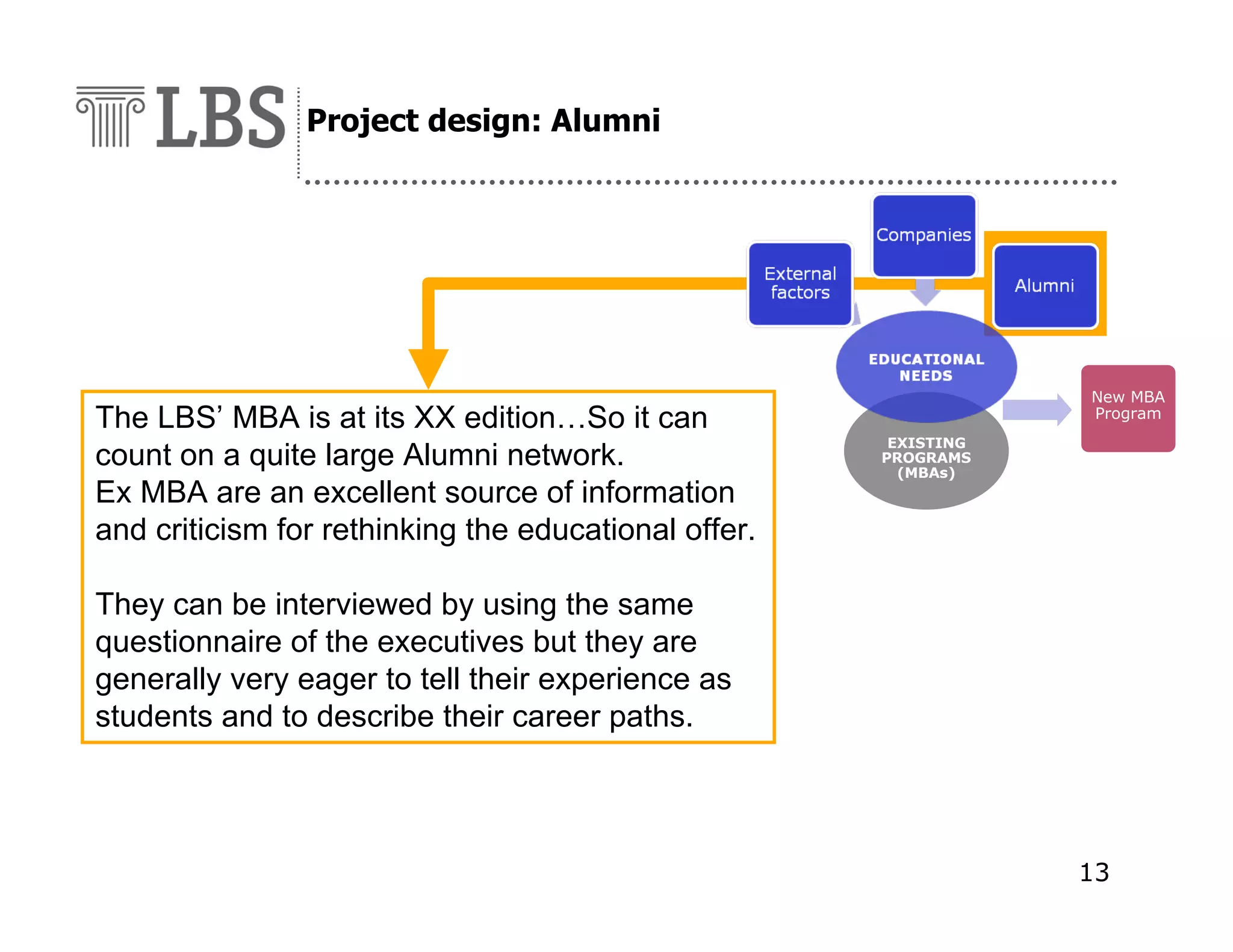
The LBS’ MBA is at its XX edition…So it can
count on a quite large Alumni network.
Ex MBA are an excellent source of information
and criticism for rethinking the educational offer.

New MBA
Program
EXISTING
PROGRAMS
(MBAs)

They can be interviewed by using the same
questionnaire of the executives but they are
generally very eager to tell their experience as
students and to describe their career paths.

13
Project design: Educational needs

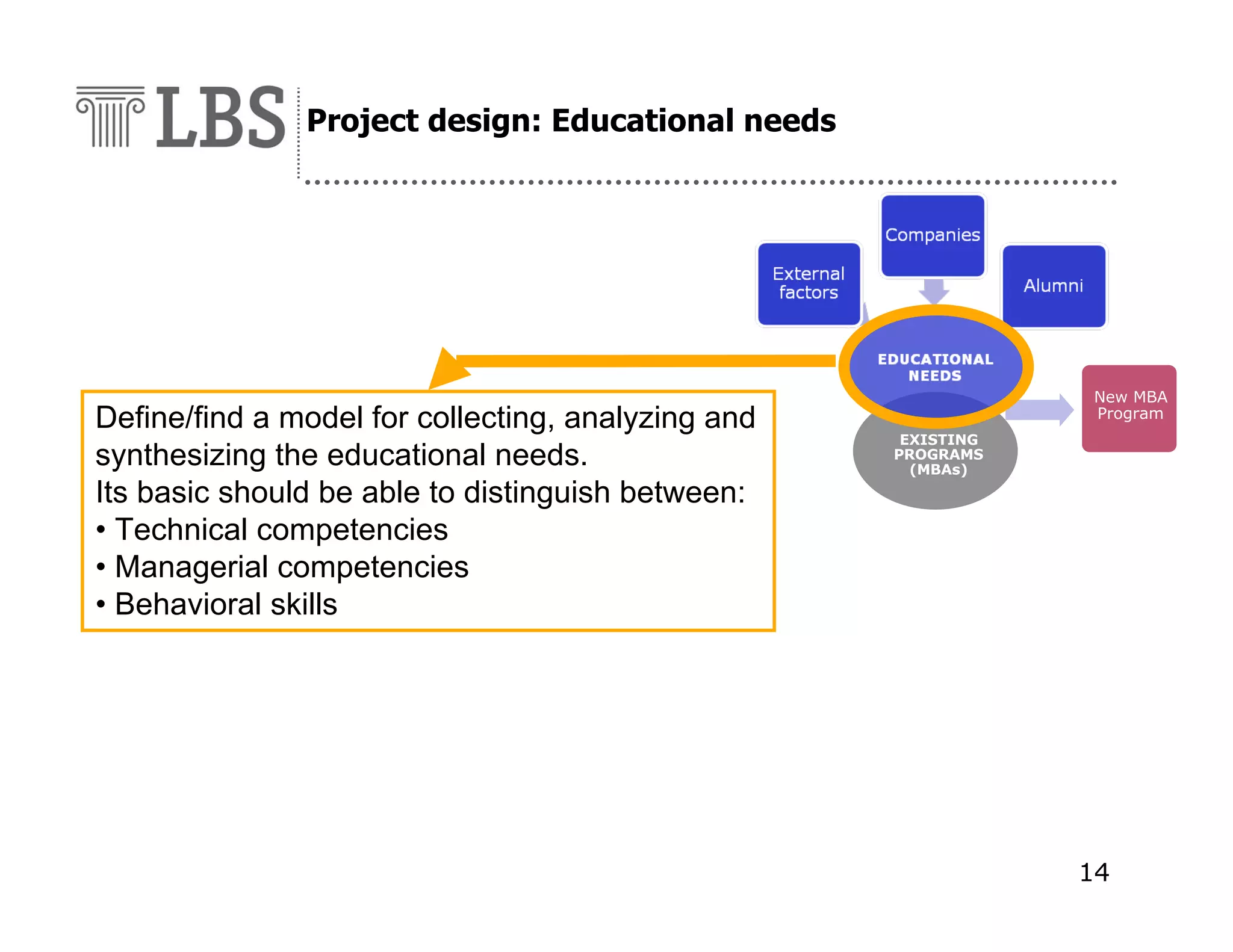
Define/find a model for collecting, analyzing and
synthesizing the educational needs.
Its basic should be able to distinguish between:
• Technical competencies
• Managerial competencies
• Behavioral skills

New MBA
Program
EXISTING
PROGRAMS
(MBAs)

14
Project design: External factors

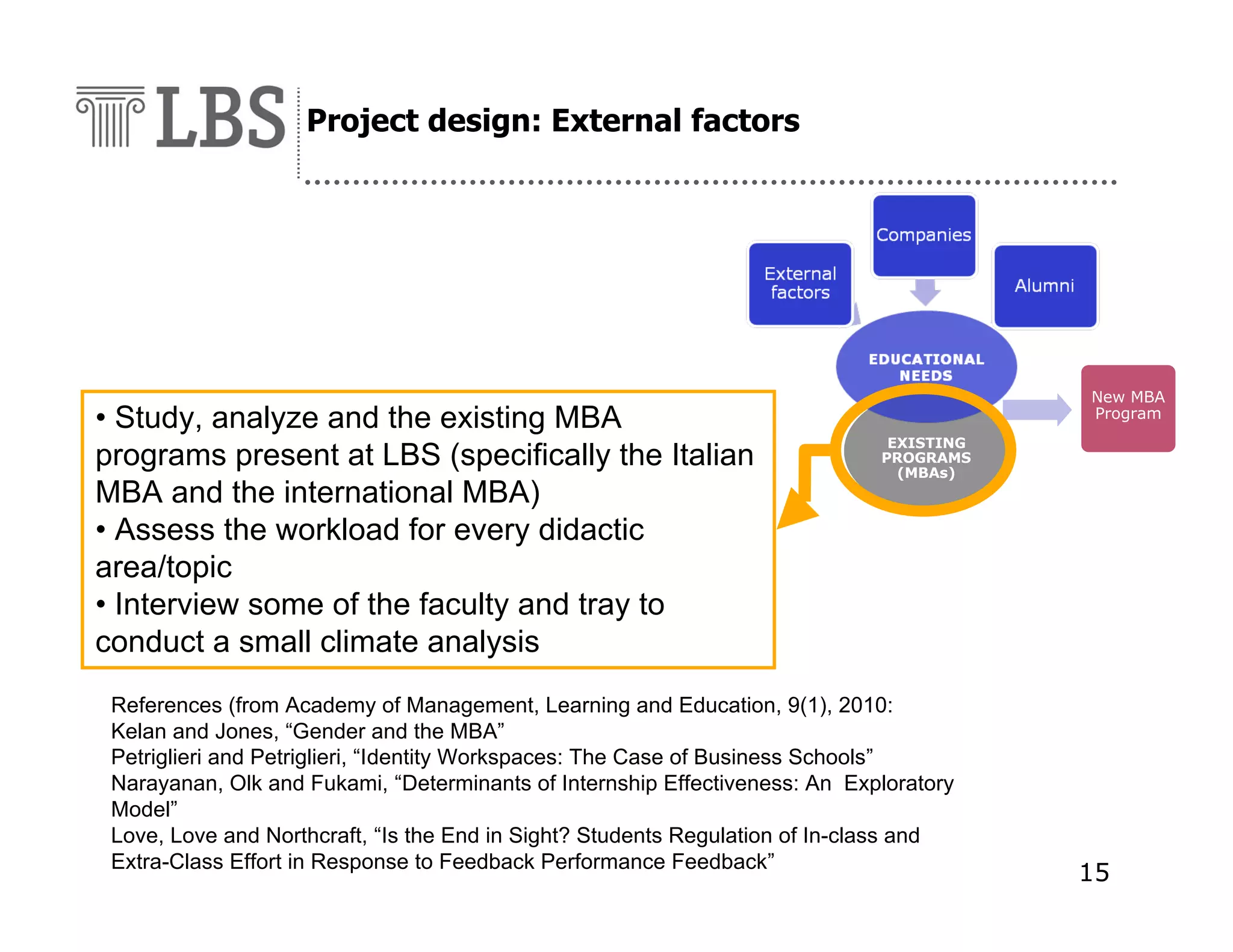
• Study, analyze and the existing MBA
programs present at LBS (specifically the Italian
MBA and the international MBA)
• Assess the workload for every didactic
area/topic
• Interview some of the faculty and tray to
conduct a small climate analysis

New MBA
Program
EXISTING
PROGRAMS
(MBAs)

References (from Academy of Management, Learning and Education, 9(1), 2010:
Kelan and Jones, “Gender and the MBA”
Petriglieri and Petriglieri, “Identity Workspaces: The Case of Business Schools”
Narayanan, Olk and Fukami, “Determinants of Internship Effectiveness: An Exploratory
Model”
Love, Love and Northcraft, “Is the End in Sight? Students Regulation of In-class and
Extra-Class Effort in Response to Feedback Performance Feedback”

15
Project design: The new MBA program

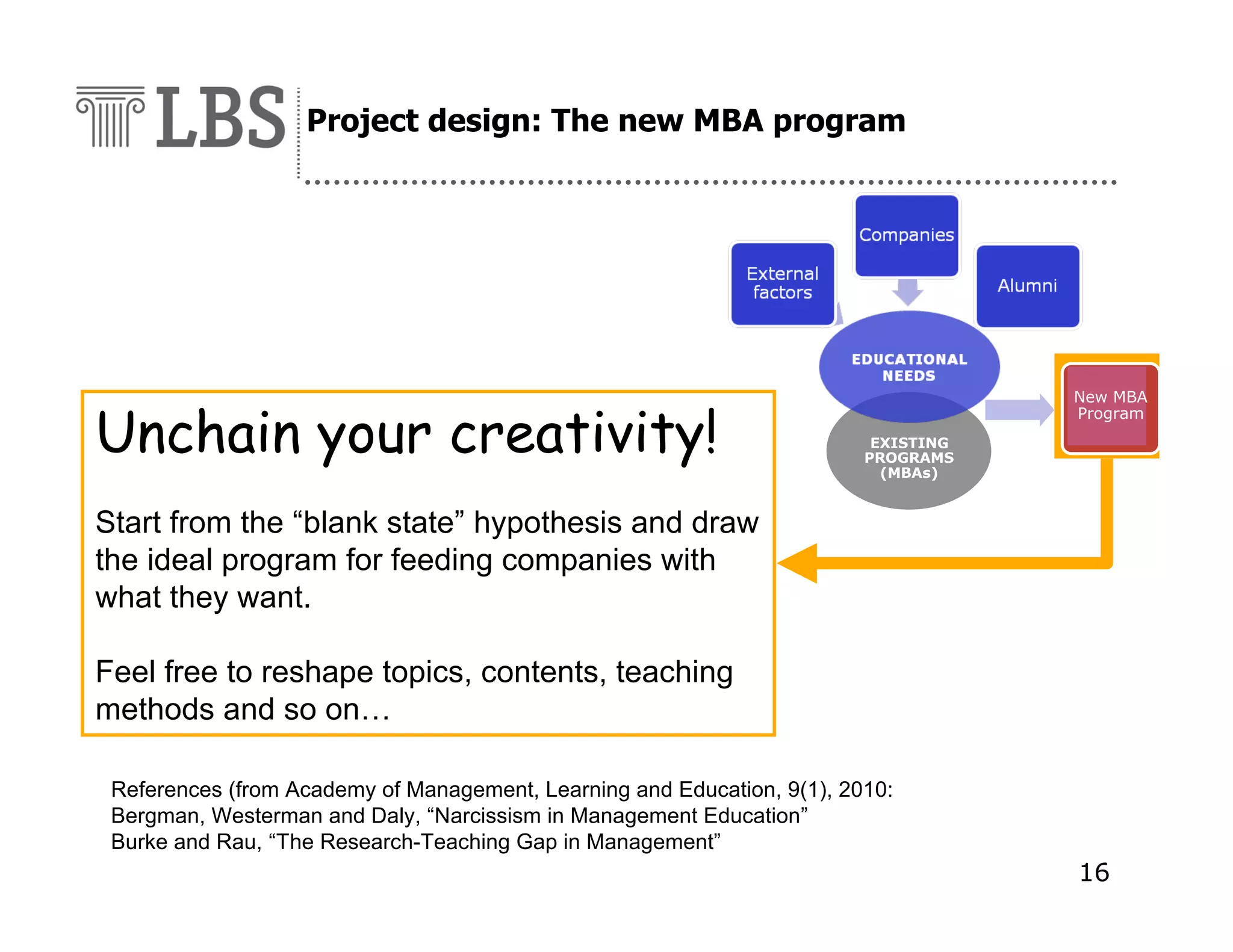
Unchain your creativity!

New MBA
Program
EXISTING
PROGRAMS
(MBAs)

Start from the “blank state” hypothesis and draw
the ideal program for feeding companies with
what they want.
Feel free to reshape topics, contents, teaching
methods and so on…
References (from Academy of Management, Learning and Education, 9(1), 2010:
Bergman, Westerman and Daly, “Narcissism in Management Education”
Burke and Rau, “The Research-Teaching Gap in Management”

16
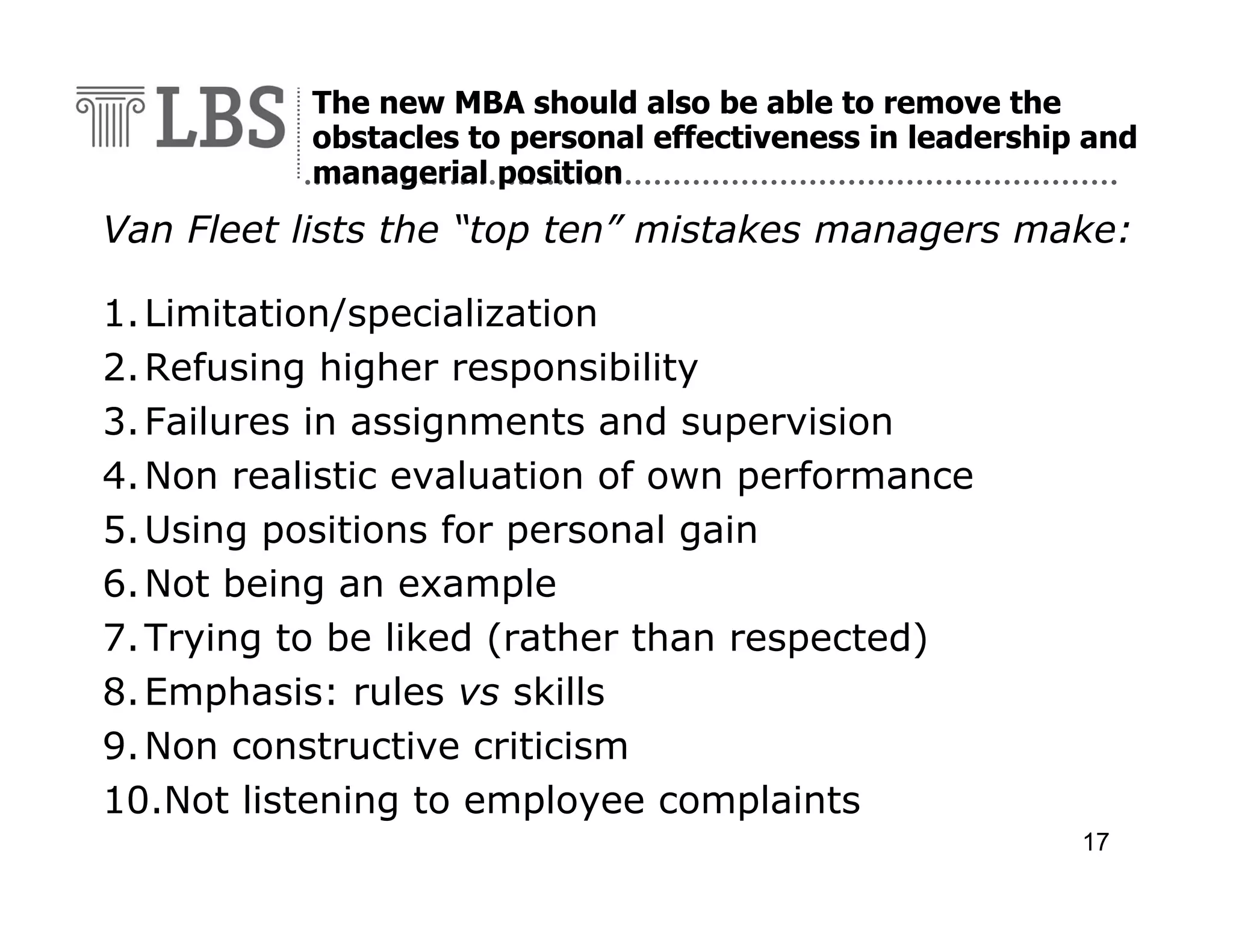
The new MBA should also be able to remove the
obstacles to personal effectiveness in leadership and
managerial position

Van Fleet lists the “top ten” mistakes managers make:
1. Limitation/specialization
2. Refusing higher responsibility
3. Failures in assignments and supervision
4. Non realistic evaluation of own performance
5. Using positions for personal gain
6. Not being an example
7. Trying to be liked (rather than respected)
8. Emphasis: rules vs skills
9. Non constructive criticism
10.Not listening to employee complaints
17
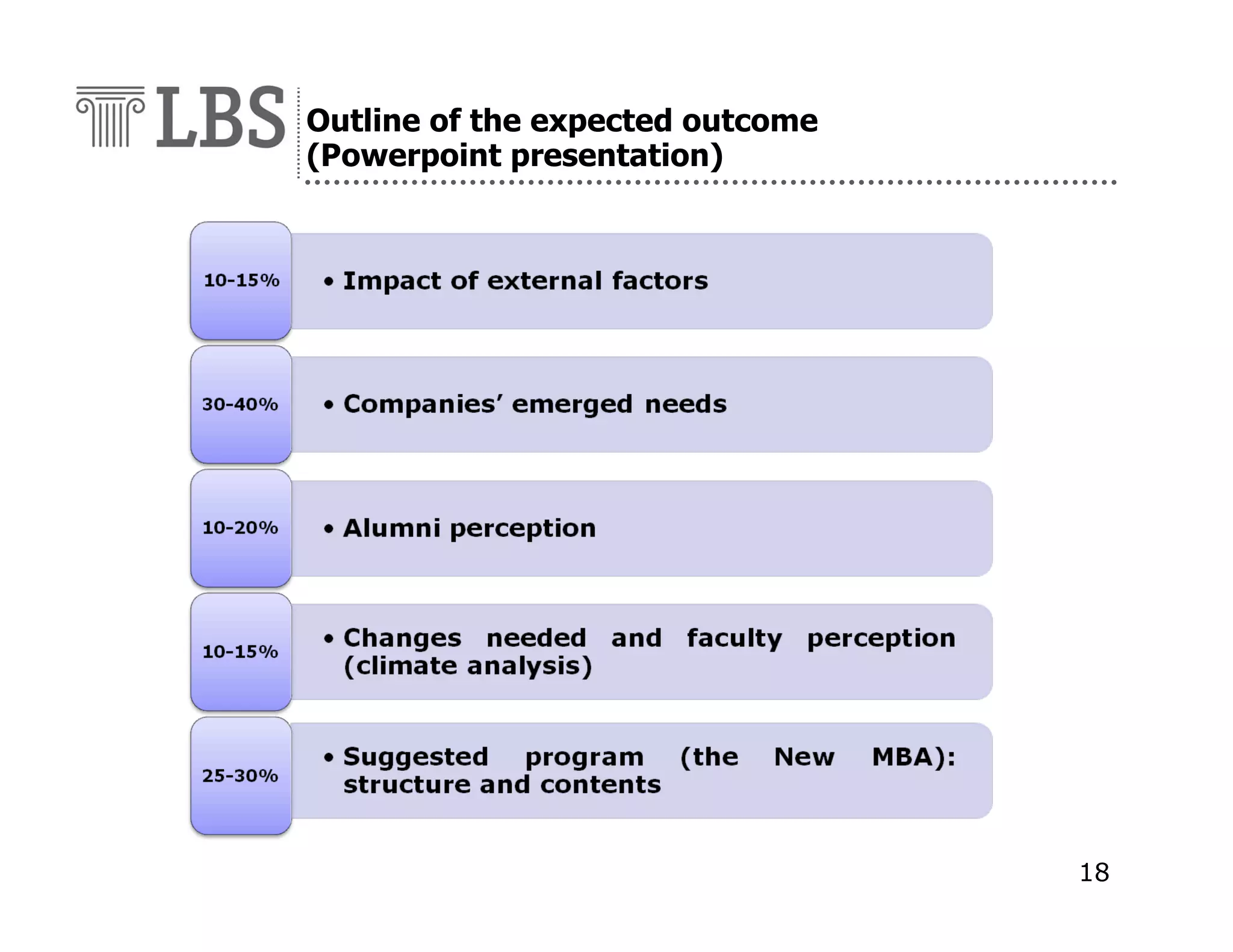
Outline of the expected outcome
(Powerpoint presentation)

18
Assignment (deadline May 7*)

– Watch the movie (first half could be enough)
– Draw an outline of the project (first draft to be discussed and
reviewed) containing:
• Sub-tasks
• Methodology
• Individual assigned roles (who’s doing what)

– Questionnaires for executives’ interview (first draft to be refined)
– Make a list of what you might need, in terms of:
• References
• Seminars
• Contacts

* Friday, May 7, 4.00-6.00 pm:
Brainstorming and knowledge sharing
[bottom up approach to your project
definition] (room 210, Viale Pola)

• Etc.
19
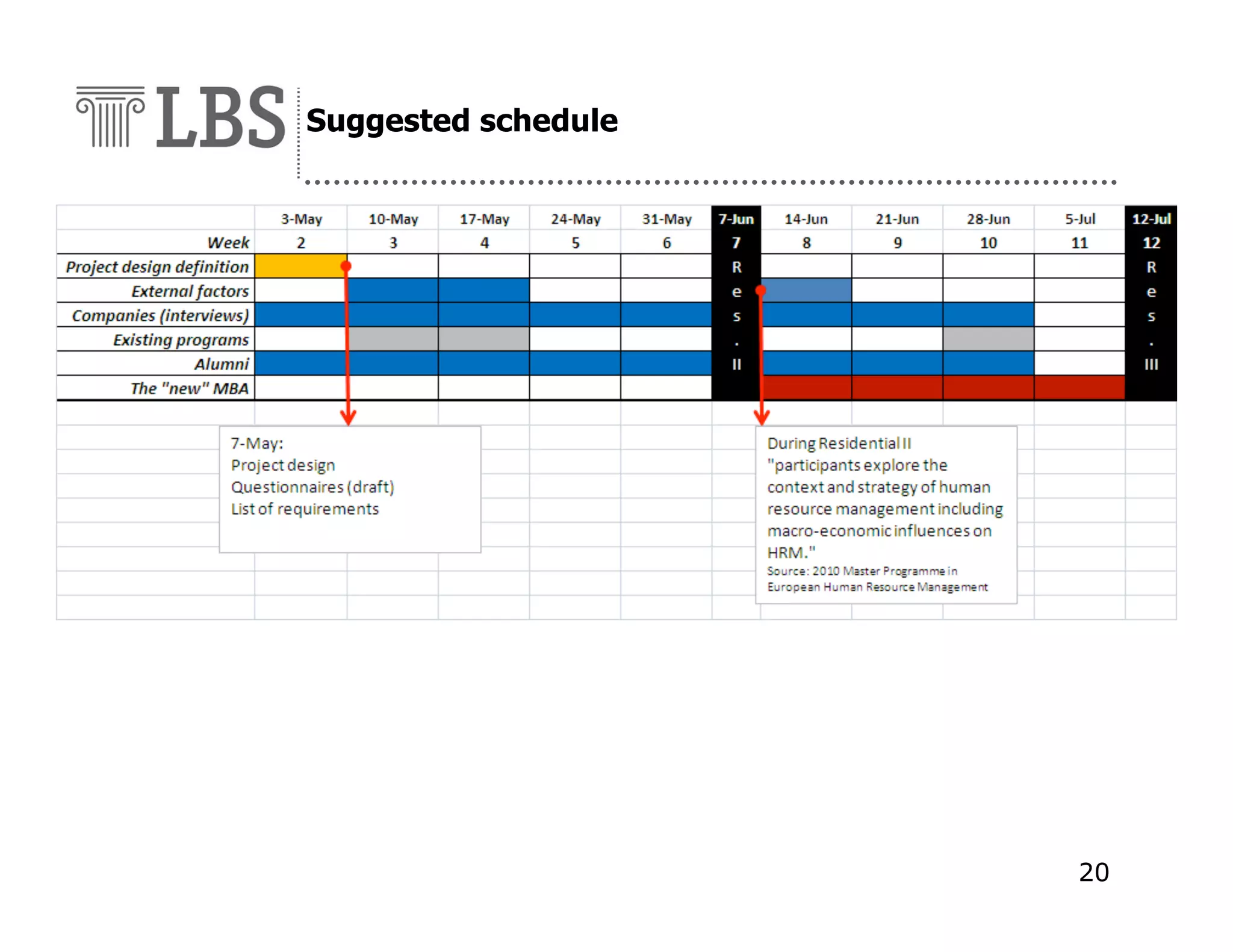
Suggested schedule

20

EHRM project

  • 1.
    What Companies Want: Graduateeducation needs in a global labor market Prof. Luca Giustiniano Associate Professor of Management Luiss Business School 1 Project presentation: 5/3/2010
  • 2.
  • 3.
    Expected outcome The expectedoutcome of the project is to help Luiss Business School improve its educational offer for the MBA programs. Recent social and economic events have driven executives and managers to the search of new routes to value creation and growth. The ultimate aim of the project is to understand “what companies want” from their present and future managers. According to the aim and philosophy of the eHRM Program: “Project work will be carried out in cross-cultural teams for a multinational company; they provide the opportunity for in-depth work and will also develop consultancy skills relevant to multinationals operating in Europe. Source: (C) 2010 Master Programme in European Human Resource Management 3
  • 4.
    Project task Participants willwork directly on business and management topics in order to carry out the research project in cooperation with the faculty. The (applied) research project will be based on multiple methodology: • Quantitative analysis •Basic descriptive statistic •External data analysis • Qualitative analysis •Participative observation •Storytelling 4
  • 5.
    Scenario: World GDPGrowth World: GDP growth % year Market exchange rates 6 PPP exchange rates 5 Forecast 4 3 2 1 0 1995 1997 1999 2001 Source: Oxford Economics 2003 2005 2007 2009 2011 5
  • 6.
    Scenario: Prosperity performance SelectedCountries GDP pro Capita (PPP- adjusted) 2009 ($ 78.108, 3,47%) $55.000 ($ 92.121, 6,21 ) Luxembourg Qatar Norway $50.000 USA $45.000 Singapore Hong Kong Switzerland Ireland Kuwait $40.000 Austria Iceland $35.000 Australia UA E BelgiumUK Bahrain Japan Greece Spain $30.000 Slovenia Taiwan Italy Korea Om an $25.000 Saudi A rabia Czech Rep. Portugal $20.000 Hungary $15.000 Croatia Chile Mexico Brazil Algeria $5.000 Iraq ($ 3.655, 0,00%) Yem en Poland Lebanon Turkey $10.000 Slovak Rep. Libya Russia Argentina Iran South Africa Thailand Egypt Jordan Syria Tunisia China ($6.379, 10,30%) Indonesia Pakistan Philippines Vietnam India $0 1% 2% 3% 4% 5% 6% 7% Growth Capita pro Capita (PPP-adjusted), CAGR 2004- 2009 Growth of GDP per of GDP(PPP-adjusted), CAGR 2004- 2009 Source:IMF - -World Economic Outlook ( 2009), authors calculations IMF World Economic Outlook ( 2009), Author’s calculations Source: 8% 9%
  • 7.
    Scenario: Prosperity performance SelectedCountries GDP per Capita (PPP- adjusted) 2009 $90.000 $70.000 $50.000 $30.000 $10.000 1990 1991 1992 1993 1994 1995 1996 1997 1998 1999 2000 2001 2002 2003 2004 2005 2006 2007 2008 2009 2010 2011 2012 2013 2014 Canada France Germany Source: IMF - World Economic Outlook ( 2009), authors calculations Italy Japan UK USA Bahrain Kuwait Oman Qatar Saudi Arabia UAE
  • 8.
    Scenario: Management intimes of crisis Source: Banca d’Italia (2009) 8
  • 9.
    Scenario: Lessons learntfrom the best perfomers – Continuous investments in R&D – Exploitation of ICT potential – Leverage of the “Made-In” effect – Valorization of territories – Limitation of people negative turnover – Cooperation with research centers and Universities – From pure competition to co-opetition 9
  • 10.
  • 11.
    Project design: Externalfactors Some external factors are influencing the dynamics of the global labor market and the companies’ needs: New MBA Program EXISTING PROGRAMS (MBAs) • Globalization • Cultural mediation and global understanding • Entrepreneurial thinking • Demography • Technology • Ethics and corporate social responsibility • Other factors 11
  • 12.
    Project design: Companies Theunderstanding of what companies want is the core part of this project. This part will be conducted mainly by interviewing executives. They can be classified into 3 main groups: New MBA Program EXISTING PROGRAMS (MBAs) • Top executives (CEO, General Directors, Entrepreneurs, SBU Managers) • HR Executives • Line/Functional Executives For any of these groups the team should elaborate a specific questionnaire Managers will be identified and contacted within the LBS’s network of international companies with the help of the MBA staff. Students will receive all the assistance for conducting the interviews. 12
  • 13.
    Project design: Alumni TheLBS’ MBA is at its XX edition…So it can count on a quite large Alumni network. Ex MBA are an excellent source of information and criticism for rethinking the educational offer. New MBA Program EXISTING PROGRAMS (MBAs) They can be interviewed by using the same questionnaire of the executives but they are generally very eager to tell their experience as students and to describe their career paths. 13
  • 14.
    Project design: Educationalneeds Define/find a model for collecting, analyzing and synthesizing the educational needs. Its basic should be able to distinguish between: • Technical competencies • Managerial competencies • Behavioral skills New MBA Program EXISTING PROGRAMS (MBAs) 14
  • 15.
    Project design: Externalfactors • Study, analyze and the existing MBA programs present at LBS (specifically the Italian MBA and the international MBA) • Assess the workload for every didactic area/topic • Interview some of the faculty and tray to conduct a small climate analysis New MBA Program EXISTING PROGRAMS (MBAs) References (from Academy of Management, Learning and Education, 9(1), 2010: Kelan and Jones, “Gender and the MBA” Petriglieri and Petriglieri, “Identity Workspaces: The Case of Business Schools” Narayanan, Olk and Fukami, “Determinants of Internship Effectiveness: An Exploratory Model” Love, Love and Northcraft, “Is the End in Sight? Students Regulation of In-class and Extra-Class Effort in Response to Feedback Performance Feedback” 15
  • 16.
    Project design: Thenew MBA program Unchain your creativity! New MBA Program EXISTING PROGRAMS (MBAs) Start from the “blank state” hypothesis and draw the ideal program for feeding companies with what they want. Feel free to reshape topics, contents, teaching methods and so on… References (from Academy of Management, Learning and Education, 9(1), 2010: Bergman, Westerman and Daly, “Narcissism in Management Education” Burke and Rau, “The Research-Teaching Gap in Management” 16
  • 17.
    The new MBAshould also be able to remove the obstacles to personal effectiveness in leadership and managerial position Van Fleet lists the “top ten” mistakes managers make: 1. Limitation/specialization 2. Refusing higher responsibility 3. Failures in assignments and supervision 4. Non realistic evaluation of own performance 5. Using positions for personal gain 6. Not being an example 7. Trying to be liked (rather than respected) 8. Emphasis: rules vs skills 9. Non constructive criticism 10.Not listening to employee complaints 17
  • 18.
    Outline of theexpected outcome (Powerpoint presentation) 18
  • 19.
    Assignment (deadline May7*) – Watch the movie (first half could be enough) – Draw an outline of the project (first draft to be discussed and reviewed) containing: • Sub-tasks • Methodology • Individual assigned roles (who’s doing what) – Questionnaires for executives’ interview (first draft to be refined) – Make a list of what you might need, in terms of: • References • Seminars • Contacts * Friday, May 7, 4.00-6.00 pm: Brainstorming and knowledge sharing [bottom up approach to your project definition] (room 210, Viale Pola) • Etc. 19
  • 20.