Teaching English for young Learners 
SCHOOLS 
Presentation group 1 
By : 
Ashari Susanti 
Asni 
Harmaini 
Saddam Husein 
Lecturer: 
Rona Elfiza, S.Pd
THE NATURE OF CHILDREN’S SCHOOLING 
What is the function 
of school? 
What is the 
nature of Changing 
social development 
context 
in schools?
FUNCTION OF CHILDREN SCHOOLS 
The Back To Basics in 1980s 
 the function of schools should be the rigorous 
training of intellectual skills through such subjects as 
English, Math, and science. 
 believe that schools should be in the business of 
imparting knowledge to children and should not be 
as concern about their social and emotional lives. 
 advocates – want students to have more home 
works, more tests, and more discipline.
 The debate about the function of schools produce shifts of emphasis much 
like a swinging pendulum, moving toward basic skills and intellectual 
development at one point in time and toward options and comprehensive 
training for life intellectual and social development at another, and so on back 
and forth (cross, 1984) 
 in 1980s the pendulum swung strongly in the direction of back basis, but 
today trying the push the pendulum toward a more comprehensive education 
that include social as well as cognitive development.
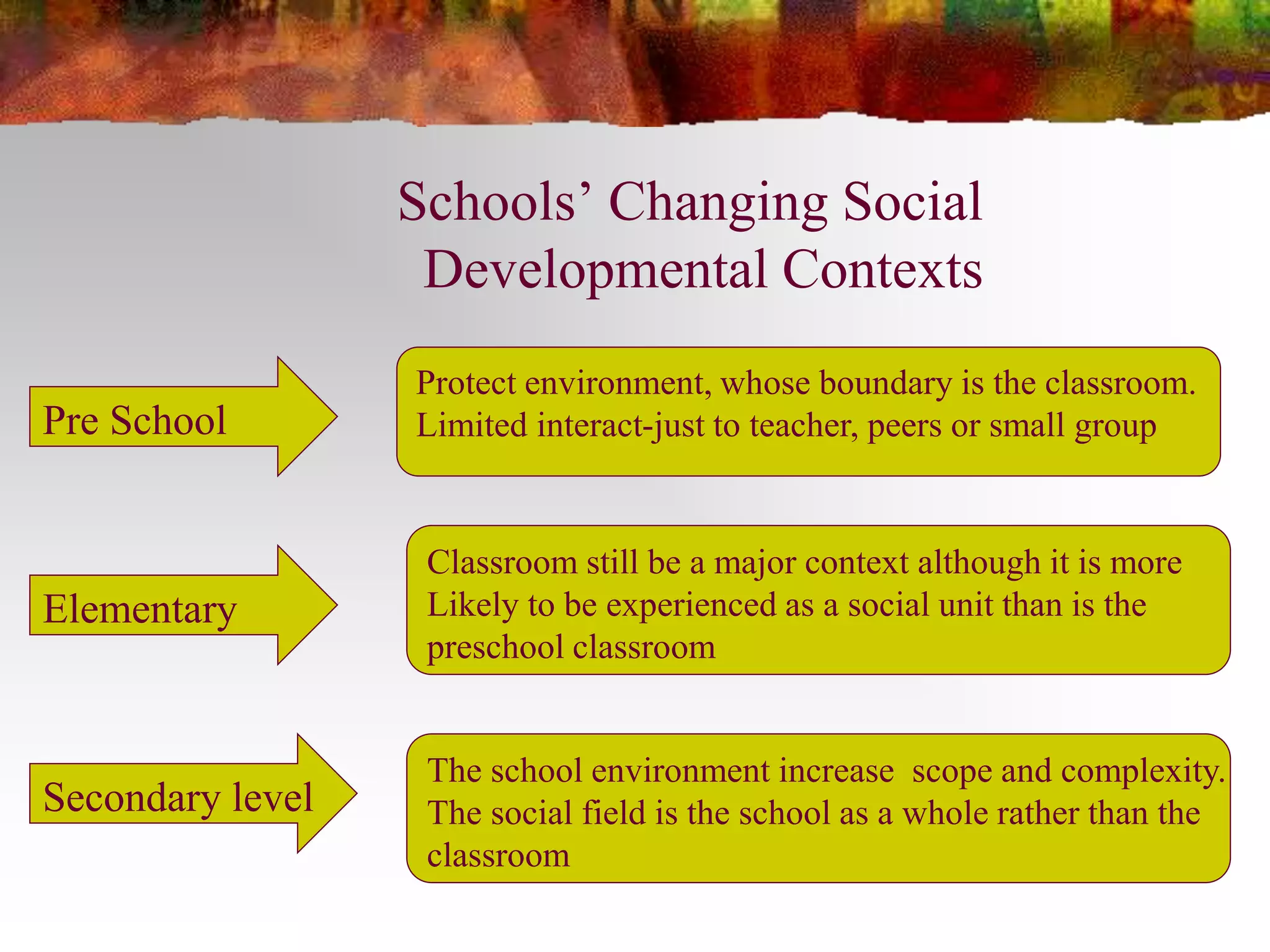
Schools’ Changing Social 
Developmental Contexts 
Pre School 
Elementary 
Secondary level 
Protect environment, whose boundary is the classroom. 
Limited interact-just to teacher, peers or small group 
Classroom still be a major context although it is more 
Likely to be experienced as a social unit than is the 
preschool classroom 
The school environment increase scope and complexity. 
The social field is the school as a whole rather than the 
classroom
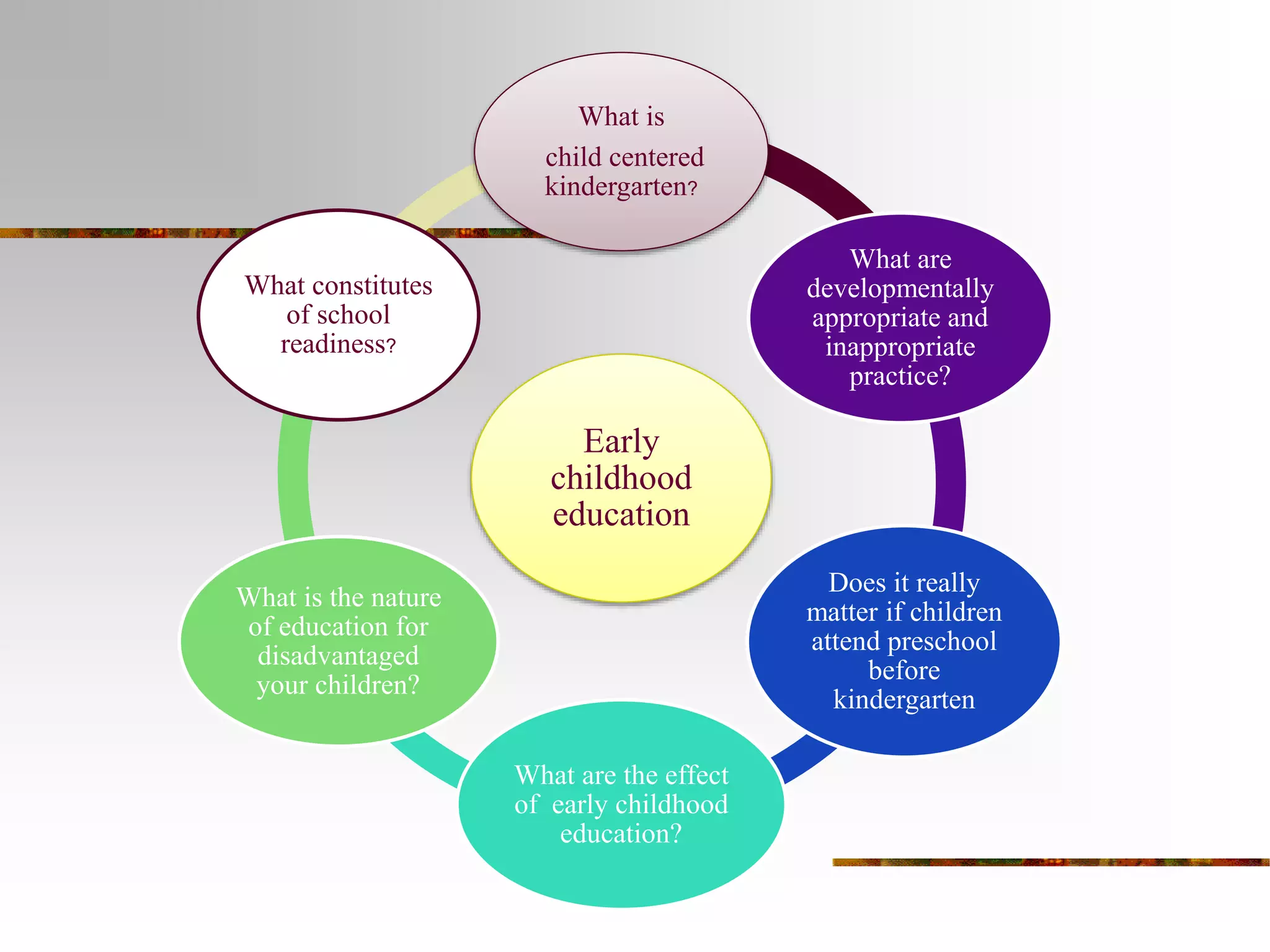
What is 
child centered 
kindergarten? 
Early 
childhood 
education 
What are 
developmentally 
appropriate and 
inappropriate 
practice? 
Does it really 
matter if children 
attend preschool 
before 
kindergarten 
What are the effect 
of early childhood 
education? 
What constitutes 
of school 
readiness? 
What is the nature 
of education for 
disadvantaged 
your children?
Child centered kindergarten 
 Kindergarten program was very a great deal 
 some expert believed that the curriculum of many today’s kindergarten 
and preschool program places too much emphasis on achievement 
and success putting pressure on young children to early in their 
development (bredekamp &shepard 1989; Charlesworth,1989; 
Elkind,1987). 

In the child kindergarten, education involves the whole 
Child and includes of child concern for the child physical, 
cognitive, 
and social development . 
Instruction is organized around the child’s need, interest 
And learning style. 
The process of learning, rather than what is learned, 
is emphasized.
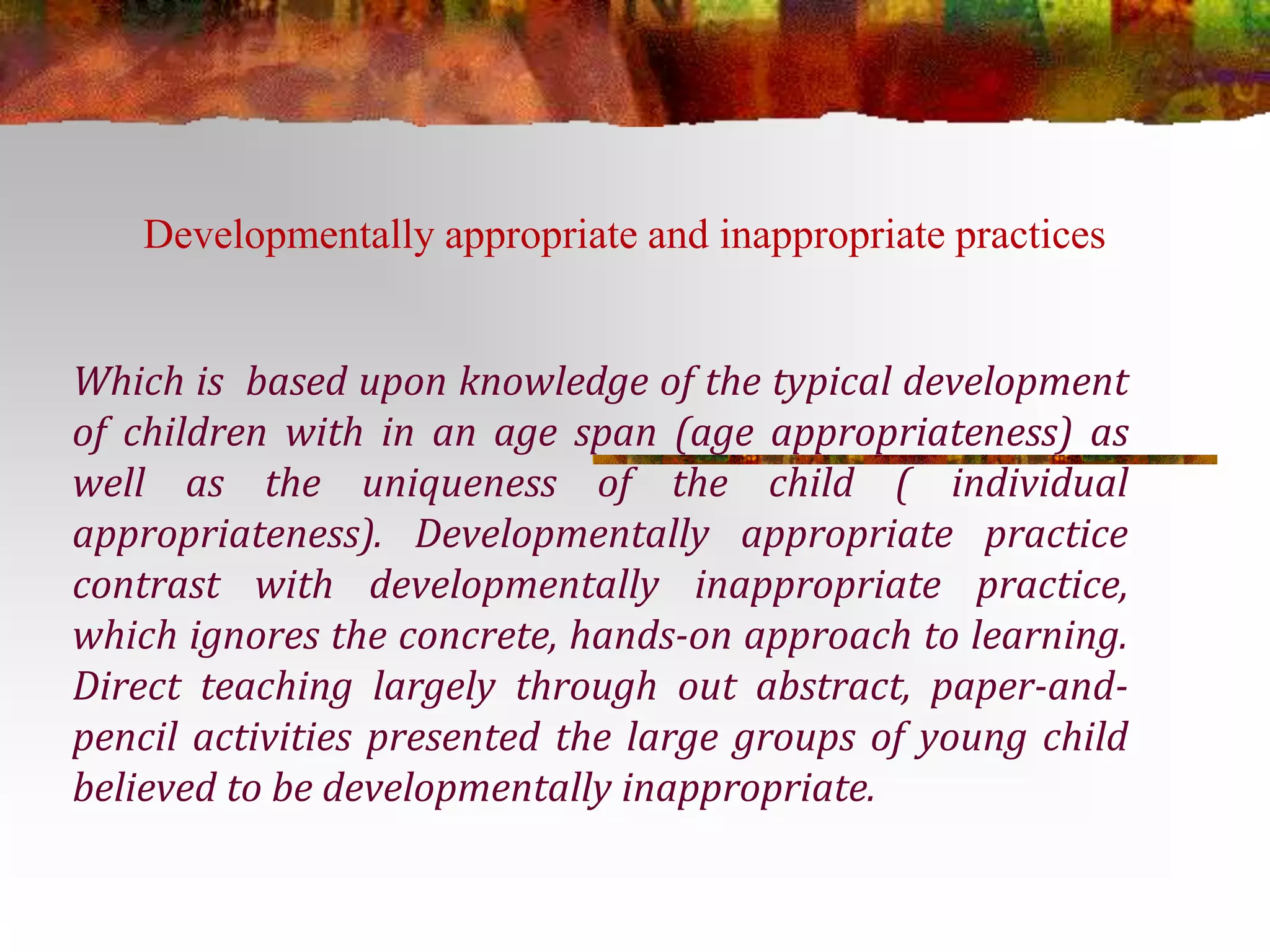
Developmentally appropriate and inappropriate practices 
Which is based upon knowledge of the typical development 
of children with in an age span (age appropriateness) as 
well as the uniqueness of the child ( individual 
appropriateness). Developmentally appropriate practice 
contrast with developmentally inappropriate practice, 
which ignores the concrete, hands-on approach to learning. 
Direct teaching largely through out abstract, paper-and-pencil 
activities presented the large groups of young child 
believed to be developmentally inappropriate.
Does it really matter if children attend preschool before 
kindergarten?
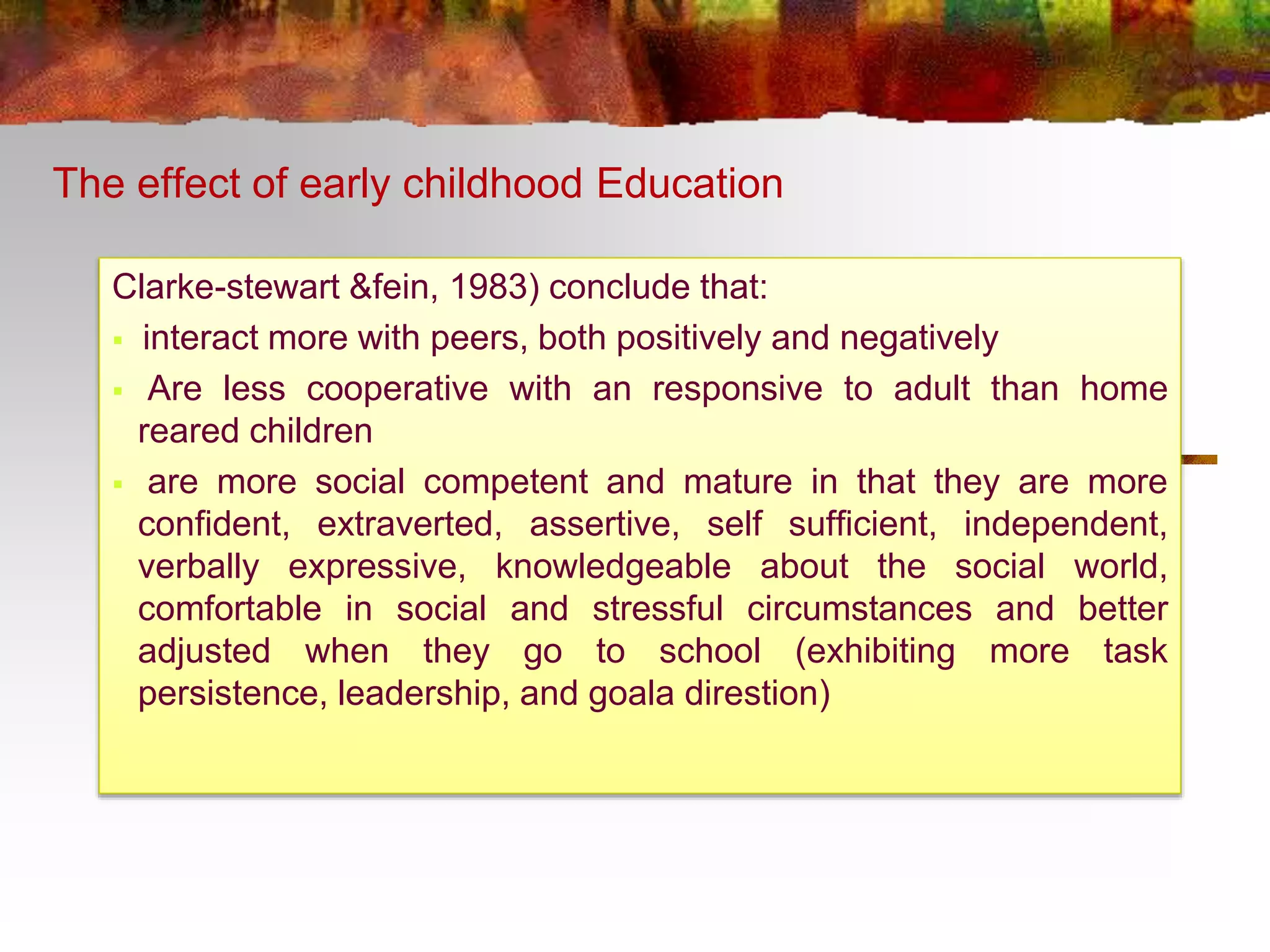
The effect of early childhood Education 
Clarke-stewart &fein, 1983) conclude that: 
 interact more with peers, both positively and negatively 
 Are less cooperative with an responsive to adult than home 
reared children 
 are more social competent and mature in that they are more 
confident, extraverted, assertive, self sufficient, independent, 
verbally expressive, knowledgeable about the social world, 
comfortable in social and stressful circumstances and better 
adjusted when they go to school (exhibiting more task 
persistence, leadership, and goala direstion)
Education for disadvantaged of children
School Readiness 
Three important factor school readiness : 
 The diversity and inequity of children’s early life 
experiences 
 The wide range of variation in young children’s developing 
learning 
 The degree to which school expectations for children 
entering kindergarten are reasonable, appropriate, and 
supportive individual difference of children.
The national association for the education of young children (1990;willer 
&bredekemp) Stress that government official and educators who promote 
universal school Readiness should commit the following: 
 addressing the inequities in early life experiences so that all children have 
access to the opportunities that promote success in school 
 recognizing and supporting individual differences ion children 
 establishing reasonable and appropriate expectations for children’s 
capabilities upon school entry 
According to NAEYC it is important to provide families which 
access to the services and support necessary to prepare children to success 
in school.
The Transition to elementary School

Efyl schools

  • 1.
    Teaching English foryoung Learners SCHOOLS Presentation group 1 By : Ashari Susanti Asni Harmaini Saddam Husein Lecturer: Rona Elfiza, S.Pd
  • 2.
    THE NATURE OFCHILDREN’S SCHOOLING What is the function of school? What is the nature of Changing social development context in schools?
  • 3.
    FUNCTION OF CHILDRENSCHOOLS The Back To Basics in 1980s  the function of schools should be the rigorous training of intellectual skills through such subjects as English, Math, and science.  believe that schools should be in the business of imparting knowledge to children and should not be as concern about their social and emotional lives.  advocates – want students to have more home works, more tests, and more discipline.
  • 4.
     The debateabout the function of schools produce shifts of emphasis much like a swinging pendulum, moving toward basic skills and intellectual development at one point in time and toward options and comprehensive training for life intellectual and social development at another, and so on back and forth (cross, 1984)  in 1980s the pendulum swung strongly in the direction of back basis, but today trying the push the pendulum toward a more comprehensive education that include social as well as cognitive development.
  • 5.
    Schools’ Changing Social Developmental Contexts Pre School Elementary Secondary level Protect environment, whose boundary is the classroom. Limited interact-just to teacher, peers or small group Classroom still be a major context although it is more Likely to be experienced as a social unit than is the preschool classroom The school environment increase scope and complexity. The social field is the school as a whole rather than the classroom
  • 6.
    What is childcentered kindergarten? Early childhood education What are developmentally appropriate and inappropriate practice? Does it really matter if children attend preschool before kindergarten What are the effect of early childhood education? What constitutes of school readiness? What is the nature of education for disadvantaged your children?
  • 7.
    Child centered kindergarten  Kindergarten program was very a great deal  some expert believed that the curriculum of many today’s kindergarten and preschool program places too much emphasis on achievement and success putting pressure on young children to early in their development (bredekamp &shepard 1989; Charlesworth,1989; Elkind,1987). 
  • 8.
    In the childkindergarten, education involves the whole Child and includes of child concern for the child physical, cognitive, and social development . Instruction is organized around the child’s need, interest And learning style. The process of learning, rather than what is learned, is emphasized.
  • 9.
    Developmentally appropriate andinappropriate practices Which is based upon knowledge of the typical development of children with in an age span (age appropriateness) as well as the uniqueness of the child ( individual appropriateness). Developmentally appropriate practice contrast with developmentally inappropriate practice, which ignores the concrete, hands-on approach to learning. Direct teaching largely through out abstract, paper-and-pencil activities presented the large groups of young child believed to be developmentally inappropriate.
  • 10.
    Does it reallymatter if children attend preschool before kindergarten?
  • 11.
    The effect ofearly childhood Education Clarke-stewart &fein, 1983) conclude that:  interact more with peers, both positively and negatively  Are less cooperative with an responsive to adult than home reared children  are more social competent and mature in that they are more confident, extraverted, assertive, self sufficient, independent, verbally expressive, knowledgeable about the social world, comfortable in social and stressful circumstances and better adjusted when they go to school (exhibiting more task persistence, leadership, and goala direstion)
  • 12.
  • 13.
    School Readiness Threeimportant factor school readiness :  The diversity and inequity of children’s early life experiences  The wide range of variation in young children’s developing learning  The degree to which school expectations for children entering kindergarten are reasonable, appropriate, and supportive individual difference of children.
  • 14.
    The national associationfor the education of young children (1990;willer &bredekemp) Stress that government official and educators who promote universal school Readiness should commit the following:  addressing the inequities in early life experiences so that all children have access to the opportunities that promote success in school  recognizing and supporting individual differences ion children  establishing reasonable and appropriate expectations for children’s capabilities upon school entry According to NAEYC it is important to provide families which access to the services and support necessary to prepare children to success in school.
  • 15.
    The Transition toelementary School