Nerve Pain
Nerve pain, also known as neuralgia or neuropathic pain, occurs when a
health condition impacts the nerves responsible for transmitting sensations
to the brain. Nerve pain can manifest differently compared to other types of
pain.
Nerve pain can affect any nerve in the body, with certain nerves being more
commonly affected. Examples include:
1. Post-herpetic pain - which can occur after experiencing shingles (herpes
zoster) and affects the same area as the shingles rash
2. Trigeminal pain - causing pain in the jaw or cheek
3. Occipital pain - causing pain at the base of the skull that may radiate to
the back of the head
4. Pudendal pain - causing pain in the 'saddle area' between the legs
Symptoms
Nerve pain typically presents as a shooting, stabbing, or burning sensation.
It can sometimes feel as sharp and sudden as an electric shock. Individuals
may experience heightened sensitivity to touch or cold, and pain triggered
by stimuli that would not normally be painful, such as light contact with the
skin.
Nerve pain is often more intense during night time and can range from mild
to severe. It may significantly impact various aspects of life, including sleep,
sexual activity, work, and physical exercise. Individuals with nerve pain may
experience feelings of anger, frustration, anxiety, and depression.
Click this link if you want to have a better solution to nerve issues:
https://instituteofneuropathy.com/nerve-solution#aff=Harickseng
Disclaimer: Product recommendations here are based on personal
experiences and research. We may earn from qualifying purchases
through affiliate links, but rest assured, our recommendations remain
unbiased. Always do your own research before buying.
Causes
1. Nerve pain can be attributed to various factors, including injuries,
diseases affecting the central nervous system, poor blood circulation to
nerves, excessive alcohol consumption, phantom pain post-amputation,
deficiencies in vitamins B12 or thiamine, and certain medications.
2. Diseases such as infections like shingles and HIV/AIDS, multiple
sclerosis, diabetes, stroke, cancer, and treatments involving radiation,
surgery, or chemotherapy can also lead to nerve pain.
3. Additionally, conditions like trapped nerves in carpal tunnel syndrome,
sciatica, fibromyalgia, and peripheral neuropathy are associated with nerve
pain, each presenting unique symptoms and causes related to nerve
damage or dysfunction.
Diagnosis
- The diagnosis of nerve pain involves a thorough examination of
symptoms and a physical assessment by a healthcare professional.
- Additional tests such as blood tests, nerve conduction studies, and
imaging scans may be recommended to further evaluate the condition.
- These tests aim to assess general health, identify underlying conditions,
measure nerve conduction speed, and identify potential causes of the pain.
Treatment
- Addressing the treatment of nerve pain involves a multifaceted
approach that may include various strategies.
- The initial step in managing nerve pain is to identify and treat the root
cause, if present.
- In addition to medication for pain relief, non-pharmacological
interventions like exercise, acupuncture, and relaxation methods can
also be beneficial in alleviating nerve pain.
Medication
- Nerve pain requires specific medications, as over-the-counter pain
medicines and those used for inflammatory pain have limited
effectiveness.
- Medications like gabapentin or pregabalin can be prescribed by a
doctor for nerve pain, starting with a low dose and gradually increasing if
necessary.
- If these medications are not effective, there are other options available,
as different individuals respond differently to pain medications and it may
take time to find the right ones. Stronger pain medications like opioids
may be used, but they come with potential harmful side effects and
addiction risks.
Strategies
- Implementing a healthy lifestyle can enhance overall well-being and
quality of life.
- Making dietary adjustments and engaging in regular exercise can
contribute to managing nerve pain.
- Breaking down daily tasks into smaller steps and seeking strategies for
better sleep can help alleviate nerve pain.
Click this link if you want to have a better solution to nerve issues:
https://instituteofneuropathy.com/nerve-solution#aff=Harickseng
Disclaimer: Product recommendations here are based on personal
experiences and research. We may earn from qualifying purchases
through affiliate links, but rest assured, our recommendations remain
unbiased. Always do your own research before buying.

Effects And Attributes of Nerve Pain.pdf.PDF

  • 2.
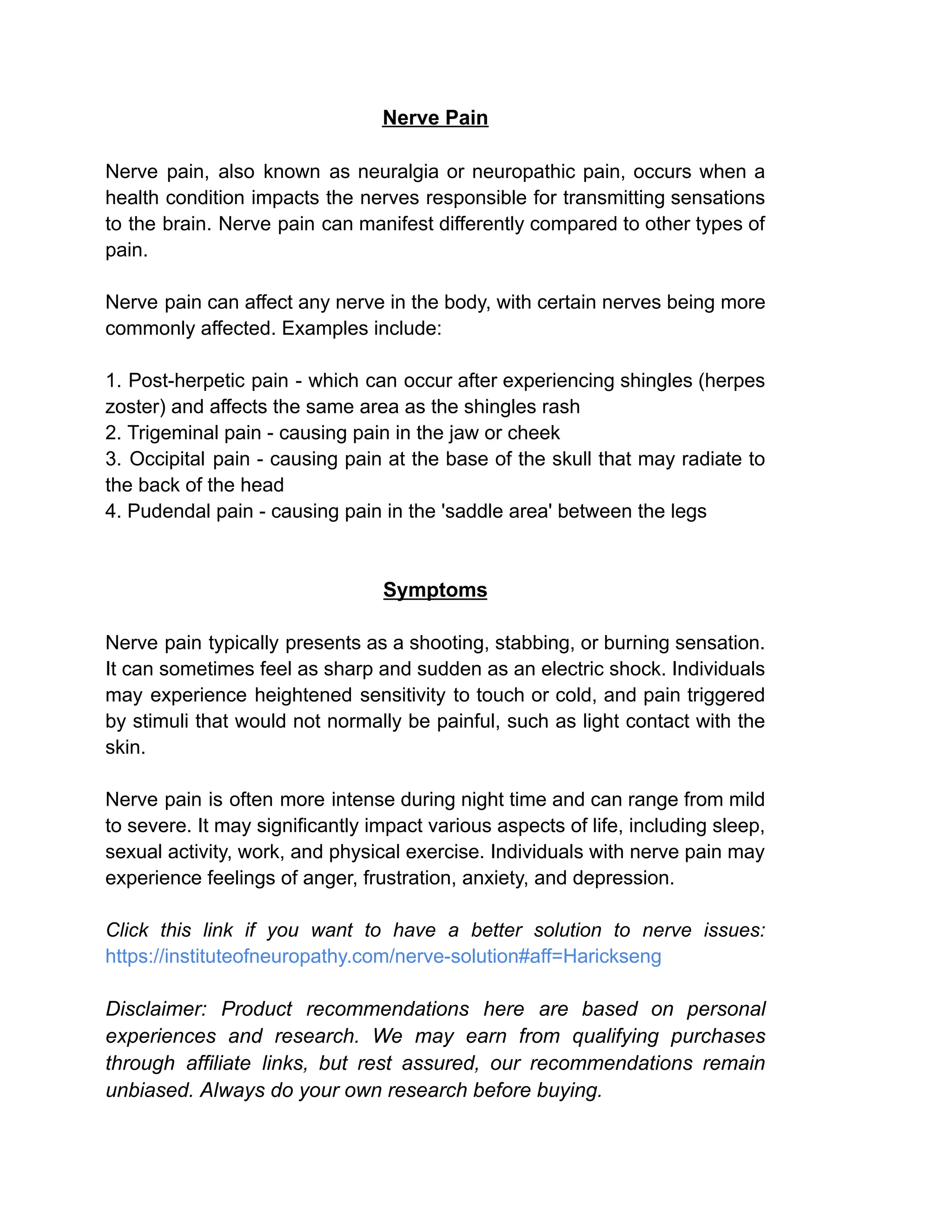
    Nerve Pain Nerve pain,also known as neuralgia or neuropathic pain, occurs when a health condition impacts the nerves responsible for transmitting sensations to the brain. Nerve pain can manifest differently compared to other types of pain. Nerve pain can affect any nerve in the body, with certain nerves being more commonly affected. Examples include: 1. Post-herpetic pain - which can occur after experiencing shingles (herpes zoster) and affects the same area as the shingles rash 2. Trigeminal pain - causing pain in the jaw or cheek 3. Occipital pain - causing pain at the base of the skull that may radiate to the back of the head 4. Pudendal pain - causing pain in the 'saddle area' between the legs Symptoms Nerve pain typically presents as a shooting, stabbing, or burning sensation. It can sometimes feel as sharp and sudden as an electric shock. Individuals may experience heightened sensitivity to touch or cold, and pain triggered by stimuli that would not normally be painful, such as light contact with the skin. Nerve pain is often more intense during night time and can range from mild to severe. It may significantly impact various aspects of life, including sleep, sexual activity, work, and physical exercise. Individuals with nerve pain may experience feelings of anger, frustration, anxiety, and depression. Click this link if you want to have a better solution to nerve issues: https://instituteofneuropathy.com/nerve-solution#aff=Harickseng Disclaimer: Product recommendations here are based on personal experiences and research. We may earn from qualifying purchases through affiliate links, but rest assured, our recommendations remain unbiased. Always do your own research before buying.
  • 3.
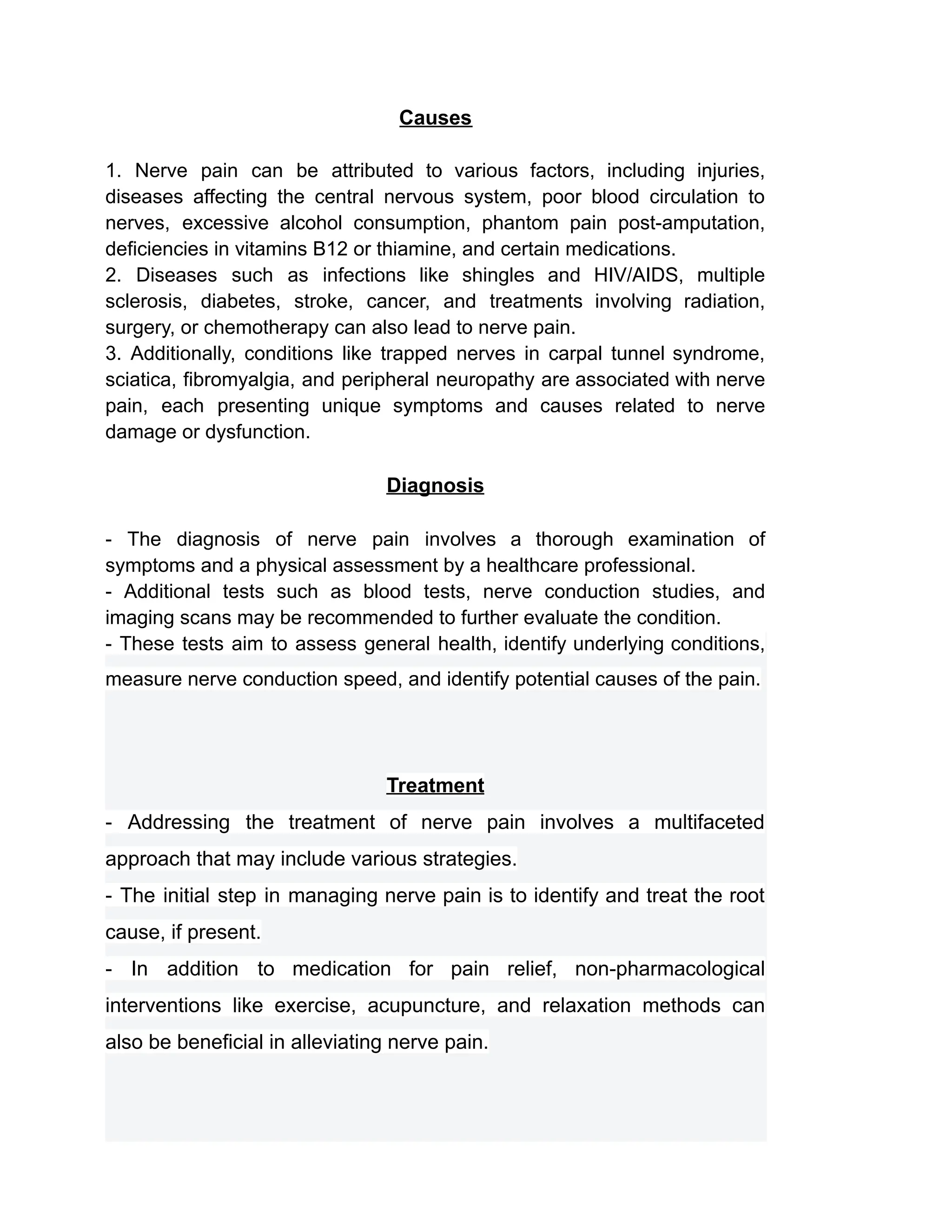
    Causes 1. Nerve paincan be attributed to various factors, including injuries, diseases affecting the central nervous system, poor blood circulation to nerves, excessive alcohol consumption, phantom pain post-amputation, deficiencies in vitamins B12 or thiamine, and certain medications. 2. Diseases such as infections like shingles and HIV/AIDS, multiple sclerosis, diabetes, stroke, cancer, and treatments involving radiation, surgery, or chemotherapy can also lead to nerve pain. 3. Additionally, conditions like trapped nerves in carpal tunnel syndrome, sciatica, fibromyalgia, and peripheral neuropathy are associated with nerve pain, each presenting unique symptoms and causes related to nerve damage or dysfunction. Diagnosis - The diagnosis of nerve pain involves a thorough examination of symptoms and a physical assessment by a healthcare professional. - Additional tests such as blood tests, nerve conduction studies, and imaging scans may be recommended to further evaluate the condition. - These tests aim to assess general health, identify underlying conditions, measure nerve conduction speed, and identify potential causes of the pain. Treatment - Addressing the treatment of nerve pain involves a multifaceted approach that may include various strategies. - The initial step in managing nerve pain is to identify and treat the root cause, if present. - In addition to medication for pain relief, non-pharmacological interventions like exercise, acupuncture, and relaxation methods can also be beneficial in alleviating nerve pain.
  • 4.
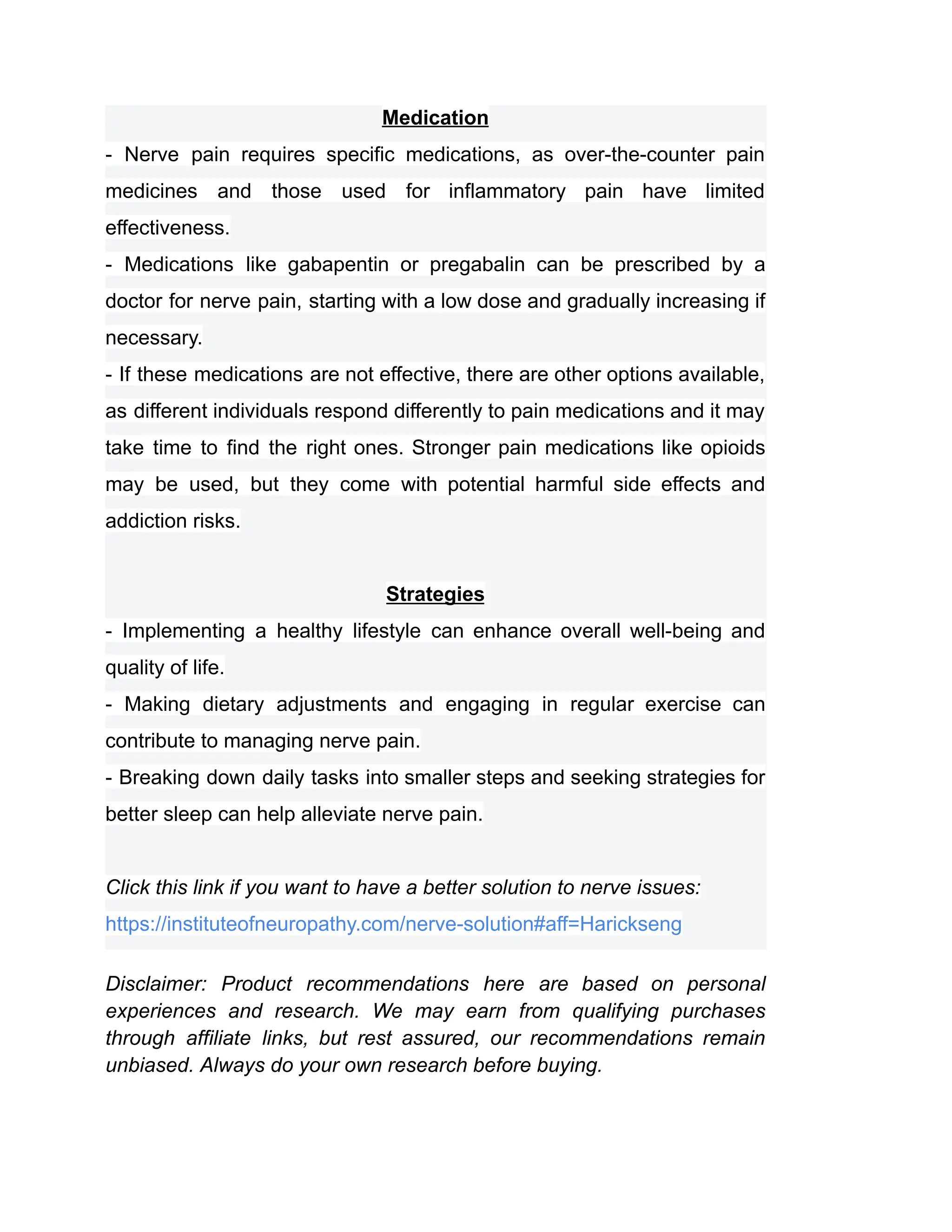
    Medication - Nerve painrequires specific medications, as over-the-counter pain medicines and those used for inflammatory pain have limited effectiveness. - Medications like gabapentin or pregabalin can be prescribed by a doctor for nerve pain, starting with a low dose and gradually increasing if necessary. - If these medications are not effective, there are other options available, as different individuals respond differently to pain medications and it may take time to find the right ones. Stronger pain medications like opioids may be used, but they come with potential harmful side effects and addiction risks. Strategies - Implementing a healthy lifestyle can enhance overall well-being and quality of life. - Making dietary adjustments and engaging in regular exercise can contribute to managing nerve pain. - Breaking down daily tasks into smaller steps and seeking strategies for better sleep can help alleviate nerve pain. Click this link if you want to have a better solution to nerve issues: https://instituteofneuropathy.com/nerve-solution#aff=Harickseng Disclaimer: Product recommendations here are based on personal experiences and research. We may earn from qualifying purchases through affiliate links, but rest assured, our recommendations remain unbiased. Always do your own research before buying.