Effective Written
Communication
Writing, to me, is simply thinking through my fingers. - Issac Asimov
Subject Line
● Subject Line - keep it short and simple
● Reader should know what’s inside even without
opening
● Very important section of any email
● Start with project acronym. For eg;) CKC,
BBFarm, TCS
● Use Follow Up: for follow up emails
To - CC - BCC
➔To - ensure you address to the correct person(s)
while composing a new one and replying
➔Cc - copy emails to necessary workers and
managers
➔Bcc - use it only in need
Body - Big Start
● Hello/Dear/Hi
● Use Dear with first name of the person
● Use Dear with Mr./Ms./Mrs. and family name
● Use the addressee name or team name to start
with
● Don’t just start with Hi, as it looks odd
● Just mention name in continuous emails
● Eg:- Mathews, Michelle,
Body - Big Start
● Eg:- Hi Mark, Hi Nexcess Team, Hi Payodians
● Eg:- Mathews, Michelle,
● Full name: Fred Alen
● Use: Dear Mr. Alen / Dear Fred / Hi Fred
Body - Begin with a greeting
● Begin with warm wish for the day
● Just a note on their last weekend
● Festival or holiday
● Ask if they are well
Body - greeting phrases
● Good morning/afternoon/evening
● I/We hope you had a great weekend
● I/We hope your christmas brought loads of joy
and peace.
● I/We hope you are doing well/great
● I hope this email finds you in good shape
Body - Critical part
● Vital information goes first
● Keep your language clear and understandable by
the reader
● Use separate paras for different topics to avoid
lengthy one.
● First time - brief about you
● Sound polite
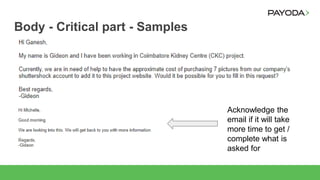
Body - Critical part - Samples
Acknowledge the
email if it will take
more time to get /
complete what is
asked for
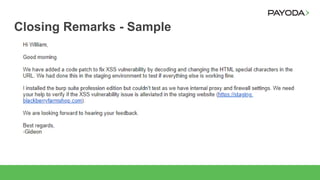
Closing Remarks
● Ask for queries
● Ask for help/support
● Inform that you are waiting for the reply/feedback
● Thank the reader
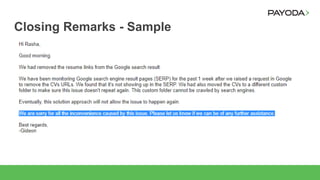
● Ask sorry for being late
Closing Remarks - Phrases
● Please let us/me know if you have any further
questions
● We would be glad to assist you if we can be of
any further help.
● We look forward to hearing your
feedback/approval.
Closing Remarks - Phrases
● Thank you for your patience and cooperation
● Thank you for your consideration
● If you have any questions or concerns, don’t
hesitate to let me know
● We will wait to hear back from you on the
estimate.
● Sorry for the inconvenience
Closing Remarks - Sample
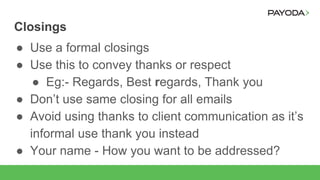
Closings
● Use a formal closings
● Use this to convey thanks or respect
● Eg:- Regards, Best regards, Thank you
● Don’t use same closing for all emails
● Avoid using thanks to client communication as it’s
informal use thank you instead
● Your name - How you want to be addressed?
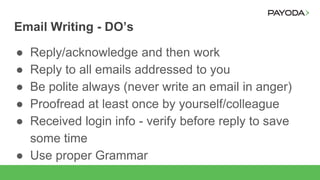
Email Writing - DO’s
● Reply/acknowledge and then work
● Reply to all emails addressed to you
● Be polite always (never write an email in anger)
● Proofread at least once by yourself/colleague
● Received login info - verify before reply to save
some time
● Use proper Grammar
Email Writing - DO’s
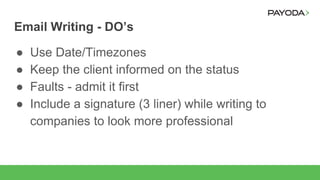
● Use Date/Timezones
● Keep the client informed on the status
● Faults - admit it first
● Include a signature (3 liner) while writing to
companies to look more professional
Email Writing - DON'Ts
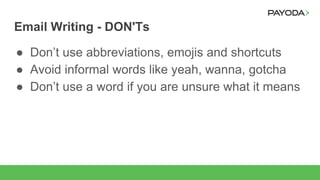
● Don’t use abbreviations, emojis and shortcuts
● Avoid informal words like yeah, wanna, gotcha
● Don’t use a word if you are unsure what it means
Use Grammarly
grammarly.com
Thank you
Have a question?
A poorly written email can discredit your professional image - Diane Gottsman,
etiquette expert

Effective written communication

  • 1.
    Effective Written Communication Writing, tome, is simply thinking through my fingers. - Issac Asimov
  • 2.
    Subject Line ● SubjectLine - keep it short and simple ● Reader should know what’s inside even without opening ● Very important section of any email ● Start with project acronym. For eg;) CKC, BBFarm, TCS ● Use Follow Up: for follow up emails
  • 3.
    To - CC- BCC ➔To - ensure you address to the correct person(s) while composing a new one and replying ➔Cc - copy emails to necessary workers and managers ➔Bcc - use it only in need
  • 4.
    Body - BigStart ● Hello/Dear/Hi ● Use Dear with first name of the person ● Use Dear with Mr./Ms./Mrs. and family name ● Use the addressee name or team name to start with ● Don’t just start with Hi, as it looks odd ● Just mention name in continuous emails ● Eg:- Mathews, Michelle,
  • 5.
    Body - BigStart ● Eg:- Hi Mark, Hi Nexcess Team, Hi Payodians ● Eg:- Mathews, Michelle, ● Full name: Fred Alen ● Use: Dear Mr. Alen / Dear Fred / Hi Fred
  • 6.
    Body - Beginwith a greeting ● Begin with warm wish for the day ● Just a note on their last weekend ● Festival or holiday ● Ask if they are well
  • 7.
    Body - greetingphrases ● Good morning/afternoon/evening ● I/We hope you had a great weekend ● I/We hope your christmas brought loads of joy and peace. ● I/We hope you are doing well/great ● I hope this email finds you in good shape
  • 8.
    Body - Criticalpart ● Vital information goes first ● Keep your language clear and understandable by the reader ● Use separate paras for different topics to avoid lengthy one. ● First time - brief about you ● Sound polite
  • 9.
    Body - Criticalpart - Samples Acknowledge the email if it will take more time to get / complete what is asked for
  • 10.
    Closing Remarks ● Askfor queries ● Ask for help/support ● Inform that you are waiting for the reply/feedback ● Thank the reader ● Ask sorry for being late
  • 11.
    Closing Remarks -Phrases ● Please let us/me know if you have any further questions ● We would be glad to assist you if we can be of any further help. ● We look forward to hearing your feedback/approval.
  • 12.
    Closing Remarks -Phrases ● Thank you for your patience and cooperation ● Thank you for your consideration ● If you have any questions or concerns, don’t hesitate to let me know ● We will wait to hear back from you on the estimate. ● Sorry for the inconvenience
  • 13.
  • 14.
  • 15.
    Closings ● Use aformal closings ● Use this to convey thanks or respect ● Eg:- Regards, Best regards, Thank you ● Don’t use same closing for all emails ● Avoid using thanks to client communication as it’s informal use thank you instead ● Your name - How you want to be addressed?
  • 16.
    Email Writing -DO’s ● Reply/acknowledge and then work ● Reply to all emails addressed to you ● Be polite always (never write an email in anger) ● Proofread at least once by yourself/colleague ● Received login info - verify before reply to save some time ● Use proper Grammar
  • 17.
    Email Writing -DO’s ● Use Date/Timezones ● Keep the client informed on the status ● Faults - admit it first ● Include a signature (3 liner) while writing to companies to look more professional
  • 18.
    Email Writing -DON'Ts ● Don’t use abbreviations, emojis and shortcuts ● Avoid informal words like yeah, wanna, gotcha ● Don’t use a word if you are unsure what it means
  • 19.
  • 20.
    Thank you Have aquestion? A poorly written email can discredit your professional image - Diane Gottsman, etiquette expert