Effective Tips for Workplace
Housekeeping
www.basicsafe.us/
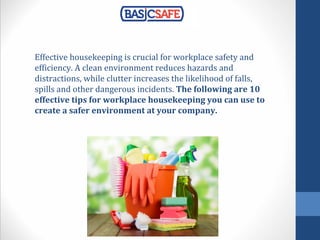
Effective housekeeping is crucial for workplace safety and
efficiency. A clean environment reduces hazards and
distractions, while clutter increases the likelihood of falls,
spills and other dangerous incidents. The following are 10
effective tips for workplace housekeeping you can use to
create a safer environment at your company.
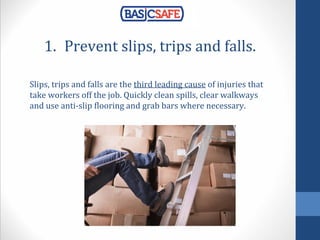
1. Prevent slips, trips and falls.
Slips, trips and falls are the third leading cause of injuries that
take workers off the job. Quickly clean spills, clear walkways
and use anti-slip flooring and grab bars where necessary.
2. Contain Fire Hazards
According to OSHA’s Hazardous
Materials Standard, combustibles
should be stored in covered metal
containers and disposed of daily.
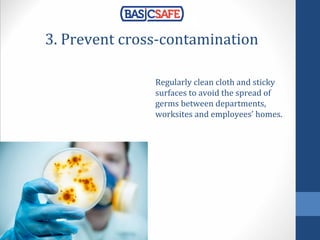
3. Prevent cross-contamination
Regularly clean cloth and sticky
surfaces to avoid the spread of
germs between departments,
worksites and employees’ homes.
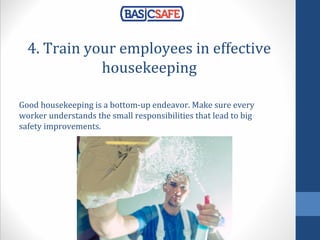
4. Train your employees in effective
housekeeping
Good housekeeping is a bottom-up endeavor. Make sure every
worker understands the small responsibilities that lead to big
safety improvements.
5. Recognize and reward top
performers
Recognition for a job well done can
massively improve engagement.
Incentivize safe behaviors, but steer
clear of outcome-based rewards to
avoid under-reporting.
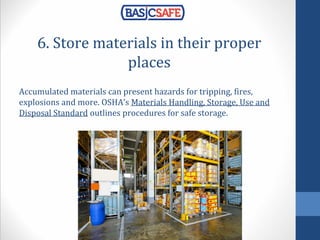
6. Store materials in their proper
places
Accumulated materials can present hazards for tripping, fires,
explosions and more. OSHA’s Materials Handling, Storage, Use and
Disposal Standard outlines procedures for safe storage.
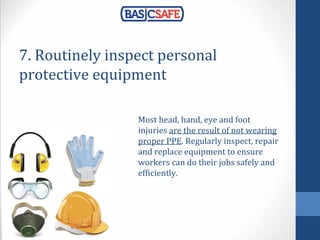
7. Routinely inspect personal
protective equipment
Most head, hand, eye and foot
injuries are the result of not wearing
proper PPE. Regularly inspect, repair
and replace equipment to ensure
workers can do their jobs safely and
efficiently.
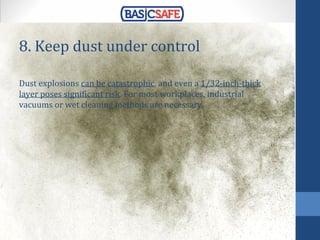
8. Keep dust under control
Dust explosions can be catastrophic, and even a 1/32-inch-thick
layer poses significant risk. For most workplaces, industrial
vacuums or wet cleaning methods are necessary.
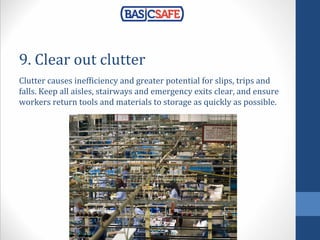
9. Clear out clutter
Clutter causes inefficiency and greater potential for slips, trips and
falls. Keep all aisles, stairways and emergency exits clear, and ensure
workers return tools and materials to storage as quickly as possible.
10. Write out your rules
From simple storage requirements
to specific cleaning methods and
schedules, housekeeping policies
should be clearly defined and
displayed.
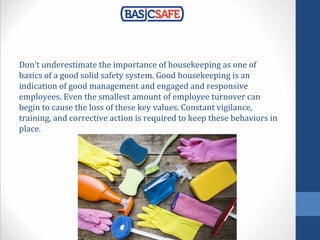
Don’t underestimate the importance of housekeeping as one of
basics of a good solid safety system. Good housekeeping is an
indication of good management and engaged and responsive
employees. Even the smallest amount of employee turnover can
begin to cause the loss of these key values. Constant vigilance,
training, and corrective action is required to keep these behaviors in
place.
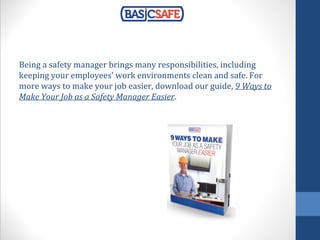
Being a safety manager brings many responsibilities, including
keeping your employees’ work environments clean and safe. For
more ways to make your job easier, download our guide, 9 Ways to
Make Your Job as a Safety Manager Easier.
About BasicSafe
BasicSafe is an internet based integrated approach to managing
safe work cultures and compliance with regulatory requirements.
Extensive programming based on proven safety methodologies
that target employee training and information access are the
backbone of the BasicSafe suite.
For more information, please visit www.basicsafe.us/

Effective Tips for Workplace Housekeeping

  • 1.
    Effective Tips forWorkplace Housekeeping www.basicsafe.us/
  • 2.
    Effective housekeeping iscrucial for workplace safety and efficiency. A clean environment reduces hazards and distractions, while clutter increases the likelihood of falls, spills and other dangerous incidents. The following are 10 effective tips for workplace housekeeping you can use to create a safer environment at your company.
  • 3.
    1. Prevent slips,trips and falls. Slips, trips and falls are the third leading cause of injuries that take workers off the job. Quickly clean spills, clear walkways and use anti-slip flooring and grab bars where necessary.
  • 4.
    2. Contain FireHazards According to OSHA’s Hazardous Materials Standard, combustibles should be stored in covered metal containers and disposed of daily.
  • 5.
    3. Prevent cross-contamination Regularlyclean cloth and sticky surfaces to avoid the spread of germs between departments, worksites and employees’ homes.
  • 6.
    4. Train youremployees in effective housekeeping Good housekeeping is a bottom-up endeavor. Make sure every worker understands the small responsibilities that lead to big safety improvements.
  • 7.
    5. Recognize andreward top performers Recognition for a job well done can massively improve engagement. Incentivize safe behaviors, but steer clear of outcome-based rewards to avoid under-reporting.
  • 8.
    6. Store materialsin their proper places Accumulated materials can present hazards for tripping, fires, explosions and more. OSHA’s Materials Handling, Storage, Use and Disposal Standard outlines procedures for safe storage.
  • 9.
    7. Routinely inspectpersonal protective equipment Most head, hand, eye and foot injuries are the result of not wearing proper PPE. Regularly inspect, repair and replace equipment to ensure workers can do their jobs safely and efficiently.
  • 10.
    8. Keep dustunder control Dust explosions can be catastrophic, and even a 1/32-inch-thick layer poses significant risk. For most workplaces, industrial vacuums or wet cleaning methods are necessary.
  • 11.
    9. Clear outclutter Clutter causes inefficiency and greater potential for slips, trips and falls. Keep all aisles, stairways and emergency exits clear, and ensure workers return tools and materials to storage as quickly as possible.
  • 12.
    10. Write outyour rules From simple storage requirements to specific cleaning methods and schedules, housekeeping policies should be clearly defined and displayed.
  • 13.
    Don’t underestimate theimportance of housekeeping as one of basics of a good solid safety system. Good housekeeping is an indication of good management and engaged and responsive employees. Even the smallest amount of employee turnover can begin to cause the loss of these key values. Constant vigilance, training, and corrective action is required to keep these behaviors in place.
  • 14.
    Being a safetymanager brings many responsibilities, including keeping your employees’ work environments clean and safe. For more ways to make your job easier, download our guide, 9 Ways to Make Your Job as a Safety Manager Easier.
  • 15.
    About BasicSafe BasicSafe isan internet based integrated approach to managing safe work cultures and compliance with regulatory requirements. Extensive programming based on proven safety methodologies that target employee training and information access are the backbone of the BasicSafe suite. For more information, please visit www.basicsafe.us/