EERA SHALEGAS SP2 
8-9 October 2014, GUT 
Research Pilot Instalation 
for testing shale gas technologies 
Jan Hupka, 
Oil and Gas Center 
In cooperation with: 
Robert Aranowski 
Jan Godlewski 
Waldemar Kamrat 
Justyna Łuczak 
Jacek Mąkinia 
Joanna Mioduska 
Anna Mykowska 
Cezary Orłowski 
Jarosław Pawłowski 
Katarzyna Piszcz 
Andrzej Rogala 
Andrzej Tonderski 
Andrzej Zieliński 
Anna Zielińska-Jurek
Outline 
• Polish Roadmap for Research Infrastructure LabRiG 
Oil and Gas Laboratory 
• Mobile systems and pilot research at GUT 
2
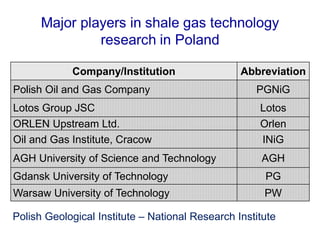
Company/Institution Abbreviation 
Polish Oil and Gas Company PGNiG 
Lotos Group JSC Lotos 
ORLEN Upstream Ltd. Orlen 
Oil and Gas Institute, Cracow INiG 
AGH University of Science and Technology AGH 
Gdansk University of Technology PG 
Warsaw University of Technology PW 
Polish Geological Institute – National Research Institute
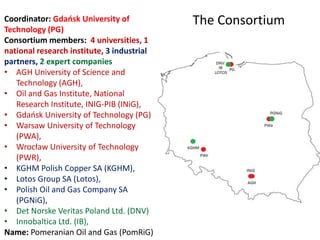
Coordinator: Gdańsk University of The Consortium 
Technology (PG) 
Consortium members: 4 universities, 1 
national research institute, 3 industrial 
partners, 2 expert companies 
• AGH University of Science and 
Technology (AGH), 
• Oil and Gas Institute, National 
Research Institute, INIG-PIB (INiG), 
• Gdańsk University of Technology (PG) 
• Warsaw University of Technology 
(PWA), 
• Wrocław University of Technology 
(PWR), 
• KGHM Polish Copper SA (KGHM), 
• Lotos Group SA (Lotos), 
• Polish Oil and Gas Company SA 
(PGNiG), 
• Det Norske Veritas Poland Ltd. (DNV) 
• Innobaltica Ltd. (IB), 
Name: Pomeranian Oil and Gas (PomRiG)
By the decision of the Minister of 
Science and Higher Education from 
August 5, 2014 the venture LabRiG - 
Laboratory of Oil and Gas has been 
placed on Polish Roadmap for 
Research Infrastructures.
Role and tasks for LabRiG 
• Conducting R&D programmes and providing technological 
solutions in the relatively new field of exploitation of low 
permeability minerals, mainly oil & gas contained in shale 
rocks; 
• Creating unique infrastructure & organization that allows 
for consolidation of the relevant research capacity in 
Poland/Europe and for a better competitiveness of the 
unconventional hydrocarbons research sector; 
• Providing unique education base for students, scientists, 
entrepreneurs, but also for the public.
Scientific objectives 
• Safe technologies and methods to improve intensity of the 
production and the degree of exploitation of minerals, oil and gas; 
• Minimization of the negative impact on the environment, with the 
emphasis placed on the recovery and recycling of the resources; 
• Improvement of the public communication with regard to 
exploitation of minerals, oil & gas in cooperation with policy 
makers and industrial stakeholders. 
The main objective of the project is to adapt existing technologies 
and innovative solutions to the specific chemical and geophysical 
characteristics of Polish/European shales. With the proposed 
infrastructure it should be possible to take up work in the area of 
mastering the stimulation and better understanding the properties of 
oil and gas deposits.
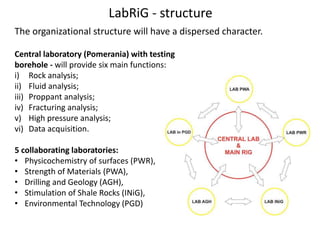
LabRiG - structure 
The organizational structure will have a dispersed character. 
Central laboratory (Pomerania) with testing 
borehole - will provide six main functions: 
i) Rock analysis; 
ii) Fluid analysis; 
iii) Proppant analysis; 
iv) Fracturing analysis; 
v) High pressure analysis; 
vi) Data acquisition. 
5 collaborating laboratories: 
• Physicochemistry of surfaces (PWR), 
• Strength of Materials (PWA), 
• Drilling and Geology (AGH), 
• Stimulation of Shale Rocks (INiG), 
• Environmental Technology (PGD)
LabRiG – research borehole 
1. Well logging in open-hole and cased-hole 
2. Defining physical rock characteristics such as lithology, 
porosity, permeability based on well logs interpretation (in 
uncased well bore) or evaluating of the integrity of cement 
work in well logging (in cased hole) 
3. Long-time monitoring of wellbore cement 
4. Identification of mineralogy, determination of the type of clay 
minerals, partial elemental composition (presence of metals, 
radioisotopes, etc.), impact of shale heterogeneity 
5. Identification of fractures, investigation of fractures 
propagation 
6. Identification of wellbore stability 
7. Tests regarding new methods of reservoir completion and 
stimulation: perforation, hydraulic fracturing, non-aqueous 
fracturing technologies 
8. Testing of tools for coiled tubing, wireline, snubbing, and 
completions
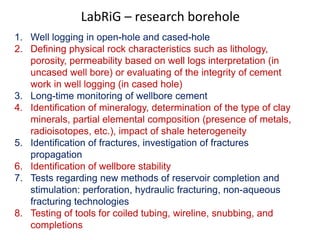
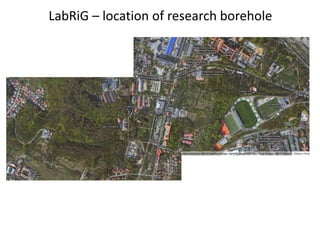
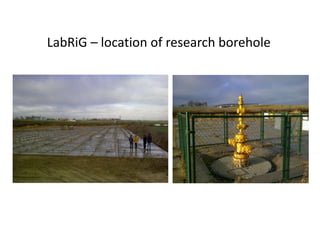
LabRiG – location of research borehole
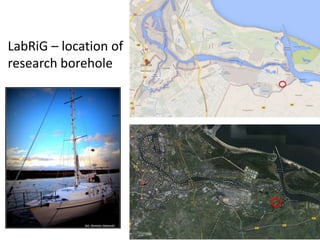
LabRiG – location of 
research borehole
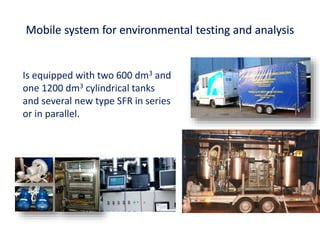
Is equipped with two 600 dm3 and 
one 1200 dm3 cylindrical tanks 
and several new type SFR in series 
or in parallel.
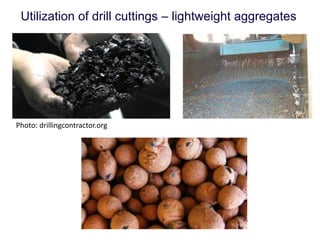
Utilization of drill cuttings – lightweight aggregates 
Photo: drillingcontractor.org
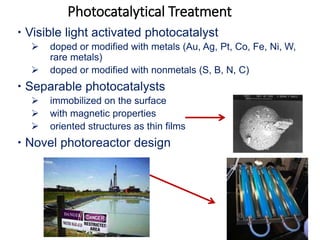
Photocatalytical Treatment 
 Visible light activated photocatalyst 
 doped or modified with metals (Au, Ag, Pt, Co, Fe, Ni, W, 
rare metals) 
 doped or modified with nonmetals (S, B, N, C) 
 Separable photocatalysts 
 immobilized on the surface 
 with magnetic properties 
 oriented structures as thin films 
 Novel photoreactor design
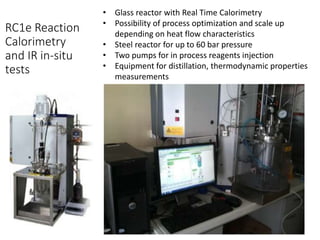
RC1e Reaction 
Calorimetry 
and IR in-situ 
tests 
• Glass reactor with Real Time Calorimetry 
• Possibility of process optimization and scale up 
depending on heat flow characteristics 
• Steel reactor for up to 60 bar pressure 
• Two pumps for in process reagents injection 
• Equipment for distillation, thermodynamic properties 
measurements
International cooperation in the development of advanced technologies in 
the extraction of gas and oil from shale, focused on obtaining grants 
and international research collaboration. 
• West Virginia University (signed memorandum of collaboration 
with AGH and GUT) 
• Texas A&M University, Department od Petroleum Engineering and 
College of Geosciences 
• The University of Utah, Energy and Geoscience Institute, 
Department od Metallurgical Engineering, Department of Chemical 
Engineering 
• Stanford University, Department of Geophysics, 
• University of Indianapolis 
• Consulting, servicing and oil companies, including: Economides 
Consultants, Houston, Texas; Exponent, Palo Alto CA; Marathon 
Oil Company; BNK Petroleum Poland; MicroSeismic, Houston, 
Texas; Schlumberger; Halliburton
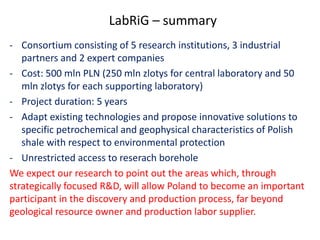
LabRiG – summary 
- Consortium consisting of 5 research institutions, 3 industrial 
partners and 2 expert companies 
- Cost: 500 mln PLN (250 mln zlotys for central laboratory and 50 
mln zlotys for each supporting laboratory) 
- Project duration: 5 years 
- Adapt existing technologies and propose innovative solutions to 
specific petrochemical and geophysical characteristics of Polish 
shale with respect to environmental protection 
- Unrestricted access to reserach borehole 
We expect our research to point out the areas which, through 
strategically focused R&D, will allow Poland to become an important 
participant in the discovery and production process, far beyond 
geological resource owner and production labor supplier.
Eera gdansk jh2014

  • 1.
    EERA SHALEGAS SP2 8-9 October 2014, GUT Research Pilot Instalation for testing shale gas technologies Jan Hupka, Oil and Gas Center In cooperation with: Robert Aranowski Jan Godlewski Waldemar Kamrat Justyna Łuczak Jacek Mąkinia Joanna Mioduska Anna Mykowska Cezary Orłowski Jarosław Pawłowski Katarzyna Piszcz Andrzej Rogala Andrzej Tonderski Andrzej Zieliński Anna Zielińska-Jurek
  • 2.
    Outline • PolishRoadmap for Research Infrastructure LabRiG Oil and Gas Laboratory • Mobile systems and pilot research at GUT 2
  • 3.
    Company/Institution Abbreviation PolishOil and Gas Company PGNiG Lotos Group JSC Lotos ORLEN Upstream Ltd. Orlen Oil and Gas Institute, Cracow INiG AGH University of Science and Technology AGH Gdansk University of Technology PG Warsaw University of Technology PW Polish Geological Institute – National Research Institute
  • 4.
    Coordinator: Gdańsk Universityof The Consortium Technology (PG) Consortium members: 4 universities, 1 national research institute, 3 industrial partners, 2 expert companies • AGH University of Science and Technology (AGH), • Oil and Gas Institute, National Research Institute, INIG-PIB (INiG), • Gdańsk University of Technology (PG) • Warsaw University of Technology (PWA), • Wrocław University of Technology (PWR), • KGHM Polish Copper SA (KGHM), • Lotos Group SA (Lotos), • Polish Oil and Gas Company SA (PGNiG), • Det Norske Veritas Poland Ltd. (DNV) • Innobaltica Ltd. (IB), Name: Pomeranian Oil and Gas (PomRiG)
  • 5.
    By the decisionof the Minister of Science and Higher Education from August 5, 2014 the venture LabRiG - Laboratory of Oil and Gas has been placed on Polish Roadmap for Research Infrastructures.
  • 6.
    Role and tasksfor LabRiG • Conducting R&D programmes and providing technological solutions in the relatively new field of exploitation of low permeability minerals, mainly oil & gas contained in shale rocks; • Creating unique infrastructure & organization that allows for consolidation of the relevant research capacity in Poland/Europe and for a better competitiveness of the unconventional hydrocarbons research sector; • Providing unique education base for students, scientists, entrepreneurs, but also for the public.
  • 7.
    Scientific objectives •Safe technologies and methods to improve intensity of the production and the degree of exploitation of minerals, oil and gas; • Minimization of the negative impact on the environment, with the emphasis placed on the recovery and recycling of the resources; • Improvement of the public communication with regard to exploitation of minerals, oil & gas in cooperation with policy makers and industrial stakeholders. The main objective of the project is to adapt existing technologies and innovative solutions to the specific chemical and geophysical characteristics of Polish/European shales. With the proposed infrastructure it should be possible to take up work in the area of mastering the stimulation and better understanding the properties of oil and gas deposits.
  • 8.
    LabRiG - structure The organizational structure will have a dispersed character. Central laboratory (Pomerania) with testing borehole - will provide six main functions: i) Rock analysis; ii) Fluid analysis; iii) Proppant analysis; iv) Fracturing analysis; v) High pressure analysis; vi) Data acquisition. 5 collaborating laboratories: • Physicochemistry of surfaces (PWR), • Strength of Materials (PWA), • Drilling and Geology (AGH), • Stimulation of Shale Rocks (INiG), • Environmental Technology (PGD)
  • 9.
    LabRiG – researchborehole 1. Well logging in open-hole and cased-hole 2. Defining physical rock characteristics such as lithology, porosity, permeability based on well logs interpretation (in uncased well bore) or evaluating of the integrity of cement work in well logging (in cased hole) 3. Long-time monitoring of wellbore cement 4. Identification of mineralogy, determination of the type of clay minerals, partial elemental composition (presence of metals, radioisotopes, etc.), impact of shale heterogeneity 5. Identification of fractures, investigation of fractures propagation 6. Identification of wellbore stability 7. Tests regarding new methods of reservoir completion and stimulation: perforation, hydraulic fracturing, non-aqueous fracturing technologies 8. Testing of tools for coiled tubing, wireline, snubbing, and completions
  • 10.
    LabRiG – locationof research borehole
  • 11.
    LabRiG – locationof research borehole
  • 12.
    LabRiG – locationof research borehole
  • 13.
    Is equipped withtwo 600 dm3 and one 1200 dm3 cylindrical tanks and several new type SFR in series or in parallel.
  • 14.
    Utilization of drillcuttings – lightweight aggregates Photo: drillingcontractor.org
  • 15.
    Photocatalytical Treatment Visible light activated photocatalyst  doped or modified with metals (Au, Ag, Pt, Co, Fe, Ni, W, rare metals)  doped or modified with nonmetals (S, B, N, C)  Separable photocatalysts  immobilized on the surface  with magnetic properties  oriented structures as thin films  Novel photoreactor design
  • 16.
    RC1e Reaction Calorimetry and IR in-situ tests • Glass reactor with Real Time Calorimetry • Possibility of process optimization and scale up depending on heat flow characteristics • Steel reactor for up to 60 bar pressure • Two pumps for in process reagents injection • Equipment for distillation, thermodynamic properties measurements
  • 17.
    International cooperation inthe development of advanced technologies in the extraction of gas and oil from shale, focused on obtaining grants and international research collaboration. • West Virginia University (signed memorandum of collaboration with AGH and GUT) • Texas A&M University, Department od Petroleum Engineering and College of Geosciences • The University of Utah, Energy and Geoscience Institute, Department od Metallurgical Engineering, Department of Chemical Engineering • Stanford University, Department of Geophysics, • University of Indianapolis • Consulting, servicing and oil companies, including: Economides Consultants, Houston, Texas; Exponent, Palo Alto CA; Marathon Oil Company; BNK Petroleum Poland; MicroSeismic, Houston, Texas; Schlumberger; Halliburton
  • 18.
    LabRiG – summary - Consortium consisting of 5 research institutions, 3 industrial partners and 2 expert companies - Cost: 500 mln PLN (250 mln zlotys for central laboratory and 50 mln zlotys for each supporting laboratory) - Project duration: 5 years - Adapt existing technologies and propose innovative solutions to specific petrochemical and geophysical characteristics of Polish shale with respect to environmental protection - Unrestricted access to reserach borehole We expect our research to point out the areas which, through strategically focused R&D, will allow Poland to become an important participant in the discovery and production process, far beyond geological resource owner and production labor supplier.