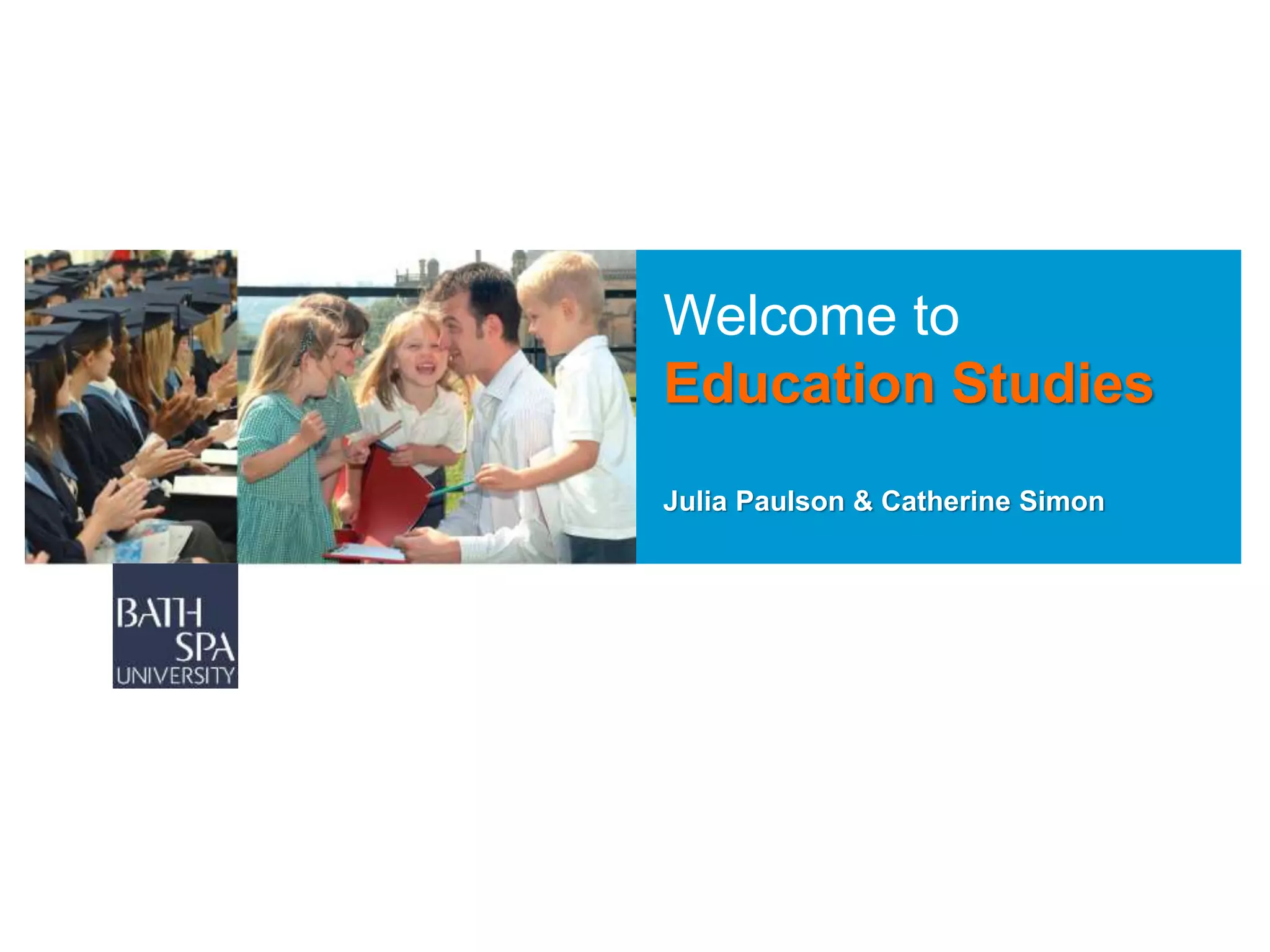
Welcome to 
Education Studies 
Julia Paulson & Catherine Simon
Why come to BSU? 
• A leading university in the field 
of Education Studies providing 
a broad and flexible range of 
awards. 
• Experienced and well qualified 
team of more than 40 tutors 
with different backgrounds as 
qualified teachers, academics, 
authors & researchers.
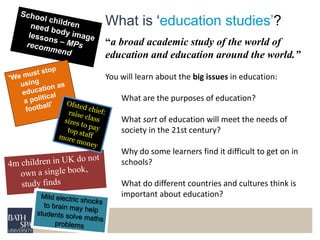
What is ‘education studies’? 
“a broad academic study of the world of 
education and education around the world.” 
You will learn about the big issues in education: 
What are the purposes of education? 
What sort of education will meet the needs of 
society in the 21st century? 
Why do some learners find it difficult to get on in 
schools? 
What do different countries and cultures think is 
important about education?
Awards in Education Studies 
Single honours awards in: 
• Education Studies (X300) (X301) 
• International Education (X392) (X311) 
• Early Years Education (X312) (X390) 
• Combined honours awards in Education Studies and 
another subject (see prospectus for codes) 
All above awards can be taken as Specialised awards 
leading to our PGCE primary year (3+1) [Rated as 
‘outstanding’ in 2012] 
• Youth and Community Studies (L590)
Your tailored degree course 
• Would you like to study abroad? 
• Would you like to spend time in 
schools, nurseries or other 
settings? 
• Would you like to gain a Global 
Citizenship Certificate? 
• Do you want to develop a 
specialism?
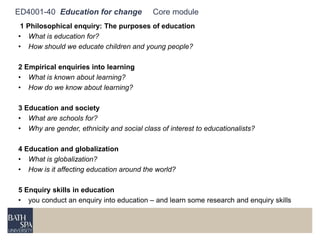
ED4001-40 Education for change Core module 
1 Philosophical enquiry: The purposes of education 
• What is education for? 
• How should we educate children and young people? 
2 Empirical enquiries into learning 
• What is known about learning? 
• How do we know about learning? 
3 Education and society 
• What are schools for? 
• Why are gender, ethnicity and social class of interest to educationalists? 
4 Education and globalization 
• What is globalization? 
• How is it affecting education around the world? 
5 Enquiry skills in education 
• you conduct an enquiry into education – and learn some research and enquiry skills
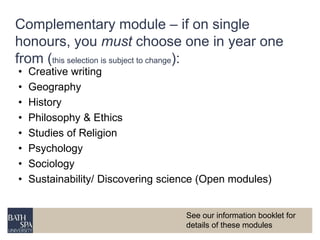
Complementary module – if on single 
honours, you must choose one in year one 
from (this selection is subject to change): 
• Creative writing 
• Geography 
• History 
• Philosophy & Ethics 
• Studies of Religion 
• Psychology 
• Sociology 
• Sustainability/ Discovering science (Open modules) 
See our information booklet for 
details of these modules
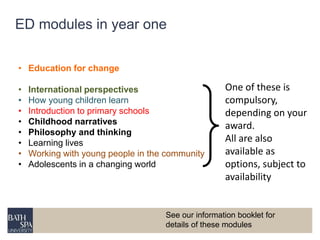
ED modules in year one 
• Education for change 
• International perspectives 
• How young children learn 
• Introduction to primary schools 
• Childhood narratives 
• Philosophy and thinking 
• Learning lives 
• Working with young people in the community 
• Adolescents in a changing world 
One of these is 
compulsory, 
depending on your 
award. 
All are also 
available as 
options, subject to 
availability 
See our information booklet for 
details of these modules
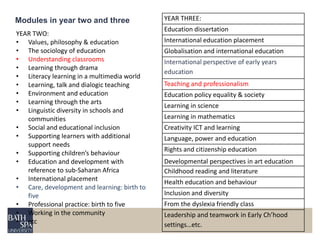
Modules in year two and three 
YEAR TWO: 
• Values, philosophy & education 
• The sociology of education 
• Understanding classrooms 
• Learning through drama 
• Literacy learning in a multimedia world 
• Learning, talk and dialogic teaching 
• Environment and education 
• Learning through the arts 
• Linguistic diversity in schools and 
communities 
• Social and educational inclusion 
• Supporting learners with additional 
support needs 
• Supporting children’s behaviour 
• Education and development with 
reference to sub-Saharan Africa 
• International placement 
• Care, development and learning: birth to 
five 
• Professional practice: birth to five 
• Working in the community 
• etc 
YEAR THREE: 
Education dissertation 
International education placement 
Globalisation and international education 
International perspective of early years 
education 
Teaching and professionalism 
Education policy equality & society 
Learning in science 
Learning in mathematics 
Creativity ICT and learning 
Language, power and education 
Rights and citizenship education 
Developmental perspectives in art education 
Childhood reading and literature 
Health education and behaviour 
Inclusion and diversity 
From the dyslexia friendly class 
Leadership and teamwork in Early Ch’hood 
settings…etc.
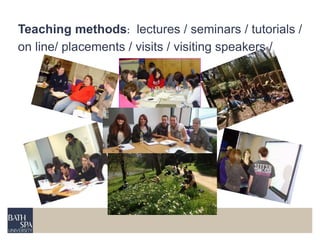
Teaching methods: lectures / seminars / tutorials / 
on line/ placements / visits / visiting speakers /
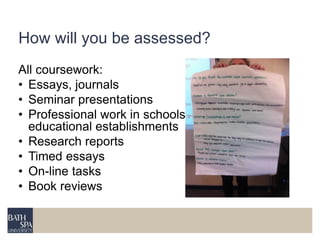
How will you be assessed? 
All coursework: 
• Essays, journals 
• Seminar presentations 
• Professional work in schools and other 
educational establishments 
• Research reports 
• Timed essays 
• On-line tasks 
• Book reviews
Entry requirements (expected): 
-for the Specialised Education course 
• A to C passes in GCSE maths, English and science (or equivalent); 
• Ten full days' work experience (approx 70 hrs) in UK state primary 
schools or early years settings. This must be completed, on-going 
or formally arranged at the time of application 
• 340 UCAS tariff points overall, 280 of which must be achieved at A 
level (or equivalent) 
• One grade B or higher at A level (or equivalent) 
-for Single Honours Education :- 
• 320 UCAS tariff points overall, 260 of which must be achieved at A 
level (or equivalent) 
• One grade C or higher at A level (or equivalent) 
• Work experience is not required for this course, though would be 
beneficial
Writing a personal statement 
• For all courses – tell us what interests you in 
education studies – relate your qualifications and 
experiences to the subject; 
• For specialised courses - tell us what 
experiences you have had (exactly when/where) 
and what you have learned from them; 
• Combined subjects – discuss both subjects in 
the statement.
What does Education Studies equip you to do? 
• Professional qualifications 
– Take a PGCE route into early years, primary or secondary 
teaching 
– Take a EYTS route to become an Early Years Teacher 
– (NVQ L3 Early Years Educator for EY single honours) 
• Employment 
– Work in fields related to education, such as educational 
administration, educational research, education officer with an 
Non Governmental Organisation 
– Working with learners in a variety of situations 
• Further study 
– Take a Master’s Degree in Education Studies
Education Graduate jobs: One of the top 10 
degree subjects for getting a job 
Telegraph.co.uk Monday 11 March 2013 
94.8% of all those leaving university 
with degrees relating to education 
picked up work or further study 
right away. 
Final thoughts... 
BSU – What students say: 
93% of students agree that: 
Staff are good at explaining 
things 
Staff have made the subject 
interesting 
Staff are enthusiastic about 
what they are teaching 
The course is intellectually 
stimulating 
NSS survey 2012
Thanks for listening 
• Any questions? 
• Contact Alan Howe – Head of Department 
• a.howe@bathspa.ac.uk 
• Please visit our stand in the Commons
Follow us on Twitter for updates and news 
before you arrive!

Education studies Open day 2014

  • 1.
    Welcome to EducationStudies Julia Paulson & Catherine Simon
  • 2.
    Why come toBSU? • A leading university in the field of Education Studies providing a broad and flexible range of awards. • Experienced and well qualified team of more than 40 tutors with different backgrounds as qualified teachers, academics, authors & researchers.
  • 3.
    What is ‘educationstudies’? “a broad academic study of the world of education and education around the world.” You will learn about the big issues in education: What are the purposes of education? What sort of education will meet the needs of society in the 21st century? Why do some learners find it difficult to get on in schools? What do different countries and cultures think is important about education?
  • 4.
    Awards in EducationStudies Single honours awards in: • Education Studies (X300) (X301) • International Education (X392) (X311) • Early Years Education (X312) (X390) • Combined honours awards in Education Studies and another subject (see prospectus for codes) All above awards can be taken as Specialised awards leading to our PGCE primary year (3+1) [Rated as ‘outstanding’ in 2012] • Youth and Community Studies (L590)
  • 5.
    Your tailored degreecourse • Would you like to study abroad? • Would you like to spend time in schools, nurseries or other settings? • Would you like to gain a Global Citizenship Certificate? • Do you want to develop a specialism?
  • 6.
    ED4001-40 Education forchange Core module 1 Philosophical enquiry: The purposes of education • What is education for? • How should we educate children and young people? 2 Empirical enquiries into learning • What is known about learning? • How do we know about learning? 3 Education and society • What are schools for? • Why are gender, ethnicity and social class of interest to educationalists? 4 Education and globalization • What is globalization? • How is it affecting education around the world? 5 Enquiry skills in education • you conduct an enquiry into education – and learn some research and enquiry skills
  • 7.
    Complementary module –if on single honours, you must choose one in year one from (this selection is subject to change): • Creative writing • Geography • History • Philosophy & Ethics • Studies of Religion • Psychology • Sociology • Sustainability/ Discovering science (Open modules) See our information booklet for details of these modules
  • 8.
    ED modules inyear one • Education for change • International perspectives • How young children learn • Introduction to primary schools • Childhood narratives • Philosophy and thinking • Learning lives • Working with young people in the community • Adolescents in a changing world One of these is compulsory, depending on your award. All are also available as options, subject to availability See our information booklet for details of these modules
  • 9.
    Modules in yeartwo and three YEAR TWO: • Values, philosophy & education • The sociology of education • Understanding classrooms • Learning through drama • Literacy learning in a multimedia world • Learning, talk and dialogic teaching • Environment and education • Learning through the arts • Linguistic diversity in schools and communities • Social and educational inclusion • Supporting learners with additional support needs • Supporting children’s behaviour • Education and development with reference to sub-Saharan Africa • International placement • Care, development and learning: birth to five • Professional practice: birth to five • Working in the community • etc YEAR THREE: Education dissertation International education placement Globalisation and international education International perspective of early years education Teaching and professionalism Education policy equality & society Learning in science Learning in mathematics Creativity ICT and learning Language, power and education Rights and citizenship education Developmental perspectives in art education Childhood reading and literature Health education and behaviour Inclusion and diversity From the dyslexia friendly class Leadership and teamwork in Early Ch’hood settings…etc.
  • 10.
    Teaching methods: lectures/ seminars / tutorials / on line/ placements / visits / visiting speakers /
  • 11.
    How will yoube assessed? All coursework: • Essays, journals • Seminar presentations • Professional work in schools and other educational establishments • Research reports • Timed essays • On-line tasks • Book reviews
  • 12.
    Entry requirements (expected): -for the Specialised Education course • A to C passes in GCSE maths, English and science (or equivalent); • Ten full days' work experience (approx 70 hrs) in UK state primary schools or early years settings. This must be completed, on-going or formally arranged at the time of application • 340 UCAS tariff points overall, 280 of which must be achieved at A level (or equivalent) • One grade B or higher at A level (or equivalent) -for Single Honours Education :- • 320 UCAS tariff points overall, 260 of which must be achieved at A level (or equivalent) • One grade C or higher at A level (or equivalent) • Work experience is not required for this course, though would be beneficial
  • 13.
    Writing a personalstatement • For all courses – tell us what interests you in education studies – relate your qualifications and experiences to the subject; • For specialised courses - tell us what experiences you have had (exactly when/where) and what you have learned from them; • Combined subjects – discuss both subjects in the statement.
  • 14.
    What does EducationStudies equip you to do? • Professional qualifications – Take a PGCE route into early years, primary or secondary teaching – Take a EYTS route to become an Early Years Teacher – (NVQ L3 Early Years Educator for EY single honours) • Employment – Work in fields related to education, such as educational administration, educational research, education officer with an Non Governmental Organisation – Working with learners in a variety of situations • Further study – Take a Master’s Degree in Education Studies
  • 15.
    Education Graduate jobs:One of the top 10 degree subjects for getting a job Telegraph.co.uk Monday 11 March 2013 94.8% of all those leaving university with degrees relating to education picked up work or further study right away. Final thoughts... BSU – What students say: 93% of students agree that: Staff are good at explaining things Staff have made the subject interesting Staff are enthusiastic about what they are teaching The course is intellectually stimulating NSS survey 2012
  • 16.
    Thanks for listening • Any questions? • Contact Alan Howe – Head of Department • a.howe@bathspa.ac.uk • Please visit our stand in the Commons
  • 17.
    Follow us onTwitter for updates and news before you arrive!