The Purpose of Testing
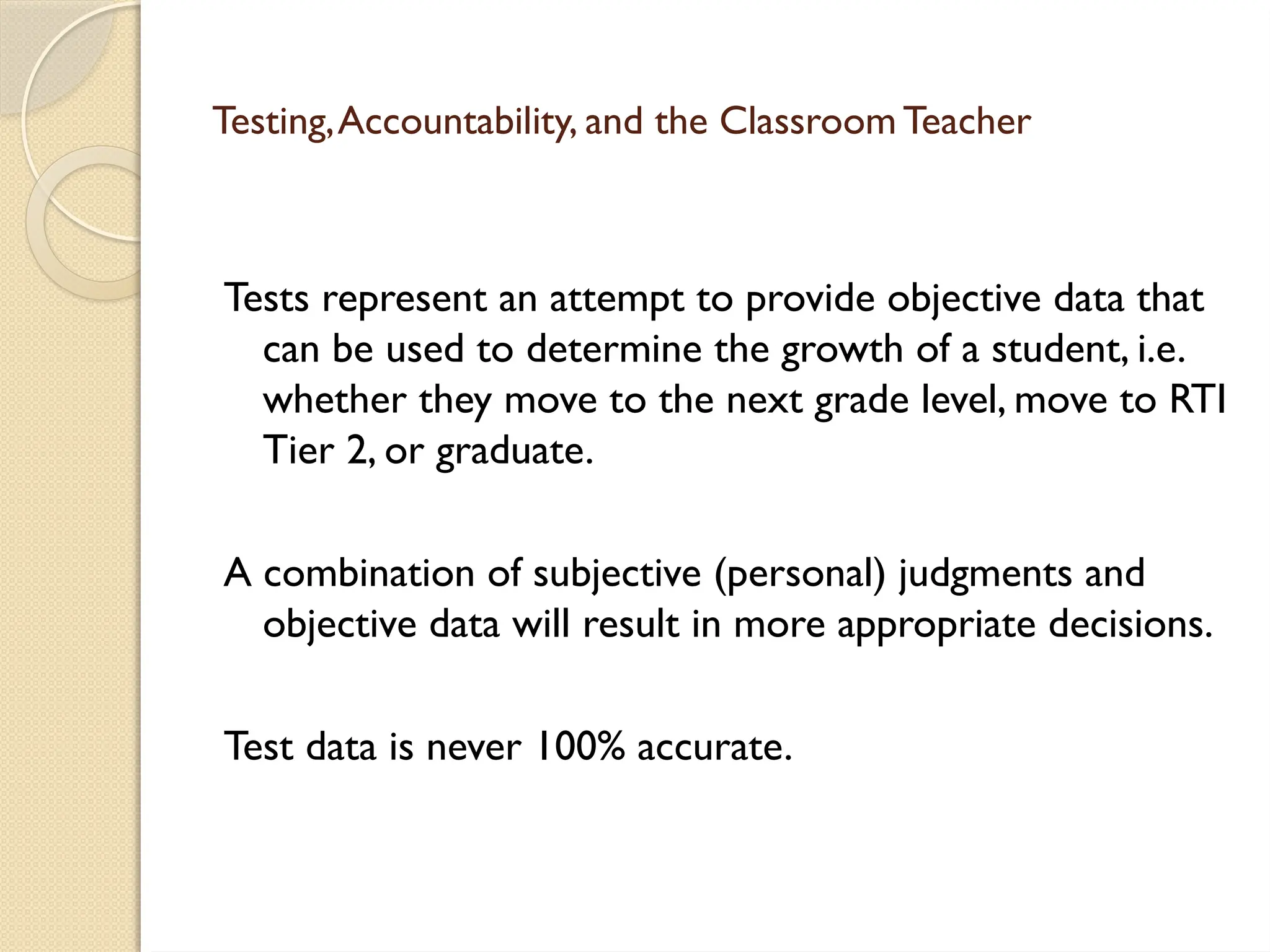
Testing,Accountability, and the Classroom Teacher
Tests represent an attempt to provide objective data that
can be used to determine the growth of a student, i.e.
whether they move to the next grade level, move to RTI
Tier 2, or graduate.
A combination of subjective (personal) judgments and
objective data will result in more appropriate decisions.
Test data is never 100% accurate.
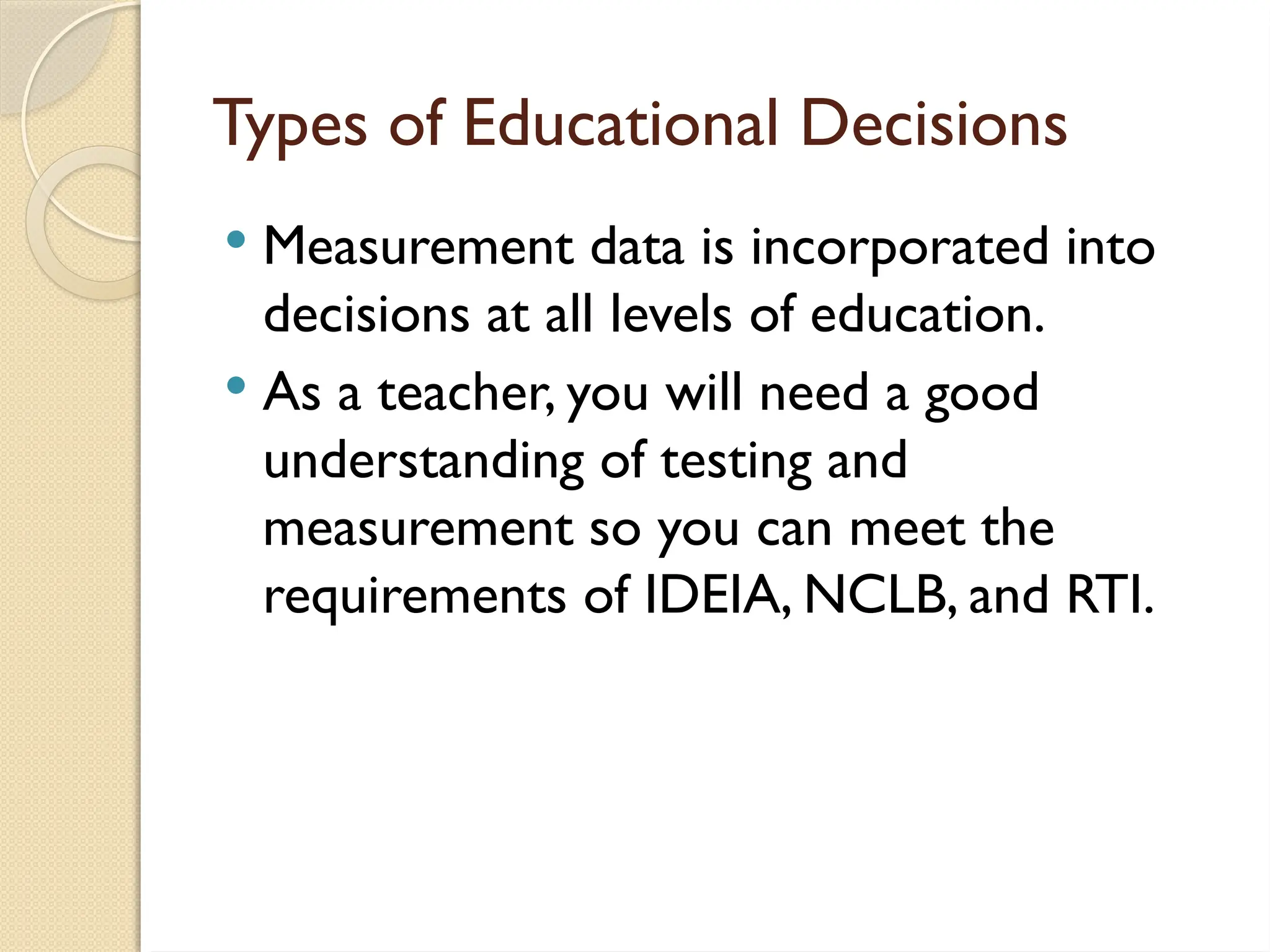
Types of Educational Decisions
 Measurement data is incorporated into
decisions at all levels of education.
 As a teacher, you will need a good
understanding of testing and
measurement so you can meet the
requirements of IDEIA, NCLB, and RTI.
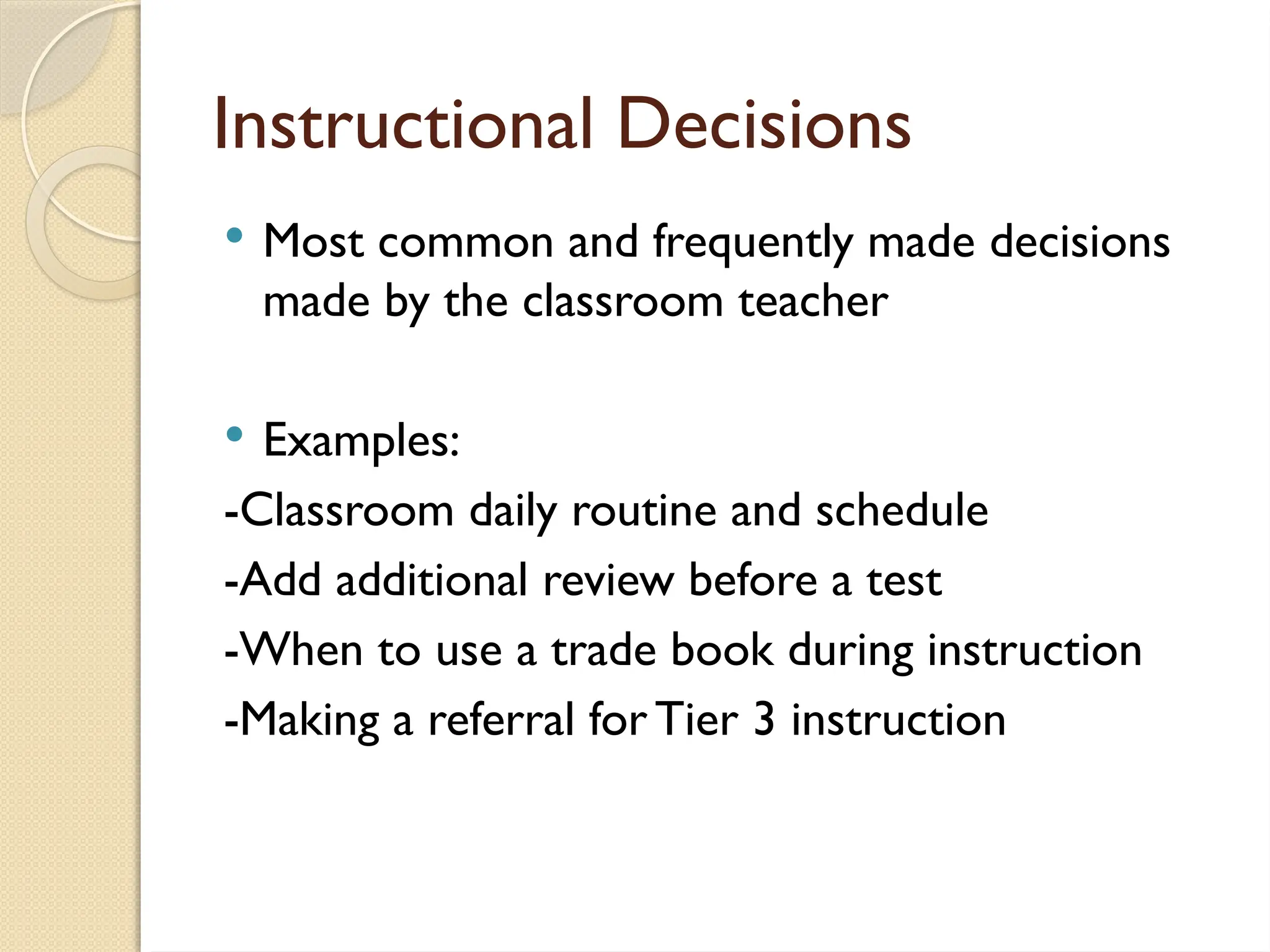
Instructional Decisions
 Most common and frequently made decisions
made by the classroom teacher
 Examples:
-Classroom daily routine and schedule
-Add additional review before a test
-When to use a trade book during instruction
-Making a referral forTier 3 instruction
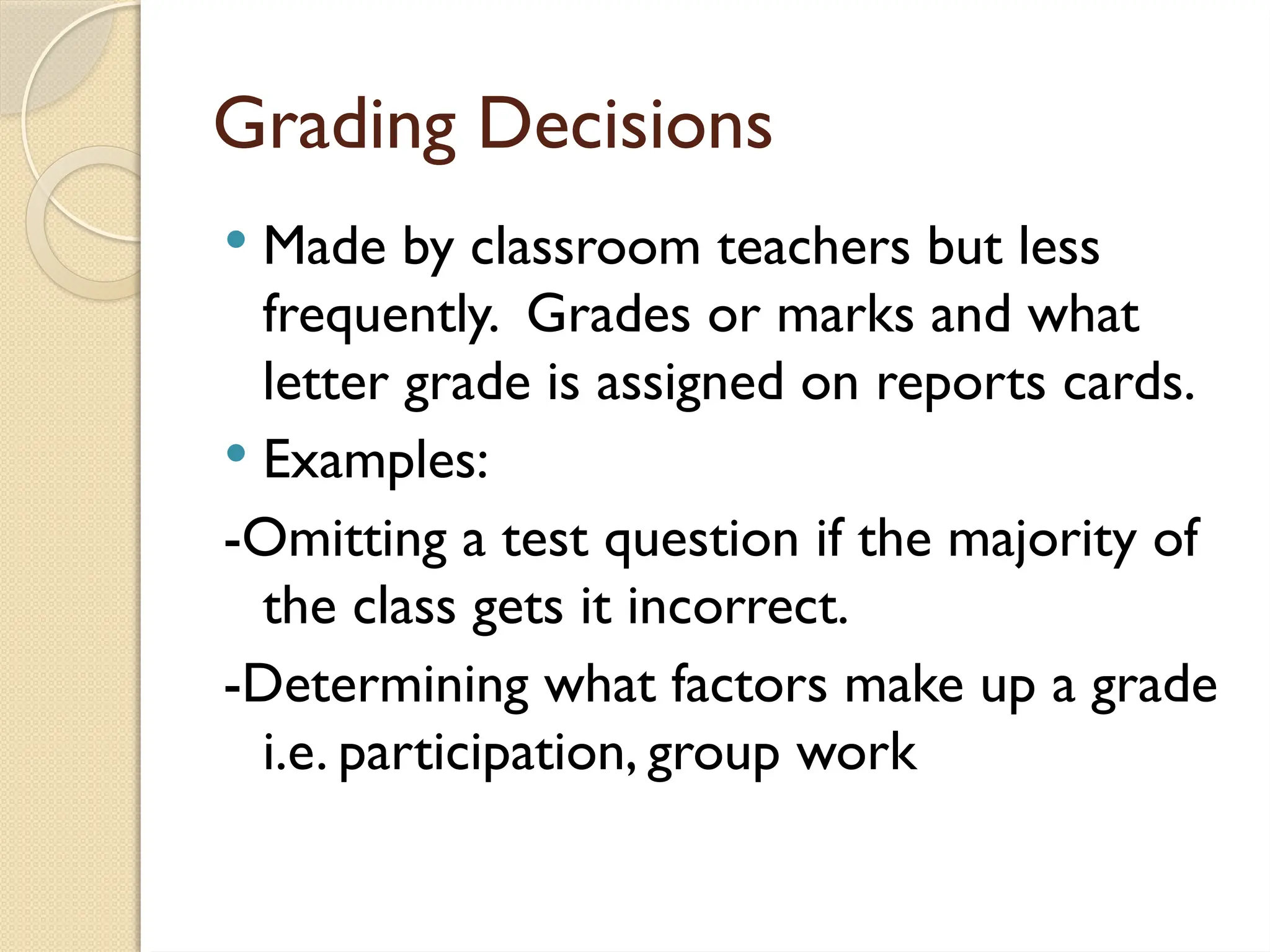
Grading Decisions
 Made by classroom teachers but less
frequently. Grades or marks and what
letter grade is assigned on reports cards.
 Examples:
-Omitting a test question if the majority of
the class gets it incorrect.
-Determining what factors make up a grade
i.e. participation, group work
Diagnostic Decisions
 Are decisions made about a student’s strengths
and weaknesses and the reasons why.
 Examples:
-After reviewing a student’s homework it is
obvious the student cannot borrow subtracting.
Objective test data should always be used along
with the teacher’s subjective judgment to make
such important decisions.
Selection Decisions
 Involve test data used for accepting or
rejecting applicants.
 Examples:
-SAT, GRE,Testing for remedial programs.
Placement Decisions
 Are made after an individual has been
accepted into program to find out where
in the program the student is best suited.
 Examples:
-English proficiency exam
Counseling and Guidance Decisions
 Involve the use of test data to help
recommend programs of study.
 Examples:
-Aptitude tests to determine positive
career paths
Program Curriculum Decisions
 Usually made at the school district level
after an evaluation study comparing two
or more programs.
 Examples:
-Change reading series
Administration Policy Decisions
 Made at the school, district, state, or
national level and are based on
measurement data.
 Examples:
-Determine the amount of money to be
channeled in a school.
-Determine what districts need special
funding.
Problems in Measurements of Testing
 Any time measurement procedures are
somewhat subjective and lack specific
direction, interpretive problems may
arise.
 Much of what we measure or attempt to
measure in the classroom is not clearly
defined.
Solution?
 Only when both what to measure and
how to measure have been considered,
specified, and clearly defined can we hope
to eliminate the problems involved in
measuring an interpreting classroom
information.
What to Measure
 How you measure must always match
what you measure.
 Examples:
-A word problem math test may test math
skills with one group of students but test
reading deficiencies in another group of
students.
How to Measure
 There are alternatives to written tests
and how we measure is often determined
by what we measure.
 Examples:
-Questionnaires
-Oral Response
-Observation
-Projects/Group Work
Evaluating Measurements
 It is best to have two types of
measurement whenever possible.
 Combine subjective measurements
(personal judgment) with objective
measurements (test results) to make an
educated decision.
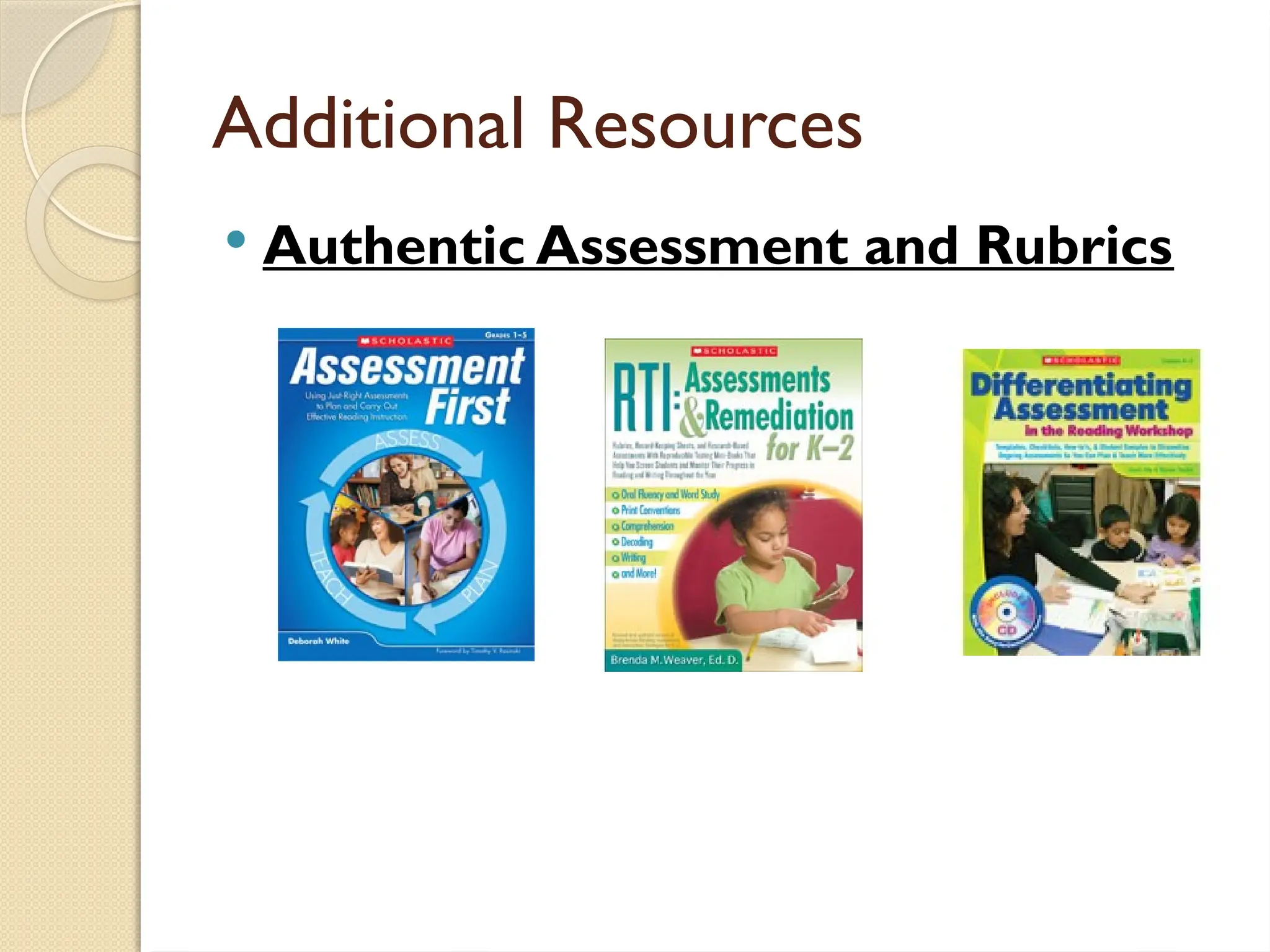
Additional Resources
 Authentic Assessment and Rubrics

EDU_510_Chapter_4 This is useful for how to educate students

  • 1.
  • 2.
    Testing,Accountability, and theClassroom Teacher Tests represent an attempt to provide objective data that can be used to determine the growth of a student, i.e. whether they move to the next grade level, move to RTI Tier 2, or graduate. A combination of subjective (personal) judgments and objective data will result in more appropriate decisions. Test data is never 100% accurate.
  • 3.
    Types of EducationalDecisions  Measurement data is incorporated into decisions at all levels of education.  As a teacher, you will need a good understanding of testing and measurement so you can meet the requirements of IDEIA, NCLB, and RTI.
  • 4.
    Instructional Decisions  Mostcommon and frequently made decisions made by the classroom teacher  Examples: -Classroom daily routine and schedule -Add additional review before a test -When to use a trade book during instruction -Making a referral forTier 3 instruction
  • 5.
    Grading Decisions  Madeby classroom teachers but less frequently. Grades or marks and what letter grade is assigned on reports cards.  Examples: -Omitting a test question if the majority of the class gets it incorrect. -Determining what factors make up a grade i.e. participation, group work
  • 6.
    Diagnostic Decisions  Aredecisions made about a student’s strengths and weaknesses and the reasons why.  Examples: -After reviewing a student’s homework it is obvious the student cannot borrow subtracting. Objective test data should always be used along with the teacher’s subjective judgment to make such important decisions.
  • 7.
    Selection Decisions  Involvetest data used for accepting or rejecting applicants.  Examples: -SAT, GRE,Testing for remedial programs.
  • 8.
    Placement Decisions  Aremade after an individual has been accepted into program to find out where in the program the student is best suited.  Examples: -English proficiency exam
  • 9.
    Counseling and GuidanceDecisions  Involve the use of test data to help recommend programs of study.  Examples: -Aptitude tests to determine positive career paths
  • 10.
    Program Curriculum Decisions Usually made at the school district level after an evaluation study comparing two or more programs.  Examples: -Change reading series
  • 11.
    Administration Policy Decisions Made at the school, district, state, or national level and are based on measurement data.  Examples: -Determine the amount of money to be channeled in a school. -Determine what districts need special funding.
  • 12.
    Problems in Measurementsof Testing  Any time measurement procedures are somewhat subjective and lack specific direction, interpretive problems may arise.  Much of what we measure or attempt to measure in the classroom is not clearly defined.
  • 13.
    Solution?  Only whenboth what to measure and how to measure have been considered, specified, and clearly defined can we hope to eliminate the problems involved in measuring an interpreting classroom information.
  • 14.
    What to Measure How you measure must always match what you measure.  Examples: -A word problem math test may test math skills with one group of students but test reading deficiencies in another group of students.
  • 15.
    How to Measure There are alternatives to written tests and how we measure is often determined by what we measure.  Examples: -Questionnaires -Oral Response -Observation -Projects/Group Work
  • 16.
    Evaluating Measurements  Itis best to have two types of measurement whenever possible.  Combine subjective measurements (personal judgment) with objective measurements (test results) to make an educated decision.
  • 17.
    Additional Resources  AuthenticAssessment and Rubrics