ECLAMPSIA
M&M
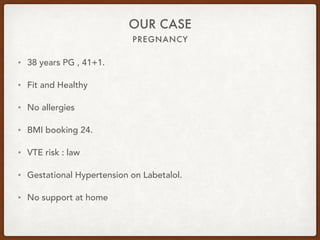
PREGNANCY
OUR CASE
• 38 years PG , 41+1.
• Fit and Healthy
• No allergies
• BMI booking 24.
• VTE risk : law
• Gestational Hypertension on Labetalol.
• No support at home
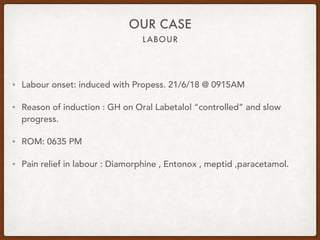
LABOUR
OUR CASE
• Labour onset: induced with Propess. 21/6/18 @ 0915AM
• Reason of induction : GH on Oral Labetalol “controlled” and slow
progress.
• ROM: 0635 PM
• Pain relief in labour : Diamorphine , Entonox , meptid ,paracetamol.
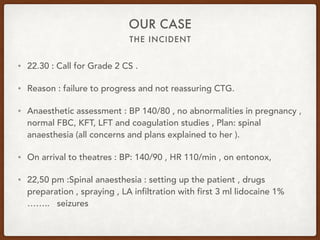
THE INCIDENT
OUR CASE
• 22.30 : Call for Grade 2 CS .
• Reason : failure to progress and not reassuring CTG.
• Anaesthetic assessment : BP 140/80 , no abnormalities in pregnancy ,
normal FBC, KFT, LFT and coagulation studies , Plan: spinal
anaesthesia (all concerns and plans explained to her ).
• On arrival to theatres : BP: 140/90 , HR 110/min , on entonox,
• 22,50 pm :Spinal anaesthesia : setting up the patient , drugs
preparation , spraying , LA infiltration with first 3 ml lidocaine 1%
…….. seizures
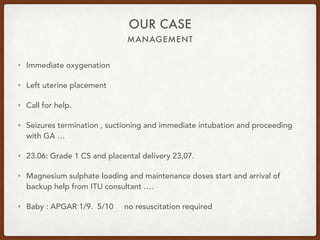
MANAGEMENT
OUR CASE
• Immediate oxygenation
• Left uterine placement
• Call for help.
• Seizures termination , suctioning and immediate intubation and proceeding
with GA …
• 23.06: Grade 1 CS and placental delivery 23,07.
• Magnesium sulphate loading and maintenance doses start and arrival of
backup help from ITU consultant ….
• Baby : APGAR 1/9. 5/10 no resuscitation required
• Oxytocin infusion and fentanyl and paracetamol.
• Reversal: using suggamedex.
• Full regain of motor power and consciousness, extubated, and sent
for recovery in main theatres ….
• Continue magnesium sulphate infusion and monitoring of
Magnesium level according to protocol .
• Patient returned to ward after two hours in recovery .
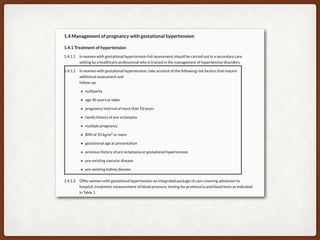
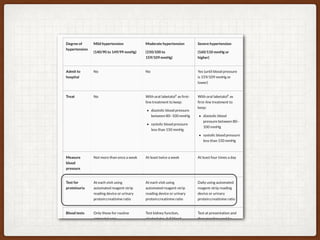
GASTATIONAL HYPERTENSIN
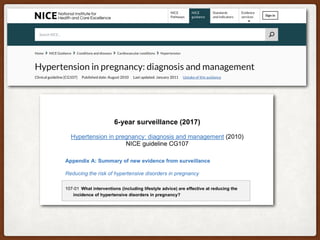
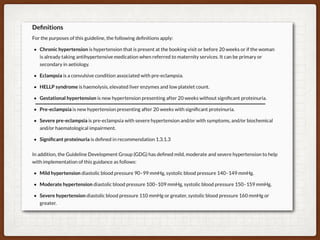
• hypertension presenting after 20 weeks' gestation without significant proteinuria.
• affects 6% of pregnancies.
• Oral labetalol is the first-line therapy if the mother can tolerate it. Alternative agents
include nifedipine and methyldopa.
•
• Renal function should be regularly monitored with quantification of any proteinuria
using spot protein:creatinine ratio.
ECLAMPSIA
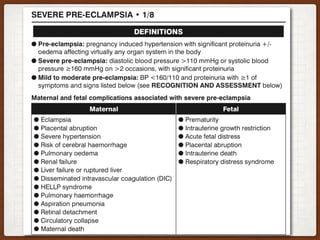
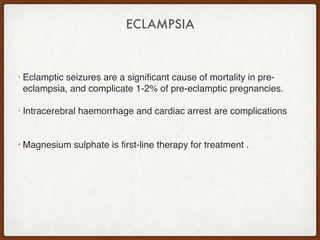
• Eclamptic seizures are a significant cause of mortality in pre-
eclampsia, and complicate 1-2% of pre-eclamptic pregnancies.
• Intracerebral haemorrhage and cardiac arrest are complications
• Magnesium sulphate is first-line therapy for treatment .
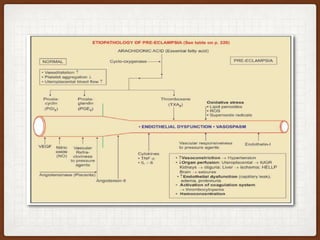
• PATHOPHYSIOLOGY?
• COMPLICATIONS …..?
MANAGEMENT
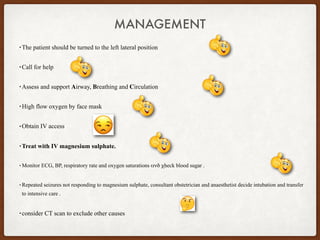
• The patient should be turned to the left lateral position
• Call for help
• Assess and support Airway, Breathing and Circulation
• High flow oxygen by face mask
• Obtain IV access
• Treat with IV magnesium sulphate.
• Monitor ECG, BP, respiratory rate and oxygen saturations ανδ χheck blood sugar .
• Repeated seizures not responding to magnesium sulphate, consultant obstetrician and anaesthetist decide intubation and transfer
to intensive care .
• consider CT scan to exclude other causes
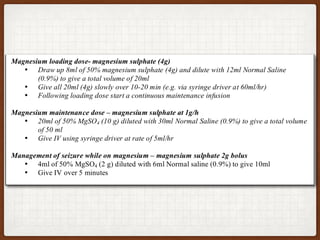
Collaborative Eclampsia Trial regimen
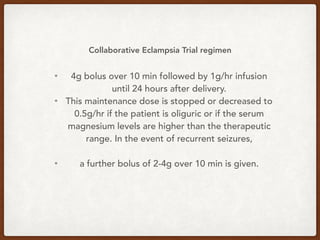
• 4g bolus over 10 min followed by 1g/hr infusion
until 24 hours after delivery.
• This maintenance dose is stopped or decreased to
0.5g/hr if the patient is oliguric or if the serum
magnesium levels are higher than the therapeutic
range. In the event of recurrent seizures,
• a further bolus of 2-4g over 10 min is given.
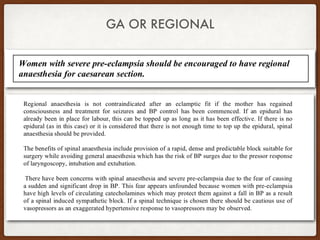
GA OR REGIONAL
REFLECTION AND FEEDBACK
• What went well?
1. The all team members did all we could, and all skills used and all
worked in harmony….
2. At the time of the incident there was a reflection in action …
3. Excellent support from ITU consultant (onsite )…
4. Compliance with literature
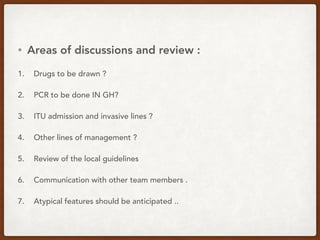
• Areas of discussions and review :
1. Drugs to be drawn ?
2. PCR to be done IN GH?
3. ITU admission and invasive lines ?
4. Other lines of management ?
5. Review of the local guidelines
6. Communication with other team members .
7. Atypical features should be anticipated ..
THANKS
”
“

Eclmpasia m&m case presentation 2018

  • 1.
  • 2.
    PREGNANCY OUR CASE • 38years PG , 41+1. • Fit and Healthy • No allergies • BMI booking 24. • VTE risk : law • Gestational Hypertension on Labetalol. • No support at home
  • 3.
    LABOUR OUR CASE • Labouronset: induced with Propess. 21/6/18 @ 0915AM • Reason of induction : GH on Oral Labetalol “controlled” and slow progress. • ROM: 0635 PM • Pain relief in labour : Diamorphine , Entonox , meptid ,paracetamol.
  • 4.
    THE INCIDENT OUR CASE •22.30 : Call for Grade 2 CS . • Reason : failure to progress and not reassuring CTG. • Anaesthetic assessment : BP 140/80 , no abnormalities in pregnancy , normal FBC, KFT, LFT and coagulation studies , Plan: spinal anaesthesia (all concerns and plans explained to her ). • On arrival to theatres : BP: 140/90 , HR 110/min , on entonox, • 22,50 pm :Spinal anaesthesia : setting up the patient , drugs preparation , spraying , LA infiltration with first 3 ml lidocaine 1% …….. seizures
  • 5.
    MANAGEMENT OUR CASE • Immediateoxygenation • Left uterine placement • Call for help. • Seizures termination , suctioning and immediate intubation and proceeding with GA … • 23.06: Grade 1 CS and placental delivery 23,07. • Magnesium sulphate loading and maintenance doses start and arrival of backup help from ITU consultant …. • Baby : APGAR 1/9. 5/10 no resuscitation required
  • 6.
    • Oxytocin infusionand fentanyl and paracetamol. • Reversal: using suggamedex. • Full regain of motor power and consciousness, extubated, and sent for recovery in main theatres …. • Continue magnesium sulphate infusion and monitoring of Magnesium level according to protocol . • Patient returned to ward after two hours in recovery .
  • 10.
    GASTATIONAL HYPERTENSIN • hypertensionpresenting after 20 weeks' gestation without significant proteinuria. • affects 6% of pregnancies. • Oral labetalol is the first-line therapy if the mother can tolerate it. Alternative agents include nifedipine and methyldopa. • • Renal function should be regularly monitored with quantification of any proteinuria using spot protein:creatinine ratio.
  • 16.
    ECLAMPSIA • Eclamptic seizuresare a significant cause of mortality in pre- eclampsia, and complicate 1-2% of pre-eclamptic pregnancies. • Intracerebral haemorrhage and cardiac arrest are complications • Magnesium sulphate is first-line therapy for treatment .
  • 17.
  • 21.
  • 22.
    MANAGEMENT • The patientshould be turned to the left lateral position • Call for help • Assess and support Airway, Breathing and Circulation • High flow oxygen by face mask • Obtain IV access • Treat with IV magnesium sulphate. • Monitor ECG, BP, respiratory rate and oxygen saturations ανδ χheck blood sugar . • Repeated seizures not responding to magnesium sulphate, consultant obstetrician and anaesthetist decide intubation and transfer to intensive care . • consider CT scan to exclude other causes
  • 23.
    Collaborative Eclampsia Trialregimen • 4g bolus over 10 min followed by 1g/hr infusion until 24 hours after delivery. • This maintenance dose is stopped or decreased to 0.5g/hr if the patient is oliguric or if the serum magnesium levels are higher than the therapeutic range. In the event of recurrent seizures, • a further bolus of 2-4g over 10 min is given.
  • 26.
  • 27.
    REFLECTION AND FEEDBACK •What went well? 1. The all team members did all we could, and all skills used and all worked in harmony…. 2. At the time of the incident there was a reflection in action … 3. Excellent support from ITU consultant (onsite )… 4. Compliance with literature
  • 28.
    • Areas ofdiscussions and review : 1. Drugs to be drawn ? 2. PCR to be done IN GH? 3. ITU admission and invasive lines ? 4. Other lines of management ? 5. Review of the local guidelines 6. Communication with other team members . 7. Atypical features should be anticipated ..
  • 29.