ROADMAP	
  2050	
  
A	
  prac/cal	
  guide	
  to	
  a	
  prosperous,	
  low-­‐carbon	
  Europe	


                                Tom	
  Brookes	
  
       NESC	
  EPA	
  Ireland,	
  Dublin,	
  November	
  14	
  2012	


                                                  PROPRIETARY
   Any use of this material without specific permission of the European Climate Foundation is strictly prohibited
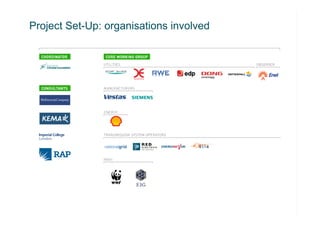
Project Set-Up: organisations involved
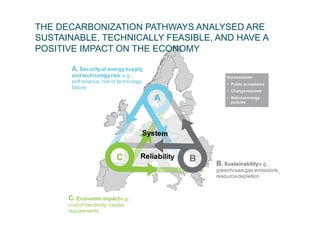
THE DECARBONIZATION PATHWAYS ANALYSED ARE
SUSTAINABLE, TECHNICALLY FEASIBLE, AND HAVE A
POSITIVE IMPACT ON THE ECONOMY
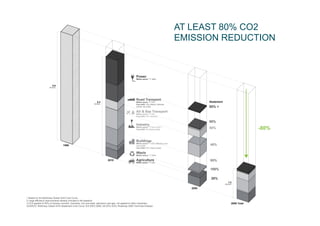
AT LEAST 80% CO2
                                                                                                                           EMISSION REDUCTION


1 Based on the McKinsey Global GHG Cost Curve
2 Large efficiency improvements already included in the baseline
3 CCS applied to 50% of industry (cement, chemistry, iron and steel, petroleum and gas, not applied to other industries)
SOURCE: McKinsey Global GHG Abatement Cost Curve; IEA WEO 2009; US EPA; EEA; Roadmap 2050 Technical Analysis
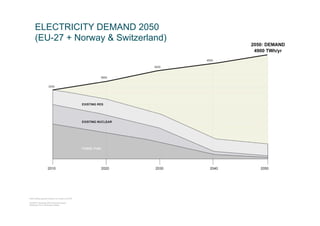
ELECTRICITY DEMAND 2050
(EU-27 + Norway & Switzerland)
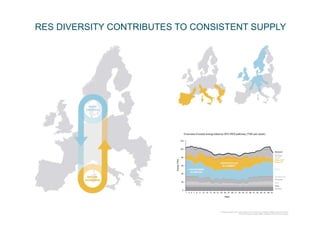
RES DIVERSITY CONTRIBUTES TO CONSISTENT SUPPLY
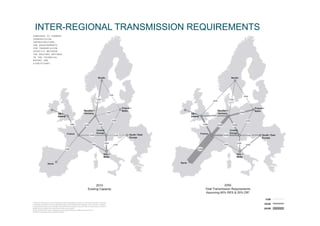
INTER-REGIONAL TRANSMISSION REQUIREMENTS


    UK	
   + 	
            UK	
   + 	
  
    Ireland	
              Ireland	
  
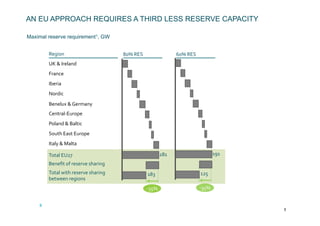
AN EU APPROACH REQUIRES A THIRD LESS RESERVE CAPACITY

Maximal reserve requirement1, GW


                Region	
                                      80%	
  RES	
                            60%	
  RES	
  
                UK	
  &	
  Ireland	
  
                France              	
  	
  
                Iberia	
  	
  
                Nordic	
  
                Benelux	
  &	
  Germany	
  
                Central-­‐Europe	
  
                Poland	
  &	
  Baltic	
  
                South	
  East	
  Europe	
  
                Italy	
  &	
  Malta	
  

                Total	
  EU27	
                                                             281	
                                   191	
  
                Benefit	
  of	
  reserve	
  sharing	
  
                Total	
  with	
  reserve	
  sharing	
  	
                      183	
                                   125	
  
                between	
  regions	
  
                                                                               -­‐35%	
                                -­‐35%	


    8	
  	
  
                                                                                                                                              8	
  	
  
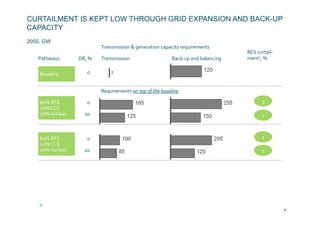
CURTAILMENT IS KEPT LOW THROUGH GRID EXPANSION AND BACK-UP
CAPACITY
2050, GW
                                        Transmission	
  &	
  generation	
  capacity	
  requirements	
  
                                                                                                                                 RES	
  curtail-­‐
   Pathways	
            DR,	
  %	
     Transmission	
                                   Back-­‐up	
  and	
  balancing	
  	
     ment1,	
  %	


    Baseline	
                  0	
           2


                                        Requirements	
  on	
  top	
  of	
  the	
  baseline	
  

    80%	
  RES	
  	
            0	
                                                                                                       3	
  
    10%	
  CCS	
  
    10%	
  nuclear	
         20	
                                                                                                         2	


    60%	
  RES	
  	
            0	
                                                                                                       2	
  
    20%	
  CCS	
  
    20%	
  nuclear	
         20	
                                                                                                         1	


    9	
  	
  
                                                                                                                                                     9	
  	
  
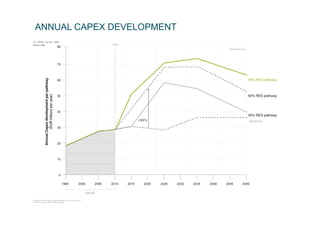
ANNUAL CAPEX DEVELOPMENT
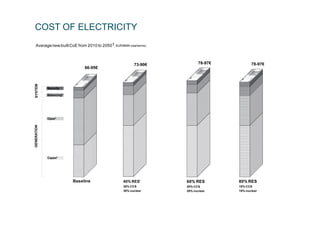
COST OF ELECTRICITY
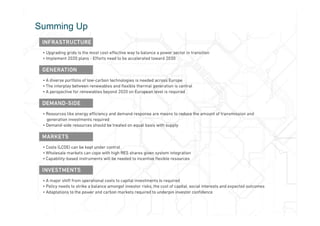
Summing Up
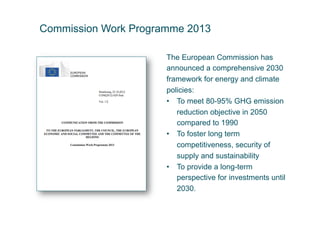
Commission Work Programme 2013

                      The European Commission has
                      announced a comprehensive 2030
                      framework for energy and climate
                      policies:
                      •  To meet 80-95% GHG emission
                         reduction objective in 2050
                         compared to 1990
                      •  To foster long term
                         competitiveness, security of
                         supply and sustainability
                      •  To provide a long-term
                         perspective for investments until
                         2030.

Roadmap 2050 - A practical guide to a prosperous, low-carbon Europe

  • 1.
    ROADMAP  2050   A  prac/cal  guide  to  a  prosperous,  low-­‐carbon  Europe     Tom  Brookes   NESC  EPA  Ireland,  Dublin,  November  14  2012     PROPRIETARY Any use of this material without specific permission of the European Climate Foundation is strictly prohibited
  • 2.
  • 3.
    THE DECARBONIZATION PATHWAYSANALYSED ARE SUSTAINABLE, TECHNICALLY FEASIBLE, AND HAVE A POSITIVE IMPACT ON THE ECONOMY
  • 4.
    AT LEAST 80%CO2 EMISSION REDUCTION 1 Based on the McKinsey Global GHG Cost Curve 2 Large efficiency improvements already included in the baseline 3 CCS applied to 50% of industry (cement, chemistry, iron and steel, petroleum and gas, not applied to other industries) SOURCE: McKinsey Global GHG Abatement Cost Curve; IEA WEO 2009; US EPA; EEA; Roadmap 2050 Technical Analysis
  • 5.
    ELECTRICITY DEMAND 2050 (EU-27+ Norway & Switzerland)
  • 6.
    RES DIVERSITY CONTRIBUTESTO CONSISTENT SUPPLY
  • 7.
    INTER-REGIONAL TRANSMISSION REQUIREMENTS UK   +   UK   +   Ireland   Ireland  
  • 8.
    AN EU APPROACHREQUIRES A THIRD LESS RESERVE CAPACITY Maximal reserve requirement1, GW Region   80%  RES   60%  RES   UK  &  Ireland   France     Iberia     Nordic   Benelux  &  Germany   Central-­‐Europe   Poland  &  Baltic   South  East  Europe   Italy  &  Malta   Total  EU27   281   191   Benefit  of  reserve  sharing   Total  with  reserve  sharing     183   125   between  regions   -­‐35%   -­‐35%   8     8    
  • 9.
    CURTAILMENT IS KEPTLOW THROUGH GRID EXPANSION AND BACK-UP CAPACITY 2050, GW Transmission  &  generation  capacity  requirements   RES  curtail-­‐ Pathways   DR,  %   Transmission   Back-­‐up  and  balancing     ment1,  %   Baseline   0   2 Requirements  on  top  of  the  baseline   80%  RES     0   3   10%  CCS   10%  nuclear   20   2   60%  RES     0   2   20%  CCS   20%  nuclear   20   1   9     9    
  • 10.
  • 11.
  • 12.
  • 13.
    Commission Work Programme2013 The European Commission has announced a comprehensive 2030 framework for energy and climate policies: •  To meet 80-95% GHG emission reduction objective in 2050 compared to 1990 •  To foster long term competitiveness, security of supply and sustainability •  To provide a long-term perspective for investments until 2030.