
Are people the problem or the
solution: a critical look at the rise
of the smart/intelligent building
and the role of ICT enabled
engagement
Richard Bull
Kate Irvine
Martin Rieser
Paul Fleming
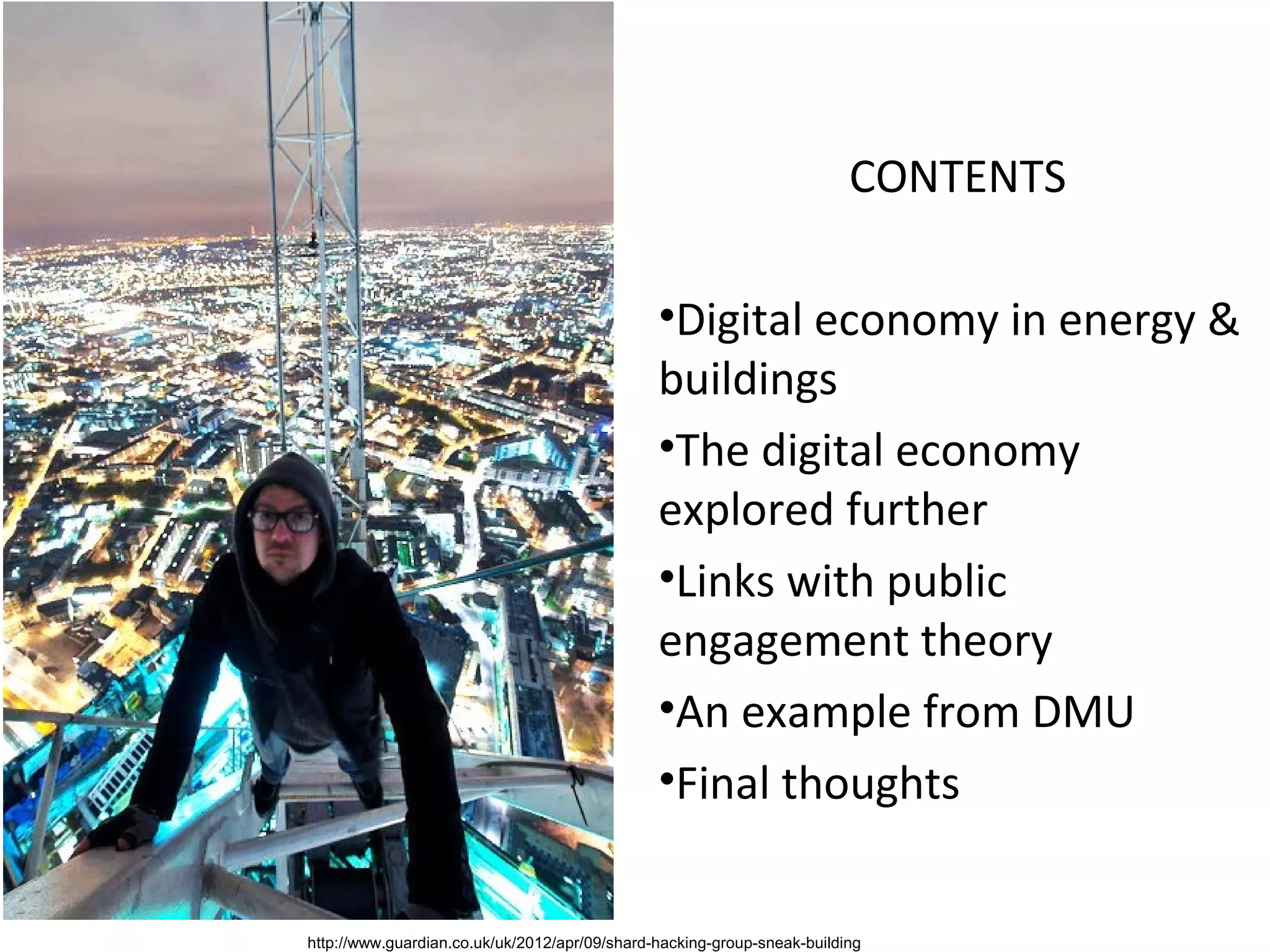
http://www.guardian.co.uk/uk/2012/apr/09/shard-hacking-group-sneak-building
CONTENTS
•Digital economy in energy &
buildings
•The digital economy
explored further
•Links with public
engagement theory
•An example from DMU
•Final thoughts
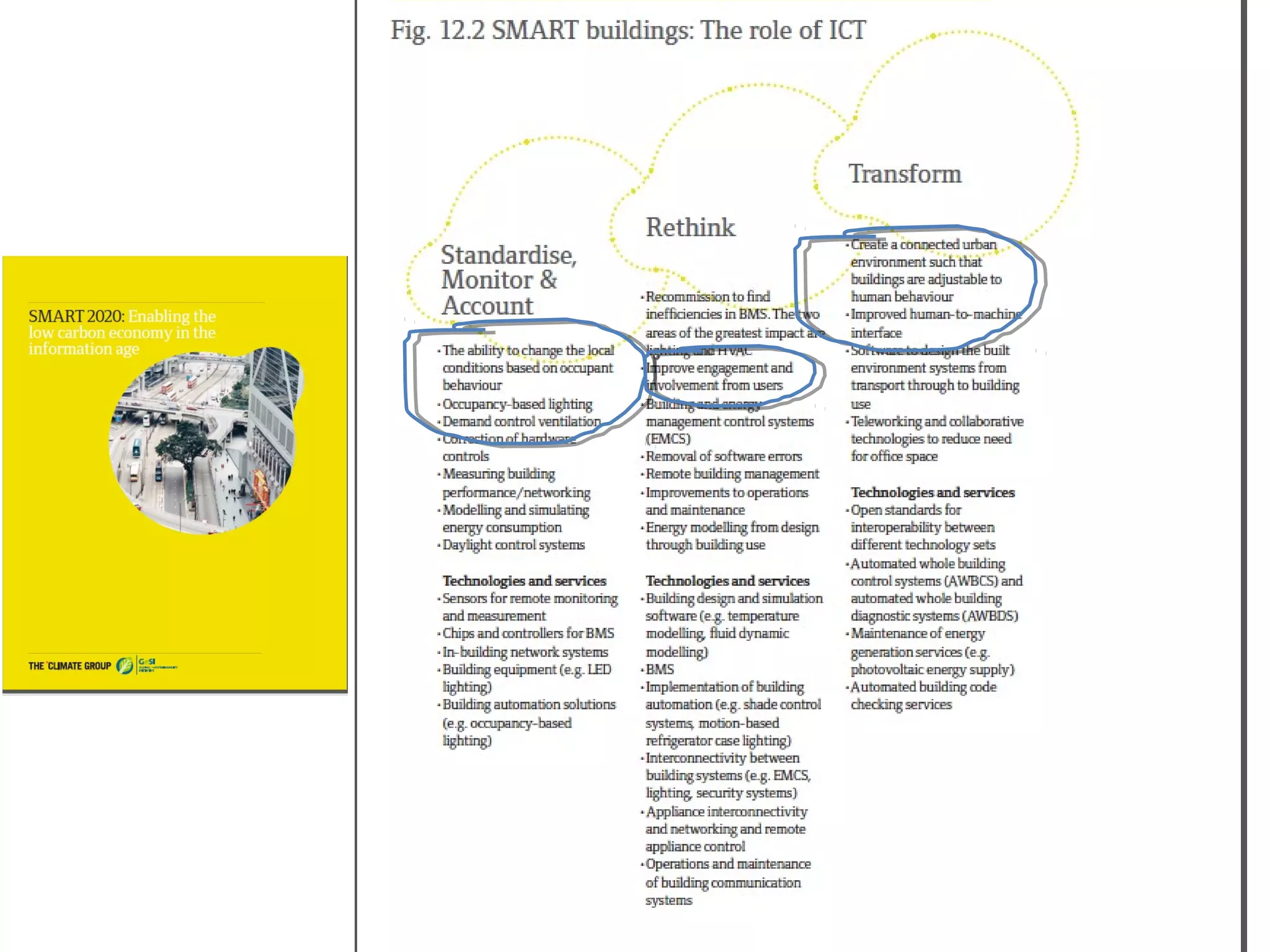
The rise of the smart/intelligent
building (1) - definitions
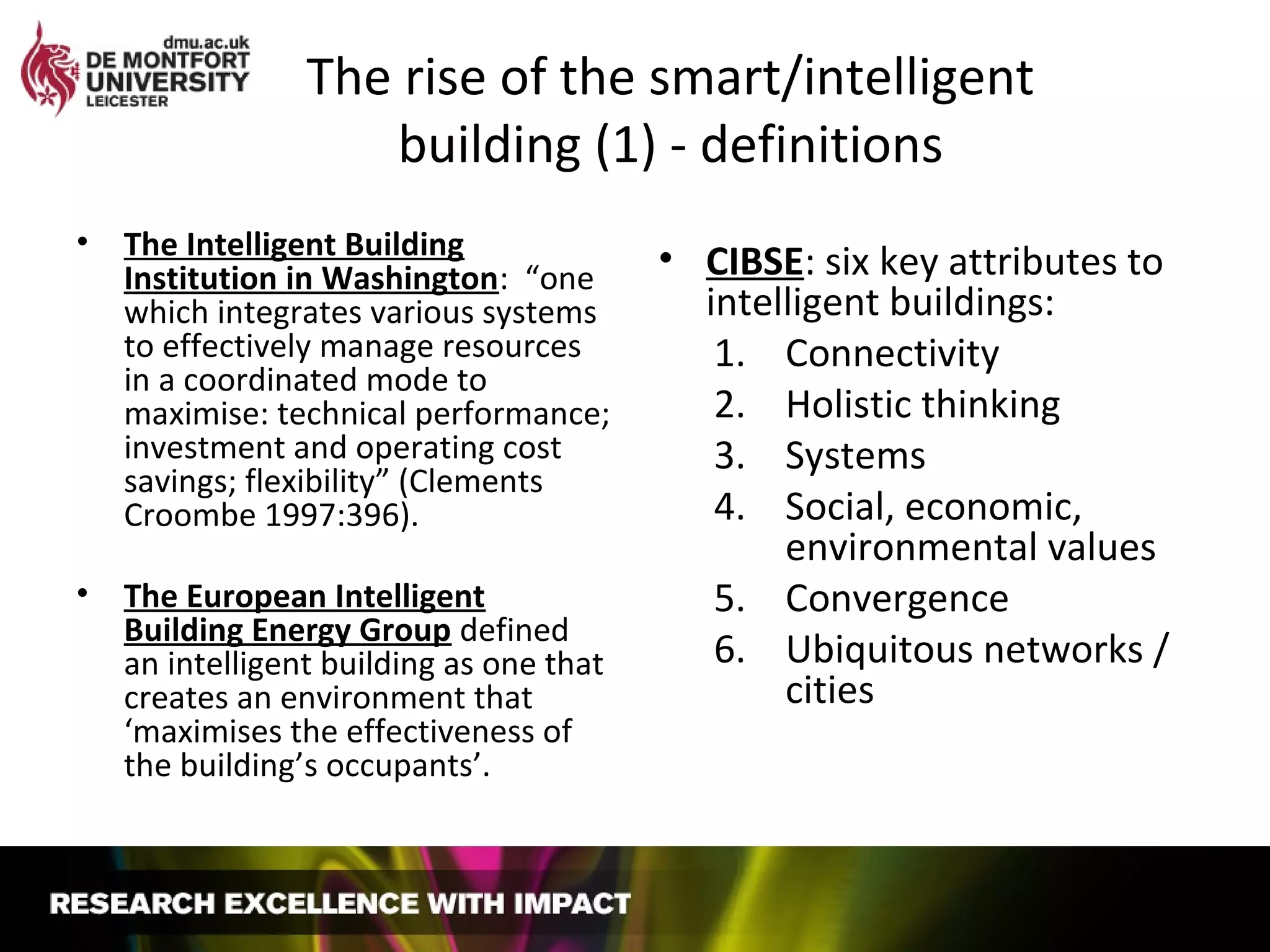
• The Intelligent Building
Institution in Washington: “one
which integrates various systems
to effectively manage resources
in a coordinated mode to
maximise: technical performance;
investment and operating cost
savings; flexibility” (Clements
Croombe 1997:396).
• The European Intelligent
Building Energy Group defined
an intelligent building as one that
creates an environment that
‘maximises the effectiveness of
the building’s occupants’.
• CIBSE: six key attributes to
intelligent buildings:
1. Connectivity
2. Holistic thinking
3. Systems
4. Social, economic,
environmental values
5. Convergence
6. Ubiquitous networks /
cities
The rise of the smart/intelligent
building (2) - critics
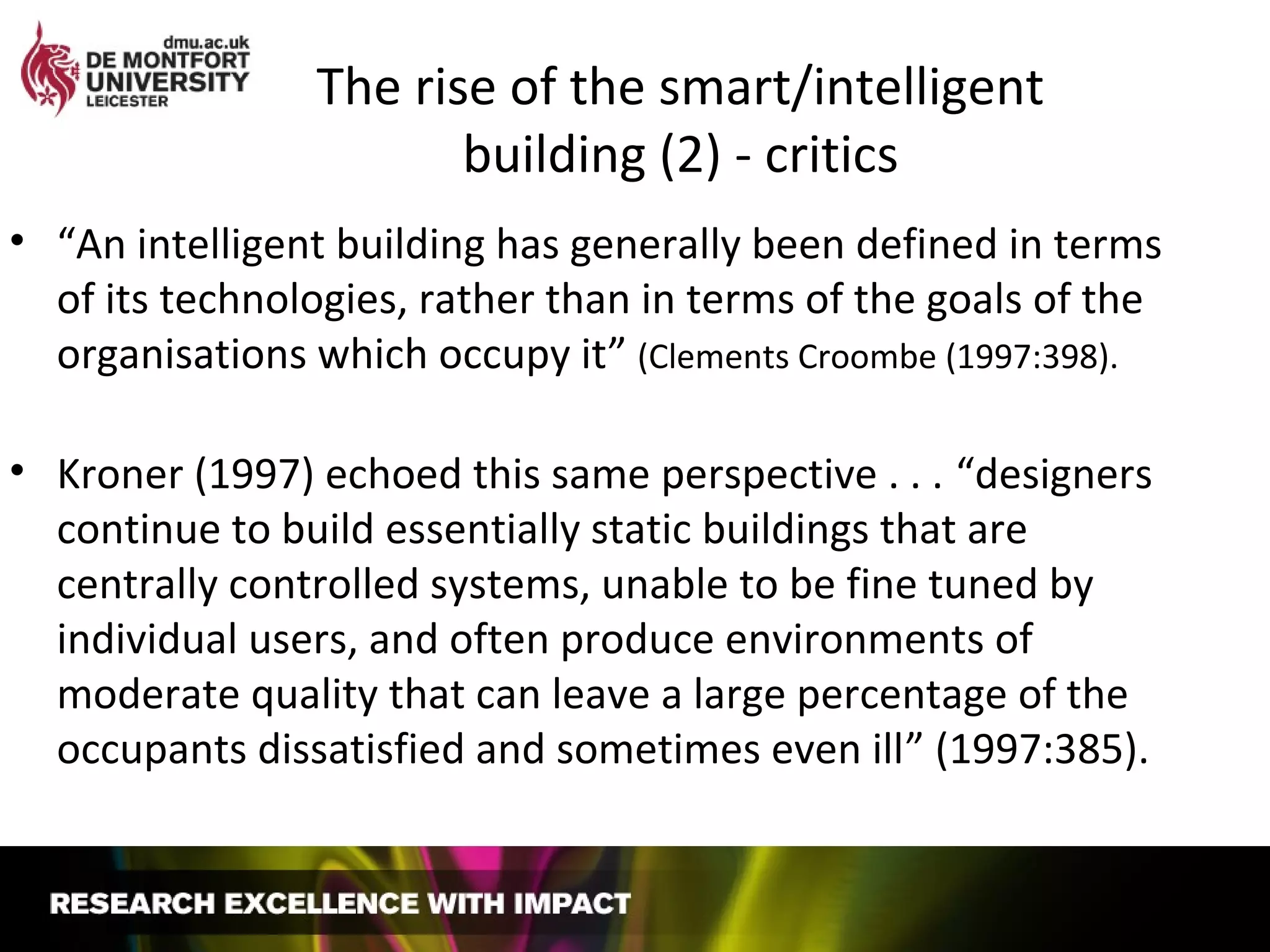
• “An intelligent building has generally been defined in terms
of its technologies, rather than in terms of the goals of the
organisations which occupy it” (Clements Croombe (1997:398).
• Kroner (1997) echoed this same perspective . . . “designers
continue to build essentially static buildings that are
centrally controlled systems, unable to be fine tuned by
individual users, and often produce environments of
moderate quality that can leave a large percentage of the
occupants dissatisfied and sometimes even ill” (1997:385).
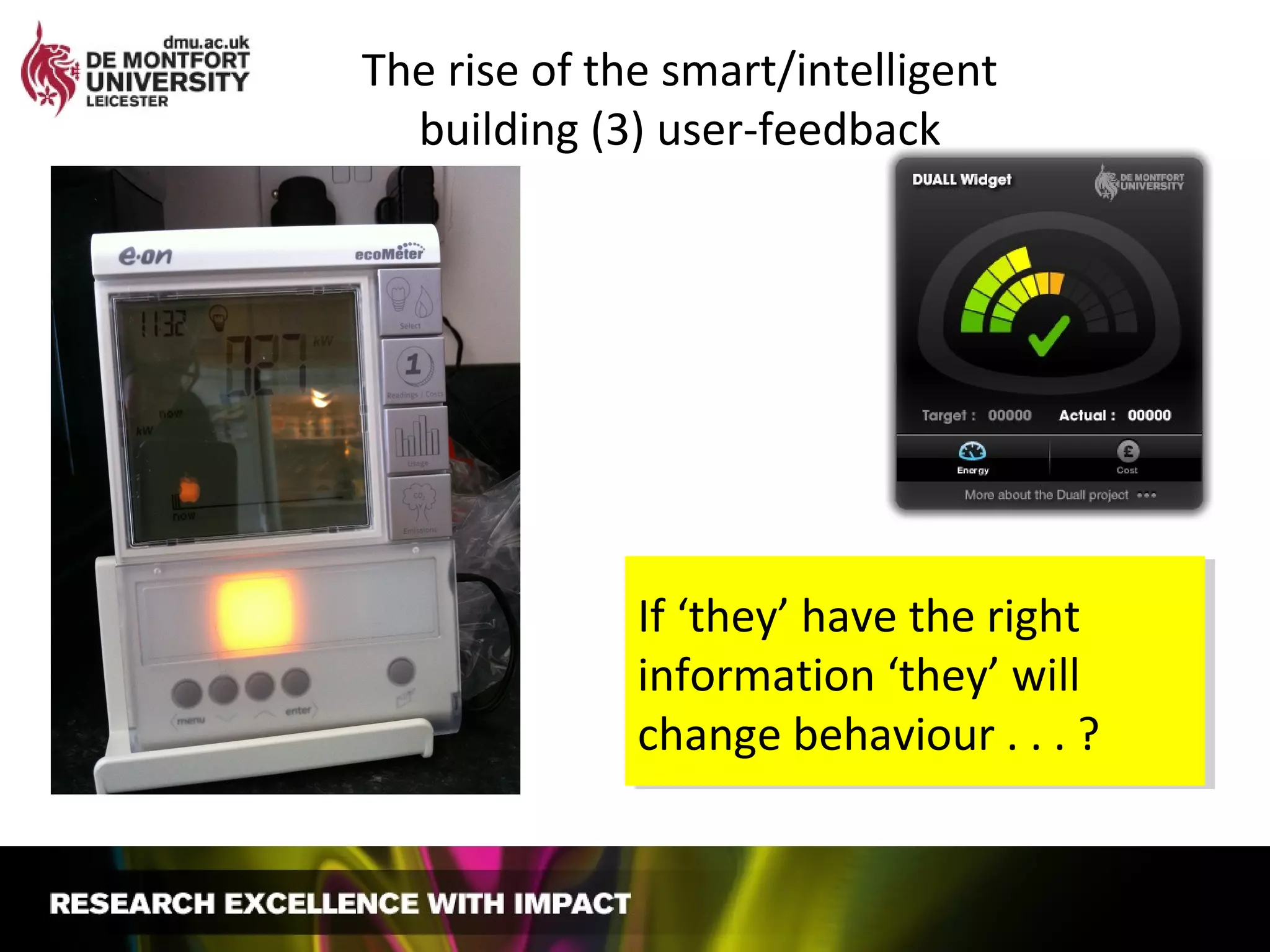
The rise of the smart/intelligent
building (3) user-feedback
If ‘they’ have the right
information ‘they’ will
change behaviour . . . ?
If ‘they’ have the right
information ‘they’ will
change behaviour . . . ?
http://www.previewnetworks.com/blo
g/social-media-stay-10/
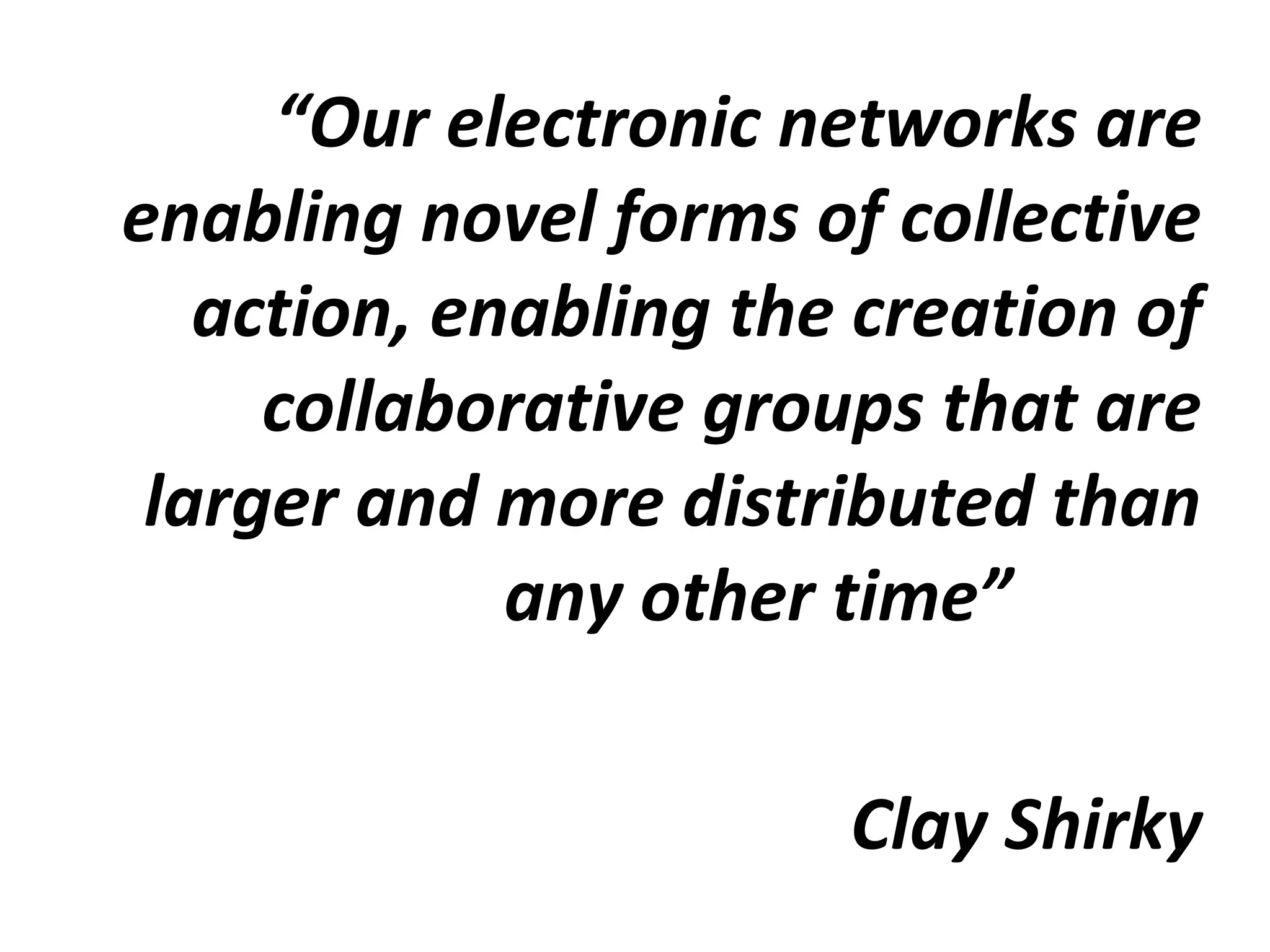
“Our electronic networks are
enabling novel forms of collective
action, enabling the creation of
collaborative groups that are
larger and more distributed than
any other time”
Clay Shirky
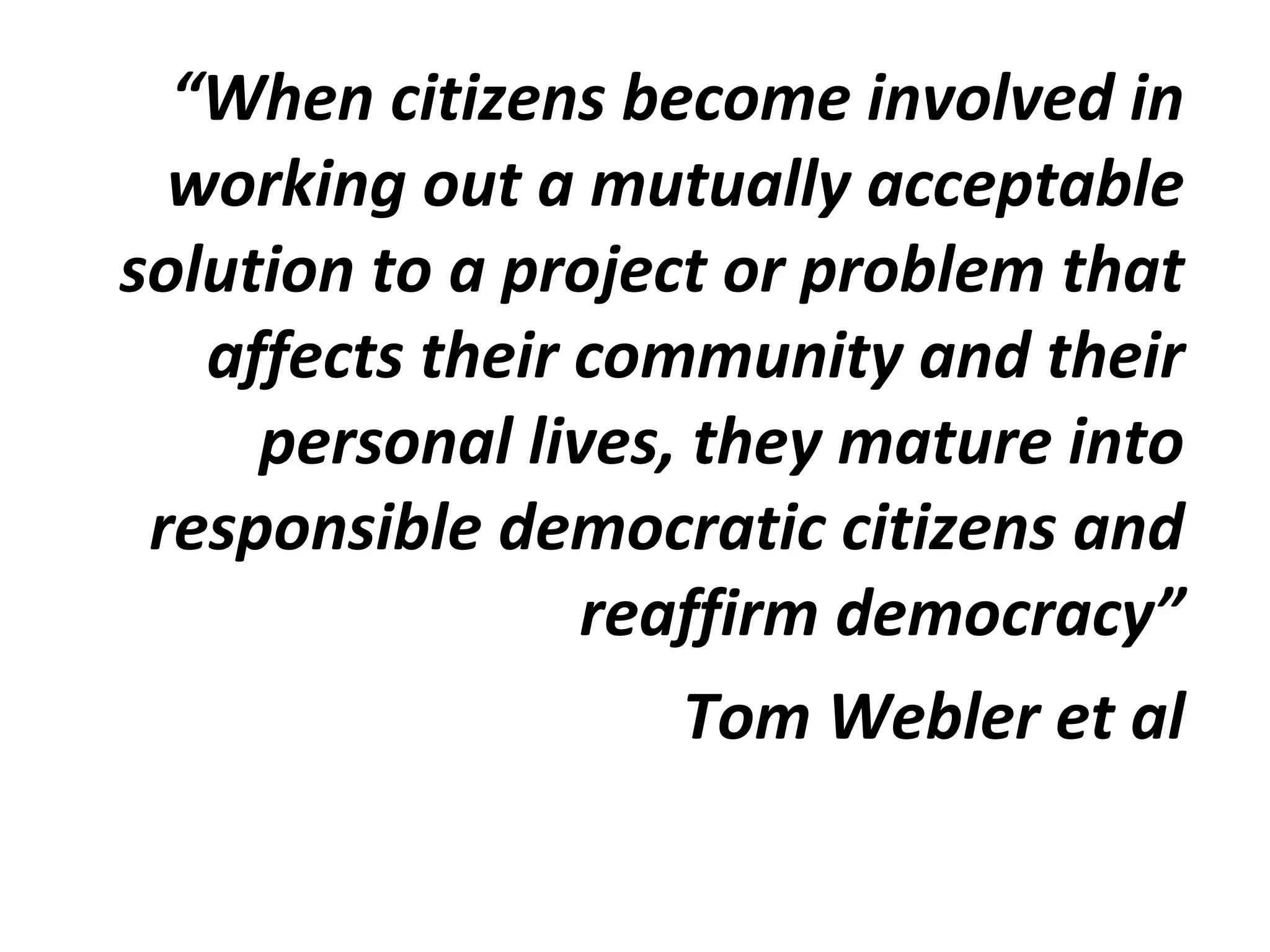
“When citizens become involved in
working out a mutually acceptable
solution to a project or problem that
affects their community and their
personal lives, they mature into
responsible democratic citizens and
reaffirm democracy”
Tom Webler et al
Parallels with the public
engagement/risk communication
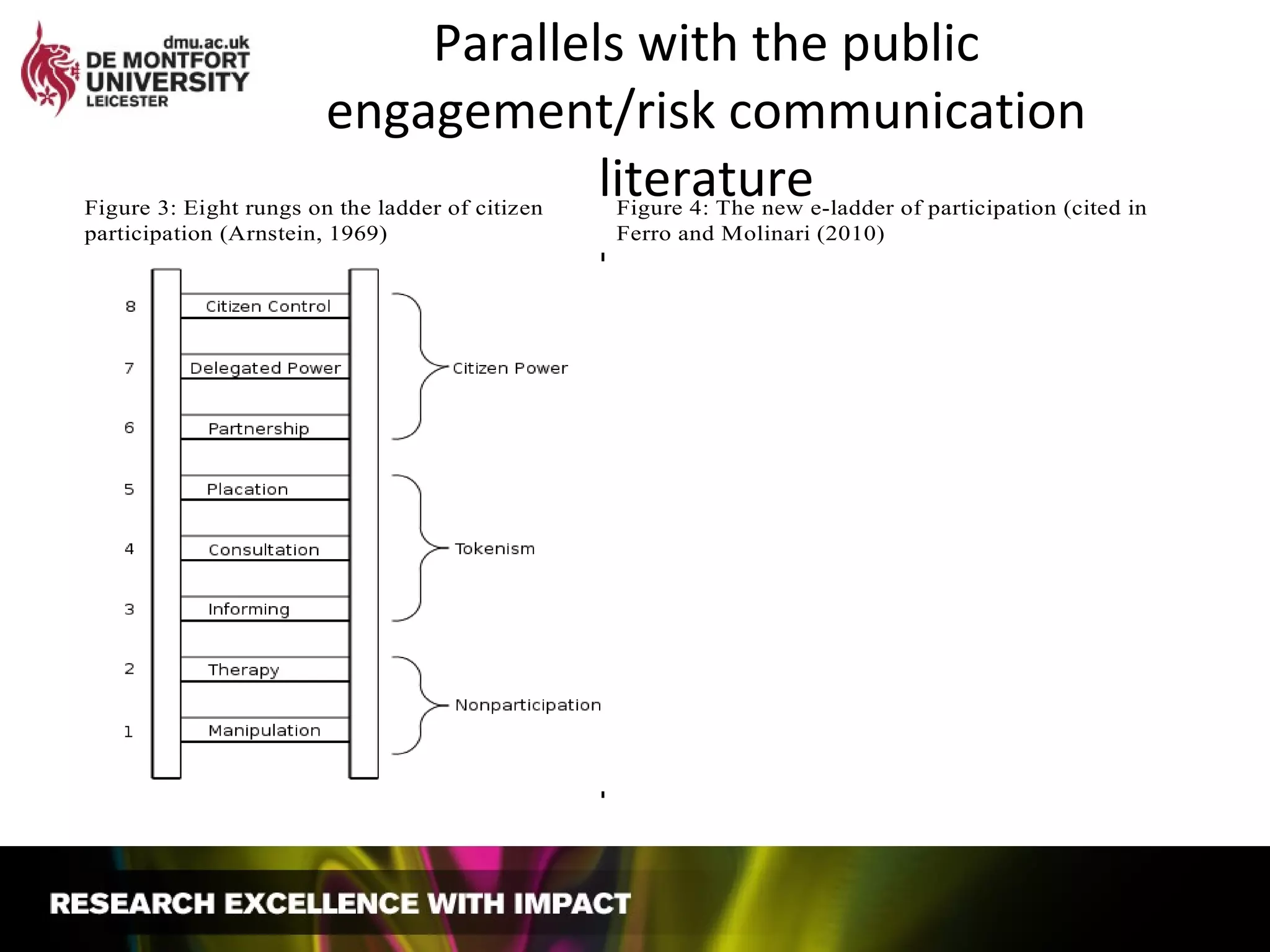
literatureFigure 3: Eight rungs on the ladder of citizen
participation (Arnstein, 1969)
Figure 4: The new e-ladder of participation (cited in
Ferro and Molinari (2010)
Where next?
• Original conceptions of smart or intelligent buildings envisaged buildings that
would take into account the preferences and experiences of the building-
users, yet a techno-centric approach has tended to dominate.
• Innovation is required not just in advanced controls but in affordable tools
that offer increased engagement and participation so that building users can
collaborate, share knowledge and mitigate some of the errors inherent in the
solely technical approach. It may involve re-shaping the effectiveness of public
services through changing the relationship between building energy
managers and building users.
• Of course the obvious question is this – do building-users want greater
control of their buildings?
• Further research is needed to substantiate whether these themes of co-
creation and participation can be effectively applied within the built
environment and deliver on the promises contained in the literature.
Questions
(e) rbull@dmu.ac.uk
(t) @richbull
(w) greenview.dmu.ac.uk

Eceee 2013 r bull

  • 1.
    Are people theproblem or the solution: a critical look at the rise of the smart/intelligent building and the role of ICT enabled engagement Richard Bull Kate Irvine Martin Rieser Paul Fleming
  • 2.
    http://www.guardian.co.uk/uk/2012/apr/09/shard-hacking-group-sneak-building CONTENTS •Digital economy inenergy & buildings •The digital economy explored further •Links with public engagement theory •An example from DMU •Final thoughts
  • 3.
    The rise ofthe smart/intelligent building (1) - definitions • The Intelligent Building Institution in Washington: “one which integrates various systems to effectively manage resources in a coordinated mode to maximise: technical performance; investment and operating cost savings; flexibility” (Clements Croombe 1997:396). • The European Intelligent Building Energy Group defined an intelligent building as one that creates an environment that ‘maximises the effectiveness of the building’s occupants’. • CIBSE: six key attributes to intelligent buildings: 1. Connectivity 2. Holistic thinking 3. Systems 4. Social, economic, environmental values 5. Convergence 6. Ubiquitous networks / cities
  • 4.
    The rise ofthe smart/intelligent building (2) - critics • “An intelligent building has generally been defined in terms of its technologies, rather than in terms of the goals of the organisations which occupy it” (Clements Croombe (1997:398). • Kroner (1997) echoed this same perspective . . . “designers continue to build essentially static buildings that are centrally controlled systems, unable to be fine tuned by individual users, and often produce environments of moderate quality that can leave a large percentage of the occupants dissatisfied and sometimes even ill” (1997:385).
  • 6.
    The rise ofthe smart/intelligent building (3) user-feedback If ‘they’ have the right information ‘they’ will change behaviour . . . ? If ‘they’ have the right information ‘they’ will change behaviour . . . ?
  • 7.
  • 8.
    “Our electronic networksare enabling novel forms of collective action, enabling the creation of collaborative groups that are larger and more distributed than any other time” Clay Shirky
  • 9.
    “When citizens becomeinvolved in working out a mutually acceptable solution to a project or problem that affects their community and their personal lives, they mature into responsible democratic citizens and reaffirm democracy” Tom Webler et al
  • 10.
    Parallels with thepublic engagement/risk communication literatureFigure 3: Eight rungs on the ladder of citizen participation (Arnstein, 1969) Figure 4: The new e-ladder of participation (cited in Ferro and Molinari (2010)
  • 12.
    Where next? • Originalconceptions of smart or intelligent buildings envisaged buildings that would take into account the preferences and experiences of the building- users, yet a techno-centric approach has tended to dominate. • Innovation is required not just in advanced controls but in affordable tools that offer increased engagement and participation so that building users can collaborate, share knowledge and mitigate some of the errors inherent in the solely technical approach. It may involve re-shaping the effectiveness of public services through changing the relationship between building energy managers and building users. • Of course the obvious question is this – do building-users want greater control of their buildings? • Further research is needed to substantiate whether these themes of co- creation and participation can be effectively applied within the built environment and deliver on the promises contained in the literature.
  • 13.