The Role of Early Detection in
Cancer Management
Heri Fadjari
Hematology – Medical Oncology Div.
Hasan Sadikin General Hospital
Bandung, Indonesia
• Every year, millions of cancer patients could be saved from premature
death and suffering if they had timely access to early detection and
treatment.
• Early detection is based on the concept that the sooner in its natural
history the cancer is detected, the more effective the treatment is likely to
be.
• The aim of early detection is to detect the cancer when it is localized to
the organ of origin and before it invades the surrounding tissues and
distant organs, or for some sites, to detect a precancerous lesion.
• There are two main components of early detection programmes for
cancer:
- screening.
- early diagnosis
Cancer control: knowledge into action. World Health Organization. 2007.
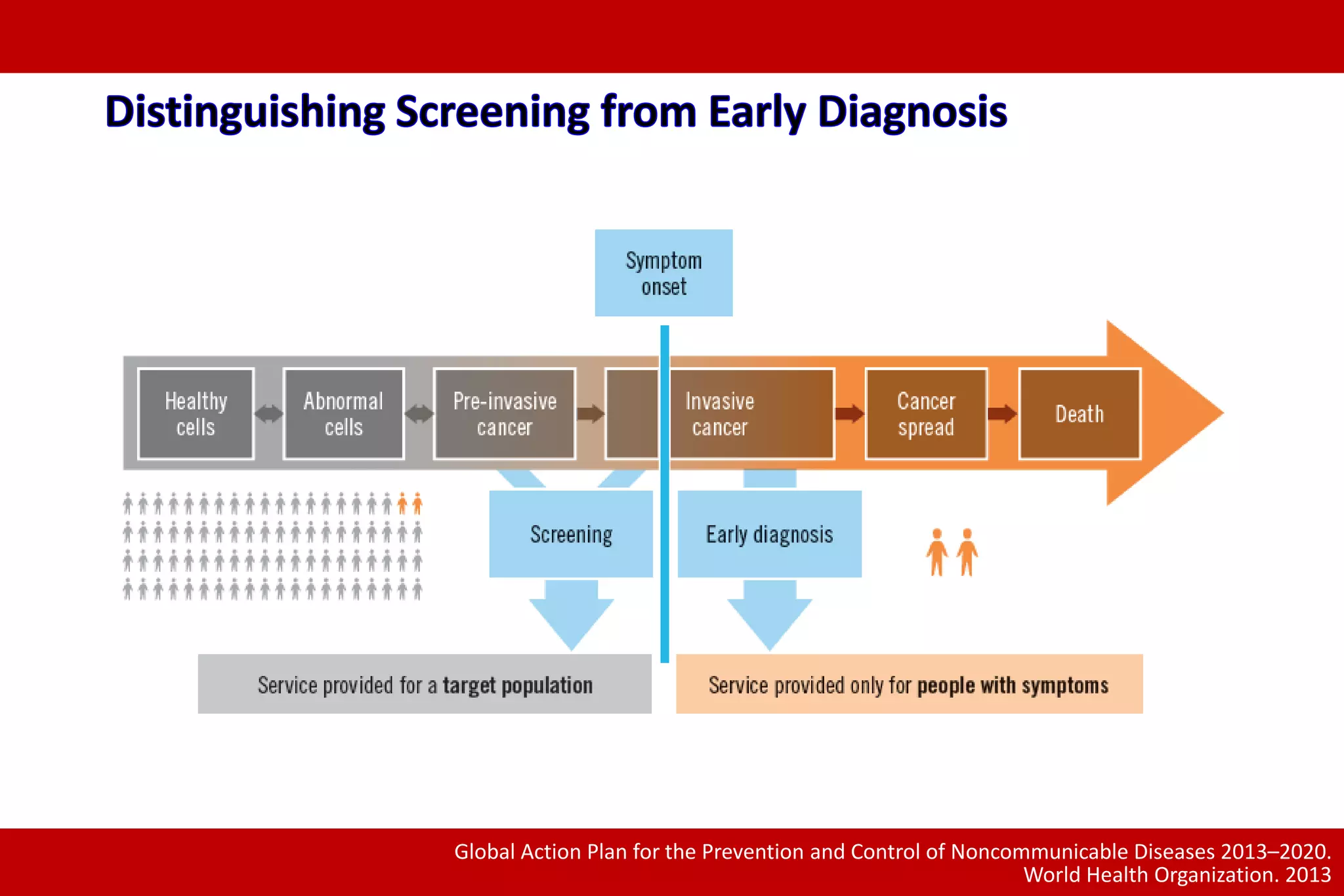
Global Action Plan for the Prevention and Control of Noncommunicable Diseases 2013–2020.
World Health Organization. 2013
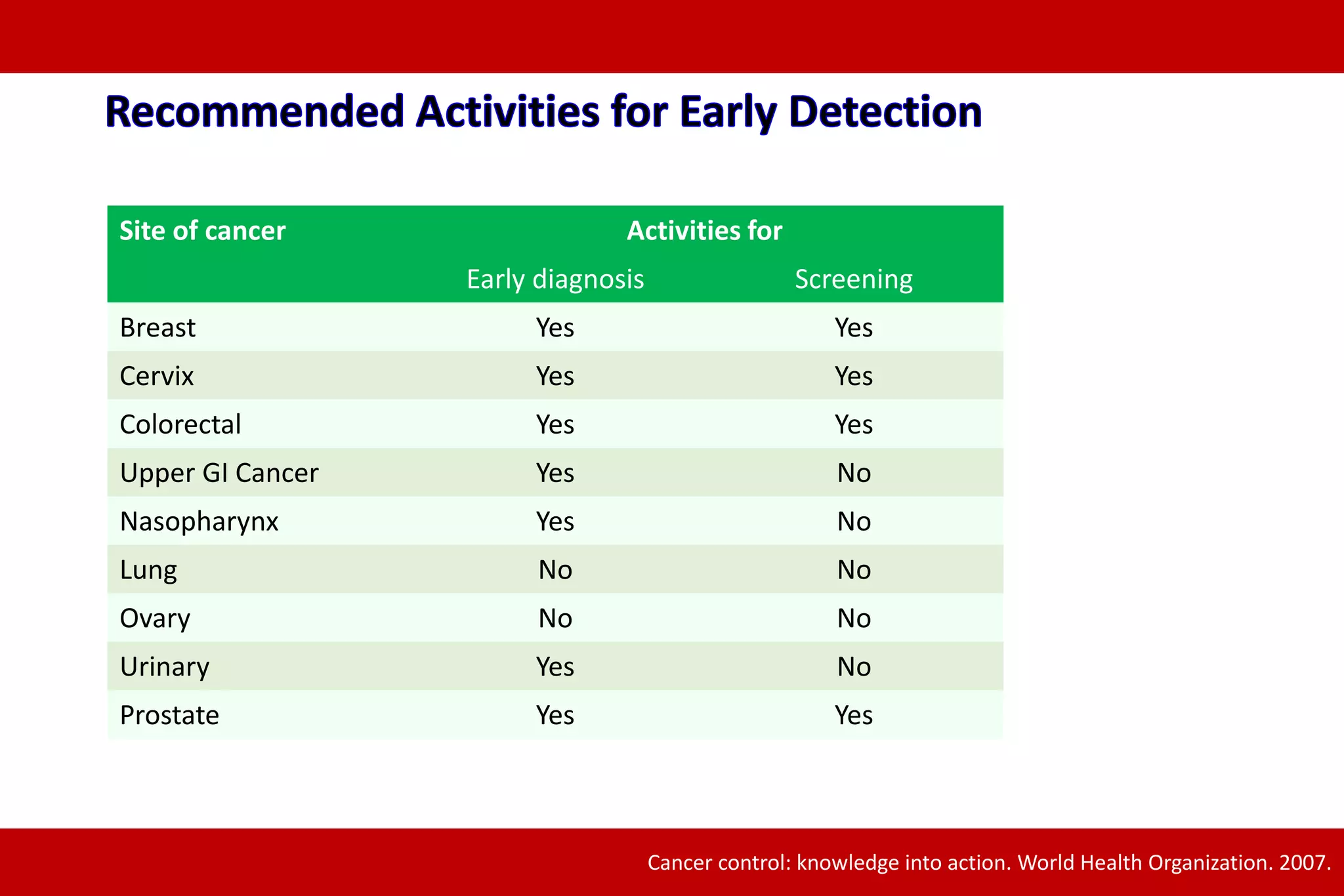
Site of cancer Activities for
Early diagnosis Screening
Breast Yes Yes
Cervix Yes Yes
Colorectal Yes Yes
Upper GI Cancer Yes No
Nasopharynx Yes No
Lung No No
Ovary No No
Urinary Yes No
Prostate Yes Yes
Cancer control: knowledge into action. World Health Organization. 2007.
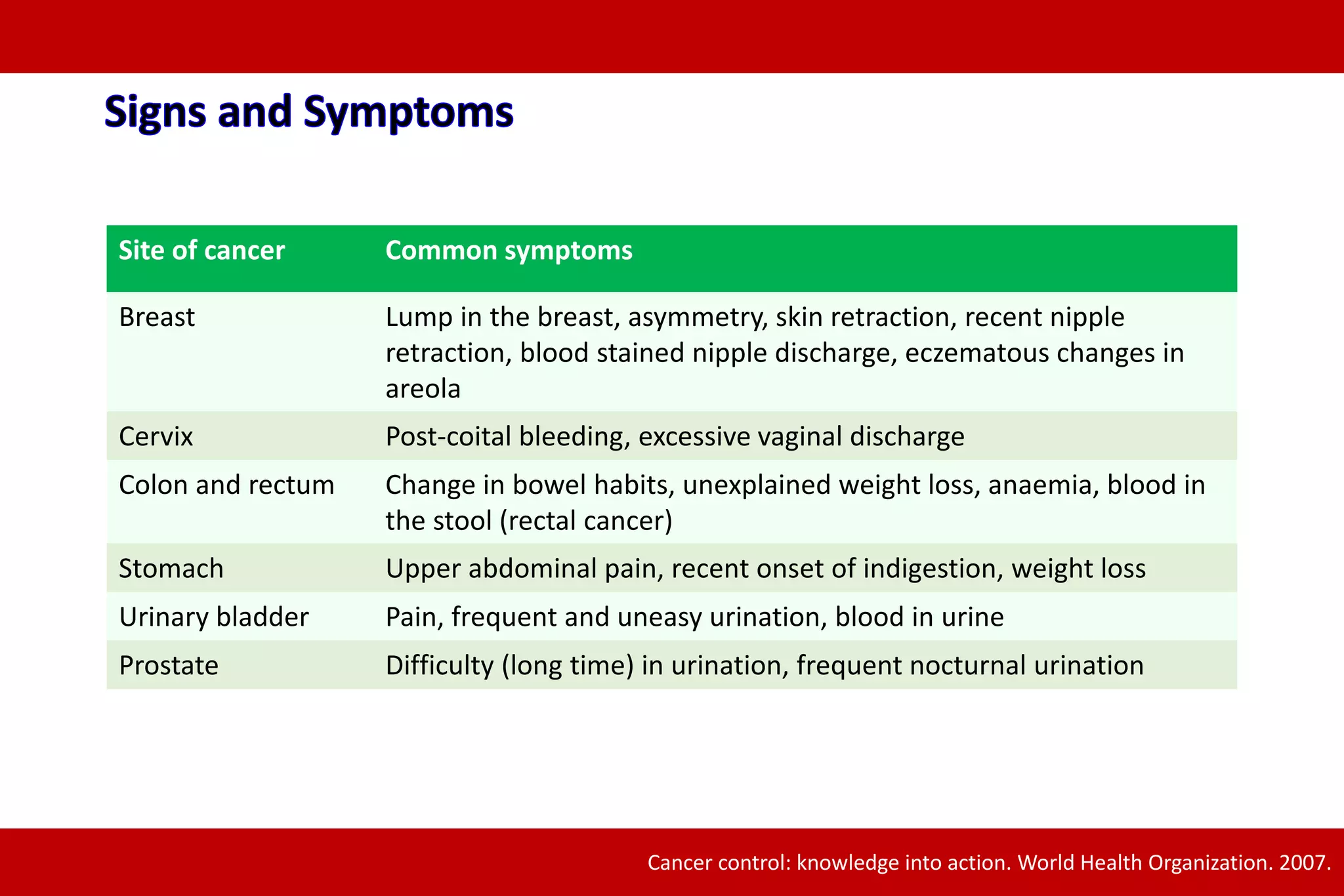
Site of cancer Common symptoms
Breast Lump in the breast, asymmetry, skin retraction, recent nipple
retraction, blood stained nipple discharge, eczematous changes in
areola
Cervix Post-coital bleeding, excessive vaginal discharge
Colon and rectum Change in bowel habits, unexplained weight loss, anaemia, blood in
the stool (rectal cancer)
Stomach Upper abdominal pain, recent onset of indigestion, weight loss
Urinary bladder Pain, frequent and uneasy urination, blood in urine
Prostate Difficulty (long time) in urination, frequent nocturnal urination
Cancer control: knowledge into action. World Health Organization. 2007.
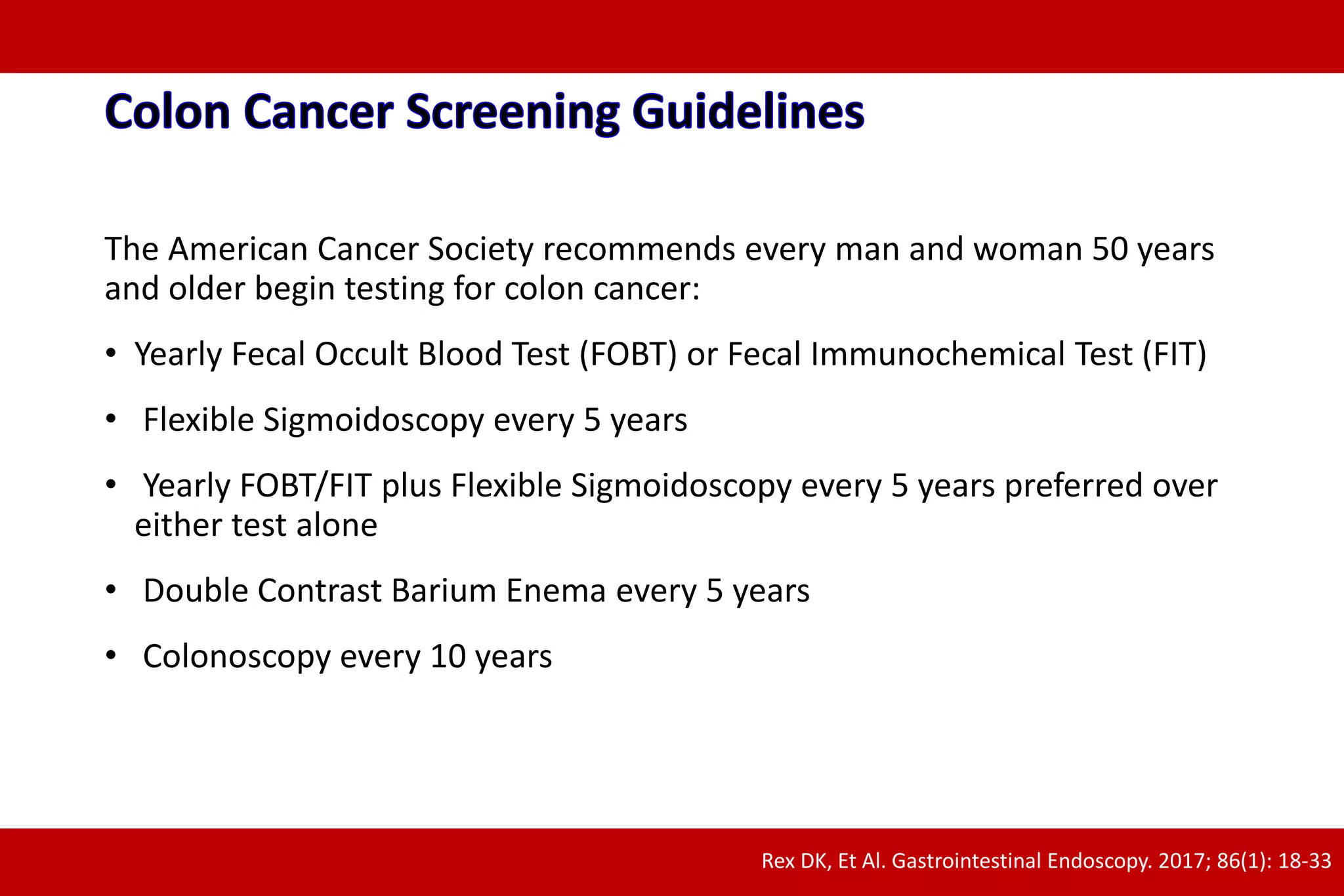
The American Cancer Society recommends every man and woman 50 years
and older begin testing for colon cancer:
• Yearly Fecal Occult Blood Test (FOBT) or Fecal Immunochemical Test (FIT)
• Flexible Sigmoidoscopy every 5 years
• Yearly FOBT/FIT plus Flexible Sigmoidoscopy every 5 years preferred over
either test alone
• Double Contrast Barium Enema every 5 years
• Colonoscopy every 10 years
Rex DK, Et Al. Gastrointestinal Endoscopy. 2017; 86(1): 18-33
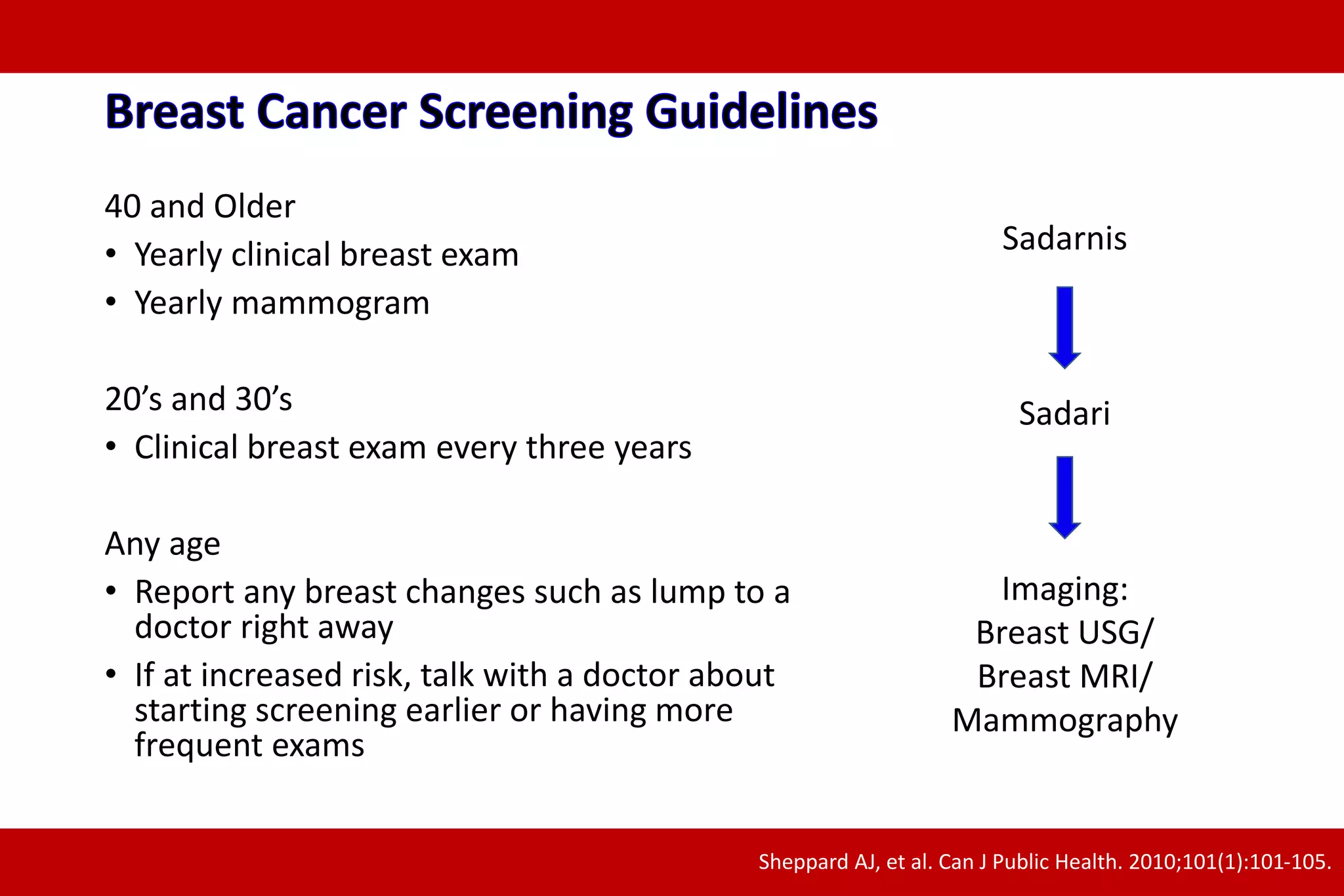
40 and Older
• Yearly clinical breast exam
• Yearly mammogram
20’s and 30’s
• Clinical breast exam every three years
Any age
• Report any breast changes such as lump to a
doctor right away
• If at increased risk, talk with a doctor about
starting screening earlier or having more
frequent exams
Sadarnis
Sadari
Imaging:
Breast USG/
Breast MRI/
Mammography
Sheppard AJ, et al. Can J Public Health. 2010;101(1):101-105.
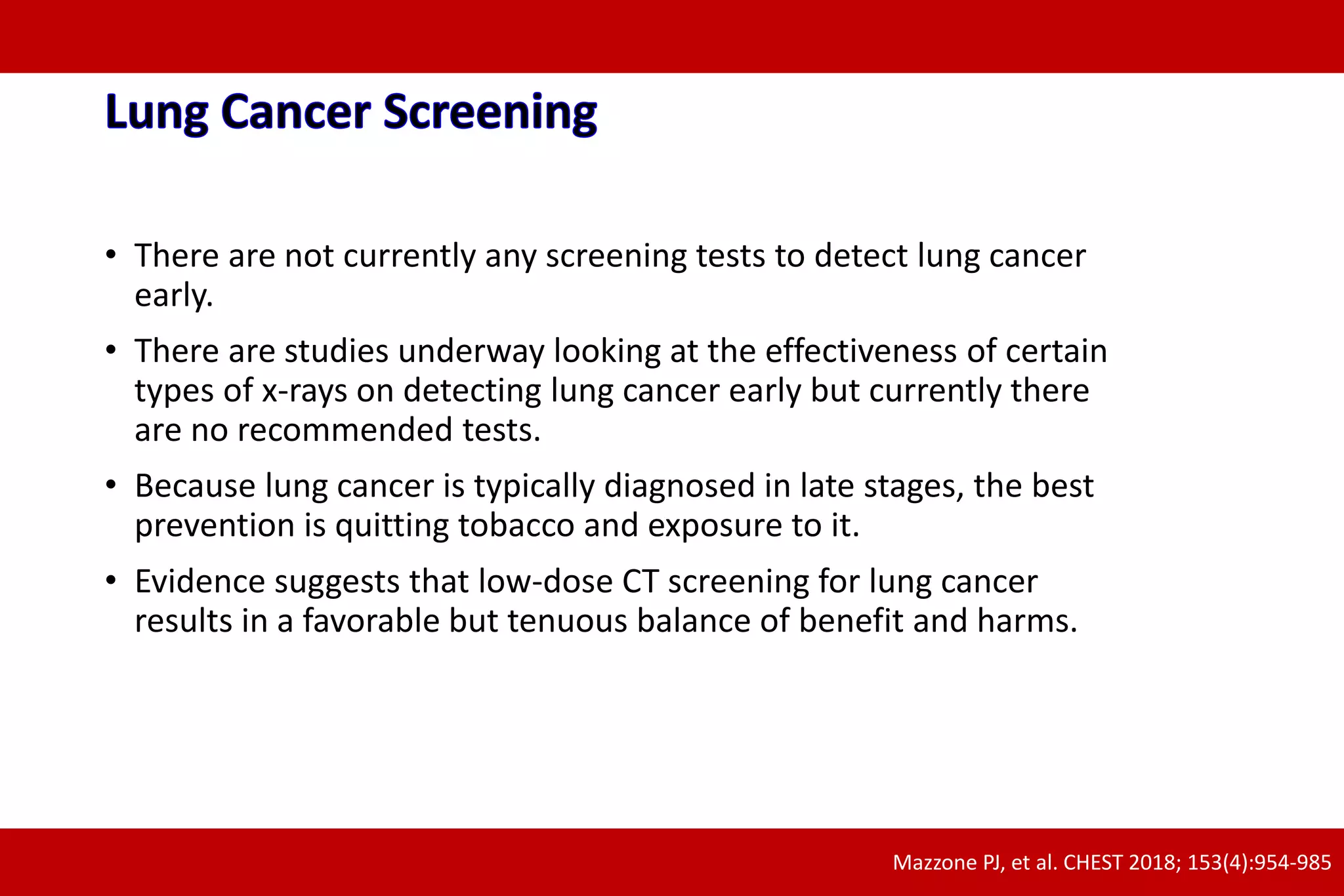
• There are not currently any screening tests to detect lung cancer
early.
• There are studies underway looking at the effectiveness of certain
types of x-rays on detecting lung cancer early but currently there
are no recommended tests.
• Because lung cancer is typically diagnosed in late stages, the best
prevention is quitting tobacco and exposure to it.
• Evidence suggests that low-dose CT screening for lung cancer
results in a favorable but tenuous balance of benefit and harms.
Mazzone PJ, et al. CHEST 2018; 153(4):954-985
• Nearly all cases of cervical cancer can be prevented if a women is
screened regularly.
• The American Cancer Society recommends women should begin
screening approximately three years after she begins having vaginal
intercourse, but no later than 21 years of age.
• Regular Pap test every year or the liquid-based Pap test every 2 years
• The Pap test can find changes in the cells of the cervix caused by
HPVs. While there is no cure for HPV, the warts and abnormal cell
growth they cause can be treated.
• Even though HPV is an important risk factor for cervical cancer, most
women with this infection do not get cervical cancer.
Canadian Task Force on Preventive Health Care.
Recommendations on screening for cervical cancer. CMAJ. 2013 Jan 8;185(1):35-45.
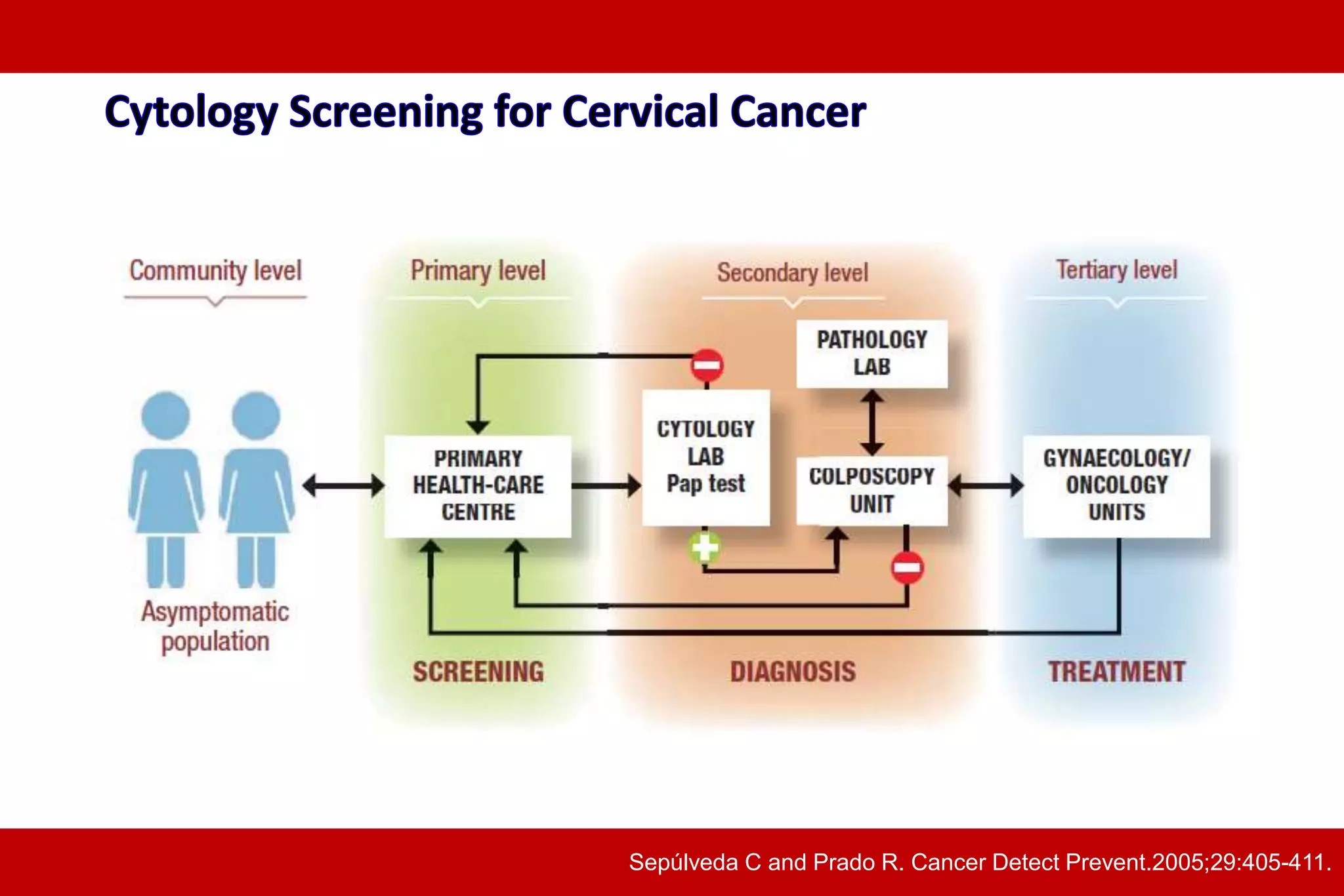
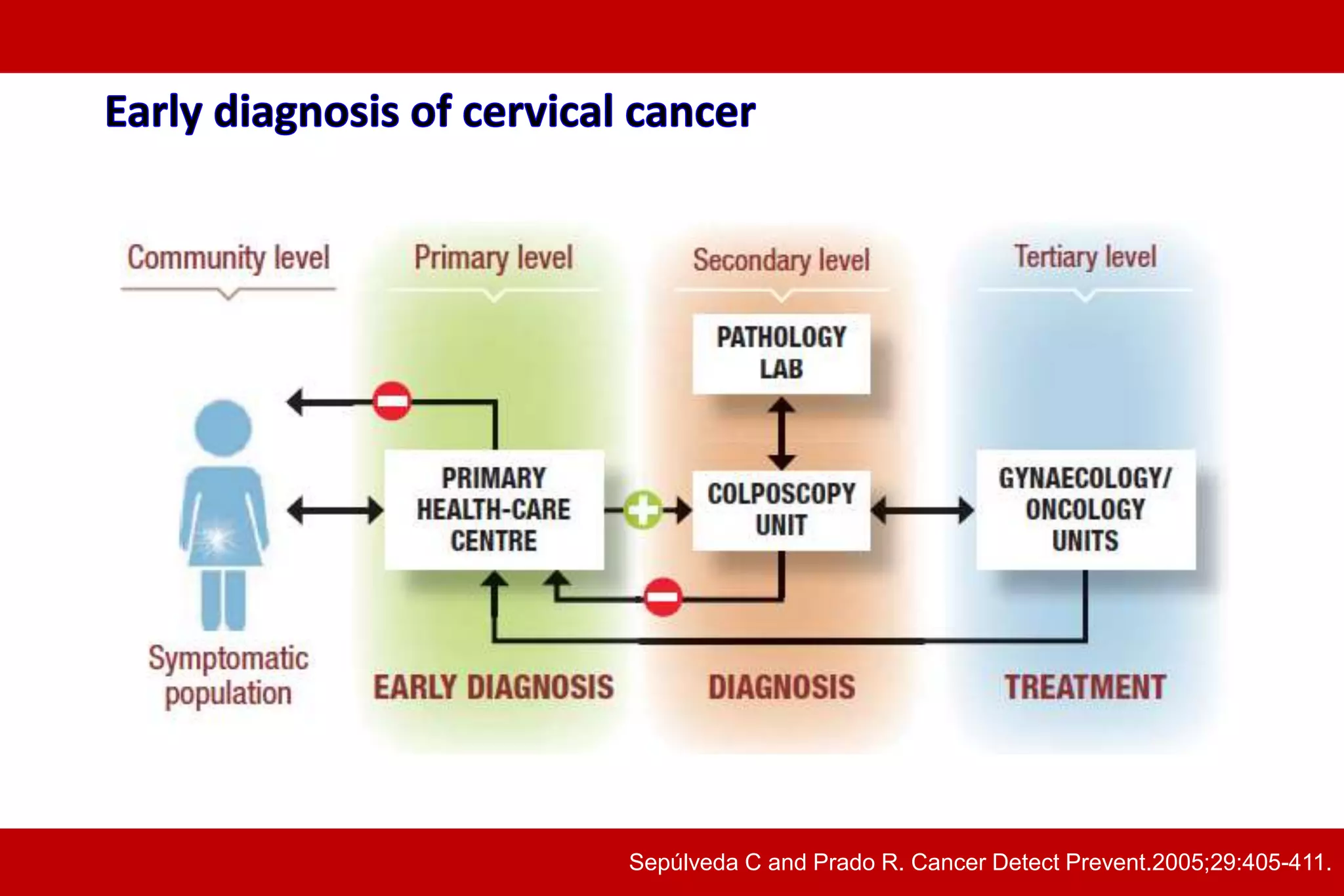
Sepúlveda C and Prado R. Cancer Detect Prevent.2005;29:405-411.
• Beginning at age 50, men should be offered the Prostate
Specific Antigen (PSA) blood test and a digital rectal
examination (DRE) every year.
• Men with a father, brother, or son with prostate cancer before
age 65 should be tested.
Mottet N, et al. J Eur Urol. 2017;71(4):618-629
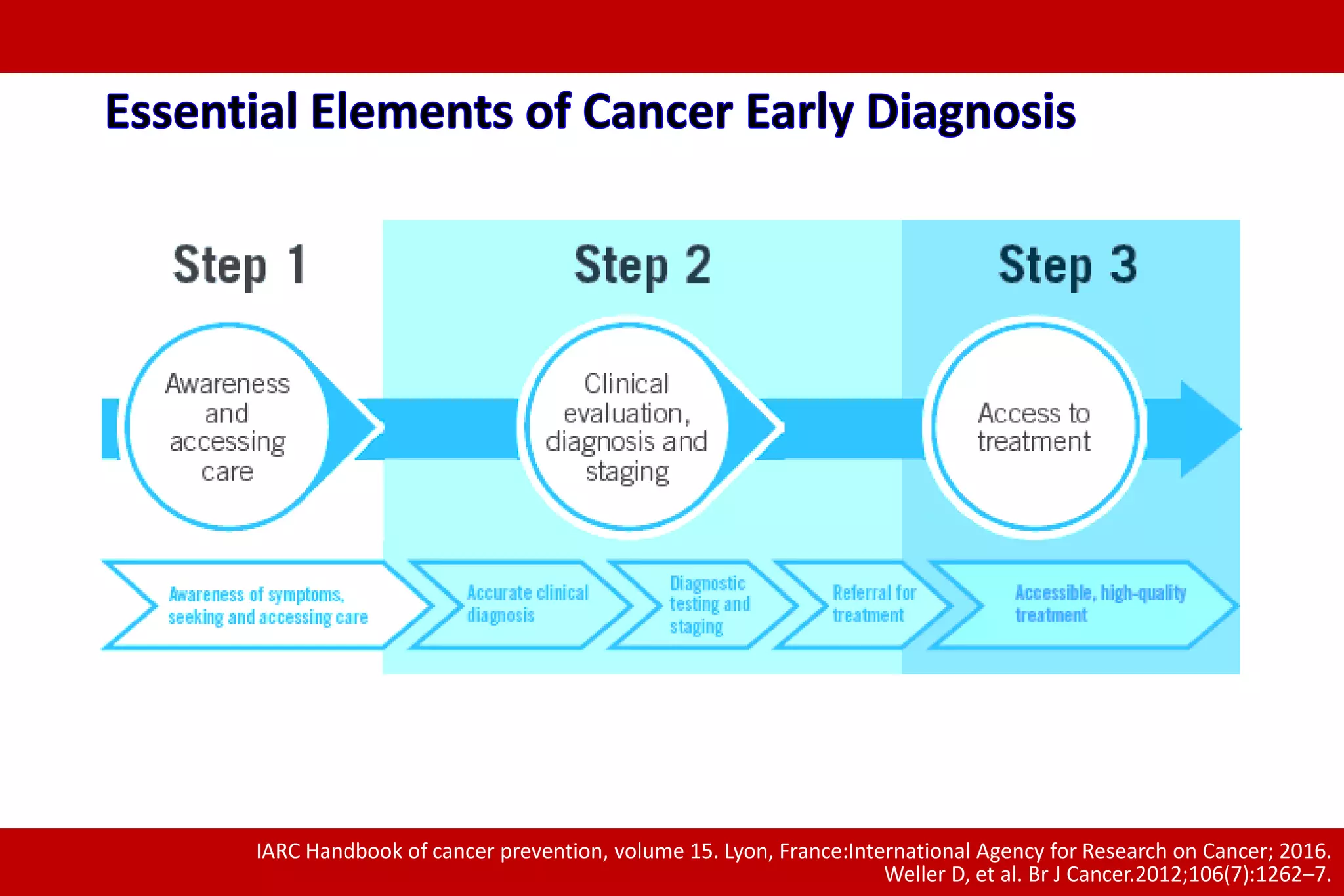
IARC Handbook of cancer prevention, volume 15. Lyon, France:International Agency for Research on Cancer; 2016.
Weller D, et al. Br J Cancer.2012;106(7):1262–7.
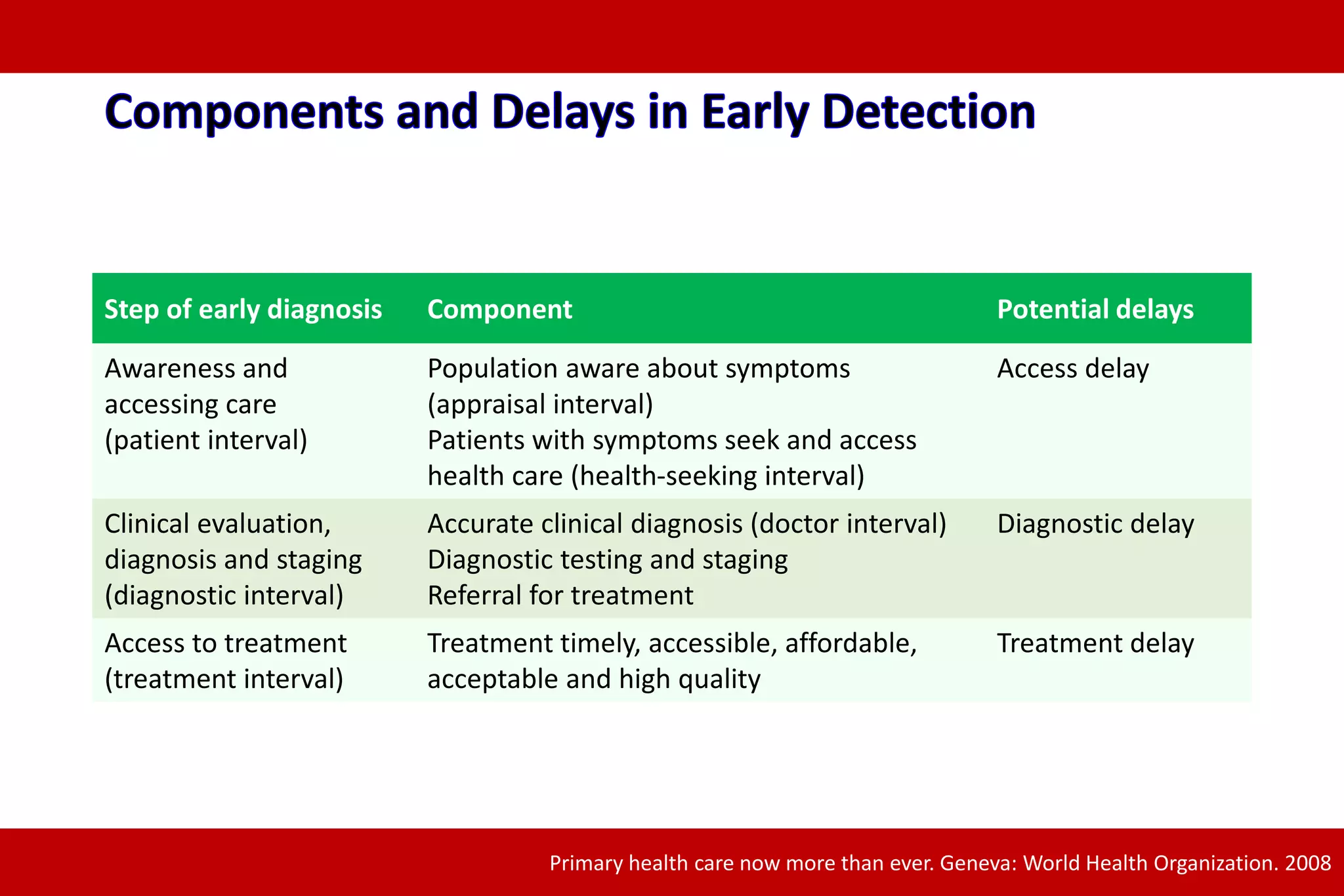
Step of early diagnosis Component Potential delays
Awareness and
accessing care
(patient interval)
Population aware about symptoms
(appraisal interval)
Patients with symptoms seek and access
health care (health-seeking interval)
Access delay
Clinical evaluation,
diagnosis and staging
(diagnostic interval)
Accurate clinical diagnosis (doctor interval)
Diagnostic testing and staging
Referral for treatment
Diagnostic delay
Access to treatment
(treatment interval)
Treatment timely, accessible, affordable,
acceptable and high quality
Treatment delay
Primary health care now more than ever. Geneva: World Health Organization. 2008
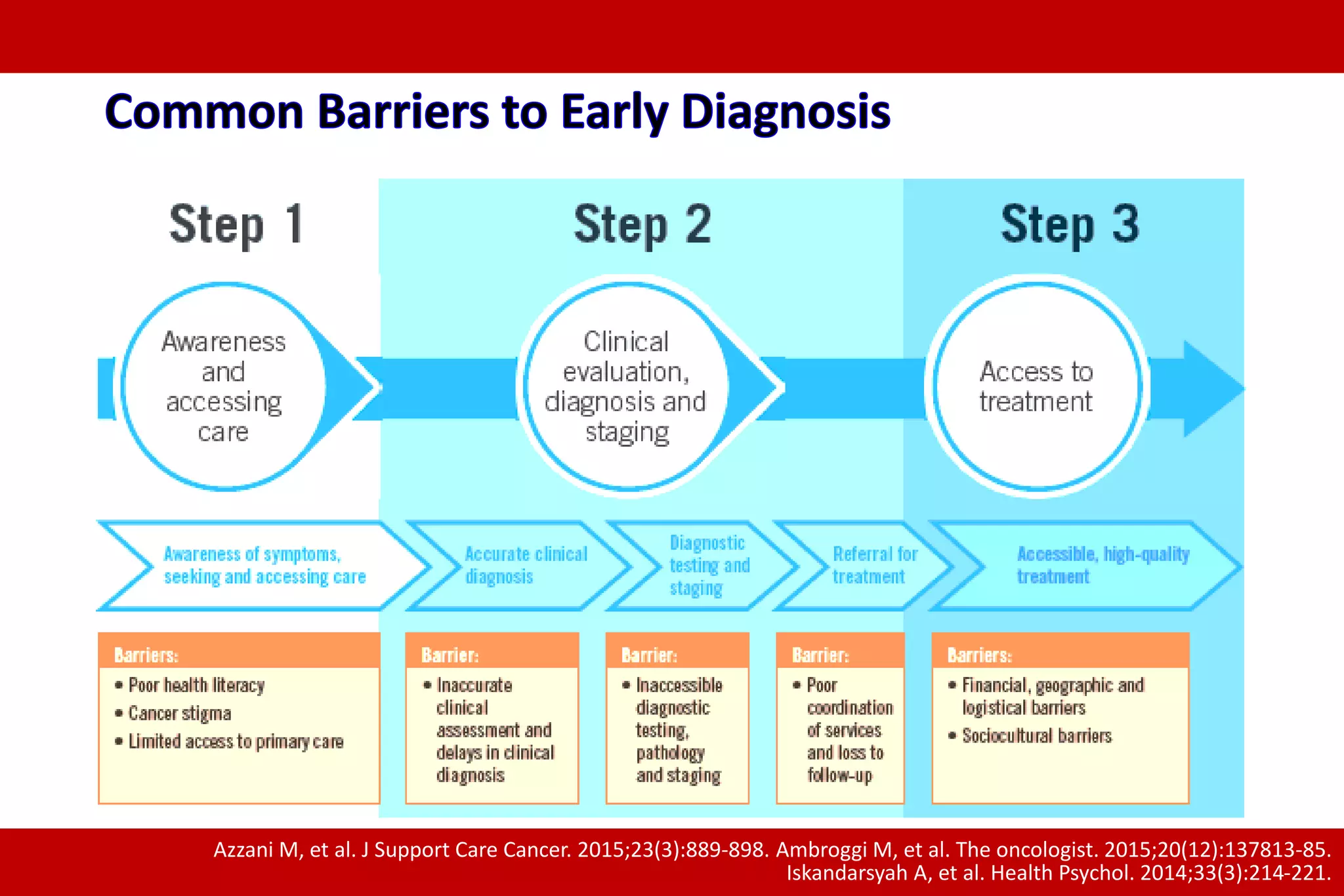
Azzani M, et al. J Support Care Cancer. 2015;23(3):889-898. Ambroggi M, et al. The oncologist. 2015;20(12):137813-85.
Iskandarsyah A, et al. Health Psychol. 2014;33(3):214-221.
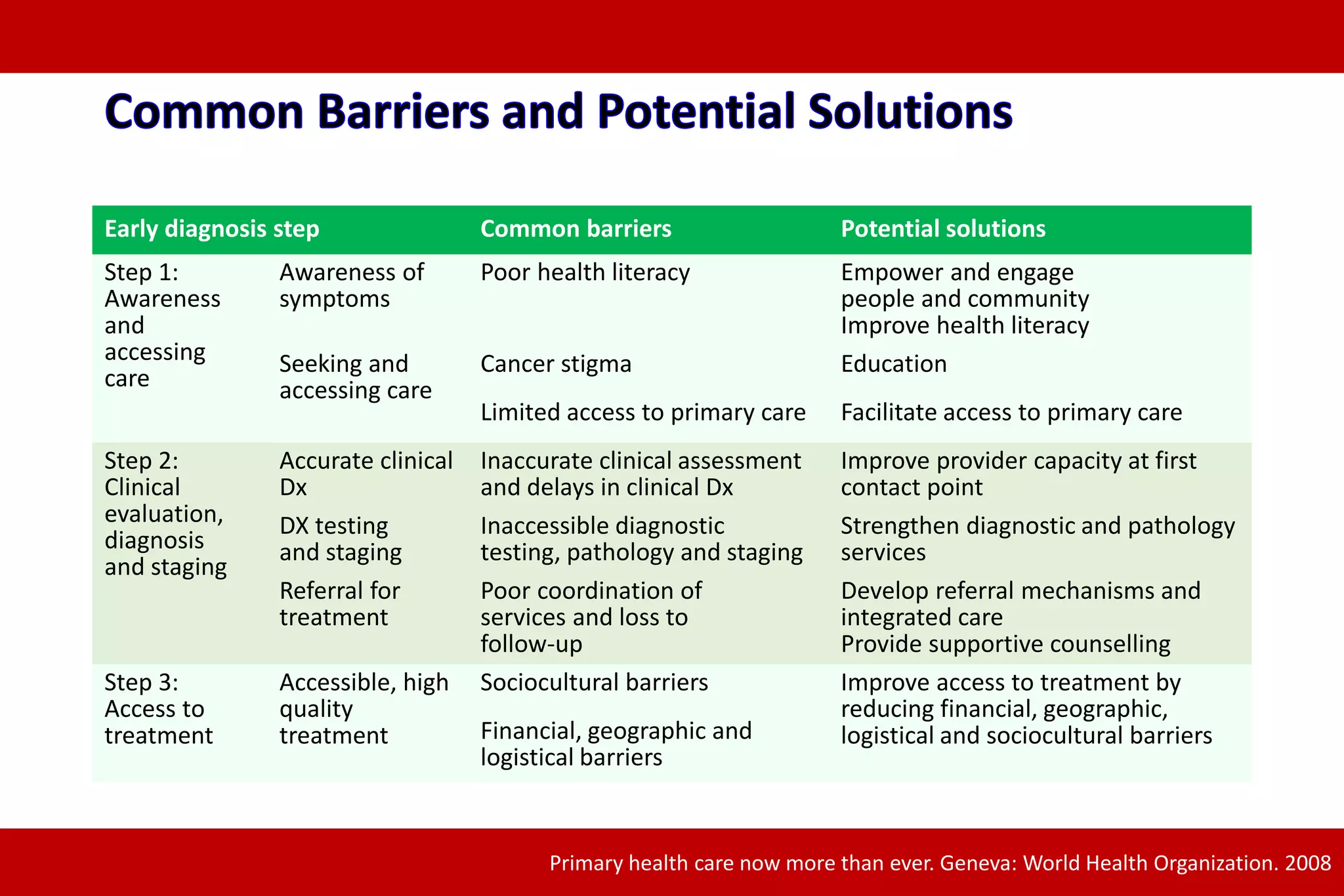
Early diagnosis step Common barriers Potential solutions
Step 1:
Awareness
and
accessing
care
Awareness of
symptoms
Poor health literacy Empower and engage
people and community
Improve health literacy
Seeking and
accessing care
Cancer stigma Education
Limited access to primary care Facilitate access to primary care
Step 2:
Clinical
evaluation,
diagnosis
and staging
Accurate clinical
Dx
Inaccurate clinical assessment
and delays in clinical Dx
Improve provider capacity at first
contact point
DX testing
and staging
Inaccessible diagnostic
testing, pathology and staging
Strengthen diagnostic and pathology
services
Referral for
treatment
Poor coordination of
services and loss to
follow-up
Develop referral mechanisms and
integrated care
Provide supportive counselling
Step 3:
Access to
treatment
Accessible, high
quality
treatment
Sociocultural barriers Improve access to treatment by
reducing financial, geographic,
logistical and sociocultural barriers
Financial, geographic and
logistical barriers
Primary health care now more than ever. Geneva: World Health Organization. 2008
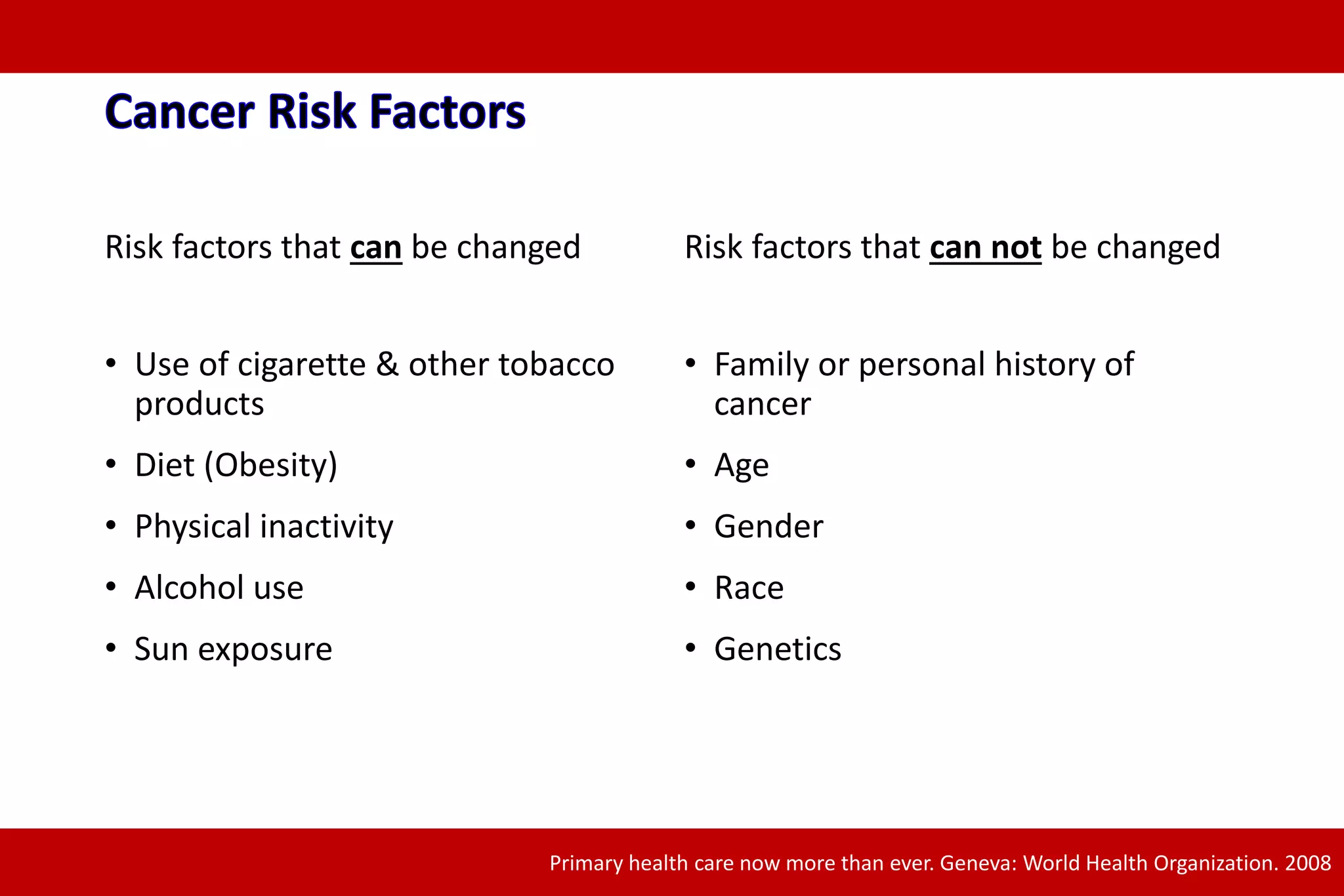
Risk factors that can be changed
• Use of cigarette & other tobacco
products
• Diet (Obesity)
• Physical inactivity
• Alcohol use
• Sun exposure
Risk factors that can not be changed
• Family or personal history of
cancer
• Age
• Gender
• Race
• Genetics
Primary health care now more than ever. Geneva: World Health Organization. 2008
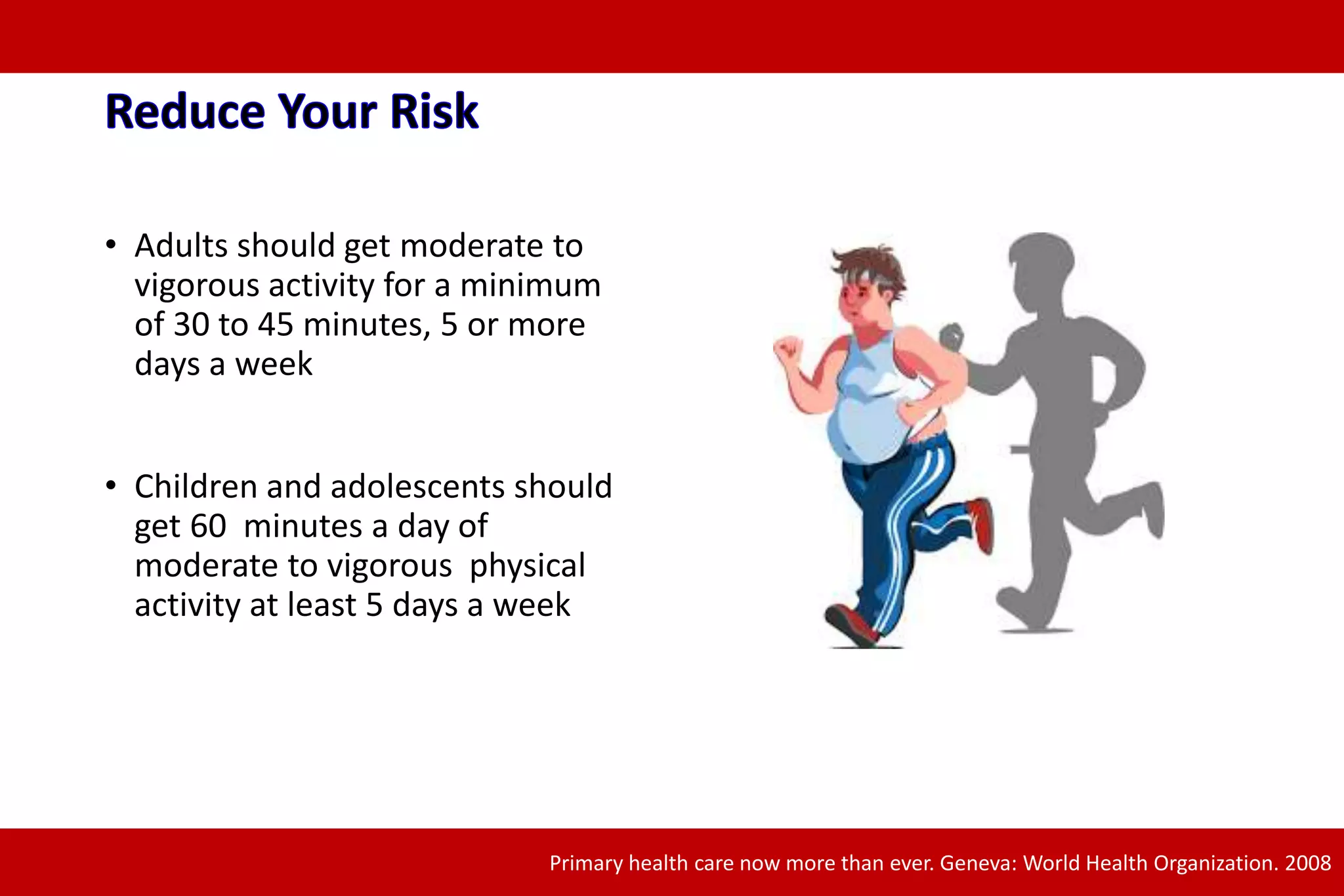
• Adults should get moderate to
vigorous activity for a minimum
of 30 to 45 minutes, 5 or more
days a week
• Children and adolescents should
get 60 minutes a day of
moderate to vigorous physical
activity at least 5 days a week
Primary health care now more than ever. Geneva: World Health Organization. 2008
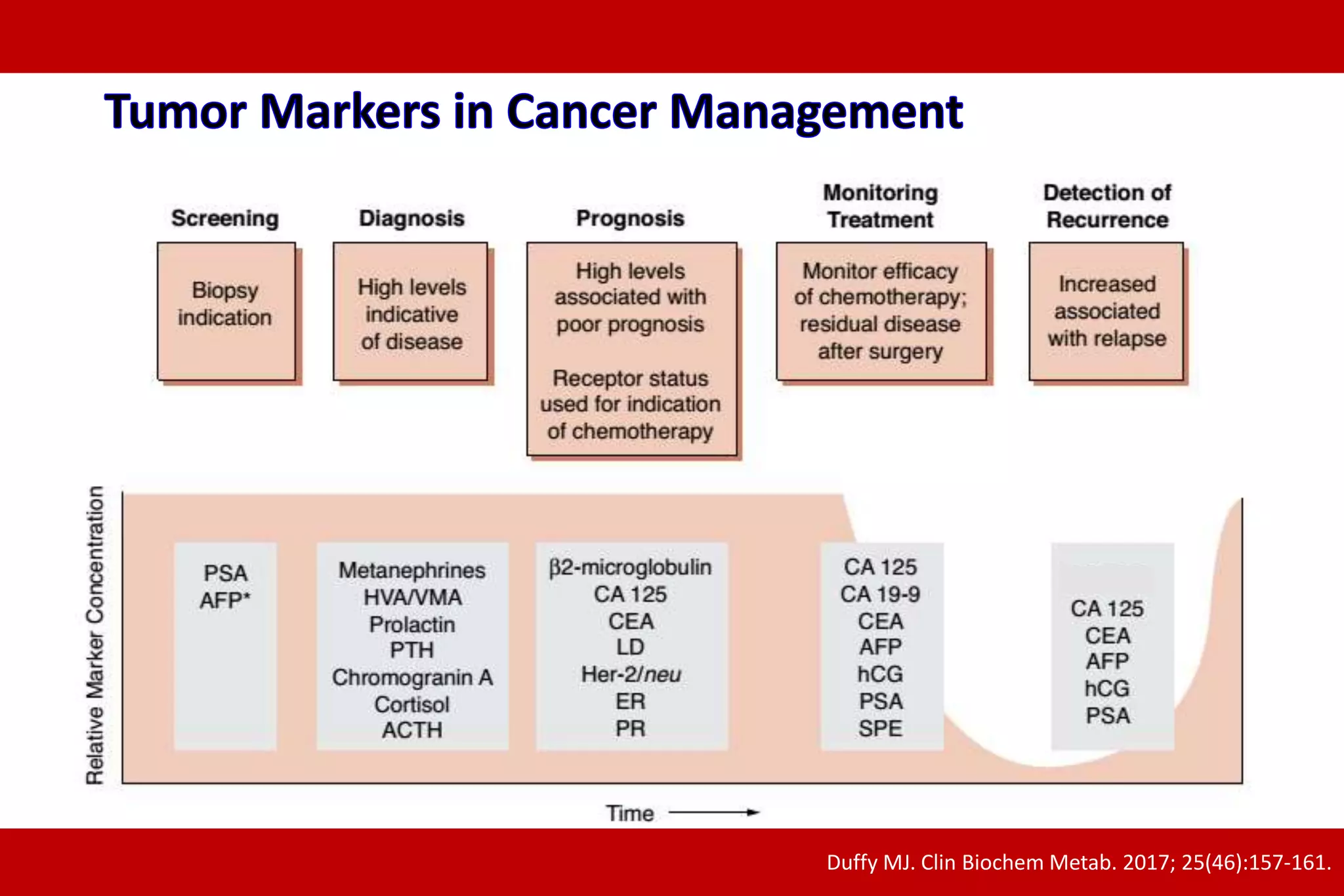
• A Tumor marker is a biological substance synthesized and released by:
• The tumor
• Or by the host in response to tumor tissue
• It may be used to:
• Detect the presence of a tumor
• Monitor the progress of disease
• Monitor the response to treatment
Duffy MJ. Clin Biochem Metab. 2017; 25(46):157-161.
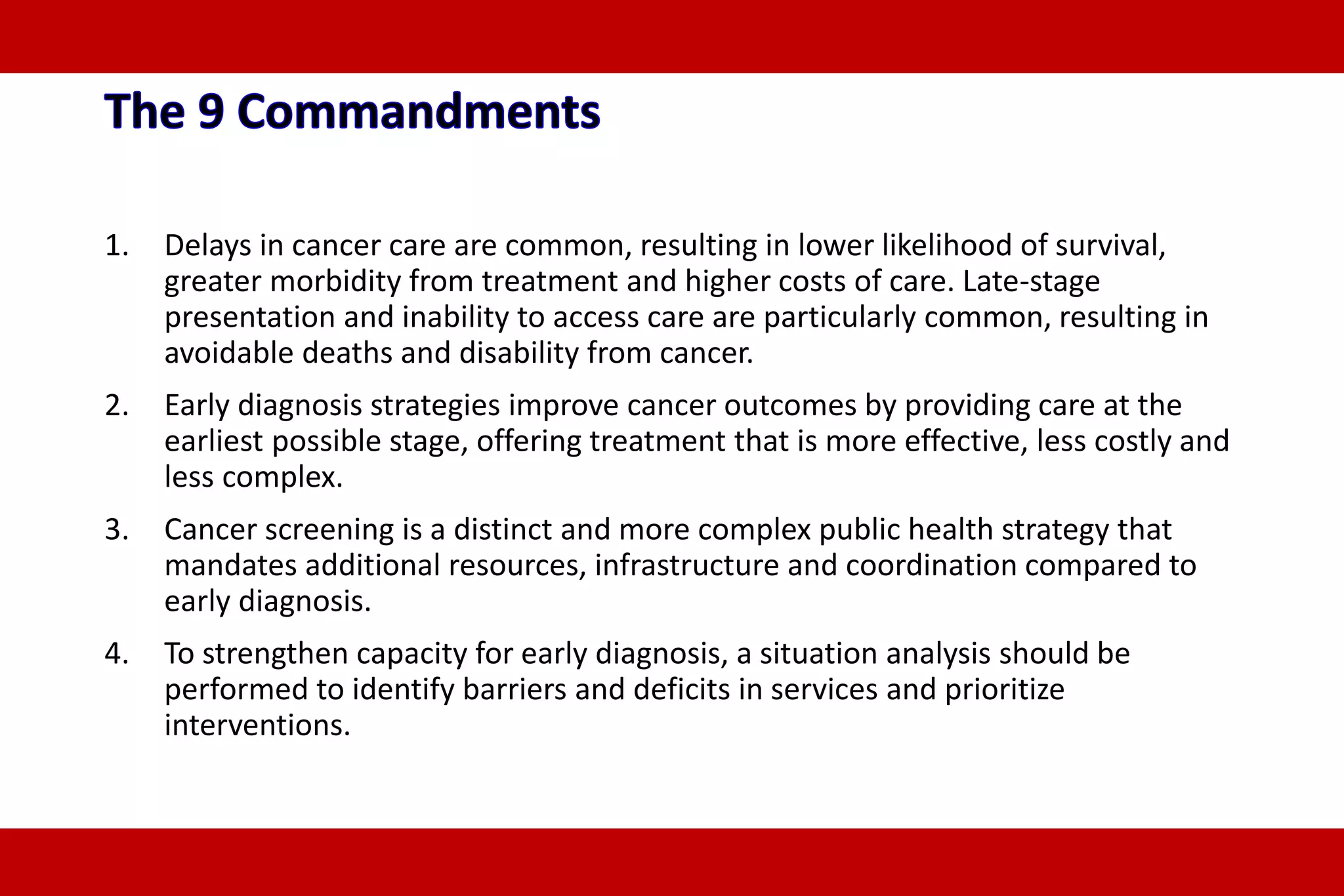
1. Delays in cancer care are common, resulting in lower likelihood of survival,
greater morbidity from treatment and higher costs of care. Late-stage
presentation and inability to access care are particularly common, resulting in
avoidable deaths and disability from cancer.
2. Early diagnosis strategies improve cancer outcomes by providing care at the
earliest possible stage, offering treatment that is more effective, less costly and
less complex.
3. Cancer screening is a distinct and more complex public health strategy that
mandates additional resources, infrastructure and coordination compared to
early diagnosis.
4. To strengthen capacity for early diagnosis, a situation analysis should be
performed to identify barriers and deficits in services and prioritize
interventions.
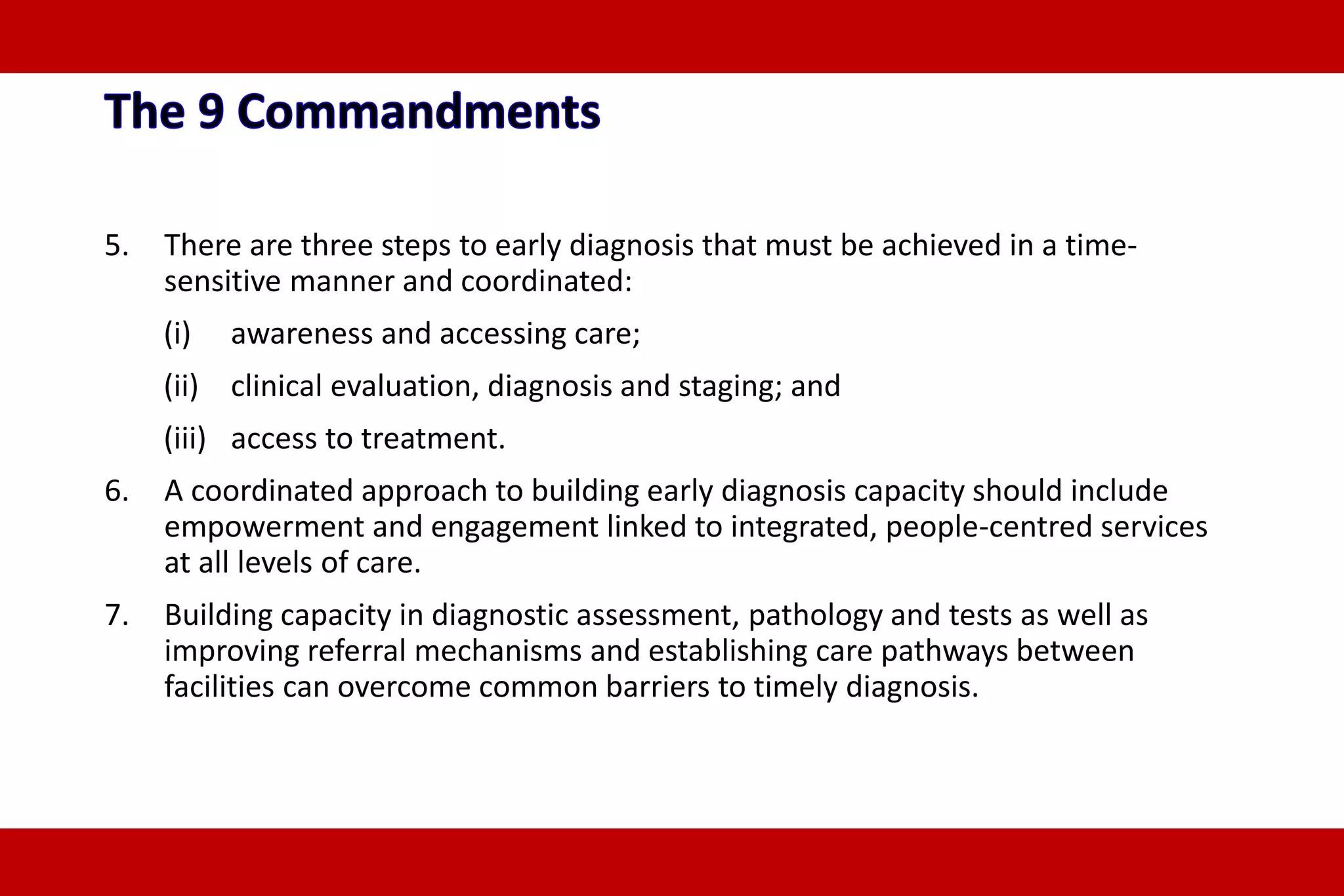
5. There are three steps to early diagnosis that must be achieved in a time-
sensitive manner and coordinated:
(i) awareness and accessing care;
(ii) clinical evaluation, diagnosis and staging; and
(iii) access to treatment.
6. A coordinated approach to building early diagnosis capacity should include
empowerment and engagement linked to integrated, people-centred services
at all levels of care.
7. Building capacity in diagnostic assessment, pathology and tests as well as
improving referral mechanisms and establishing care pathways between
facilities can overcome common barriers to timely diagnosis.
8. Financial, geographic, logistical and sociocultural barriers must be considered
and addressed as per national context to improve access to timely cancer
treatment.
9. A robust monitoring and evaluation system is critical to identify gaps in early
diagnosis, assess programme performance and improve cancer services.
• An early detection of cancer is a key component within an overall cancer
control plan. It enables cases to be detected at an earlier stage, when
treatment is more effective, at lower cost and with less complex
interventions, and there are greater chances of cure.
• A cancer screening programme is a far more costly and complex
undertaking than an early diagnosis programme.
• Therefore, where resources are limited, and where the majority of cases
are diagnosed in late stages, early diagnosis of the most frequent cancers,
linked to appropriate treatment, is likely to be the best option to reduce
premature deaths and suffering due to cancer.
• Delayed diagnosis and inability to access treatment contribute significantly
to cancer morbidity and mortality globally. Solutions must be oriented
around a comprehensive health system response and multidisciplinary
team approach, prioritizing high-impact and cost-sensitive interventions.

Early detection and prevention.pptx

  • 1.
    The Role ofEarly Detection in Cancer Management Heri Fadjari Hematology – Medical Oncology Div. Hasan Sadikin General Hospital Bandung, Indonesia
  • 2.
    • Every year,millions of cancer patients could be saved from premature death and suffering if they had timely access to early detection and treatment. • Early detection is based on the concept that the sooner in its natural history the cancer is detected, the more effective the treatment is likely to be. • The aim of early detection is to detect the cancer when it is localized to the organ of origin and before it invades the surrounding tissues and distant organs, or for some sites, to detect a precancerous lesion. • There are two main components of early detection programmes for cancer: - screening. - early diagnosis Cancer control: knowledge into action. World Health Organization. 2007.
  • 3.
    Global Action Planfor the Prevention and Control of Noncommunicable Diseases 2013–2020. World Health Organization. 2013
  • 4.
    Site of cancerActivities for Early diagnosis Screening Breast Yes Yes Cervix Yes Yes Colorectal Yes Yes Upper GI Cancer Yes No Nasopharynx Yes No Lung No No Ovary No No Urinary Yes No Prostate Yes Yes Cancer control: knowledge into action. World Health Organization. 2007.
  • 5.
    Site of cancerCommon symptoms Breast Lump in the breast, asymmetry, skin retraction, recent nipple retraction, blood stained nipple discharge, eczematous changes in areola Cervix Post-coital bleeding, excessive vaginal discharge Colon and rectum Change in bowel habits, unexplained weight loss, anaemia, blood in the stool (rectal cancer) Stomach Upper abdominal pain, recent onset of indigestion, weight loss Urinary bladder Pain, frequent and uneasy urination, blood in urine Prostate Difficulty (long time) in urination, frequent nocturnal urination Cancer control: knowledge into action. World Health Organization. 2007.
  • 6.
    The American CancerSociety recommends every man and woman 50 years and older begin testing for colon cancer: • Yearly Fecal Occult Blood Test (FOBT) or Fecal Immunochemical Test (FIT) • Flexible Sigmoidoscopy every 5 years • Yearly FOBT/FIT plus Flexible Sigmoidoscopy every 5 years preferred over either test alone • Double Contrast Barium Enema every 5 years • Colonoscopy every 10 years Rex DK, Et Al. Gastrointestinal Endoscopy. 2017; 86(1): 18-33
  • 7.
    40 and Older •Yearly clinical breast exam • Yearly mammogram 20’s and 30’s • Clinical breast exam every three years Any age • Report any breast changes such as lump to a doctor right away • If at increased risk, talk with a doctor about starting screening earlier or having more frequent exams Sadarnis Sadari Imaging: Breast USG/ Breast MRI/ Mammography Sheppard AJ, et al. Can J Public Health. 2010;101(1):101-105.
  • 8.
    • There arenot currently any screening tests to detect lung cancer early. • There are studies underway looking at the effectiveness of certain types of x-rays on detecting lung cancer early but currently there are no recommended tests. • Because lung cancer is typically diagnosed in late stages, the best prevention is quitting tobacco and exposure to it. • Evidence suggests that low-dose CT screening for lung cancer results in a favorable but tenuous balance of benefit and harms. Mazzone PJ, et al. CHEST 2018; 153(4):954-985
  • 9.
    • Nearly allcases of cervical cancer can be prevented if a women is screened regularly. • The American Cancer Society recommends women should begin screening approximately three years after she begins having vaginal intercourse, but no later than 21 years of age. • Regular Pap test every year or the liquid-based Pap test every 2 years • The Pap test can find changes in the cells of the cervix caused by HPVs. While there is no cure for HPV, the warts and abnormal cell growth they cause can be treated. • Even though HPV is an important risk factor for cervical cancer, most women with this infection do not get cervical cancer. Canadian Task Force on Preventive Health Care. Recommendations on screening for cervical cancer. CMAJ. 2013 Jan 8;185(1):35-45.
  • 10.
    Sepúlveda C andPrado R. Cancer Detect Prevent.2005;29:405-411.
  • 11.
    Sepúlveda C andPrado R. Cancer Detect Prevent.2005;29:405-411.
  • 12.
    • Beginning atage 50, men should be offered the Prostate Specific Antigen (PSA) blood test and a digital rectal examination (DRE) every year. • Men with a father, brother, or son with prostate cancer before age 65 should be tested. Mottet N, et al. J Eur Urol. 2017;71(4):618-629
  • 13.
    IARC Handbook ofcancer prevention, volume 15. Lyon, France:International Agency for Research on Cancer; 2016. Weller D, et al. Br J Cancer.2012;106(7):1262–7.
  • 14.
    Step of earlydiagnosis Component Potential delays Awareness and accessing care (patient interval) Population aware about symptoms (appraisal interval) Patients with symptoms seek and access health care (health-seeking interval) Access delay Clinical evaluation, diagnosis and staging (diagnostic interval) Accurate clinical diagnosis (doctor interval) Diagnostic testing and staging Referral for treatment Diagnostic delay Access to treatment (treatment interval) Treatment timely, accessible, affordable, acceptable and high quality Treatment delay Primary health care now more than ever. Geneva: World Health Organization. 2008
  • 15.
    Azzani M, etal. J Support Care Cancer. 2015;23(3):889-898. Ambroggi M, et al. The oncologist. 2015;20(12):137813-85. Iskandarsyah A, et al. Health Psychol. 2014;33(3):214-221.
  • 16.
    Early diagnosis stepCommon barriers Potential solutions Step 1: Awareness and accessing care Awareness of symptoms Poor health literacy Empower and engage people and community Improve health literacy Seeking and accessing care Cancer stigma Education Limited access to primary care Facilitate access to primary care Step 2: Clinical evaluation, diagnosis and staging Accurate clinical Dx Inaccurate clinical assessment and delays in clinical Dx Improve provider capacity at first contact point DX testing and staging Inaccessible diagnostic testing, pathology and staging Strengthen diagnostic and pathology services Referral for treatment Poor coordination of services and loss to follow-up Develop referral mechanisms and integrated care Provide supportive counselling Step 3: Access to treatment Accessible, high quality treatment Sociocultural barriers Improve access to treatment by reducing financial, geographic, logistical and sociocultural barriers Financial, geographic and logistical barriers Primary health care now more than ever. Geneva: World Health Organization. 2008
  • 17.
    Risk factors thatcan be changed • Use of cigarette & other tobacco products • Diet (Obesity) • Physical inactivity • Alcohol use • Sun exposure Risk factors that can not be changed • Family or personal history of cancer • Age • Gender • Race • Genetics Primary health care now more than ever. Geneva: World Health Organization. 2008
  • 18.
    • Adults shouldget moderate to vigorous activity for a minimum of 30 to 45 minutes, 5 or more days a week • Children and adolescents should get 60 minutes a day of moderate to vigorous physical activity at least 5 days a week Primary health care now more than ever. Geneva: World Health Organization. 2008
  • 19.
    • A Tumormarker is a biological substance synthesized and released by: • The tumor • Or by the host in response to tumor tissue • It may be used to: • Detect the presence of a tumor • Monitor the progress of disease • Monitor the response to treatment Duffy MJ. Clin Biochem Metab. 2017; 25(46):157-161.
  • 20.
    Duffy MJ. ClinBiochem Metab. 2017; 25(46):157-161.
  • 21.
    1. Delays incancer care are common, resulting in lower likelihood of survival, greater morbidity from treatment and higher costs of care. Late-stage presentation and inability to access care are particularly common, resulting in avoidable deaths and disability from cancer. 2. Early diagnosis strategies improve cancer outcomes by providing care at the earliest possible stage, offering treatment that is more effective, less costly and less complex. 3. Cancer screening is a distinct and more complex public health strategy that mandates additional resources, infrastructure and coordination compared to early diagnosis. 4. To strengthen capacity for early diagnosis, a situation analysis should be performed to identify barriers and deficits in services and prioritize interventions.
  • 22.
    5. There arethree steps to early diagnosis that must be achieved in a time- sensitive manner and coordinated: (i) awareness and accessing care; (ii) clinical evaluation, diagnosis and staging; and (iii) access to treatment. 6. A coordinated approach to building early diagnosis capacity should include empowerment and engagement linked to integrated, people-centred services at all levels of care. 7. Building capacity in diagnostic assessment, pathology and tests as well as improving referral mechanisms and establishing care pathways between facilities can overcome common barriers to timely diagnosis.
  • 23.
    8. Financial, geographic,logistical and sociocultural barriers must be considered and addressed as per national context to improve access to timely cancer treatment. 9. A robust monitoring and evaluation system is critical to identify gaps in early diagnosis, assess programme performance and improve cancer services.
  • 24.
    • An earlydetection of cancer is a key component within an overall cancer control plan. It enables cases to be detected at an earlier stage, when treatment is more effective, at lower cost and with less complex interventions, and there are greater chances of cure. • A cancer screening programme is a far more costly and complex undertaking than an early diagnosis programme.
  • 25.
    • Therefore, whereresources are limited, and where the majority of cases are diagnosed in late stages, early diagnosis of the most frequent cancers, linked to appropriate treatment, is likely to be the best option to reduce premature deaths and suffering due to cancer. • Delayed diagnosis and inability to access treatment contribute significantly to cancer morbidity and mortality globally. Solutions must be oriented around a comprehensive health system response and multidisciplinary team approach, prioritizing high-impact and cost-sensitive interventions.