TEXT STRUCTURE
EAPP
Text Structure
EAPP
OBJECTIVES
1.To differentiate language used in academic
texts from various disciplines.
2.Academic language is the language needed by
students to do the work in schools.
3. Academic language and social language have
its own purpose.
D M E A C I
A C
S G J R O A
N
T E R R A N V I E
U S E A C
F E T F C E
C X P E I L
T I
N G W T I
R I
R O P L M E B
P A R E M O C
T R A S T N O C
Common Text Structures
Text structures (WDPI, 2012) refer
to the way authors organize
information in text. Recognizing the
underlying structure of texts can
help students focus attention on key
concepts and relationships,
anticipate what is to come, and
monitor their comprehension as they
read.
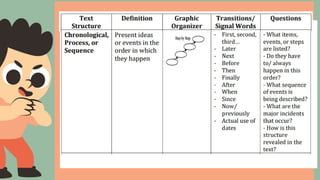
“Early one morning, Sarah decided to
go for a jog in the park. As she jogged,
the sun began to rise, casting a golden
glow over the trees. Later that day,
she met her friends for lunch and
shared her morning adventure with
them.”
Chronological: When I first woke
up, I got dressed and went on a
long run. Then, I got ready for
the day and went to work. After I
got to work, I realized that I had
forgotten my lunch and purse.
To bake a chocolate cake, first preheat your oven to 350°F
(175°C) and prepare two 9-inch round cake pans by greasing and
flouring them. In a large bowl, combine 1 and 3/4 cups of flour, 1
and 1/2 cups of sugar, 3/4 cup of cocoa powder, 1 and 1/2 teaspoons
each of baking powder and baking soda, and 1/2 teaspoon of salt.
Add 2 large eggs, 1 cup of milk, 1/2 cup of vegetable oil, and 2
teaspoons of vanilla extract, mixing until smooth. Gradually stir in 1
cup of boiling water, noting that the batter will be thin. Divide the
batter between the pans and bake for 30 to 35 minutes, or until a
toothpick inserted into the center comes out clean. Allow the cakes
to cool in the pans for 10 minutes before transferring them to a wire
rack to cool completely before frosting.
This paragraph provides a detailed, step-by-step explanation of the
process while maintaining a cohesive and organized structure.
Cause and Effect: The Impact of Regular Exercise on Energy Levels
Regular exercise leads to increased energy levels. Engaging in physical
activity enhances blood circulation and oxygen flow throughout the body,
which boosts overall vitality and reduces feelings of fatigue. As a result,
individuals who exercise regularly often experience higher energy levels
and improved stamina throughout the day.
On the other hand, a lack of exercise can lead to decreased energy
levels. Sedentary behavior often results in poor circulation and lower
overall physical fitness, contributing to increased tiredness and decreased
motivation.
In summary, regular exercise boosts energy levels and stamina, while
a lack of exercise can lead to feelings of fatigue and reduced vitality.
This example briefly explains the cause (regular exercise) and its effect
(increased energy levels), as well as the effect of not engaging in the cause
(decreased energy levels).
Problem and Solution: Improving Academic Writing Skills
Many students struggle with academic writing, often finding it
difficult to organize their thoughts coherently and present their
arguments effectively. This issue frequently leads to poor grades and
reduced academic performance.
To address this challenge, students can benefit from several
strategies. First, practicing structured writing techniques, such as
creating detailed outlines before drafting, helps in organizing ideas
clearly. Additionally, seeking feedback from peers or instructors
provides valuable insights for improvement. Utilizing academic writing
resources, such as online tutorials and writing centers, can further
enhance writing skills. By implementing these strategies, students can
improve their academic writing, leading to better performance and
greater success in their studies.
This paragraph succinctly identifies the problem (difficulty in
academic writing) and offers practical solutions to address it.
Compare and Contrast: Online Learning vs. Traditional Classroom Learning
“Online learning and traditional classroom learning offer different
experiences and benefits. Online learning provides flexibility, allowing
students to access materials and complete assignments from anywhere at
any time. This format is convenient for those with busy schedules or who
live far from educational institutions. However, it often lacks the
immediate feedback and face-to-face interaction that traditional
classroom settings offer. In contrast, traditional classroom learning
promotes direct communication between students and instructors,
fostering a more personal learning environment. It also provides
structured schedules and in-person collaboration with peers. Despite
these differences, both methods aim to deliver quality education and can
be effective depending on the learner's needs and preferences.”
This paragraph clearly compares and contrasts the two types of
learning by highlighting their key features and benefits.
APPEARANCE
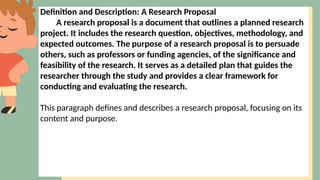
Definition and Description: A Research Proposal
A research proposal is a document that outlines a planned research
project. It includes the research question, objectives, methodology, and
expected outcomes. The purpose of a research proposal is to persuade
others, such as professors or funding agencies, of the significance and
feasibility of the research. It serves as a detailed plan that guides the
researcher through the study and provides a clear framework for
conducting and evaluating the research.
This paragraph defines and describes a research proposal, focusing on its
content and purpose.
Why is Text Structure Important?
The readers can significantly improve their comprehension and reten
of information when they can identify and recognize the text structur
text. It can also help them:
1. Organize information and details they are learning in their minds
reading.
2. 2. Make connections between the details being presented in a t
3. Summarize the important details shared in a text
box.
Activity 1. Direction:
Match the informal vocabulary in the list below with the more appropriate formal options
from the box.
APPEARANCE
FEELINGS
CHARACTER
APPEARANCE
FEELINGS
CHARACTER
APPEARANCE
FEELINGS
CHARACTER
APPEARANCE
FEELINGS
CHARACTER

EAPP academic text, text structure.pptx

  • 1.
  • 2.
    OBJECTIVES 1.To differentiate languageused in academic texts from various disciplines. 2.Academic language is the language needed by students to do the work in schools. 3. Academic language and social language have its own purpose.
  • 3.
    D M EA C I A C S G J R O A N T E R R A N V I E U S E A C F E T F C E
  • 4.
    C X PE I L T I N G W T I R I R O P L M E B P A R E M O C T R A S T N O C
  • 5.
    Common Text Structures Textstructures (WDPI, 2012) refer to the way authors organize information in text. Recognizing the underlying structure of texts can help students focus attention on key concepts and relationships, anticipate what is to come, and monitor their comprehension as they read.
  • 7.
    “Early one morning,Sarah decided to go for a jog in the park. As she jogged, the sun began to rise, casting a golden glow over the trees. Later that day, she met her friends for lunch and shared her morning adventure with them.”
  • 9.
    Chronological: When Ifirst woke up, I got dressed and went on a long run. Then, I got ready for the day and went to work. After I got to work, I realized that I had forgotten my lunch and purse.
  • 10.
    To bake achocolate cake, first preheat your oven to 350°F (175°C) and prepare two 9-inch round cake pans by greasing and flouring them. In a large bowl, combine 1 and 3/4 cups of flour, 1 and 1/2 cups of sugar, 3/4 cup of cocoa powder, 1 and 1/2 teaspoons each of baking powder and baking soda, and 1/2 teaspoon of salt. Add 2 large eggs, 1 cup of milk, 1/2 cup of vegetable oil, and 2 teaspoons of vanilla extract, mixing until smooth. Gradually stir in 1 cup of boiling water, noting that the batter will be thin. Divide the batter between the pans and bake for 30 to 35 minutes, or until a toothpick inserted into the center comes out clean. Allow the cakes to cool in the pans for 10 minutes before transferring them to a wire rack to cool completely before frosting. This paragraph provides a detailed, step-by-step explanation of the process while maintaining a cohesive and organized structure.
  • 12.
    Cause and Effect:The Impact of Regular Exercise on Energy Levels Regular exercise leads to increased energy levels. Engaging in physical activity enhances blood circulation and oxygen flow throughout the body, which boosts overall vitality and reduces feelings of fatigue. As a result, individuals who exercise regularly often experience higher energy levels and improved stamina throughout the day. On the other hand, a lack of exercise can lead to decreased energy levels. Sedentary behavior often results in poor circulation and lower overall physical fitness, contributing to increased tiredness and decreased motivation. In summary, regular exercise boosts energy levels and stamina, while a lack of exercise can lead to feelings of fatigue and reduced vitality. This example briefly explains the cause (regular exercise) and its effect (increased energy levels), as well as the effect of not engaging in the cause (decreased energy levels).
  • 13.
    Problem and Solution:Improving Academic Writing Skills Many students struggle with academic writing, often finding it difficult to organize their thoughts coherently and present their arguments effectively. This issue frequently leads to poor grades and reduced academic performance. To address this challenge, students can benefit from several strategies. First, practicing structured writing techniques, such as creating detailed outlines before drafting, helps in organizing ideas clearly. Additionally, seeking feedback from peers or instructors provides valuable insights for improvement. Utilizing academic writing resources, such as online tutorials and writing centers, can further enhance writing skills. By implementing these strategies, students can improve their academic writing, leading to better performance and greater success in their studies. This paragraph succinctly identifies the problem (difficulty in academic writing) and offers practical solutions to address it.
  • 15.
    Compare and Contrast:Online Learning vs. Traditional Classroom Learning “Online learning and traditional classroom learning offer different experiences and benefits. Online learning provides flexibility, allowing students to access materials and complete assignments from anywhere at any time. This format is convenient for those with busy schedules or who live far from educational institutions. However, it often lacks the immediate feedback and face-to-face interaction that traditional classroom settings offer. In contrast, traditional classroom learning promotes direct communication between students and instructors, fostering a more personal learning environment. It also provides structured schedules and in-person collaboration with peers. Despite these differences, both methods aim to deliver quality education and can be effective depending on the learner's needs and preferences.” This paragraph clearly compares and contrasts the two types of learning by highlighting their key features and benefits.
  • 16.
  • 17.
    Definition and Description:A Research Proposal A research proposal is a document that outlines a planned research project. It includes the research question, objectives, methodology, and expected outcomes. The purpose of a research proposal is to persuade others, such as professors or funding agencies, of the significance and feasibility of the research. It serves as a detailed plan that guides the researcher through the study and provides a clear framework for conducting and evaluating the research. This paragraph defines and describes a research proposal, focusing on its content and purpose.
  • 18.
    Why is TextStructure Important? The readers can significantly improve their comprehension and reten of information when they can identify and recognize the text structur text. It can also help them: 1. Organize information and details they are learning in their minds reading. 2. 2. Make connections between the details being presented in a t 3. Summarize the important details shared in a text
  • 19.
    box. Activity 1. Direction: Matchthe informal vocabulary in the list below with the more appropriate formal options from the box.
  • 20.
  • 21.
  • 22.
  • 23.