e-learning essentials. What is e-learning?


e-learning
Is a learning process created by combining digitally delivered content with learning support services. Broadly
can be defined as any use electronic technology to create learning experiences.

Consists of the transfer of skills and knowledge using electronic applications and processes (Web-based
learning, computer-based learning, virtual classrooms, collaborative learning, learning 2.0 ...). This may include ,
use of diverse media (audio or video recording...) and supports (web, mobile, PDA...).


on-line learning (web based learning)
Is the most popular modality of e-learning , who takes place via computer and connected to the Internet.

The learner use the computer to access to the learning environment and interact with resources (text, audio
video...), activities and persons (teacher, instructor, tutor, learners...). The teacher (instructor, trainer...) uses the
environment utilities to facilitate, advise and supervise the learning process.

The communication between learners and teachers can be on real time (synchronous mode), with chat o
videoconference o in asynchronous mode (forum, debate, mail...).

The interactive activity promotes an approach to continuous evaluation of learning process.
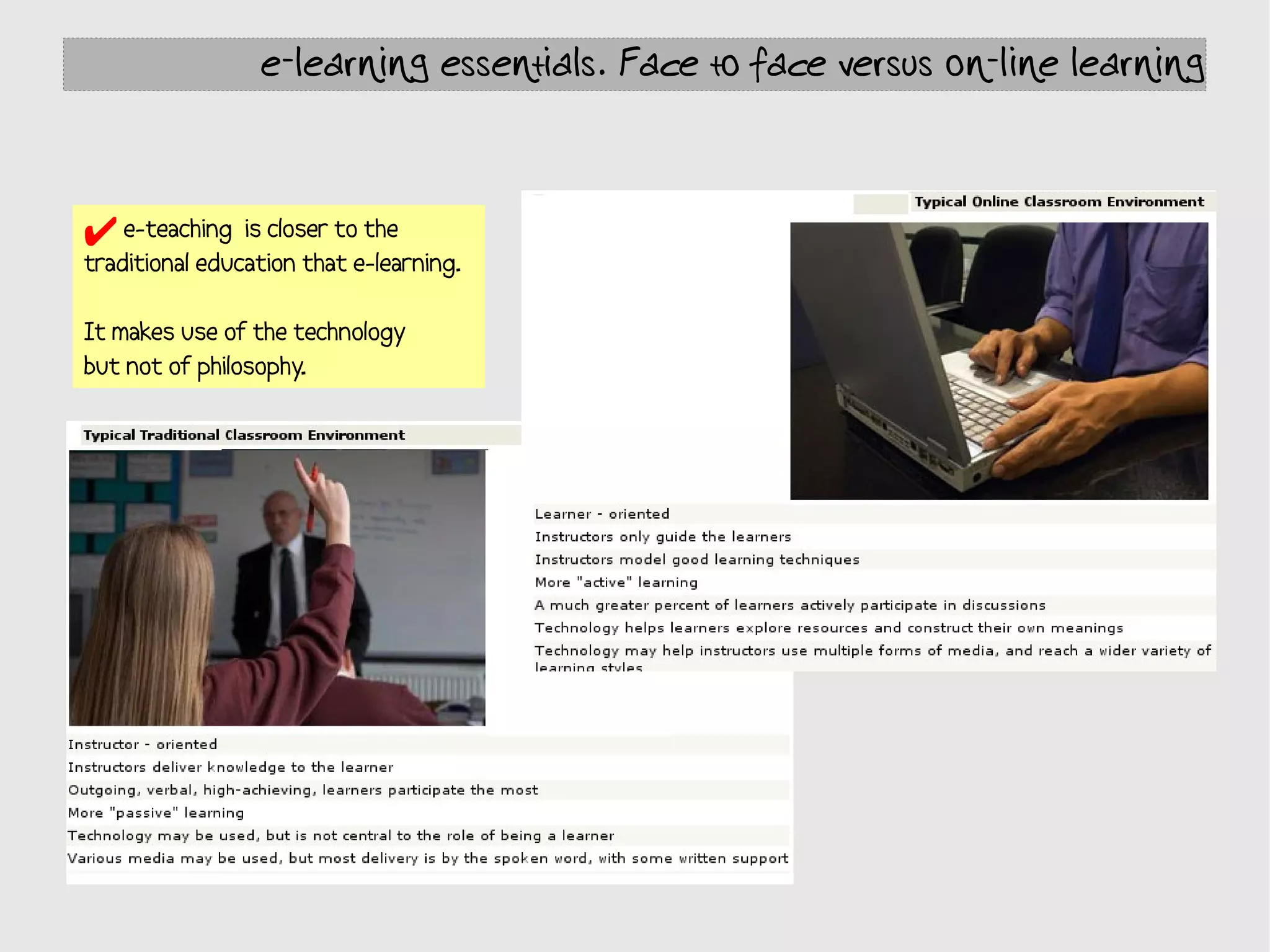
e-learning essentials. Face to face versus on-line learning


✔ e-teaching is closer to the
traditional education that e-learning.

It makes use of the technology
but not of philosophy.
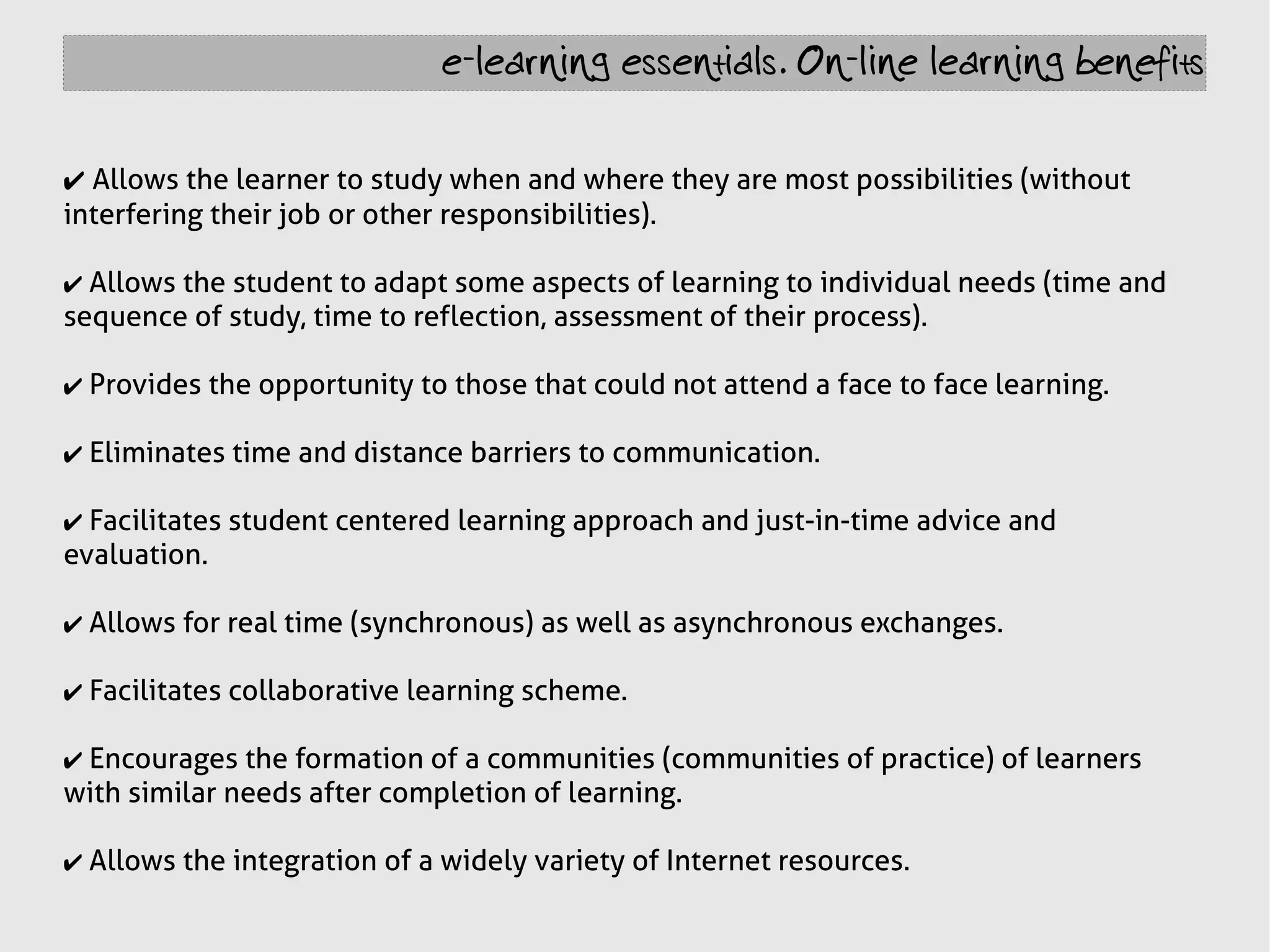
e-learning essentials. On-line learning benefits


✔ Allows the learner to study when and where they are most possibilities (without
interfering their job or other responsibilities).

✔ Allows the student to adapt some aspects of learning to individual needs (time and
sequence of study, time to reflection, assessment of their process).

✔ Provides the opportunity to those that could not attend a face to face learning.

✔ Eliminates time and distance barriers to communication.

✔ Facilitates student centered learning approach and just-in-time advice and
evaluation.

✔ Allows for real time (synchronous) as well as asynchronous exchanges.

✔ Facilitates collaborative learning scheme.

✔ Encourages the formation of a communities (communities of practice) of learners
with similar needs after completion of learning.

✔ Allows the integration of a widely variety of Internet resources.
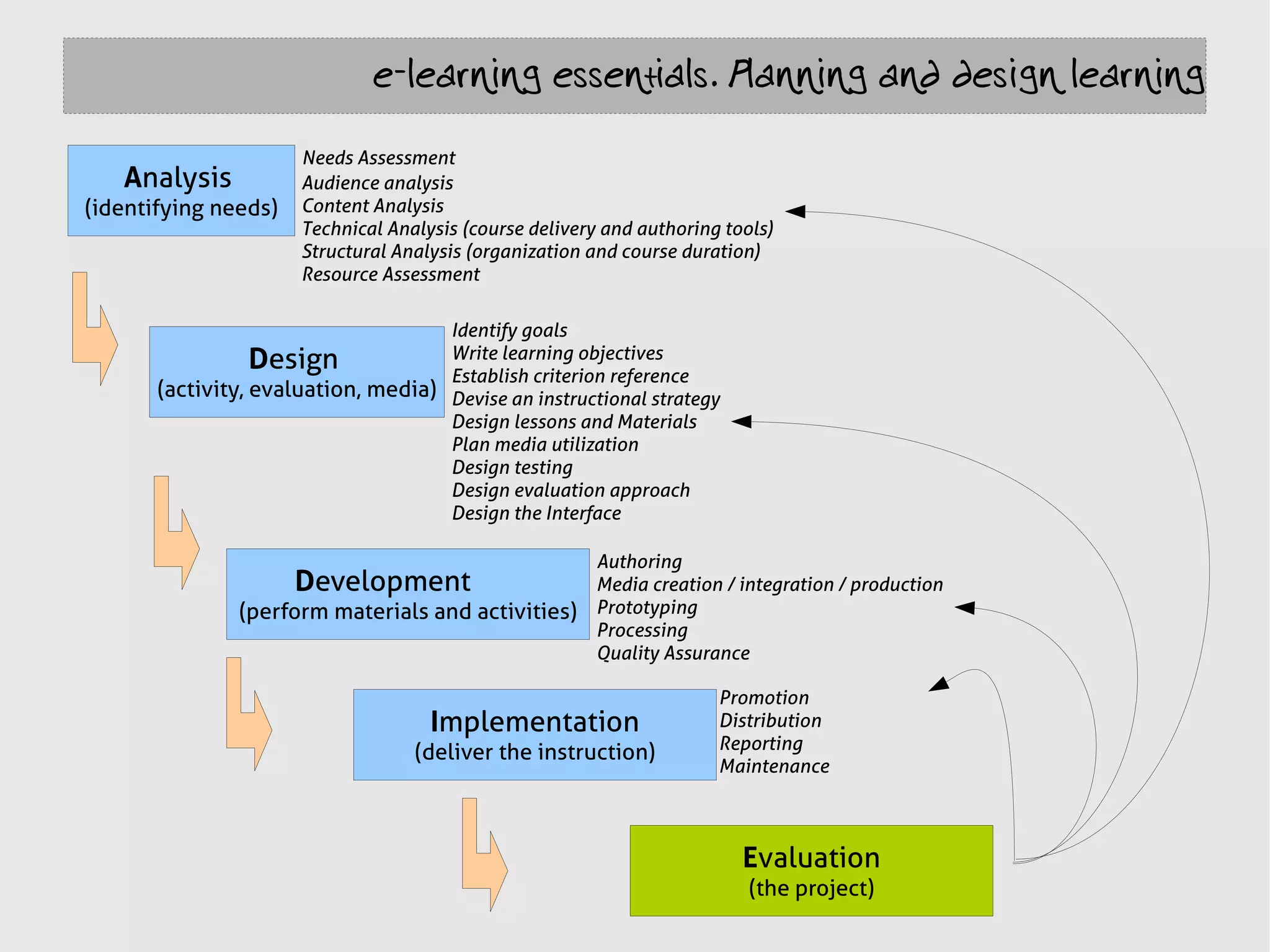
e-learning essentials. Planning and design learning

                      Needs Assessment
   Analysis           Audience analysis
(identifying needs)   Content Analysis
                      Technical Analysis (course delivery and authoring tools)
                      Structural Analysis (organization and course duration)
                      Resource Assessment

                                     Identify goals
                  Design             Write learning objectives
                                     Establish criterion reference
       (activity, evaluation, media) Devise an instructional strategy
                                     Design lessons and Materials
                                     Plan media utilization
                                     Design testing
                                     Design evaluation approach
                                     Design the Interface

                                                   Authoring
                      Development                  Media creation / integration / production
                (perform materials and activities) Prototyping
                                                   Processing
                                                   Quality Assurance

                                                                       Promotion
                                     Implementation                    Distribution
                                                                       Reporting
                                   (deliver the instruction)
                                                                       Maintenance


                                                                          Evaluation
                                                                           (the project)
e-learning essentials. Other aspects


Continuing Education (Long life learning)

Usually performed for adults learners in a context of professional development.

Adults learn of different form that the children (Andragogy). Adult learner:

✔ Are much more self-directed than children.
✔ Take responsibility for their learning experiences.
✔ Begin with previous experiences and knowledge.
✔ Seeks learning experiences that are learner-oriented.
✔ Prefer a practical and immediately relevant approach.
✔ Learn readily from their peers (colleagues).
✔ Have formed a learning style and preferences.
✔ Want immediate and regular feedback.
✔ Seeks an effective learning experience.

e- learning essentials

  • 1.
    e-learning essentials. Whatis e-learning? e-learning Is a learning process created by combining digitally delivered content with learning support services. Broadly can be defined as any use electronic technology to create learning experiences. Consists of the transfer of skills and knowledge using electronic applications and processes (Web-based learning, computer-based learning, virtual classrooms, collaborative learning, learning 2.0 ...). This may include , use of diverse media (audio or video recording...) and supports (web, mobile, PDA...). on-line learning (web based learning) Is the most popular modality of e-learning , who takes place via computer and connected to the Internet. The learner use the computer to access to the learning environment and interact with resources (text, audio video...), activities and persons (teacher, instructor, tutor, learners...). The teacher (instructor, trainer...) uses the environment utilities to facilitate, advise and supervise the learning process. The communication between learners and teachers can be on real time (synchronous mode), with chat o videoconference o in asynchronous mode (forum, debate, mail...). The interactive activity promotes an approach to continuous evaluation of learning process.
  • 2.
    e-learning essentials. Faceto face versus on-line learning ✔ e-teaching is closer to the traditional education that e-learning. It makes use of the technology but not of philosophy.
  • 3.
    e-learning essentials. On-linelearning benefits ✔ Allows the learner to study when and where they are most possibilities (without interfering their job or other responsibilities). ✔ Allows the student to adapt some aspects of learning to individual needs (time and sequence of study, time to reflection, assessment of their process). ✔ Provides the opportunity to those that could not attend a face to face learning. ✔ Eliminates time and distance barriers to communication. ✔ Facilitates student centered learning approach and just-in-time advice and evaluation. ✔ Allows for real time (synchronous) as well as asynchronous exchanges. ✔ Facilitates collaborative learning scheme. ✔ Encourages the formation of a communities (communities of practice) of learners with similar needs after completion of learning. ✔ Allows the integration of a widely variety of Internet resources.
  • 4.
    e-learning essentials. Planningand design learning Needs Assessment Analysis Audience analysis (identifying needs) Content Analysis Technical Analysis (course delivery and authoring tools) Structural Analysis (organization and course duration) Resource Assessment Identify goals Design Write learning objectives Establish criterion reference (activity, evaluation, media) Devise an instructional strategy Design lessons and Materials Plan media utilization Design testing Design evaluation approach Design the Interface Authoring Development Media creation / integration / production (perform materials and activities) Prototyping Processing Quality Assurance Promotion Implementation Distribution Reporting (deliver the instruction) Maintenance Evaluation (the project)
  • 5.
    e-learning essentials. Otheraspects Continuing Education (Long life learning) Usually performed for adults learners in a context of professional development. Adults learn of different form that the children (Andragogy). Adult learner: ✔ Are much more self-directed than children. ✔ Take responsibility for their learning experiences. ✔ Begin with previous experiences and knowledge. ✔ Seeks learning experiences that are learner-oriented. ✔ Prefer a practical and immediately relevant approach. ✔ Learn readily from their peers (colleagues). ✔ Have formed a learning style and preferences. ✔ Want immediate and regular feedback. ✔ Seeks an effective learning experience.