Del Rio, Pat
 Eugenio, Arah
Laxamana, Yachel
 Robes, Camille
Rodriguez, Ysabel
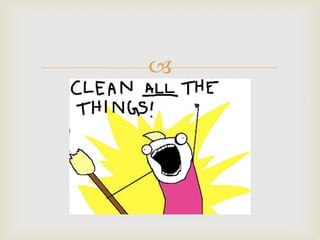
Hyperbole
                   
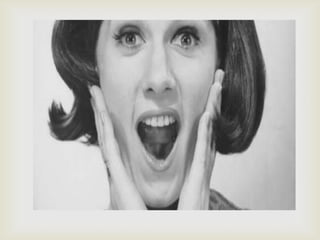
 Hyperbole is the use of exaggeration as a rhetorical
  device or figure of speech. It may be used to evoke
  strong feelings or to create a strong impression, but
  is not meant to be taken literally. Hyperbole are
  exaggerations to create emphasis or effect.

Source: http://en.m.wikipedia.org/wiki/Hyperbole

EXAMPLES
                 
 “The bag weighed a ton.”
 “I called you a million times!”
 “It was so cold, I saw polar bears wearing jackets”
 “She is so dumb, she thinks Taco Bell is a Mexican
  phone company”
 That joke is so old, the last time I heard it I was
  riding on a dinosaur.
HYPERBOLE POEM
  What Am I?           
I’m bigger than the entire earth
More powerful than the sea
Though a million, billion have tried
Not one could ever stop me.
I control each person with my hand
and hold up fleets of ships.
I can make them bend to my will
with one word from my lips.
I’m the greatest power in the world
in this entire nation.
No one should ever try to stop
a child’s imagination.

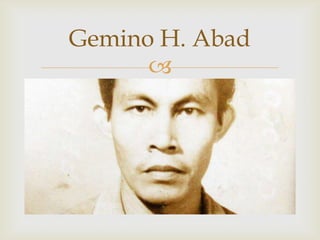
Gemino H. Abad
      
Gemino H. Abad
                
 Feb. 15, 1939 –Manila
 Also known as “Jimmy”
 Poet and literary critic
 Born in Cebu to the acclaimed Cebuano poet and Professor
  Antonio Abad.
 Studied Bachelor Of Arts Degree in English from UP in 1964
 Ph.D. in English Literature from University of Chicago in 1970


 http://en.wikipilipinas.org/index.php?title=Gemin
  o_H._Abad
Literary works

                     
    Gemino Abad's Published Books:
   Poetry
   Fugitive Emphasis, 1973
   Poems and Parables, 1988
   In Ordinary Time: Poems, Parables, Poetics, 2004
   Poems and Critical Essays
   In Another Light, 1976
   The Space Between, 1985
   Father and Daughter, 1996
   Poetry and Fiction (in the same book)
   A Makeshift Sun, 2001
   "Care of Light: New Poems and Found", 2010
Literary works
                     
 Fiction and Essays (in the same book)

 Orion’s Belt and Other Writings, 1996

 Literary Criticism

 A Formal Approach to Lyric Poetry, 1978
 Getting Real: An Introduction to the Practice of Poetry, 2004

 Creative Non-fiction

 State of Play (essays), 1990
http://www.poemhunter.com/gemino-abad/biography/
Gemino H. Abad
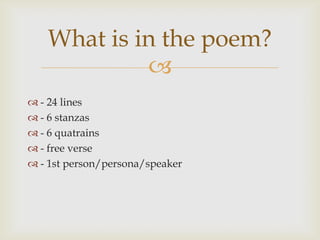
What is in the poem?
            
 - 24 lines
 - 6 stanzas
 - 6 quatrains
 - free verse
 - 1st person/persona/speaker
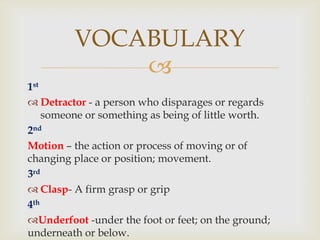
VOCABULARY
             
1st
 Detractor - a person who disparages or regards
    someone or something as being of little worth.
2nd
Motion – the action or process of moving or of
changing place or position; movement.
3rd
 Clasp- A firm grasp or grip
4th
Underfoot -under the foot or feet; on the ground;
underneath or below.
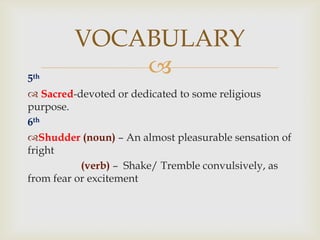
VOCABULARY
5th
             
 Sacred-devoted or dedicated to some religious
purpose.
6th
Shudder (noun) – An almost pleasurable sensation of
fright
           (verb) – Shake/ Tremble convulsively, as
from fear or excitement
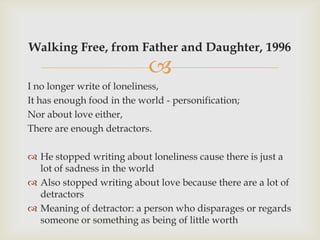
Walking Free, from Father and Daughter, 1996
                            
I no longer write of loneliness,
It has enough food in the world - personification;
Nor about love either,
There are enough detractors.

 He stopped writing about loneliness cause there is just a
  lot of sadness in the world
 Also stopped writing about love because there are a lot of
  detractors
 Meaning of detractor: a person who disparages or regards
  someone or something as being of little worth
2nd      stanza
                          
Why not, I said to myself,
Just walk about, without aim?
It may be, not having a subject,
The joy of motion creates itself - personification.

To walk without target or aiming something. You
don’t have to be in a hurry to find your purpose in life.
You just have to go with the flow because as you go
along the way, you will find real happiness and
contentment.
3rd    stanza
                         
My feet joyfully remember their past - personification,
Tickle of grass, bruise of stones,
Clasp of mud – all the earth’s pull
And possessiveness.

 As he go on to the journey of life, he will always
  remember the things that happened to him. The
  good memories and even the bad memories.
 It made him a better person because after everything
  that happened to him, he never refuses to look back.
4th    stanza
                         
Now I feel quite bare, exposed,
My thoughts underfoot in lushest green,
And no words to think me,
Nor myself distract.

 The speaker tells us that he’s whole being is stripped
  off away from him and he can no longer think of
  anything.
5th    stanza
                          
I hear the birds call to one another - personification;
Their inhuman cries gladden my soul,
They mark a boundary of the sacred
That in a distant time pierced my feet.

He can remembered the person he used to be. Their
human cries, gladden my soul; mirrors worries that
caused him pain. Upon hearing it, he just took the
negative things as a lesson that he learned from his life.
6th     stanza
                           
A light breeze touches my face,
I feel the longing beneath human speech,
Like ashes upon my tongue - hyperbole,
And my feet shudder where they fall.

 The line “A light breeze touches my face,“ speaks about
  relief or feeling of freedom to write anything that he
  desires
 “I feel the longing beneath human speech” – He’s eager
  to express his feelings through words and describe it
  “Like ashes upon my tongue,
  And my feet shudder where they fall”
 The stanza shows his excitement through ought
Collective
           understanding
                 
 Be spontaneous, write what you feel and freely
  express it
 The poem is about living “freely”: free from the past
  and slowly moving on; continue life with a clear
  mind. Do what you want to do; go out, have fun,
  make mistakes and carry on.
 The speaker wants to give the reader a positive
  outlook in life. Though challenges may arise, s/he’ll
  face the problems without thinking twice.

E 105 walking free - hyperbole

  • 1.
    Del Rio, Pat Eugenio, Arah Laxamana, Yachel Robes, Camille Rodriguez, Ysabel
  • 2.
    Hyperbole   Hyperbole is the use of exaggeration as a rhetorical device or figure of speech. It may be used to evoke strong feelings or to create a strong impression, but is not meant to be taken literally. Hyperbole are exaggerations to create emphasis or effect. Source: http://en.m.wikipedia.org/wiki/Hyperbole
  • 3.
  • 4.
    EXAMPLES   “The bag weighed a ton.”  “I called you a million times!”  “It was so cold, I saw polar bears wearing jackets”  “She is so dumb, she thinks Taco Bell is a Mexican phone company”  That joke is so old, the last time I heard it I was riding on a dinosaur.
  • 5.
    HYPERBOLE POEM What Am I?  I’m bigger than the entire earth More powerful than the sea Though a million, billion have tried Not one could ever stop me. I control each person with my hand and hold up fleets of ships. I can make them bend to my will with one word from my lips. I’m the greatest power in the world in this entire nation. No one should ever try to stop a child’s imagination.
  • 6.
  • 7.
  • 8.
    Gemino H. Abad   Feb. 15, 1939 –Manila  Also known as “Jimmy”  Poet and literary critic  Born in Cebu to the acclaimed Cebuano poet and Professor Antonio Abad.  Studied Bachelor Of Arts Degree in English from UP in 1964  Ph.D. in English Literature from University of Chicago in 1970  http://en.wikipilipinas.org/index.php?title=Gemin o_H._Abad
  • 9.
    Literary works   Gemino Abad's Published Books:  Poetry  Fugitive Emphasis, 1973  Poems and Parables, 1988  In Ordinary Time: Poems, Parables, Poetics, 2004  Poems and Critical Essays  In Another Light, 1976  The Space Between, 1985  Father and Daughter, 1996  Poetry and Fiction (in the same book)  A Makeshift Sun, 2001  "Care of Light: New Poems and Found", 2010
  • 10.
    Literary works   Fiction and Essays (in the same book)  Orion’s Belt and Other Writings, 1996  Literary Criticism  A Formal Approach to Lyric Poetry, 1978  Getting Real: An Introduction to the Practice of Poetry, 2004  Creative Non-fiction  State of Play (essays), 1990 http://www.poemhunter.com/gemino-abad/biography/
  • 11.
  • 12.
    What is inthe poem?   - 24 lines  - 6 stanzas  - 6 quatrains  - free verse  - 1st person/persona/speaker
  • 13.
    VOCABULARY  1st  Detractor - a person who disparages or regards someone or something as being of little worth. 2nd Motion – the action or process of moving or of changing place or position; movement. 3rd  Clasp- A firm grasp or grip 4th Underfoot -under the foot or feet; on the ground; underneath or below.
  • 14.
    VOCABULARY 5th   Sacred-devoted or dedicated to some religious purpose. 6th Shudder (noun) – An almost pleasurable sensation of fright (verb) – Shake/ Tremble convulsively, as from fear or excitement
  • 15.
    Walking Free, fromFather and Daughter, 1996  I no longer write of loneliness, It has enough food in the world - personification; Nor about love either, There are enough detractors.  He stopped writing about loneliness cause there is just a lot of sadness in the world  Also stopped writing about love because there are a lot of detractors  Meaning of detractor: a person who disparages or regards someone or something as being of little worth
  • 16.
    2nd stanza  Why not, I said to myself, Just walk about, without aim? It may be, not having a subject, The joy of motion creates itself - personification. To walk without target or aiming something. You don’t have to be in a hurry to find your purpose in life. You just have to go with the flow because as you go along the way, you will find real happiness and contentment.
  • 17.
    3rd stanza  My feet joyfully remember their past - personification, Tickle of grass, bruise of stones, Clasp of mud – all the earth’s pull And possessiveness.  As he go on to the journey of life, he will always remember the things that happened to him. The good memories and even the bad memories.  It made him a better person because after everything that happened to him, he never refuses to look back.
  • 18.
    4th stanza  Now I feel quite bare, exposed, My thoughts underfoot in lushest green, And no words to think me, Nor myself distract.  The speaker tells us that he’s whole being is stripped off away from him and he can no longer think of anything.
  • 19.
    5th stanza  I hear the birds call to one another - personification; Their inhuman cries gladden my soul, They mark a boundary of the sacred That in a distant time pierced my feet. He can remembered the person he used to be. Their human cries, gladden my soul; mirrors worries that caused him pain. Upon hearing it, he just took the negative things as a lesson that he learned from his life.
  • 20.
    6th stanza  A light breeze touches my face, I feel the longing beneath human speech, Like ashes upon my tongue - hyperbole, And my feet shudder where they fall.  The line “A light breeze touches my face,“ speaks about relief or feeling of freedom to write anything that he desires  “I feel the longing beneath human speech” – He’s eager to express his feelings through words and describe it “Like ashes upon my tongue, And my feet shudder where they fall”  The stanza shows his excitement through ought
  • 21.
    Collective understanding   Be spontaneous, write what you feel and freely express it  The poem is about living “freely”: free from the past and slowly moving on; continue life with a clear mind. Do what you want to do; go out, have fun, make mistakes and carry on.  The speaker wants to give the reader a positive outlook in life. Though challenges may arise, s/he’ll face the problems without thinking twice.