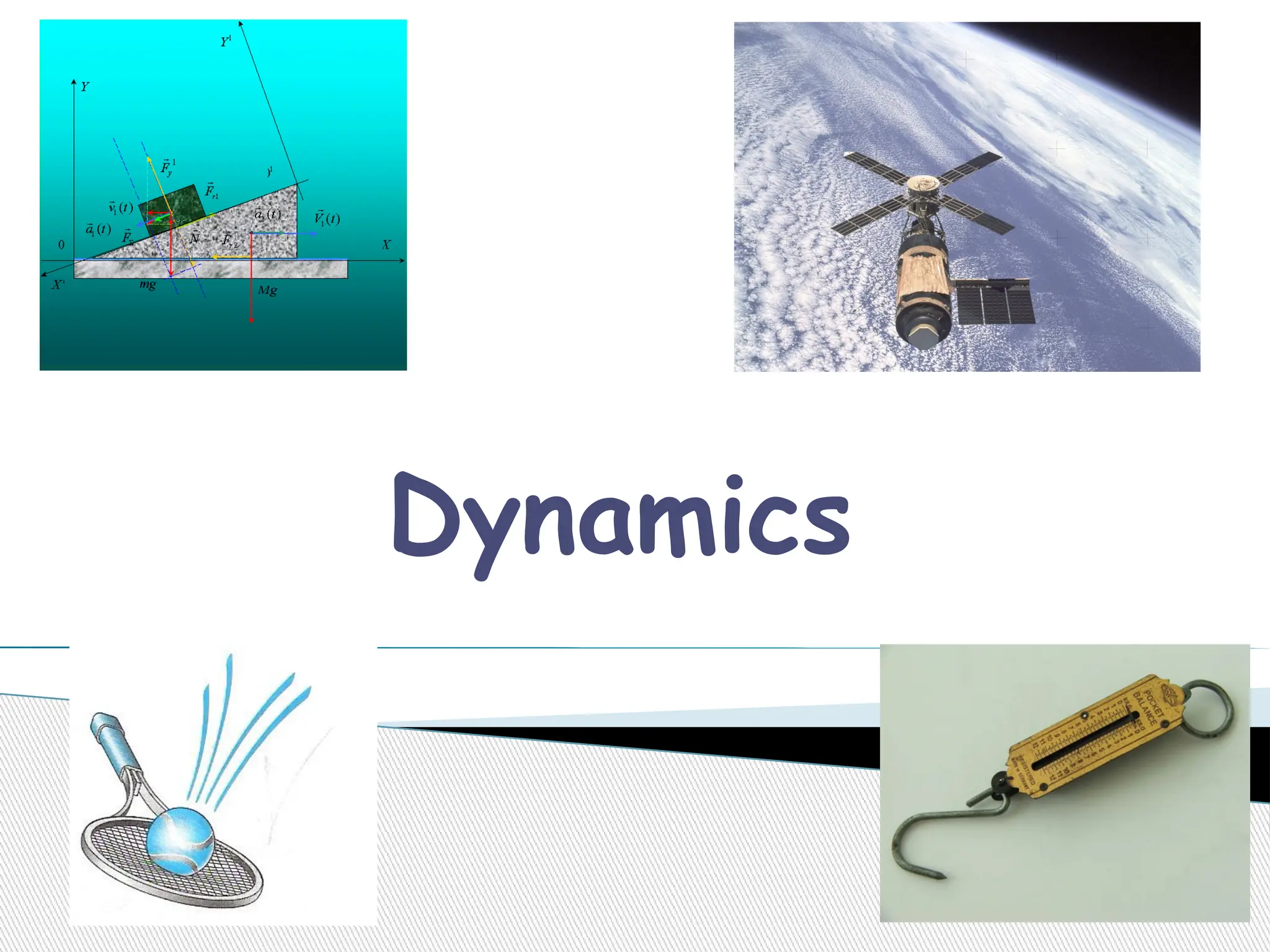
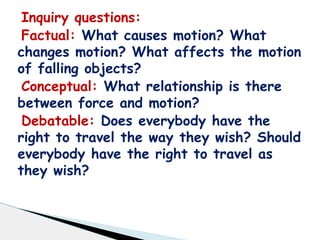
Dynamics
Global context: Scientific and technical
innovations
Key concept: Systems
Related concepts: Consequences,
Interaction, Movement
Statement of inquiry:
The way in which bodies
move within a dynamic
system is a consequence of interaction
between them.
Inquiry questions:
Factual: What causes motion? What
changes motion? What affects the motion
of falling objects?
Conceptual: What relationship is there
between force and motion?
Debatable: Does everybody have the
right to travel the way they wish? Should
everybody have the right to travel as
they wish?
Forces
Force is a push or pull, exerted by one object on
another.
Force has direction as well as magnitude, so it is a
vector.
F – force.
The SI unit of force is the newton
(N)
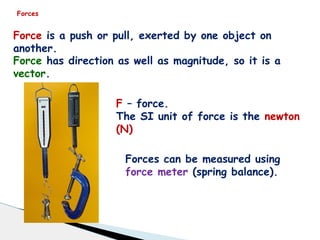
Forces can be measured using
force meter (spring balance).
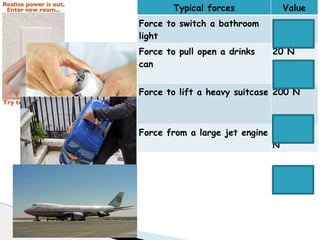
Typical forces Value
Force to switch a bathroom
light
10 N
Force to pull open a drinks
can
20 N
Force to lift a heavy suitcase 200 N
Force from a large jet engine 250 000
N
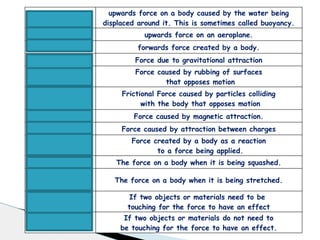
Upthrust
upwards force on a body caused by the water being
displaced around it. This is sometimes called buoyancy.
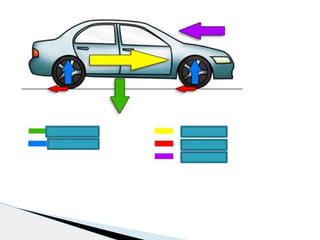
Lift upwards force on an aeroplane.
Thrust forwards force created by a body.
Weight Force due to gravitational attraction
Friction
Force caused by rubbing of surfaces
that opposes motion
Air/Water
Resistance
Frictional Force caused by particles colliding
with the body that opposes motion
Magnetic Force caused by magnetic attraction.
Electrostatic Force caused by attraction between charges
Reaction
Force created by a body as a reaction
to a force being applied.
Compression The force on a body when it is being squashed.
Tension The force on a body when it is being stretched.
Contact
If two objects or materials need to be
touching for the force to have an effect
Non Contact
If two objects or materials do not need to
be touching for the force to have an effect.
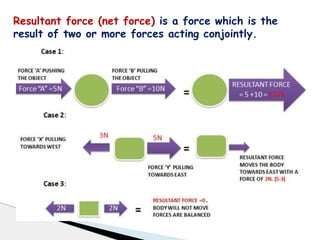
Resultant force (net force) is a force which is the
result of two or more forces acting conjointly.
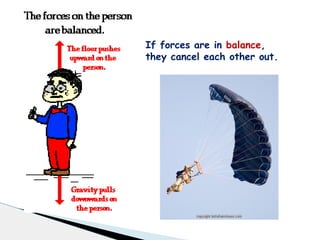
If forces are in balance,
they cancel each other out.
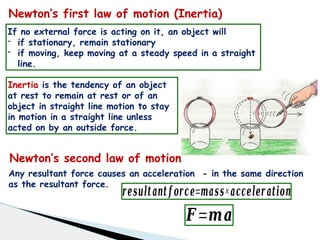
Newton’s first law of motion (Inertia)
If no external force is acting on it, an object will
- if stationary, remain stationary
- if moving, keep moving at a steady speed in a straight
line.
Inertia is the tendency of an object
at rest to remain at rest or of an
object in straight line motion to stay
in motion in a straight line unless
acted on by an outside force.
Newton’s second law of motion
Any resultant force causes an acceleration - in the same direction
as the resultant force.
𝒓𝒆𝒔𝒖𝒍𝒕𝒂𝒏𝒕 𝒇 𝒐𝒓𝒄𝒆=𝒎𝒂𝒔𝒔×𝒂𝒄𝒄𝒆𝒍𝒆𝒓 𝒂𝒕𝒊𝒐𝒏
𝑭=𝒎𝒂
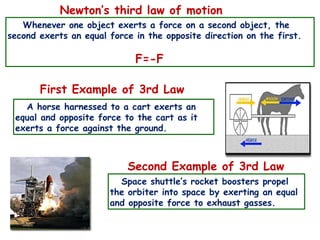
Newton’s third law of motion
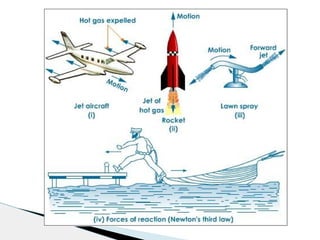
Whenever one object exerts a force on a second object, the
second exerts an equal force in the opposite direction on the first.
F=-F
First Example of 3rd Law
A horse harnessed to a cart exerts an
equal and opposite force to the cart as it
exerts a force against the ground.
Second Example of 3rd Law
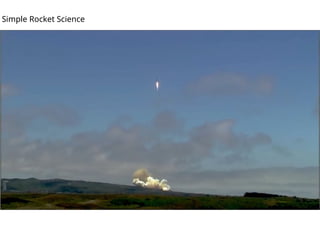
Space shuttle’s rocket boosters propel
the orbiter into space by exerting an equal
and opposite force to exhaust gasses.
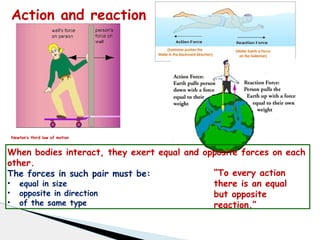
Action and reaction
Newton’s third law of motion
When bodies interact, they exert equal and opposite forces on each
other.
The forces in such pair must be:
• equal in size
• opposite in direction
• of the same type
“To every action
there is an equal
but opposite
reaction.”
Friction
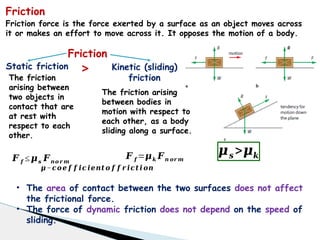
Static friction Kinetic (sliding)
friction
𝑭 𝒇 ≤𝝁𝒔 𝑭𝒏𝒐 𝒓 𝒎
𝑭 𝒇 =𝝁𝒌 𝑭𝒏 𝒐𝒓 𝒎
>
𝝁−𝒄𝒐𝒆 𝒇 𝒇 𝒊𝒄 𝒊𝒆𝒏𝒕 𝒐 𝒇 𝒇 𝒓 𝒊𝒄𝒕 𝒊 𝒐𝒏
The friction
arising between
two objects in
contact that are
at rest with
respect to each
other.
The friction arising
between bodies in
motion with respect to
each other, as a body
sliding along a surface.
𝝁𝒔 >𝝁𝒌
• The area of contact between the two surfaces does not affect
the frictional force.
• The force of dynamic friction does not depend on the speed of
sliding.
Friction force is the force exerted by a surface as an object moves across
it or makes an effort to move across it. It opposes the motion of a body.
Friction
Force of gravity
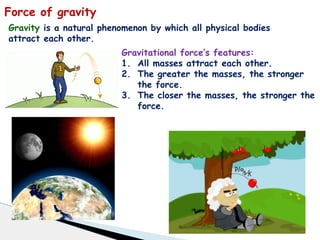
Gravity is a natural phenomenon by which all physical bodies
attract each other.
Gravitational force’s features:
1. All masses attract each other.
2. The greater the masses, the stronger
the force.
3. The closer the masses, the stronger the
force.
Mass, kg
Weight, N
Weight
mass
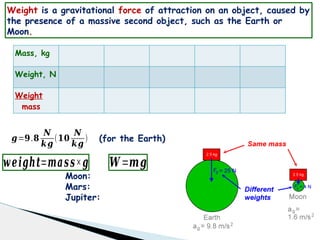
𝒘𝒆𝒊𝒈𝒉𝒕=𝒎𝒂𝒔𝒔×𝒈 𝑾=𝒎𝒈
𝒈=𝟗.𝟖
𝑵
𝒌𝒈
(𝟏𝟎
𝑵
𝒌𝒈
) (for the Earth)
Weight is a gravitational force of attraction on an object, caused by
the presence of a massive second object, such as the Earth or
Moon.
Moon:
Mars:
Jupiter:
 Topic: Terminal velocity
 Lesson objectives:
 To form the concept of terminal velocity
 To understand the relationship between drag
force and weight
 ATL focus: Thinking skills
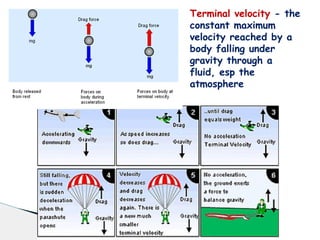
Terminal velocity - the
constant maximum
velocity reached by a
body falling under
gravity through a
fluid, esp the
atmosphere
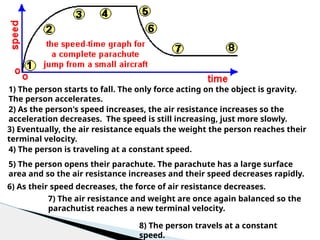
1) The person starts to fall. The only force acting on the object is gravity.
The person accelerates.
2) As the person's speed increases, the air resistance increases so the
acceleration decreases. The speed is still increasing, just more slowly.
3) Eventually, the air resistance equals the weight the person reaches their
terminal velocity.
4) The person is traveling at a constant speed.
5) The person opens their parachute. The parachute has a large surface
area and so the air resistance increases and their speed decreases rapidly.
6) As their speed decreases, the force of air resistance decreases.
7) The air resistance and weight are once again balanced so the
parachutist reaches a new terminal velocity.
8) The person travels at a constant
speed.
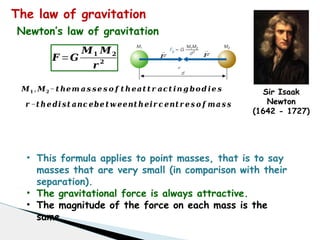
The law of gravitation
Sir Isaak
Newton
(1642 - 1727)
𝑭 =𝑮
𝑴𝟏 𝑴𝟐
𝒓 𝟐
𝑟
𝐹
→
𝐹
→
𝑴𝟏 , 𝑴𝟐−𝒕 𝒉𝒆𝒎 𝒂 𝒔 𝒔𝒆 𝒔 𝒐 𝒇 𝒕 𝒉 𝒆𝒂𝒕 𝒕 𝒓 𝒂𝒄𝒕 𝒊𝒏 𝒈 𝒃𝒐 𝒅 𝒊𝒆 𝒔
𝒓 −𝒕 𝒉𝒆 𝒅𝒊 𝒔𝒕 𝒂𝒏𝒄 𝒆𝒃𝒆 𝒕 𝒘 𝒆𝒆𝒏𝒕 𝒉𝒆𝒊𝒓 𝒄 𝒆𝒏𝒕 𝒓 𝒆 𝒔 𝒐 𝒇 𝒎𝒂 𝒔 𝒔
• This formula applies to point masses, that is to say
masses that are very small (in comparison with their
separation).
• The gravitational force is always attractive.
• The magnitude of the force on each mass is the
same.
Newton’s law of gravitation
Gravitational field strength
A mass M creates a gravitational field in the space around it.
When another mass is placed at some point near M, it ‘feels’
the gravitational field in the form of a gravitational force.
𝒈=
𝑭
𝒎
𝑩𝒖𝒕 𝑭 =𝑮
𝑴 𝒎
𝒓𝟐
( 𝑴 𝒊𝒔 𝒂 𝒔 𝒑 𝒉𝒆𝒓 𝒊𝒄𝒂 𝒍𝒎𝒂 𝒔 𝒔)
𝒈=𝑮
𝑴
𝒓 𝟐
- the gravitational field strength of
a spherical mass M
[𝒈]=𝑵 𝒌𝒈−𝟏
=𝒎 𝒔−𝟐
Moon:
Mars:
Jupiter:
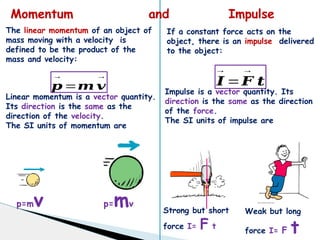
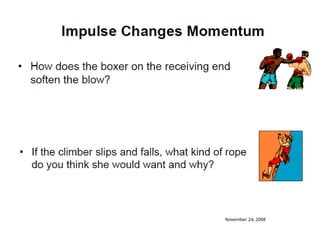
Momentum and Impulse
The linear momentum of an object of
mass moving with a velocity is
defined to be the product of the
mass and velocity:
𝒑
→
=𝒎 𝒗
→
Linear momentum is a vector quantity.
Its direction is the same as the
direction of the velocity.
The SI units of momentum are
If a constant force acts on the
object, there is an impulse delivered
to the object:
𝑰
→
=𝑭
→
𝒕
Impulse is a vector quantity. Its
direction is the same as the direction
of the force.
The SI units of impulse are
Strong but short
force I= F t
Weak but long
force I= F t
p=mv p=mv
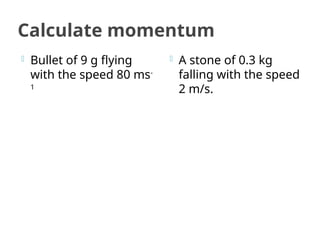
Calculate momentum
 Bullet of 9 g flying
with the speed 80 ms-
1
 A stone of 0.3 kg
falling with the speed
2 m/s.
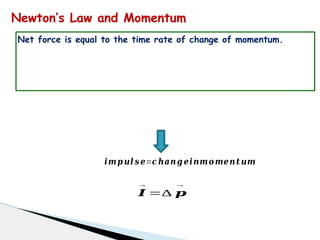
Newton’s Law and Momentum
Net force is equal to the time rate of change of momentum.
𝒊𝒎𝒑 𝒖𝒍 𝒔 𝒆=𝒄 𝒉𝒂𝒏𝒈 𝒆𝒊𝒏𝒎𝒐𝒎𝒆𝒏𝒕𝒖𝒎
𝑰
→
=∆ 𝒑
→
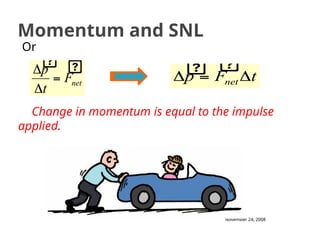
Momentum and SNL
Or
Change in momentum is equal to the impulse
applied.
November 24, 2008
November 24, 2008
m1 m1
m2 m2
Conservation of Momentum
Before After
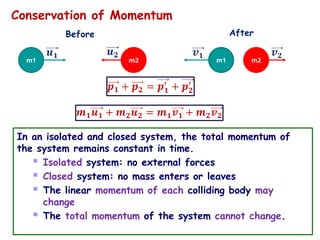
In an isolated and closed system, the total momentum of
the system remains constant in time.
■ Isolated system: no external forces
■ Closed system: no mass enters or leaves
■ The linear momentum of each colliding body may
change
■ The total momentum of the system cannot change.
November 24, 2008
Types of Collisions
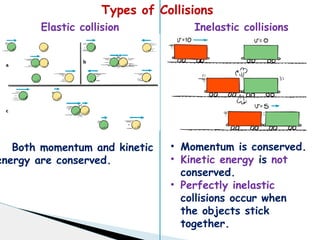
Elastic collision Inelastic collisions
Both momentum and kinetic
energy are conserved.
• Momentum is conserved.
• Kinetic energy is not
conserved.
• Perfectly inelastic
collisions occur when
the objects stick
together.
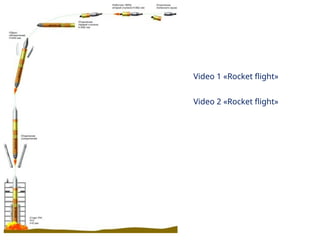
Jet motion
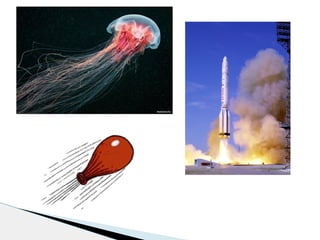
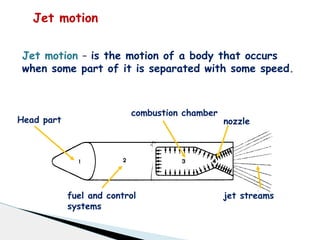
Jet motion – is the motion of a body that occurs
when some part of it is separated with some speed.
Head part
fuel and control
systems
combustion chamber
jet streams
nozzle
Video 1 «Rocket flight»
Video 2 «Rocket flight»
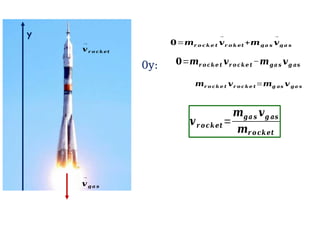
𝒗
→
𝒓 𝒐 𝒄 𝒌 𝒆𝒕
𝒗
→
𝒈 𝒂 𝒔
𝟎=𝒎𝒓 𝒐 𝒄𝒌 𝒆 𝒕 𝒗
→
𝒓 𝒐 𝒌 𝒆𝒕 +𝒎𝒈 𝒂 𝒔 𝒗
→
𝒈 𝒂 𝒔
y
𝟎=𝒎𝒓 𝒐 𝒄𝒌𝒆 𝒕 𝒗𝒓 𝒐 𝒄𝒌𝒆 𝒕 −𝒎𝒈𝒂 𝒔 𝒗𝒈 𝒂𝒔
0y:
𝒎𝒓 𝒐 𝒄𝒌 𝒆 𝒕 𝒗𝒓 𝒐 𝒄𝒌 𝒆 𝒕=𝒎𝒈 𝒂𝒔 𝒗𝒈 𝒂 𝒔
𝒗𝒓 𝒐𝒄𝒌𝒆𝒕=
𝒎𝒈𝒂 𝒔 𝒗𝒈 𝒂𝒔
𝒎𝒓 𝒐𝒄𝒌𝒆𝒕
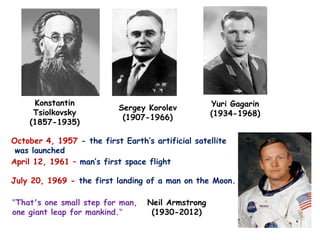
Konstantin
Tsiolkovsky
(1857-1935)
Sergey Korolev
(1907-1966)
Yuri Gagarin
(1934-1968)
October 4, 1957 - the first Earth’s artificial satellite
was launched
April 12, 1961 – man’s first space flight
July 20, 1969 - the first landing of a man on the Moon.
Neil Armstrong
(1930-2012)
"That's one small step for man,
one giant leap for mankind."
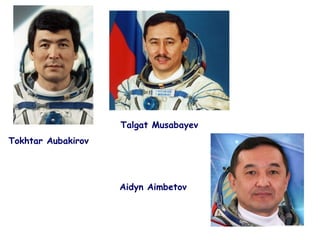
Tokhtar Aubakirov
Talgat Musabayev
Aidyn Aimbetov
Simple Rocket Science
November 24, 2008
November 24, 2008
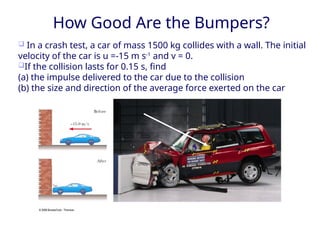
How Good Are the Bumpers?
❑ In a crash test, a car of mass 1500 kg collides with a wall. The initial
velocity of the car is u =-15 m s-1
and v = 0.
❑If the collision lasts for 0.15 s, find
(a) the impulse delivered to the car due to the collision
(b) the size and direction of the average force exerted on the car
November 24, 2008

Dydddddddddddnamdfgdfgdfgdfgdfics 2.pptx

  • 1.
  • 2.
    Global context: Scientificand technical innovations Key concept: Systems Related concepts: Consequences, Interaction, Movement Statement of inquiry: The way in which bodies move within a dynamic system is a consequence of interaction between them.
  • 3.
    Inquiry questions: Factual: Whatcauses motion? What changes motion? What affects the motion of falling objects? Conceptual: What relationship is there between force and motion? Debatable: Does everybody have the right to travel the way they wish? Should everybody have the right to travel as they wish?
  • 5.
    Forces Force is apush or pull, exerted by one object on another. Force has direction as well as magnitude, so it is a vector. F – force. The SI unit of force is the newton (N) Forces can be measured using force meter (spring balance).
  • 6.
    Typical forces Value Forceto switch a bathroom light 10 N Force to pull open a drinks can 20 N Force to lift a heavy suitcase 200 N Force from a large jet engine 250 000 N
  • 7.
    Upthrust upwards force ona body caused by the water being displaced around it. This is sometimes called buoyancy. Lift upwards force on an aeroplane. Thrust forwards force created by a body. Weight Force due to gravitational attraction Friction Force caused by rubbing of surfaces that opposes motion Air/Water Resistance Frictional Force caused by particles colliding with the body that opposes motion Magnetic Force caused by magnetic attraction. Electrostatic Force caused by attraction between charges Reaction Force created by a body as a reaction to a force being applied. Compression The force on a body when it is being squashed. Tension The force on a body when it is being stretched. Contact If two objects or materials need to be touching for the force to have an effect Non Contact If two objects or materials do not need to be touching for the force to have an effect.
  • 9.
    Resultant force (netforce) is a force which is the result of two or more forces acting conjointly.
  • 10.
    If forces arein balance, they cancel each other out.
  • 11.
    Newton’s first lawof motion (Inertia) If no external force is acting on it, an object will - if stationary, remain stationary - if moving, keep moving at a steady speed in a straight line. Inertia is the tendency of an object at rest to remain at rest or of an object in straight line motion to stay in motion in a straight line unless acted on by an outside force. Newton’s second law of motion Any resultant force causes an acceleration - in the same direction as the resultant force. 𝒓𝒆𝒔𝒖𝒍𝒕𝒂𝒏𝒕 𝒇 𝒐𝒓𝒄𝒆=𝒎𝒂𝒔𝒔×𝒂𝒄𝒄𝒆𝒍𝒆𝒓 𝒂𝒕𝒊𝒐𝒏 𝑭=𝒎𝒂
  • 12.
    Newton’s third lawof motion Whenever one object exerts a force on a second object, the second exerts an equal force in the opposite direction on the first. F=-F First Example of 3rd Law A horse harnessed to a cart exerts an equal and opposite force to the cart as it exerts a force against the ground. Second Example of 3rd Law Space shuttle’s rocket boosters propel the orbiter into space by exerting an equal and opposite force to exhaust gasses.
  • 13.
    Action and reaction Newton’sthird law of motion When bodies interact, they exert equal and opposite forces on each other. The forces in such pair must be: • equal in size • opposite in direction • of the same type “To every action there is an equal but opposite reaction.”
  • 15.
    Friction Static friction Kinetic(sliding) friction 𝑭 𝒇 ≤𝝁𝒔 𝑭𝒏𝒐 𝒓 𝒎 𝑭 𝒇 =𝝁𝒌 𝑭𝒏 𝒐𝒓 𝒎 > 𝝁−𝒄𝒐𝒆 𝒇 𝒇 𝒊𝒄 𝒊𝒆𝒏𝒕 𝒐 𝒇 𝒇 𝒓 𝒊𝒄𝒕 𝒊 𝒐𝒏 The friction arising between two objects in contact that are at rest with respect to each other. The friction arising between bodies in motion with respect to each other, as a body sliding along a surface. 𝝁𝒔 >𝝁𝒌 • The area of contact between the two surfaces does not affect the frictional force. • The force of dynamic friction does not depend on the speed of sliding. Friction force is the force exerted by a surface as an object moves across it or makes an effort to move across it. It opposes the motion of a body. Friction
  • 16.
    Force of gravity Gravityis a natural phenomenon by which all physical bodies attract each other. Gravitational force’s features: 1. All masses attract each other. 2. The greater the masses, the stronger the force. 3. The closer the masses, the stronger the force.
  • 17.
    Mass, kg Weight, N Weight mass 𝒘𝒆𝒊𝒈𝒉𝒕=𝒎𝒂𝒔𝒔×𝒈𝑾=𝒎𝒈 𝒈=𝟗.𝟖 𝑵 𝒌𝒈 (𝟏𝟎 𝑵 𝒌𝒈 ) (for the Earth) Weight is a gravitational force of attraction on an object, caused by the presence of a massive second object, such as the Earth or Moon. Moon: Mars: Jupiter:
  • 18.
     Topic: Terminalvelocity  Lesson objectives:  To form the concept of terminal velocity  To understand the relationship between drag force and weight  ATL focus: Thinking skills
  • 19.
    Terminal velocity -the constant maximum velocity reached by a body falling under gravity through a fluid, esp the atmosphere
  • 20.
    1) The personstarts to fall. The only force acting on the object is gravity. The person accelerates. 2) As the person's speed increases, the air resistance increases so the acceleration decreases. The speed is still increasing, just more slowly. 3) Eventually, the air resistance equals the weight the person reaches their terminal velocity. 4) The person is traveling at a constant speed. 5) The person opens their parachute. The parachute has a large surface area and so the air resistance increases and their speed decreases rapidly. 6) As their speed decreases, the force of air resistance decreases. 7) The air resistance and weight are once again balanced so the parachutist reaches a new terminal velocity. 8) The person travels at a constant speed.
  • 21.
    The law ofgravitation Sir Isaak Newton (1642 - 1727) 𝑭 =𝑮 𝑴𝟏 𝑴𝟐 𝒓 𝟐 𝑟 𝐹 → 𝐹 → 𝑴𝟏 , 𝑴𝟐−𝒕 𝒉𝒆𝒎 𝒂 𝒔 𝒔𝒆 𝒔 𝒐 𝒇 𝒕 𝒉 𝒆𝒂𝒕 𝒕 𝒓 𝒂𝒄𝒕 𝒊𝒏 𝒈 𝒃𝒐 𝒅 𝒊𝒆 𝒔 𝒓 −𝒕 𝒉𝒆 𝒅𝒊 𝒔𝒕 𝒂𝒏𝒄 𝒆𝒃𝒆 𝒕 𝒘 𝒆𝒆𝒏𝒕 𝒉𝒆𝒊𝒓 𝒄 𝒆𝒏𝒕 𝒓 𝒆 𝒔 𝒐 𝒇 𝒎𝒂 𝒔 𝒔 • This formula applies to point masses, that is to say masses that are very small (in comparison with their separation). • The gravitational force is always attractive. • The magnitude of the force on each mass is the same. Newton’s law of gravitation
  • 22.
    Gravitational field strength Amass M creates a gravitational field in the space around it. When another mass is placed at some point near M, it ‘feels’ the gravitational field in the form of a gravitational force. 𝒈= 𝑭 𝒎 𝑩𝒖𝒕 𝑭 =𝑮 𝑴 𝒎 𝒓𝟐 ( 𝑴 𝒊𝒔 𝒂 𝒔 𝒑 𝒉𝒆𝒓 𝒊𝒄𝒂 𝒍𝒎𝒂 𝒔 𝒔) 𝒈=𝑮 𝑴 𝒓 𝟐 - the gravitational field strength of a spherical mass M [𝒈]=𝑵 𝒌𝒈−𝟏 =𝒎 𝒔−𝟐 Moon: Mars: Jupiter:
  • 23.
    Momentum and Impulse Thelinear momentum of an object of mass moving with a velocity is defined to be the product of the mass and velocity: 𝒑 → =𝒎 𝒗 → Linear momentum is a vector quantity. Its direction is the same as the direction of the velocity. The SI units of momentum are If a constant force acts on the object, there is an impulse delivered to the object: 𝑰 → =𝑭 → 𝒕 Impulse is a vector quantity. Its direction is the same as the direction of the force. The SI units of impulse are Strong but short force I= F t Weak but long force I= F t p=mv p=mv
  • 24.
    Calculate momentum  Bulletof 9 g flying with the speed 80 ms- 1  A stone of 0.3 kg falling with the speed 2 m/s.
  • 25.
    Newton’s Law andMomentum Net force is equal to the time rate of change of momentum. 𝒊𝒎𝒑 𝒖𝒍 𝒔 𝒆=𝒄 𝒉𝒂𝒏𝒈 𝒆𝒊𝒏𝒎𝒐𝒎𝒆𝒏𝒕𝒖𝒎 𝑰 → =∆ 𝒑 →
  • 26.
    Momentum and SNL Or Changein momentum is equal to the impulse applied. November 24, 2008
  • 27.
    November 24, 2008 m1m1 m2 m2 Conservation of Momentum Before After In an isolated and closed system, the total momentum of the system remains constant in time. ■ Isolated system: no external forces ■ Closed system: no mass enters or leaves ■ The linear momentum of each colliding body may change ■ The total momentum of the system cannot change.
  • 28.
    November 24, 2008 Typesof Collisions Elastic collision Inelastic collisions Both momentum and kinetic energy are conserved. • Momentum is conserved. • Kinetic energy is not conserved. • Perfectly inelastic collisions occur when the objects stick together.
  • 30.
    Jet motion Jet motion– is the motion of a body that occurs when some part of it is separated with some speed. Head part fuel and control systems combustion chamber jet streams nozzle
  • 31.
    Video 1 «Rocketflight» Video 2 «Rocket flight»
  • 32.
    𝒗 → 𝒓 𝒐 𝒄𝒌 𝒆𝒕 𝒗 → 𝒈 𝒂 𝒔 𝟎=𝒎𝒓 𝒐 𝒄𝒌 𝒆 𝒕 𝒗 → 𝒓 𝒐 𝒌 𝒆𝒕 +𝒎𝒈 𝒂 𝒔 𝒗 → 𝒈 𝒂 𝒔 y 𝟎=𝒎𝒓 𝒐 𝒄𝒌𝒆 𝒕 𝒗𝒓 𝒐 𝒄𝒌𝒆 𝒕 −𝒎𝒈𝒂 𝒔 𝒗𝒈 𝒂𝒔 0y: 𝒎𝒓 𝒐 𝒄𝒌 𝒆 𝒕 𝒗𝒓 𝒐 𝒄𝒌 𝒆 𝒕=𝒎𝒈 𝒂𝒔 𝒗𝒈 𝒂 𝒔 𝒗𝒓 𝒐𝒄𝒌𝒆𝒕= 𝒎𝒈𝒂 𝒔 𝒗𝒈 𝒂𝒔 𝒎𝒓 𝒐𝒄𝒌𝒆𝒕
  • 33.
    Konstantin Tsiolkovsky (1857-1935) Sergey Korolev (1907-1966) Yuri Gagarin (1934-1968) October4, 1957 - the first Earth’s artificial satellite was launched April 12, 1961 – man’s first space flight July 20, 1969 - the first landing of a man on the Moon. Neil Armstrong (1930-2012) "That's one small step for man, one giant leap for mankind."
  • 34.
  • 35.
  • 36.
  • 37.
    November 24, 2008 HowGood Are the Bumpers? ❑ In a crash test, a car of mass 1500 kg collides with a wall. The initial velocity of the car is u =-15 m s-1 and v = 0. ❑If the collision lasts for 0.15 s, find (a) the impulse delivered to the car due to the collision (b) the size and direction of the average force exerted on the car
  • 38.