Combined Angiotensin Inhibition for
the Treatment of Diabetic
Nephropathy
Dr. Sandeep G Huilgol
MBBS, DNB(Internal Medicine),
MMedSci(Nephro)
Original Article

Combined Angiotensin Inhibition for the Treatment
of Diabetic Nephropathy
Linda F. Fried, M.D., M.P.H., Nicholas Emanuele, M.D., Jane H. Zhang,
Ph.D., Mary Brophy, M.D., Todd A. Conner, Pharm.D., William Duckworth,
M.D., David J. Leehey, M.D., Peter A. McCullough, M.D., M.P.H., Theresa
O'Connor, Ph.D., Paul M. Palevsky, M.D., Robert F. Reilly, M.D., Stephen L.
Seliger, M.D., Stuart R. Warren, J.D., Pharm.D., Suzanne Watnick, M.D.,
Peter Peduzzi, Ph.D., Peter Guarino, M.P.H., Ph.D., for the VA NEPHRON-D
Investigators

N Engl J Med
Volume 369(20):1892-1903
November 14, 2013
Study Overview
• In this study, patients with type 2 diabetes, albuminuria, and mild-tomoderate renal dysfunction received losartan followed by lisinopril or
placebo.
• The study was stopped early because of increased risks of
hyperkalemia and acute kidney injury with combination therapy.
• Combination therapy with angiotensinconverting–enzyme (ACE) inhibitors and
angiotensin-receptor blockers (ARBs)
decreases proteinuria; however, its safety and
effect on the progression of kidney disease are
uncertain
• Diabetic nephropathy is the leading cause of endstage renal disease (ESRD).
• Persons with diabetes and proteinuria are at high
risk for progression to ESRD.
• Blockade of the renin–angiotensin system
decreases the progression of proteinuric kidney
disease, and the degree of reduction in
proteinuria correlates with the extent to which
the decrease in the glomerular filtration rate
(GFR) is slowed.
ONTARGET
Questions:
1.Is telmisartan “non-inferior” to ramipril?
2.Is the combination superior to ramipril?
Outcome:
1.Primary: CV death, MI, stroke, CHF hosp
2.Key secondary: CV death, MI, stroke (HOPE trial
outcome)
1. Telmisartan is clearly “non-inferior” to
ramipril
• Primary composite outcome (p=0.0038)

2. Combination therapy does not reduce the
primary outcome to a greater extent
compared to ramipril alone
3. Higher rates of adverse events:
•-hypotension related, including syncope
•-renal dysfunction
• The ONTARGET study population had
predominantly normal levels of albumin
excretion or microalbuminuria.
Research question
• Is combination therapy of ARB and ACE safe?
• Is the combination therapy efficacious in
slowing the progression of proteinuric diabetic
nephropathy than monotherapy.
The Veterans Affairs Nephropathy in Diabetes
(VA NEPHRON-D) study was
•
•
•
•

Multicenter
Double- blind,
Randomized, controlled study designed
to test the efficacy of the combination of losartan (an ARB)
with lisinopril (an ACE inhibitor), as compared with standard
treatment with losartan alone, in slowing the progression of
proteinuric diabetic kidney disease.
Primary end point
• First occurrence of a decline in the estimated GFR
(an absolute decrease of ≥30 ml per minute per
1.73 m2 if the estimated GFR was ≥60 ml per
minute per 1.73 m2 at randomization or a
relative decrease of ≥50% if the estimated GFR
was <60 ml per minute per 1.73 m2).
• ESRD (defined by the initiation of maintenance
dialysis or an estimated GFR of <15 ml per minute
per 1.73 m2), or death.
Secondary renal end point
• First occurrence of a decline in the estimated
GFR (as defined above) or ESRD.
• Changes in the estimated GFR were confirmed
at least 4 weeks after treatment of potentially
reversible factors.
• Patients who reached the primary end point
on the basis of the estimated GFR continued
to receive study medications until the
occurrence of ESRD or death….???
• Tertiary end points included cardiovascular
events (myocardial infarction, stroke, or
hospitalization for congestive heart failure),
the slope of change in the estimated GFR, and
the change in albuminuria at 1 year.
• Between July 2008 and September 2012, a
total of 4346 patients were screened,
• 1648 were enrolled,
• 1448 underwent randomization (724 in each
group).
Baseline Characteristics of the Patients.

Fried LF et al. N Engl J Med
2013;369:1892-1903
Adverse Events and Safety
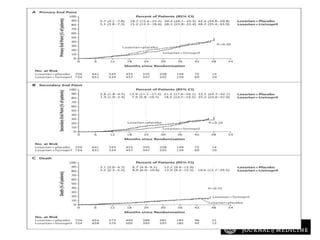
Kaplan–Meier Plot of Cumulative Probabilities of the Primary and Secondary End Points and
Death.

Fried LF et al. N Engl J Med 2013;369:1892-1903
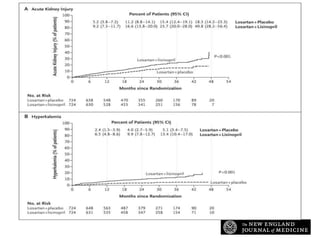
Kaplan–Meier Plot of Cumulative Probabilities of Acute Kidney Injury and Hyperkalemia.

Fried LF et al. N Engl J Med 2013;369:1892-1903
Efficacy End Points and Mortality.

Fried LF et al. N Engl J Med 2013;369:1892-1903
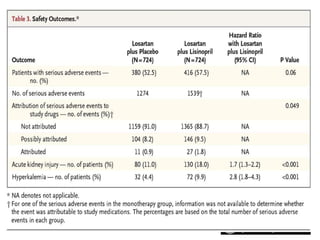
Safety Outcomes.

Fried LF et al. N Engl J Med 2013;369:1892-1903
Conclusions
• Combination therapy with an ACE inhibitor and an ARB was associated
with an increased risk of adverse events among patients with diabetic
nephropathy.
Take home message
• In the VA NEPHRON-D trail, despite higher reductions in
UACR in the combination arm, there was no demonstrable
renal benefits.
• AKI was the major reason for the higher rate of serious
adverse events in the combination arm of the VA
NEPHRON-D trial;
• Regardless of the evidence base for renoprotection with
ACEI or ARB in proteinuric CKD and diabetic nephropathies,
it must be borne in mind by the practicing physician that
the potential for iatrogenic renal failure with ACEi/ARBs

Dual raas blockade VA NEPHRON D trial

  • 1.
    Combined Angiotensin Inhibitionfor the Treatment of Diabetic Nephropathy Dr. Sandeep G Huilgol MBBS, DNB(Internal Medicine), MMedSci(Nephro)
  • 2.
    Original Article Combined AngiotensinInhibition for the Treatment of Diabetic Nephropathy Linda F. Fried, M.D., M.P.H., Nicholas Emanuele, M.D., Jane H. Zhang, Ph.D., Mary Brophy, M.D., Todd A. Conner, Pharm.D., William Duckworth, M.D., David J. Leehey, M.D., Peter A. McCullough, M.D., M.P.H., Theresa O'Connor, Ph.D., Paul M. Palevsky, M.D., Robert F. Reilly, M.D., Stephen L. Seliger, M.D., Stuart R. Warren, J.D., Pharm.D., Suzanne Watnick, M.D., Peter Peduzzi, Ph.D., Peter Guarino, M.P.H., Ph.D., for the VA NEPHRON-D Investigators N Engl J Med Volume 369(20):1892-1903 November 14, 2013
  • 3.
    Study Overview • Inthis study, patients with type 2 diabetes, albuminuria, and mild-tomoderate renal dysfunction received losartan followed by lisinopril or placebo. • The study was stopped early because of increased risks of hyperkalemia and acute kidney injury with combination therapy.
  • 4.
    • Combination therapywith angiotensinconverting–enzyme (ACE) inhibitors and angiotensin-receptor blockers (ARBs) decreases proteinuria; however, its safety and effect on the progression of kidney disease are uncertain
  • 5.
    • Diabetic nephropathyis the leading cause of endstage renal disease (ESRD). • Persons with diabetes and proteinuria are at high risk for progression to ESRD. • Blockade of the renin–angiotensin system decreases the progression of proteinuric kidney disease, and the degree of reduction in proteinuria correlates with the extent to which the decrease in the glomerular filtration rate (GFR) is slowed.
  • 6.
    ONTARGET Questions: 1.Is telmisartan “non-inferior”to ramipril? 2.Is the combination superior to ramipril? Outcome: 1.Primary: CV death, MI, stroke, CHF hosp 2.Key secondary: CV death, MI, stroke (HOPE trial outcome)
  • 7.
    1. Telmisartan isclearly “non-inferior” to ramipril • Primary composite outcome (p=0.0038) 2. Combination therapy does not reduce the primary outcome to a greater extent compared to ramipril alone 3. Higher rates of adverse events: •-hypotension related, including syncope •-renal dysfunction
  • 8.
    • The ONTARGETstudy population had predominantly normal levels of albumin excretion or microalbuminuria.
  • 9.
    Research question • Iscombination therapy of ARB and ACE safe? • Is the combination therapy efficacious in slowing the progression of proteinuric diabetic nephropathy than monotherapy.
  • 10.
    The Veterans AffairsNephropathy in Diabetes (VA NEPHRON-D) study was • • • • Multicenter Double- blind, Randomized, controlled study designed to test the efficacy of the combination of losartan (an ARB) with lisinopril (an ACE inhibitor), as compared with standard treatment with losartan alone, in slowing the progression of proteinuric diabetic kidney disease.
  • 11.
    Primary end point •First occurrence of a decline in the estimated GFR (an absolute decrease of ≥30 ml per minute per 1.73 m2 if the estimated GFR was ≥60 ml per minute per 1.73 m2 at randomization or a relative decrease of ≥50% if the estimated GFR was <60 ml per minute per 1.73 m2). • ESRD (defined by the initiation of maintenance dialysis or an estimated GFR of <15 ml per minute per 1.73 m2), or death.
  • 12.
    Secondary renal endpoint • First occurrence of a decline in the estimated GFR (as defined above) or ESRD. • Changes in the estimated GFR were confirmed at least 4 weeks after treatment of potentially reversible factors.
  • 13.
    • Patients whoreached the primary end point on the basis of the estimated GFR continued to receive study medications until the occurrence of ESRD or death….??? • Tertiary end points included cardiovascular events (myocardial infarction, stroke, or hospitalization for congestive heart failure), the slope of change in the estimated GFR, and the change in albuminuria at 1 year.
  • 14.
    • Between July2008 and September 2012, a total of 4346 patients were screened, • 1648 were enrolled, • 1448 underwent randomization (724 in each group).
  • 15.
    Baseline Characteristics ofthe Patients. Fried LF et al. N Engl J Med 2013;369:1892-1903
  • 16.
  • 17.
    Kaplan–Meier Plot ofCumulative Probabilities of the Primary and Secondary End Points and Death. Fried LF et al. N Engl J Med 2013;369:1892-1903
  • 18.
    Kaplan–Meier Plot ofCumulative Probabilities of Acute Kidney Injury and Hyperkalemia. Fried LF et al. N Engl J Med 2013;369:1892-1903
  • 19.
    Efficacy End Pointsand Mortality. Fried LF et al. N Engl J Med 2013;369:1892-1903
  • 20.
    Safety Outcomes. Fried LFet al. N Engl J Med 2013;369:1892-1903
  • 21.
    Conclusions • Combination therapywith an ACE inhibitor and an ARB was associated with an increased risk of adverse events among patients with diabetic nephropathy.
  • 22.
    Take home message •In the VA NEPHRON-D trail, despite higher reductions in UACR in the combination arm, there was no demonstrable renal benefits. • AKI was the major reason for the higher rate of serious adverse events in the combination arm of the VA NEPHRON-D trial; • Regardless of the evidence base for renoprotection with ACEI or ARB in proteinuric CKD and diabetic nephropathies, it must be borne in mind by the practicing physician that the potential for iatrogenic renal failure with ACEi/ARBs