DSD/ “Ambiguous genitalia or Intersex”
(Differences of Sexual Development)
Dr. Raghu Nath Karmaker
MS, Phase- B Resident
Pediatric Surgery
MMC
Definitions:
• DSD is a congenital conditions in which infant/ child's has developed –
1. Chromosomal
2. Gonadal
3. Anatomic sex are atypical
• Hormonal, metabolic, and chromosomal abnormalities( abnormal
genital development)
• The most challenging for pediatric urologist, gynecologist, and
surgeon.
Gender and sex Differentiation:
Derivative's of urogenital system:
Pathways of steroid biosynthesis:
Incidence and Cause:
• The incidence of true ambiguous genitalia: 1:4500-5000
• CAH & MGD are most common cause
Pathogenesis of DSD:
1. Overabundance of androgenic steroid production(genetic female are
masculinized)
2. Deficient androgen production (genetics males)
3. Mutations (GD- Absent, incomplete, or asymmetric)
Classification
• Allen classified primarily by gonadal histology in 1976(intersex or
hermaphrodite).
• Newer 3 broad categories :
sex chromosome DSDs
46,XY DSDs ( Male pseudo-hermaphrodite)
46,XX DSDs (Female pseudo-hermaphrodite)
Ovotesticular DSDs(true)
Evaluation of DSD
• History :
Family history, infertility, hirsutism, drug inj. Progesterone during preg.
• Physical examination :
1. Focus on genitalia
2. Phallic stretched length, clitoral size, urogenital sinus position
3. Abdomen and Rectal examination- uterus
4. Bronzing of areola or scrotum
5. Palpable gonads
6. Status of hydration, pigmentation, murmur, web neck
• Chromosomal evaluation
Karyotyping
• Biochemical:
1. Serum electrolyte
2. Testosterone, DHT, DHEA level
3. 17-OH progesterone
4. FSH,LH
5. Serum cortisol level
6. Serum progesterone level
Radiology :
• USG
• MRI
• Genitogram
1. Diagnostic laparoscopy
2. Endoscopy : level of confluence
3. Histopathology : Gonadal biopsy.
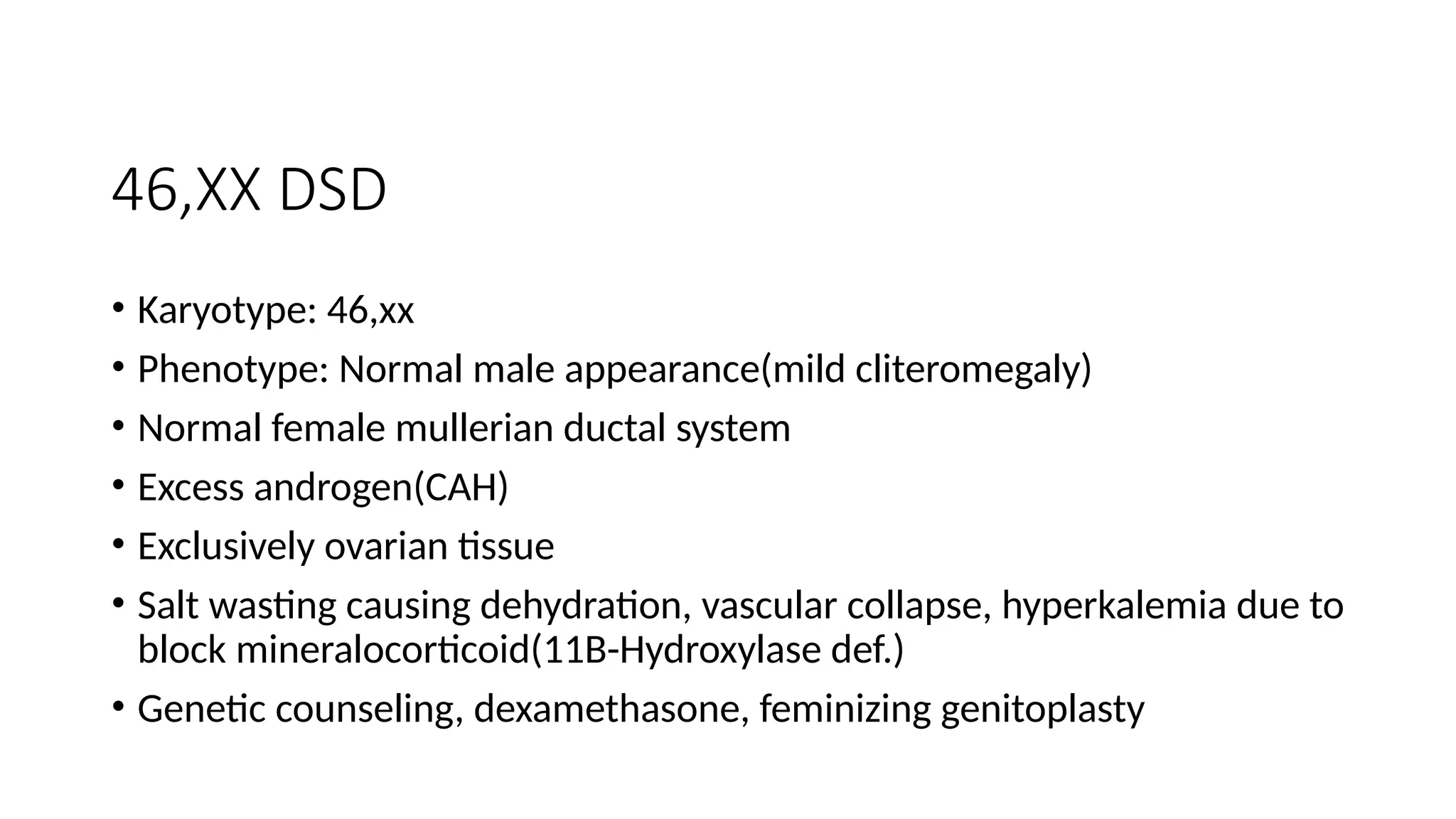
46,XX DSD
• Karyotype: 46,xx
• Phenotype: Normal male appearance(mild cliteromegaly)
• Normal female mullerian ductal system
• Excess androgen(CAH)
• Exclusively ovarian tissue
• Salt wasting causing dehydration, vascular collapse, hyperkalemia due to
block mineralocorticoid(11B-Hydroxylase def.)
• Genetic counseling, dexamethasone, feminizing genitoplasty
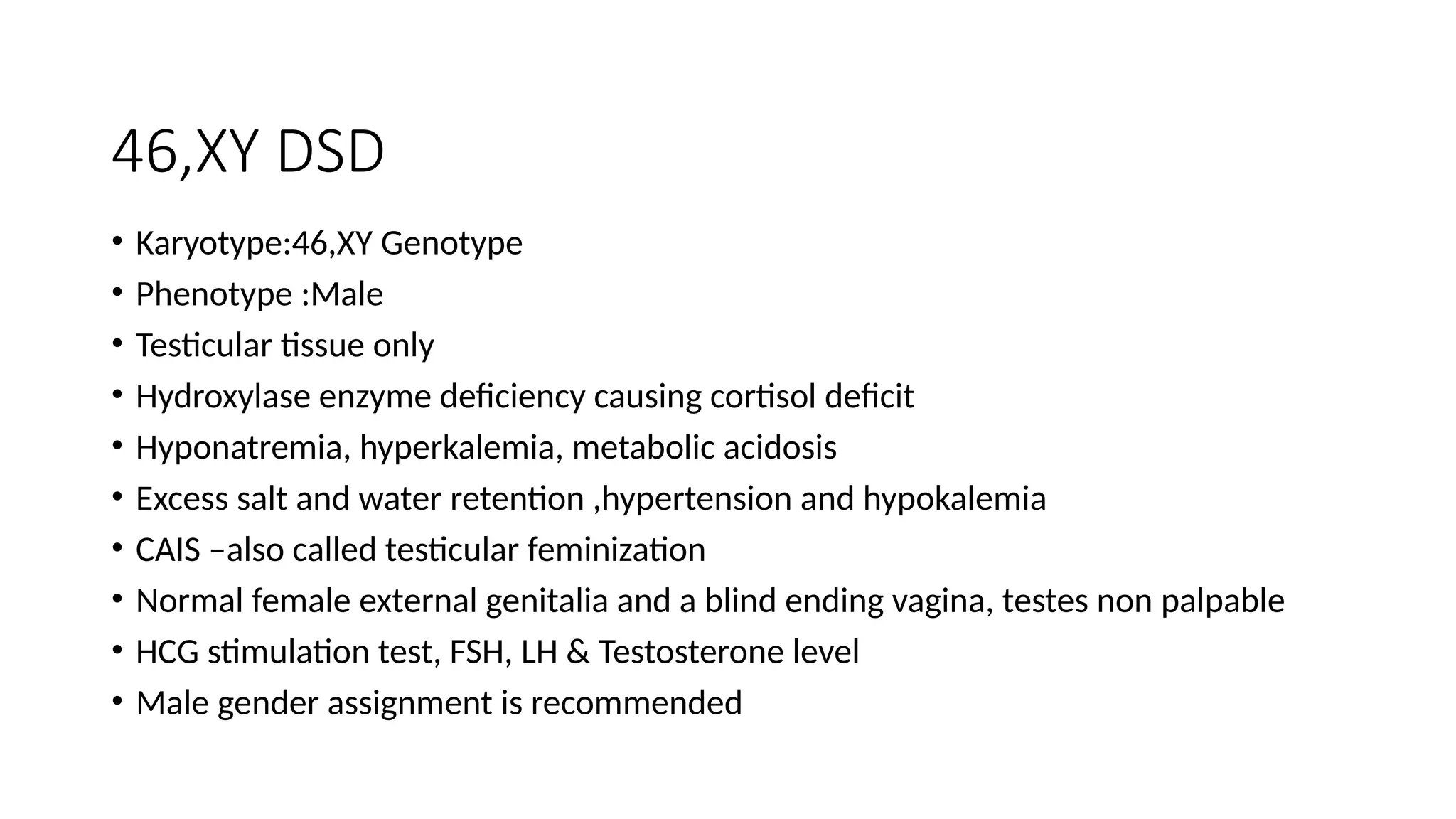
46,XY DSD
• Karyotype:46,XY Genotype
• Phenotype :Male
• Testicular tissue only
• Hydroxylase enzyme deficiency causing cortisol deficit
• Hyponatremia, hyperkalemia, metabolic acidosis
• Excess salt and water retention ,hypertension and hypokalemia
• CAIS –also called testicular feminization
• Normal female external genitalia and a blind ending vagina, testes non palpable
• HCG stimulation test, FSH, LH & Testosterone level
• Male gender assignment is recommended
Ovotesticular DSD
• Karyotypes are variable
• Both ovarian & testicular tissue are present
• Tissues are distributed longitudinally
• Diagnosed by gonadal biopsy
• Gender assignment by phenotype features
MGD
• Karyotype: 45,X0 /46,XY & stigmata of TS
• Second most common neonatal ambiguous genitalia
• Patient will have a testes on one side and a streak gonad on other side
• Streak gonad associated with fallopian tube and uterus but lack of MS
• Gonadal tumor( gonadoblastoma)
• Diagnosed by physical examination (webbed neck, shield chest) & karyotyping
• Female undergo early gonadectomy and feminizing genitoplasty and
• Male requires early excision of streak gonad,orchiopexy or orchiectomy and
hypospadias repair
• Low dose radiation therapy
PGD
• Karyotype 46,XY /45,X0 or a Mosaic
• Streak gonads bilaterally
• External phenotype and internal duct structure are female
• Diagnosed by physical examination,USG,FSH ,LH ,Estrogen &
Testosterone level
• Hormone replacement at puberty
Fertility preservation
• Reproduction is challengeing with gonadal failure due to various
factors
• Fertility potential suggested by donor oocytes (IVF)
• Cryopreservation of pre-pubertal gonadal tissue & in vitro ovarian
follicles and sperm maturation for future reproduction( experimental)
Psychosexual development
• Gender assignment for children is critical decision with life long
impact for both the child and family
• Gender dysphoria
• Hormonal influences versus socialization on the gender identity
remains a topic of ongoing research
• Gender identity by rearing ,learning & socialization and masculine
play are strong predictors
Management
• Counselling of DSD
• Pre- surgical testosterone for male
• Male gender assignment (Reconstructive surgery with orchiopexy or
orchiectomy & hypospadias repair)
• Female gender assignment(Feminizing genitoplasty)
DSD ( disorders of sexual development).pptx

DSD ( disorders of sexual development).pptx

  • 1.
    DSD/ “Ambiguous genitaliaor Intersex” (Differences of Sexual Development) Dr. Raghu Nath Karmaker MS, Phase- B Resident Pediatric Surgery MMC
  • 2.
    Definitions: • DSD isa congenital conditions in which infant/ child's has developed – 1. Chromosomal 2. Gonadal 3. Anatomic sex are atypical • Hormonal, metabolic, and chromosomal abnormalities( abnormal genital development) • The most challenging for pediatric urologist, gynecologist, and surgeon.
  • 3.
    Gender and sexDifferentiation:
  • 4.
  • 5.
    Pathways of steroidbiosynthesis:
  • 6.
    Incidence and Cause: •The incidence of true ambiguous genitalia: 1:4500-5000 • CAH & MGD are most common cause
  • 7.
    Pathogenesis of DSD: 1.Overabundance of androgenic steroid production(genetic female are masculinized) 2. Deficient androgen production (genetics males) 3. Mutations (GD- Absent, incomplete, or asymmetric)
  • 8.
    Classification • Allen classifiedprimarily by gonadal histology in 1976(intersex or hermaphrodite). • Newer 3 broad categories : sex chromosome DSDs 46,XY DSDs ( Male pseudo-hermaphrodite) 46,XX DSDs (Female pseudo-hermaphrodite) Ovotesticular DSDs(true)
  • 9.
    Evaluation of DSD •History : Family history, infertility, hirsutism, drug inj. Progesterone during preg. • Physical examination : 1. Focus on genitalia 2. Phallic stretched length, clitoral size, urogenital sinus position 3. Abdomen and Rectal examination- uterus 4. Bronzing of areola or scrotum 5. Palpable gonads 6. Status of hydration, pigmentation, murmur, web neck
  • 10.
    • Chromosomal evaluation Karyotyping •Biochemical: 1. Serum electrolyte 2. Testosterone, DHT, DHEA level 3. 17-OH progesterone 4. FSH,LH 5. Serum cortisol level 6. Serum progesterone level
  • 11.
    Radiology : • USG •MRI • Genitogram 1. Diagnostic laparoscopy 2. Endoscopy : level of confluence 3. Histopathology : Gonadal biopsy.
  • 12.
    46,XX DSD • Karyotype:46,xx • Phenotype: Normal male appearance(mild cliteromegaly) • Normal female mullerian ductal system • Excess androgen(CAH) • Exclusively ovarian tissue • Salt wasting causing dehydration, vascular collapse, hyperkalemia due to block mineralocorticoid(11B-Hydroxylase def.) • Genetic counseling, dexamethasone, feminizing genitoplasty
  • 13.
    46,XY DSD • Karyotype:46,XYGenotype • Phenotype :Male • Testicular tissue only • Hydroxylase enzyme deficiency causing cortisol deficit • Hyponatremia, hyperkalemia, metabolic acidosis • Excess salt and water retention ,hypertension and hypokalemia • CAIS –also called testicular feminization • Normal female external genitalia and a blind ending vagina, testes non palpable • HCG stimulation test, FSH, LH & Testosterone level • Male gender assignment is recommended
  • 14.
    Ovotesticular DSD • Karyotypesare variable • Both ovarian & testicular tissue are present • Tissues are distributed longitudinally • Diagnosed by gonadal biopsy • Gender assignment by phenotype features
  • 15.
    MGD • Karyotype: 45,X0/46,XY & stigmata of TS • Second most common neonatal ambiguous genitalia • Patient will have a testes on one side and a streak gonad on other side • Streak gonad associated with fallopian tube and uterus but lack of MS • Gonadal tumor( gonadoblastoma) • Diagnosed by physical examination (webbed neck, shield chest) & karyotyping • Female undergo early gonadectomy and feminizing genitoplasty and • Male requires early excision of streak gonad,orchiopexy or orchiectomy and hypospadias repair • Low dose radiation therapy
  • 16.
    PGD • Karyotype 46,XY/45,X0 or a Mosaic • Streak gonads bilaterally • External phenotype and internal duct structure are female • Diagnosed by physical examination,USG,FSH ,LH ,Estrogen & Testosterone level • Hormone replacement at puberty
  • 17.
    Fertility preservation • Reproductionis challengeing with gonadal failure due to various factors • Fertility potential suggested by donor oocytes (IVF) • Cryopreservation of pre-pubertal gonadal tissue & in vitro ovarian follicles and sperm maturation for future reproduction( experimental)
  • 18.
    Psychosexual development • Genderassignment for children is critical decision with life long impact for both the child and family • Gender dysphoria • Hormonal influences versus socialization on the gender identity remains a topic of ongoing research • Gender identity by rearing ,learning & socialization and masculine play are strong predictors
  • 19.
    Management • Counselling ofDSD • Pre- surgical testosterone for male • Male gender assignment (Reconstructive surgery with orchiopexy or orchiectomy & hypospadias repair) • Female gender assignment(Feminizing genitoplasty)