Open access as a means to produce 
high quality data 
Anja Gassner 
Head Research Method Group 
Sentinel Landscape Coordinator FTA 
World Agroforestry Centre (ICRAF)
The policy is applicable both to new data as well as retrospectively to legacy data: 
1. Data shall be made open access as soon as possible and in any event within 12 month 
of completion of the data collection or appropriate project milestone 
2. Existing and future databases shall be made Open access 
3. Datasets shall be made open access after the publication the data replicates is 
published. 
The consortium policy provides two options that allow centers to decide when and 
what kind of research data should be made open access 
1. data sets that are regarded as not of value to others (draft, poor quality or 
incomplete) are excepted from this policy (Section 4.1.1. Openness). This option is 
important if data collection is done by partners and is not in our full control. 
2. Completion of data collection is a relative term and independent of funding 
(unless stated otherwise in the grant contract) and project closure. Thus it is up to 
the center to define this on a case by case basis and allows control over the actual 
release date.
Common Misconceptions 
• Open Access means that I share all my data 
• Open Access means that I do not have time to 
use the data for publications 
• Open Access means that I will not be 
recognized for my work 
• Sharing data means I share all my data
The “selfish” scientist? 
“Like too many publicly funded ARIs, some 
Centre and System-wide programs seem to treat 
data as proprietary” 
The CGIAR at 31: An Independent Meta-evaluation of the CGIAR (2004)
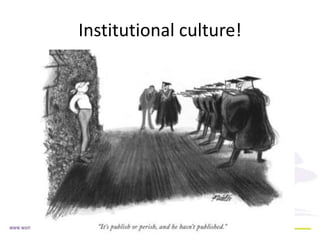
Institutional culture!
Research Quality 
When evaluating research a clear distinction should 
be made between research ‘quality’ (i.e. the 
relative excellence of academic outputs intended 
for academic consumption, e.g. journal papers and 
books) and research ‘impact’ (i.e. the benefits that 
research outcomes produce for wider society) 
Unfortunately this division is often confused, a 
prime example being when journal citation 
(‘quality’) metrics are incorrectly presented as 
measures of ‘impact’ (Donovan, 2011).
• Publications are seldom evaluated based on the 
technical rigor of the data collection procedures, the 
completeness of the data and its description, and 
alignment with existing community standards. 
• To translate conceptual frameworks into empirical 
sampling designs takes significant research experience. 
• Thus producing a high value data set that forms the 
basis of a high quality scientific publication requires a 
high level of scientific sophistication, 
• Writing the paper itself requires a good grasp of 
language, some understanding of the science you're 
writing about, and an ability to "translate" technical 
information into plain English and write about it 
compellingly (Costandi, 2013).
Data publishing! 
Quisumbing A, Baulch B (2010) Chronic Poverty and Long Term Impact Study 
in Bangladesh <http://hdl.handle.net/1902.1/17045 
UNF:5:8MUn92HhwQhRKF69wSTwaA== International Food Policy Research 
Institute [Distributor] V5 [Version]>
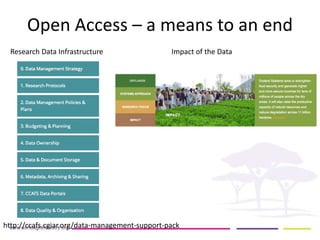
Open Access – a means to an end 
Research Data Infrastructure Impact of the Data 
http://ccafs.cgiar.org/data-management-support-pack
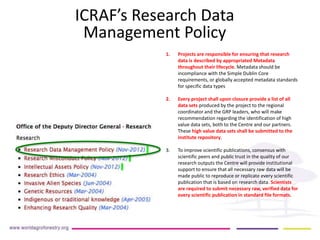
ICRAF’s Research Data 
Management Policy 
1. Projects are responsible for ensuring that research 
data is described by appropriated Metadata 
throughout their lifecycle. Metadata should be 
incompliance with the Simple Dublin Core 
requirements, or globally accepted metadata standards 
for specific data types 
2. Every project shall upon closure provide a list of all 
data sets produced by the project to the regional 
coordinator and the GRP leaders, who will make 
recommendation regarding the identification of high 
value data sets, both to the Centre and our partners. 
These high value data sets shall be submitted to the 
institute repository. 
3. To improve scientific publications, consensus with 
scientific peers and public trust in the quality of our 
research outputs the Centre will provide institutional 
support to ensure that all necessary raw data will be 
made public to reproduce or replicate every scientific 
publication that is based on research data. Scientists 
are required to submit necessary raw, verified data for 
every scientific publication in standard file formats.
Open Access? 
Open Access is a means to an end 
• Better quality data 
• Better quality publications 
• Higher usage of data (internal & external) 
• Higher Recognition for “Techis” 
• More transparency 
• Better Impact
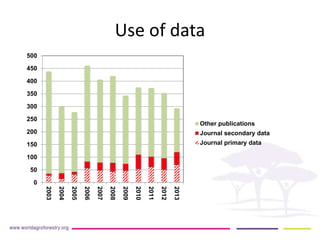
Use of data 
500 
450 
400 
350 
300 
250 
200 
150 
100 
50 
0 
2003 
2004 
2005 
2006 
2007 
2008 
2009 
2010 
2011 
2012 
2013 
Other publications 
Journal secondary data 
Journal primary data
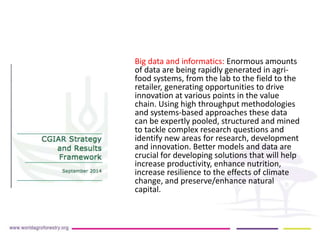
Big data and informatics: Enormous amounts 
of data are being rapidly generated in agri-food 
systems, from the lab to the field to the 
retailer, generating opportunities to drive 
innovation at various points in the value 
chain. Using high throughput methodologies 
and systems-based approaches these data 
can be expertly pooled, structured and mined 
to tackle complex research questions and 
identify new areas for research, development 
and innovation. Better models and data are 
crucial for developing solutions that will help 
increase productivity, enhance nutrition, 
increase resilience to the effects of climate 
change, and preserve/enhance natural 
capital.
Thanks

Open Access as a Means to Produce High Quality Data

  • 1.
    Open access asa means to produce high quality data Anja Gassner Head Research Method Group Sentinel Landscape Coordinator FTA World Agroforestry Centre (ICRAF)
  • 2.
    The policy isapplicable both to new data as well as retrospectively to legacy data: 1. Data shall be made open access as soon as possible and in any event within 12 month of completion of the data collection or appropriate project milestone 2. Existing and future databases shall be made Open access 3. Datasets shall be made open access after the publication the data replicates is published. The consortium policy provides two options that allow centers to decide when and what kind of research data should be made open access 1. data sets that are regarded as not of value to others (draft, poor quality or incomplete) are excepted from this policy (Section 4.1.1. Openness). This option is important if data collection is done by partners and is not in our full control. 2. Completion of data collection is a relative term and independent of funding (unless stated otherwise in the grant contract) and project closure. Thus it is up to the center to define this on a case by case basis and allows control over the actual release date.
  • 3.
    Common Misconceptions •Open Access means that I share all my data • Open Access means that I do not have time to use the data for publications • Open Access means that I will not be recognized for my work • Sharing data means I share all my data
  • 4.
    The “selfish” scientist? “Like too many publicly funded ARIs, some Centre and System-wide programs seem to treat data as proprietary” The CGIAR at 31: An Independent Meta-evaluation of the CGIAR (2004)
  • 5.
  • 7.
    Research Quality Whenevaluating research a clear distinction should be made between research ‘quality’ (i.e. the relative excellence of academic outputs intended for academic consumption, e.g. journal papers and books) and research ‘impact’ (i.e. the benefits that research outcomes produce for wider society) Unfortunately this division is often confused, a prime example being when journal citation (‘quality’) metrics are incorrectly presented as measures of ‘impact’ (Donovan, 2011).
  • 8.
    • Publications areseldom evaluated based on the technical rigor of the data collection procedures, the completeness of the data and its description, and alignment with existing community standards. • To translate conceptual frameworks into empirical sampling designs takes significant research experience. • Thus producing a high value data set that forms the basis of a high quality scientific publication requires a high level of scientific sophistication, • Writing the paper itself requires a good grasp of language, some understanding of the science you're writing about, and an ability to "translate" technical information into plain English and write about it compellingly (Costandi, 2013).
  • 10.
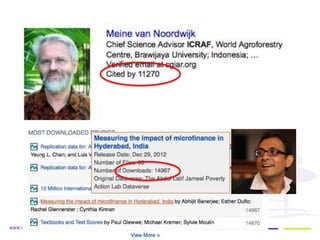
    Data publishing! QuisumbingA, Baulch B (2010) Chronic Poverty and Long Term Impact Study in Bangladesh <http://hdl.handle.net/1902.1/17045 UNF:5:8MUn92HhwQhRKF69wSTwaA== International Food Policy Research Institute [Distributor] V5 [Version]>
  • 12.
    Open Access –a means to an end Research Data Infrastructure Impact of the Data http://ccafs.cgiar.org/data-management-support-pack
  • 13.
    ICRAF’s Research Data Management Policy 1. Projects are responsible for ensuring that research data is described by appropriated Metadata throughout their lifecycle. Metadata should be incompliance with the Simple Dublin Core requirements, or globally accepted metadata standards for specific data types 2. Every project shall upon closure provide a list of all data sets produced by the project to the regional coordinator and the GRP leaders, who will make recommendation regarding the identification of high value data sets, both to the Centre and our partners. These high value data sets shall be submitted to the institute repository. 3. To improve scientific publications, consensus with scientific peers and public trust in the quality of our research outputs the Centre will provide institutional support to ensure that all necessary raw data will be made public to reproduce or replicate every scientific publication that is based on research data. Scientists are required to submit necessary raw, verified data for every scientific publication in standard file formats.
  • 14.
    Open Access? OpenAccess is a means to an end • Better quality data • Better quality publications • Higher usage of data (internal & external) • Higher Recognition for “Techis” • More transparency • Better Impact
  • 15.
    Use of data 500 450 400 350 300 250 200 150 100 50 0 2003 2004 2005 2006 2007 2008 2009 2010 2011 2012 2013 Other publications Journal secondary data Journal primary data
  • 16.
    Big data andinformatics: Enormous amounts of data are being rapidly generated in agri-food systems, from the lab to the field to the retailer, generating opportunities to drive innovation at various points in the value chain. Using high throughput methodologies and systems-based approaches these data can be expertly pooled, structured and mined to tackle complex research questions and identify new areas for research, development and innovation. Better models and data are crucial for developing solutions that will help increase productivity, enhance nutrition, increase resilience to the effects of climate change, and preserve/enhance natural capital.
  • 17.