Dementia Q&A
4
For language assistance
call 131 450
National Dementia Helpline 1800 100 500
Drugs used to relieve
behavioural and psychological
symptoms (changed or
responsive behaviours)
of dementia
People with dementia may at some point in their illness develop
behavioural or psychological symptoms. While it is important to
try to understand and address the underlying reasons for these
problems, it may be necessary at times to prescribe medication.
This sheet describes the different types of drugs that may
be prescribed.
Can drugs help to relieve the behavioural and
psychological symptoms of dementia?
People with dementia may at some point in their illness develop
symptoms such as depression, anxiety, restlessness, sleep disturbance,
aggressive behaviour, delusions or hallucinations. For behavioural
symptoms such as restlessness or aggression, it is important to
understand and address the underlying reasons for these problems. It
may be necessary at times to prescribe medication if the symptoms
are distressing, persistent and have not responded to psychosocial
treatments. Other problems such as severe and long lasting depression
should be treated with medication.
When should drugs be used?
Drugs should be avoided unless they are really necessary. Before any
of the drugs mentioned in this Update Sheet are prescribed it is
essential to ensure that the person with dementia is physically healthy,
well cared for and comfortable. Whenever possible, the person should
be helped to lead an active life, with interesting and stimulating
daily activities.
Dementia Q&A
4
Page 2 of 12
Drugs used to relieve behavioural and psychological symptoms (changed or responsive behaviours) of dementia
Behavioural and psychological symptoms of dementia can result from
unrelieved pain, other illnesses or infections, problems with eyesight or
hearing, drug side-effects and environmental factors such as changes
to routine. It is important to address these factors in the first instance
before resorting to medication. By minimising distress and agitation it
is often possible to avoid the use of drugs altogether.
The treatment of depression is slightly different. Depression can
have a major impact on the person’s functioning and quality of life.
Mild depression can respond to psychological treatments, but
more severe depression should usually also be treated with
antidepressant medication.
Taking drugs
If, after trying non-drug treatments, drugs are considered to be
necessary remember:
• Drugs used for behavioural or psychological symptoms of dementia
should complement not replace non-drug approaches.
• All drugs have potential side-effects, some of which may worsen
dementia symptoms. It is important to weigh the potential benefits
against the likelihood of side-effects when considering the use
of medications.
• 
Always ask the prescribing doctor why the drug is being prescribed,
what the side-effects might be and what you should do if they occur.
Ask your pharmacist to provide consumer medication information
whenever new medications are dispensed.
• 
Consent to prescribe regular psychotics must be obtained. In some
jurisdictions, if the person cannot provide informed consent, this
needs to be in writing from the proxy or ‘person responsible’.
• Don’t assume that a drug that has proved to be useful at one time
will continue to be effective. Dementia is a degenerative condition.
The chemistry and structure of the brain will change during the
course of the illness.
• Many people with dementia take a number of different medications.
Certain combinations of drugs may counteract each other or act to
make memory and thinking worse. Remind the doctor what other
medications are being taken.
Dementia QA
4
Page 3 of 12
Drugs used to relieve behavioural and psychological symptoms (changed or responsive behaviours) of dementia
• Check with the prescribing doctor that there is a clear plan to review
the effectiveness of the medication. There should be defined
treatment goals and careful monitoring, and in some cases a clear
timeline for stopping the drug.
Drugs will be more effective if they are taken exactly as prescribed by
the doctor, in the correct dose, and monitored regularly for
effectiveness and side-effects.
• If symptoms are difficult to control, the GP may refer to a specialist
for further advice.
• Some drugs need to be taken regularly to have an effect – for
example, antidepressants and antipsychotics are not helpful when
given on an ‘as needed’ basis. Other drugs, such as hypnotics or
anxiety-relieving drugs, may be more effective when taken as
needed intermittently. Take drugs only as prescribed by the doctor.
• Do not expect immediate results. Benefits may take several weeks to
appear, particularly with antidepressants and antipsychotics.
• Side-effects may occur early or late in the course of treatment – it is
important that you ask the doctor what to expect or check with your
pharmacist if you suspect any potential side effects.
• Side-effects are often related to the dose given (higher doses are
usually associated with a greater chance of side-effects). The doctor
will usually start with a low dose and gradually increase the dose
until the desired effects are achieved.
• Once treatment has been established it is important that
it is reviewed regularly. Take all medications to clinic and
hospital appointments.
Names of drugs
All drugs have at least two names – a generic name, which identifies
the active ingredient, and a brand name, which depends on the
company that manufactured it. Generic names are used in this sheet.
At the end of this help sheet you will find a list of drugs in common use,
giving both the generic and some common brand names.
Dementia QA
4
Page 4 of 12
Drugs used to relieve behavioural and psychological symptoms (changed or responsive behaviours) of dementia
Treating restlessness, aggression and psychotic symptoms
Clinical guidelines for the treatment of behavioural problems in
dementia state clearly that non-drug treatments should be tried
before drugs, unless there is a severe and persistent risk of harm to the
person with dementia or to others. Psychosocial interventions can be
very beneficial and often prevent the need for drugs. There should be
a detailed assessment of the problem and potential underlying
causes. Therapies might include music, massage or aromatherapy to
calm the person, removing the triggers of changed behaviours, or
psychological approaches such as reminiscence therapy.
Antipsychotic drugs
Antipsychotics are the most commonly used drugs for treating
restlessness, aggression and psychotic symptoms (delusions,
hallucinations or thought disorder) in people with dementia.
Clinical trials suggest that antipsychotics can reduce aggression and
psychotic symptoms over a period of three months in some people
with dementia. However, there is no evidence that they improve
restlessness or other non-aggressive behaviour problems. Longer-term
clinical trials show limited benefits over longer periods. Antipsychotic
drugs can be safely reduced and then stopped after three months,
with no worsening of behavioural symptoms in most people.
There are two types of antipsychotics – typical and atypical. The newer
atypical antipsychotics are usually preferred as they are less likely to
have significant movement-related side-effects, including tremor,
muscle stiffness or uncontrolled mouth and tongue movements. Drugs
with the best evidence of effectiveness in dementia include risperidone
and aripiprazole, although the latter is rarely used. Risperidone is the
only drug licensed in Australia for the treatment of severe and
persistent aggression or psychotic symptoms in people with
Alzheimer’s disease. For further information, see Dementia QA sheet
5 Risperidone for treatment of behavioural symptoms in dementia.
Dementia QA
4
Page 5 of 12
Drugs used to relieve behavioural and psychological symptoms (changed or responsive behaviours) of dementia
Side-effects
The side-effects of antipsychotics can include excessive sedation,
dizziness, pneumonia, unsteadiness, ankle swelling and symptoms
that resemble those of Parkinson’s disease (shakiness, slowness and
stiffness of the limbs). If taken for long periods, these drugs can
produce tardive dyskinesia, which is recognised by persistent
involuntary chewing movements and facial grimacing. More recently,
there have been increasing concerns about the risk of serious
side-effects for people with dementia including stroke and premature
death. The risk of stroke or death is quite low over short periods of
treatment (up to three months).
Antipsychotics for people with Alzheimer’s disease, vascular dementia
or mixed dementia who have mild to moderate behavioural or
psychological symptoms are not recommended. People with dementia
with Lewy bodies should also avoid antipsychotics due to the risk of
increased problems with movement. Quetiapine, an atypical
antipsychotic, may be better tolerated than risperidone in those with
Lewy body disorders.
Treatment with antipsychotics should be regularly reviewed and the
dose reduced or the drug withdrawn if side-effects become
unacceptable. Excessive sedation with antipsychotics may reduce
symptoms such as aggression at the expense of reducing mobility and
worsening confusion.
Antipsychotics may be associated with faster decline in people with
dementia,raisingfurtherconcernsaboutthelong-termuseofthesedrugs.
Anticonvulsant and antidepressant drugs
Anticonvulsants, such as sodium valproate and carbamazepine, and
antidepressants, such as citalopram, are sometimes prescribed to
reduce aggression, agitation and restlessness in dementia. These
medications should usually only be prescribed by specialists, such as
psychiatrists or geriatricians. These drugs should not usually be
combined with each other or with antipsychotics. Evidence for the
benefit of anticonvulsants is limited.
Dementia QA
4
Page 6 of 12
Drugs used to relieve behavioural and psychological symptoms (changed or responsive behaviours) of dementia
Alzheimer’s disease drugs
Some clinical trial evidence suggests that the drug memantine, used
to improve memory and functioning in people with moderate to
severe Alzheimer’s disease, may also be effective in reducing
aggression, agitation and delusions. Memantine has the advantage of
being a treatment with a low risk of serious side effects. For further
information, see Dementia QA sheet 3 Drug treatments for
alzheimer’s disease: Memantine.
Cholinesterase inhibitors, used to treat mild to moderately severe
Alzheimer’s disease, may be an effective treatment for psychotic
symptoms and apathy in people with dementia with Lewy bodies,
Parkinson’s disease dementia or mixed dementia. In people with
Alzheimer’s disease, cholinesterase inhibitors may delay the onset of
behavioural and psychiatric symptoms, but it is unclear whether they
are a useful treatment once these symptoms, apart from apathy,
occur. For further information about these drugs, see Dementia QA
sheet 1 Drug treatments for alzheimer’s disease: Cholinesterase
inhibitors.
Treating depression
Symptoms of depression are very common in dementia. In the early
stages they can be a reaction to the person’s awareness of their
diagnosis. Depression may also be the result of reduced chemical
transmitter function in the brain. Non-drug interventions, such as an
activity or exercise program or psychological treatments, can be very
helpful, especially for mild depression. More severe depression should
be treated with antidepressants, but care must be taken to ensure
that this is done with the minimum risk of side-effects.
The role of antidepressants in the treatment of depression in people
with dementia is still uncertain but may be useful for people with a
history of depression. However, some clinical trial evidence suggests
that the newer antidepressants known as selective serotonin
re-uptake inhibitors (SSRIs) and serotonin noradrenaline re-uptake
inhibitors (SNRIs) may not be effective treatments for people with
dementia and depression.
Dementia QA
4
Page 7 of 12
Drugs used to relieve behavioural and psychological symptoms (changed or responsive behaviours) of dementia
Clinical trial evidence suggests that the newer antidepressants known
as selective serotonin re-uptake inhibitors (SSRIs) and serotonin
noradrenaline re-uptake inhibitors (SNRIs) can be effective treatments
for people with dementia and depression, with a low risk of serious
side-effects. The best evidence is for the SSRI drug citalopram.
Antidepressants may be helpful not only in improving persistently low
mood but also in controlling the irritability and rapid mood swings that
often occur in dementia or following a stroke. Once started, the doctor
will usually recommend taking antidepressant drugs for a period of at
least six months. In order for them to be effective, it is important that
they are taken regularly without missing any doses.
Improvement in mood typically takes at least two to three weeks or
more to occur. Side-effects such as gastric upset may appear within a
few days of starting treatment. These effects usually decrease over time.
Side-effects
Tricyclic antidepressants, an older type of drug for treating depression,
are likely to increase confusion in someone with dementia. They might
also cause a dry mouth, blurred vision, constipation, difficulty in
urination (especially in men) and dizziness on standing, which may
lead to falls and injuries. Newer antidepressants are therefore
preferable for treating depression in dementia.
SSRIs such as fluoxetine, sertraline and citalopram, escitalopram and
the SNRIs venlafaxine and desvenlafaxine do not have the side-effects
of tricyclics and are well tolerated by older people. SSRIs can produce
headaches and nausea, especially in the first week or two of
treatment. They can also lead to low sodium which can increase
confusion, and to gastrointestinal bleeding. Mirtazapine, duloxetine,
agomelatine and vortioxetine are newer antidepressants in different
classes that appear to be better tolerated than older ones, but
there is only limited evidence of their effectiveness in those with
dementia and depression.
Dementia QA
4
Page 8 of 12
Drugs used to relieve behavioural and psychological symptoms (changed or responsive behaviours) of dementia
Treating anxiety
Anxiety states, accompanied by panic attacks and fearfulness, may
lead to demands including having constant company. Mild symptoms
are often helped by reassurance, adjustments to the environment or
an improved daily routine. For more persistent mild anxiety,
psychological treatments can be helpful. More severe and persistent
anxiety is often related to underlying depression and will usually
improve with antidepressant treatments.
Antipsychotic drugs and another group of drugs called
benzodiazepines are sometimes used to treat anxiety, but both should
usually be avoided as a treatment for anxiety in people with
dementia. The long-term use of benzodiazepines is not recommended,
but they may have a limited role in the short-term (less than 2 weeks)
treatment of restlessness in people with dementia.
Side-effects
There are many different benzodiazepines, some with a short duration
of action, such as lorazepam and oxazepam, and some with longer
action, such as diazepam which it is recommended to avoid in older
people. All of these drugs may cause excessive sedation, unsteadiness
and a tendency to fall. They may also accentuate any confusion and
memory deficits that are already present. They can also cause
dependency and withdrawal symptoms when stopped.
Antipsychotics (see above) are sometimes used for severe or persistent
anxiety, but should be avoided for this purpose in people with dementia.
Treating sleep disturbance
Sleep disturbance, in particular persistent wakefulness and night-time
restlessness, can be distressing for the person with dementia and for
carers. Some of the drugs commonly prescribed for people with dementia
can cause excessive sedation during the day, leading to an inability to
sleep at night. Increased stimulation and activity during the day and
avoiding caffeine late at night will help reduce sleep problems.
Dementia QA
4
Page 9 of 12
Drugs used to relieve behavioural and psychological symptoms (changed or responsive behaviours) of dementia
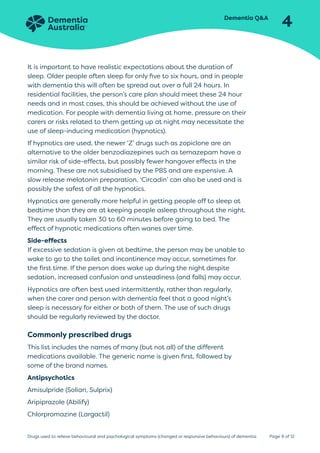
It is important to have realistic expectations about the duration of
sleep. Older people often sleep for only five to six hours, and in people
with dementia this will often be spread out over a full 24 hours. In
residential facilities, the person’s care plan should meet these 24 hour
needs and in most cases, this should be achieved without the use of
medication. For people with dementia living at home, pressure on their
carers or risks related to them getting up at night may necessitate the
use of sleep-inducing medication (hypnotics).
If hypnotics are used, the newer ‘Z’ drugs such as zopiclone are an
alternative to the older benzodiazepines such as temazepam have a
similar risk of side-effects, but possibly fewer hangover effects in the
morning. These are not subsidised by the PBS and are expensive. A
slow release melatonin preparation, ‘Circadin’ can also be used and is
possibly the safest of all the hypnotics.
Hypnotics are generally more helpful in getting people off to sleep at
bedtime than they are at keeping people asleep throughout the night.
They are usually taken 30 to 60 minutes before going to bed. The
effect of hypnotic medications often wanes over time.
Side-effects
If excessive sedation is given at bedtime, the person may be unable to
wake to go to the toilet and incontinence may occur, sometimes for
the first time. If the person does wake up during the night despite
sedation, increased confusion and unsteadiness (and falls) may occur.
Hypnotics are often best used intermittently, rather than regularly,
when the carer and person with dementia feel that a good night’s
sleep is necessary for either or both of them. The use of such drugs
should be regularly reviewed by the doctor.
Commonly prescribed drugs
This list includes the names of many (but not all) of the different
medications available. The generic name is given first, followed by
some of the brand names.
Antipsychotics
Amisulpride (Solian, Sulprix)
Aripiprazole (Abilify)
Chlorpromazine (Largactil)
Dementia QA
4
Page 10 of 12
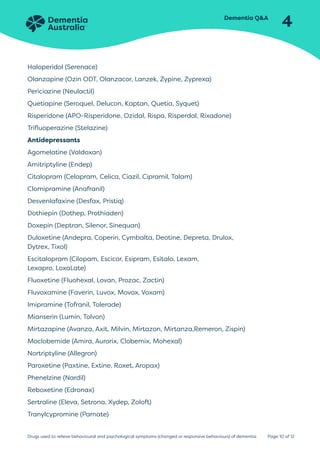
Drugs used to relieve behavioural and psychological symptoms (changed or responsive behaviours) of dementia
Haloperidol (Serenace)
Olanzapine (Ozin ODT, Olanzacor, Lanzek, Zypine, Zyprexa)
Periciazine (Neulactil)
Quetiapine (Seroquel, Delucon, Kaptan, Quetia, Syquet)
Risperidone (APO-Risperidone, Ozidal, Rispa, Risperdal, Rixadone)
Trifluoperazine (Stelazine)
Antidepressants
Agomelatine (Valdoxan)
Amitriptyline (Endep)
Citalopram (Celapram, Celica, Ciazil, Cipramil, Talam)
Clomipramine (Anafranil)
Desvenlafaxine (Desfax, Pristiq)
Dothiepin (Dothep, Prothiaden)
Doxepin (Deptran, Silenor, Sinequan)
Duloxetine (Andepra, Coperin, Cymbalta, Deotine, Depreta, Drulox,
Dytrex, Tixol)
Escitalopram (Cilopam, Escicor, Esipram, Esitalo, Lexam,
Lexapro, LoxaLate)
Fluoxetine (Fluohexal, Lovan, Prozac, Zactin)
Fluvoxamine (Faverin, Luvox, Movox, Voxam)
Imipramine (Tofranil, Tolerade)
Mianserin (Lumin, Tolvon)
Mirtazapine (Avanza, Axit, Milvin, Mirtazon, Mirtanza,Remeron, Zispin)
Moclobemide (Amira, Aurorix, Clobemix, Mohexal)
Nortriptyline (Allegron)
Paroxetine (Paxtine, Extine, Roxet, Aropax)
Phenelzine (Nardil)
Reboxetine (Edronax)
Sertraline (Eleva, Setrona, Xydep, Zoloft)
Tranylcypromine (Parnate)
Dementia QA
4
Page 11 of 12
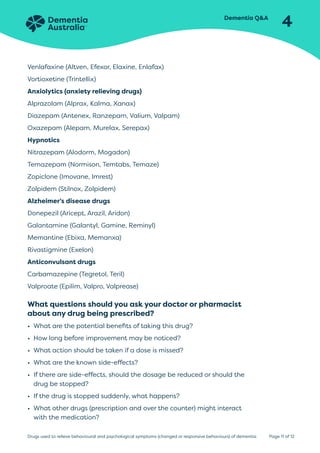
Drugs used to relieve behavioural and psychological symptoms (changed or responsive behaviours) of dementia
Venlafaxine (Altven, Efexor, Elaxine, Enlafax)
Vortioxetine (Trintellix)
Anxiolytics (anxiety relieving drugs)
Alprazolam (Alprax, Kalma, Xanax)
Diazepam (Antenex, Ranzepam, Valium, Valpam)
Oxazepam (Alepam, Murelax, Serepax)
Hypnotics
Nitrazepam (Alodorm, Mogadon)
Temazepam (Normison, Temtabs, Temaze)
Zopiclone (Imovane, Imrest)
Zolpidem (Stilnox, Zolpidem)
Alzheimer’s disease drugs
Donepezil (Aricept, Arazil, Aridon)
Galantamine (Galantyl, Gamine, Reminyl)
Memantine (Ebixa, Memanxa)
Rivastigmine (Exelon)
Anticonvulsant drugs
Carbamazepine (Tegretol, Teril)
Valproate (Epilim, Valpro, Valprease)
What questions should you ask your doctor or pharmacist
about any drug being prescribed?
• What are the potential benefits of taking this drug?
• How long before improvement may be noticed?
• What action should be taken if a dose is missed?
• What are the known side-effects?
• If there are side-effects, should the dosage be reduced or should the
drug be stopped?
• If the drug is stopped suddenly, what happens?
• What other drugs (prescription and over the counter) might interact
with the medication?
Dementia QA
4
Page 12 of 12
© Dementia Australia 2020. Reviewed 2020
This publication provides a general summary only of the subject matter covered. People should seek professional
advice about their specific case. Dementia Australia is not liable for any error or omission in this publication.
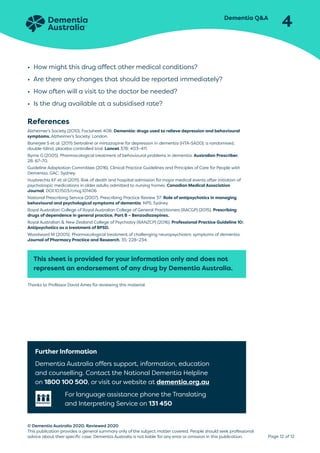
• How might this drug affect other medical conditions?
• Are there any changes that should be reported immediately?
• How often will a visit to the doctor be needed?
• Is the drug available at a subsidised rate?
References
Alzheimer’s Society (2010). Factsheet 408: Dementia: drugs used to relieve depression and behavioural
symptoms. Alzheimer’s Society: London.
Banerjee S et al. (2011) Sertraline or mirtazapine for depression in dementia (HTA-SADD): a randomised,
double-blind, placebo controlled trial. Lancet 378: 403–411.
Byrne G (2005). Pharmacological treatment of behavioural problems in dementia. Australian Prescriber,
28: 67–70.
Guideline Adaptation Committee (2016). Clinical Practice Guidelines and Principles of Care for People with
Dementia. GAC: Sydney.
Huybrechts KF et al (2011). Risk of death and hospital admission for major medical events after initiation of
psychotropic medications in older adults admitted to nursing homes. Canadian Medical Association
Journal, DOI:10.1503/cmaj.101406
National Prescribing Service (2007). Prescribing Practice Review 37: Role of antipsychotics in managing
behavioural and psychological symptoms of dementia. NPS: Sydney.
Royal Australian College of Royal Australian College of General Practitioners (RACGP) (2015). Prescribing
drugs of dependence in general practice, Part B – Benzodiazepines.
Royal Australian  New Zealand College of Psychiatry (RANZCP) (2016). Professional Practice Guideline 10:
Antipsychotics as a treatment of BPSD.
Woodward M (2005). Pharmacological treatment of challenging neuropsychiatric symptoms of dementia.
Journal of Pharmacy Practice and Research, 35: 228–234.
This sheet is provided for your information only and does not
represent an endorsement of any drug by Dementia Australia.
Thanks to Professor David Ames for reviewing this material.
Further Information
Dementia Australia offers support, information, education
and counselling. Contact the National Dementia Helpline
on 1800 100 500, or visit our website at dementia.org.au
For language assistance phone the Translating
and Interpreting Service on 131 450

Drugs in Dementia.pdf

  • 1.
    Dementia Q&A 4 For languageassistance call 131 450 National Dementia Helpline 1800 100 500 Drugs used to relieve behavioural and psychological symptoms (changed or responsive behaviours) of dementia People with dementia may at some point in their illness develop behavioural or psychological symptoms. While it is important to try to understand and address the underlying reasons for these problems, it may be necessary at times to prescribe medication. This sheet describes the different types of drugs that may be prescribed. Can drugs help to relieve the behavioural and psychological symptoms of dementia? People with dementia may at some point in their illness develop symptoms such as depression, anxiety, restlessness, sleep disturbance, aggressive behaviour, delusions or hallucinations. For behavioural symptoms such as restlessness or aggression, it is important to understand and address the underlying reasons for these problems. It may be necessary at times to prescribe medication if the symptoms are distressing, persistent and have not responded to psychosocial treatments. Other problems such as severe and long lasting depression should be treated with medication. When should drugs be used? Drugs should be avoided unless they are really necessary. Before any of the drugs mentioned in this Update Sheet are prescribed it is essential to ensure that the person with dementia is physically healthy, well cared for and comfortable. Whenever possible, the person should be helped to lead an active life, with interesting and stimulating daily activities.
  • 2.
    Dementia Q&A 4 Page 2of 12 Drugs used to relieve behavioural and psychological symptoms (changed or responsive behaviours) of dementia Behavioural and psychological symptoms of dementia can result from unrelieved pain, other illnesses or infections, problems with eyesight or hearing, drug side-effects and environmental factors such as changes to routine. It is important to address these factors in the first instance before resorting to medication. By minimising distress and agitation it is often possible to avoid the use of drugs altogether. The treatment of depression is slightly different. Depression can have a major impact on the person’s functioning and quality of life. Mild depression can respond to psychological treatments, but more severe depression should usually also be treated with antidepressant medication. Taking drugs If, after trying non-drug treatments, drugs are considered to be necessary remember: • Drugs used for behavioural or psychological symptoms of dementia should complement not replace non-drug approaches. • All drugs have potential side-effects, some of which may worsen dementia symptoms. It is important to weigh the potential benefits against the likelihood of side-effects when considering the use of medications. • Always ask the prescribing doctor why the drug is being prescribed, what the side-effects might be and what you should do if they occur. Ask your pharmacist to provide consumer medication information whenever new medications are dispensed. • Consent to prescribe regular psychotics must be obtained. In some jurisdictions, if the person cannot provide informed consent, this needs to be in writing from the proxy or ‘person responsible’. • Don’t assume that a drug that has proved to be useful at one time will continue to be effective. Dementia is a degenerative condition. The chemistry and structure of the brain will change during the course of the illness. • Many people with dementia take a number of different medications. Certain combinations of drugs may counteract each other or act to make memory and thinking worse. Remind the doctor what other medications are being taken.
  • 3.
    Dementia QA 4 Page 3of 12 Drugs used to relieve behavioural and psychological symptoms (changed or responsive behaviours) of dementia • Check with the prescribing doctor that there is a clear plan to review the effectiveness of the medication. There should be defined treatment goals and careful monitoring, and in some cases a clear timeline for stopping the drug. Drugs will be more effective if they are taken exactly as prescribed by the doctor, in the correct dose, and monitored regularly for effectiveness and side-effects. • If symptoms are difficult to control, the GP may refer to a specialist for further advice. • Some drugs need to be taken regularly to have an effect – for example, antidepressants and antipsychotics are not helpful when given on an ‘as needed’ basis. Other drugs, such as hypnotics or anxiety-relieving drugs, may be more effective when taken as needed intermittently. Take drugs only as prescribed by the doctor. • Do not expect immediate results. Benefits may take several weeks to appear, particularly with antidepressants and antipsychotics. • Side-effects may occur early or late in the course of treatment – it is important that you ask the doctor what to expect or check with your pharmacist if you suspect any potential side effects. • Side-effects are often related to the dose given (higher doses are usually associated with a greater chance of side-effects). The doctor will usually start with a low dose and gradually increase the dose until the desired effects are achieved. • Once treatment has been established it is important that it is reviewed regularly. Take all medications to clinic and hospital appointments. Names of drugs All drugs have at least two names – a generic name, which identifies the active ingredient, and a brand name, which depends on the company that manufactured it. Generic names are used in this sheet. At the end of this help sheet you will find a list of drugs in common use, giving both the generic and some common brand names.
  • 4.
    Dementia QA 4 Page 4of 12 Drugs used to relieve behavioural and psychological symptoms (changed or responsive behaviours) of dementia Treating restlessness, aggression and psychotic symptoms Clinical guidelines for the treatment of behavioural problems in dementia state clearly that non-drug treatments should be tried before drugs, unless there is a severe and persistent risk of harm to the person with dementia or to others. Psychosocial interventions can be very beneficial and often prevent the need for drugs. There should be a detailed assessment of the problem and potential underlying causes. Therapies might include music, massage or aromatherapy to calm the person, removing the triggers of changed behaviours, or psychological approaches such as reminiscence therapy. Antipsychotic drugs Antipsychotics are the most commonly used drugs for treating restlessness, aggression and psychotic symptoms (delusions, hallucinations or thought disorder) in people with dementia. Clinical trials suggest that antipsychotics can reduce aggression and psychotic symptoms over a period of three months in some people with dementia. However, there is no evidence that they improve restlessness or other non-aggressive behaviour problems. Longer-term clinical trials show limited benefits over longer periods. Antipsychotic drugs can be safely reduced and then stopped after three months, with no worsening of behavioural symptoms in most people. There are two types of antipsychotics – typical and atypical. The newer atypical antipsychotics are usually preferred as they are less likely to have significant movement-related side-effects, including tremor, muscle stiffness or uncontrolled mouth and tongue movements. Drugs with the best evidence of effectiveness in dementia include risperidone and aripiprazole, although the latter is rarely used. Risperidone is the only drug licensed in Australia for the treatment of severe and persistent aggression or psychotic symptoms in people with Alzheimer’s disease. For further information, see Dementia QA sheet 5 Risperidone for treatment of behavioural symptoms in dementia.
  • 5.
    Dementia QA 4 Page 5of 12 Drugs used to relieve behavioural and psychological symptoms (changed or responsive behaviours) of dementia Side-effects The side-effects of antipsychotics can include excessive sedation, dizziness, pneumonia, unsteadiness, ankle swelling and symptoms that resemble those of Parkinson’s disease (shakiness, slowness and stiffness of the limbs). If taken for long periods, these drugs can produce tardive dyskinesia, which is recognised by persistent involuntary chewing movements and facial grimacing. More recently, there have been increasing concerns about the risk of serious side-effects for people with dementia including stroke and premature death. The risk of stroke or death is quite low over short periods of treatment (up to three months). Antipsychotics for people with Alzheimer’s disease, vascular dementia or mixed dementia who have mild to moderate behavioural or psychological symptoms are not recommended. People with dementia with Lewy bodies should also avoid antipsychotics due to the risk of increased problems with movement. Quetiapine, an atypical antipsychotic, may be better tolerated than risperidone in those with Lewy body disorders. Treatment with antipsychotics should be regularly reviewed and the dose reduced or the drug withdrawn if side-effects become unacceptable. Excessive sedation with antipsychotics may reduce symptoms such as aggression at the expense of reducing mobility and worsening confusion. Antipsychotics may be associated with faster decline in people with dementia,raisingfurtherconcernsaboutthelong-termuseofthesedrugs. Anticonvulsant and antidepressant drugs Anticonvulsants, such as sodium valproate and carbamazepine, and antidepressants, such as citalopram, are sometimes prescribed to reduce aggression, agitation and restlessness in dementia. These medications should usually only be prescribed by specialists, such as psychiatrists or geriatricians. These drugs should not usually be combined with each other or with antipsychotics. Evidence for the benefit of anticonvulsants is limited.
  • 6.
    Dementia QA 4 Page 6of 12 Drugs used to relieve behavioural and psychological symptoms (changed or responsive behaviours) of dementia Alzheimer’s disease drugs Some clinical trial evidence suggests that the drug memantine, used to improve memory and functioning in people with moderate to severe Alzheimer’s disease, may also be effective in reducing aggression, agitation and delusions. Memantine has the advantage of being a treatment with a low risk of serious side effects. For further information, see Dementia QA sheet 3 Drug treatments for alzheimer’s disease: Memantine. Cholinesterase inhibitors, used to treat mild to moderately severe Alzheimer’s disease, may be an effective treatment for psychotic symptoms and apathy in people with dementia with Lewy bodies, Parkinson’s disease dementia or mixed dementia. In people with Alzheimer’s disease, cholinesterase inhibitors may delay the onset of behavioural and psychiatric symptoms, but it is unclear whether they are a useful treatment once these symptoms, apart from apathy, occur. For further information about these drugs, see Dementia QA sheet 1 Drug treatments for alzheimer’s disease: Cholinesterase inhibitors. Treating depression Symptoms of depression are very common in dementia. In the early stages they can be a reaction to the person’s awareness of their diagnosis. Depression may also be the result of reduced chemical transmitter function in the brain. Non-drug interventions, such as an activity or exercise program or psychological treatments, can be very helpful, especially for mild depression. More severe depression should be treated with antidepressants, but care must be taken to ensure that this is done with the minimum risk of side-effects. The role of antidepressants in the treatment of depression in people with dementia is still uncertain but may be useful for people with a history of depression. However, some clinical trial evidence suggests that the newer antidepressants known as selective serotonin re-uptake inhibitors (SSRIs) and serotonin noradrenaline re-uptake inhibitors (SNRIs) may not be effective treatments for people with dementia and depression.
  • 7.
    Dementia QA 4 Page 7of 12 Drugs used to relieve behavioural and psychological symptoms (changed or responsive behaviours) of dementia Clinical trial evidence suggests that the newer antidepressants known as selective serotonin re-uptake inhibitors (SSRIs) and serotonin noradrenaline re-uptake inhibitors (SNRIs) can be effective treatments for people with dementia and depression, with a low risk of serious side-effects. The best evidence is for the SSRI drug citalopram. Antidepressants may be helpful not only in improving persistently low mood but also in controlling the irritability and rapid mood swings that often occur in dementia or following a stroke. Once started, the doctor will usually recommend taking antidepressant drugs for a period of at least six months. In order for them to be effective, it is important that they are taken regularly without missing any doses. Improvement in mood typically takes at least two to three weeks or more to occur. Side-effects such as gastric upset may appear within a few days of starting treatment. These effects usually decrease over time. Side-effects Tricyclic antidepressants, an older type of drug for treating depression, are likely to increase confusion in someone with dementia. They might also cause a dry mouth, blurred vision, constipation, difficulty in urination (especially in men) and dizziness on standing, which may lead to falls and injuries. Newer antidepressants are therefore preferable for treating depression in dementia. SSRIs such as fluoxetine, sertraline and citalopram, escitalopram and the SNRIs venlafaxine and desvenlafaxine do not have the side-effects of tricyclics and are well tolerated by older people. SSRIs can produce headaches and nausea, especially in the first week or two of treatment. They can also lead to low sodium which can increase confusion, and to gastrointestinal bleeding. Mirtazapine, duloxetine, agomelatine and vortioxetine are newer antidepressants in different classes that appear to be better tolerated than older ones, but there is only limited evidence of their effectiveness in those with dementia and depression.
  • 8.
    Dementia QA 4 Page 8of 12 Drugs used to relieve behavioural and psychological symptoms (changed or responsive behaviours) of dementia Treating anxiety Anxiety states, accompanied by panic attacks and fearfulness, may lead to demands including having constant company. Mild symptoms are often helped by reassurance, adjustments to the environment or an improved daily routine. For more persistent mild anxiety, psychological treatments can be helpful. More severe and persistent anxiety is often related to underlying depression and will usually improve with antidepressant treatments. Antipsychotic drugs and another group of drugs called benzodiazepines are sometimes used to treat anxiety, but both should usually be avoided as a treatment for anxiety in people with dementia. The long-term use of benzodiazepines is not recommended, but they may have a limited role in the short-term (less than 2 weeks) treatment of restlessness in people with dementia. Side-effects There are many different benzodiazepines, some with a short duration of action, such as lorazepam and oxazepam, and some with longer action, such as diazepam which it is recommended to avoid in older people. All of these drugs may cause excessive sedation, unsteadiness and a tendency to fall. They may also accentuate any confusion and memory deficits that are already present. They can also cause dependency and withdrawal symptoms when stopped. Antipsychotics (see above) are sometimes used for severe or persistent anxiety, but should be avoided for this purpose in people with dementia. Treating sleep disturbance Sleep disturbance, in particular persistent wakefulness and night-time restlessness, can be distressing for the person with dementia and for carers. Some of the drugs commonly prescribed for people with dementia can cause excessive sedation during the day, leading to an inability to sleep at night. Increased stimulation and activity during the day and avoiding caffeine late at night will help reduce sleep problems.
  • 9.
    Dementia QA 4 Page 9of 12 Drugs used to relieve behavioural and psychological symptoms (changed or responsive behaviours) of dementia It is important to have realistic expectations about the duration of sleep. Older people often sleep for only five to six hours, and in people with dementia this will often be spread out over a full 24 hours. In residential facilities, the person’s care plan should meet these 24 hour needs and in most cases, this should be achieved without the use of medication. For people with dementia living at home, pressure on their carers or risks related to them getting up at night may necessitate the use of sleep-inducing medication (hypnotics). If hypnotics are used, the newer ‘Z’ drugs such as zopiclone are an alternative to the older benzodiazepines such as temazepam have a similar risk of side-effects, but possibly fewer hangover effects in the morning. These are not subsidised by the PBS and are expensive. A slow release melatonin preparation, ‘Circadin’ can also be used and is possibly the safest of all the hypnotics. Hypnotics are generally more helpful in getting people off to sleep at bedtime than they are at keeping people asleep throughout the night. They are usually taken 30 to 60 minutes before going to bed. The effect of hypnotic medications often wanes over time. Side-effects If excessive sedation is given at bedtime, the person may be unable to wake to go to the toilet and incontinence may occur, sometimes for the first time. If the person does wake up during the night despite sedation, increased confusion and unsteadiness (and falls) may occur. Hypnotics are often best used intermittently, rather than regularly, when the carer and person with dementia feel that a good night’s sleep is necessary for either or both of them. The use of such drugs should be regularly reviewed by the doctor. Commonly prescribed drugs This list includes the names of many (but not all) of the different medications available. The generic name is given first, followed by some of the brand names. Antipsychotics Amisulpride (Solian, Sulprix) Aripiprazole (Abilify) Chlorpromazine (Largactil)
  • 10.
    Dementia QA 4 Page 10of 12 Drugs used to relieve behavioural and psychological symptoms (changed or responsive behaviours) of dementia Haloperidol (Serenace) Olanzapine (Ozin ODT, Olanzacor, Lanzek, Zypine, Zyprexa) Periciazine (Neulactil) Quetiapine (Seroquel, Delucon, Kaptan, Quetia, Syquet) Risperidone (APO-Risperidone, Ozidal, Rispa, Risperdal, Rixadone) Trifluoperazine (Stelazine) Antidepressants Agomelatine (Valdoxan) Amitriptyline (Endep) Citalopram (Celapram, Celica, Ciazil, Cipramil, Talam) Clomipramine (Anafranil) Desvenlafaxine (Desfax, Pristiq) Dothiepin (Dothep, Prothiaden) Doxepin (Deptran, Silenor, Sinequan) Duloxetine (Andepra, Coperin, Cymbalta, Deotine, Depreta, Drulox, Dytrex, Tixol) Escitalopram (Cilopam, Escicor, Esipram, Esitalo, Lexam, Lexapro, LoxaLate) Fluoxetine (Fluohexal, Lovan, Prozac, Zactin) Fluvoxamine (Faverin, Luvox, Movox, Voxam) Imipramine (Tofranil, Tolerade) Mianserin (Lumin, Tolvon) Mirtazapine (Avanza, Axit, Milvin, Mirtazon, Mirtanza,Remeron, Zispin) Moclobemide (Amira, Aurorix, Clobemix, Mohexal) Nortriptyline (Allegron) Paroxetine (Paxtine, Extine, Roxet, Aropax) Phenelzine (Nardil) Reboxetine (Edronax) Sertraline (Eleva, Setrona, Xydep, Zoloft) Tranylcypromine (Parnate)
  • 11.
    Dementia QA 4 Page 11of 12 Drugs used to relieve behavioural and psychological symptoms (changed or responsive behaviours) of dementia Venlafaxine (Altven, Efexor, Elaxine, Enlafax) Vortioxetine (Trintellix) Anxiolytics (anxiety relieving drugs) Alprazolam (Alprax, Kalma, Xanax) Diazepam (Antenex, Ranzepam, Valium, Valpam) Oxazepam (Alepam, Murelax, Serepax) Hypnotics Nitrazepam (Alodorm, Mogadon) Temazepam (Normison, Temtabs, Temaze) Zopiclone (Imovane, Imrest) Zolpidem (Stilnox, Zolpidem) Alzheimer’s disease drugs Donepezil (Aricept, Arazil, Aridon) Galantamine (Galantyl, Gamine, Reminyl) Memantine (Ebixa, Memanxa) Rivastigmine (Exelon) Anticonvulsant drugs Carbamazepine (Tegretol, Teril) Valproate (Epilim, Valpro, Valprease) What questions should you ask your doctor or pharmacist about any drug being prescribed? • What are the potential benefits of taking this drug? • How long before improvement may be noticed? • What action should be taken if a dose is missed? • What are the known side-effects? • If there are side-effects, should the dosage be reduced or should the drug be stopped? • If the drug is stopped suddenly, what happens? • What other drugs (prescription and over the counter) might interact with the medication?
  • 12.
    Dementia QA 4 Page 12of 12 © Dementia Australia 2020. Reviewed 2020 This publication provides a general summary only of the subject matter covered. People should seek professional advice about their specific case. Dementia Australia is not liable for any error or omission in this publication. • How might this drug affect other medical conditions? • Are there any changes that should be reported immediately? • How often will a visit to the doctor be needed? • Is the drug available at a subsidised rate? References Alzheimer’s Society (2010). Factsheet 408: Dementia: drugs used to relieve depression and behavioural symptoms. Alzheimer’s Society: London. Banerjee S et al. (2011) Sertraline or mirtazapine for depression in dementia (HTA-SADD): a randomised, double-blind, placebo controlled trial. Lancet 378: 403–411. Byrne G (2005). Pharmacological treatment of behavioural problems in dementia. Australian Prescriber, 28: 67–70. Guideline Adaptation Committee (2016). Clinical Practice Guidelines and Principles of Care for People with Dementia. GAC: Sydney. Huybrechts KF et al (2011). Risk of death and hospital admission for major medical events after initiation of psychotropic medications in older adults admitted to nursing homes. Canadian Medical Association Journal, DOI:10.1503/cmaj.101406 National Prescribing Service (2007). Prescribing Practice Review 37: Role of antipsychotics in managing behavioural and psychological symptoms of dementia. NPS: Sydney. Royal Australian College of Royal Australian College of General Practitioners (RACGP) (2015). Prescribing drugs of dependence in general practice, Part B – Benzodiazepines. Royal Australian New Zealand College of Psychiatry (RANZCP) (2016). Professional Practice Guideline 10: Antipsychotics as a treatment of BPSD. Woodward M (2005). Pharmacological treatment of challenging neuropsychiatric symptoms of dementia. Journal of Pharmacy Practice and Research, 35: 228–234. This sheet is provided for your information only and does not represent an endorsement of any drug by Dementia Australia. Thanks to Professor David Ames for reviewing this material. Further Information Dementia Australia offers support, information, education and counselling. Contact the National Dementia Helpline on 1800 100 500, or visit our website at dementia.org.au For language assistance phone the Translating and Interpreting Service on 131 450