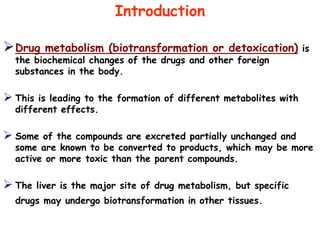
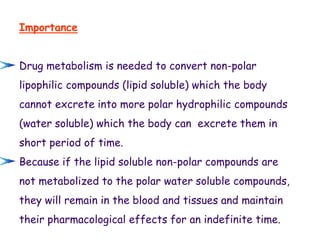
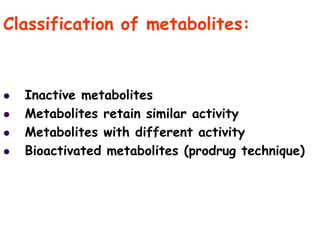
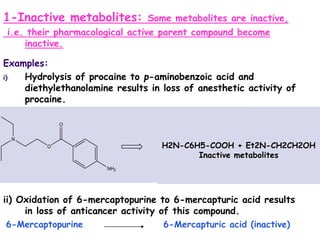
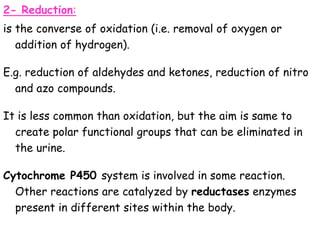
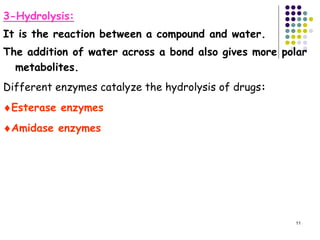
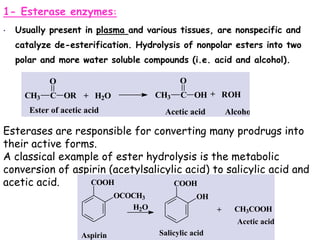
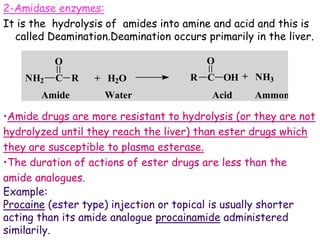
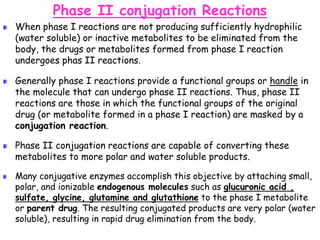
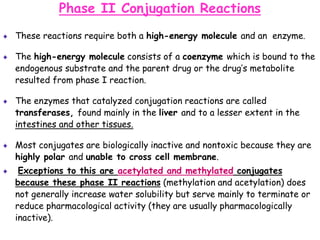
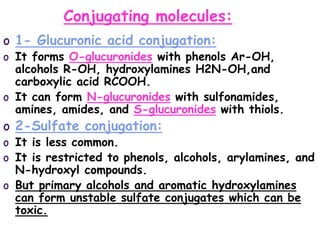
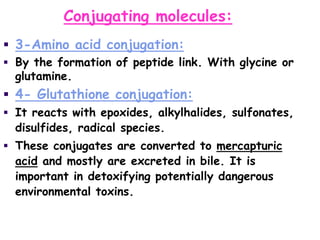
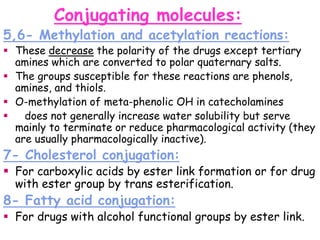
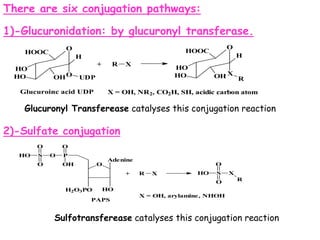
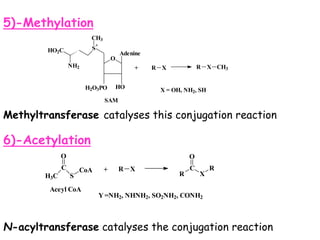
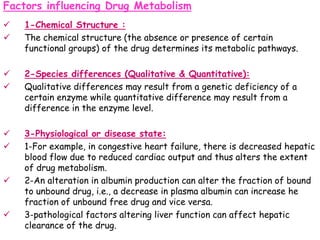
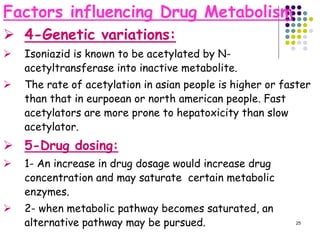
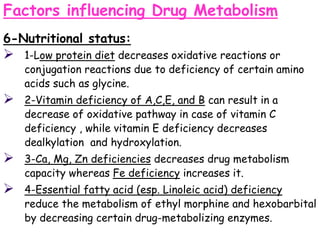
Drug metabolism involves biochemical changes that convert lipophilic compounds into more polar, water soluble compounds that can be readily excreted. This occurs mainly through two phases - phase I involves oxidation, reduction, and hydrolysis while phase II involves conjugating metabolites with glucuronic acid, sulfate, glycine or glutathione. Many factors can influence drug metabolism, including a drug's chemical structure, species differences, physiological state, genetics, dosage, nutrition, age, gender, route of administration, and interactions with metabolic enzymes. Understanding these factors is important for predicting a drug's effects in the body.









![CASE_PRESENTATION_ON_subdural_hematoma(SDH)[1 FINAL PPT]-1.pptx](https://cdn.slidesharecdn.com/ss_thumbnails/casepresentationonsubduralhematomasdh1finalppt-1-260129172522-d405d375-thumbnail.jpg?width=640&height=640&fit=bounds)


